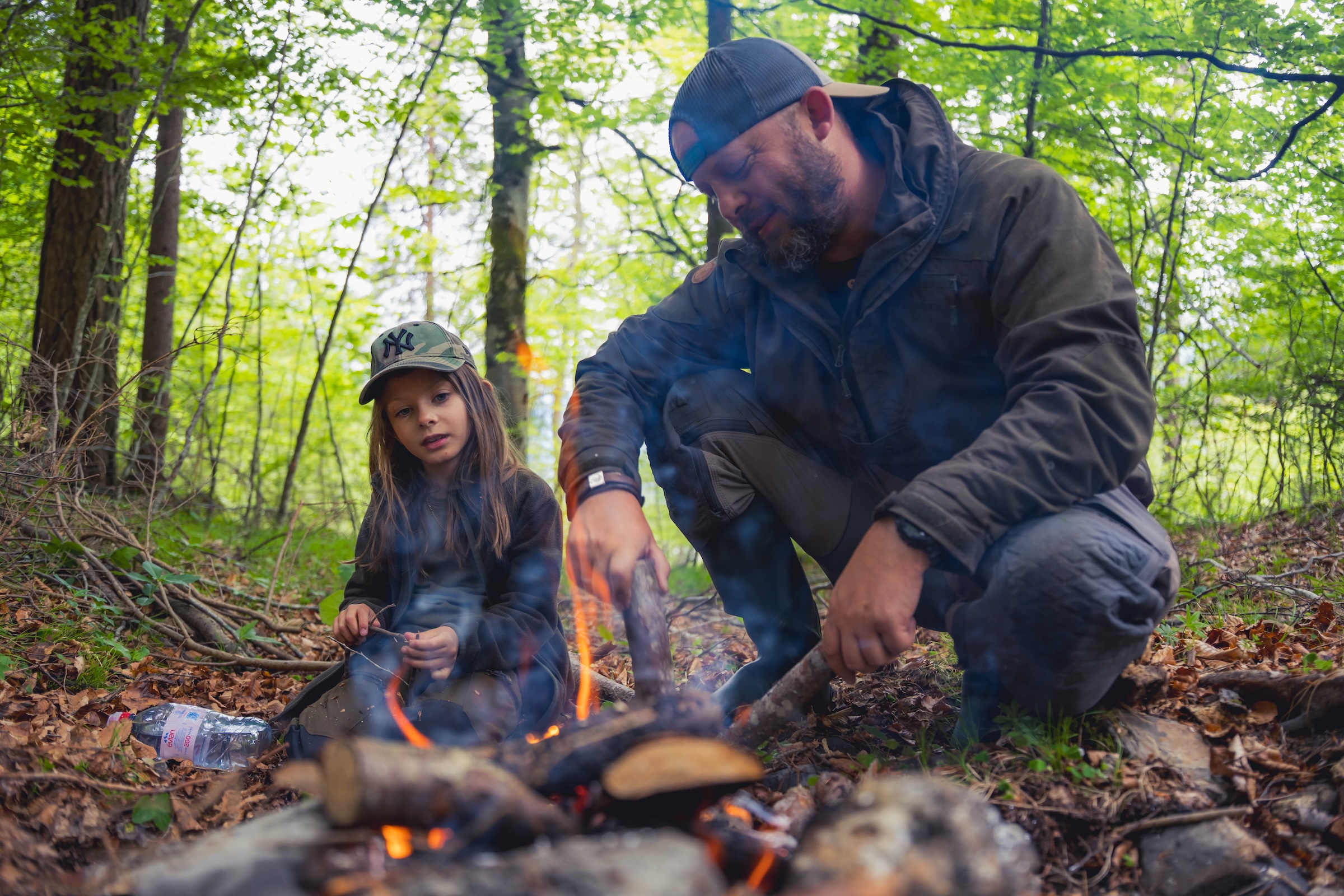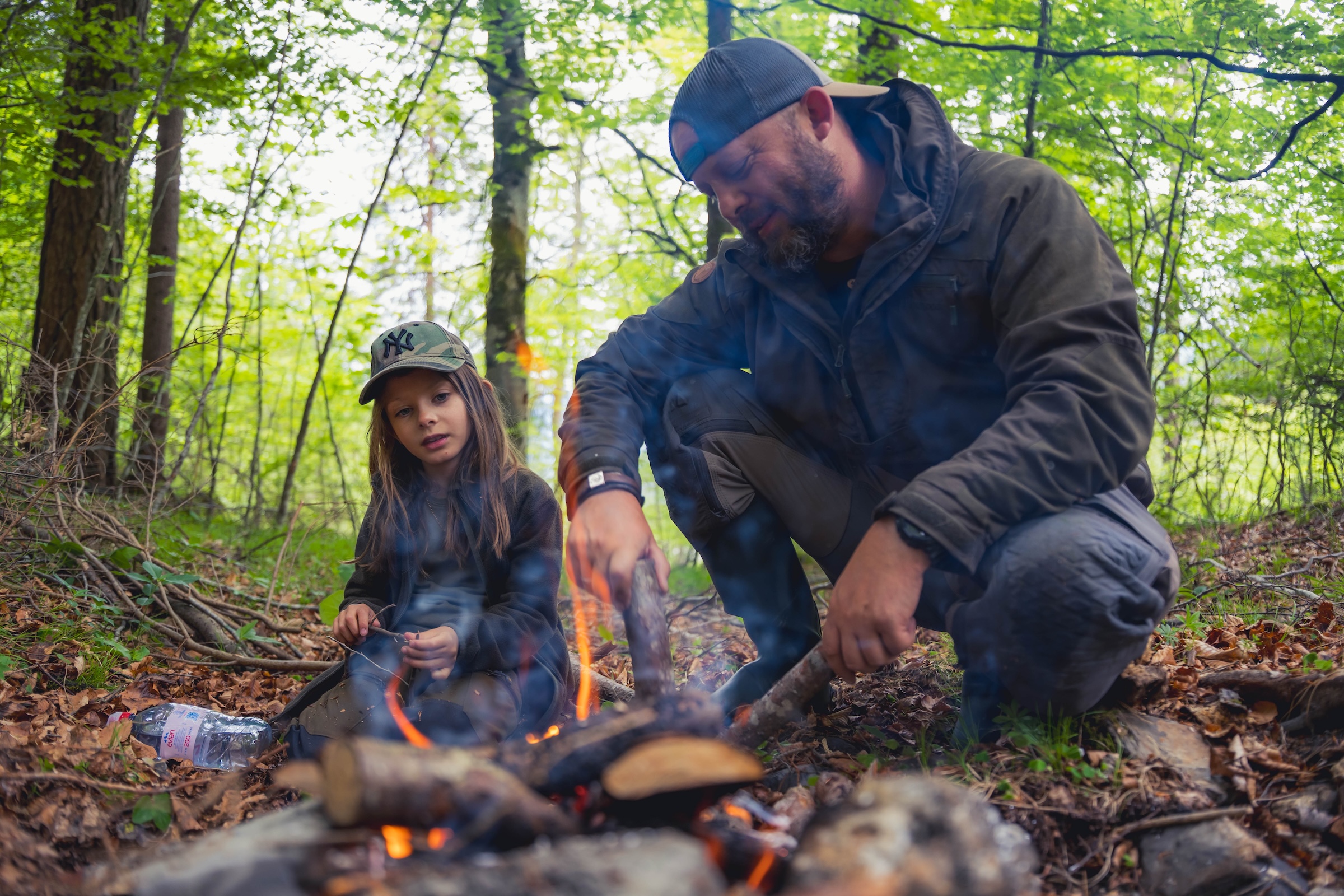
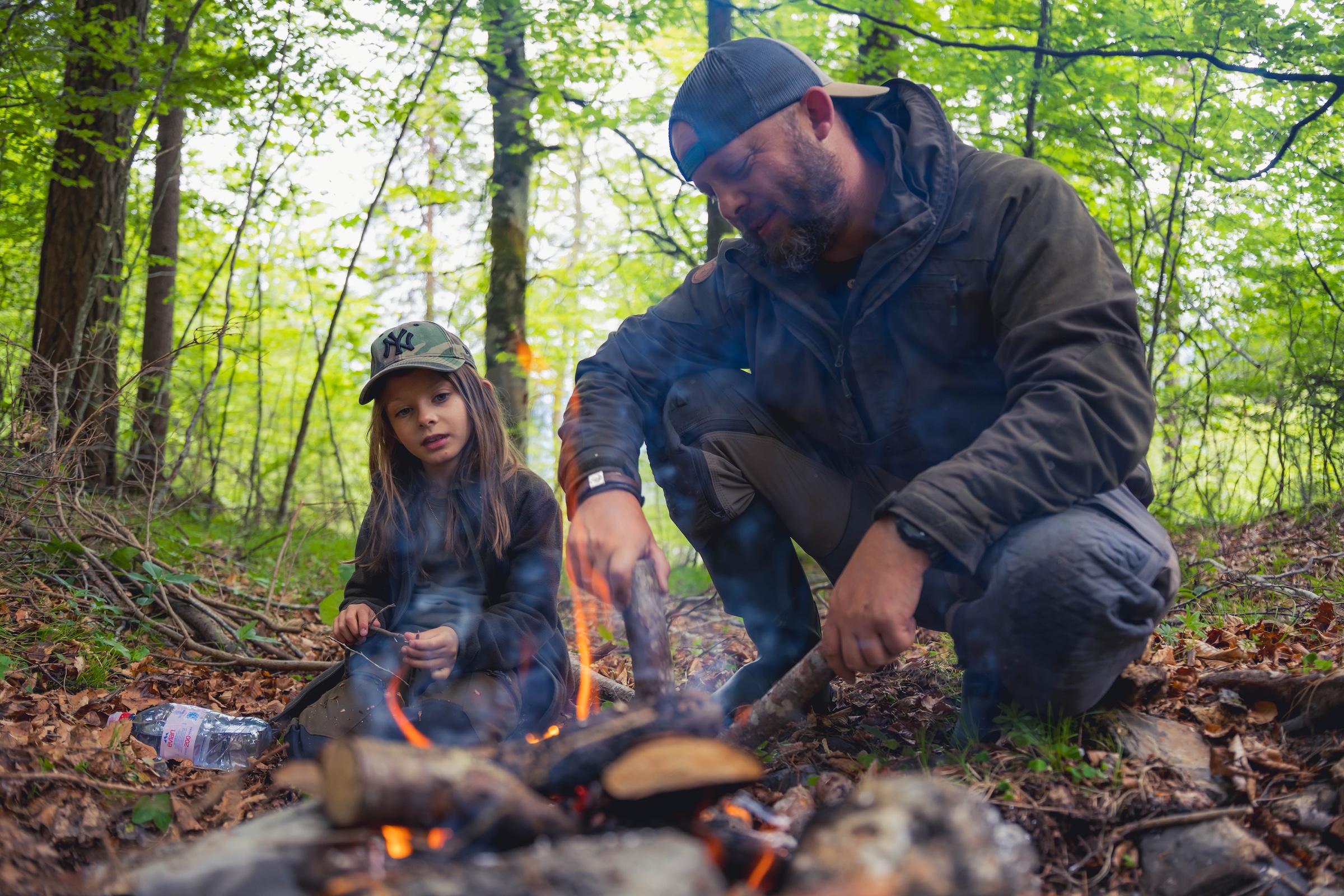
The forest still smells of rain. The branches are shiny and damp, the ground is soft underfoot and water is dripping from a spruce tree onto the leaves. Roman has been spending time outside since he was a child. Today, he shows his daughter Freya many of the skills that humans have taken for granted over thousands of years.
Freya sits on a fallen log and looks at the small pot in her rucksack.
"Dad, are we making cocoa?"
"Sure."
She looks around. "But what are we going to make a fire with?" I pull the fire steel out of my pocket. Freya grins. "Ah. The spark stick." Many outdoor people have a fire steel with them. Yet it often doesn't work. The reason is almost never the spark. The reason is usually the tinder. Fire never starts with wood. It starts with something that can react immediately. People knew this long before there were matches or lighters.
Why birch bark works even in the rain
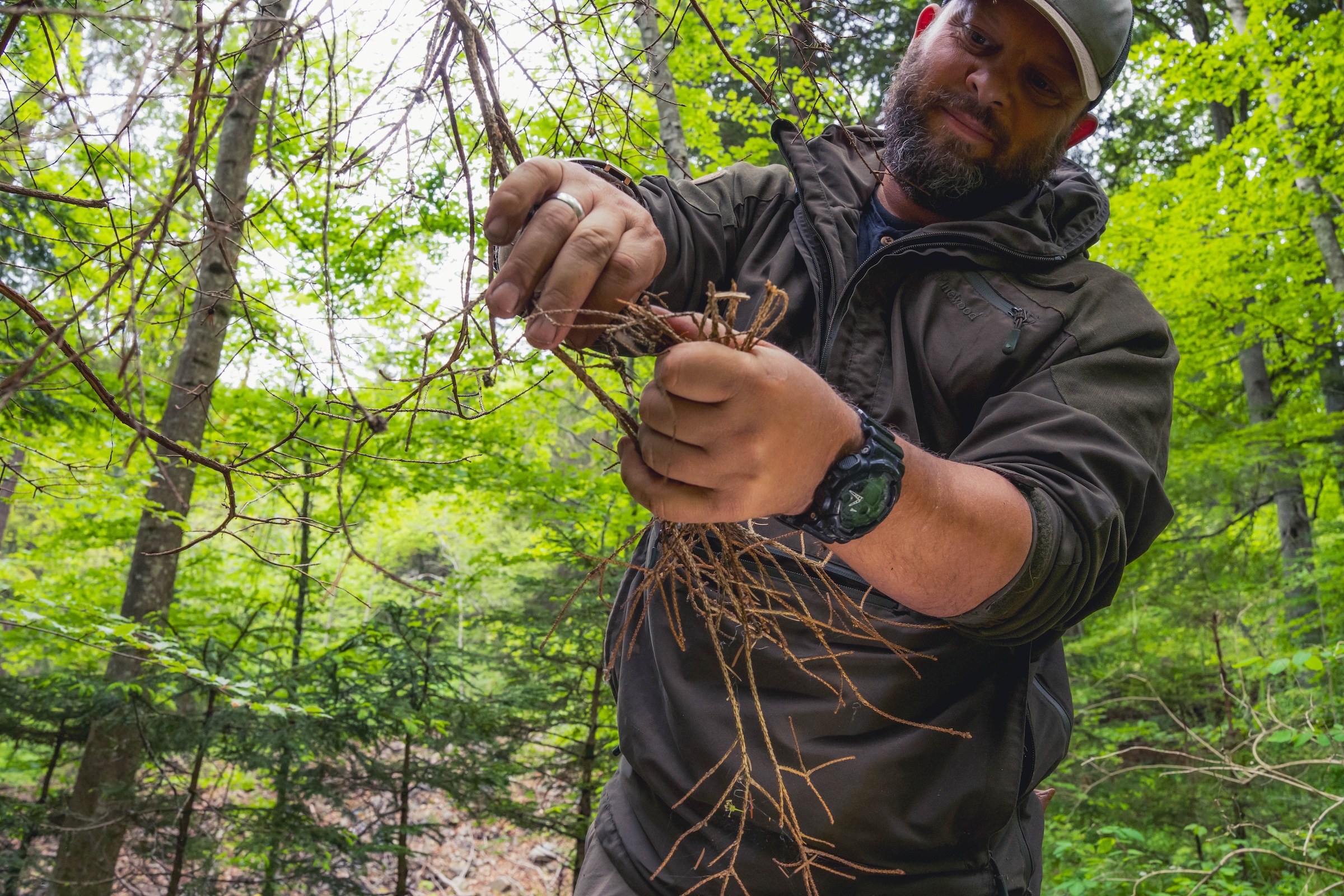
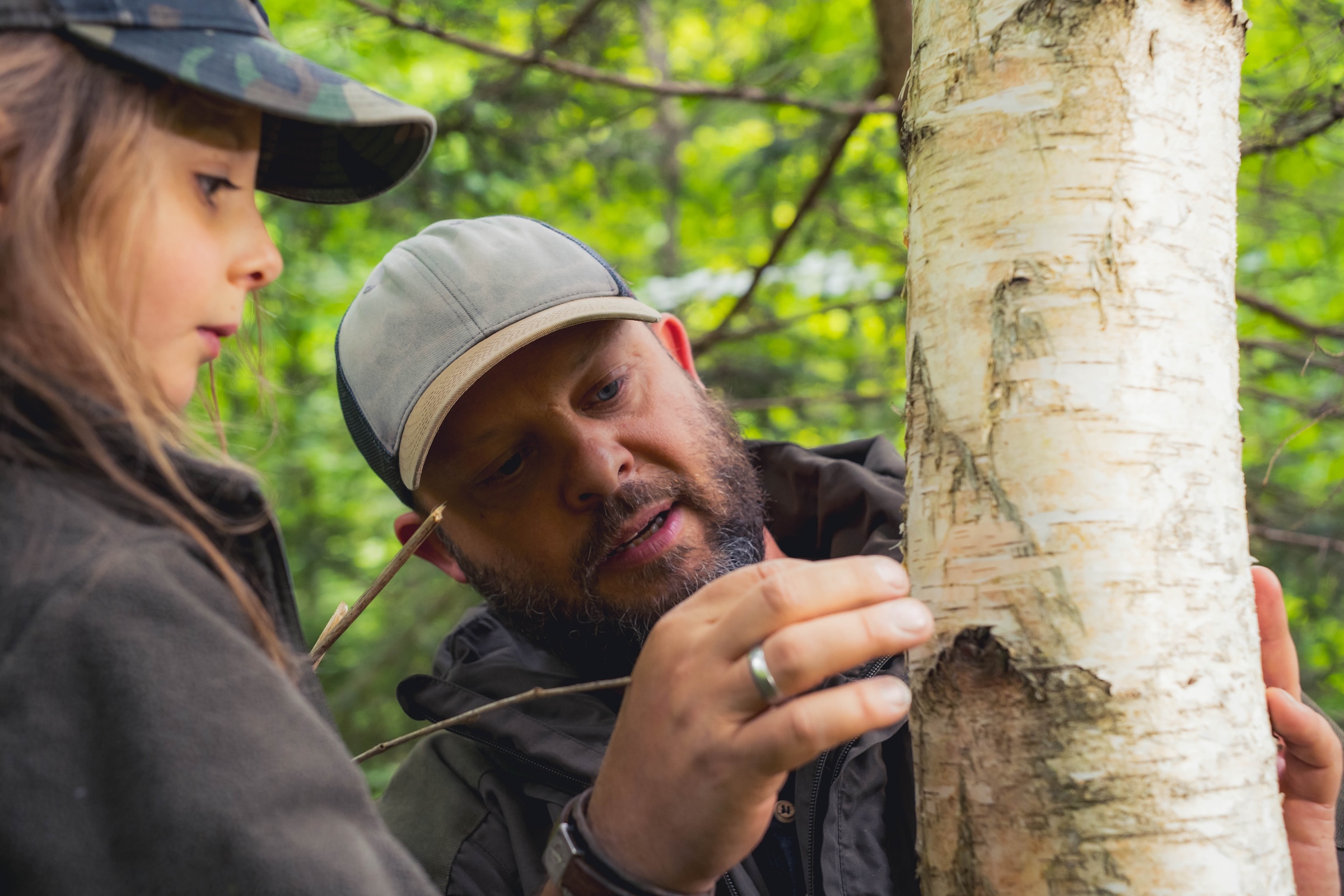
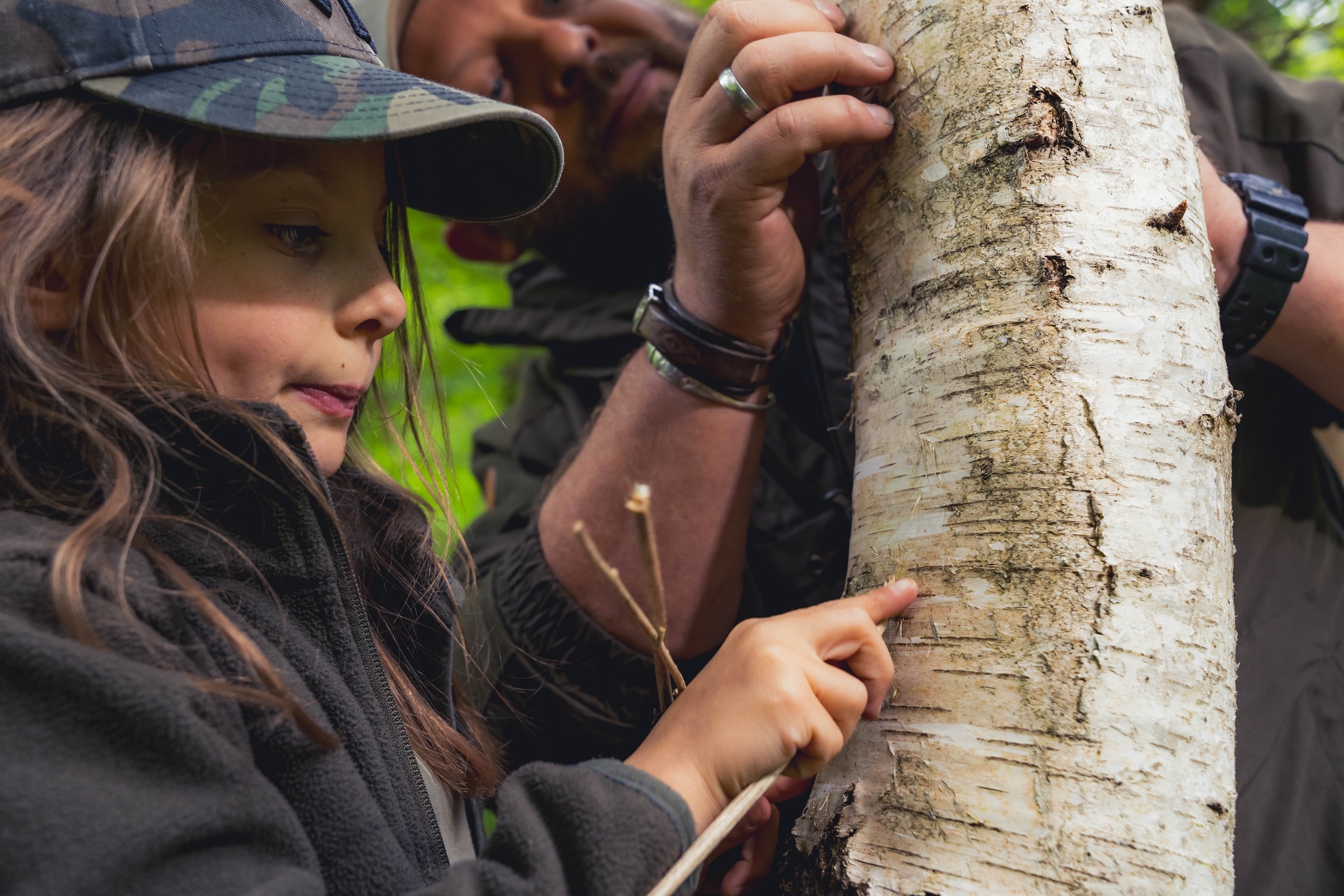
When everything outside seems wet, making a fire starts with observation. One of the best answers is often right in front of us: the birch tree. Its bark contains natural oils and burns amazingly reliably - even when the forest is still dripping with rain. For me, birch bark is therefore one of the most important materials when I show Freya how to prepare a fire outdoors.
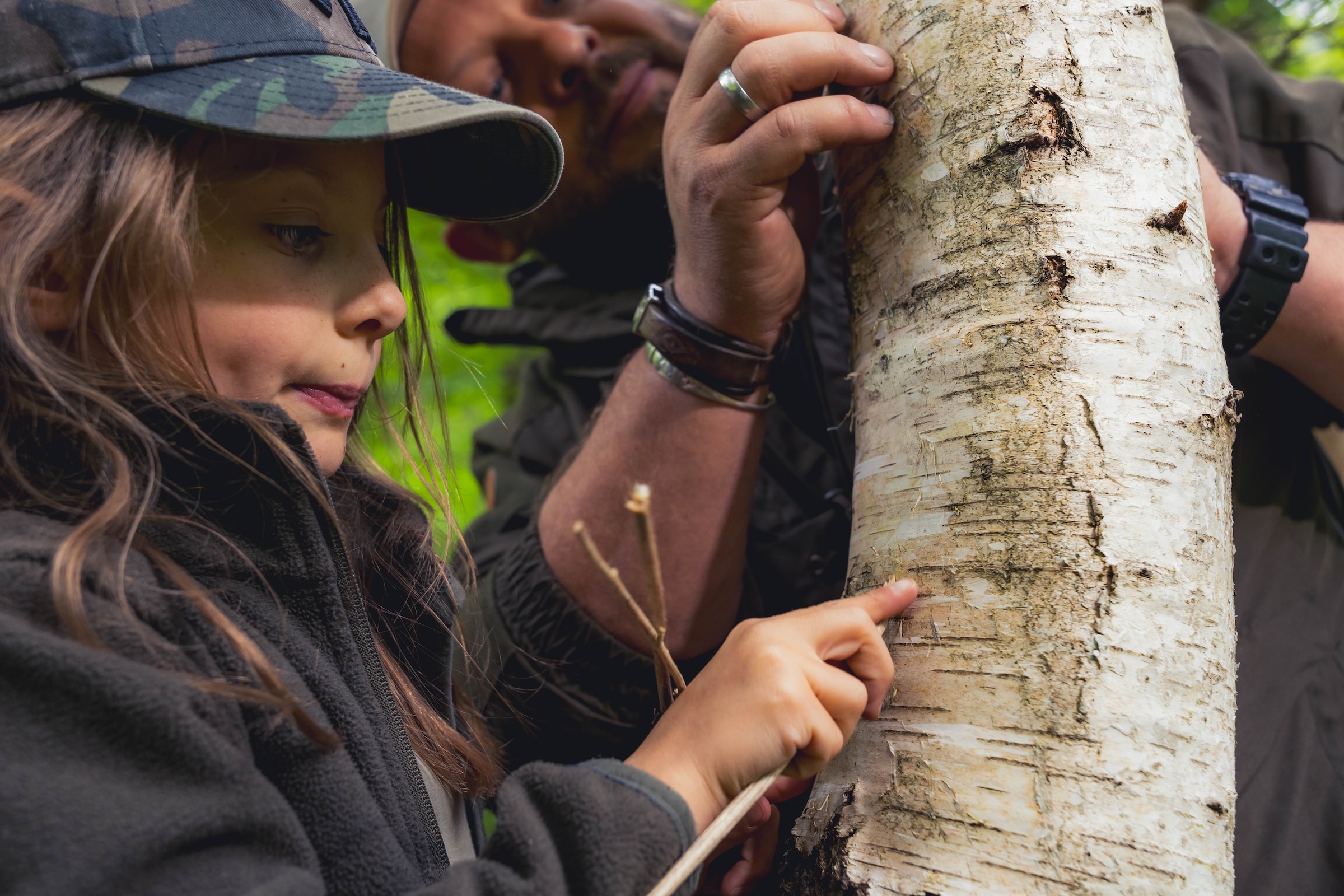
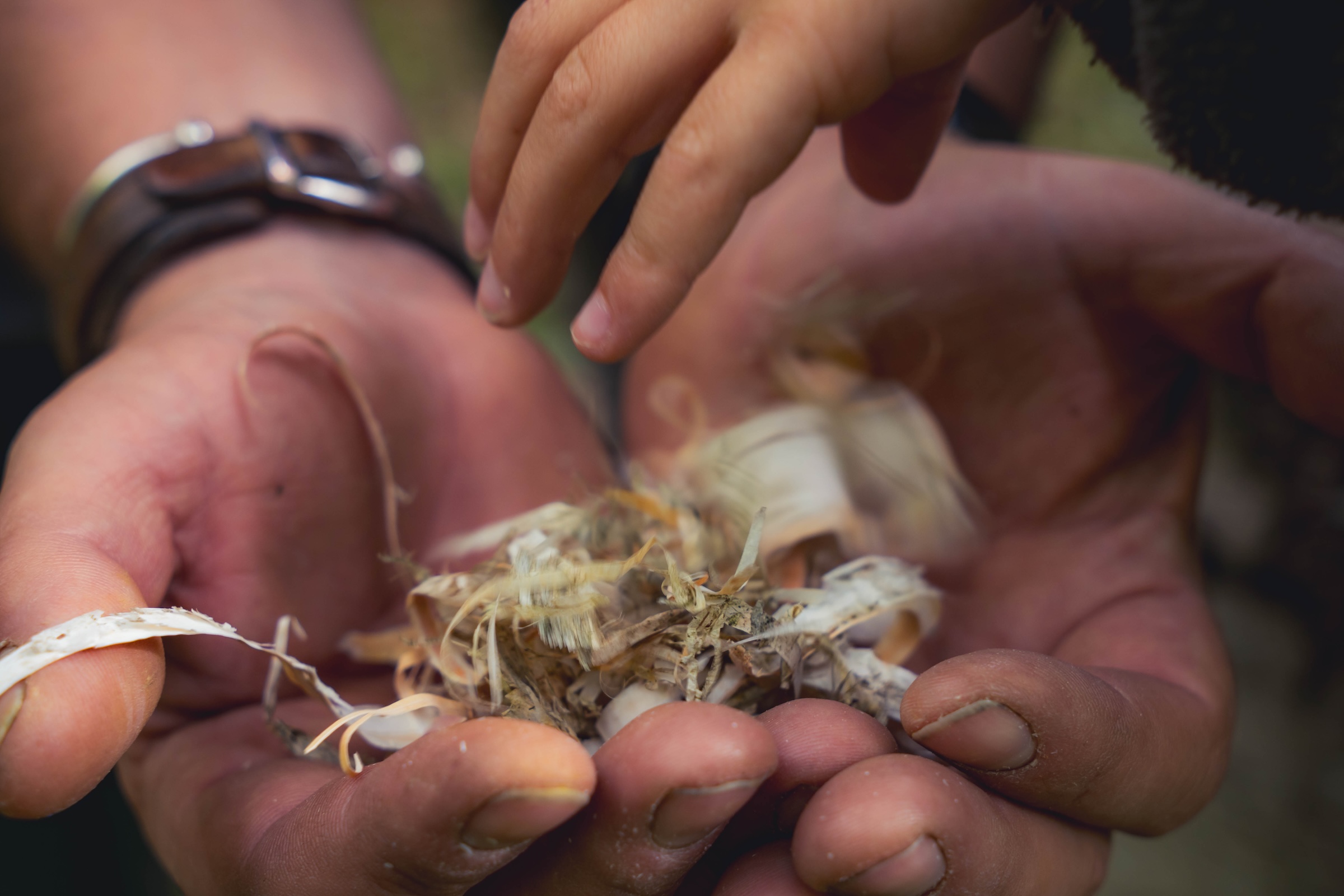
But at least as important as knowing how to make good tinder is the way you collect it. I always see people cutting large pieces out of the birch with a knife or even carving around the trunk. A living tree is injured for a quick fire. That's where bushcraft ends for me. We only take the loose outer layer. Small, paper-thin pieces that almost come off by themselves.
I explain to Freya: "It's like skin flakes. The birch can't scratch itself. We just help a little." A child understands that immediately. And maybe that's exactly the point. Outdoors, we don't just learn techniques. We learn attitude. We learn that a tree is not a storehouse of materials and that good craftsmanship begins with respect. A fire in the rain is a beautiful thing. Warmth, light and a small focal point in the wet forest. It is even nicer when the tree still stands intact at the end. Because outside, it's not about wringing something out of nature. It's about recognizing what it freely gives.
Fire needs air - not power
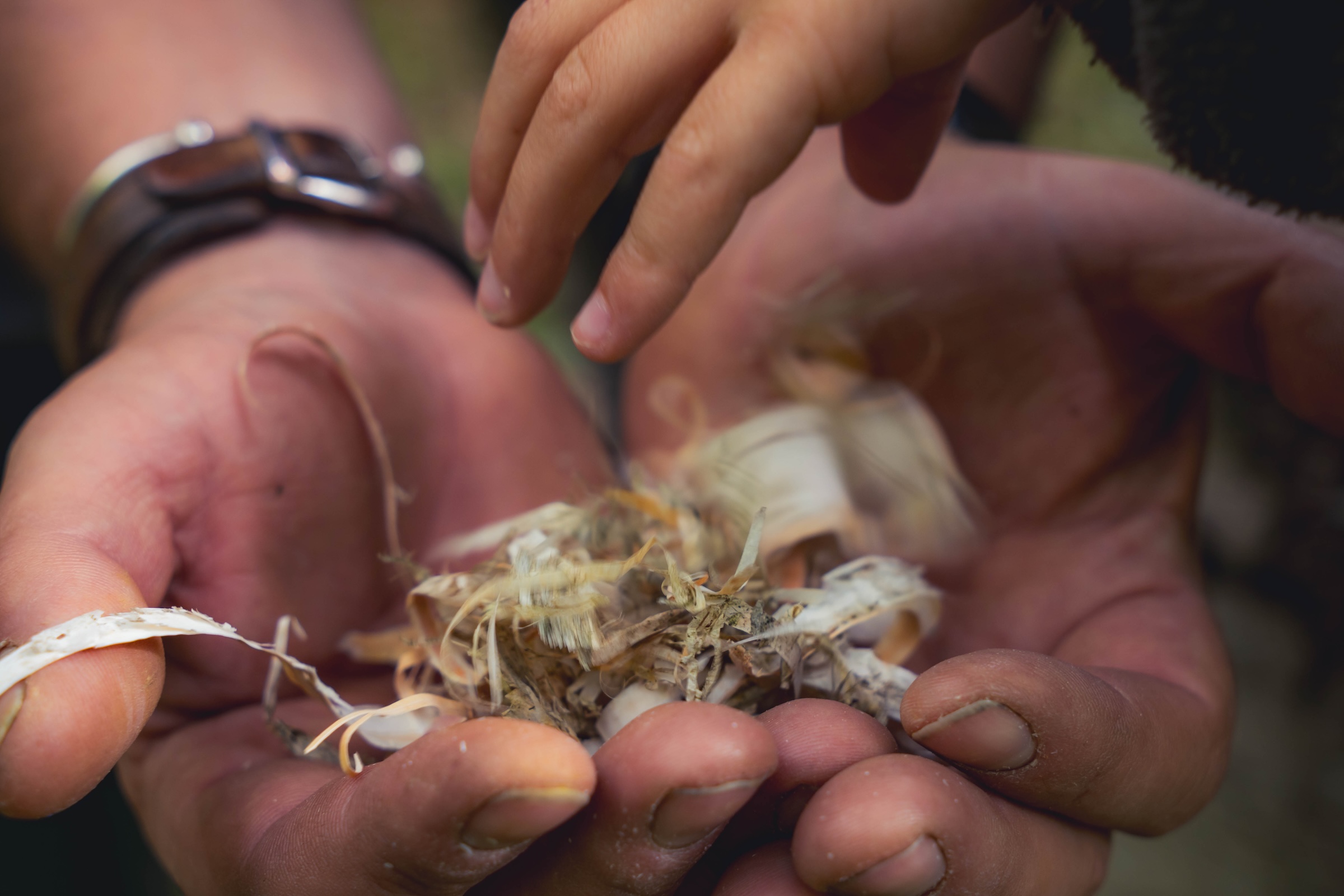
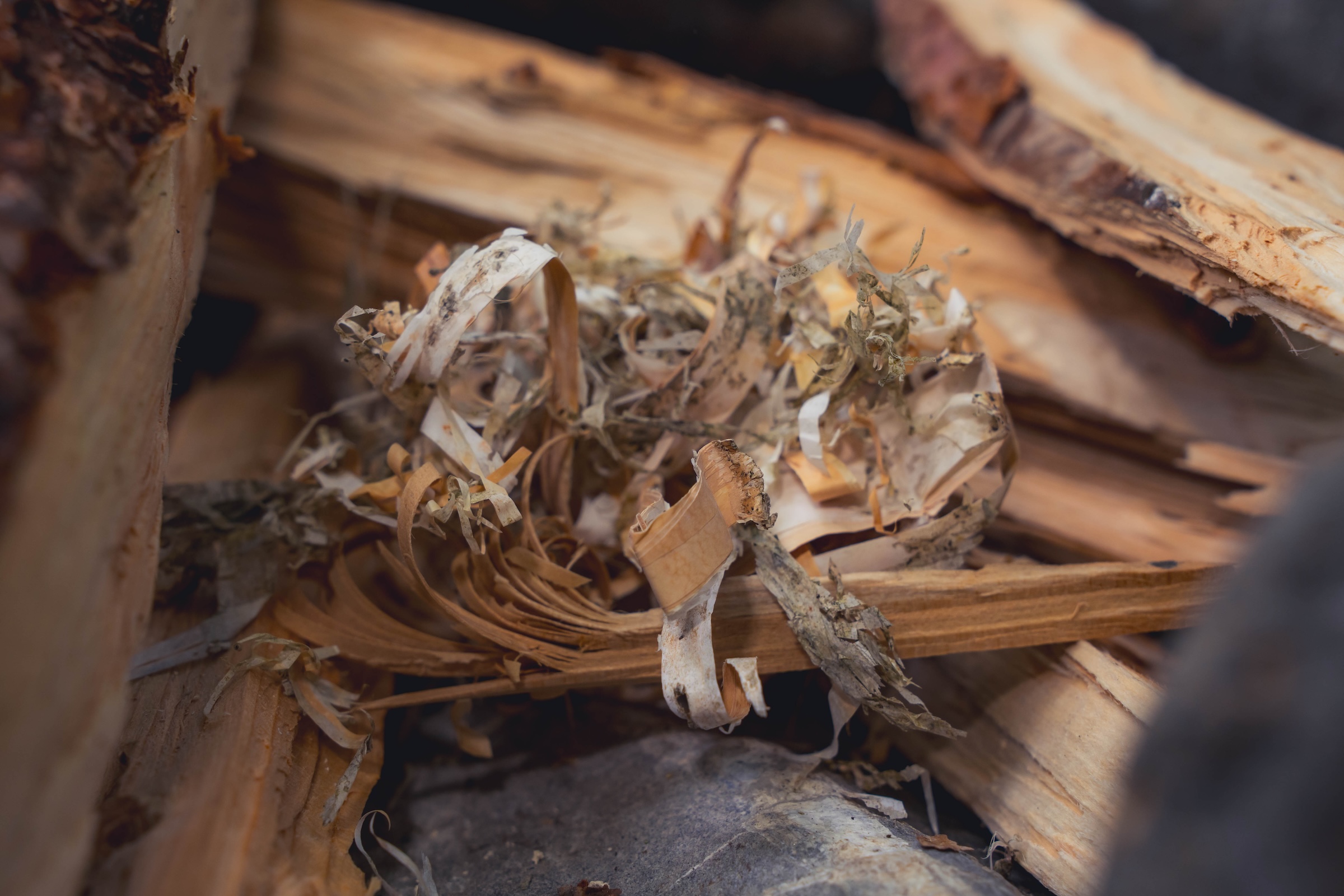
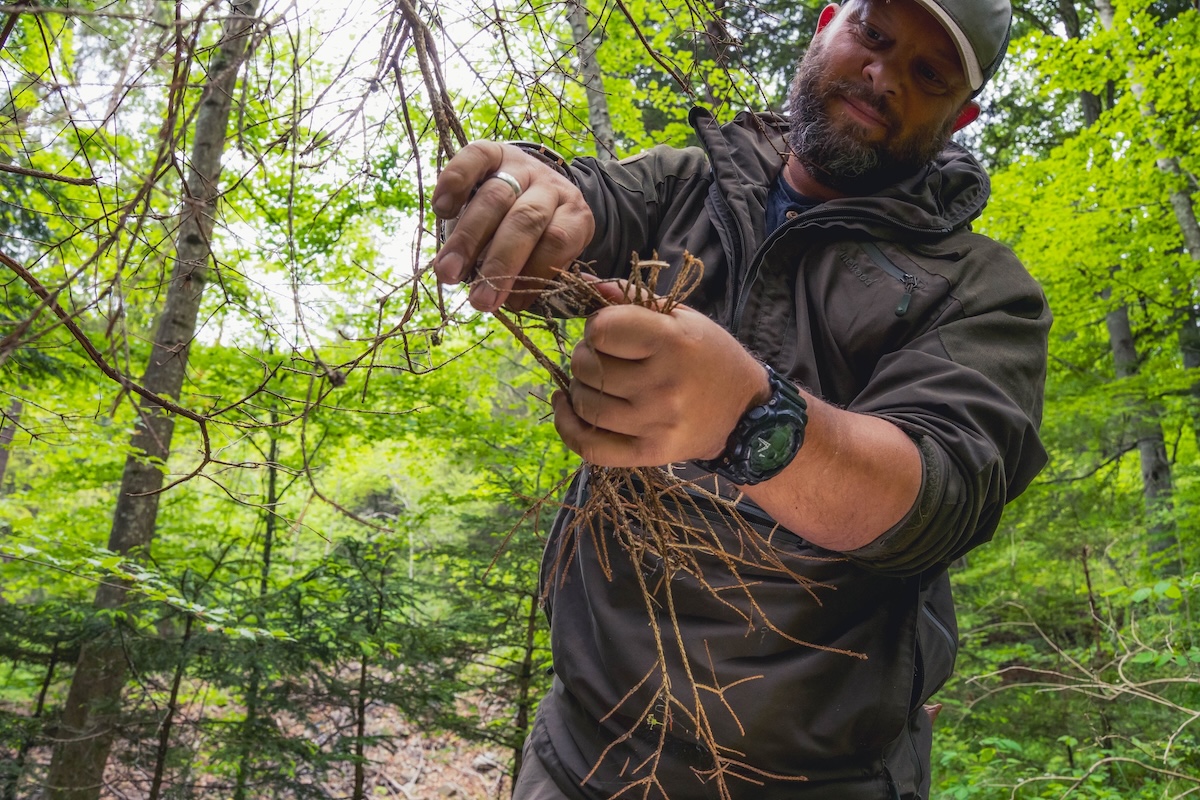
A good tinder bundle is not just a small pile of bark. It has to be prepared: loose, fine and airy. I tell Freya: "Imagine a little tuft of fur." That's exactly how good tinder material should feel. Not compressed, not compact. Fire needs fuel - but so does air. A good bundle fits roughly in two hands. Enough material so that the flame doesn't starve right away, but loose enough to allow air to get in between.
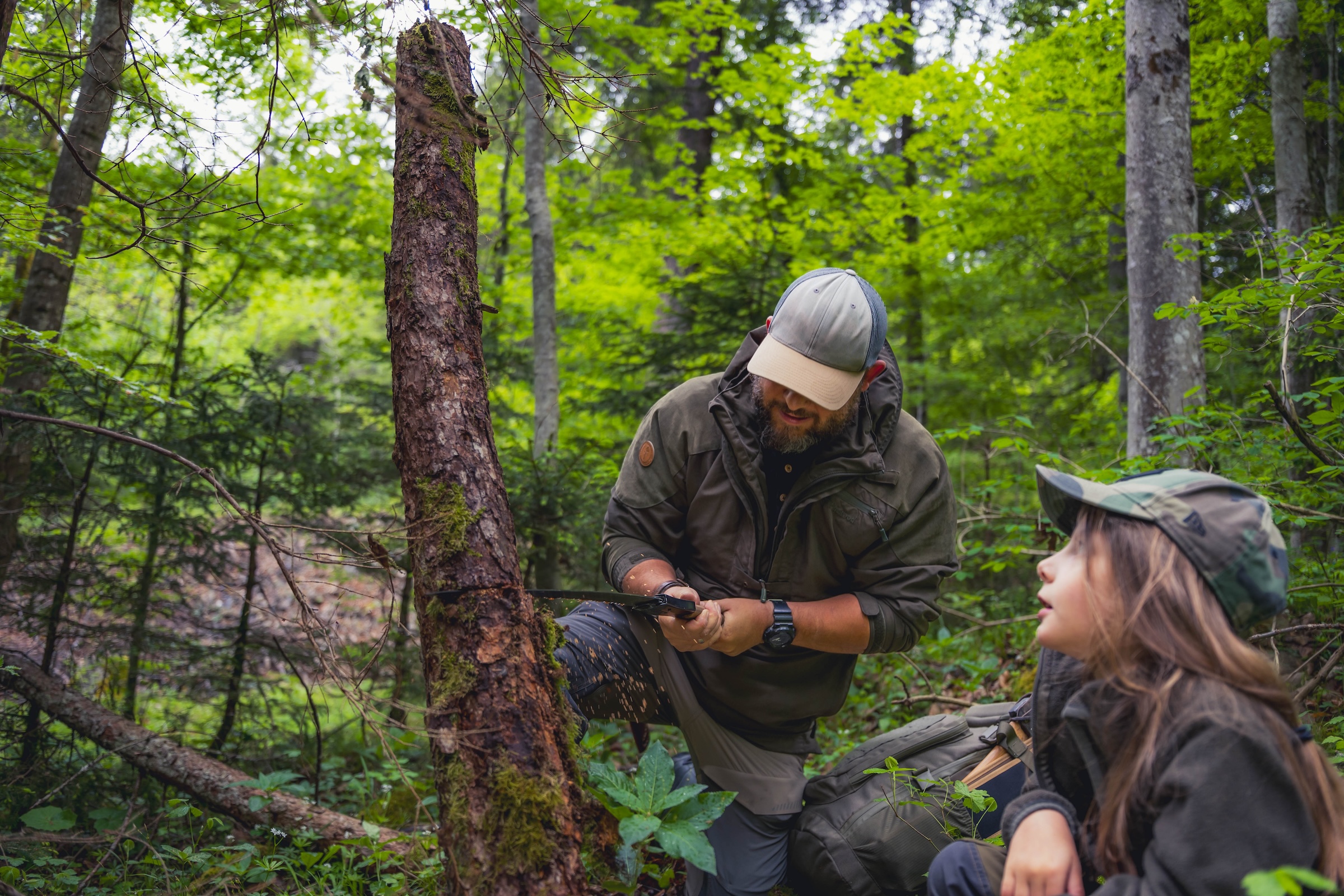
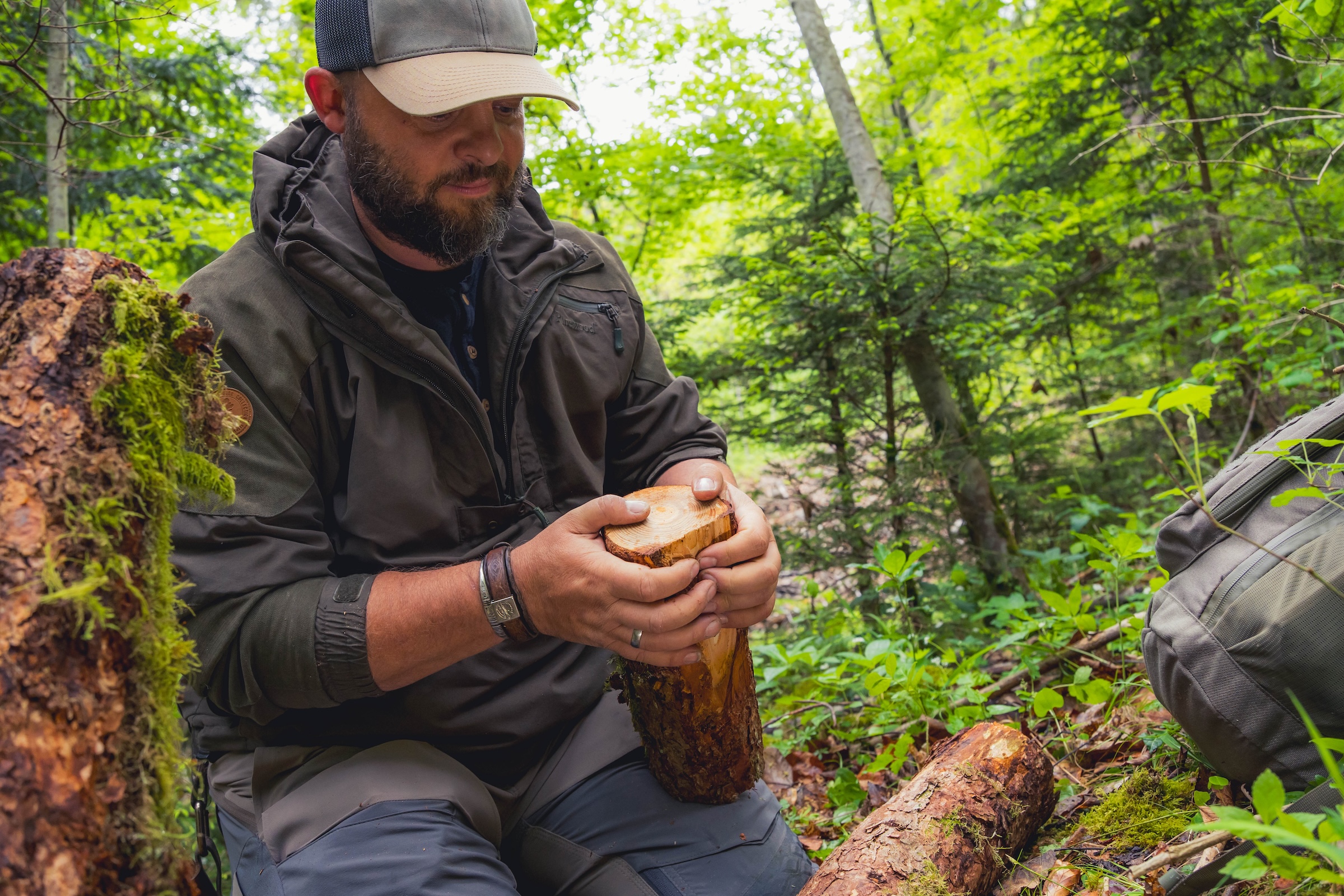
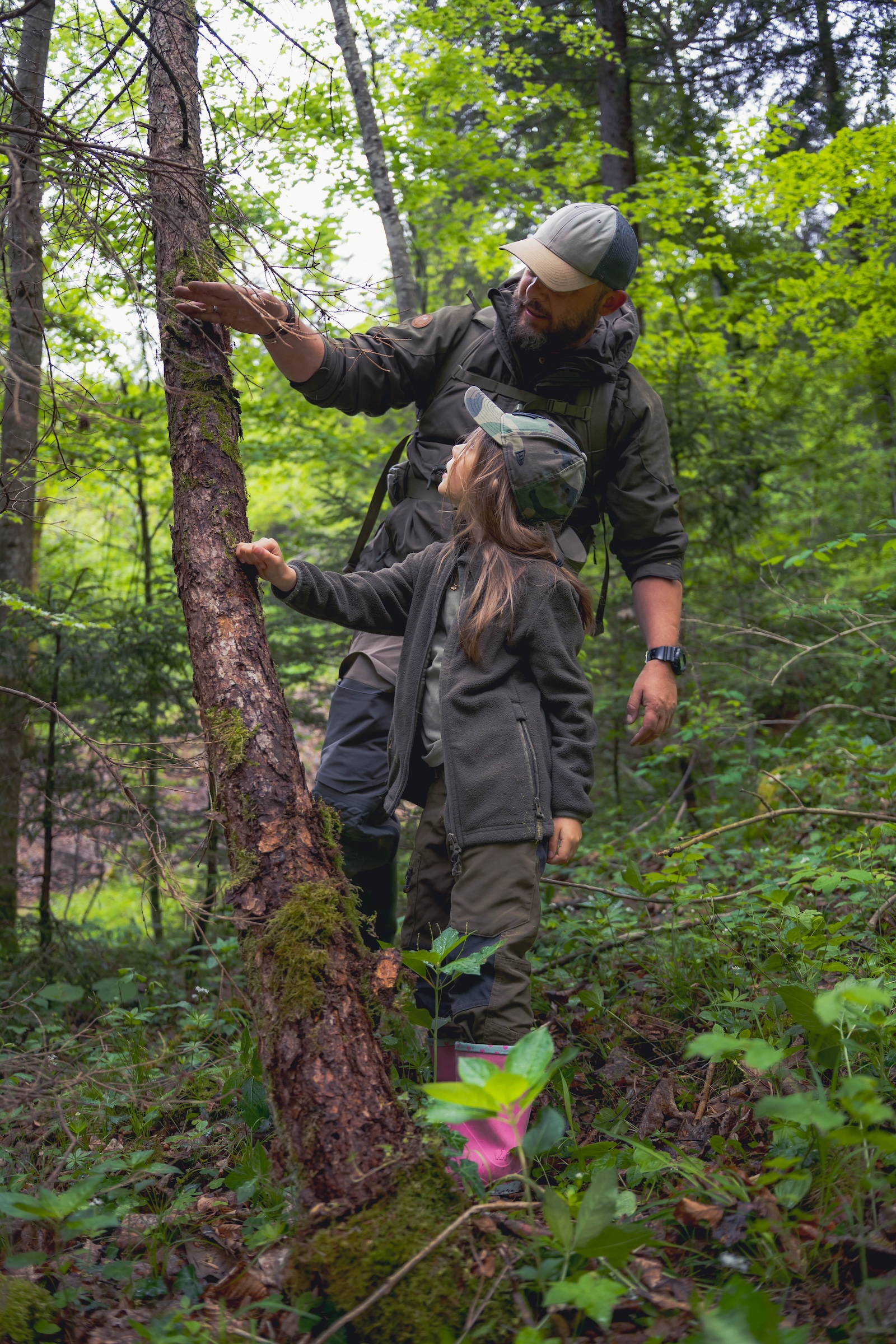
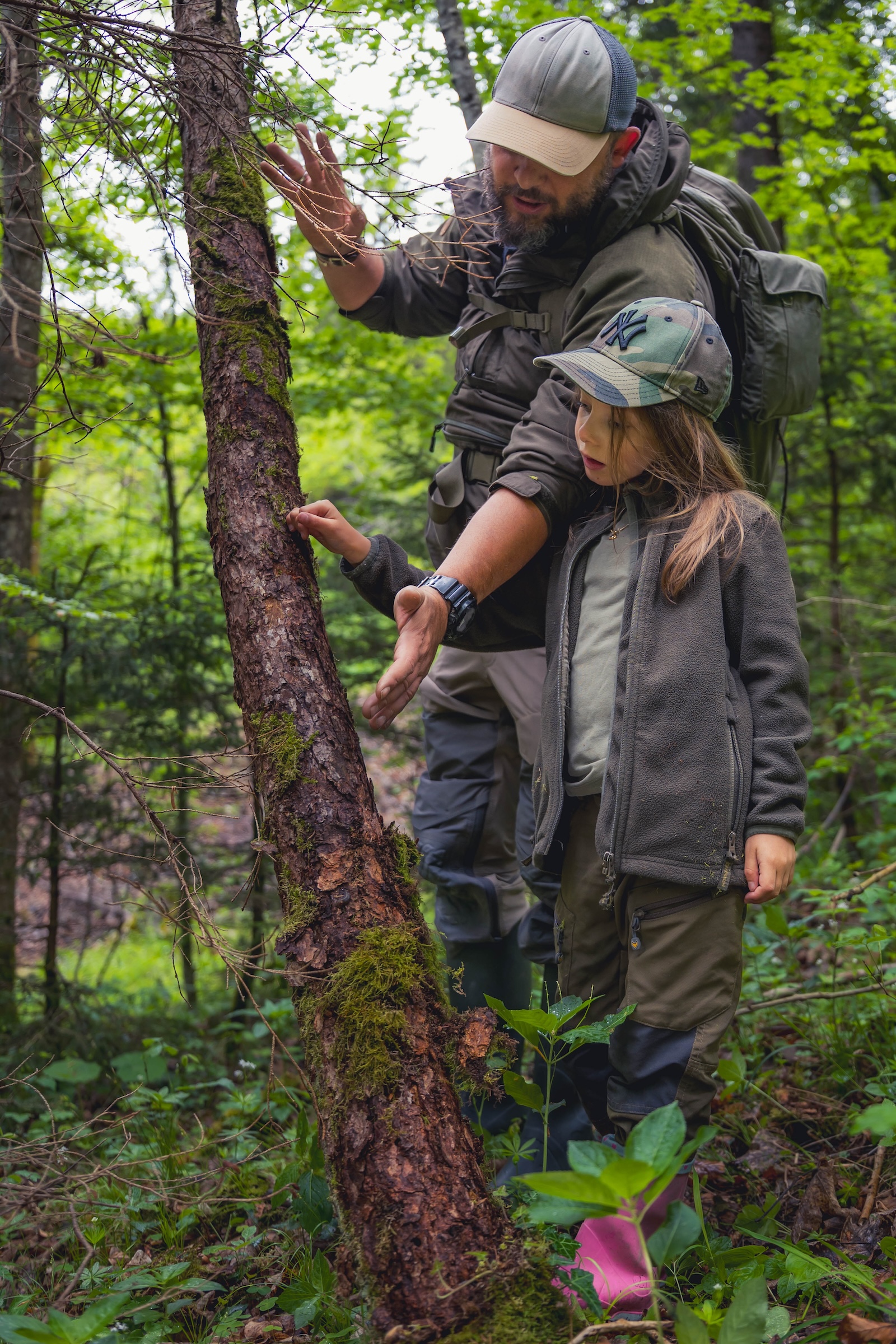
Once the tinder is prepared, we look for dry wood. And you rarely find that on the ground after rain. Anything lying directly on the ground absorbs moisture like a sponge. Standing dead wood is better. I prefer to look for dead spruce, sometimes also pine or larch. These trunks often look dark, wet and mossy on the outside. Inside, however, there is often surprisingly dry wood. This is exactly what I show Freya out in the forest.
From the outside, the trunk looks unusable. But if you take a closer look, you start to read what it is telling you. Does the wood sound hard? Does it break dry? Is it still solid? Then perhaps it contains exactly what we need. The same applies here: we don't pick at random. Not a living tree. Not a healthy trunk. Only wood that the forest has already released. This is how making a fire in the rain begins. Not with force. With observation.
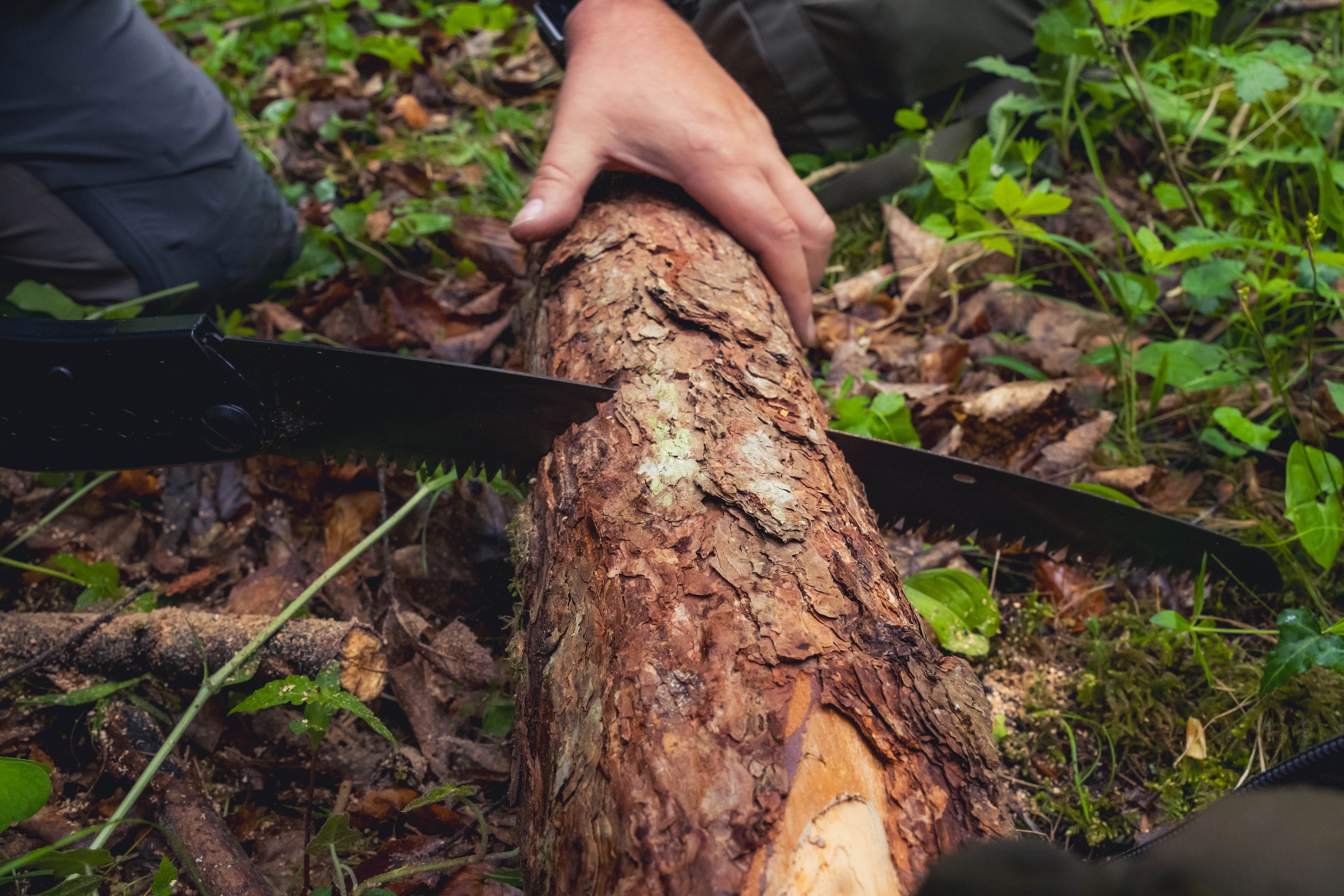
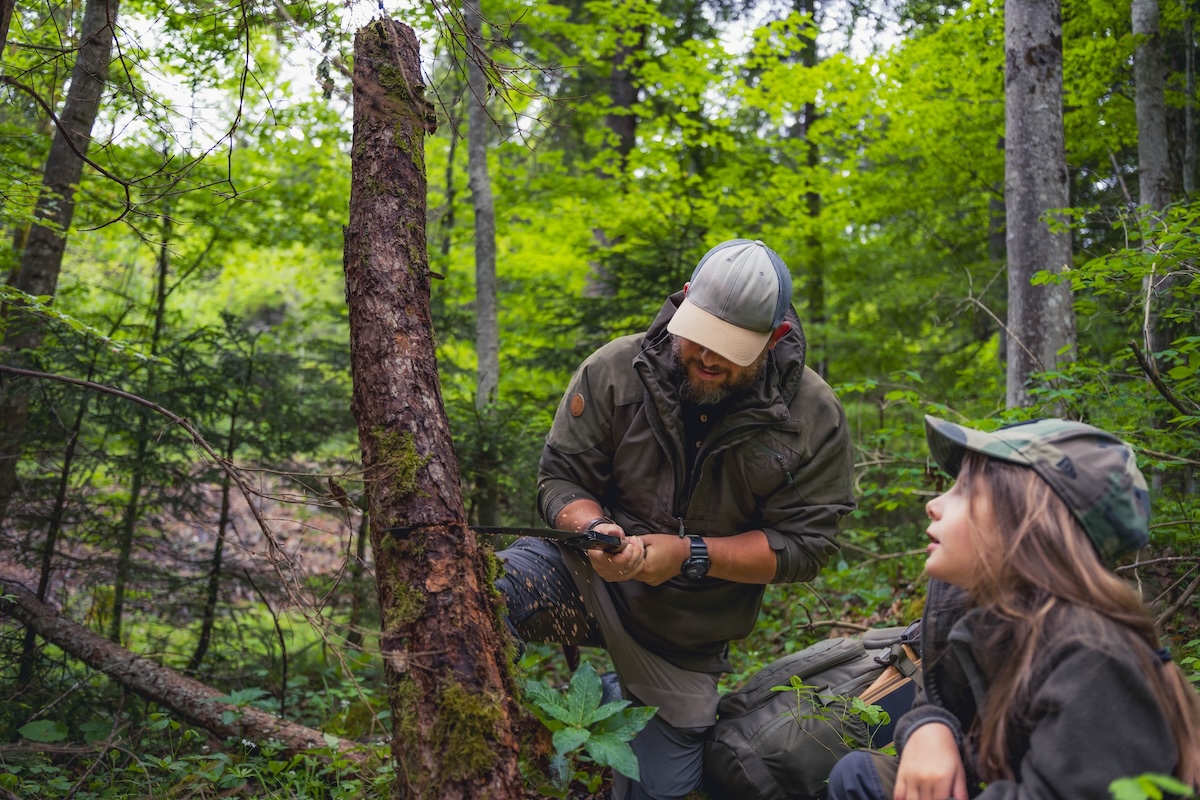
Sometimes a loose piece is enough. Sometimes we have to take a small piece out of the trunk. Before we even saw, we take a close look at the tree. Where is it leaning? Is it stuck somewhere? Is there a safe way back? Especially with dead wood, you never know exactly how stable it is. "The tree won't fall where we want it to," I explain to Freya. "It falls where physics pulls it."
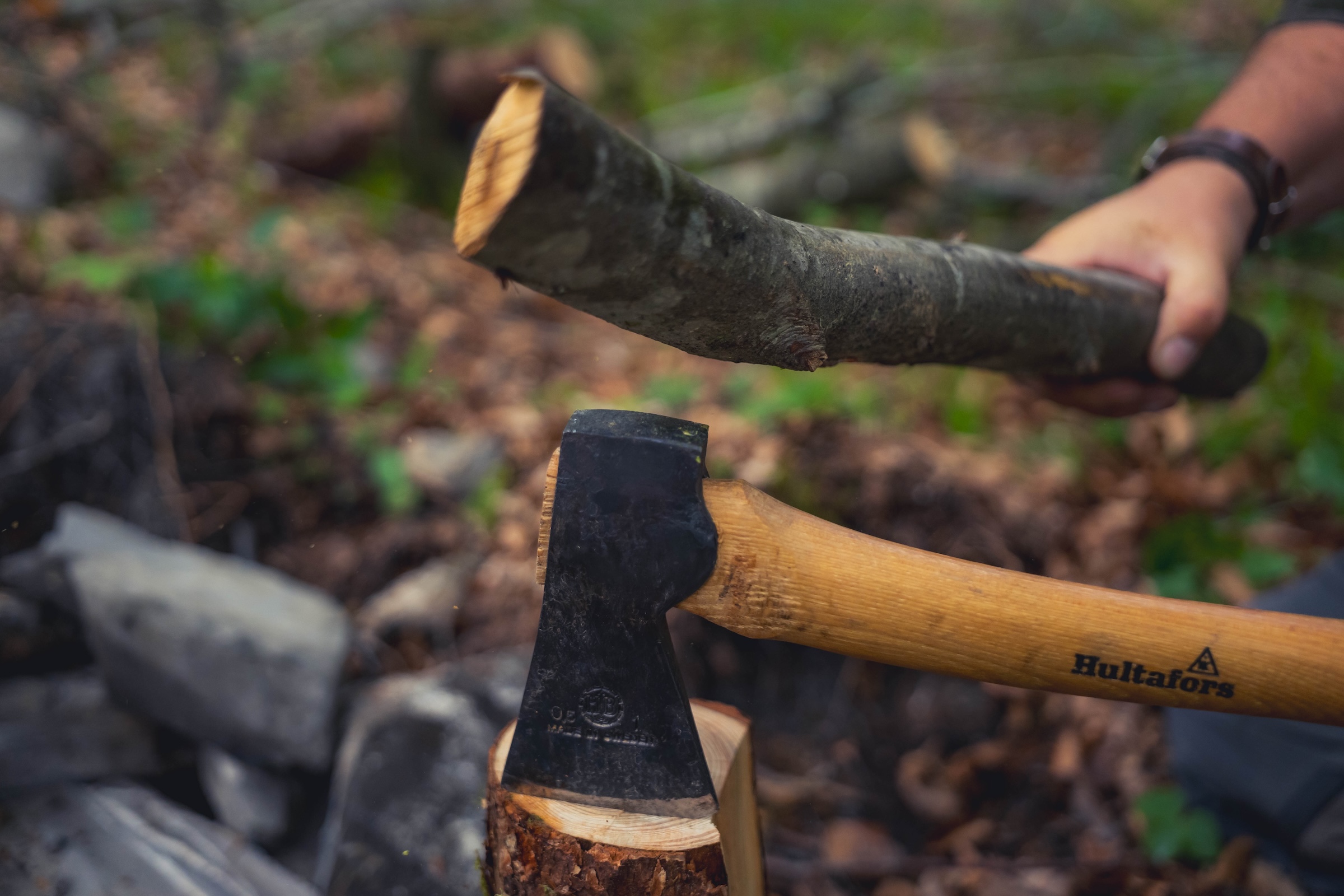
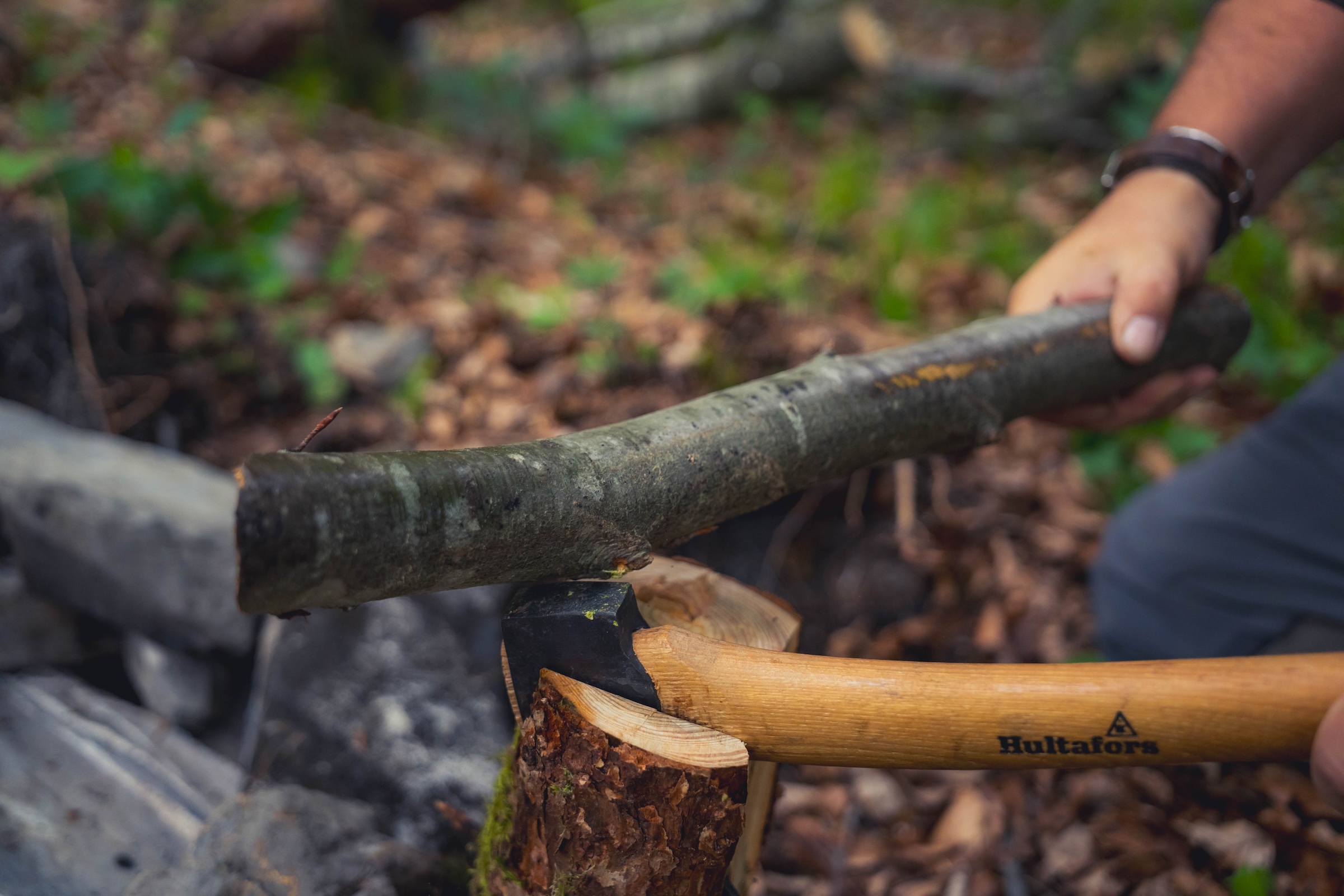
Of course, you can influence the direction in which it falls. But with dead wood in particular, weight, tension and inclination are often decisive in the end. This is precisely why this step is not a time to rush. We don't need a whole log for our fire. A short piece is all we need. Not right at the bottom, where the wood is often wetter. A little higher up in the trunk, the wood inside is usually much drier.
The mistakes when making a fire
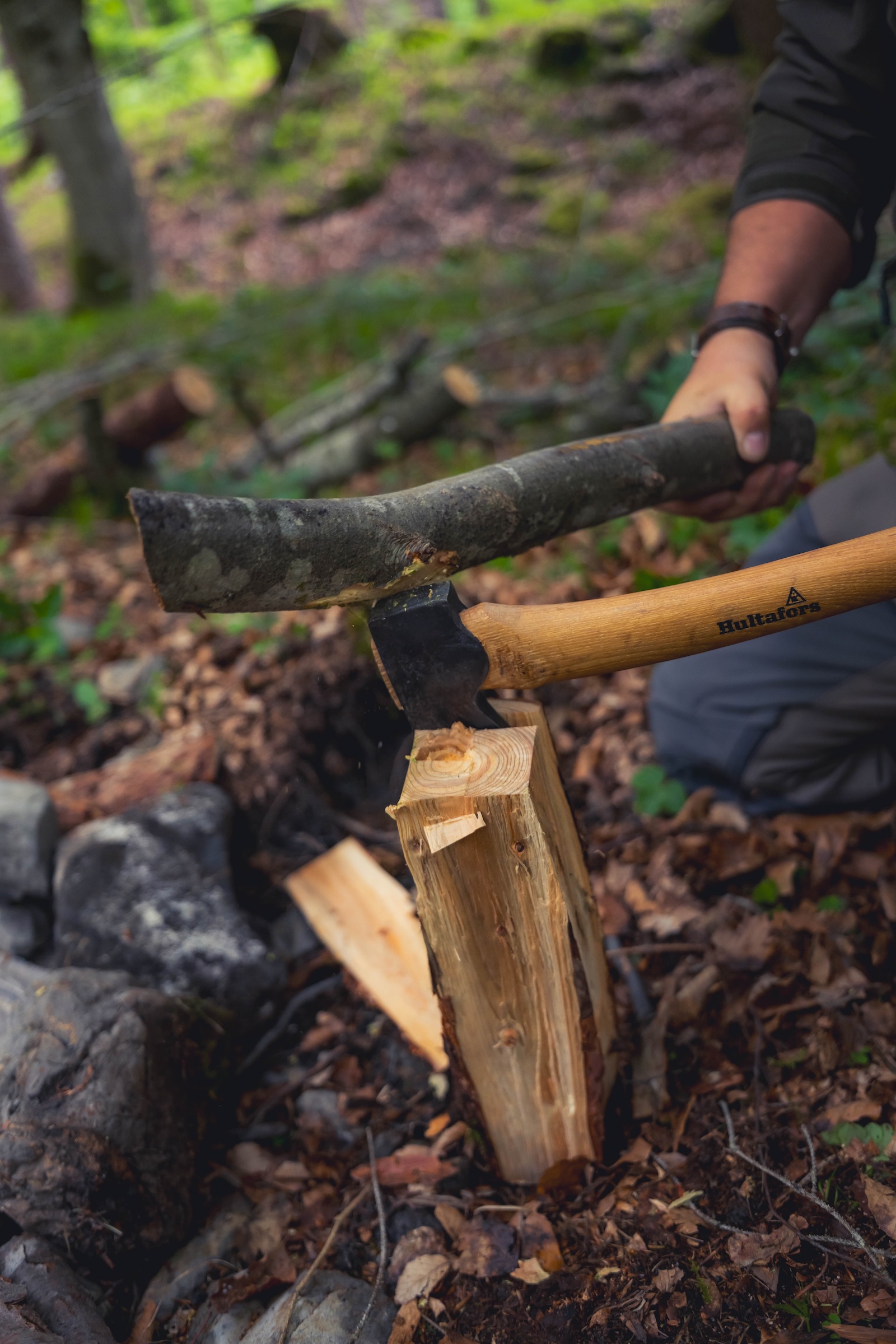
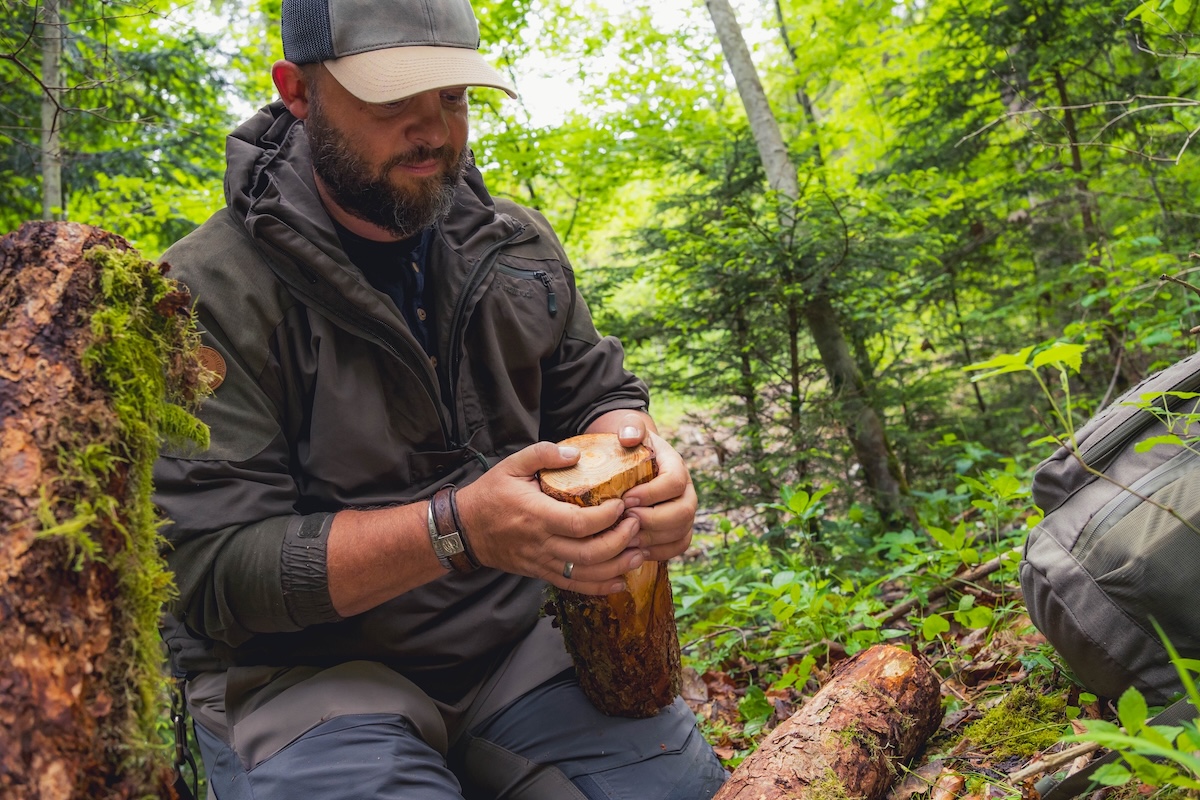
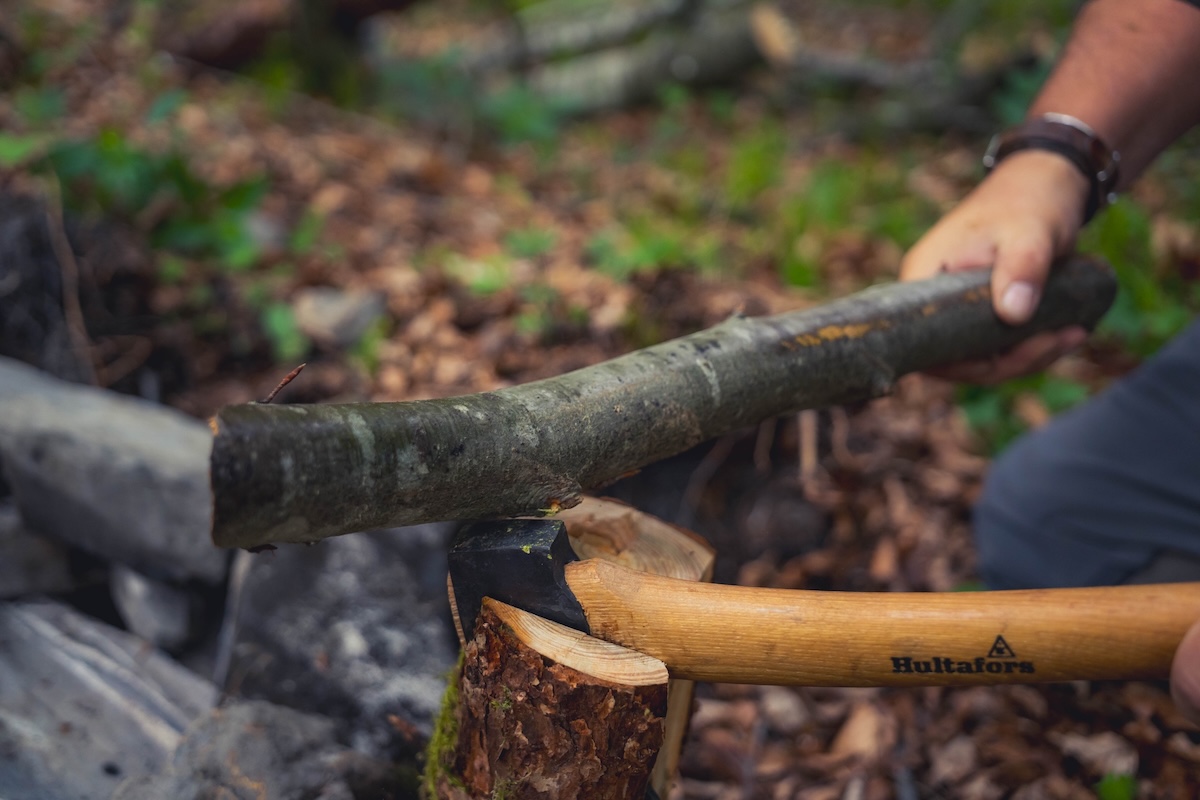
When we have found a suitable piece of wood, we first split away the damp outer layers. This reveals light-colored, dry heartwood. Finer and finer pieces emerge from this. My father used to call them "Spriessli". I still don't know if that's an official word. But I use it myself now. And Freya now says the same thing. Perhaps knowledge has always been passed on in exactly the same way. These fine pieces of wood are crucial. The thinner the edges, the easier it is for the fire to take hold.
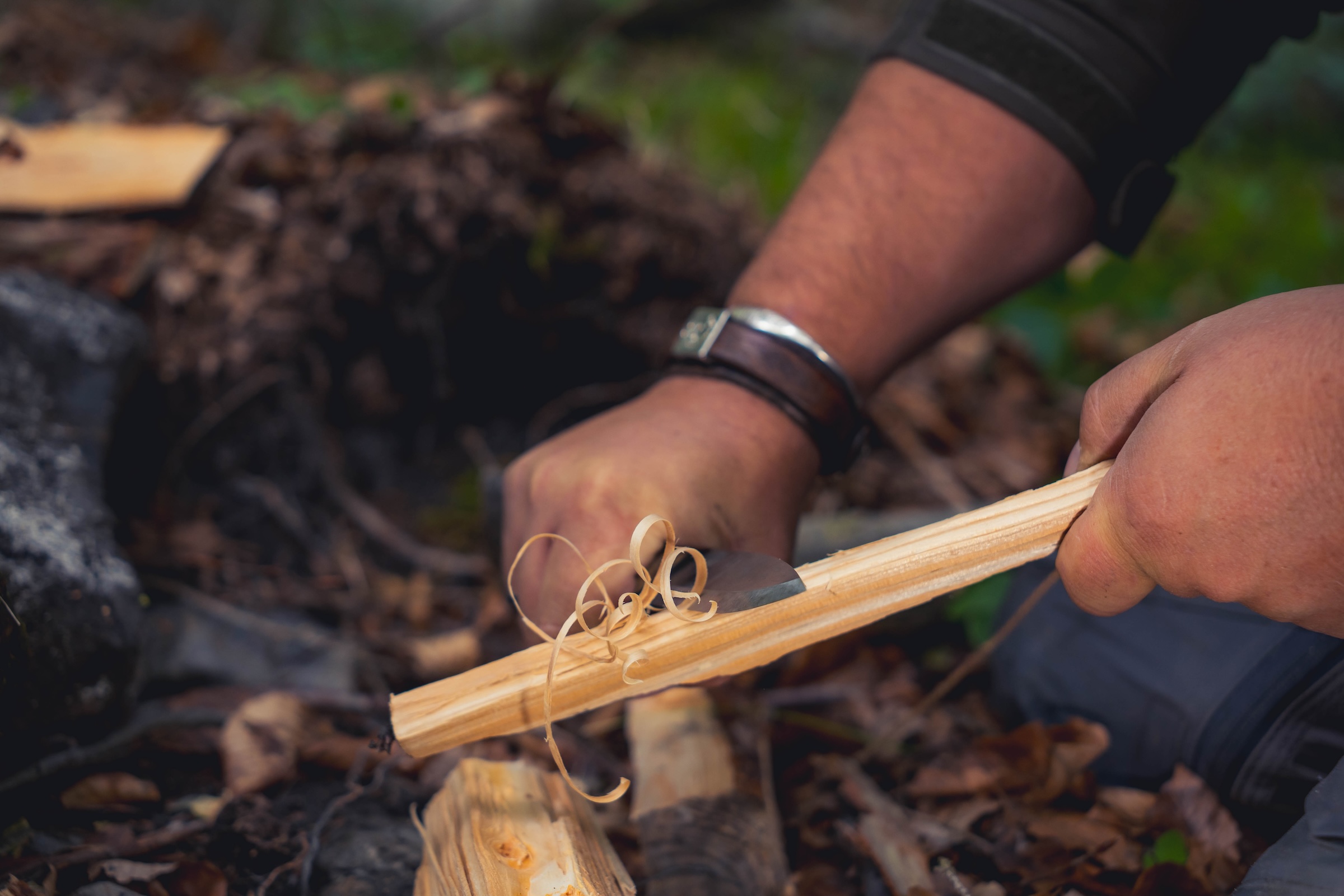
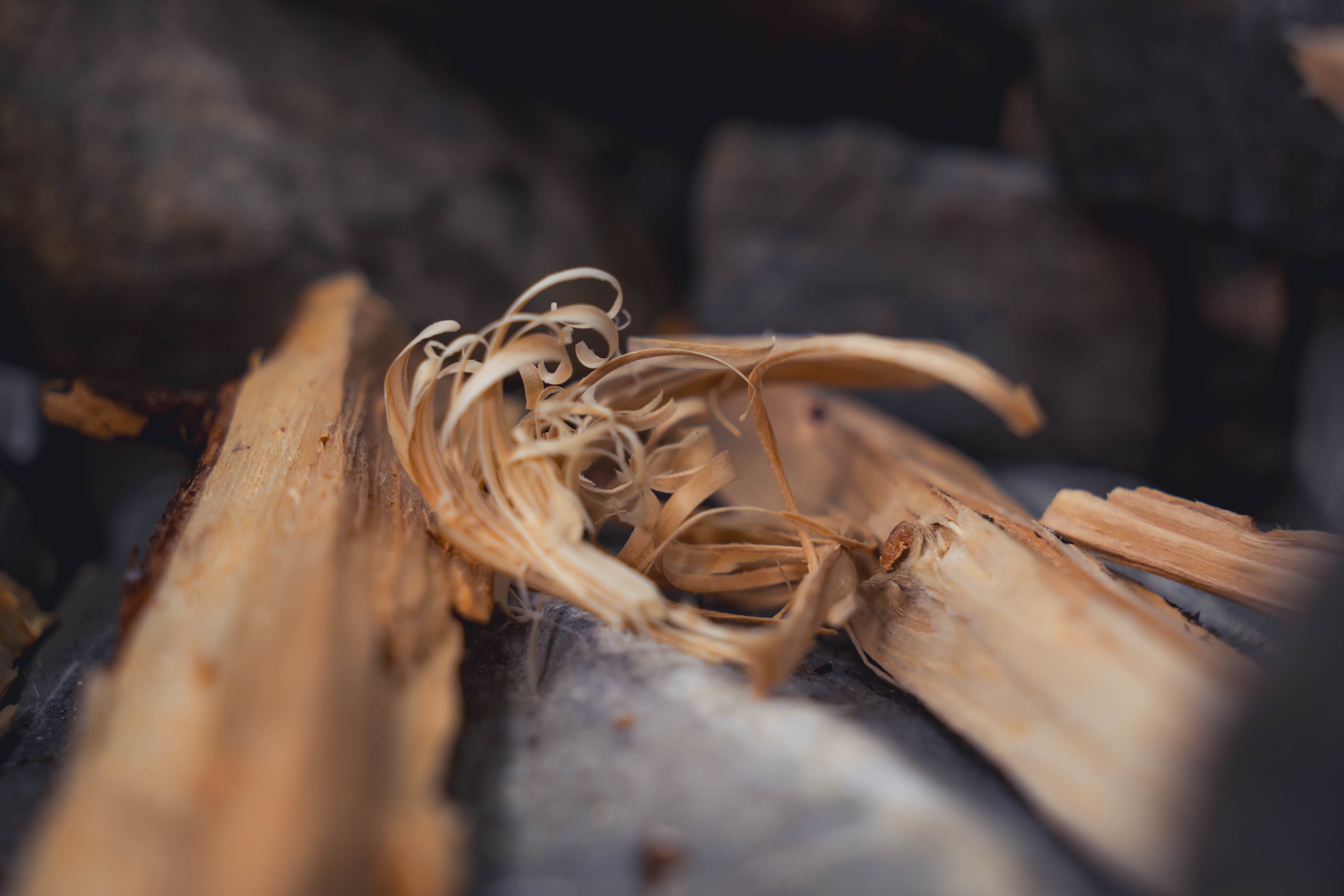
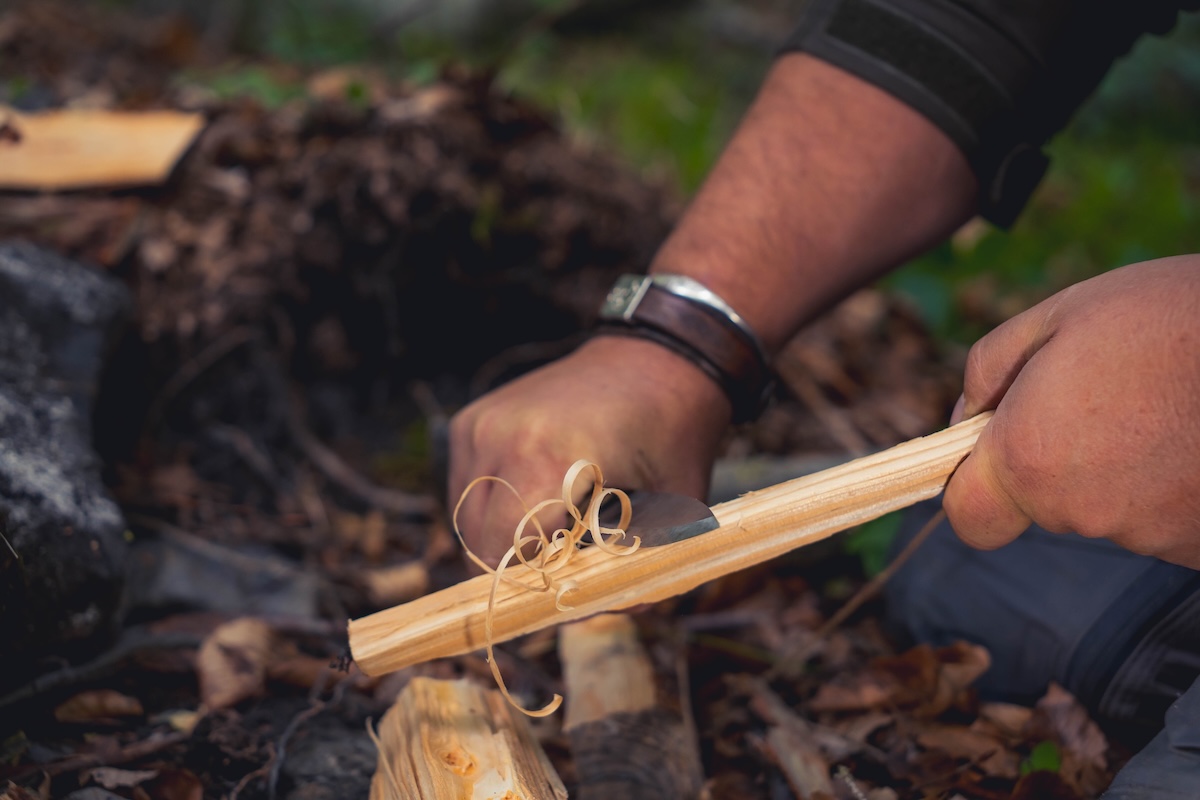
Then come the curls of wood. I use a sharp knife to pull fine shavings out of the dry wood. Some turn out nice and long, others break immediately. Neither is very important. The only important thing is that fine edges are created. Because that's where the fire starts. Many people believe that a fire fails because of the fire steel. In reality, it almost always fails earlier:
- The tinder is too coarse
- The wood is too thick
- The structure is too compact
- Or everything is lying directly on wet ground
A good fire is not created by a single trick. It is the result of many small, correct decisions.
How fire steel really works
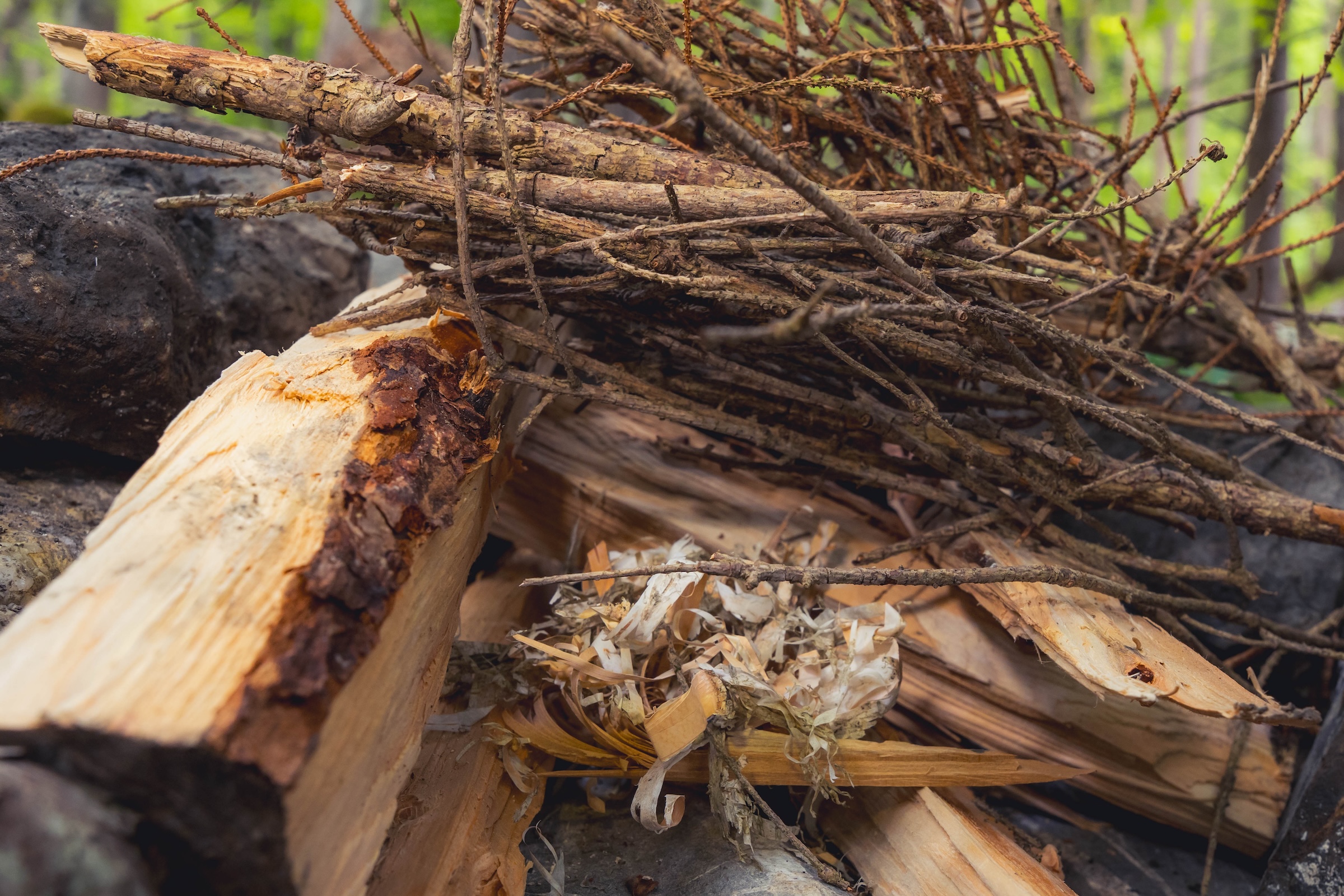
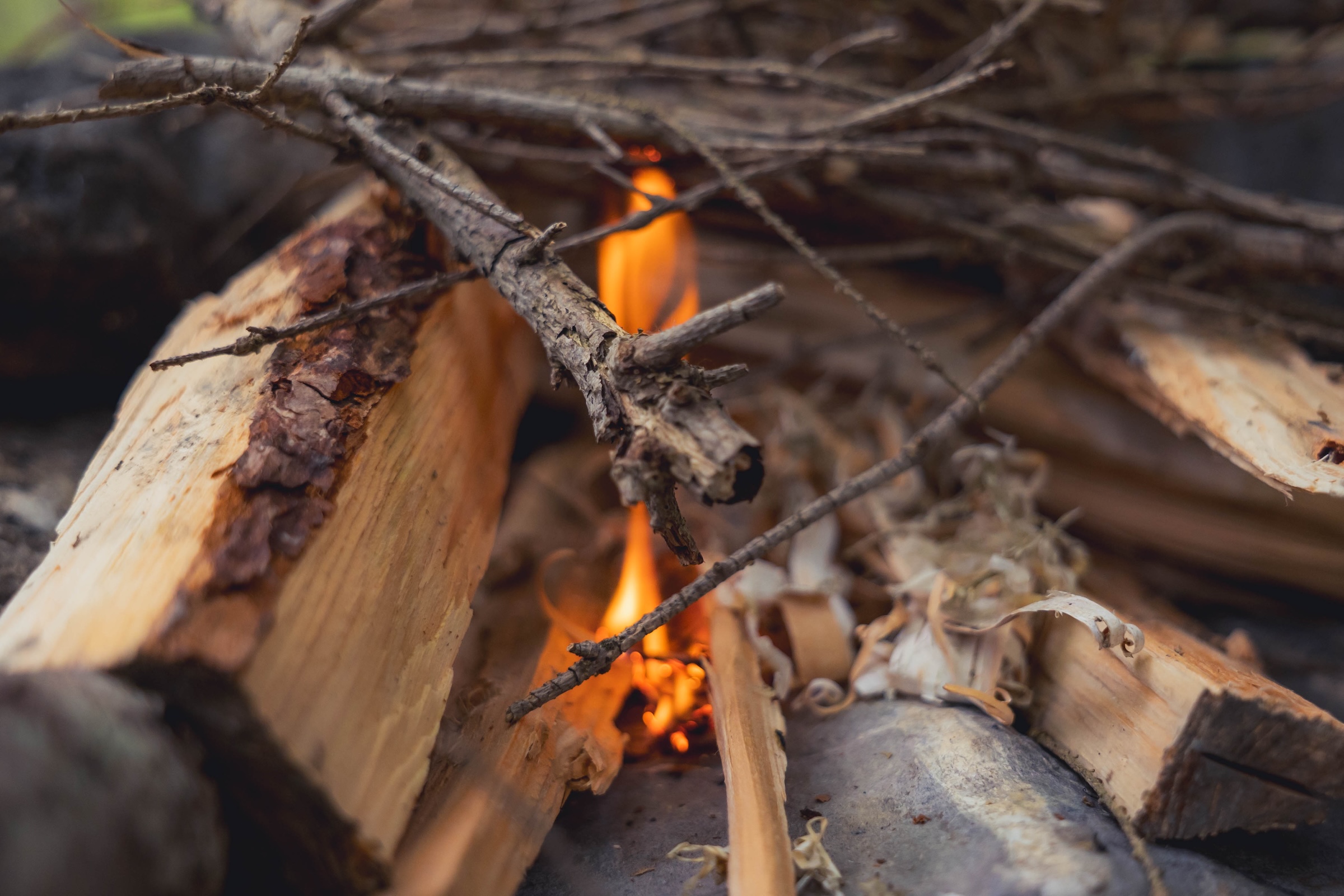
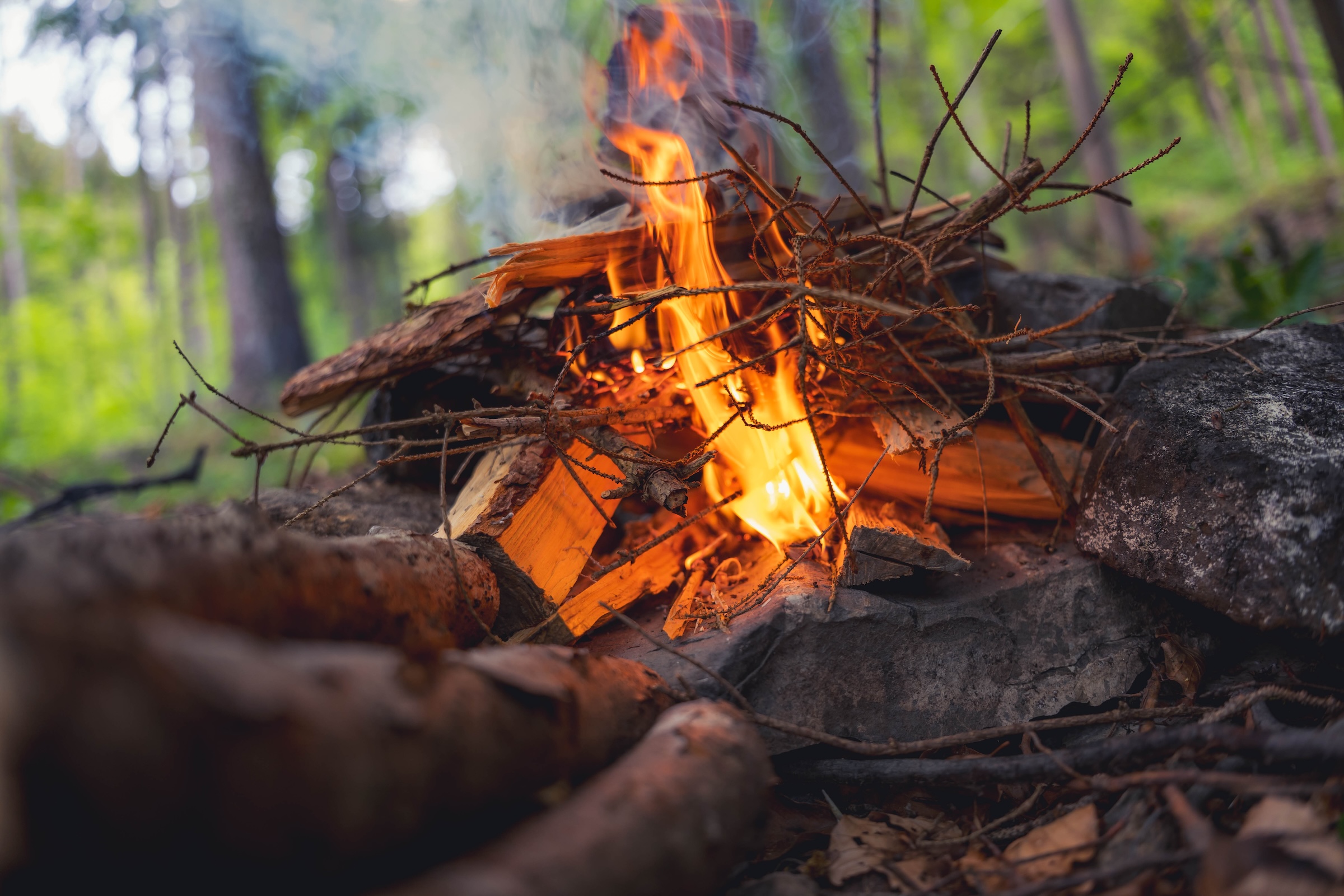
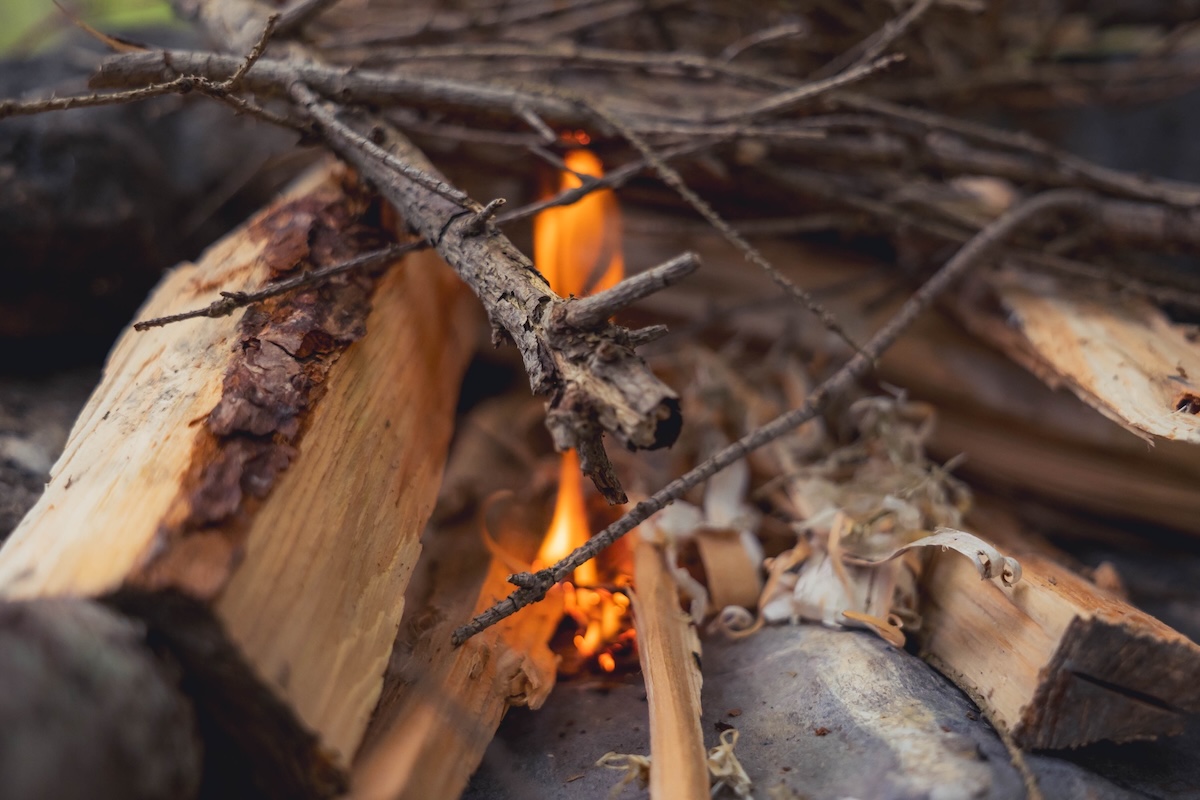
I show Freya that a fire is built almost like a small house. At the bottom is the dry bed of split wood. Tinder, wood curls and fine spits are placed on top. The thin twigs are placed on top. But something else is very important: we leave a small opening. "That's where the air comes in," I say. Because fire doesn't just need fuel. It needs space to breathe.
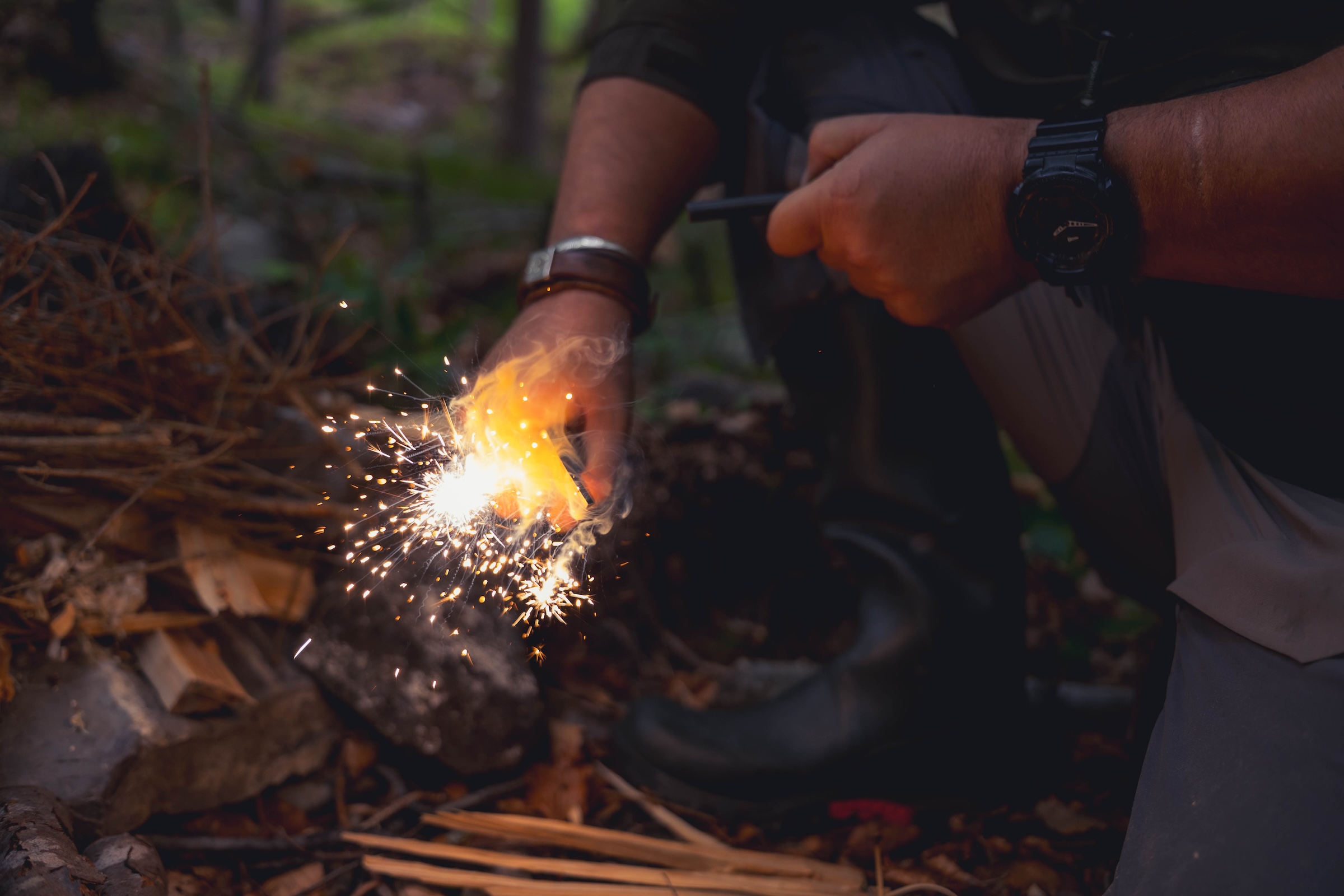
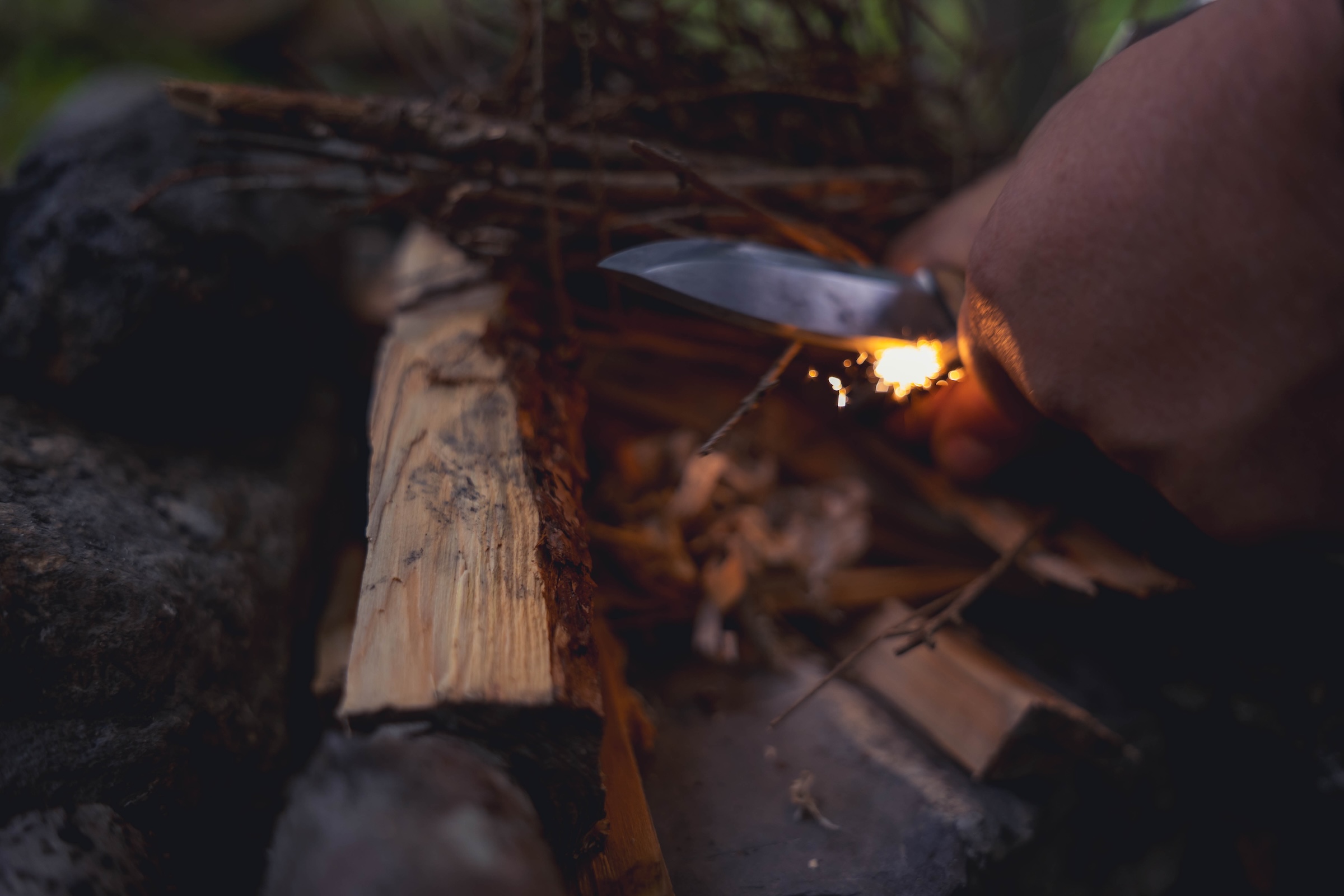
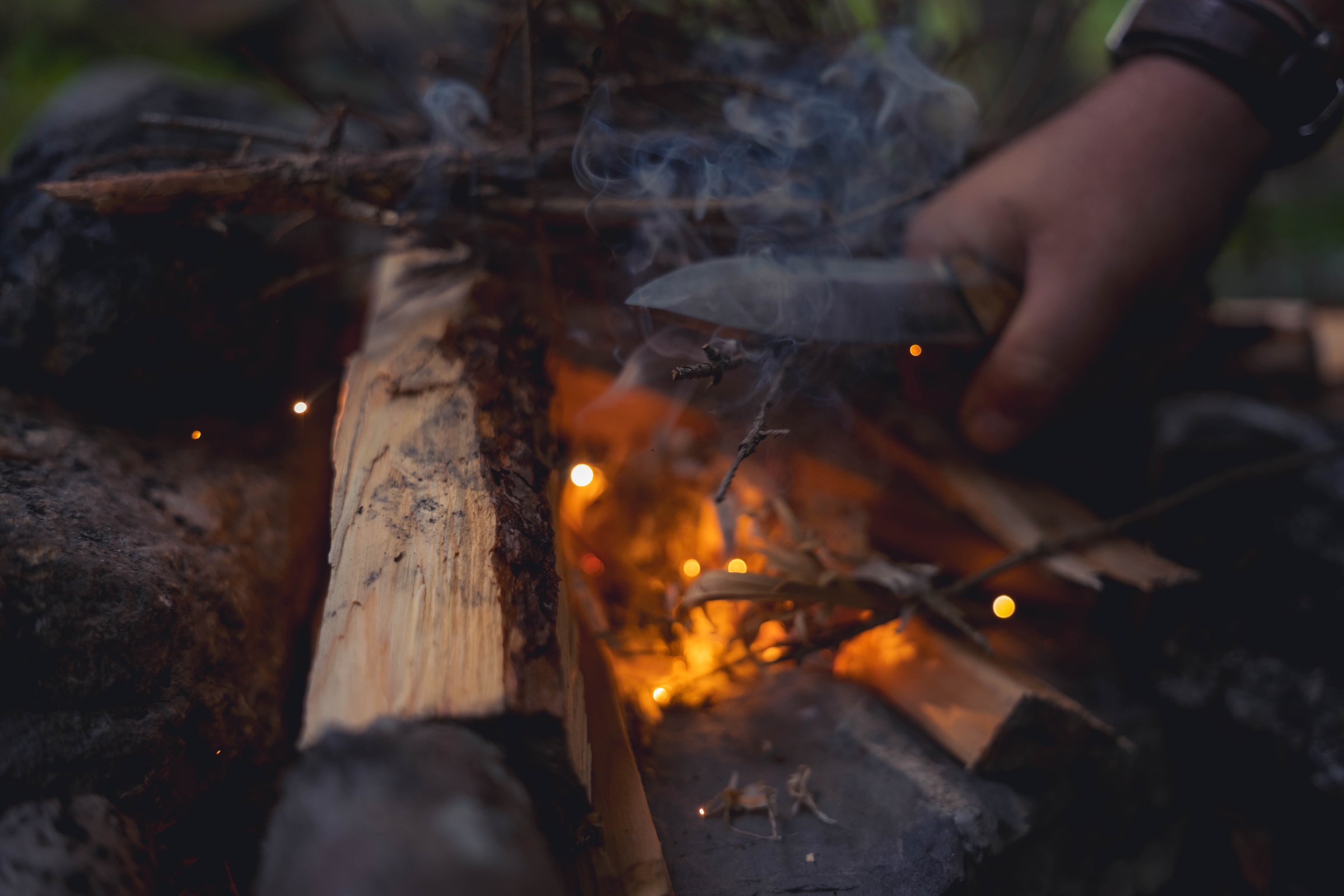
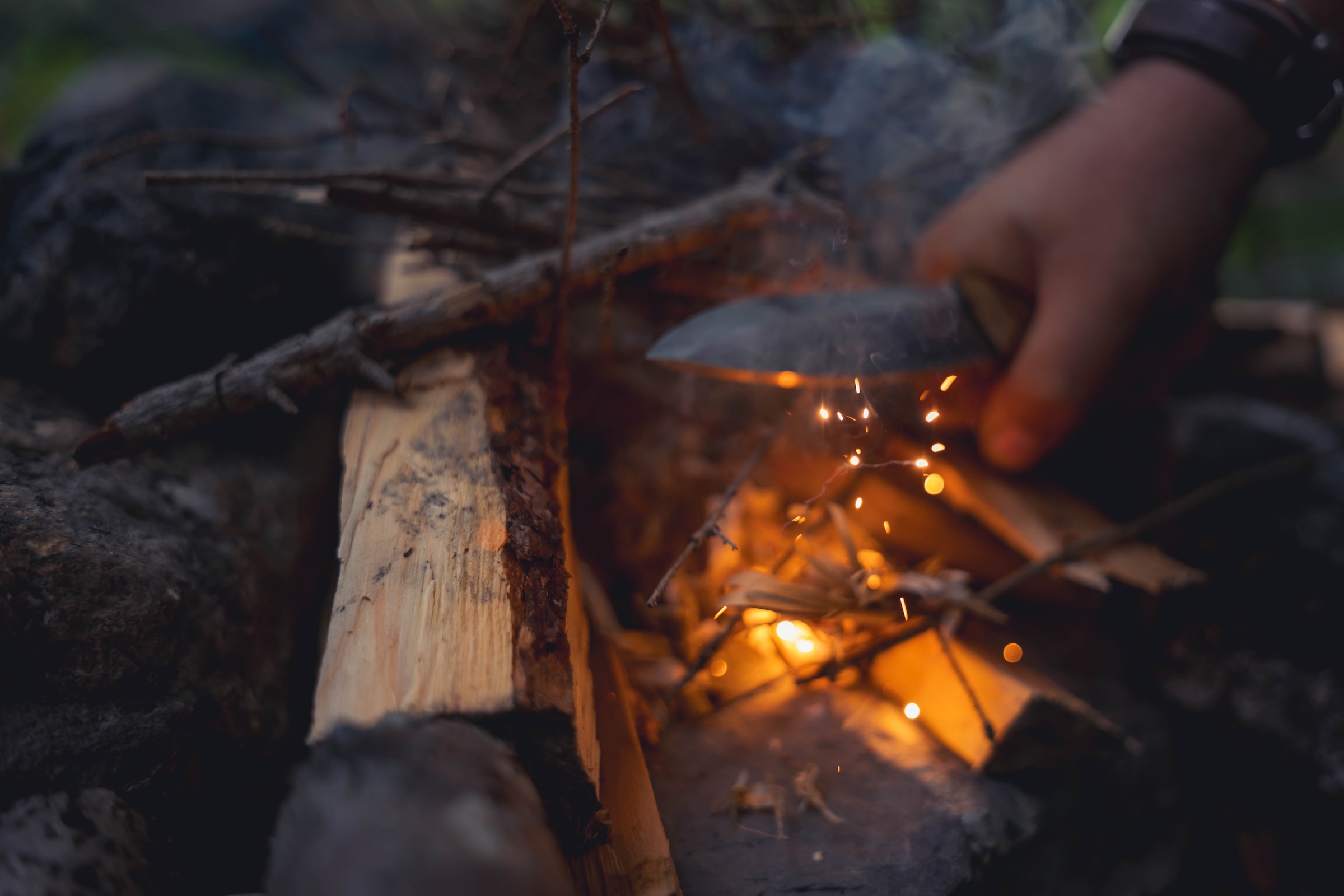
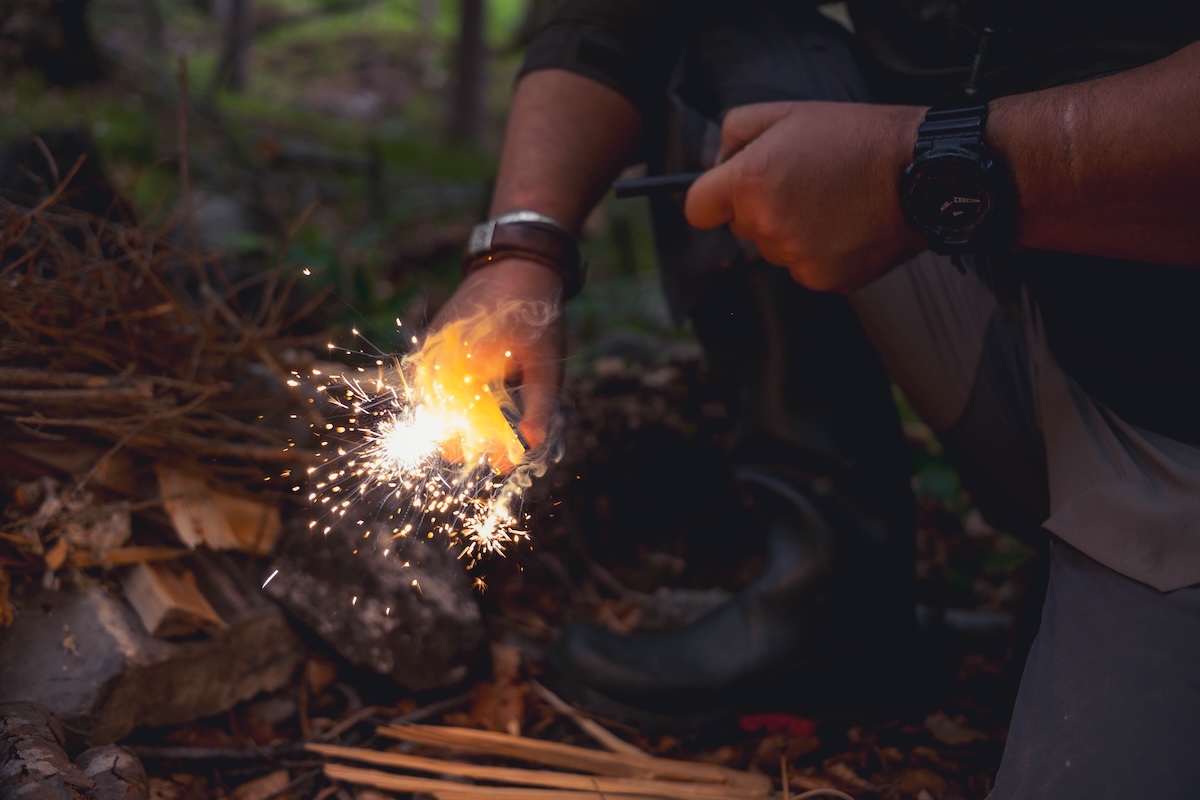
Now comes the moment Freya is always waiting for: the spark. I hold the knife steady and pull the firesteel backwards in a controlled manner. Not the other way round. It sounds trivial, but it makes a huge difference. If you scrape forward with the knife, you often destroy your own tinder nest. The wood curls slip, the birch bark flies away and the whole structure collapses. That's why the knife hand remains steady. The sparks go forwards. The structure remains stable. That is the real trick. Don't get hectic. Don't scratch wildly. Stay calm. Work cleanly.
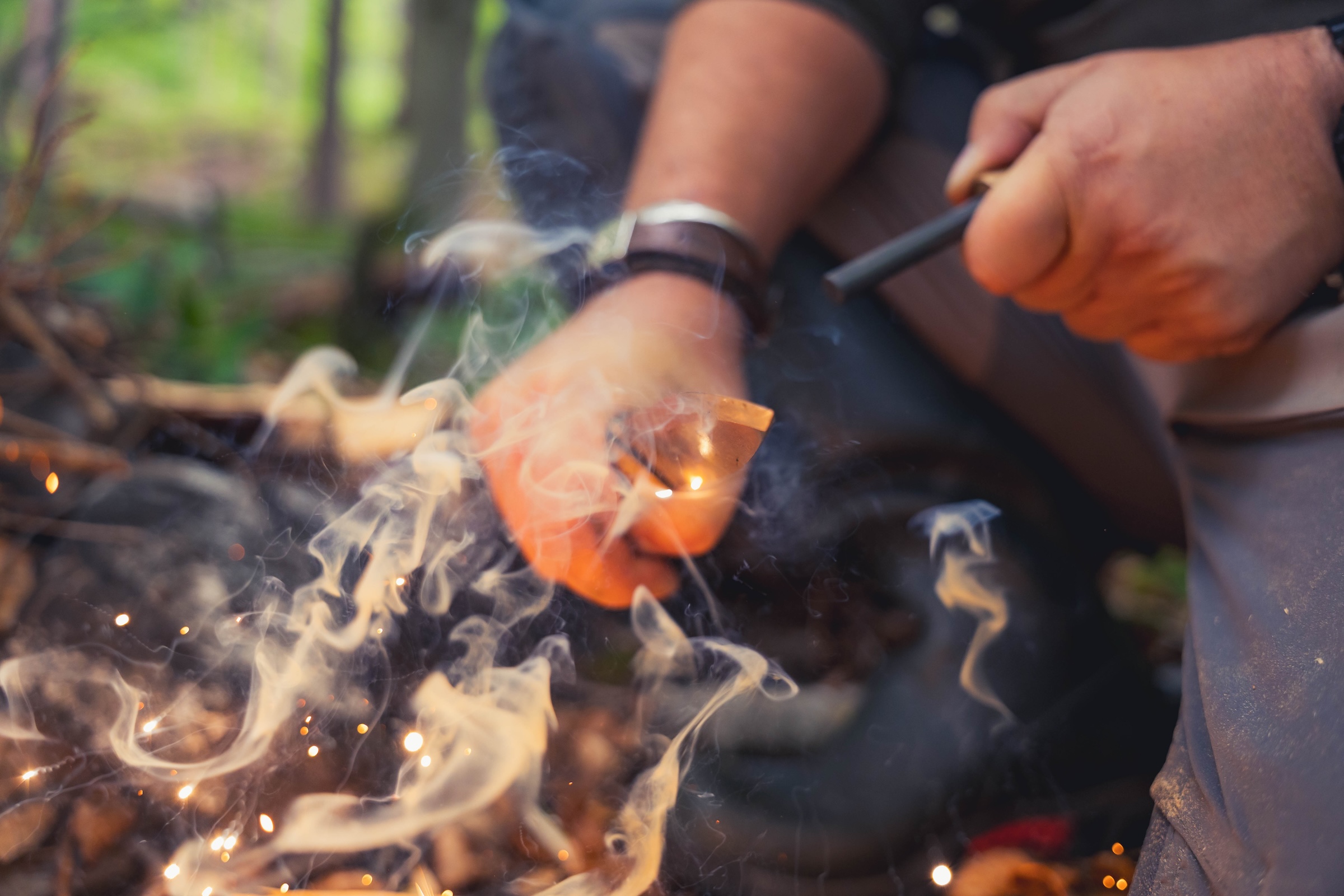
On the second attempt, a spark sticks in the birch bark. A thin thread of smoke rises. Freya immediately looks at me. "Don't blow," I say quietly. The embers slowly eat their way through the bark. Then the first small flame appears. Freya carefully adds a few fine spits. A few minutes later, the pot of water hangs over the fire. The wood is still dripping. But the fire is burning.
Why fire is more than just warmth
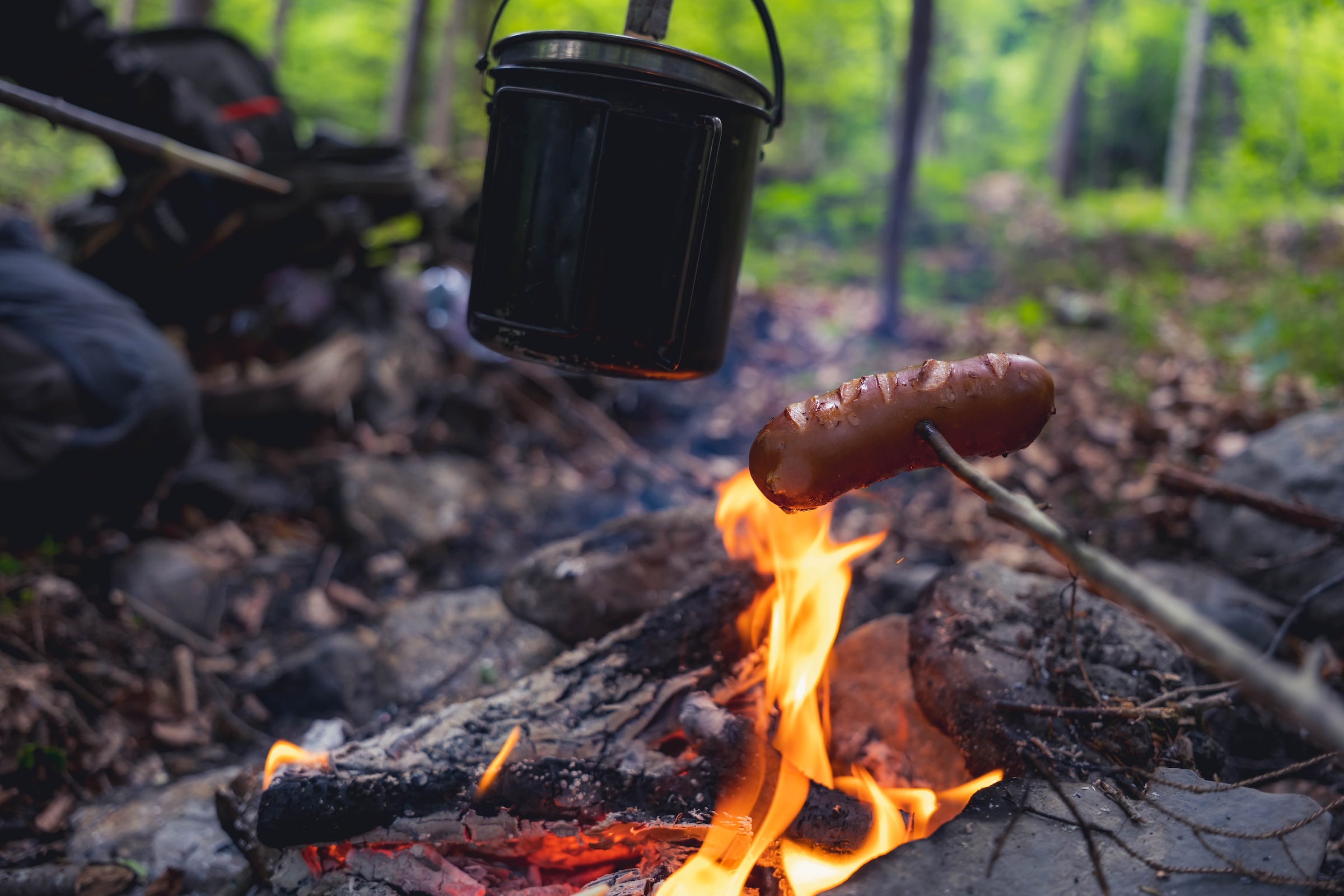
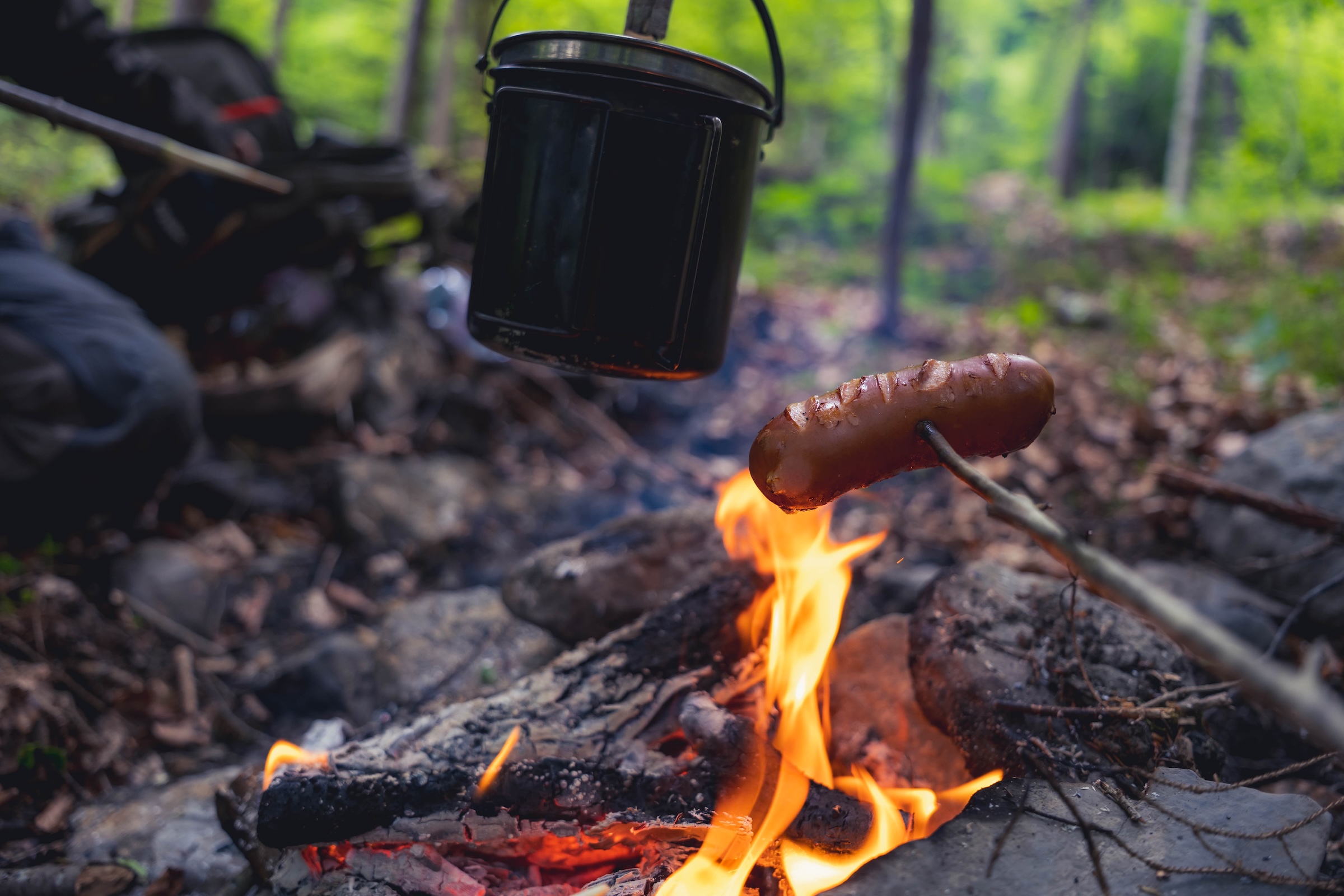
Once a fire is burning cleanly, a place changes. A few stones, some smoke and a small circle of flames suddenly become a camp. A place where you stay. We hang the pot of water over the flames, roast a few sausages and just sit there. The smoke drifts slowly between the spruce trees, water still drips from the branches somewhere.
This might be an adventure for Freya.
For me, it's something else.
People have been sitting around fires for thousands of years. To eat. To tell stories. To warm up. To come together. Fire was never just practical. Fire has always been a community. Maybe that's why it immediately feels familiar. Where a fire burns, a home is created for a moment. Of course, only where fire is permitted and safe. Because fire doesn't just mean warmth. Fire means responsibility.
How to extinguish a fire properly
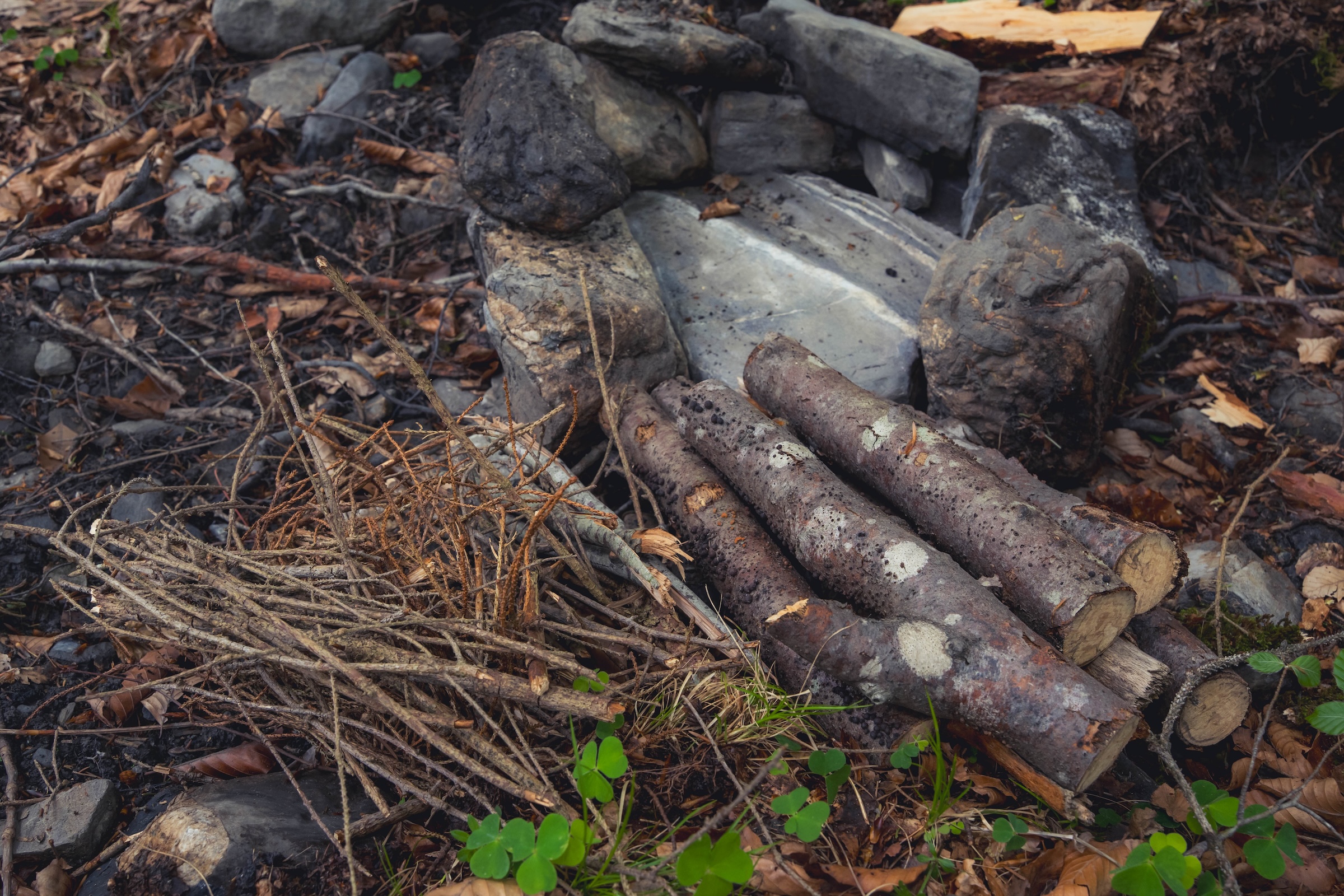
Anyone who lights a fire takes responsibility right down to the last spark. Preparing the fireplace is just as important as lighting it yourself. A fire never belongs on ground that can burn itself. If the soil is loose, dry and full of pine needles, embers can spread unnoticed and flare up again later. Sandy, loamy or stony ground and a clean, clear fire pit are better. I always give the fire clear boundaries: free earth, stones and enough distance from dry material. It should know where it is allowed to burn - and where not.
Moreover, a fire is not out just because there are no more visible flames. Embers can live on for hours - especially between roots or in dry soil. That's why I never extinguish a fire half-heartedly. The embers are pushed together, doused completely with water and then checked. The fire is only really out when you can touch the coals with your bare hand. Then we spread the cold remains and leave the place as we found it. Because if you want to make a fire, you should not only know how to light it. But also how to make it disappear again without a trace.
Freya's Bushcraft - Field Notes
Freya sits in front of the fire and stirs her cocoa. "Actually, it wasn't the spark at all," she says at one point. I look into the embers. Most fires fail right there. Not because of the fire steel. But at the start. The tinder is too coarse. The fire starts too big. The sparks don't land where they are needed.
Freya looks into the flames again. "Then the forest isn't wet at all." I add a thin twig. "Just the surface. It often gets interesting underneath - you just have to look closer."
Freya learns things outside that used to be taken for granted: Making a fire, building shelter, finding water. I try to categorize what lies behind this - from experience and from the perspective of an archaeologist.
About Roman and Freya
Roman is an archaeologist and has been outdoors since childhood. Many of the skills that are now known as bushcraft also come to him in his professional environment - techniques that people used to live in nature for thousands of years.
He regularly spends time in the forest with his daughter Freya. This is not about extremes or staging, but about practical skills, tranquillity and an understanding of nature that used to be taken for granted - and is often rediscovered today.