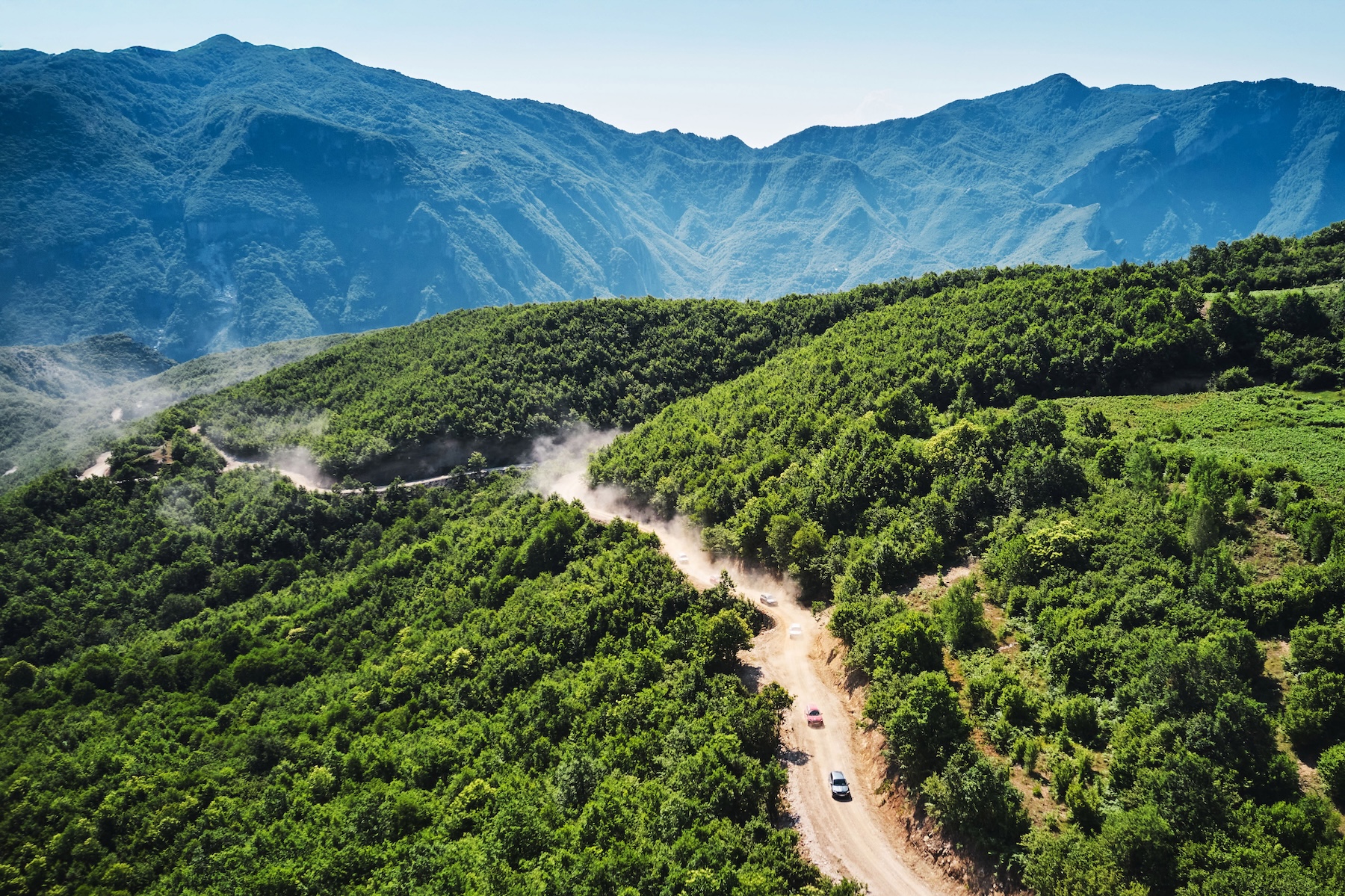
Lets explore Albania: With Škoda through Albania's rough heart
For many, Albania is still a blind spot on the map - but those who set out to discover a country full of contrasts: wild and warm, archaic and on the move. For three days, we traveled through the northern Albanian Alps in a Škoda Octavia 4x4 and Karoq 4x4 - over gravel roads, through quiet villages and into the heart of a culture that doesn't want to shine, but to touch.
Albania is like a teenager. Still searching for himself. That's how Leo, owner, chef and heart of Villa Mikpritja in Theth, describes it one evening around the campfire - and you could hardly have summed up this country better. Untamed, proud, changing - and full of stories.
Or as our guide Gjergj Skrame puts it: "Albania? Blessed - not cursed."
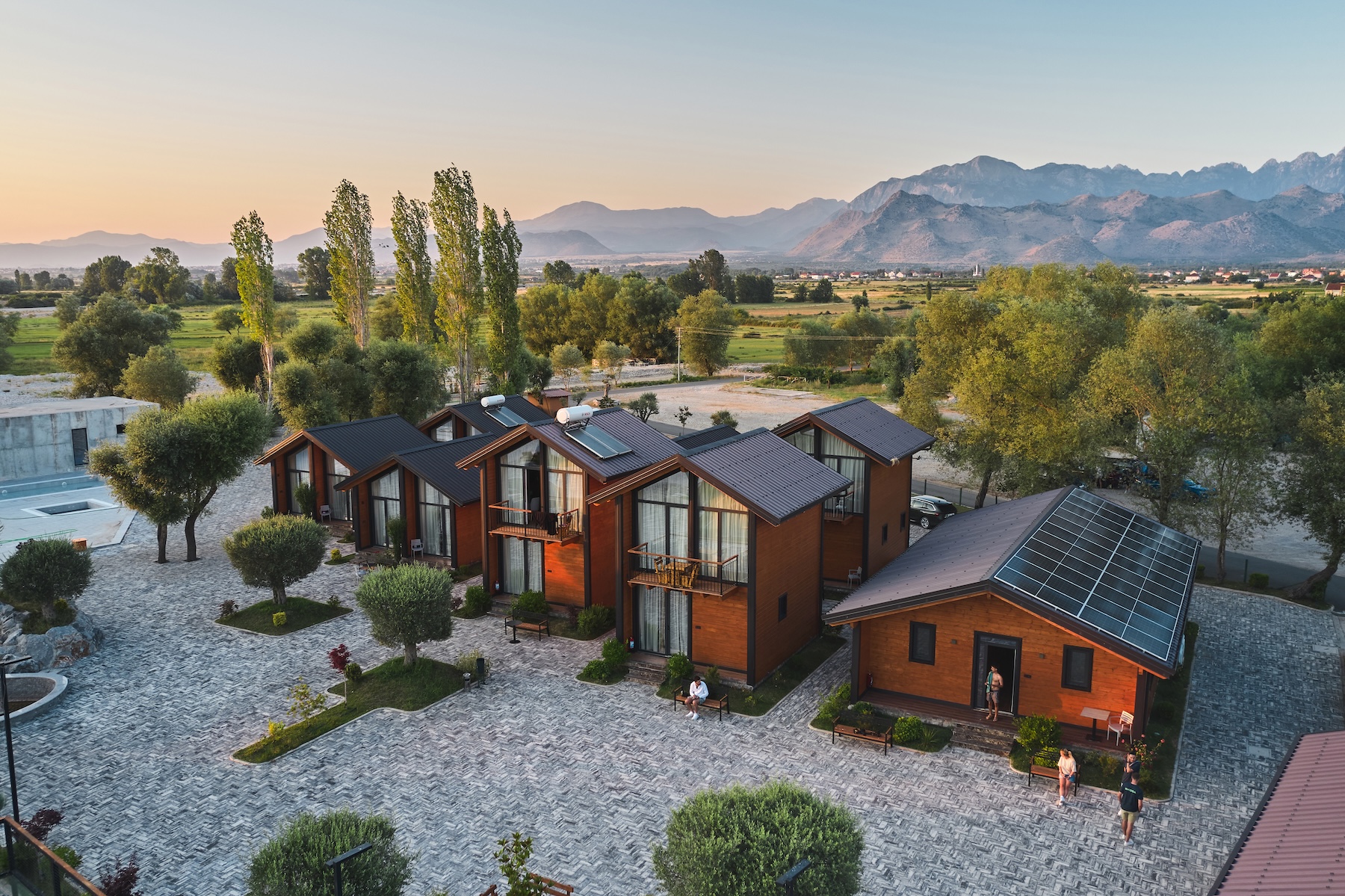
Leo runs the guesthouse together with his two brothers. One helps with the service, the other is actually a detective - "but he makes sure everything runs smoothly," says Leo with a smile and in flawless English, which he has taught himself, movie by movie. He has never really been away from the valley, apart from a few trips - and doesn't want to. "Why should I?" he asks. "I love this place." Especially in winter, when the passes are closed, the tourists gone, and only the silence remains. Then Theth once again belongs entirely to those who live here - and love what they have.
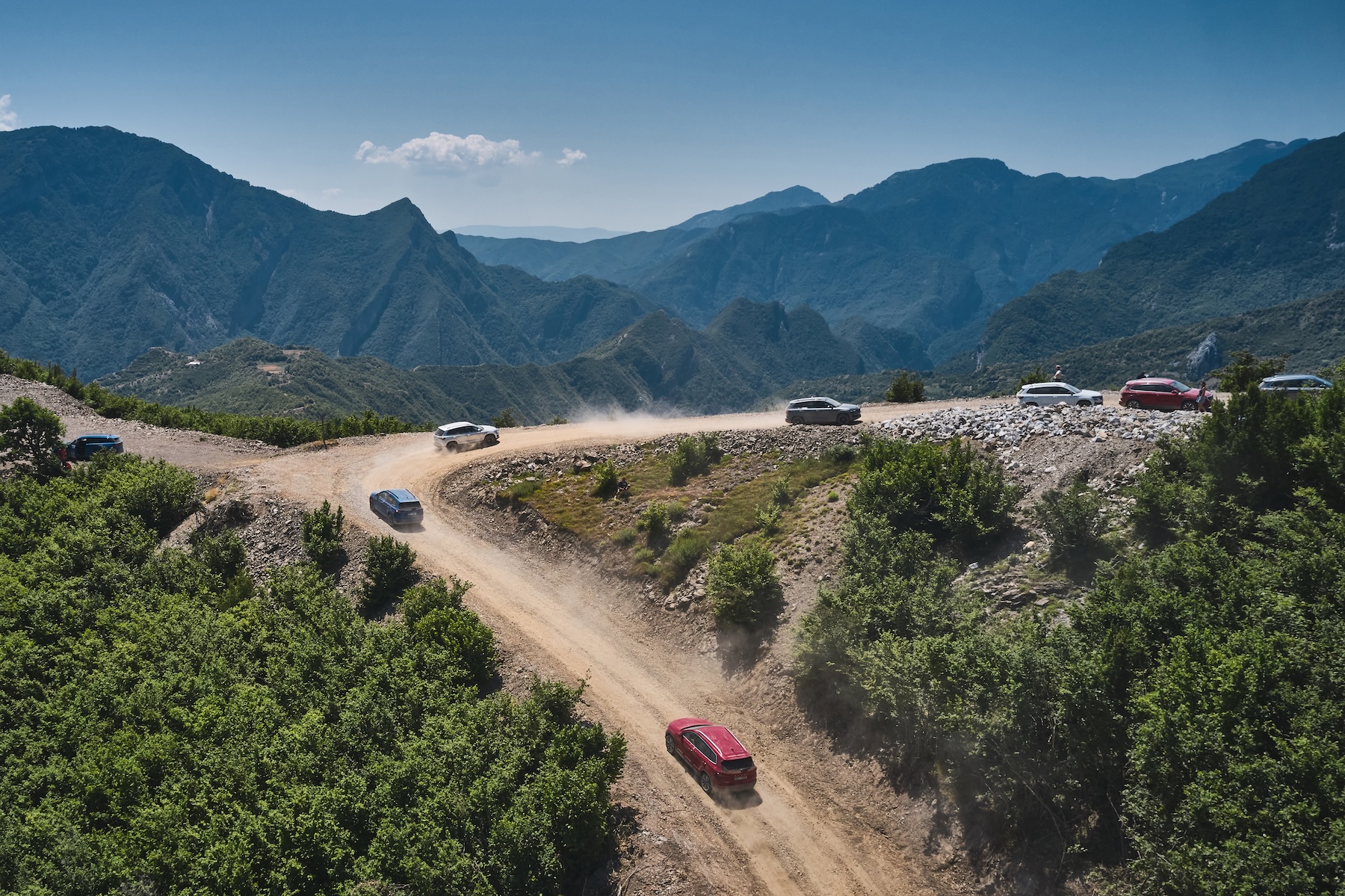
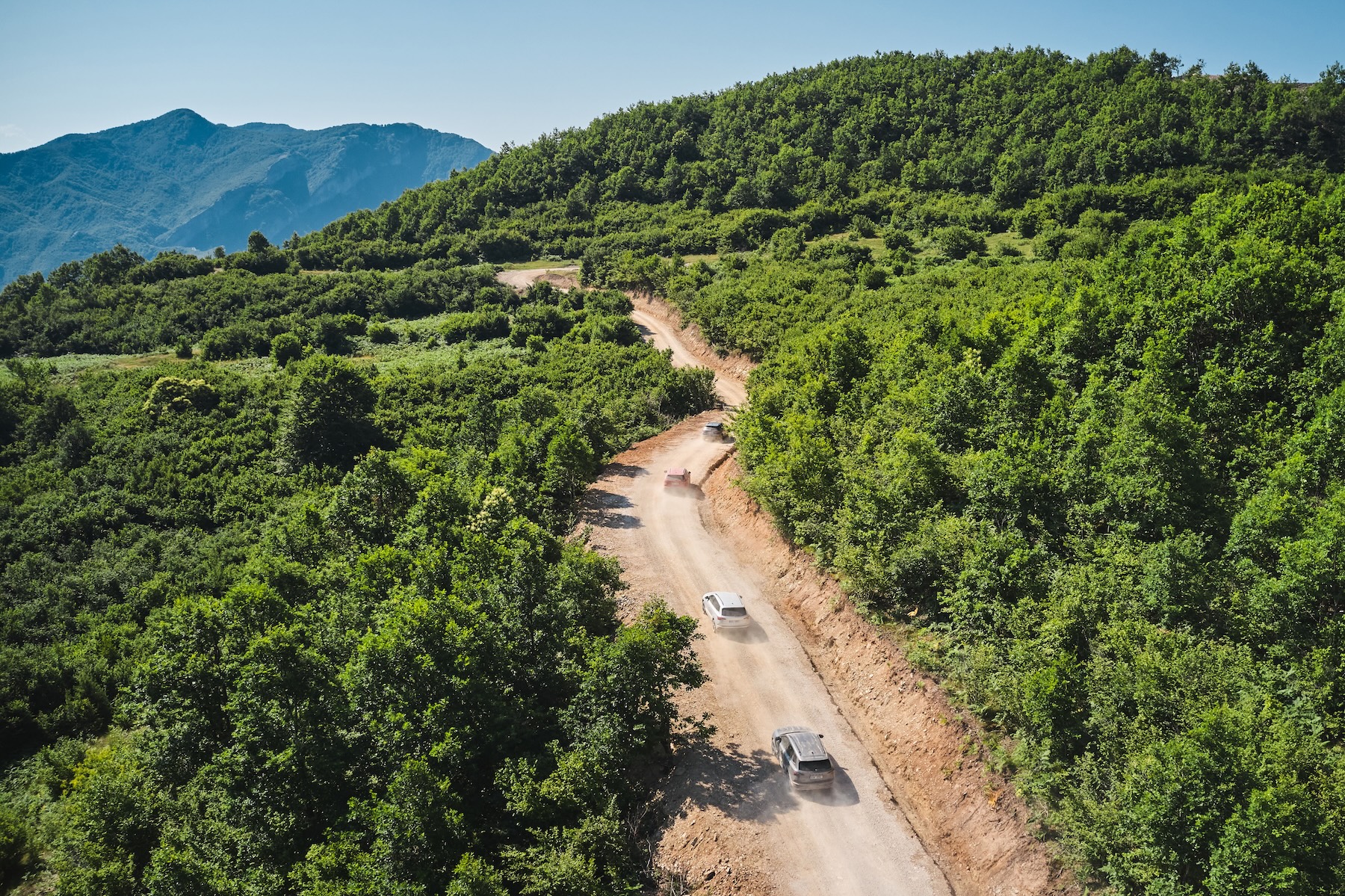
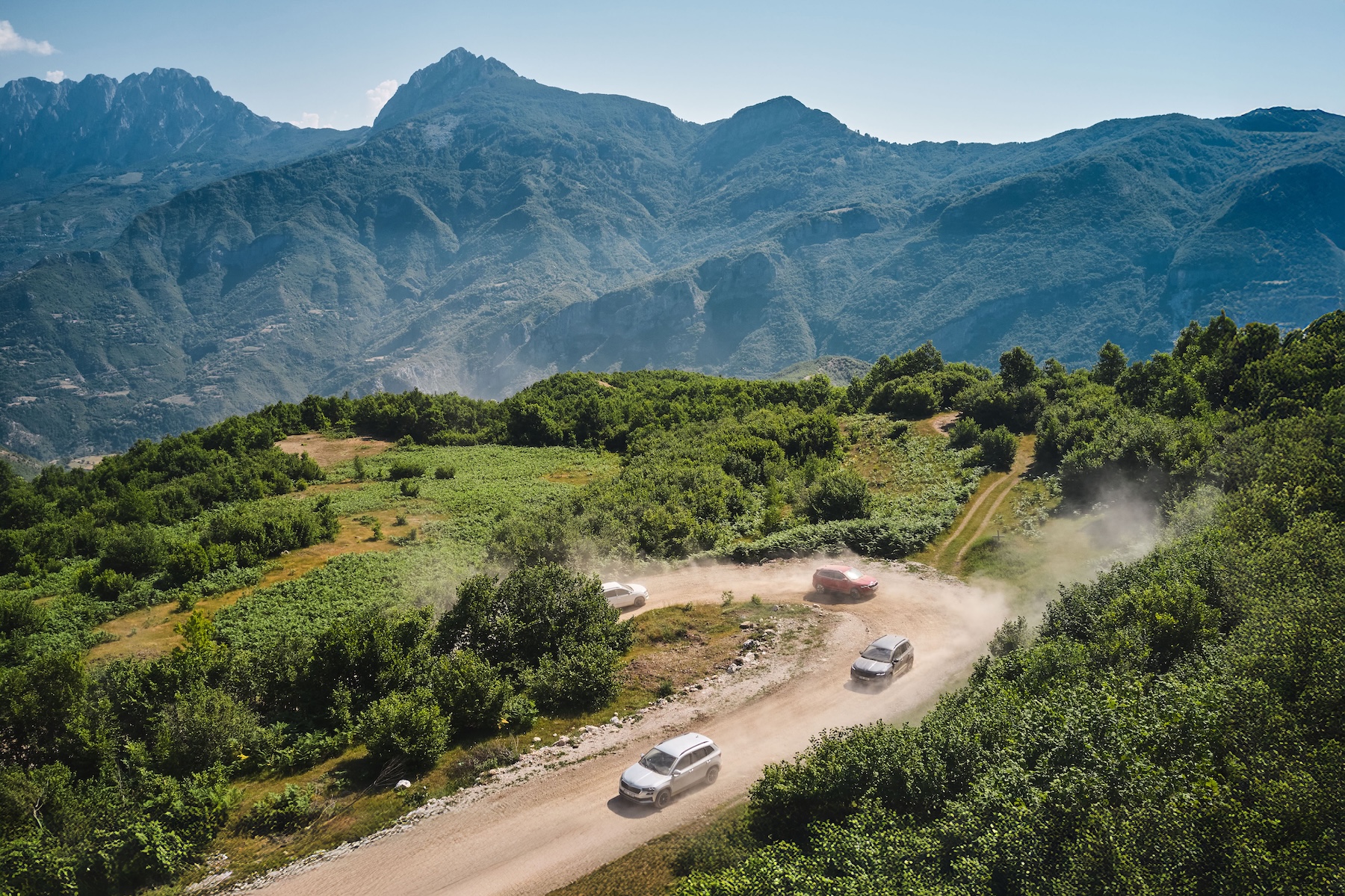
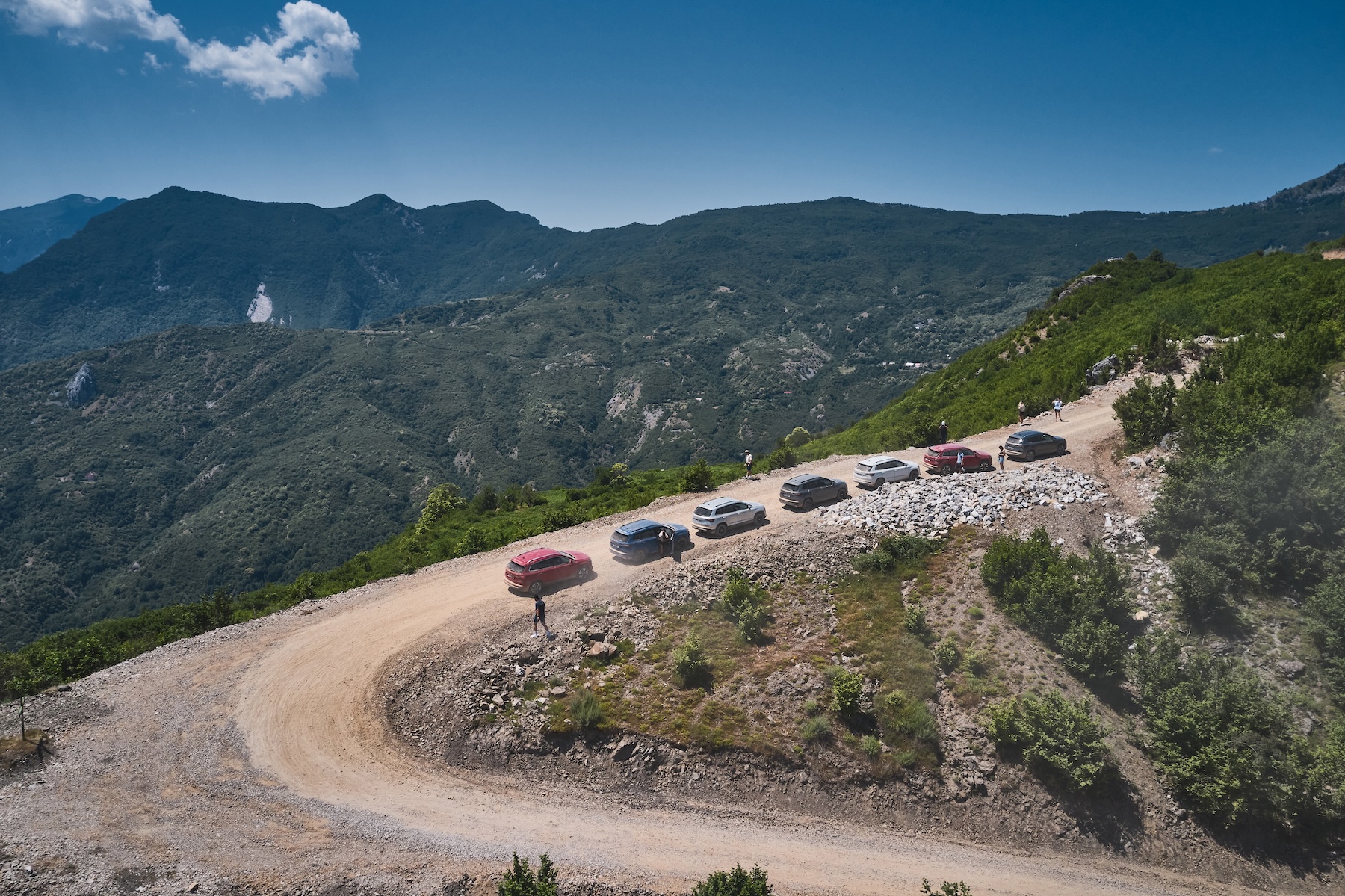
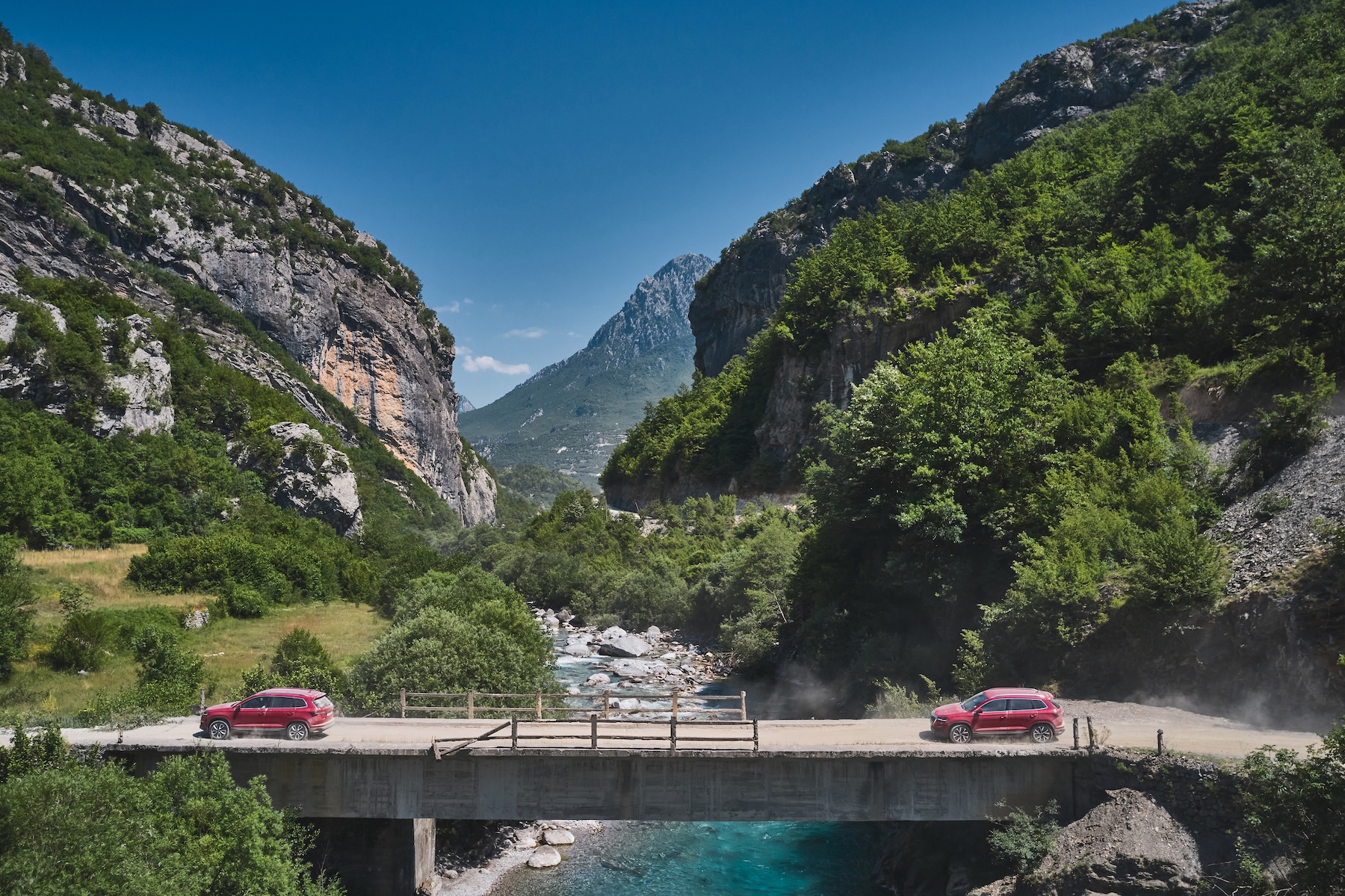
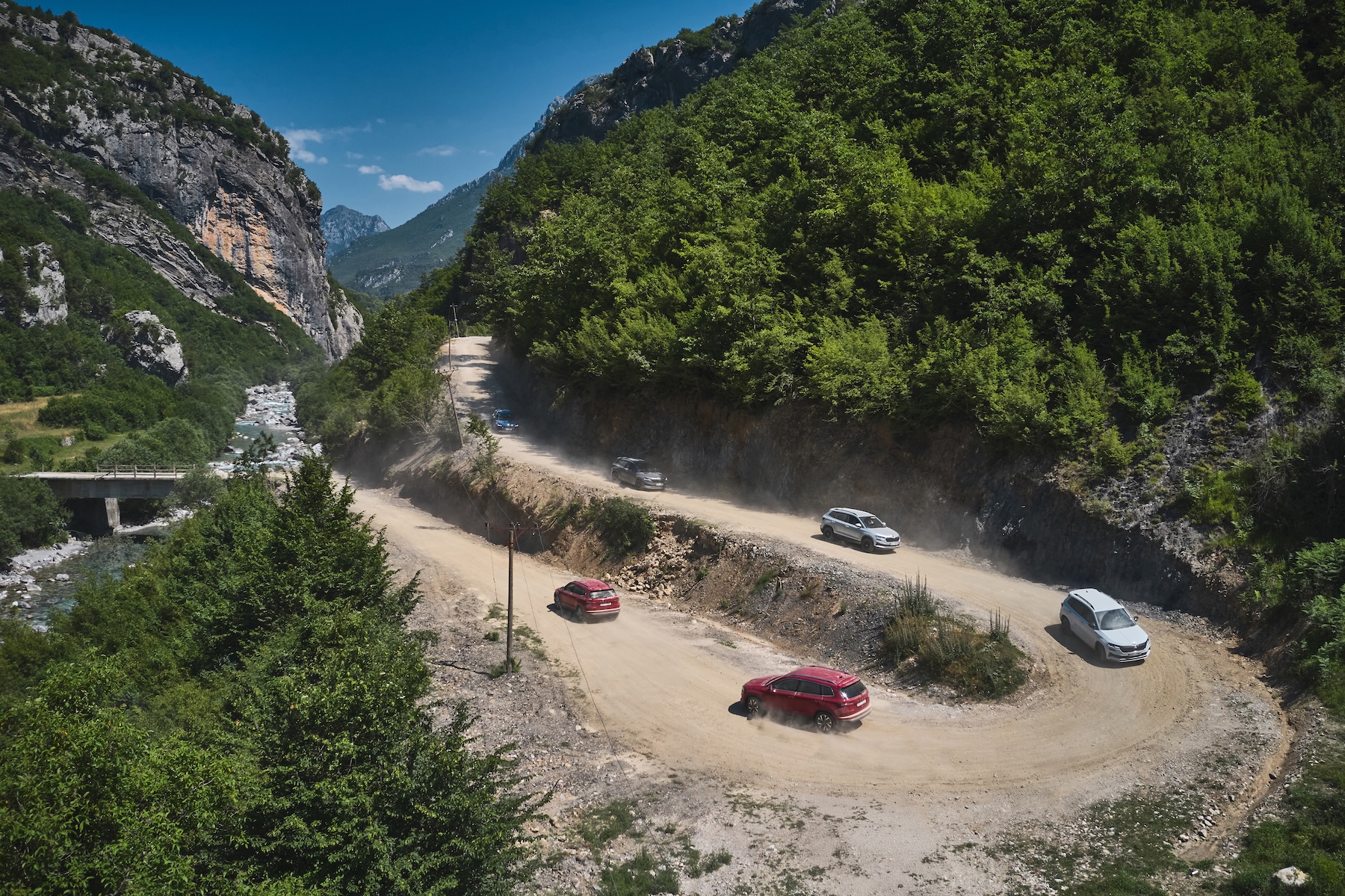
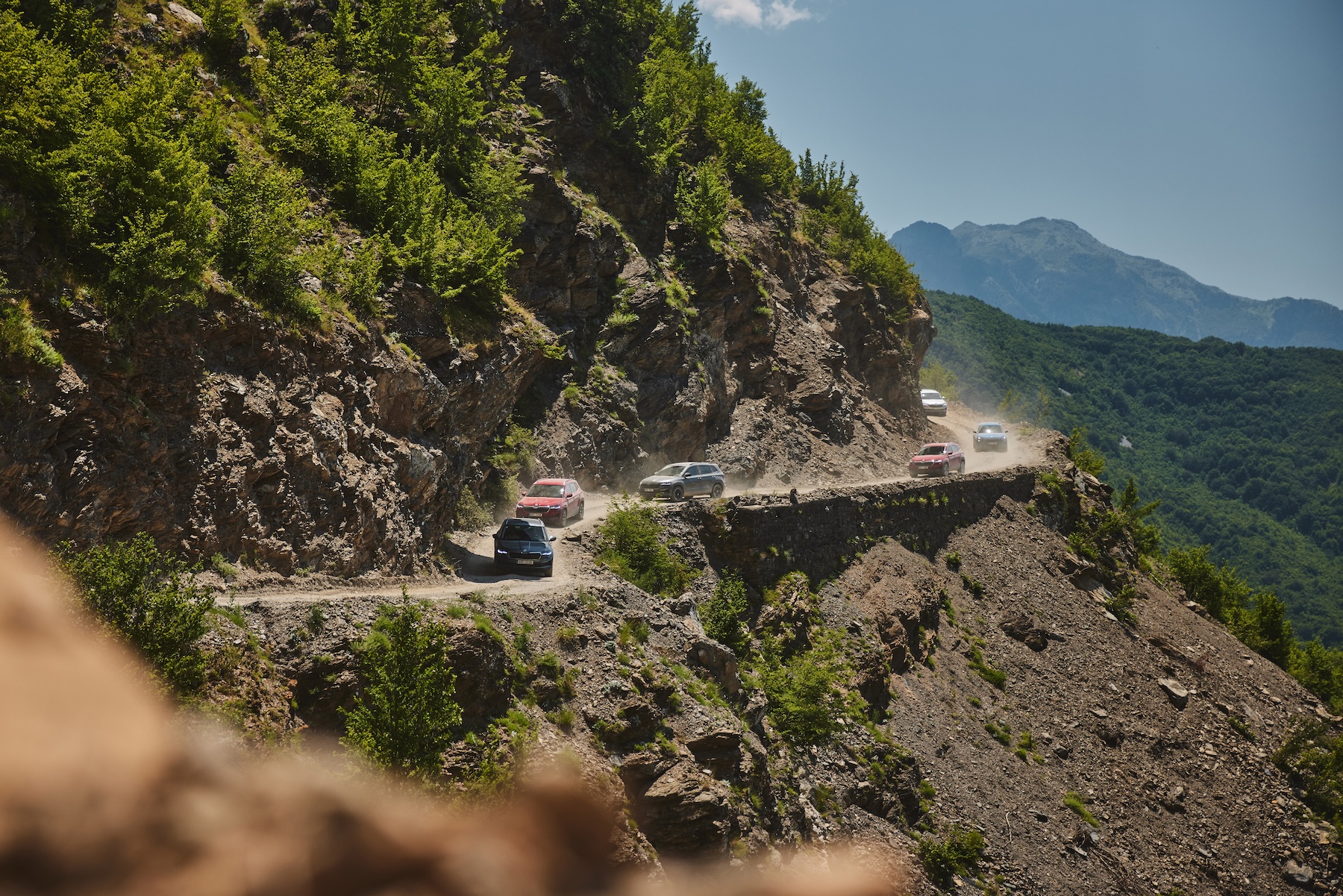
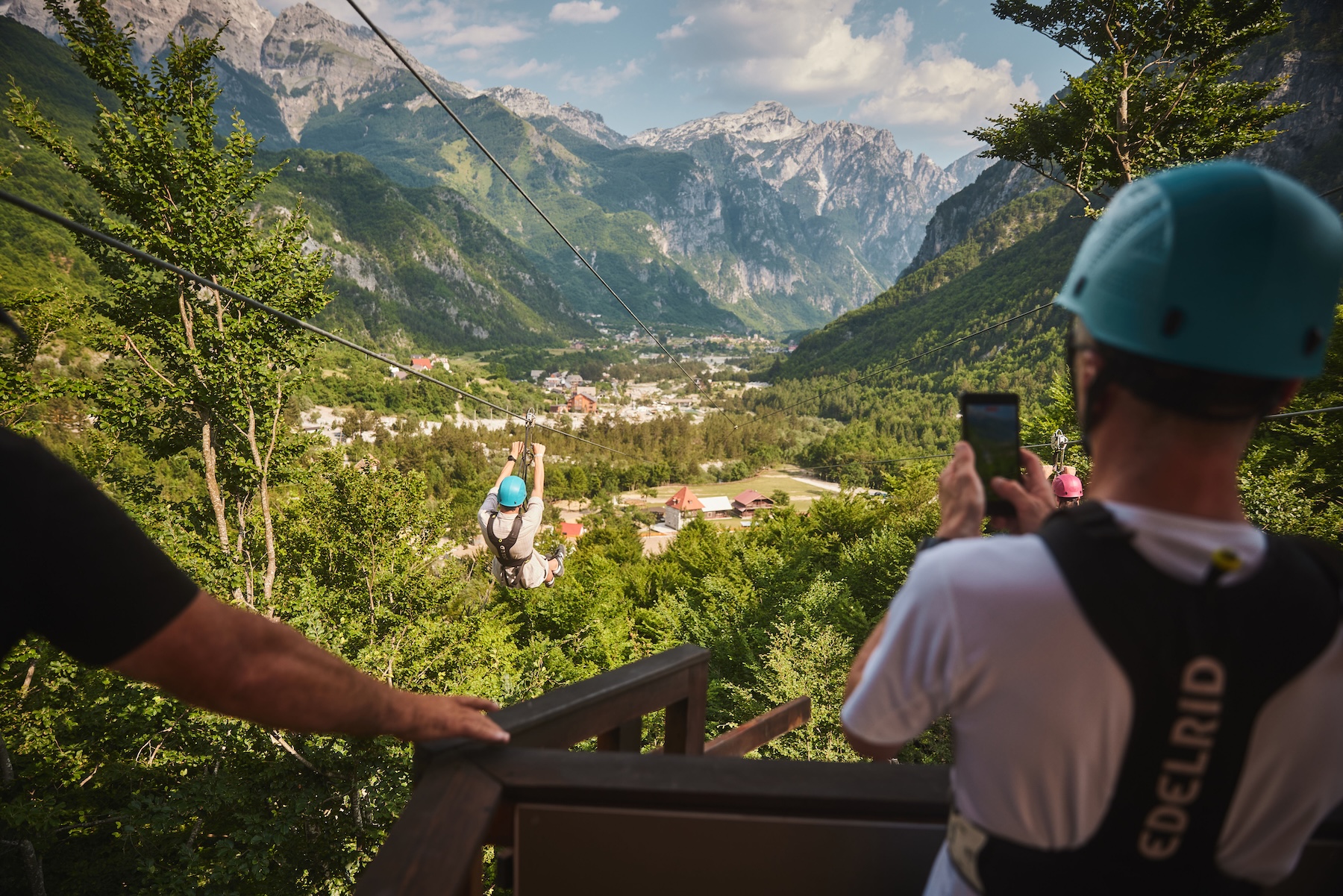
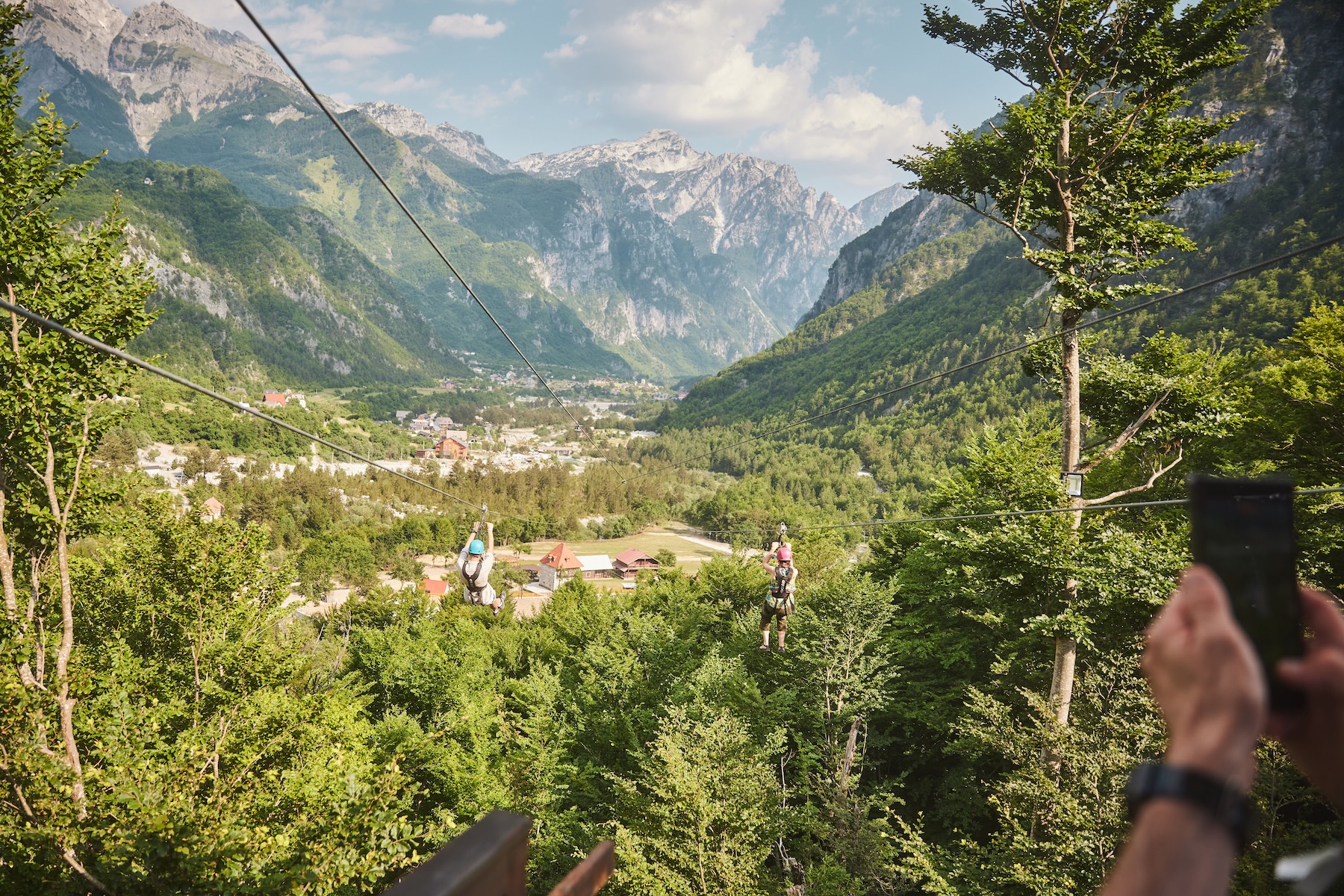
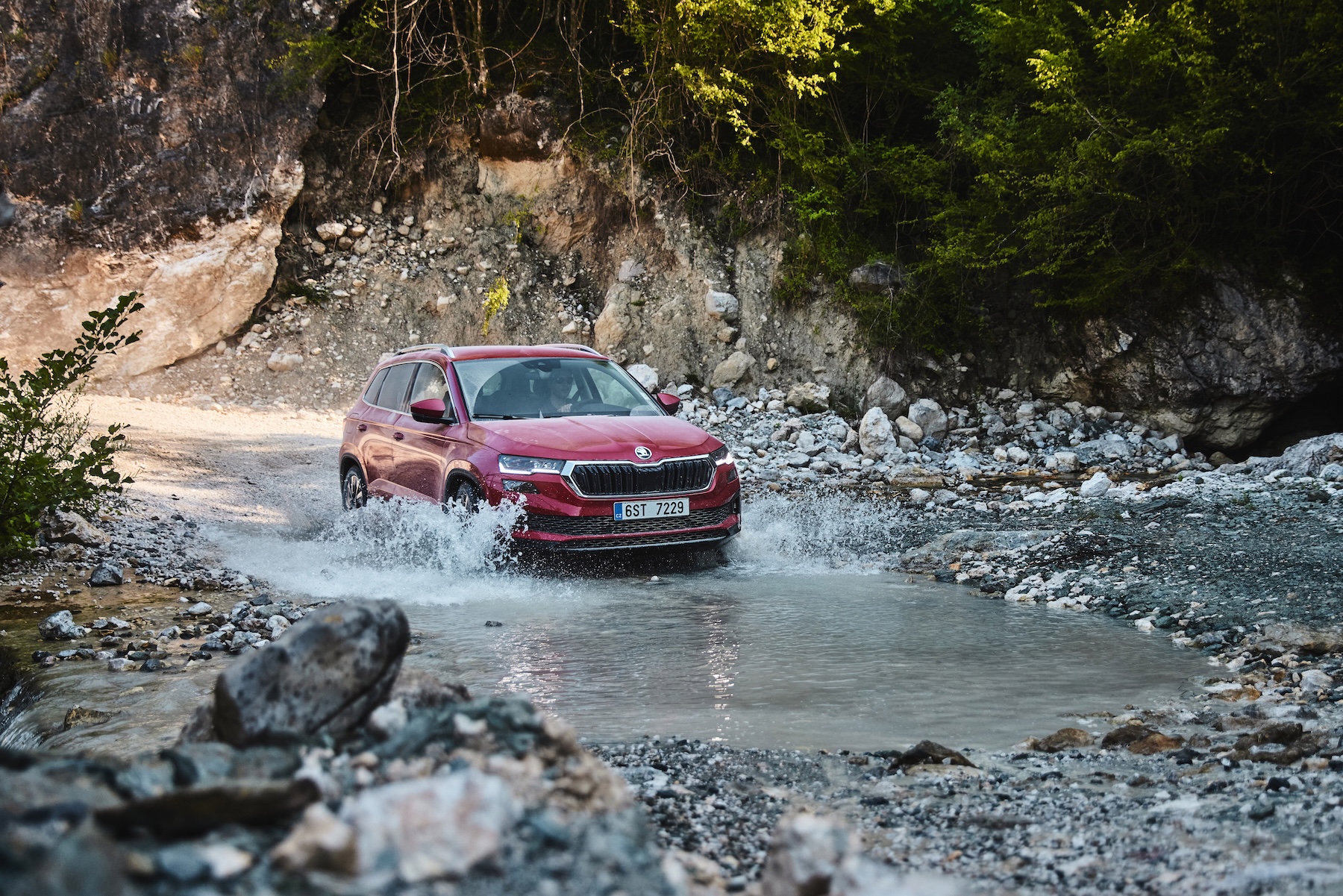
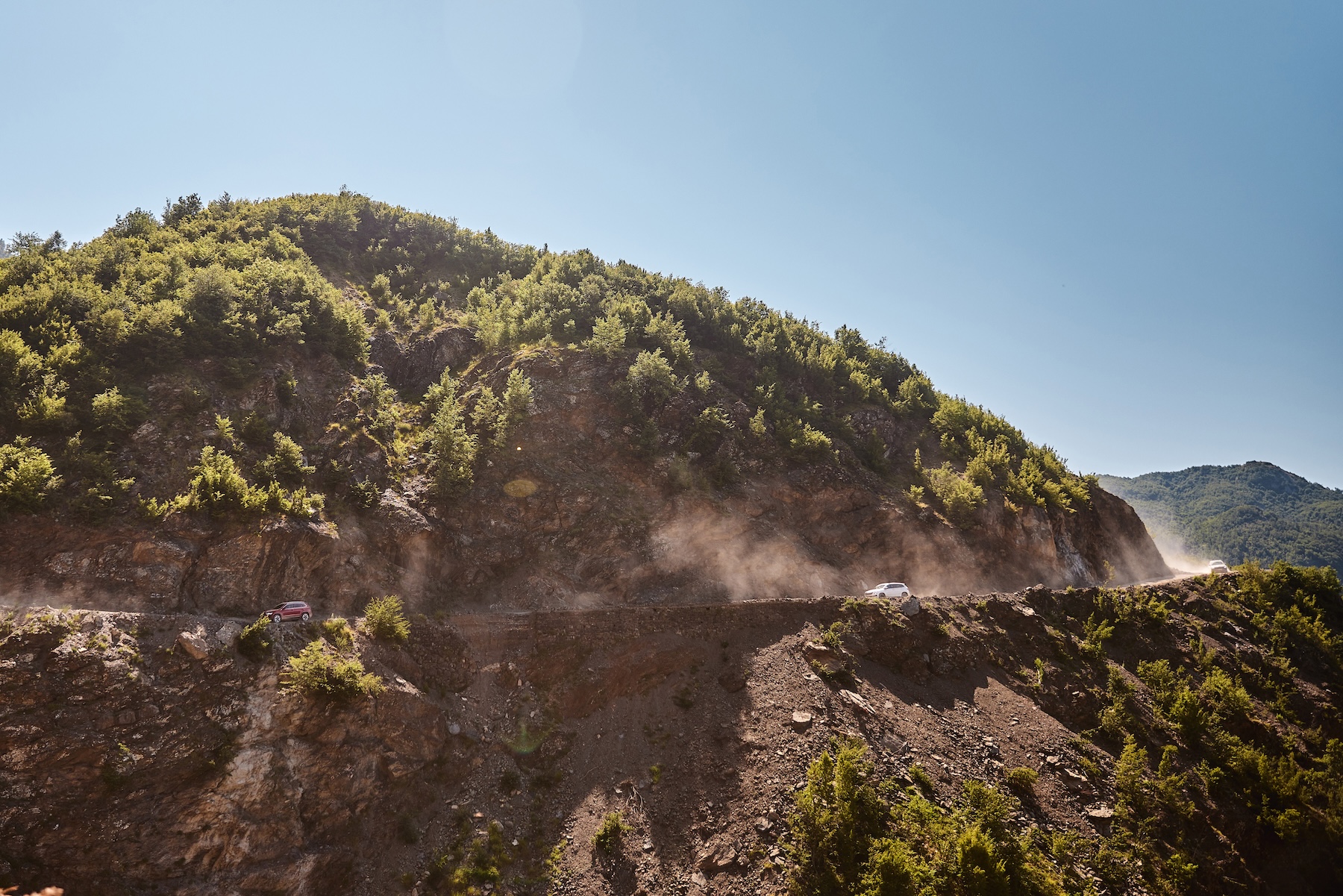
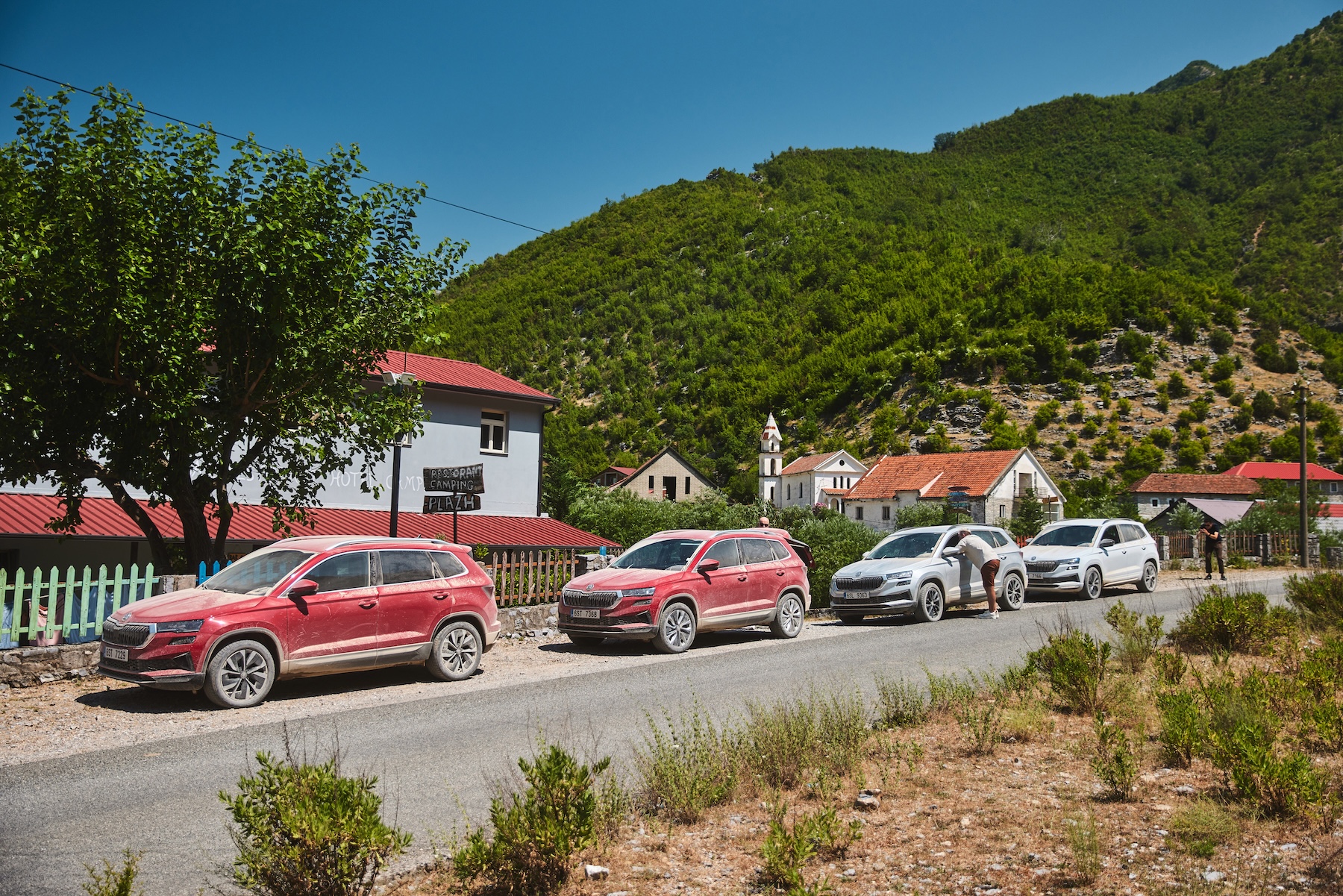
This road trip through northern Albania's rugged beauty was not an adrenaline-filled adventure - but a quiet conversation. With a country that sometimes makes you wonder who you really are.
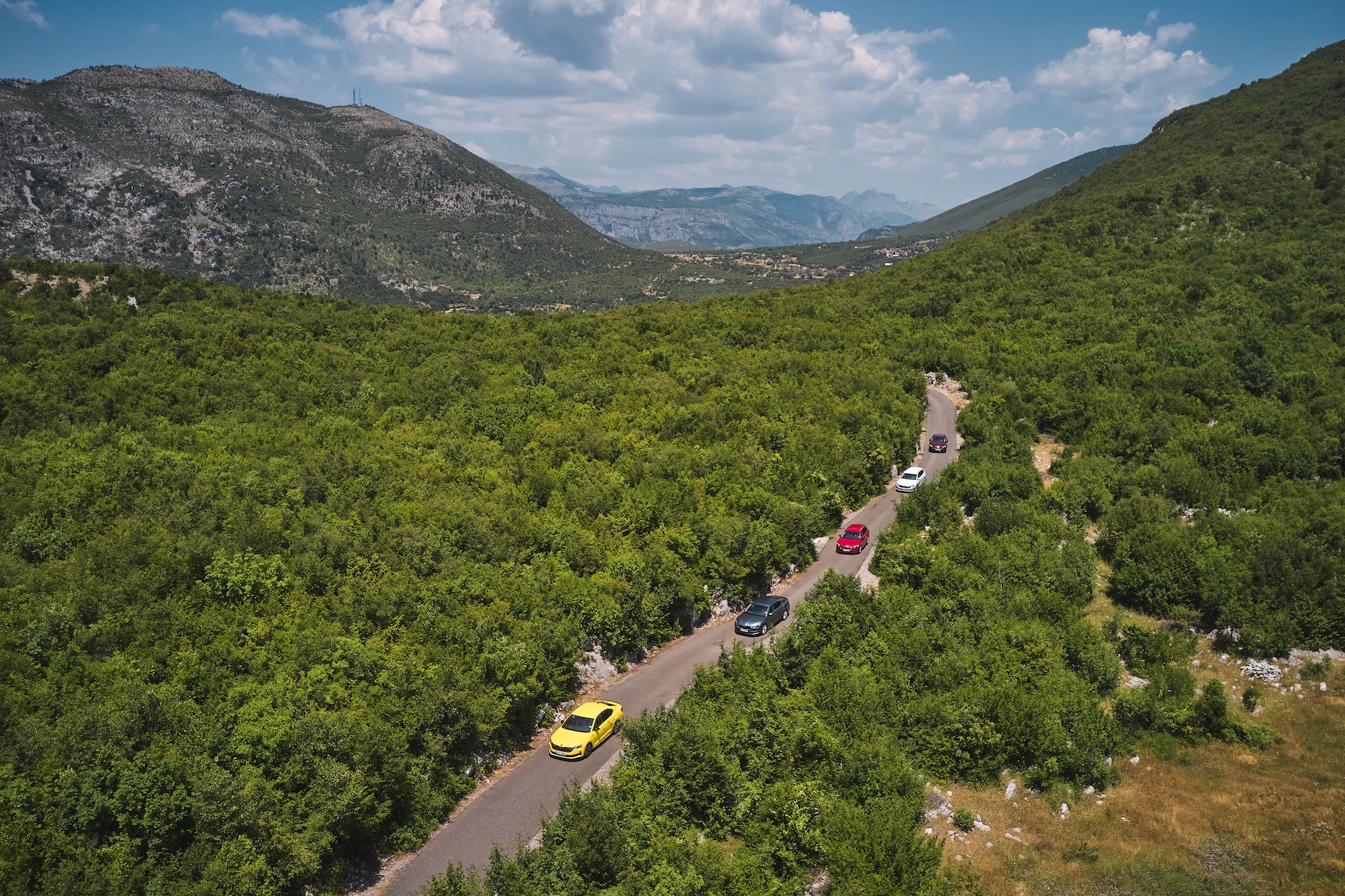
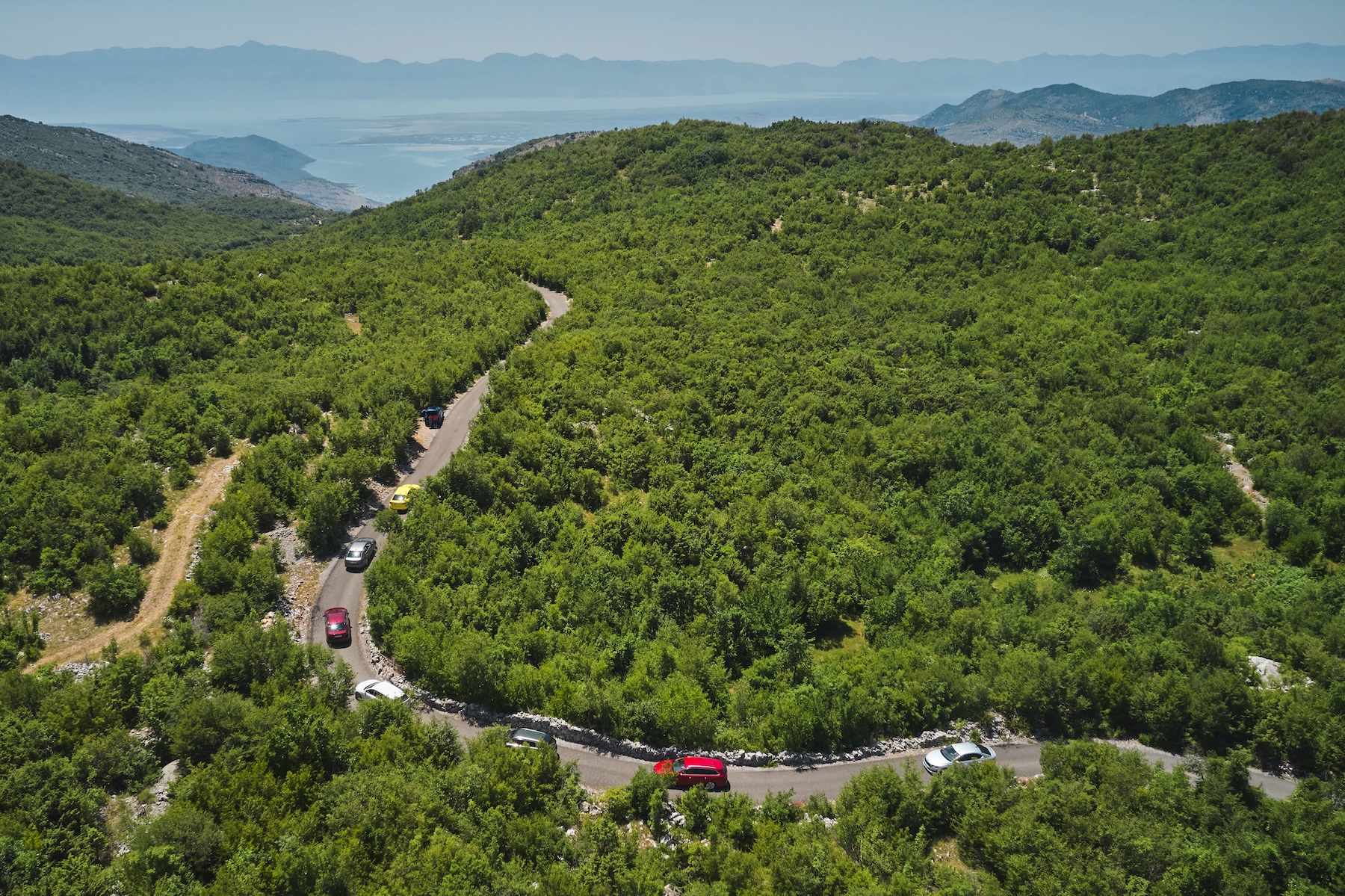
We were on the road for three days: on unpaved roads, in remote valleys and through the middle of a culture that welcomes you with open arms - and yet hardly anyone can imagine. With them: two vehicles that seem to have been made for this route. The Škoda Octavia 4x4, superior and comfortable. And the Škoda Karoq 4x4, somewhat more compact, but robust - ideal for the tracks that are officially considered roads, but turn every navigation into an adventure.
Albania - a country that cannot be explained, but must be experienced. For many, it is still a blind spot on the map of Europe. For others: the next big thing. And for Gjergj Skrame, our guide, economist and returnee, it's clear: "Blessed - not cursed." In his eyes, Albania lies somewhere between archaic power and hopeful change. Between mountains, myths and Mikpritja - the legendary Albanian hospitality.
During these three days, we immersed ourselves in Albania's landscapes, its contradictions - and its stories. And with two vehicles that didn't push themselves to the fore - but were simply there when it counted: the Škoda Octavia 4x4, confident and comfortable. And the Škoda Karoq 4x4, more compact, more robust - made for roads that would not even be called forest roads in Central Europe, but are considered national roads in Albania.
Shkoder - cultural city by the lake
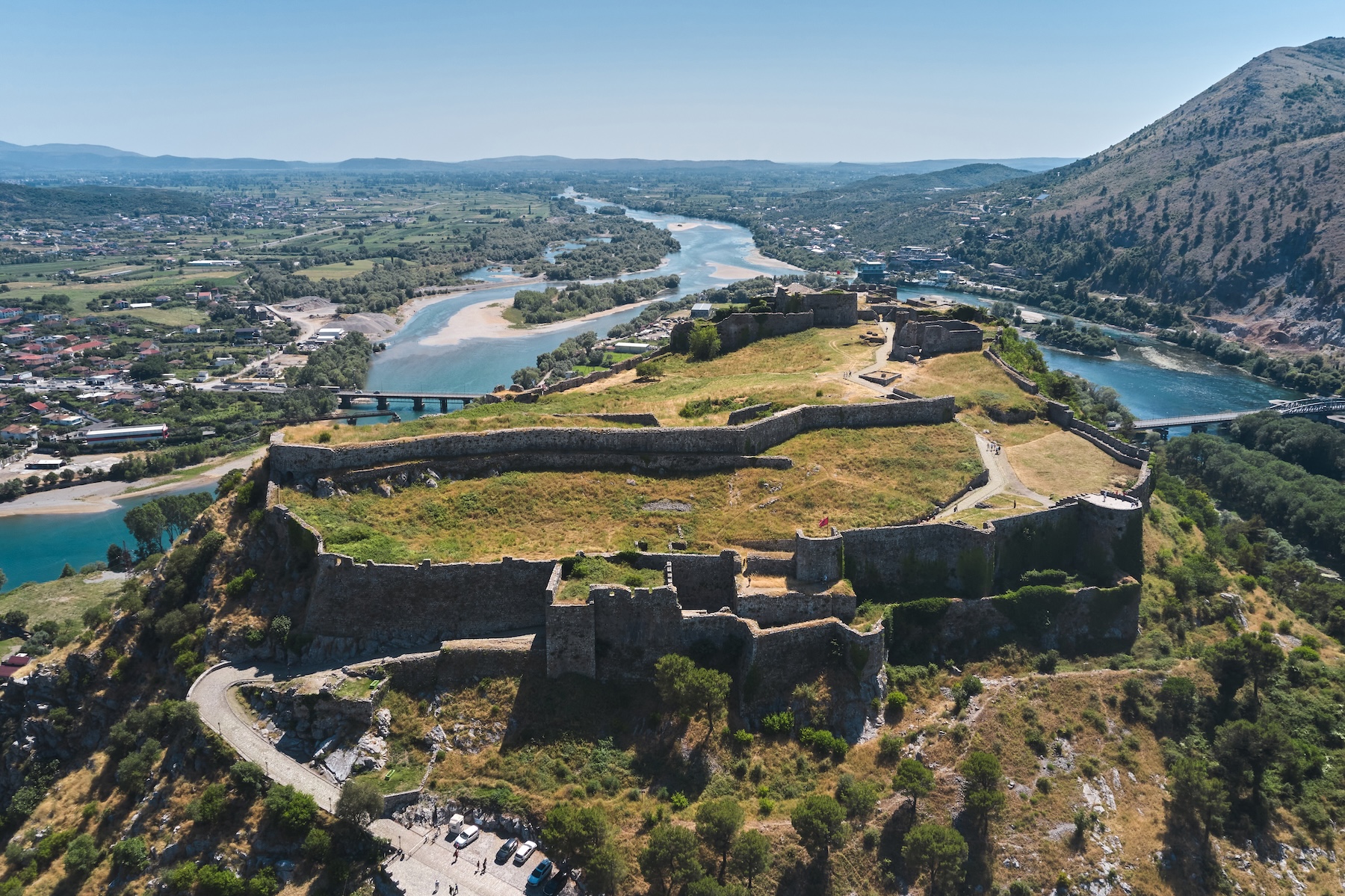
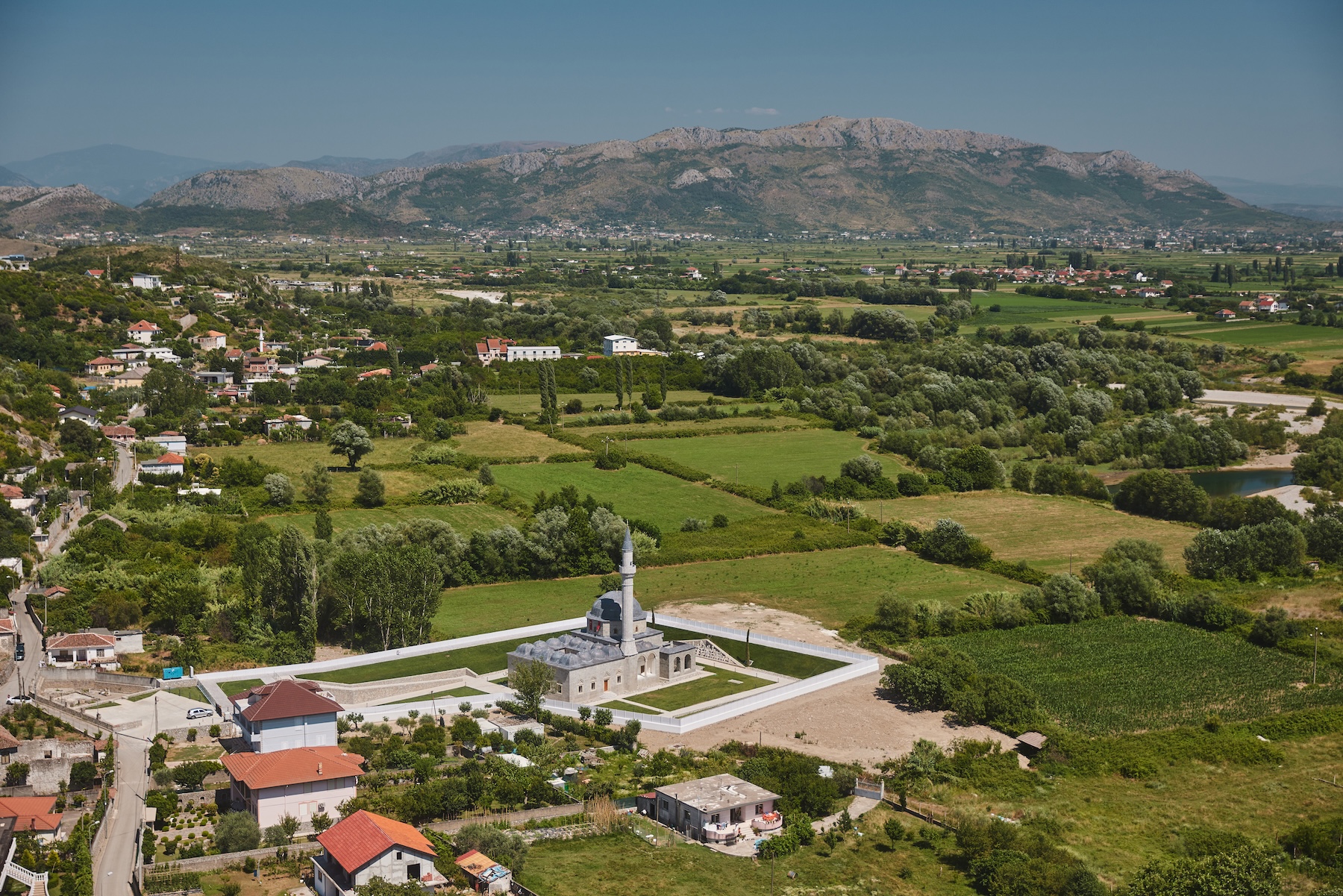
Shkoder is one of the oldest cities in the Balkans and is considered the cultural center of northern Albania. Picturesquely situated between Lake Skutari, the rivers Buna and Drin and the foothills of the Albanian Alps, today it is a city of transitions: between East and West, between yesterday and tomorrow. Old town alleyways, churches, minarets, cafés - and above all bicycles, bicycles everywhere. Shkoder is lively and at the same time relaxed, urban and yet full of history.
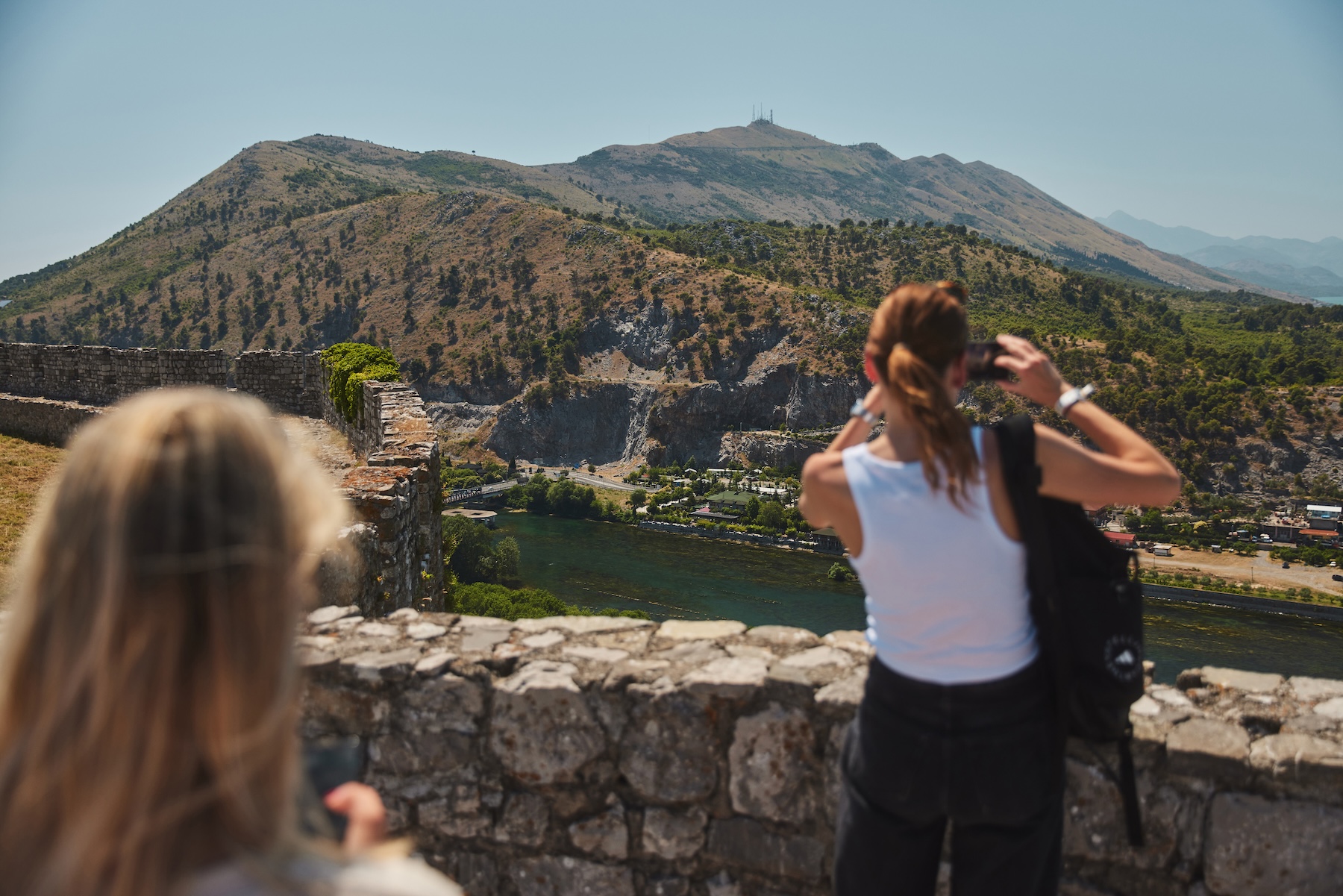
Rozafa Castle towers above the town - a place full of legends. According to legend, a woman was walled into the walls alive so that the castle would last forever. An image that is deeply rooted in the Albanian psyche. Archaeologically, the site dates back to the Illyrian period - the people who are considered to be the cultural origin of Albanian identity. Perhaps this is typical of Albania: it wears its roots like a protective shield - not against others, but for itself.
Shkoder is therefore not only the gateway to the wilderness, but also to understanding Albania: a city that appears European and yet remains entirely its own. A city that shows that identity in Albania is not a thing of the past - but a constant confrontation with the future.
The northern Albanian Alps - Europe's untamed mountains
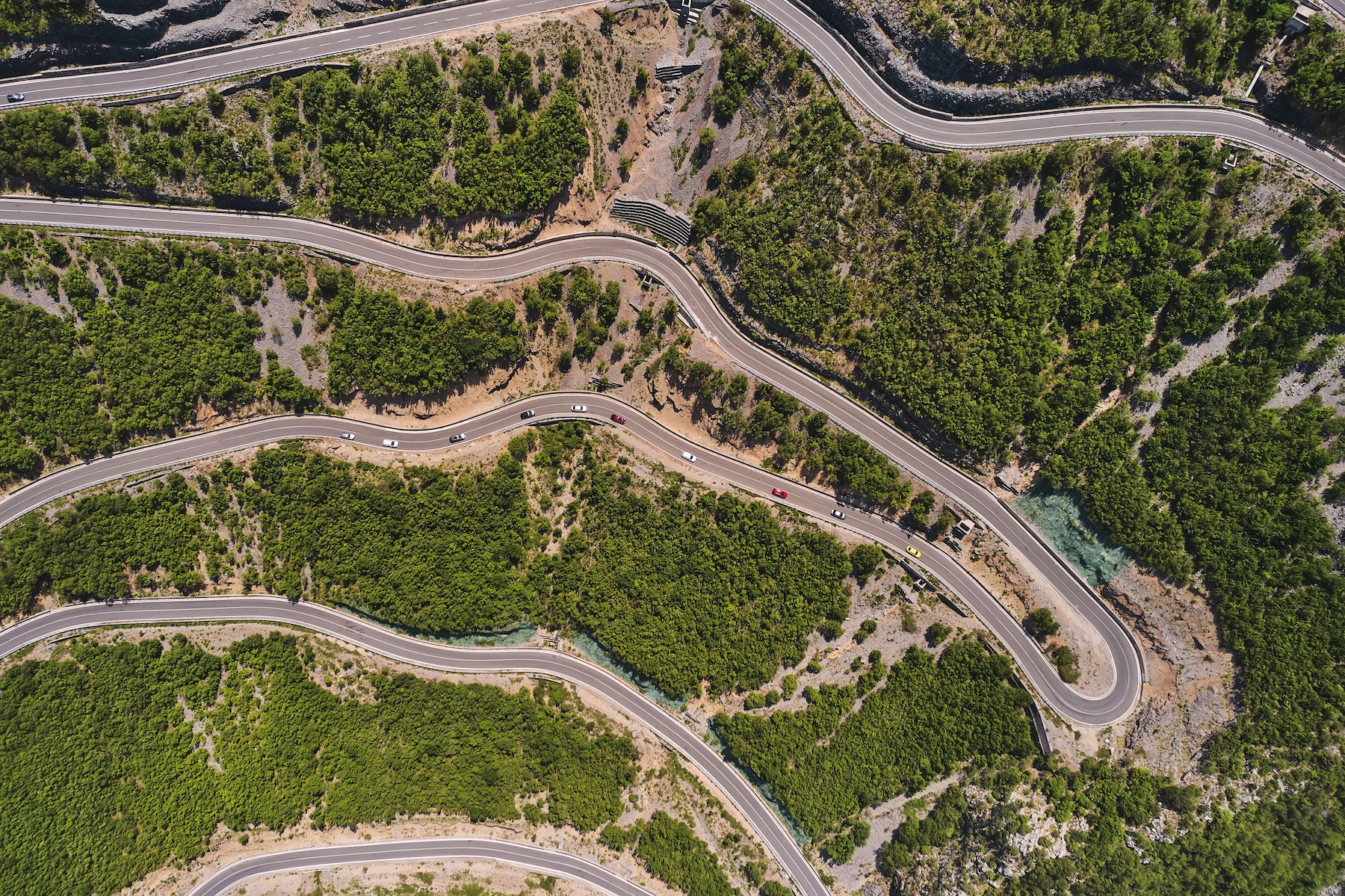
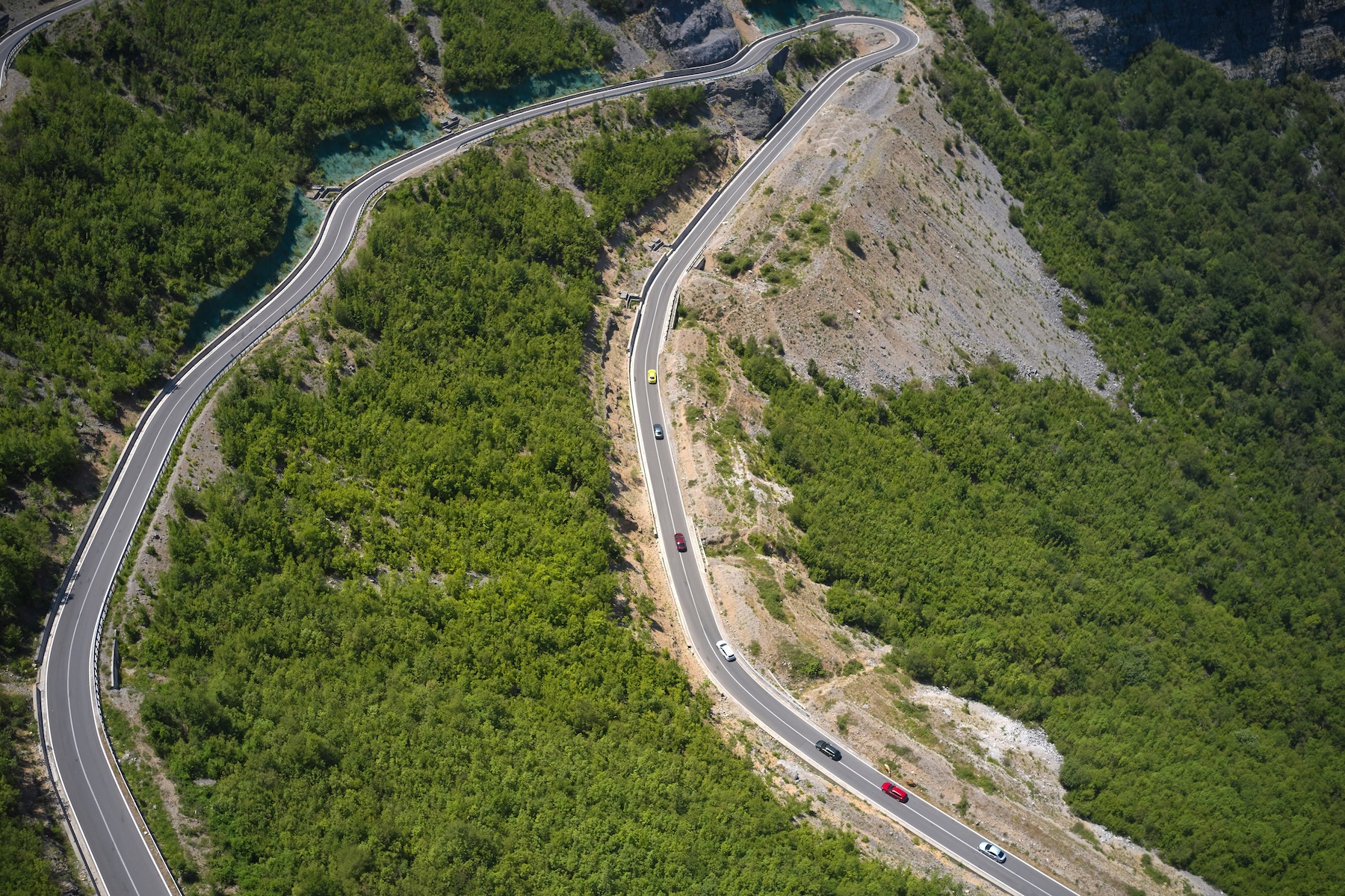
The so-called "Enchanted Mountains" (Bjeshkët e Namuna) are considered to be one of the last wild high mountain regions in Europe. Steep, rugged, spectacular - and until a few decades ago almost inaccessible. Anyone who sets out to explore them today will not find a staged Alpine idyll, but real challenges: Gravel tracks, river crossings, steep passes - and villages where time moves at a different speed.
"These mountains do something to you," says Gjergj. "They're not just beautiful. They are a test."
The region lies in the border triangle between Albania, Montenegro and Kosovo. Border crossings such as Hani i Hotit to Montenegro or Qafë Morinë into the Valbona Valley and on into Kosovo are scenically breathtaking, but not always easy to pass. Other passes such as Qafë e Prushit or Qafë Bordolecit are only accessible for experienced off-road drivers or on foot - depending on the season.
Anyone who ventures here not only encounters magnificent nature - but also the Kanun, the code of honor of the north. "The Kanun no longer exists as a law - but as a feeling," says Gjergj. "In these valleys, honor is not preached - but lived." The mountains may be wild, but they follow rules. And if you listen, you realize that it's not just the geographical altitude that impresses you here - it's the depth of the culture.
Theth - the valley of silence
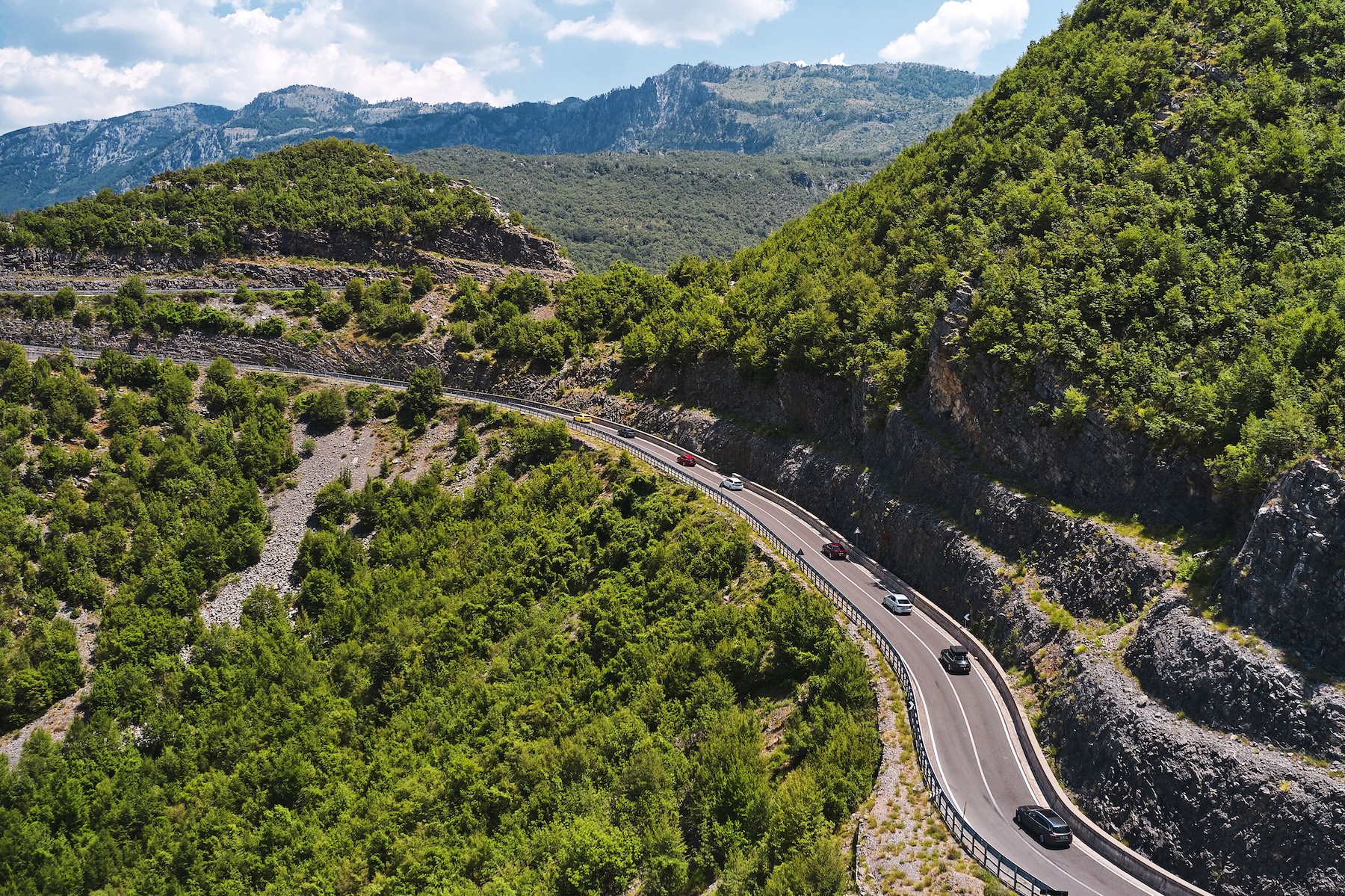
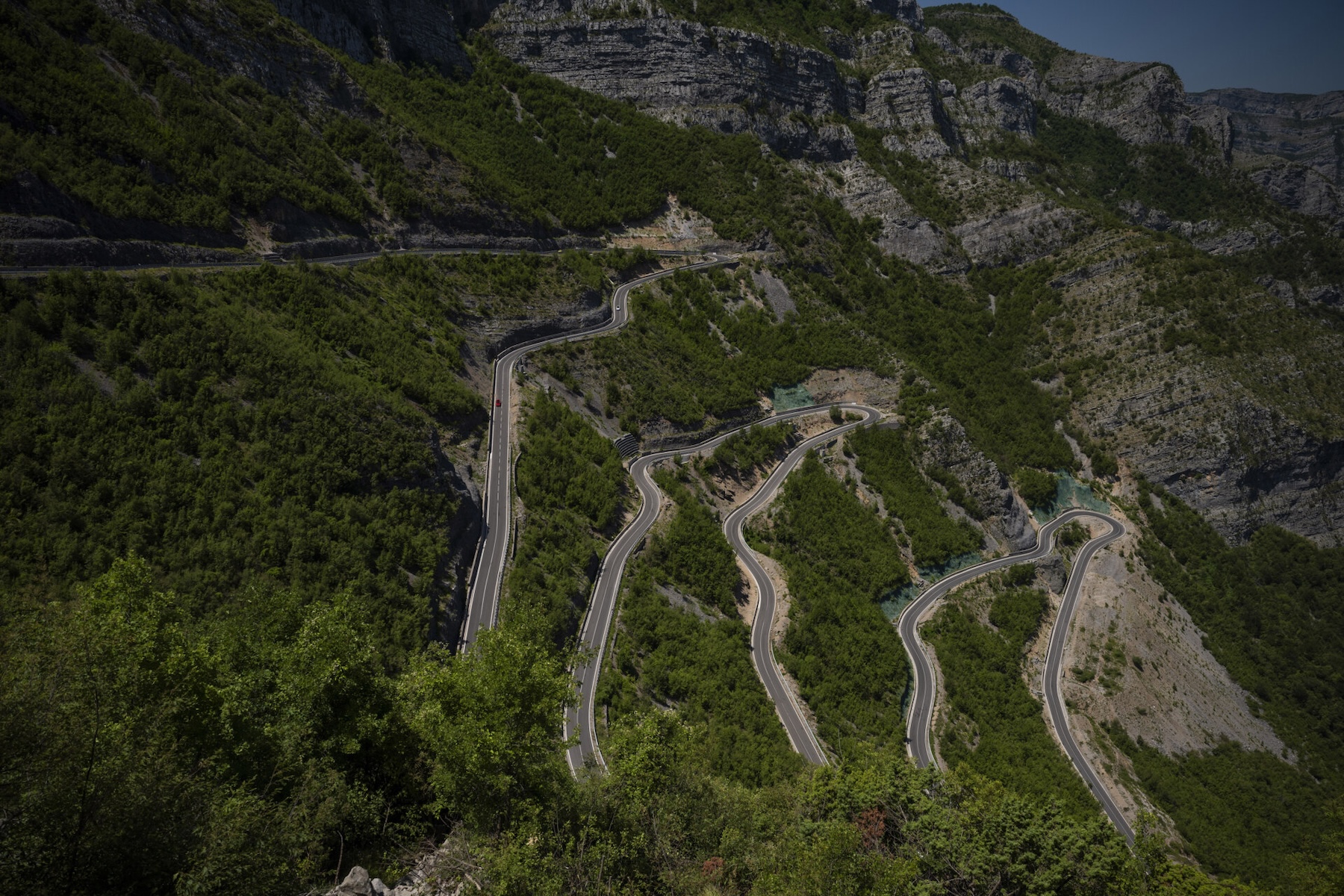
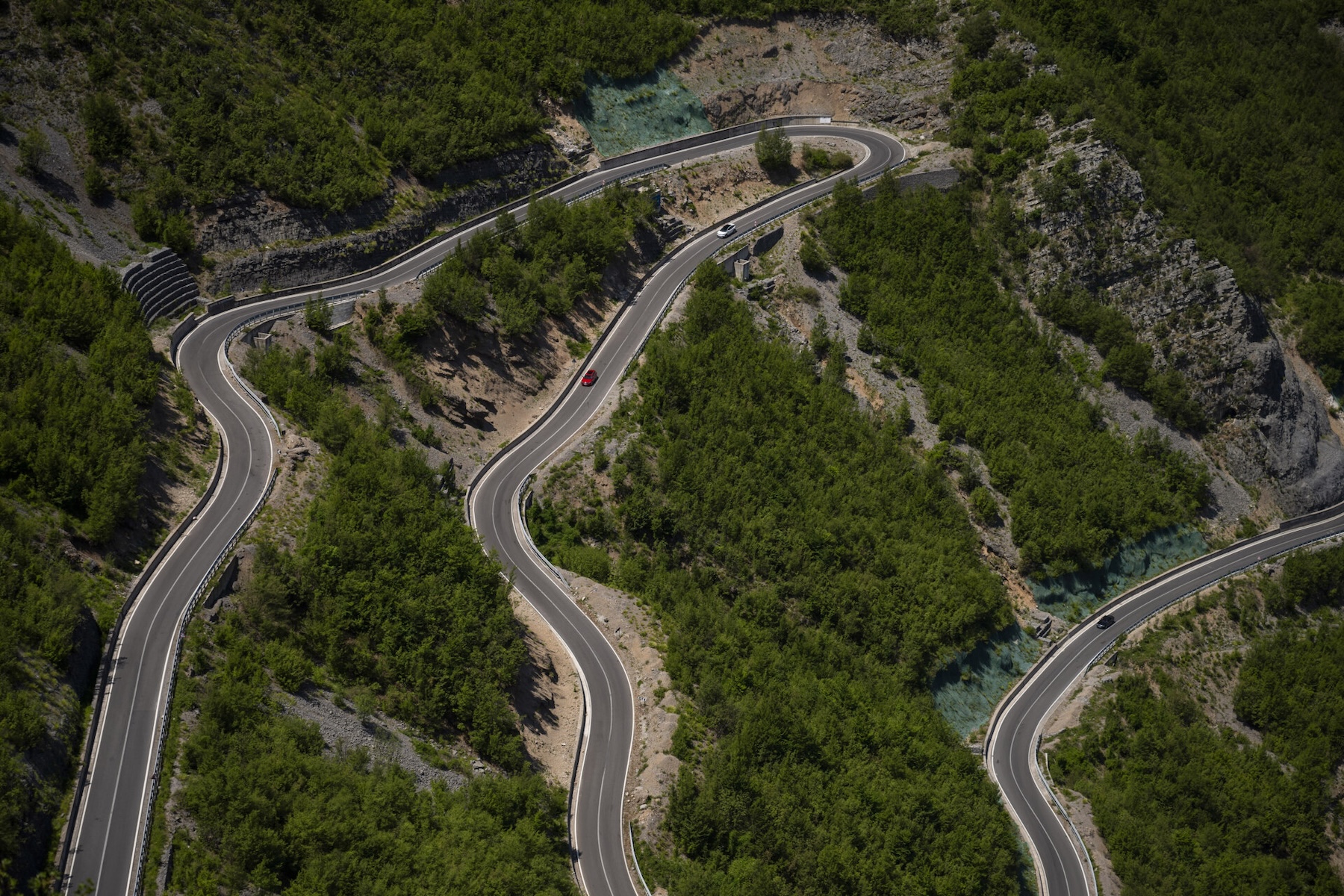
Theth is more than just a mountain village - it is a feeling. Nestled in a high valley in the Albanian Alps, surrounded by jagged peaks rising up to 2,500 meters, time seems to slow down here. For decades, Theth was only accessible on foot or by mule - it is only in recent years that a partly asphalted, partly challenging trail has led to this secluded valley. But despite its growing fame, Theth has retained its quiet pride.
"I'm always amazed at how quiet it is here," says Gjergj Skrame. "Not just in terms of the sounds. But inwardly. There's something about Theth that forces you to be quiet."
Between stone houses, waterfalls and ancient chestnut trees stands a building that tells more about Albania than many books: the Kulla e Ngujimit - the "Tower of Isolation". This multi-storey stone tower was a retreat for men who became targets of blood feud (Gjakmarrja) due to the Kanun, Albania's centuries-old code of honor. They lived locked up here for weeks or months - supplied only through a small opening in the wall.
"The Kulla is not a museum," says Gjergj. "It is a testimony. People made mistakes - out of character or greed. But isolation could also bring redemption: Repentance, forgiveness, the acknowledgment of guilt." The Kanun was passed down orally over generations and later written down. It regulated social life in northern Albania - from property, family and hospitality to honor. "Mik means friend. Pritja means reception. Mikpritja - it's not a slogan, it's a promise," explains Gjergj. The guest was untouchable.
But the principle of honor was just as sacrosanct - and this often led to endless feuds. Gjakmarrja was a bitter reality. But the Kanun also knew pajtim - reconciliation. Those who admitted their guilt could free themselves with a handshake or were given three days to leave the village. The rules were tough, but they also offered a way back into life. Today, the Kulla is open to the public - a silent memorial to an order that demanded life, but also ensured dignity. Theth itself remains a place of contrasts: hard and soft, archaic and open, rooted and at the same time on the way to something new.
Škoda Octavia & Škoda Karoq 4x4 - companions, not heroes
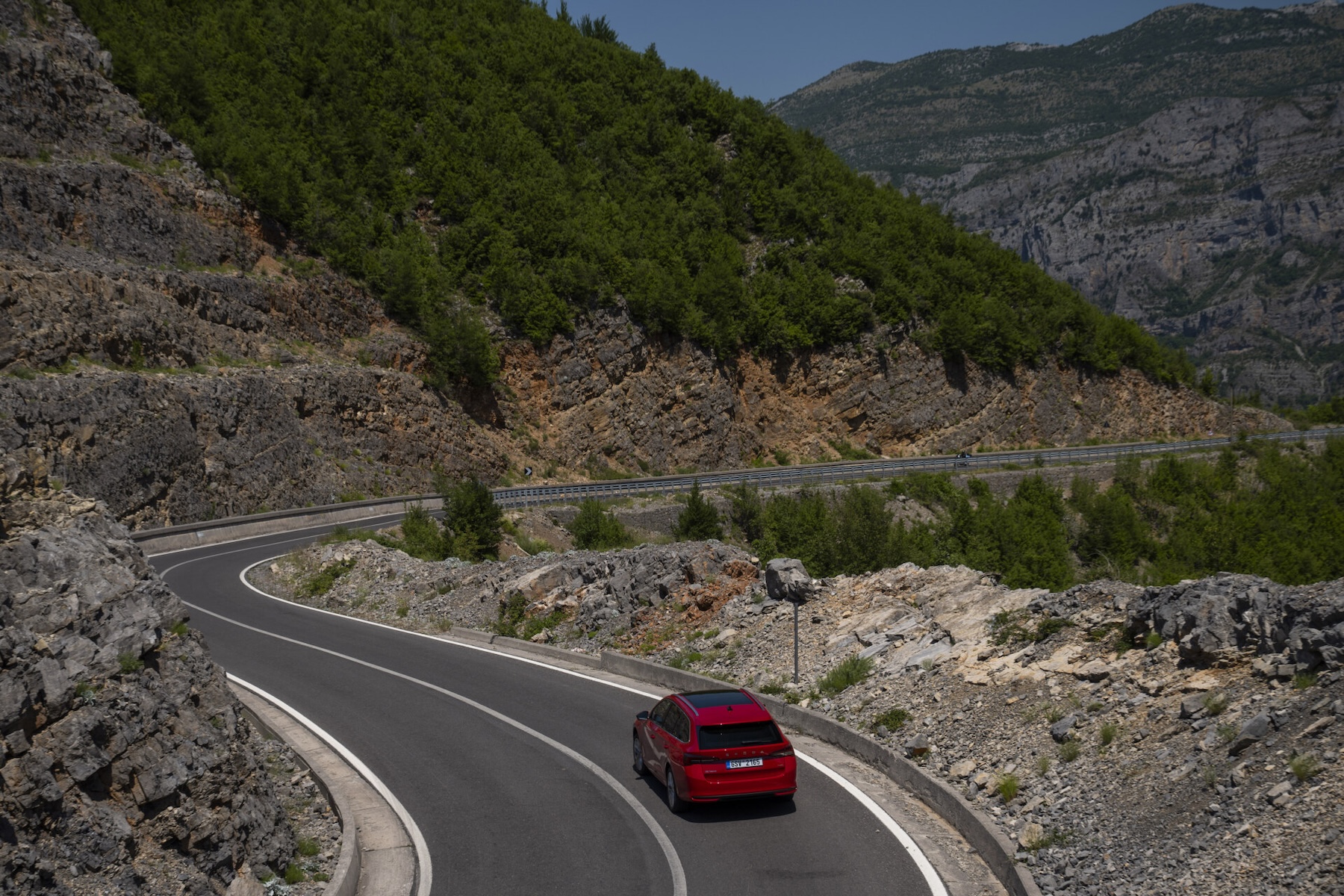
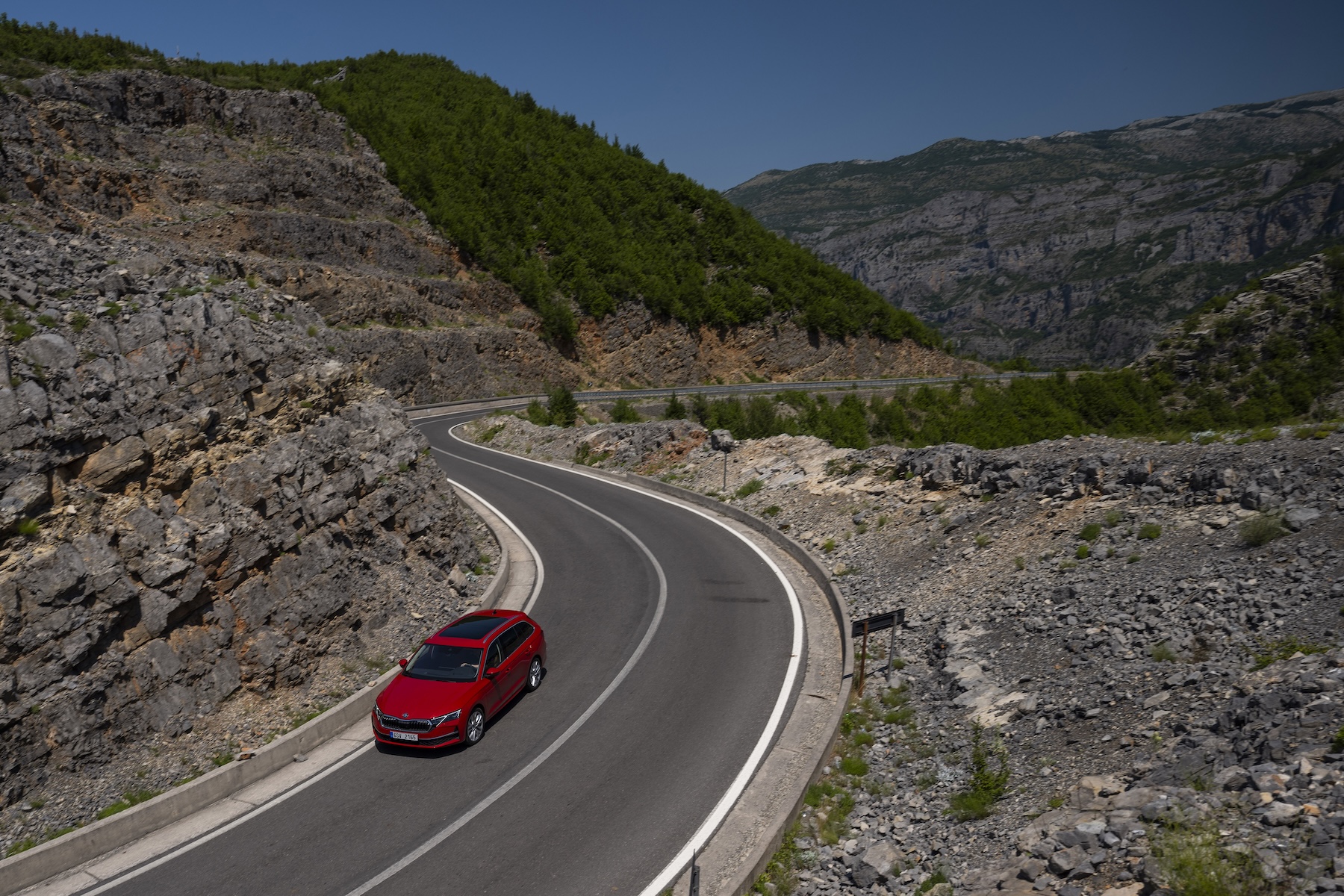
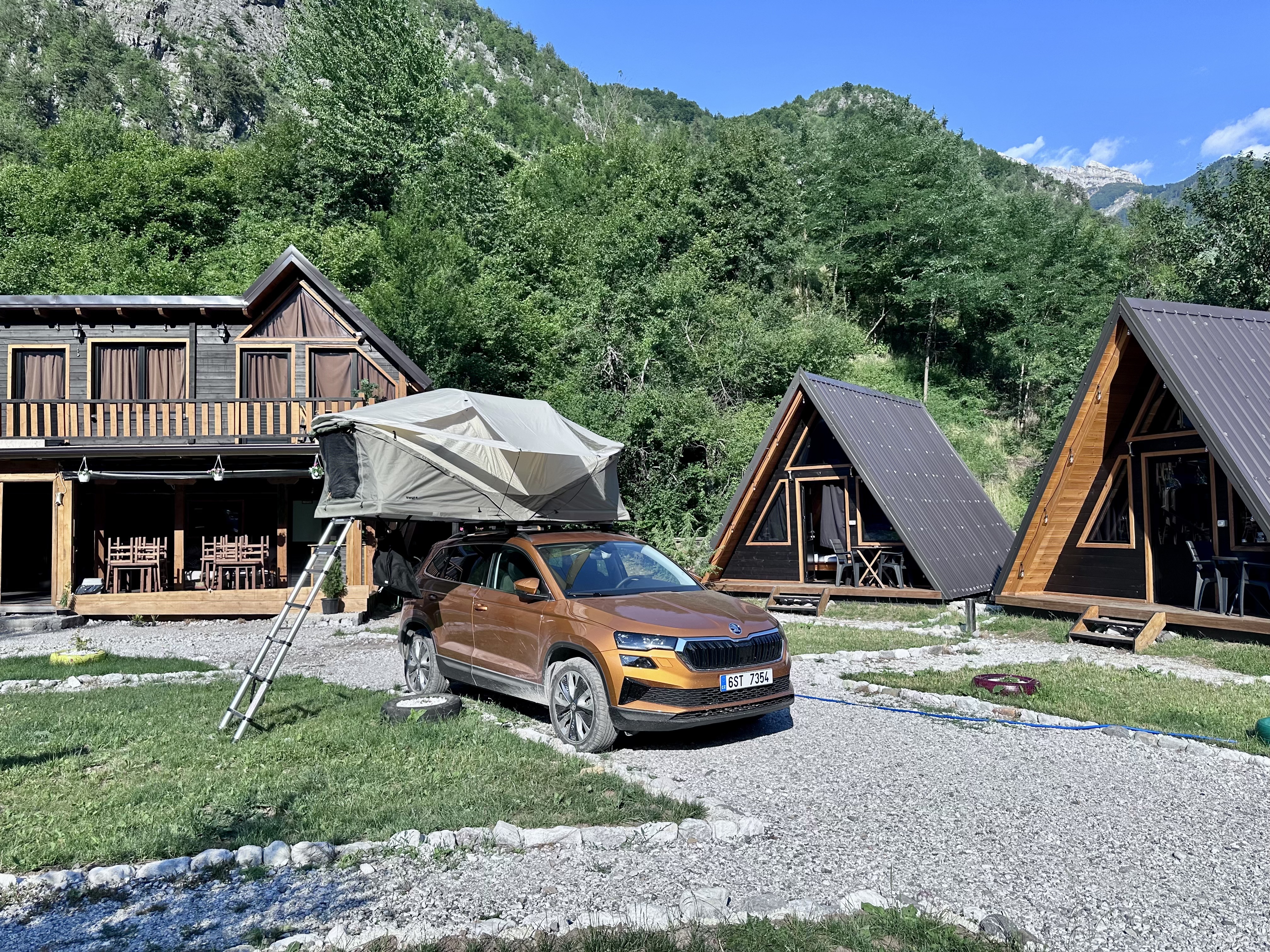
The Škoda Octavia Combi 4x4 and the Škoda Karoq 4x4 did not push themselves to the fore on this road trip - but quietly and reliably delivered exactly what is needed in Albania's mountains: confidence. No show, no show-off - but real ability on rough terrain. Both vehicles prove their strength where infrastructure ceases to be planned - although "the roads are much better today than they were a few years ago," Gjergj explained to us. The Škodas get you there - and, above all, back again. Without drama. And that's what counts.
The Octavia impresses with long-distance comfort, superior traction and surprising composure on loose surfaces. Even at 36 degrees and on endless serpentines, its handling remains precise and relaxed - and shows that all-wheel drive doesn't have to be loud to be effective. The Karoq, which is somewhat more compact, offers more ground clearance and therefore scope for spontaneous turns on gravel tracks, stream crossings or spontaneous detours through the terrain. An all-rounder with character that feels more at home between rock faces and scree fields than its urban silhouette would suggest.
Both vehicles prove their worth where the infrastructure ceases to be planned. They get you there - and, above all, out again. Without drama. And that's exactly what's needed here. What remains is the reassuring feeling of being able to rely on technology - when the nearest accommodation is hours away and the cell phone signal has long since disappeared.
Conclusion - A country in search
Albania is like a teenager, explained Leo from Mikpritja. And perhaps that's exactly what it is: quick-tempered, vulnerable, full of potential. A country between self-assertion and new beginnings. "Albania? Blessed - not cursed," says Gjergj Skrame. Economist, returnee, guide. Someone who not only knows the country, but feels it. Someone who does not suppress the hardships of the past - but draws hope from them.
"I experienced Albania's disintegration in 1997 from California," he recalls. "It was like a relapse into powerlessness." Back then, the country lost trust - today it is regaining it. Step by step. With every conversation, every encounter, every new view from the outside.
Because Albania is not only beautiful - it is touching. Not polished, but genuine. Rugged one moment, tender the next. And in between: a warmth that lingers. "It's the little moments. Maybe it's the waitress with hastily applied make-up. Or the old man feeding a stray dog. The group of people pushing a car to start it. The policewoman standing in traffic for hours - and just someone bringing her a cool bottle of water." That's Albania," says Gjergj. And you believe him. Because you can feel it.
Three days are not enough to understand Albania. But they are enough to make you want to go back. Because of the mountains. Because of the history. And above all: because of the people. This road trip was like a quiet conversation. With a country that doesn't have to be loud to be heard. And with people who don't lecture, but touch - if you listen to them.