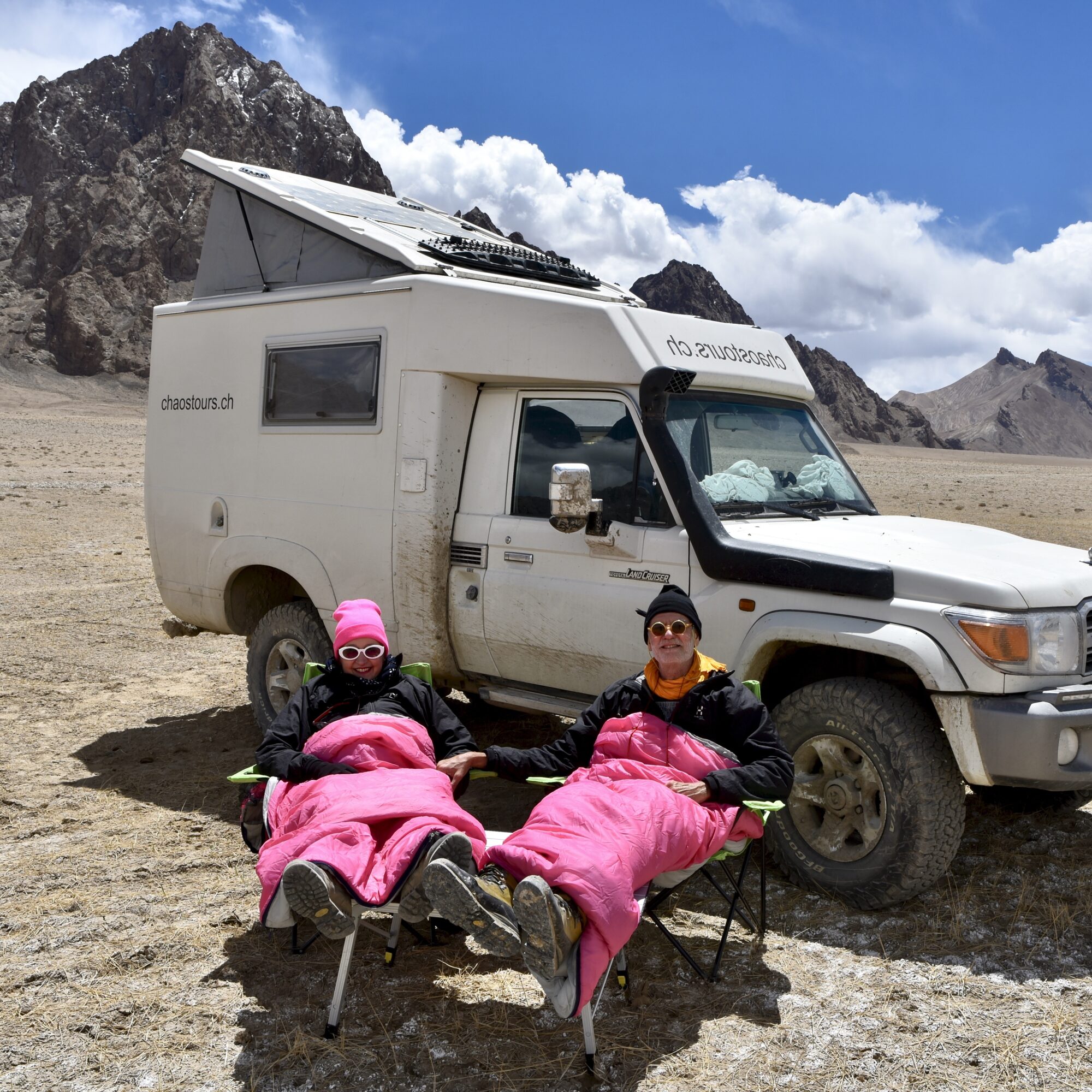
Chaos Tours: Survival strategies for couples on overland trips
Our greatest shared passion is traveling. Preferably with a backpack or our Land Cruiser to remote areas. Such trips are always a tough test for a couple's relationship. The following three strategies
proved to be helpful time and again on our trips together.
Strategy 1: Damage report
Shortly after we met in a student hostel in 1975, we went traveling together, tracing the traces of antiquity in Greece, Turkey and Iraq. When a time window of five months opened up after our studies, we wanted to use it for a longer backpacking trip to India, Sri Lanka and Nepal. At the beginning, we did everything wrong: we skimped on accommodation, drank iced drinks instead of hot tea and let ourselves be ripped off a few times. We suffered from bites from bedbugs and fleas, had stomach cramps and diarrhea and were constantly on the lookout for more scams. The trip threatened to be a disaster.
The low point came in Varanasi: Sylvia felt miserable and asked me to take her back to the guesthouse. But I wanted to take photos and didn't understand what her problem was. She was too weak to answer my questions and I didn't understand why she didn't express herself more clearly. We had a communication problem. It was only when she stopped moving that I realized the seriousness of the situation. That's when we both realized that we couldn't continue travelling together like this.
"Science fiction saved us. In the style of the damage reports in Star Trek, we asked each other how we were feeling every morning."
Nevertheless, we continued our journey. Science fiction saved us. In the style of the damage reports in "Star Trek", we started asking each other how we were feeling from head to toe every morning while traveling (in medical terms, you could also call it a brief physical and psychological status):
- Head: Are you in pain? How about tiredness? How did you sleep last night?
- Respiratory system: Do you have difficulty swallowing, coughing, a cold, breathing difficulties?
- Digestion: How is your appetite? Do you have stomach problems, diarrhea, constipation, have you been drinking enough?
- Limbs: Can you feel your back, shoulders, knees and feet? (especially important when trekking)
- Skin: Do you have sunburn, insect bites, wounds?
- And finally: General condition and morale, the latter is described with a grade. Less than 4 is an alarm condition. Then, for example, a rest day would be called for.
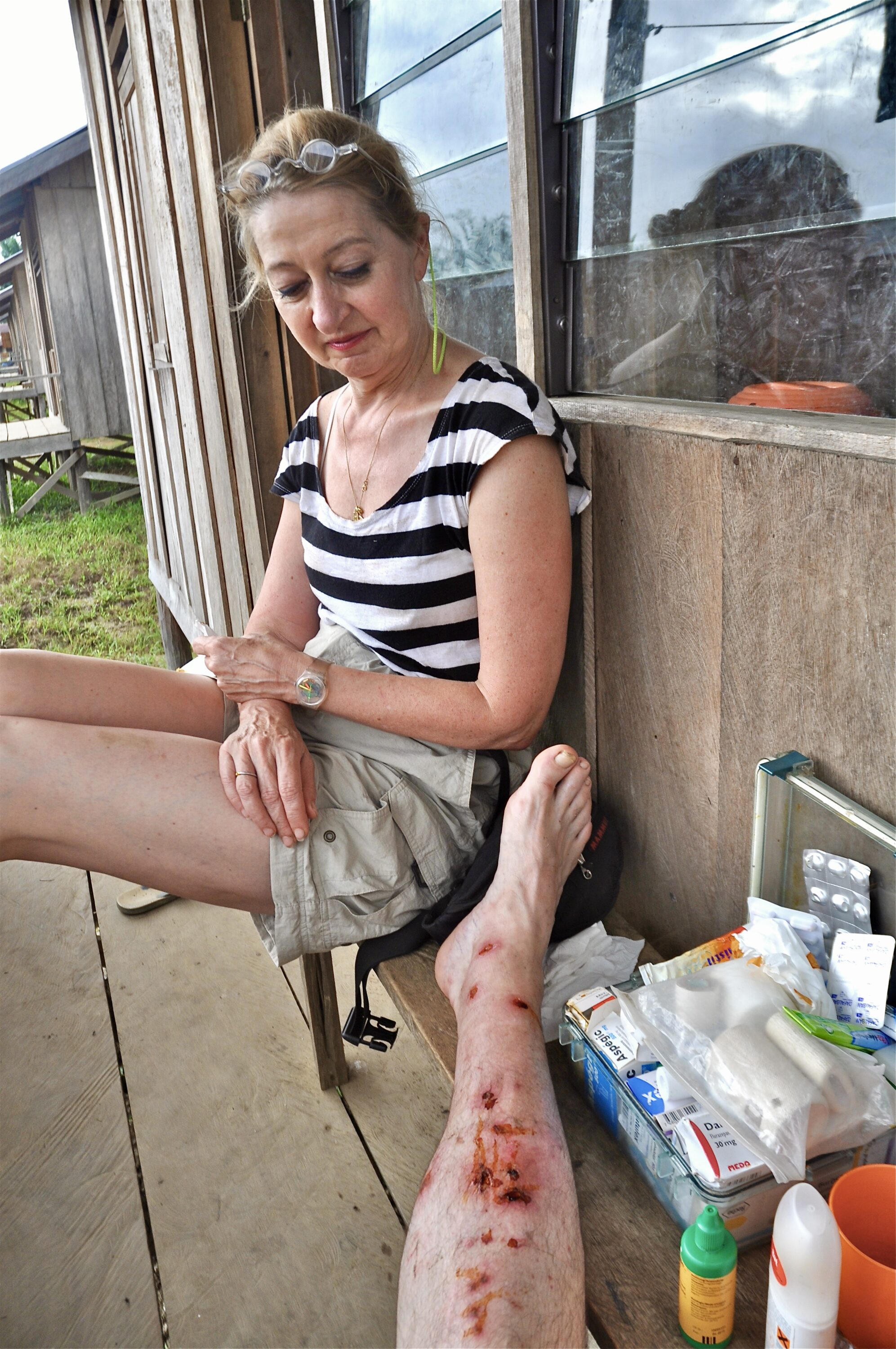
The benefit of the damage report lies in the early detection of impending problems. If these are communicated, the partner can ask about them at the next rest stop or in the evening, his involvement is assured and measures can be taken at an early stage.
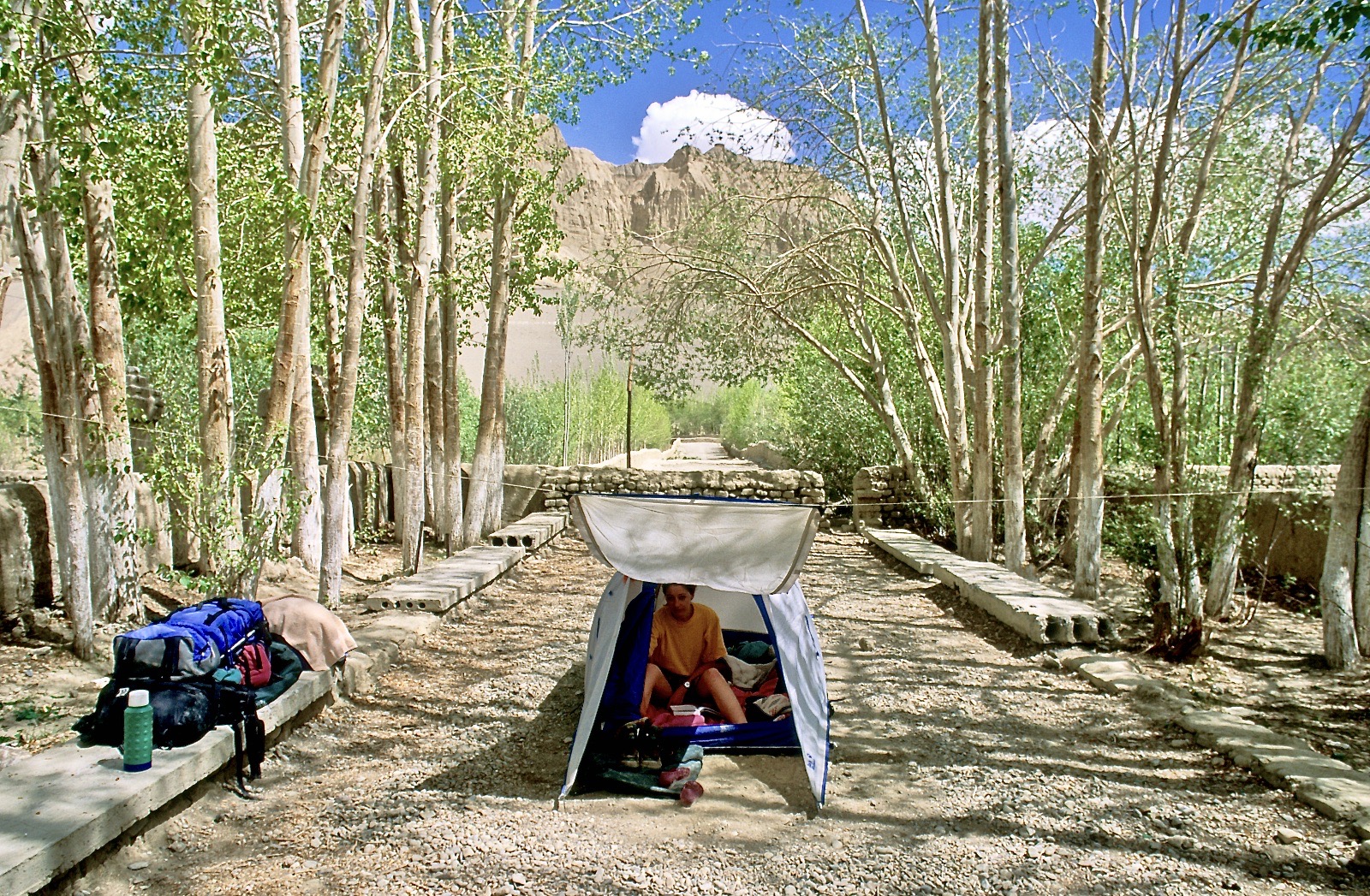
Strategy 2: Ritualized daily review in the Recovery Tent
Encouraged by the positive experiences on our travels, we opened ourselves up to cultures that function very differently to us. However, we often reached our limits, be it in terms of extreme climatic conditions, physical exertion while trekking, poor hygiene, food that initially disgusted us or health problems of the population that were unimaginable to us, not to mention the complete failure of certain countries to educate children or provide the most primitive infrastructure such as wells, usable roads or energy supplies. Our aim has always been to treat each individual with respect. But how can we do this when we, who are spoiled by prosperity, are faced with so much misery and unsolvable problems? And how do we manage not to take our concern and mood out on them or on our partner? So over the years, as our travels took us to more and more remote and not always easily accessible cultures, we gradually developed another strategy.
"Retreat to the Recovery Tent: We retreat to the tent for half an hour to gain some distance from all the intense impressions."
We learned by observing and participating: When we were trekking with three Russians in Kamchatka and we were about to run out of food, our guide took out a bottle of vodka and everyone had to make a toast before drinking from the small glass. It was mostly about the friendship between the peoples, but also about wishes for a successful trek together. Even later in Siberia with the reindeer nomads, no one was ever drunk, but rather lovingly focused on the emotions associated with what was being said.
Frans from Namibia taught us another ritual when we were traveling with him and the Land Cruiser in the southwest of Angola: As soon as we had found a place to spend the night in the bush, the camping chairs and table were set up first, then glasses were filled with cola and brandy from the cooler we had brought with us and a review of the day was exchanged over a sundowner. Only then did we set about cooking dinner.
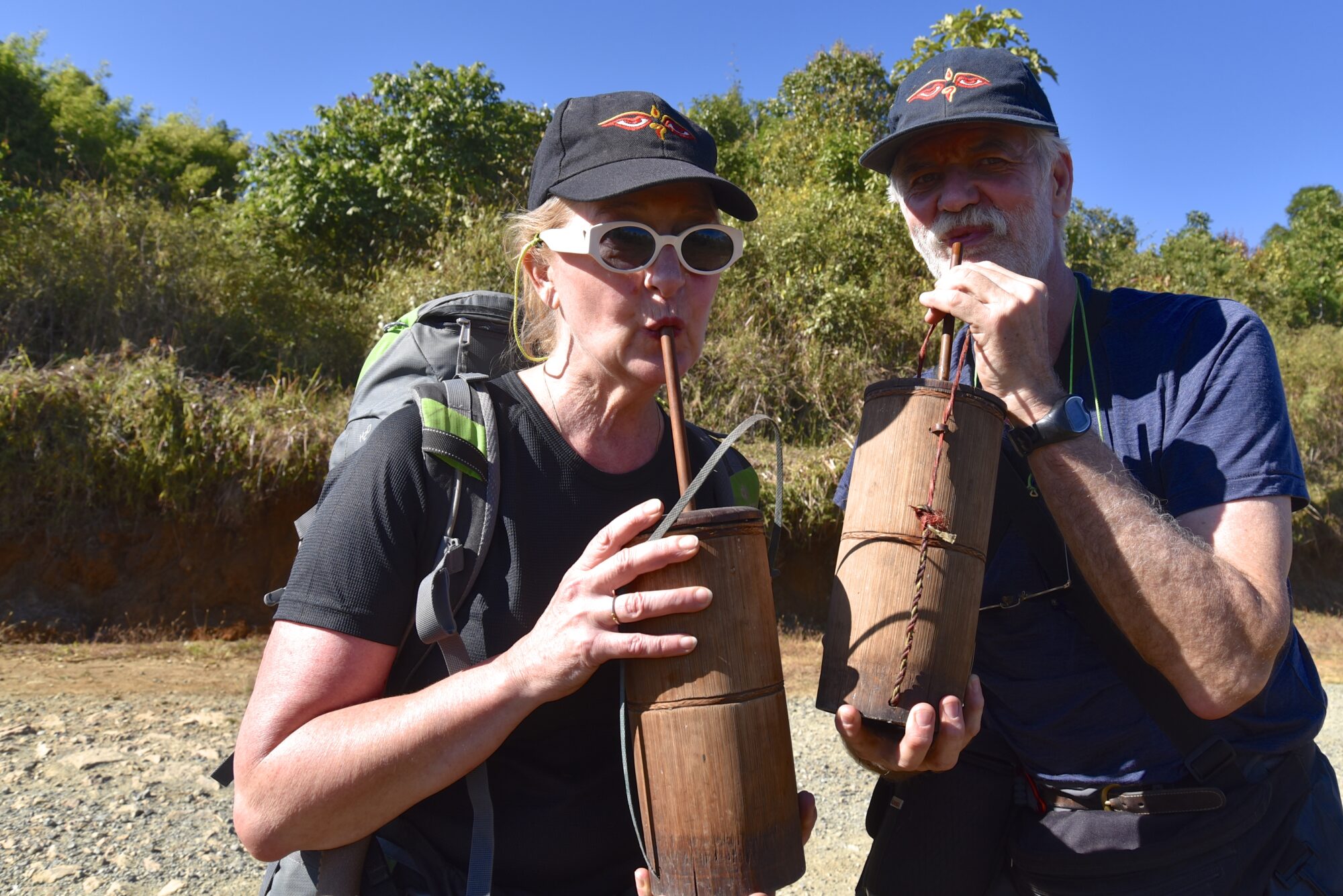
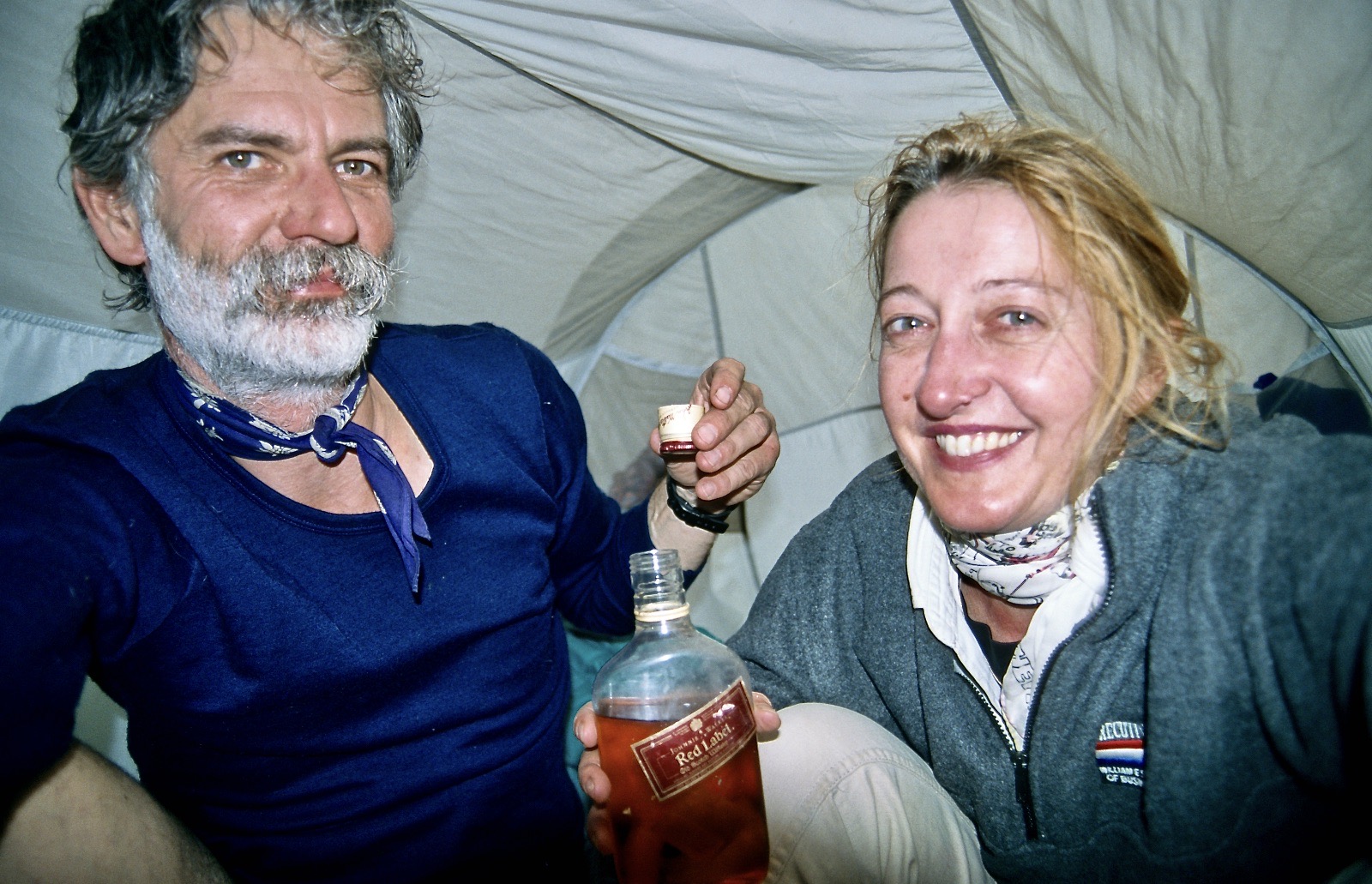
On our trekking trips in West Papua, with the Kogi in Colombia or the Naga in Myanmar, we spent the whole day in close contact with people from completely different cultures. We learned how important it is for our mental hygiene to retreat into our tent for half an hour in the evening before dinner and gain some distance from all the intense impressions. We now know that we are under tension as soon as we are outside of our familiar civilization, that the experience moves us more than we want to admit and that we don't know what the next day will bring. This emotional tension can easily be acted out incorrectly. One way to reduce it is the ritualized review of the day - combined with three toasts - in the Recovery Tent. At happy hour, we retire to our tent or Land Cruiser and each of us takes it in turns to have three lids filled with whisky bought in Duty Free before departure, each of which is emptied with an appreciative toast to the country, its people and our partner. In Islamic countries, we have learned that this ritual also works without alcohol.

Strategy 3: Cut! Lola run!
Even in a long-term relationship, communication between partners is often characterized by misunderstandings. This inevitably leads to spiteful reactions and arguments. As much as we would like to have more serenity and are constantly working on it, we occasionally get caught up in a negative spiral of unnecessary hurt from which there is almost no way back. In our search for alternative courses of action, Star Trek came to our aid again: In some series of Deep Space Nine, an alternative reality appears. A parallel universe exists there in which the main characters sometimes have completely reversed characteristics. The concept of an alternative world is often implemented in films. This is done by depicting alternative storylines ("What if...?"). One example of this is the movie "Run Lola Run" . The movie shows the same twenty-minute time span three times, each time with small differences in detail that lead the plot to a completely different outcome each time (butterfly effect in the form of a time loop).
"If you feel hurt, you say the magic word. It tells the other person to stop the movie here and pause for a moment."
During our almost six-month trip to Central Asia in the Land Cruiser, we developed the following rule for ourselves: as soon as one of us feels hurt by something we say or do, we say the magic word: "Cut! Lola run!" This tells the other person to stop the "previous movie" and pause for a moment. This gives both of them the opportunity to gain some emotional distance and reflect on what went wrong here. Only then is it possible to create an alternative reality with a choice of words or action that has a less hurtful effect. The earlier the intervention takes place, the easier it is for the other person to respond. This often even leads to laughter on both sides. Basically, nobody wants to hurt the other person.
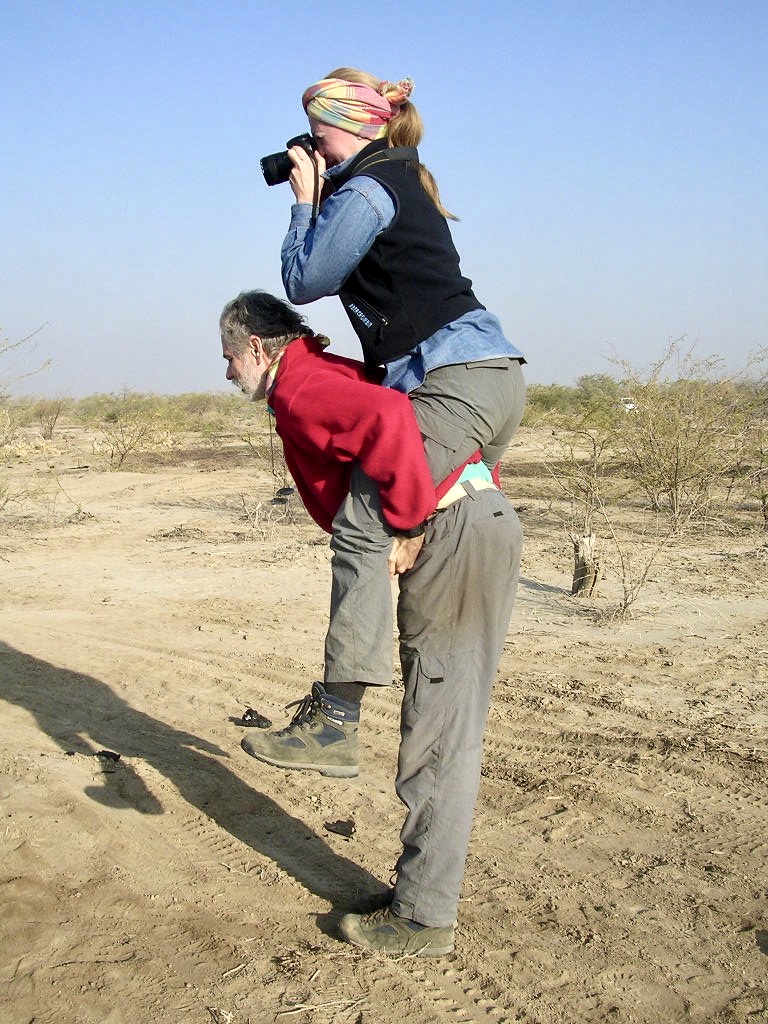
We mainly use this strategy when misunderstandings arise when one person has information from a guide book, a map or the internet and assumes that the other person has the same level of knowledge or has different, unstated interests or expectations of their partner: One person makes an enthusiastic suggestion that comes across to the other as an order to do something they have no desire to do, and then devalues it accordingly.
These three strategies have proved helpful time and again on our travels together over the past 45 years, which have taken us to the most interesting peoples on earth. It is always worth fighting for a couple's relationship.
Follow Sylvia and Holger at www.chaostours.ch