
This report comes from a time when overlanding was not a trend. In 1997, Amadeus Matzker crossed North Africa in a Land Rover - without Insta-fanboys and without a double bottom. It was something you did - or didn't do. A contemporary document about a way of being on the road that hardly exists today.
We are deliberately publishing this reportage unchanged - as a contemporary document from the late 1990s, written from direct experience, not from hindsight. Not as a guide. Not as inspiration in the modern sense. But rather as a document of an attitude that took being on the road seriously - and did not have to explain it.
North Africa is a paradise for off-road drivers. The aim is to avoid politically insecure areas as much as possible.
It's November again. But it's not just the weather, but also the fact that it's been another ten months since we were last on the road in Africa, forcing my friends and I to finally think about the next tour.
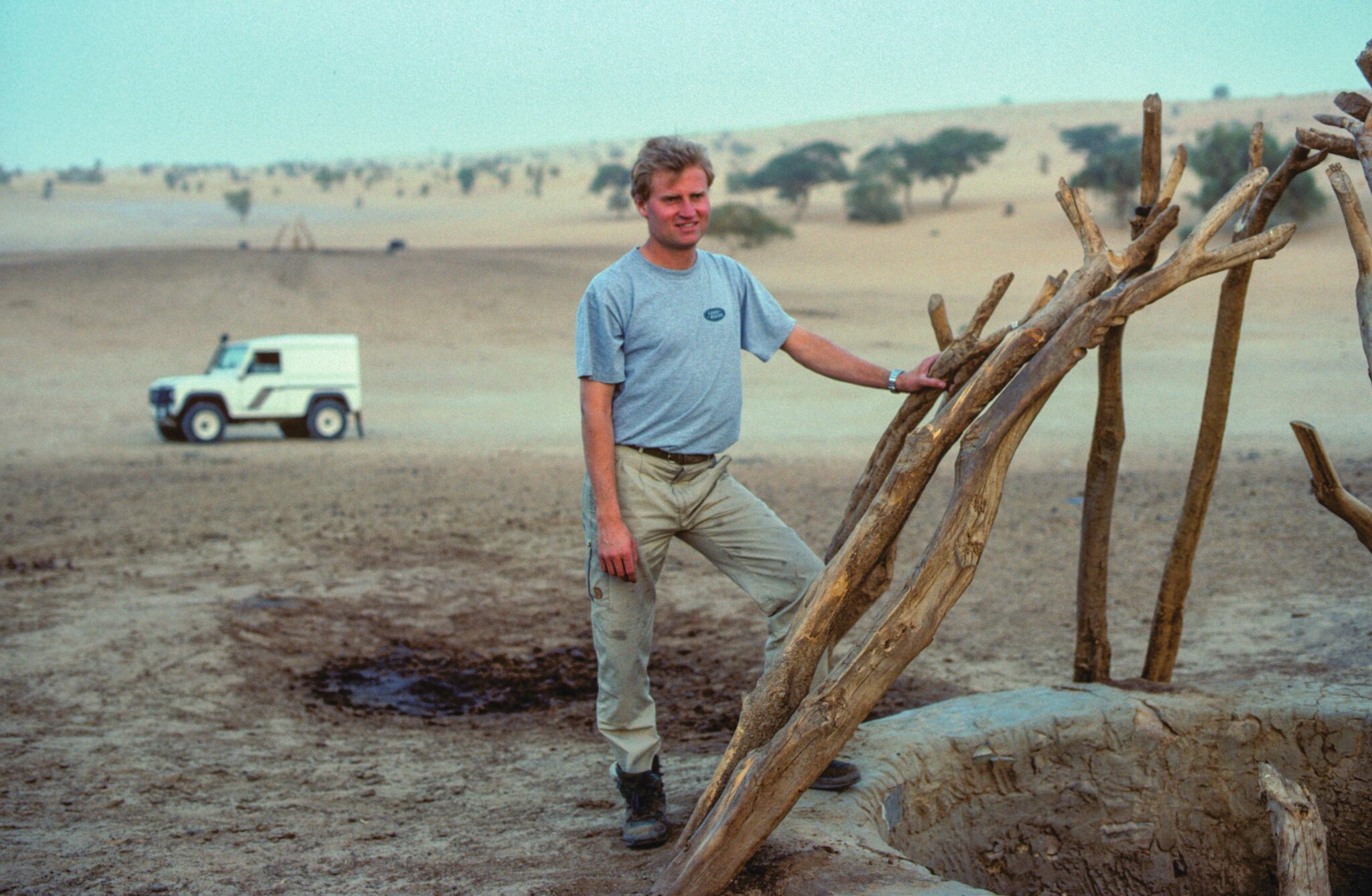
It's raining outside as we sit in a Cologne pub drinking a Kölsch and sending our thoughts to Africa. Our group consists of my old schoolmate Ralf, who now lives mainly in Bamako, Mali, our experienced travel partner Hans-Christian (known as HC), our Belgian Africa expert and travel organizer Jan and me, Amadeus Matzker - Land Rover specialist and motorsport enthusiast from Cologne.
We want to plan a special tour. The priority for us is free off-road driving. We want to drive as long as possible off the beaten track through the most scenic areas of the Sahara (Sahel zone). We are not bothered by the fact that we will be driving through politically insecure areas, as we have already survived a few Touareg attacks in the past.
The journey will take us through Morocco, Mauritania, Mali, Algeria and Niger back to Algeria and the ferry to Tunisia. A highlight is the stage from Chinguetti to Timbuktu, around 2,000 kilometers of free navigation without any supply options. For this reason, and also because of the political situation, our vehicles must have an autonomy of 3,000 kilometers with maximum off-road capability.
Route, vehicles and range
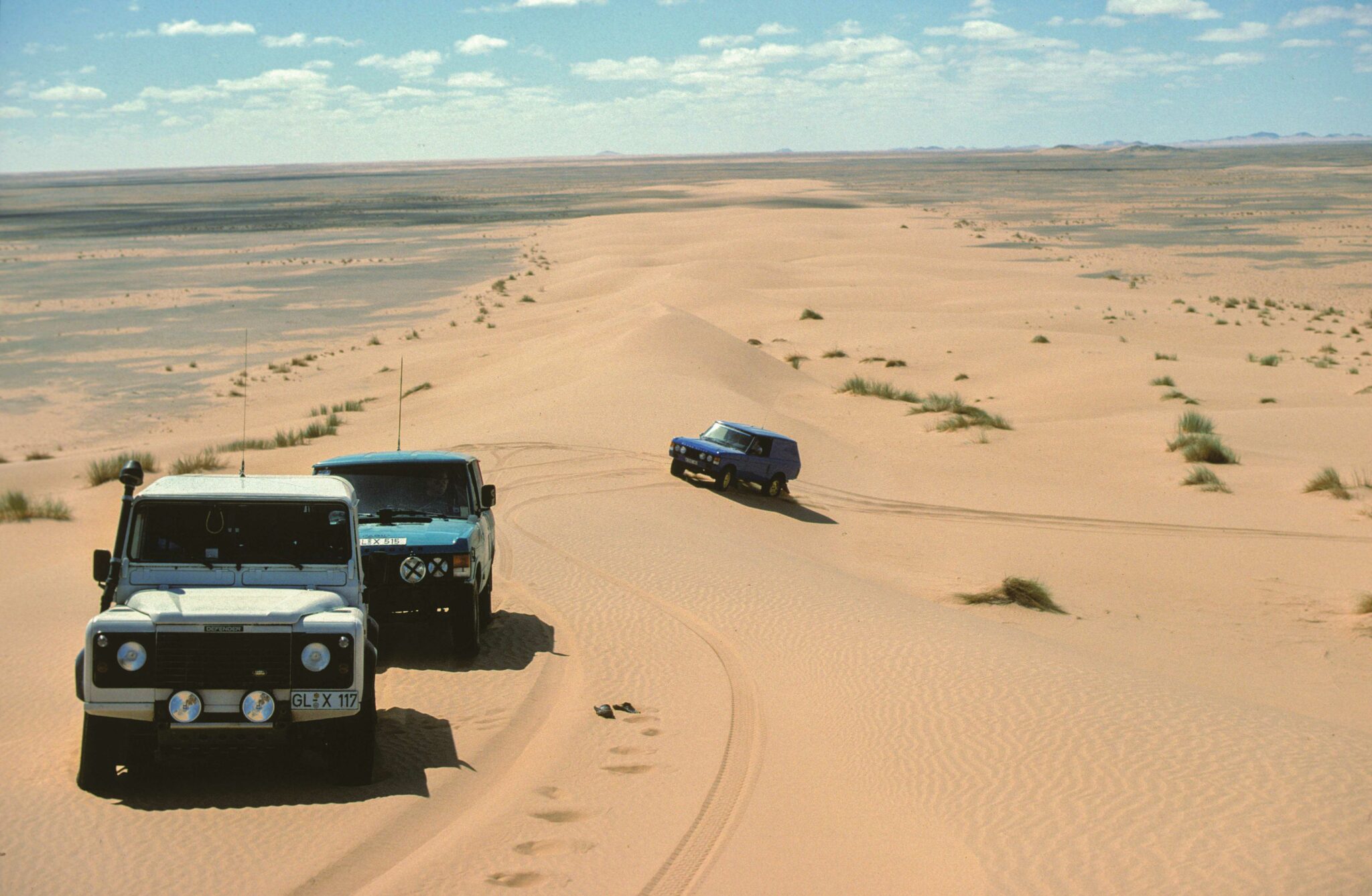
Four people, four vehicles, four concepts: Ralf chooses the Defender 110 V8 EFI Hard Top, power 185 hp, enormous charging possibilities. HC drives a sporty Range Rover 3.9 V8 EFI with 205 hp. Jan swears by the simplest technology, Range Rover 3.5 V8 carburetor with torque-oriented engine tuning. I drive the only diesel-powered vehicle in the field, my Defender 90 TDI with 145 hp.
The petrol engines need 1,000 liters of fuel to achieve the desired range, while the diesel Defender has to accommodate half of that in its small body. All vehicles have tuned suspensions with up to three gas pressure dampers per wheel.
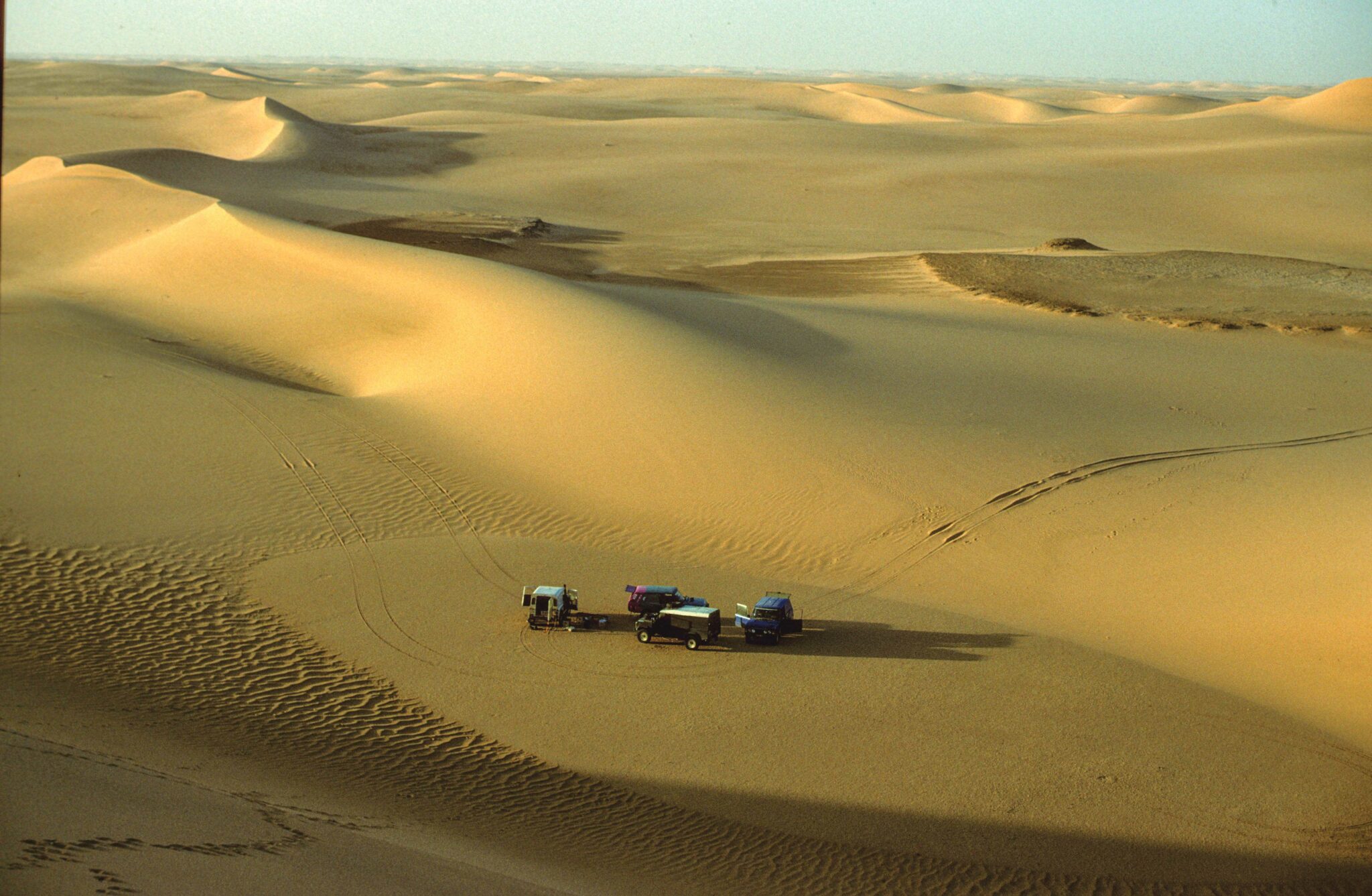
2,000 kilometers of free navigation: Chinguetti to Timbuktu - too extreme for the "Dakar"
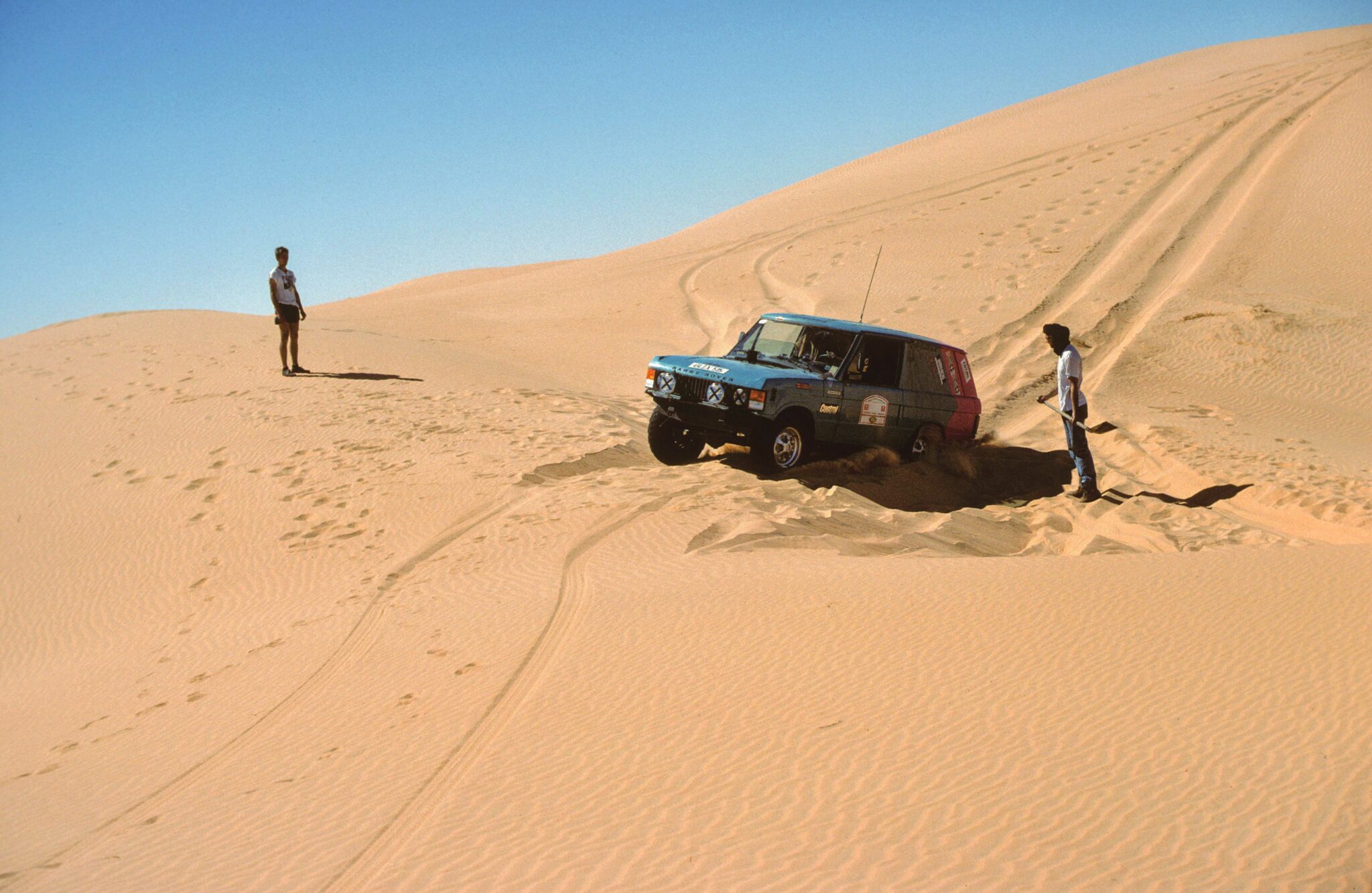
The first stage takes us from Nouadhibou to Atar, but not on a dirt road, but through Erg Akchar. A stage of the "Dakar" was canceled here because the dunes, which have no structure and are particularly soft, are almost impossible to penetrate. The vehicles are already under great strain here, having to dig through the soft sand with full fuel tanks. It is not possible to follow the GPS navigation, the landscape does not allow for a straight course. For one kilometer as the crow flies, three kilometers have to be covered. An ideal test before the difficult Chinguetti-Timbuktu stage that now begins, which takes us 2,000 kilometers through deserted areas without a track.
There are no tracks here. The landscape seems completely untouched. And contrary to expectations, our section of the route begins with large, flat and extremely soft dunes, some of which are overgrown with camel grass. The maps had indicated a more common landscape.
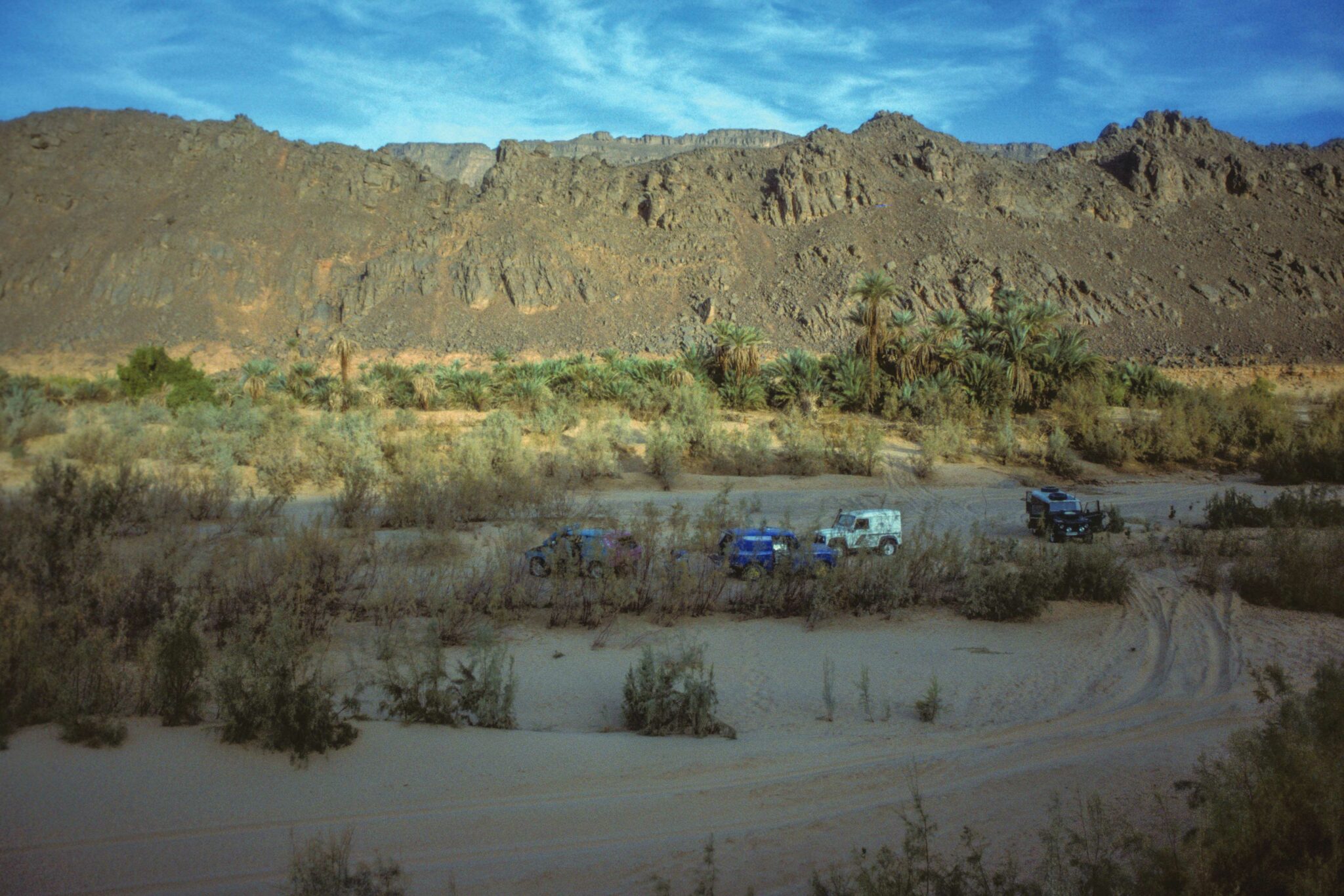
Then out of the frying pan into the fire: after 450 kilometers, the landscape changes to unforeseeable stone surfaces that force us to drive in first gear for hours on end due to the bumpy surface. As well as running out of fuel, we are now also running out of time, as our Algerian visa is about to expire. It's hard to describe the feeling of having struggled along for days at the limits of what's possible and still only having completed half of the route; almost 1,000 kilometers of emptiness separate us from both the start and the finish.
Martyrdom for the shock absorbers
But even worse was to come. The stony surfaces are replaced by sandy plains covered with tufts of camel grass. A mound of sand about 30 to 40 centimetres high has formed around each tuft of grass. In front of us is an involuntary shock absorber test facility of incalculable dimensions. The axles have to permanently cover the entire suspension travel and a speed of 30 km/h can hardly be exceeded. The shock absorbers reach temperatures of more than 100 degrees Celsius. After two days of driving like this, there's only one thing you want: to finally be able to step on the gas.
Our concerns about fuel consumption and the expiry of our visa become increasingly serious. Only shortly before Timbuktu do we reach the road we have been longing for. But here, too, we have an uneasy feeling, as an aid convoy we know had been attacked and robbed in this area shortly before. In addition, there is no official authorization to enter Mali this way. But reaching Timbuktu after 2,000 kilometers of free desert navigation from the north, as Heinrich Barth (German African explorer) once did, is an adventurous feeling.
Safer off the beaten track
A difficult undertaking, as it is a good 1,000 kilometers to get there and we are not allowed to use any roads. The risk of an ambush is simply too high here. However, we are safe off the beaten track and drive around the Adrar of the Ifoghas Mountains on the western side to the Algerian border in Bordj Badji Mokhtar. The customs officers in this sleepy little town, at the southern end of the 660-kilometre Tanezrouft road, can hardly believe where we've come from. Especially as they haven't seen any tourists for a long time.
It takes us a day of persuasion to make them understand our route. From Bordj Badji Mokhtar, a 600-kilometre dirt road leads us to Tamanrasset, where we finally take a short break for man and machine. We are the only tourists here.
And this is confirmed the very next morning when we hear the engine noise of a patrol plane 80 kilometers from the border. It is approaching our bivouac at a low altitude. We remain quietly in our sleeping bags next to the vehicles that we had covered the night before and fortunately are not noticed. That was close. Right on the border, a broken shock absorber bracket forces us to stop, but luck is with us and we finally leave Algeria unnoticed.
Ténéré, Aïr Mountains and Arbre du Ténéré
The incredibly beautiful landscape of the Ténéré rewards us for the risks. We head south along the Aïr Mountains. The transition from the golden-yellow sandy desert on the left to the pitch-black lava mountains on the right is fascinating. Without following a track, we fight our way through the highest dunes of the Ténéré to Gréboun.
Everything is demanded of the vehicles. We overcome several hundred meters of difference in altitude in soft sand. The tire pressure is reduced to 0.6 bar. Nature is incredible. We drive past the blue Chiriet mountains through the wild gorges of Tamgak to the Arakaou crater, whose 12-kilometre crown rises out of the dunes. Inside the crater, we climb the high dunes and have a fantastic view of the flat Ténéré desert. We continue to the legendary Arbre du Ténéré, where we change direction to the east to head for the oases of Fachi and Dirkou via the old tracks of the salt caravans.
The last bottle of whiskey
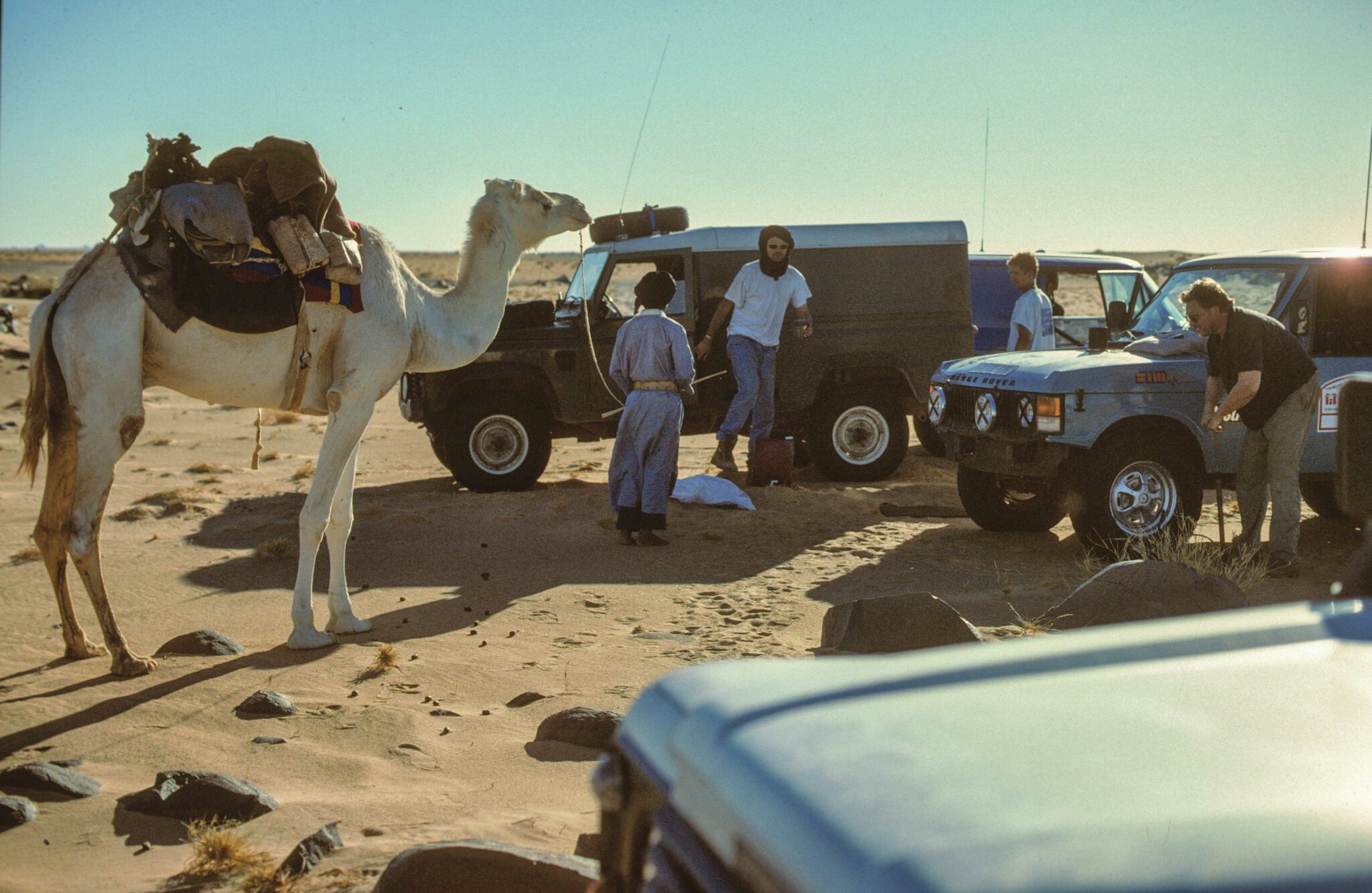
In Fachi, we have the impression that time stood still a few thousand years ago. Salt is extracted here in the simplest way, without any technical aids, dried in the sun in grueling work and transported away. However, the camel caravan now has competition from the good old round-hood Mercedes trucks.
It's another 300 kilometers from here to Dirkou through soft sand fields where even the V8 vehicles can't get past third gear. Once here, we first visit Jerome, an old friend and warhorse, over 80 years old. It's nice to see that he's doing well. Jerome fought against Rommel in El Alamein during the Second World War and has been selling smuggled fuel from Libya in Dirkou for almost half a century. He even supplied the Paris-Tripoli-Dakar rally. Soon it's time to say goodbye and move on.
We leave the Ténéré heading north via the legendary Balise Berliet track, only to return to Algeria unnoticed through the Erg Admer. We don't take the asphalt road that has unfortunately been built in the meantime, but rather the Oued Imhirou through soft sand, rocks and dense bushes in the direction of Illizi. The old track is completely overgrown, soft alluvial sand lets the vehicles sink in up to the wheel hub. But a hot spring in the oued makes up for it. To be honest, there are far worse things than enjoying the last bottle of whisky of the trip under the starry Sahara sky in the warm, bubbling water.
Return through Algeria and Tunisia
As we want to drive as little as possible on the road, we continue on dirt roads past Debdeb towards Tunisia. At the end of this tour, we are overcome with exuberance. After briefly calculating our remaining fuel supplies, we decide to take the direct route through the middle of the Grand Erg Oriental towards Chott el Djerid in Tunisia.
The last supplies
We should have known better; overconfidence is often punished. The vehicles are extremely sandy and we burrow further and further into the dune mountains of the Grand Erg. There are still flatter zones between the mighty sand mountains, which we overcome with increasing effort. But these areas become increasingly scarce and eventually one giant dune, dotted with an infinite number of smaller ones, stands next to another.
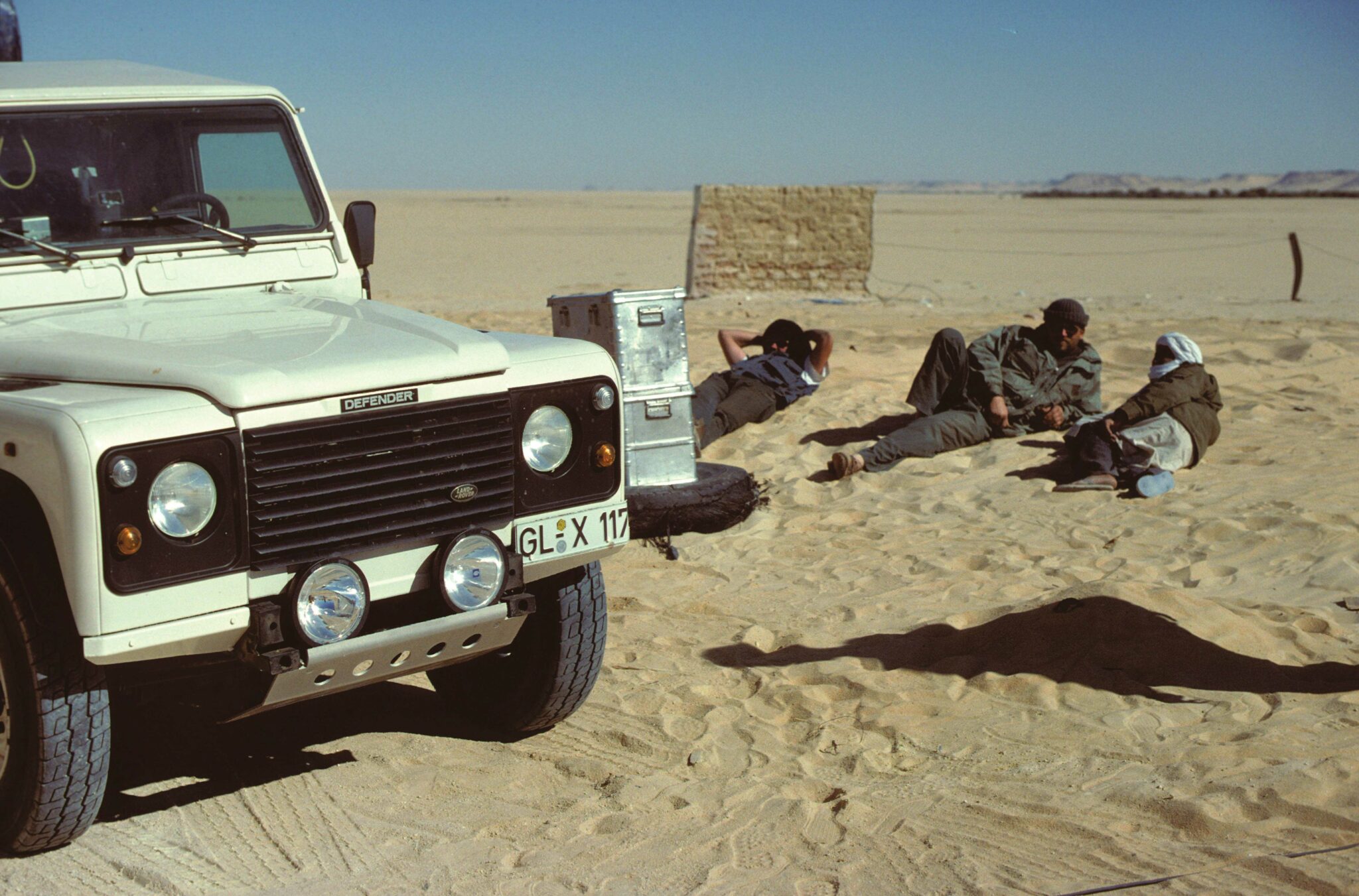
Like sand fleas, we work our way forward here too, only to realize that we no longer have enough fuel to turn back anyway. The calculated two days have already turned into five, and we've finally run out of food on board. Then we also run out of coffee and are down to water and sugar.
There can hardly be any talk of driving, because a wild zig-zag course with steep descents brings us just 20 kilometers closer to our destination during the day. Every meter is covered on foot beforehand so as not to waste any fuel. For the first time, after more than 200,000 kilometers of African experience, the question arises as to whether we can get man and machine out of the desert.
But we succeed.
Arrested as spies
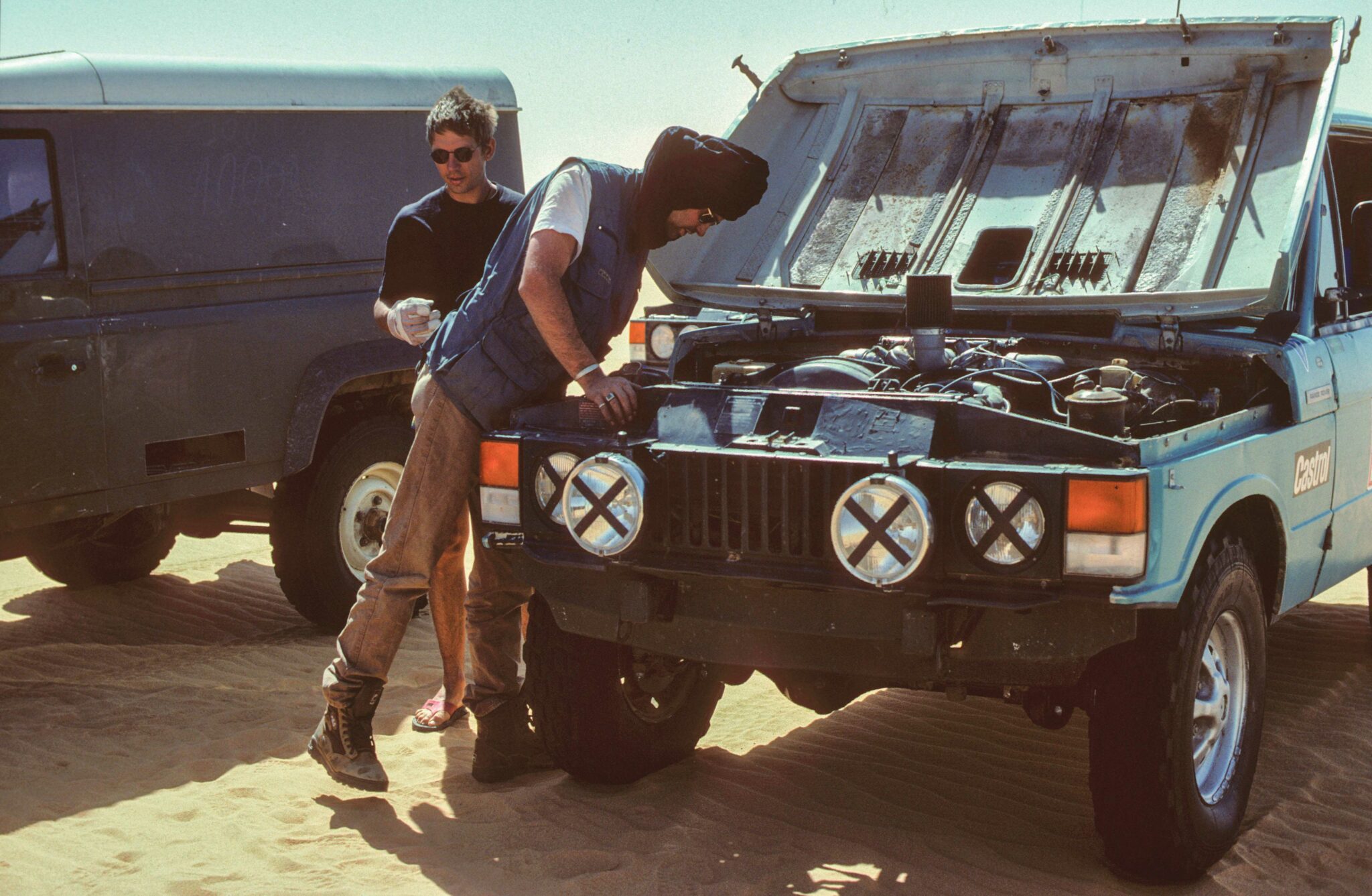
With a great deal of calm and intensive map study, we navigate the shortest possible route out of this labyrinth and are immediately arrested in the first village, Sabrina, for illegal entry. As alleged Algerian spies, we are immediately taken to the Ministry of the Interior in Tunis by the Tunisian secret service. Although we spend a whole day there trying to explain our route and our tourist motives, we remain suspicious to the Tunisian officials and are directed straight onto the ferry to Genoa to leave the country as quickly as possible.
A fitting end to an adventurous tour.
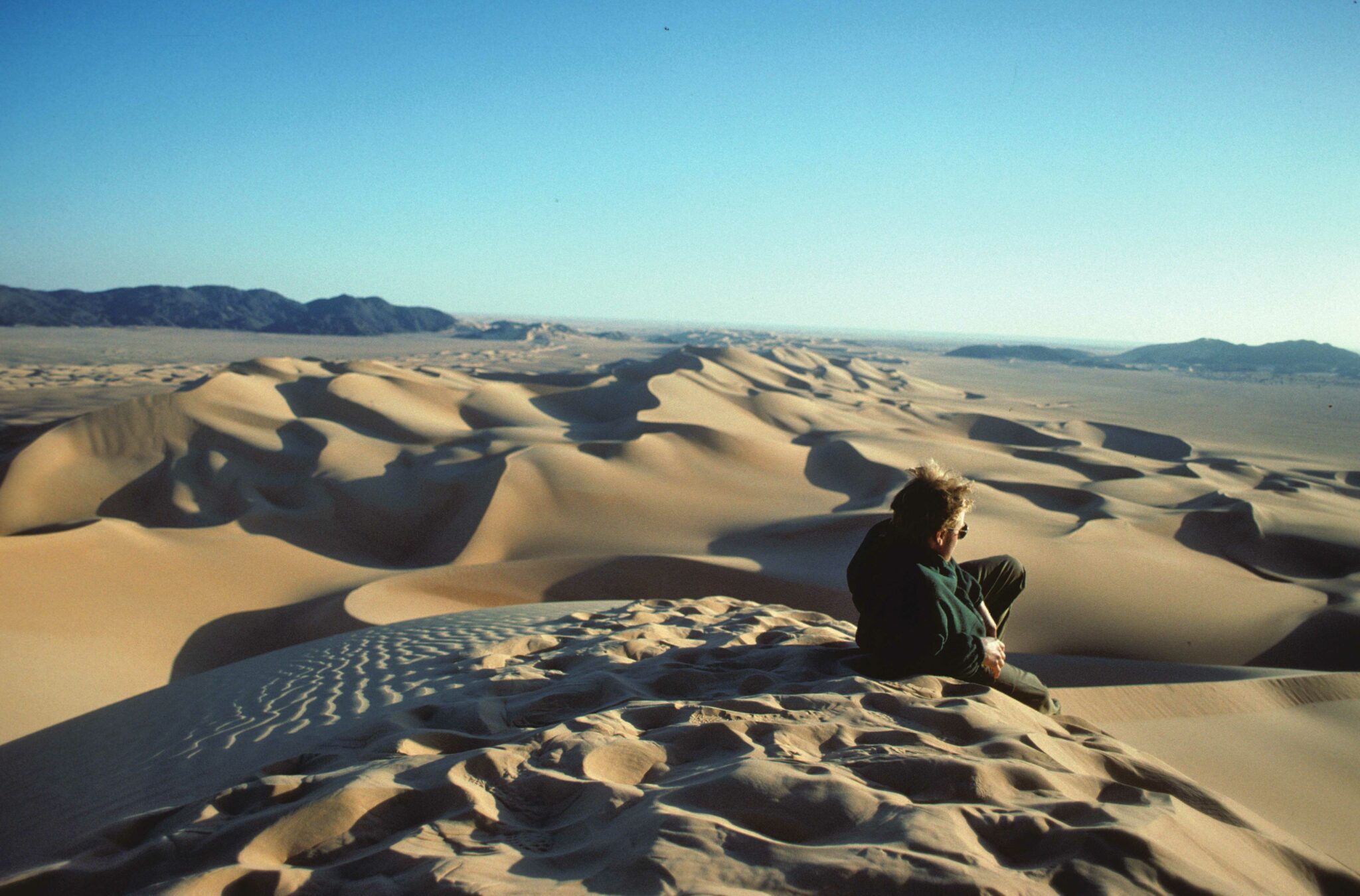
About the person: Amadeus Matzker
Since 1985, Amadeus Matzker has travelled the deserts of North Africa almost every year to experience the desert in all its untouched glory, away from civilization and on barely marked tracks.
In 1986, at the age of just 20, his passion turned into a vocation and Amadeus Matzker founded the Matzker company as a Land Rover specialist. As the designer and driver of his own rally team, Amadeus Matzker has taken part in more than 20 rallies since 2001, proving not only his skills, but above all the performance of his vehicles.
Amadeus Matzker died in an accident in the Mauritanian desert on January 24, 2016. He was 49 years old.
We are not publishing this text out of nostalgia. But because it shows that travel once meant choice. At a time when everything is documented, this report reminds us of how seriously traveling was once meant.
Photos: Matzker KFZ-Technik GmbH