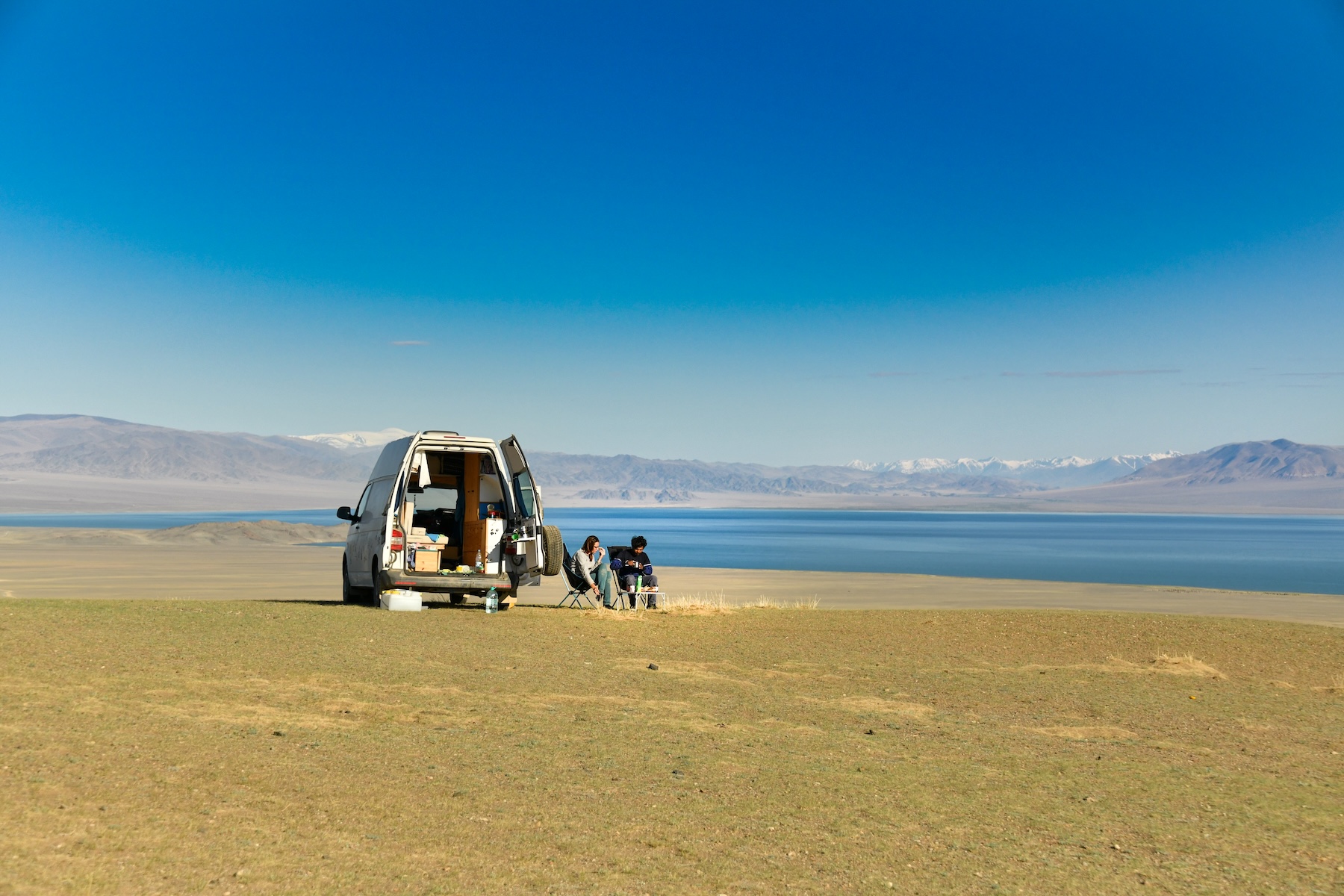
In this OLLI interview, Martina Zürcher and Dylan Wickrama talk about their first meeting in India, Dylan’s motorcycle trip around the world, life in a van, their raft expedition across the Pacific, and why freedom means something completely different to them today than it did in the past.
In OLLI Stories, we talk to people who live their lives differently—mindfully, courageously, and in their own unique way. No clichés. No glossy facades. Just honest answers to the questions you only ask yourself once the campfire is burning and the small talk is over. Stories that show: There’s another way.
Two people who set out on their own
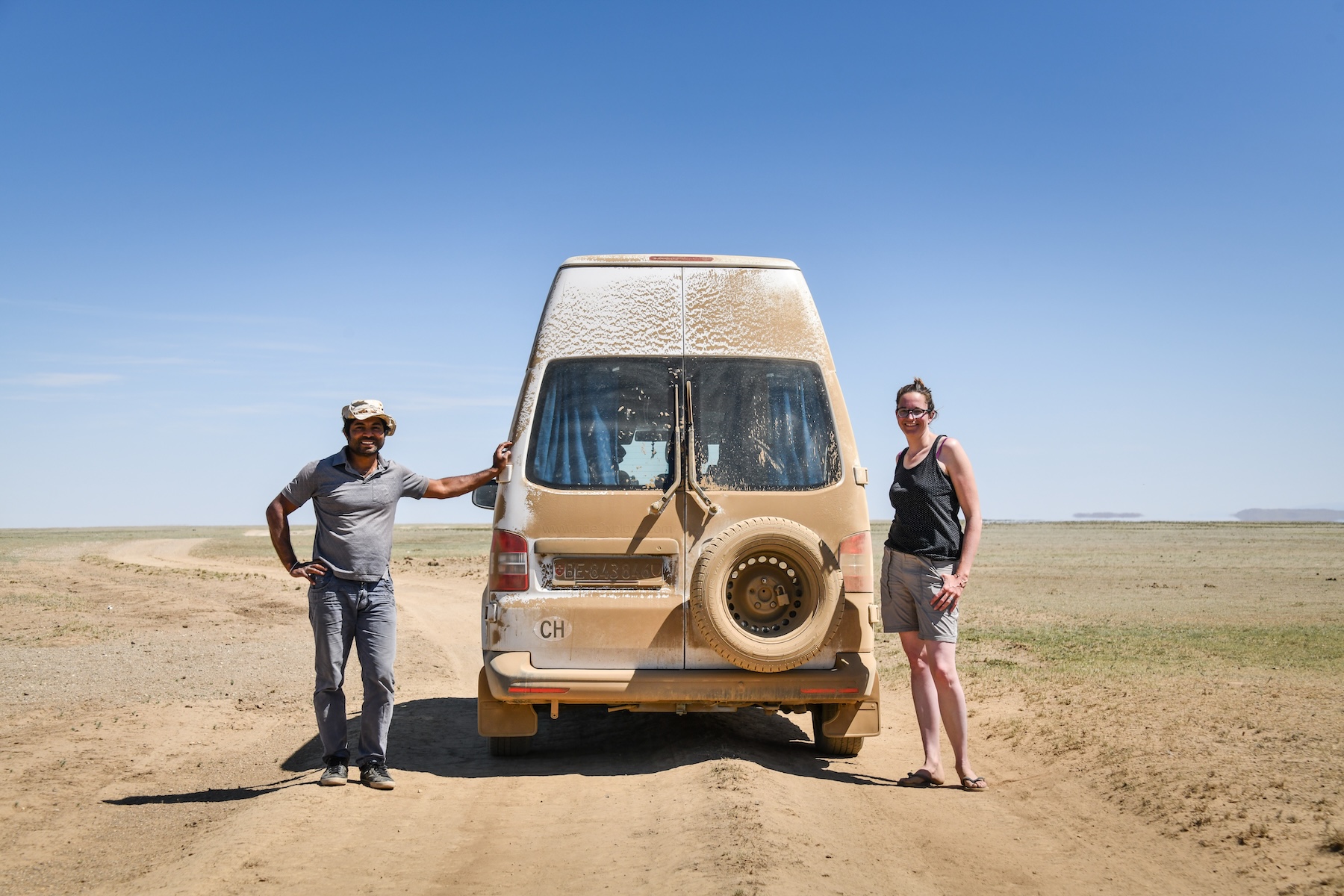
Before they traveled together through Europe and along the Silk Road all the way to Mongolia in a VW bus, wrote books, made films, and now dream of Japan while driving a Fiat Panda, Martina and Dylan led two completely different lives. One sold his auto repair shop and rode a motorcycle around the world. The other worked as a radio host, became a travel journalist, and founded a children’s aid organization in Mongolia at the age of 23.
We spoke with Martina Zürcher and Dylan Wickrama about their lives, their travels, and the decisions that have brought them to where they are today.
Who is behind Ride2xplore?
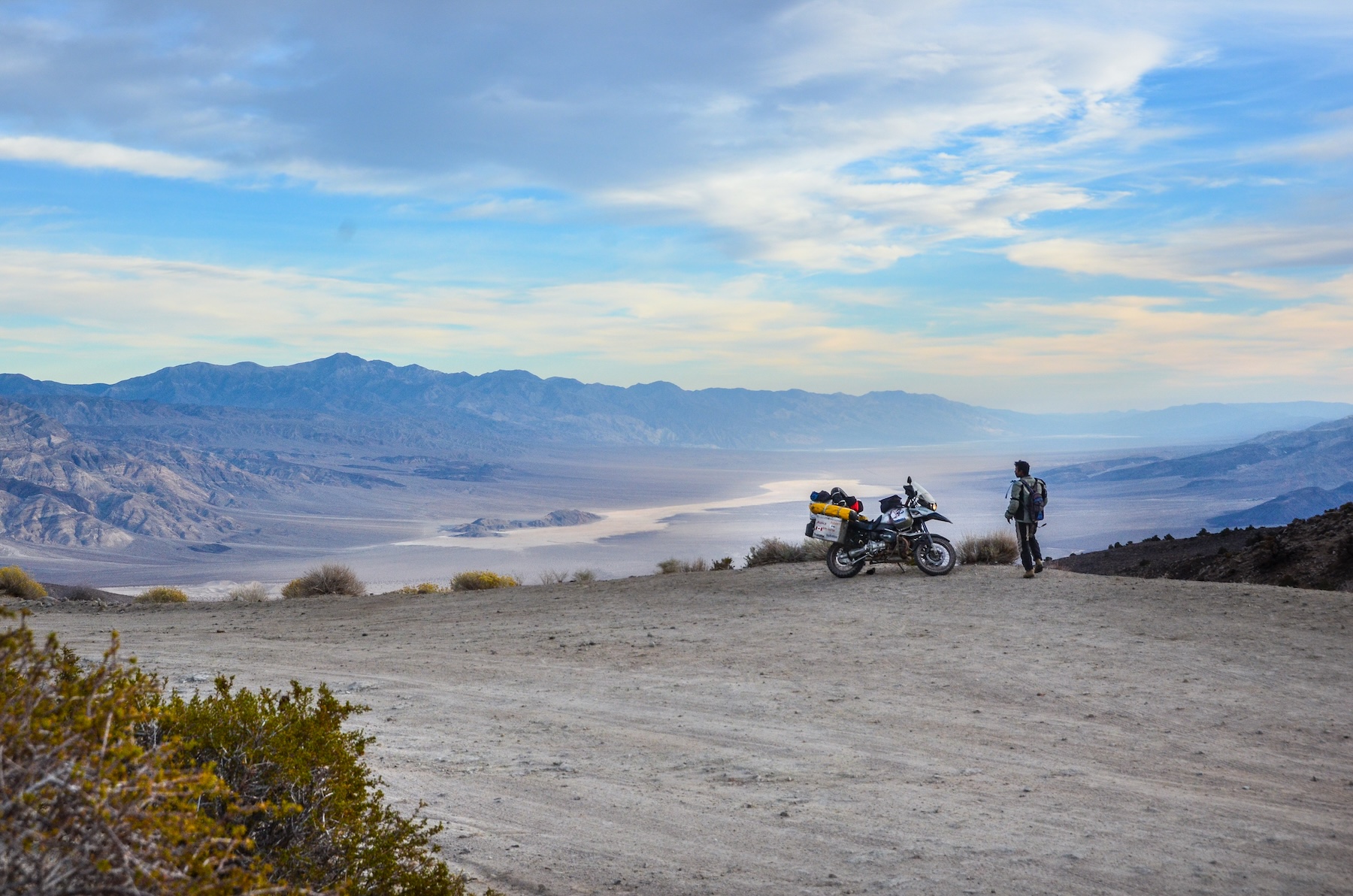
Dylan: I’m originally from Sri Lanka and left my home country with my stepfather, an Englishman, when I was 16. At first, I lived and studied in England for a while before moving to Switzerland for a woman. That was over 20 years ago—today, I’m probably more Swiss than Sri Lankan. Before my motorcycle trip around the world, I ran my own auto repair shop in Glarus. Eventually, I sold it to fulfill my dream of a three-and-a-half-year trip around the world.
Martina: I’m from Switzerland and have always loved being on the road. I was a radio host for many years, later studied journalism, and worked as an editor for the Swiss travel magazine Transhelvetica. On the side, when I was 23, I co-founded a children’s aid organization in Mongolia with some friends.
Do you remember the moment when you felt: “Things aren’t enough the way they are anymore? I want out. I want more out of life”?
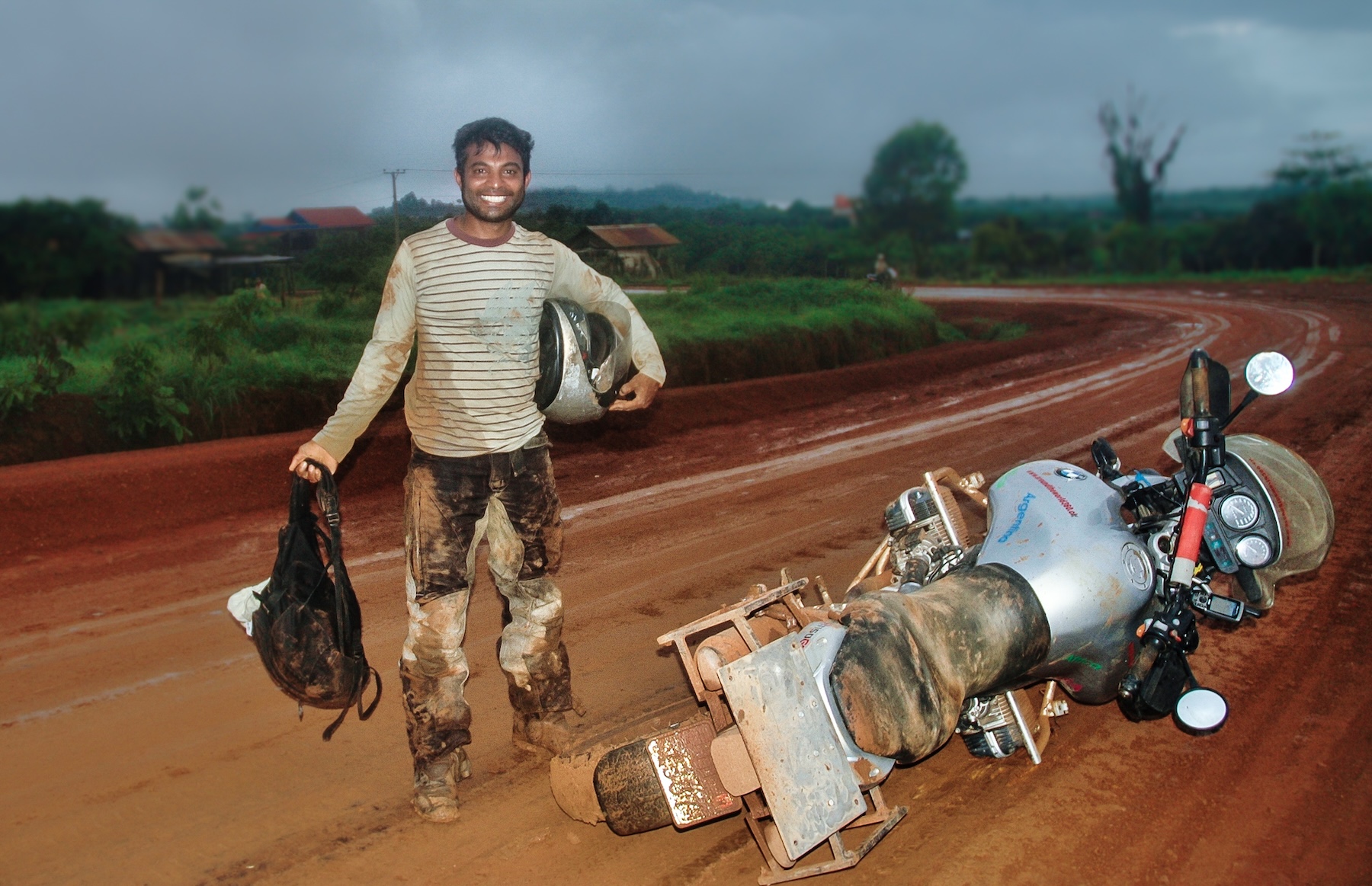
Dylan: Right before I set off on my trip around the world, someone offered me a loan so I could expand my workshop. One morning, I was in the shower. Outside, it was cold and gray in the Glarus Mountains. Then I suddenly thought, “Damn, I’ve always wanted to travel the world. Why should I take the next step on the hamster wheel right now—instead of just hitting the road?”
At the time, I was separated from my ex-wife, wasn’t exactly in the best mental state, and at the same time was ready to let go of everything and see what came next. Within three months, I’d sold my company and was on the road.
Martina: I’ve always had that feeling. That’s why, as a young woman, I studied in India for eight months, and at age 23, I founded a children’s aid organization in Mongolia with some friends. Both experiences shaped me incredibly. I learned so much from them and grew as a person.
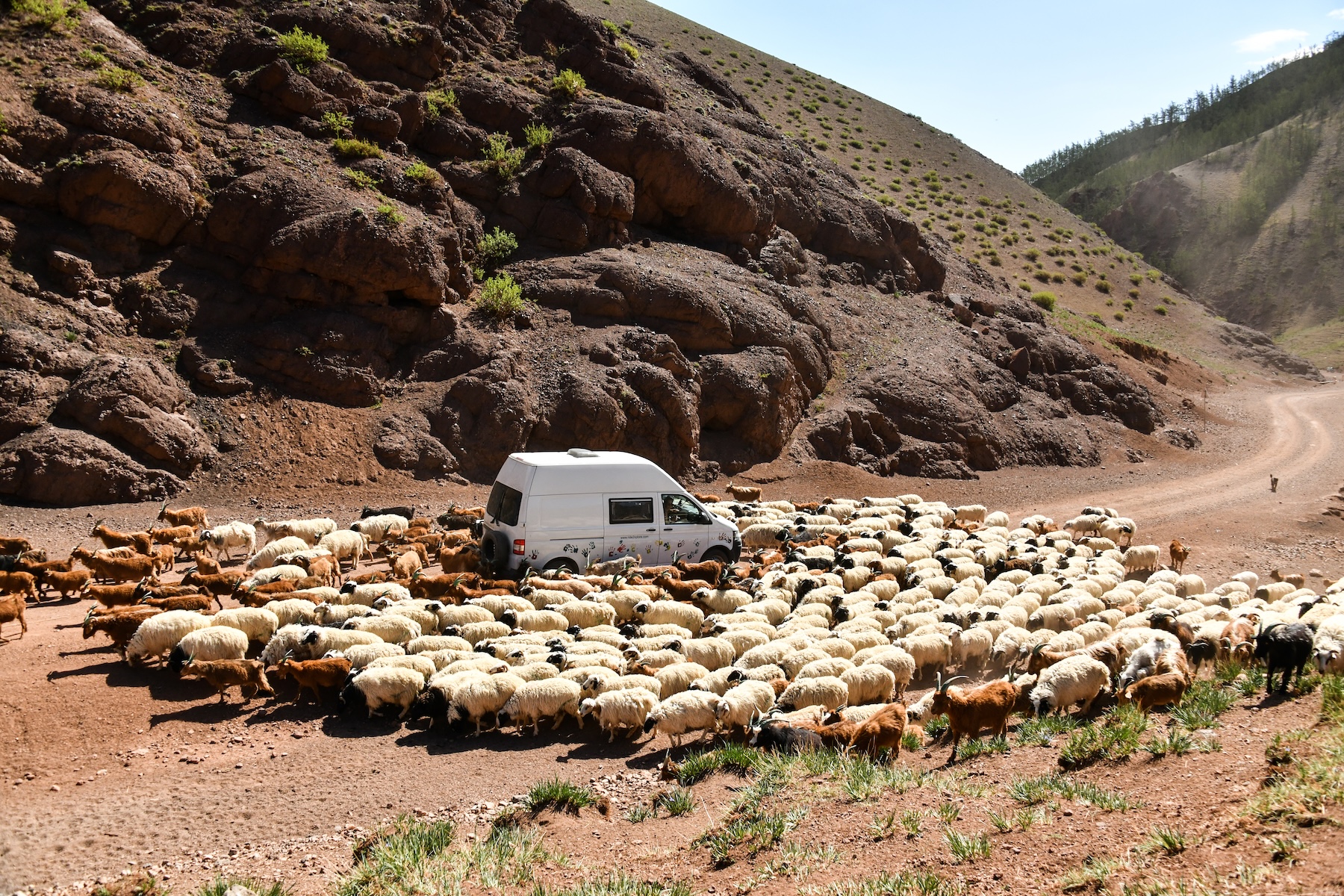
"Anyone who travels quickly realizes that there are countless shades of gray between black and white. Or rather: an infinite number of colors."
Have there been situations where you’ve consciously decided to go against reason, expectations, or well-meaning advice?
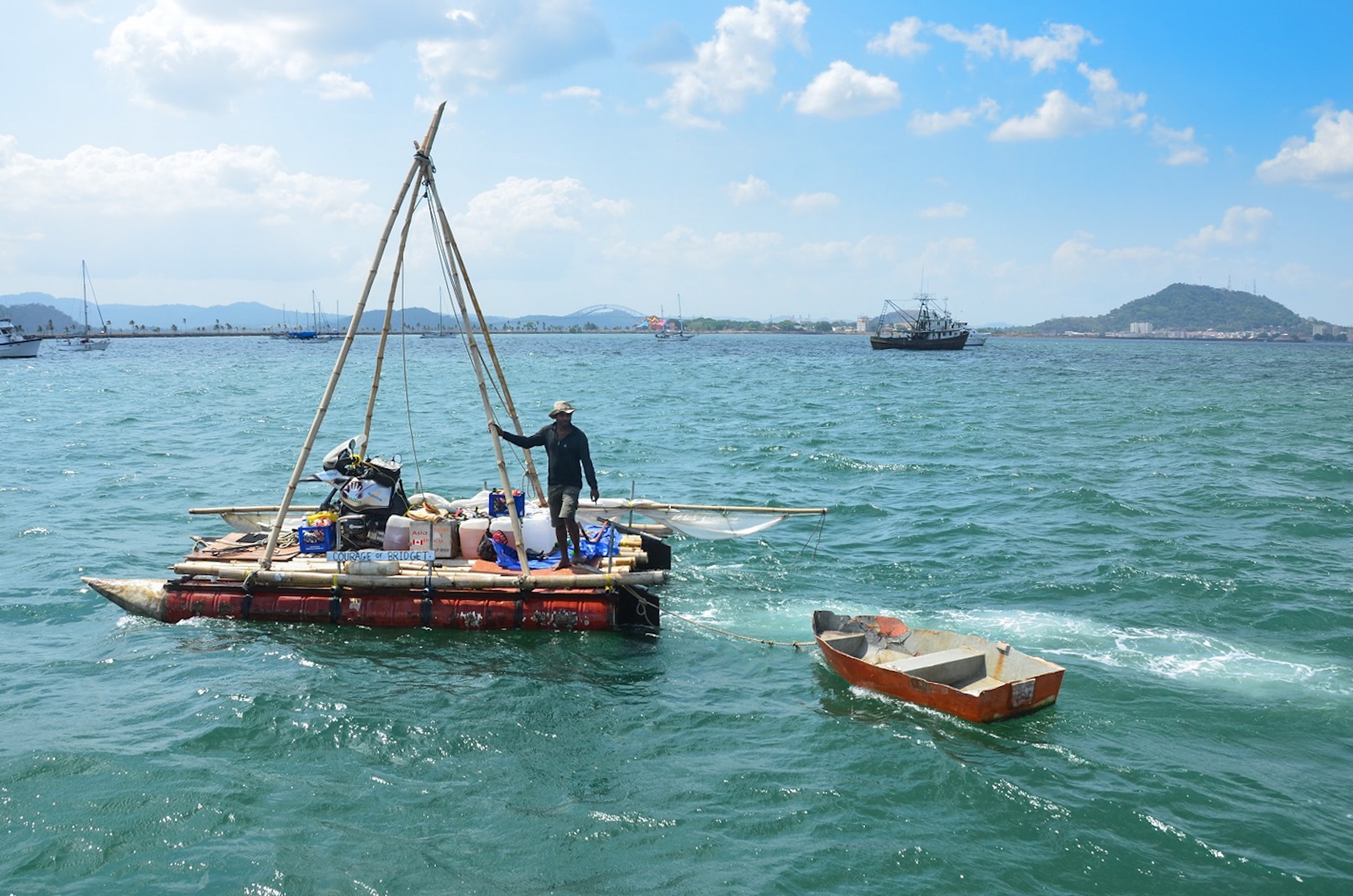
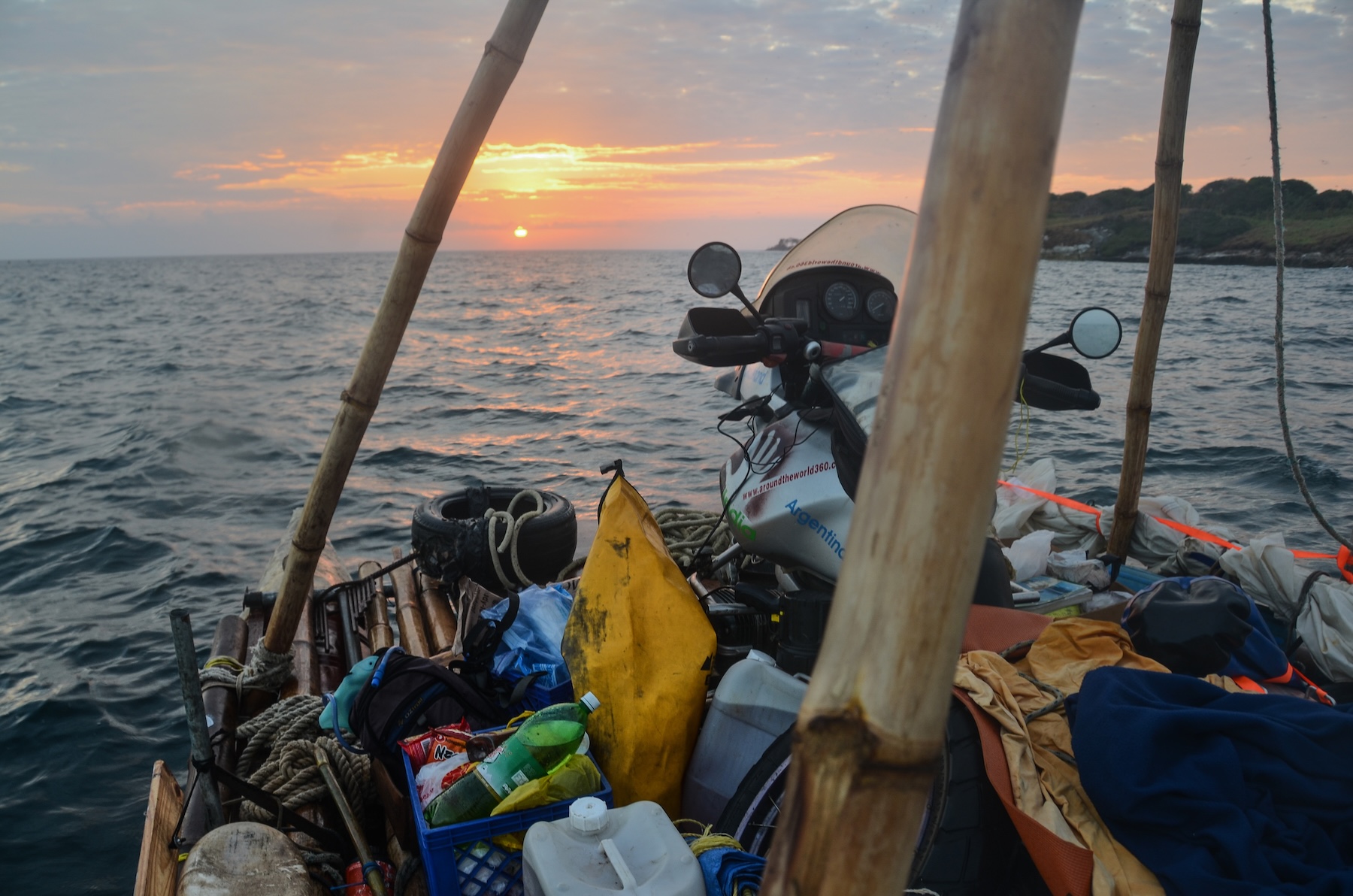
Dylan: Actually, all the time. When someone tells me, “That won’t work,” I almost feel compelled to prove that it *will* work. That was especially true for my raft adventure. I mean, who converts their motorcycle into a raft and rides it 800 kilometers from Panama to Colombia—across the Pacific and with no sailing experience? The day before I set off, someone told me I’d kill myself doing that.
Martina and I weren’t in a serious relationship back then, but we already knew and loved each other. She was probably the one who tried hardest to talk me out of this crazy idea. Looking back, that raft expedition was the most impressive experience of my life.
Martina: I’ve always gone against what others considered sensible. Later, my parents also thought our decision to give up our apartment and jobs was a crazy idea. There will always be people who speak out against it. That’s why I think it’s important to tune out others’ concerns when a decision just feels right to you.
"It was the hardest time of my life—and at the same time, the best."
What proved to be more challenging than you expected along the way—physically, mentally, or emotionally?
Dylan: My eight-week rafting trip was more difficult than I expected in every way. I thought, “I’ll just paddle along the coast toward Colombia.” In the end, I was on the water for eight weeks, nearly two of which were spent on the open sea, without knowing exactly where I was. I was chronically exhausted because I was traveling alone and had to keep a constant lookout. I could never sleep for more than maybe two hours at a time.
Even months later, I’d get teary-eyed whenever I saw water or talked about that time. Being at the mercy of the elements for so long, weathering two storms, and reaching land again thanks to a great deal of luck and tireless work was definitely much harder than I’d expected. But it was also much more beautiful.
A Temple in India
How and where did you two meet?
Martina: I spent a semester of my studies in India. Why spend a semester abroad in Hamburg when Ahmedabad in Gujarat was also an option? Since my semester in Switzerland didn’t start again until later, I traveled around the country afterward. I met Dylan at a temple in Hampi. He’d already been traveling the world on his motorcycle for about nine months and was stuck in Hampi because he was waiting for replacement parts for his bike to arrive from Germany. We struck up a conversation because he noticed my Swiss accent. It became clear to me pretty quickly: “He’s the one.” Dylan, on the other hand, needed about three years to make up his mind. That was in 2011.
A chance encounter turns into a journey together
What was the final catalyst that really made you two set out on this journey?
Martina: When Dylan returned to Switzerland from his trip around the world in 2013, we decided to give it a try together. Up until then, we’d really only known each other on the road, because I’d visited him during each of my vacations while he was traveling. Soon, the idea arose to write a book together about his journey—especially about the rafting expedition. We decided to go “all in” and start our own business with the book and our talks. That was the first step. A year later, we gave up our apartment and moved into the van full-time. We were on the road so much for work that it seemed pointless to pay rent every month.
For Dylan, it was easy to let go of everything again. For me, there was a very personal trigger. In 2011, I lost a friend my own age—whom I’d known my whole life—to cancer. That’s when it suddenly dawned on me: We have no guarantee that we’ll grow old.
"Someday is too late."
How has the van changed the way you travel? What were the pros and cons of life on four wheels?
Dylan: The best thing about traveling in a van—or in your own vehicle, for that matter—is the freedom to go wherever you want, whenever you want. To stay if you like it there. And to move on if something isn’t right. Not having to book hotels or trains really only has advantages for us.
Martina: For Dylan, there’s nothing that isn’t possible with the van anyway. Thanks to him, I’ve learned to keep pushing my comfort zone and just try new things.
What has your route been like so far?
Martina: Dylan traveled by motorcycle from 2010 to 2013, setting off from Switzerland and traveling through the East and Africa to go around the world. Since 2016, we’ve been crisscrossing Europe—mostly without a set plan. In 2018, the Silk Road took us all the way to Mongolia in our VW bus. Next, we’re dreaming of reaching Japan in our Fiat Panda. We’d love to drive through the Middle East. Right now, though, that’s unfortunately pretty difficult.
Did you plan your route in advance, or do you decide on things spontaneously?
Dylan: We deliberately chose Mongolia as our destination because it has long since become a second home for Martina. Otherwise, we usually travel pretty much without a plan and go with our gut.
Martina: Dylan’s trip around the world was actually completely unplanned. Sometimes he’d flip a coin to decide which border to head for next.
Dylan: The longer you’re on the road, the easier it becomes to listen to your intuition. And, of course, in the end, very practical matters like visas and entry requirements also play a role.
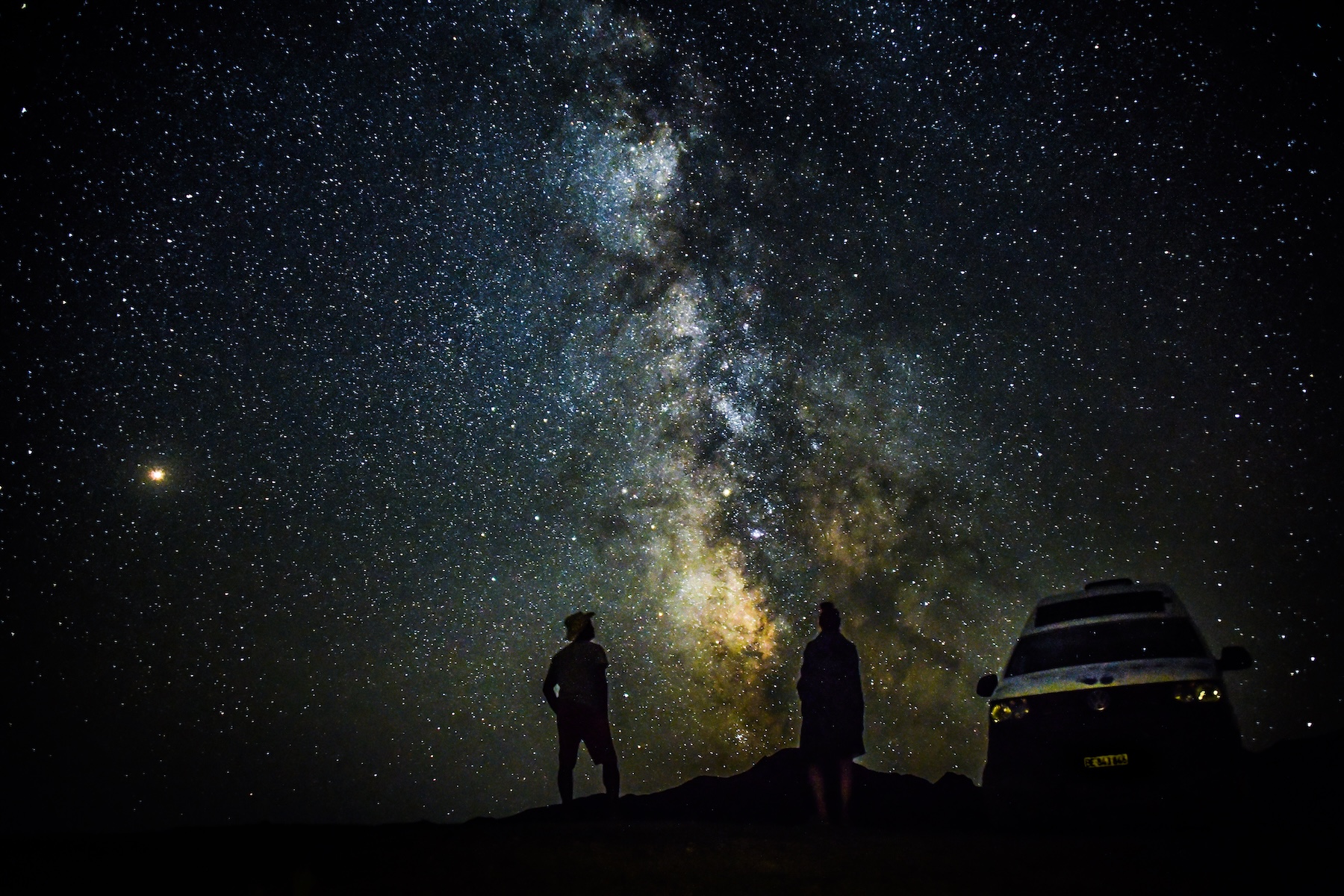
The Day That Changed Everything
How has life on the road changed your perspective on safety, possessions, control, and the future?
Martina & Dylan: In 2017—after not even a year of full-time van life—we were involved in a head-on collision on a German highway. A driver deliberately drove into oncoming traffic because he wanted to take his own life. Two people lost their lives in the accident. We could just as easily have been killed or seriously injured. Instead, we were simply incredibly lucky that day. Our van—our home—was a total loss. We, however, were able to get out practically unharmed. Since then, it’s become even clearer to us: there’s no such thing as safety. Not even when we’re in supposedly safe Germany. So why not take a road trip to Central Asia?
None of us knows what the future holds. That’s why it’s even more important for us today to be happy and content in the here and now. And if we aren’t, it’s up to us to make a change. That’s our guiding principle—and the only thing we can truly influence.
In this context, material possessions no longer play a major role for us. After all, everything we own ultimately owns us and our time. That’s why, with every purchase, we ask ourselves: Is it really worth our time?
We don’t consciously live a minimalist lifestyle. It’s just turned out that way over time. Our desire to consume is much smaller today than it used to be. On the contrary: Sometimes we even think we still own too much. It’s amazing what we humans accumulate.
Perhaps the biggest difference is this: Our focus has shifted from “What am I missing?” to “What do I really need to be content?”
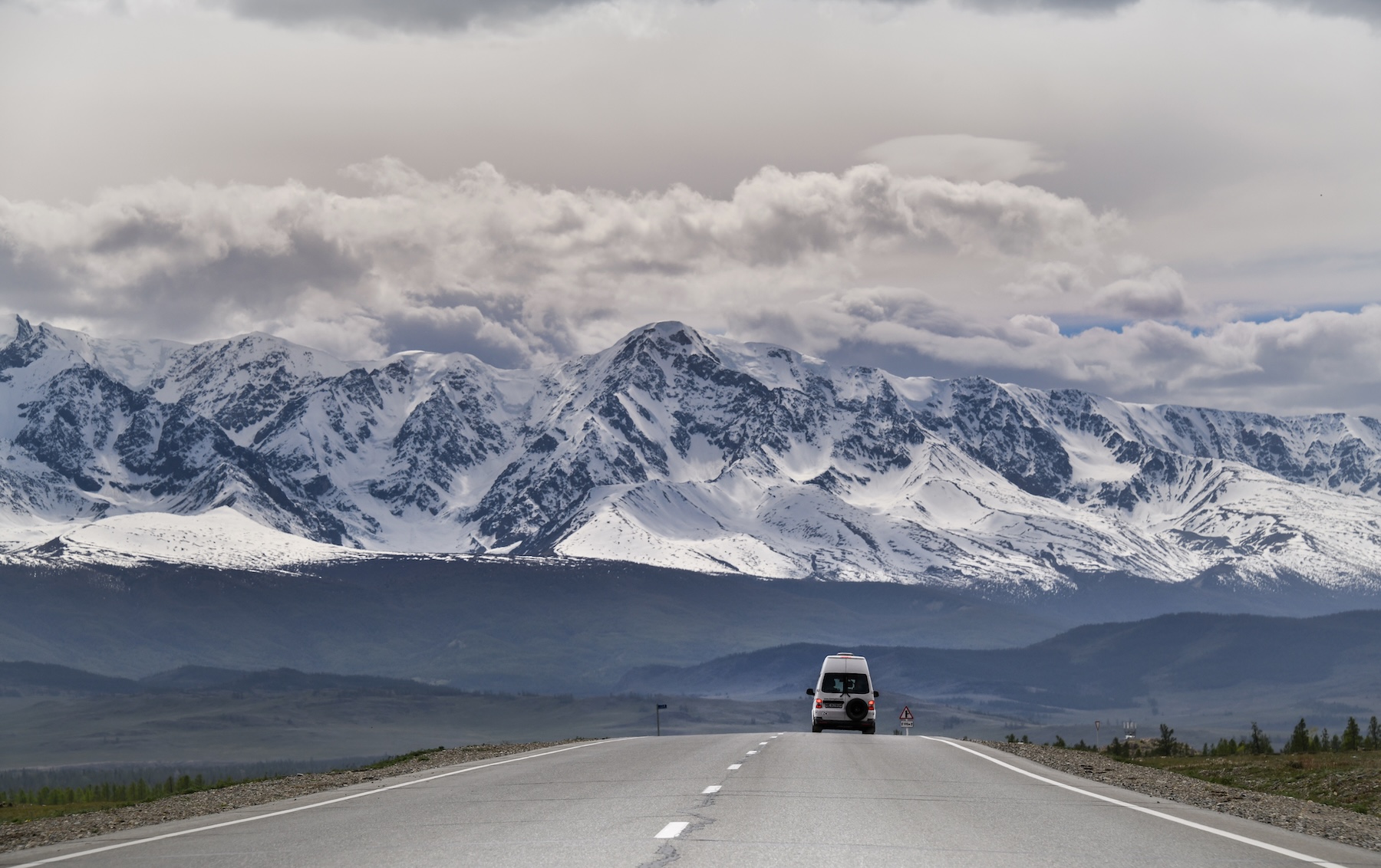
The world is bigger than headlines
Has your view of the world changed as a result of your long journey?
Martina & Dylan: Definitely. When you’re not traveling, you often understand the world only through headlines. Then you usually get just that one perspective on a country. When you travel, you quickly realize that there are countless shades of gray between black and white. Or rather: an infinite number of colors.
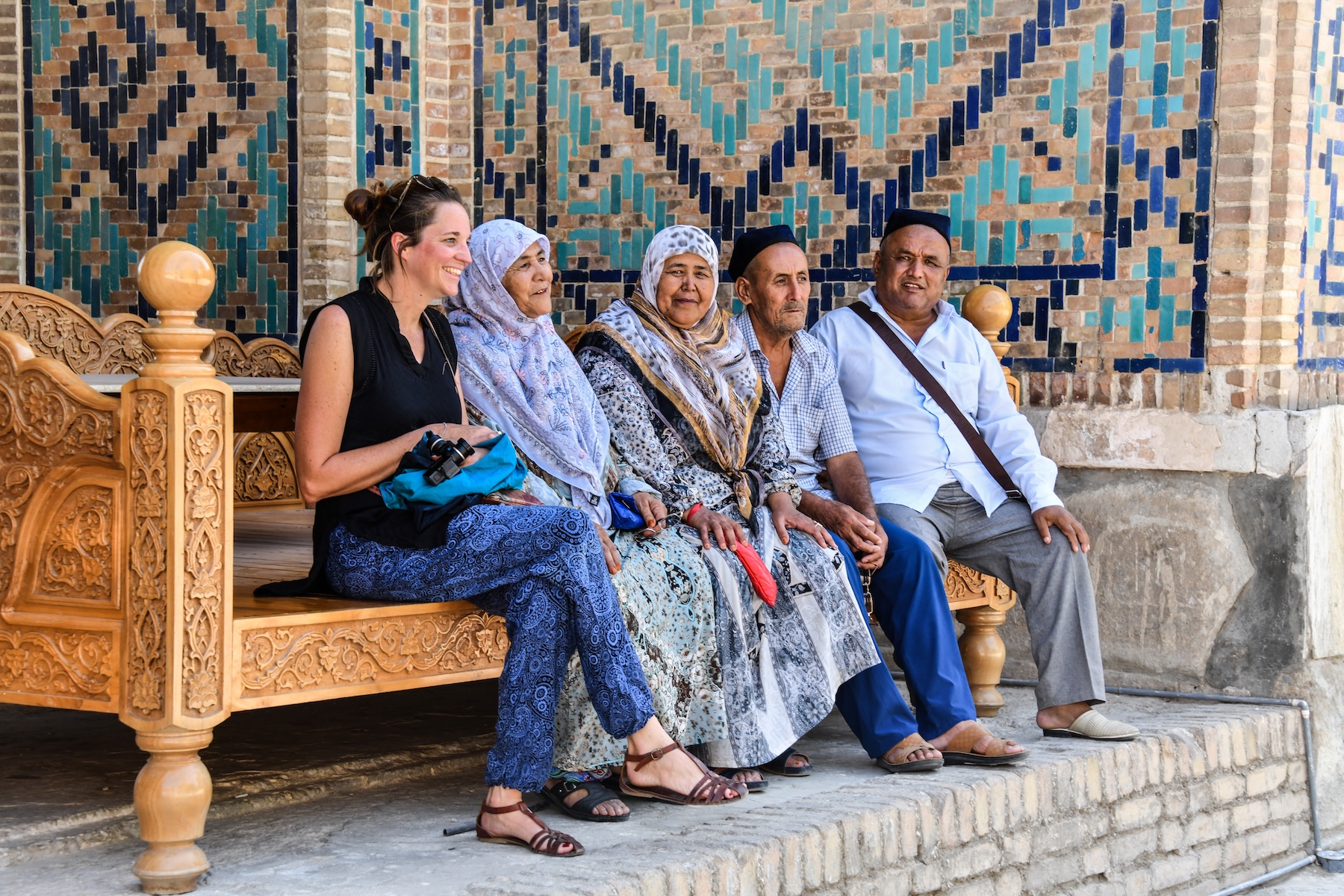
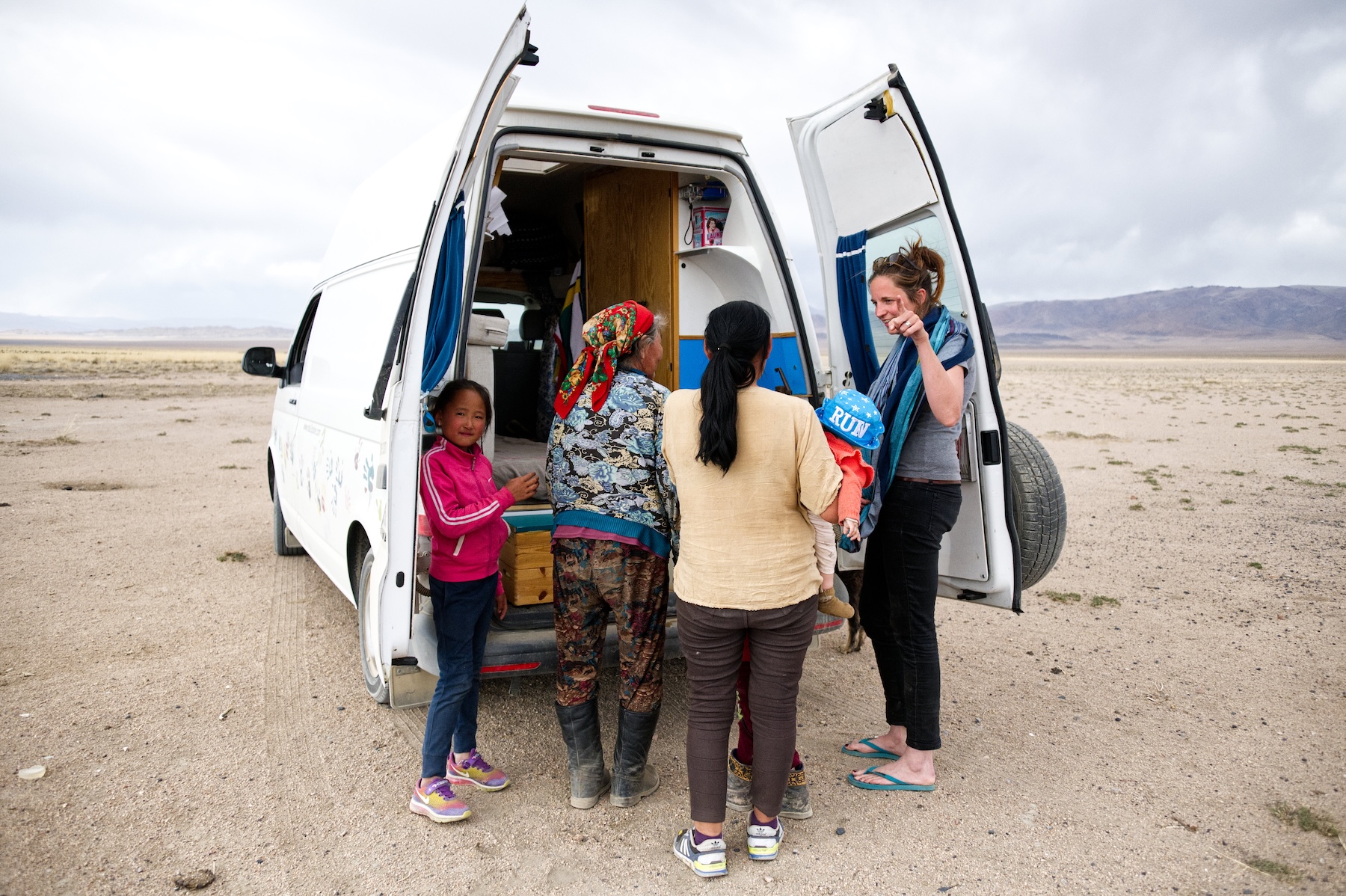
For us, traveling means, above all, sitting down at a table with the local people. Listening. Understanding instead of judging. That’s how we learn, step by step, what’s considered normal elsewhere—and how strongly we ourselves often view the world through a Eurocentric lens.
Encounters That Last
Were there places, people, or moments that particularly shaped, moved, or changed you—and that you’ll never forget?
Martina: There are so many. For example, after our motorcycle broke down, we lived on the couch of an Argentine auto mechanic and his girlfriend for a week. Even though we could communicate almost exclusively through Google Translate, all four of us were crying our eyes out when it was time to say goodbye. It was one of those vacations where I was visiting Dylan on his world trip, and honestly, I would have preferred to see more of the country than just the motorcycle repair shop. So, at times, I was actually pretty annoyed by the situation. On top of that, daily life in Argentina—with its very late dinners—followed a completely different rhythm than ours.
Looking back, though, that very week was one of our greatest highlights. Their oldest daughter now bears my name, and even more than ten years later, we’re still in touch. That’s why Bahía Blanca is at the top of our travel list—just like Ulaanbaatar, Mumbai, or Bizerte.
For us, traveling means leaving a piece of our heart behind everywhere we go—and having people everywhere we’d like to see again someday.
What does freedom mean to you today—and how has that changed?
Martina & Dylan: For us, freedom means being able to do what we want—with the resources we have. But it also means living in a country that makes this freedom possible in the first place. That’s why, even though we travel a lot, we would never want to leave our home country, Switzerland, for good.
Anyone who travels a lot realizes that being able to make this our home is anything but a given. And just how incredibly privileged we are as Swiss citizens.
If you had to explain “One Life. Live It.” in your own words—what does that mean to you personally?
Martina & Dylan: To live in such a way that every day is the happiest day of your life. At first glance, it sounds like a trite calendar quote. But ever since our head-on collision, that’s exactly what we mean. Being happy in the here and now. With what we do. Not waiting, not fretting, or staying somewhere where we can’t fully flourish. Instead, taking action. Tackling things. Getting things done. Even if others shake their heads at our way of life. For us, that also means living every day with gratitude—grateful that we’re allowed to live in this wonderful world.
What would you regret in your life if you hadn’t at least tried it?
Martina & Dylan: Life in a van. And most likely the trip with the Panda, too. Another one of those crazy ideas that makes people ask, “But why?” Our answer is simple: Why not? We’re having so much fun with it.
For anyone who's still hesitating
What would you say to someone who feels they should take the plunge but is still hesitating?
Martina & Dylan: Imagine you only had one year left to live. Would you still hesitate—or might you decide to do something completely different?
If you meet someone who feels like they should set out but is afraid—what wouldn’t you say to them?
Martina & Dylan: We certainly wouldn’t tell them that there are bound to be situations along the way where they’ll be even more afraid. Instead, we’d say: Fear is your best guide—as long as it doesn’t paralyze you. And take small steps. The steps that work for you. You’ll grow along the way. Every day you spend traveling gives you more confidence in yourself and in what you’re capable of.
After all, Dylan didn’t start with the raft expedition either. Before that, he spent three years traveling the world across four continents and had countless experiences.
Every time you step outside your comfort zone, you grow a little. And each time, it gets a little easier.
What one thing would you have liked to spare your past self—and what should you have told them?
Martina & Dylan: Most likely the recurring question: “Can you trust them?” That question still lingers sometimes, even today. But our own experiences—and those of many other travelers—show something different: About 95 percent of the people out there are good. You really have to look hard to find the bad apples.
That’s why we’d probably give our past selves this piece of advice instead—it might sound a bit cliché, but it’s still true.
"The world is better than the headlines."
The question many people ask: How did you finance your travels and your life on the road—and how did you deal with the uncertainty?
Martina: Before his round-the-world trip, Dylan sold his workshop and traveled until there was no more money coming out of the ATM. Since we’ve been traveling together, we’ve actually always worked while on the road. We write articles and books, produce films, take photos, create podcasts, lead a motorcycle tour once a year in Dylan’s home country of Sri Lanka, and during the COVID-19 pandemic, we built up our business for composting dry toilets.
Dylan: A lot of different things come together for us. That’s exactly what we love. We love being able to constantly reshape our daily lives. And even though it might not look that way from the outside: We both absolutely love our work. We’re glad we took the plunge into self-employment back then, took personal responsibility, and believed that this kind of life is possible.
What do you want to leave behind for the people you've met?
Martina & Dylan: The inspiration to not take yourself too seriously, to enjoy life, and to take responsibility for your own happiness.
Bayasgalant – Children's Aid Mongolia
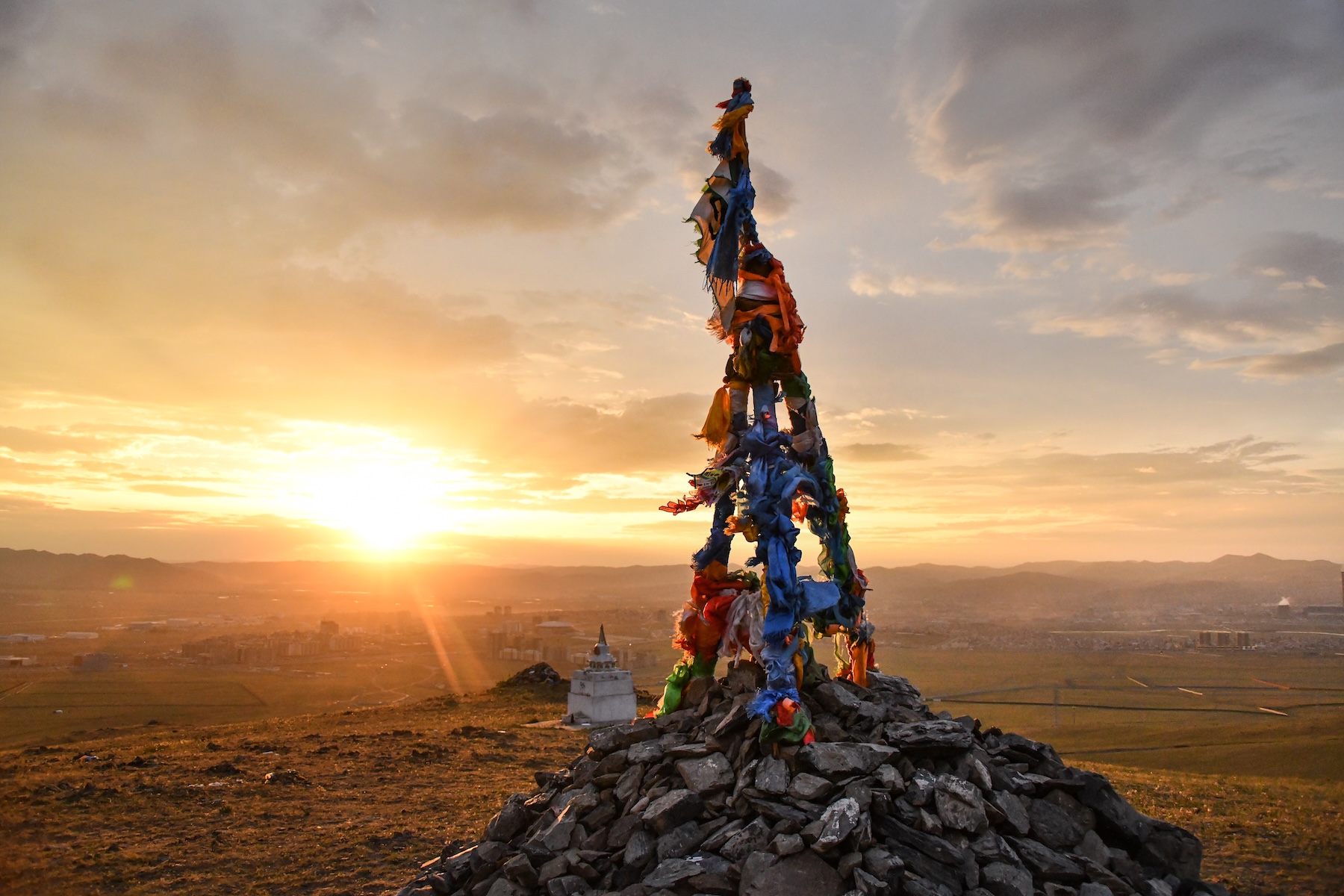
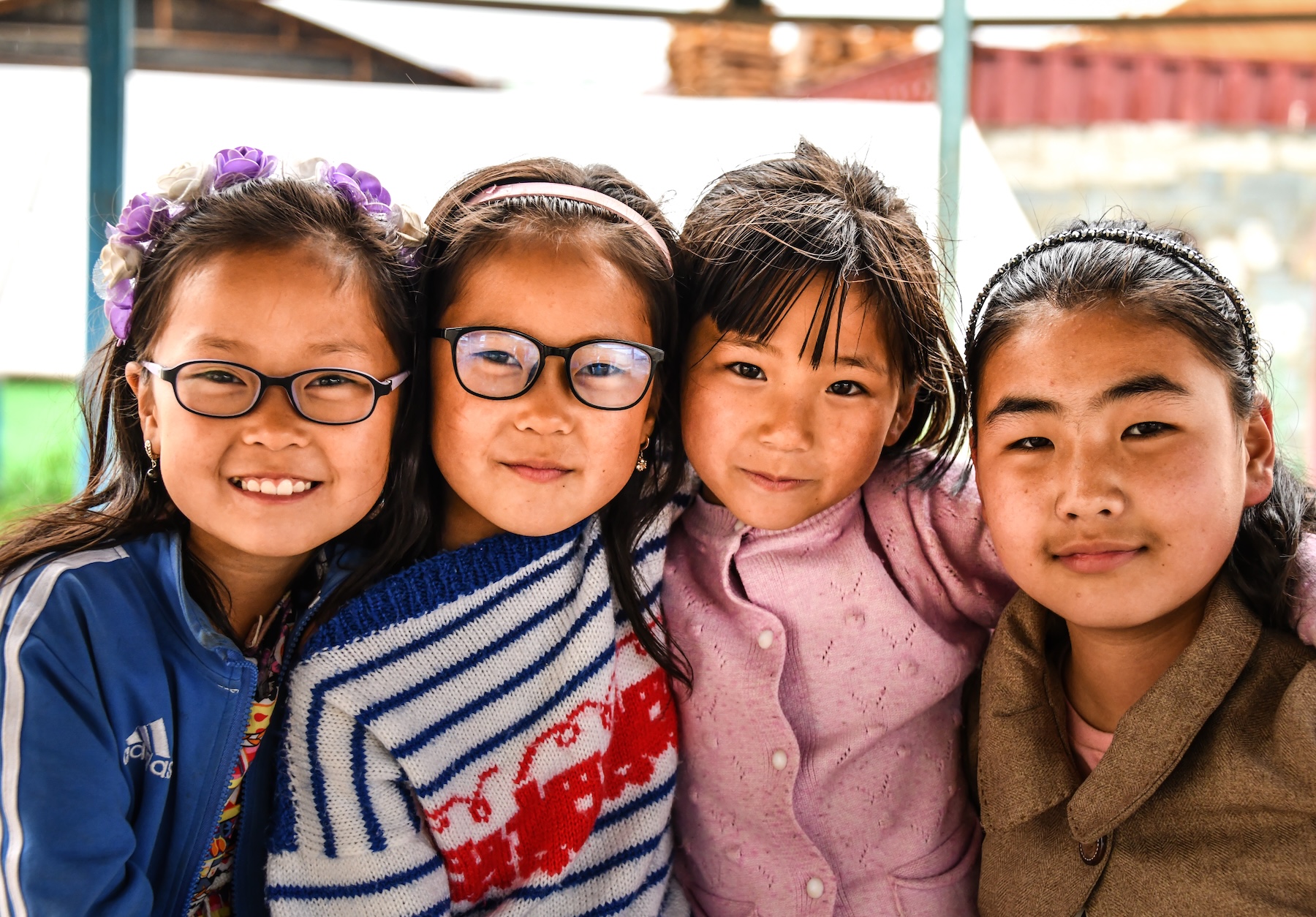
What began in 2003 as a spontaneous idea by four young women following a three-week trip through Mongolia is now a well-established children’s aid organization.
Bayasgalant cares for about 200 children from socially disadvantaged backgrounds every day in Ulaanbaatar. On its own grounds, which include three buildings, about 20 staff members provide education, care, and opportunities for children who would otherwise have very few prospects.
Many of the first children from back then are now leading independent lives—as psychologists, managers, actresses, tour guides, or chefs. Others are studying medicine or have since started families of their own.
A story that shows what can come of it when a journey becomes more than just fond memories.
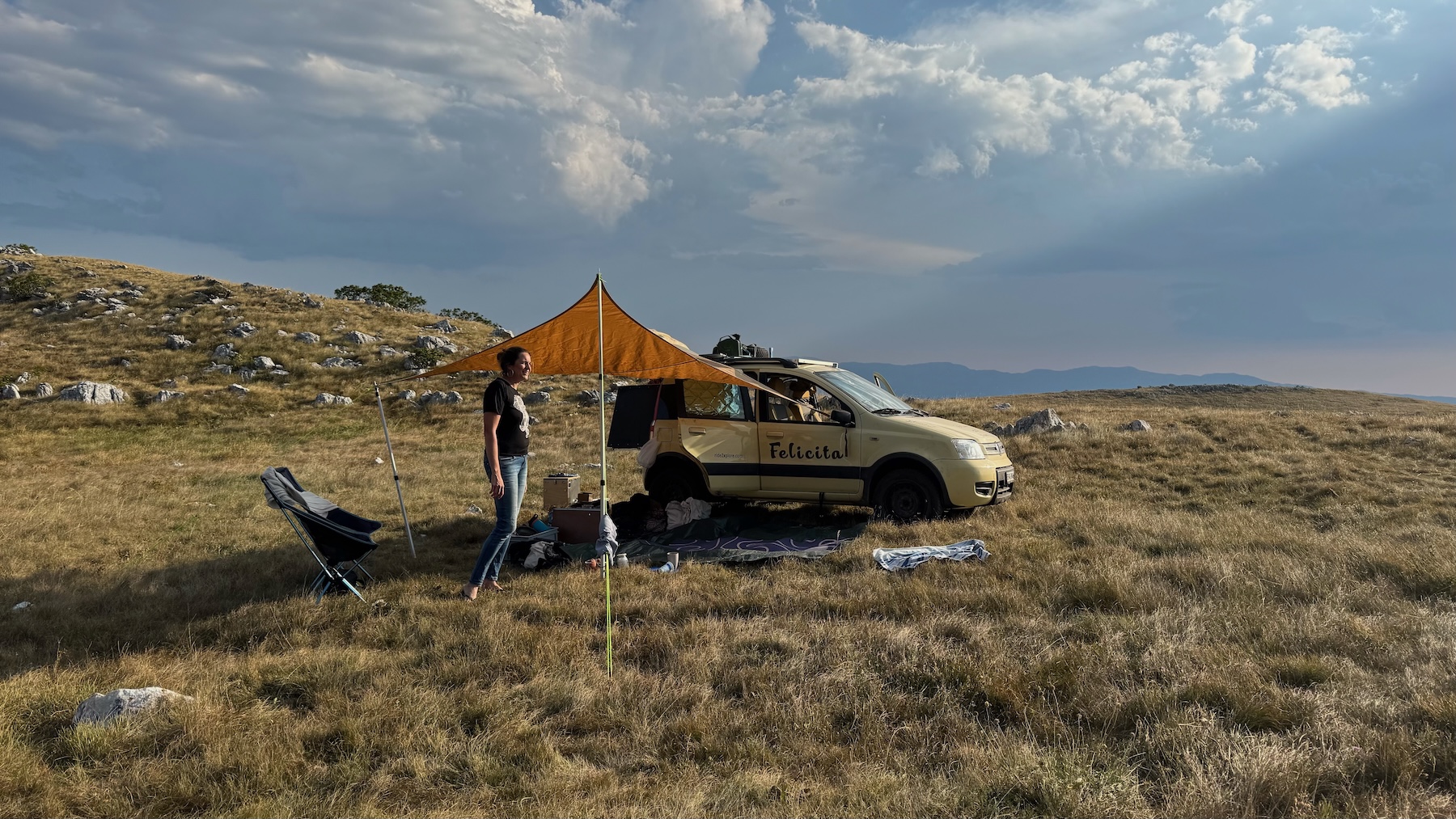
The next chapter is called "Panda." The little Fiat Panda. A big adventure.
Traveling in the Fiat Panda: What does your next trip look like? And what’s it like living in such a small space?
Martina: The Panda world tour will probably take us through the next ten years—in stages, over and over again. After all, we can’t just leave our company on hold for years. It’ll probably settle into a rhythm of about six months on the road and six months in Switzerland. At least, that’s the plan. At the moment, though, we’ve stayed in Switzerland a little longer than we originally planned. It’s just so much fun to see how the composting toilet we developed ourselves has become a product that so many people enjoy.
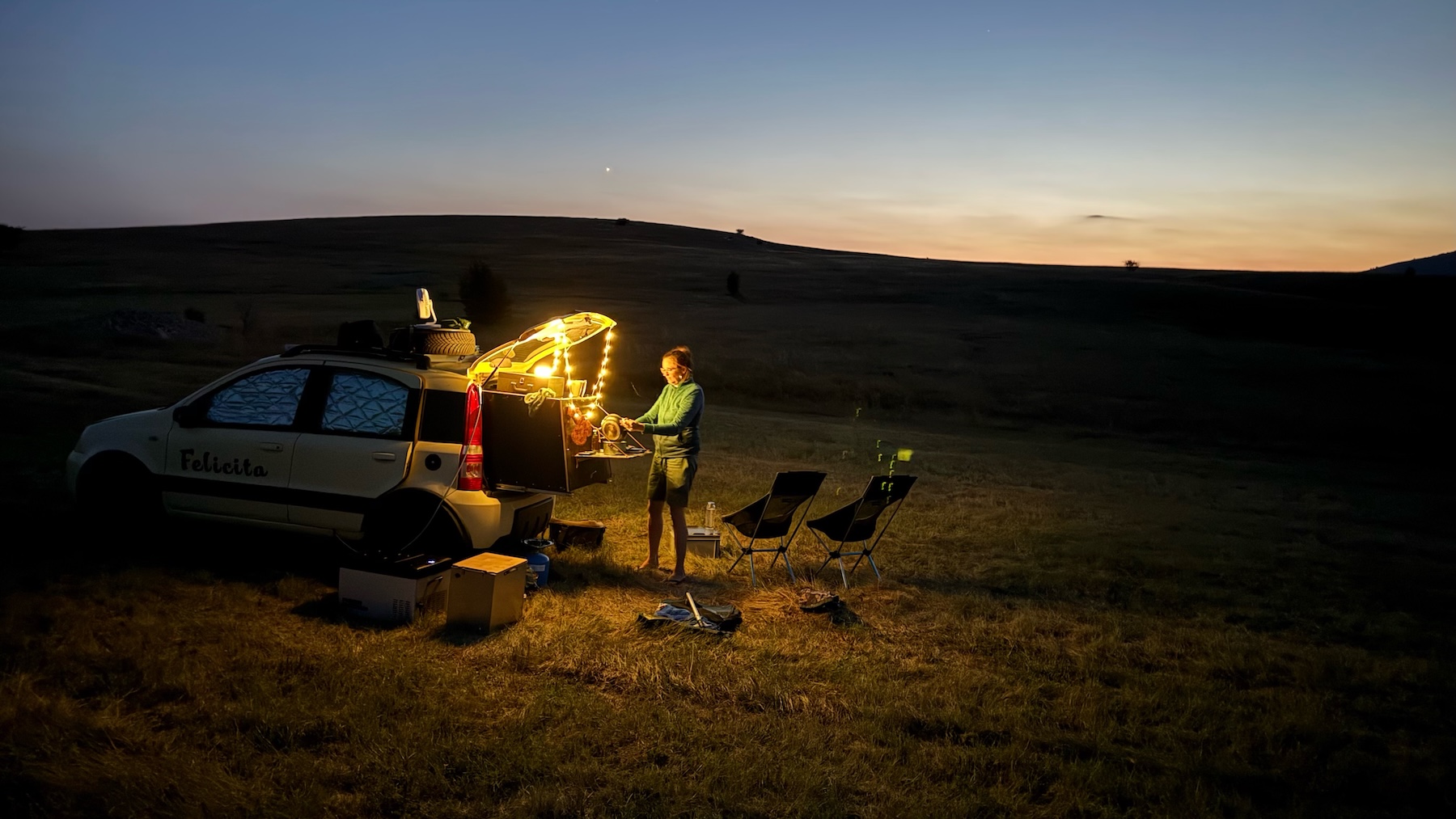
Dylan: When we’re on the road, we sleep right in the Panda. At first, we had a rooftop tent. But we sold it when Martina said she wanted to be able to sleep in the car, too. So we built a pull-out box that creates a bed about 1.85 meters long in the back—with real mattresses and surprisingly comfortable. It also has a auxiliary heater, a 12-liter hot-water boiler, an 80-liter fresh-water tank, a refrigerator, and even a toilet.
We really have everything we need.
What’s your next big goal?
Martina & Dylan: Next, we dream of reaching Japan in the Fiat Panda. We’d love to drive through the Middle East. Right now, though, that’s pretty difficult. So we’re taking it step by step to see what route works out in the coming years.
The destination remains Japan.
About Martina & Dylan
Martina Zürcher (1980) worked as a radio host for ten years before turning to writing. She studied journalism and communication sciences in Switzerland and India and served as editor-in-chief of the Swiss travel magazine Transhelvetica for several years. Together with Dylan, she is the author of several books, a filmmaker, and a public speaker. Back in 2003, she co-founded the children’s aid organization Bayasgalant with three friends; to this day, the organization cares for about 200 children from socially disadvantaged backgrounds every day in Ulaanbaatar.
Dylan Wickrama (1970) grew up in Sri Lanka, later studied in England, and eventually moved to Switzerland. In 2010, he sold his auto repair shop in Glarus and set off on a three-and-a-half-year motorcycle trip around the world. Dylan became known, among other things, for his extraordinary rafting expedition from Panama to Colombia, during which he converted his motorcycle into a raft. Today, he works as an author, filmmaker, and speaker.
Since meeting in India in 2011, Martina and Dylan have been forging their own path together. Under the name Ride2xplore, they share stories about people, travel, and life on the road—through books, films, podcasts, and live reports. Since 2016, they have been living and working primarily on the road, organizing motorcycle tours in Sri Lanka and developing Flower Pott, their own composting dry toilet for campers and travel vehicles.
More about Ride2xplore