Marie and Johnny, known as Susi and the Elephants, drove from Hamburg to Cape Town along the Trans-Africa Western Route in their Toyota Land Cruiser HDJ80 with their Cocker Spaniel, Susi. In 140 days, they covered about 23,000 kilometers through 23 countries. In this Friends of OLLI interview, they talk about traveling through West and Central Africa, off-road segments, border crossings, and encounters along the way, as well as traveling with a dog, the costs involved, mistakes they made, and the experiences that changed their perspective on Africa and their own lives.
In OLLI Stories, we talk to people who live their lives differently—mindfully, courageously, and in their own unique way. No clichés. No glossy facades. Just honest answers to the questions you only ask yourself once the campfire is burning and the small talk is over. Stories that show: There’s another way.
He'd been dreaming about it for 15 years. Four months later, he set off.
Johnny had been harboring this dream for a long time—at least since he spent a year in Cape Town in 2010. But he’d put it off for “someday.”
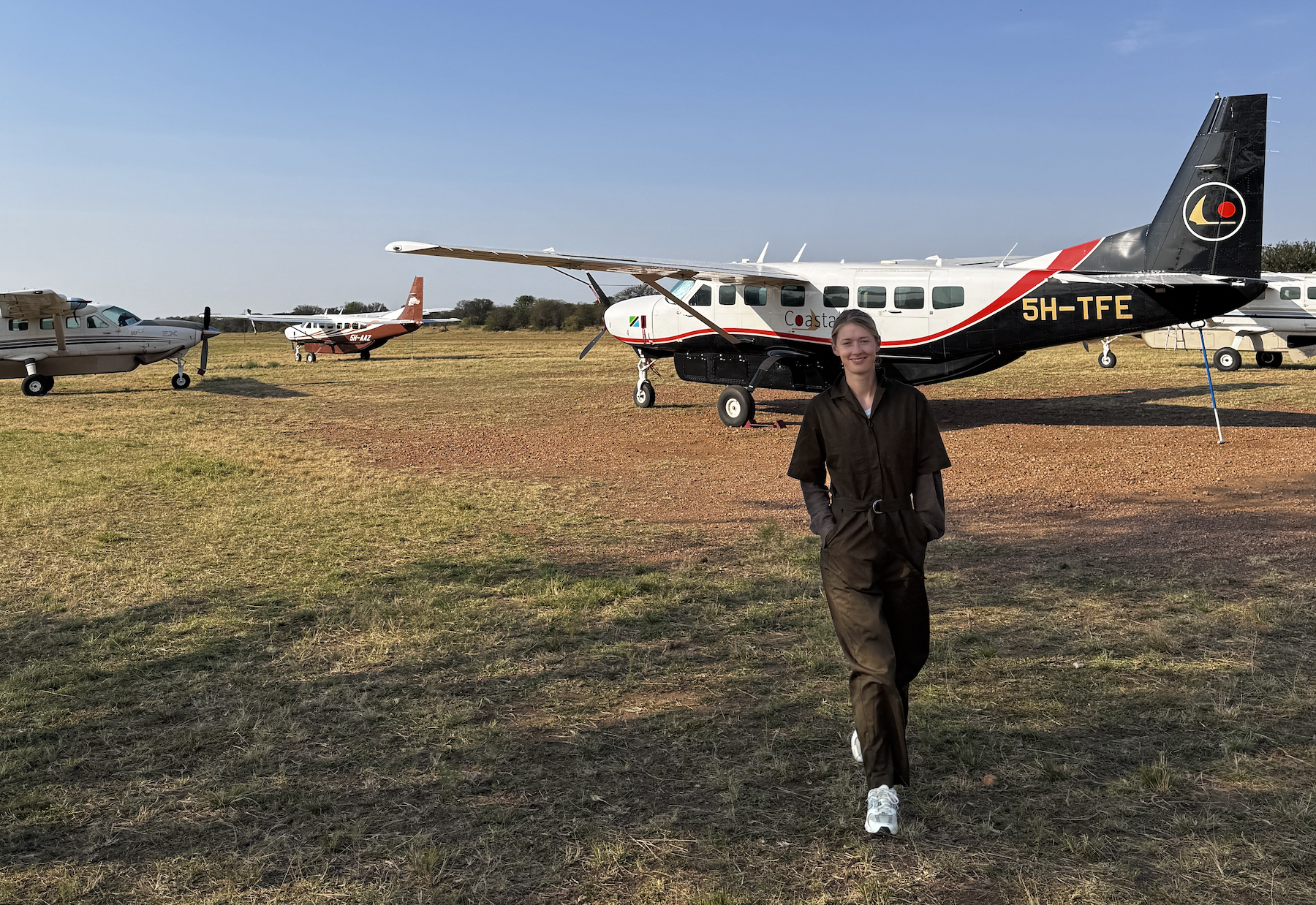
Then, in July 2025, Johnny and Marie are sitting in a small propeller plane flying over the Serengeti. Below them, elephants are roaming the savanna. Behind them lies a week-long safari; ahead of them, technically, the flight back to Germany and their normal everyday life. But somewhere up there, it dawns on both of them: They’re not done with Africa yet. Nor are they done with adventure.
In August, they decide to embark on a trans-African journey. In September, they buy a Toyota Land Cruiser HDJ80. Starting in November, their apartment is sublet. On December 2, Johnny, Marie, and their Cocker Spaniel, Susi, set off from Hamburg.
Less than four months pass between the decision and their departure. Fifteen years from dream to reality.
We spoke with Marie and Johnny about what happens when you stop putting a dream off for “someday”—and just set off.
Who is behind Susi and the Elephants?
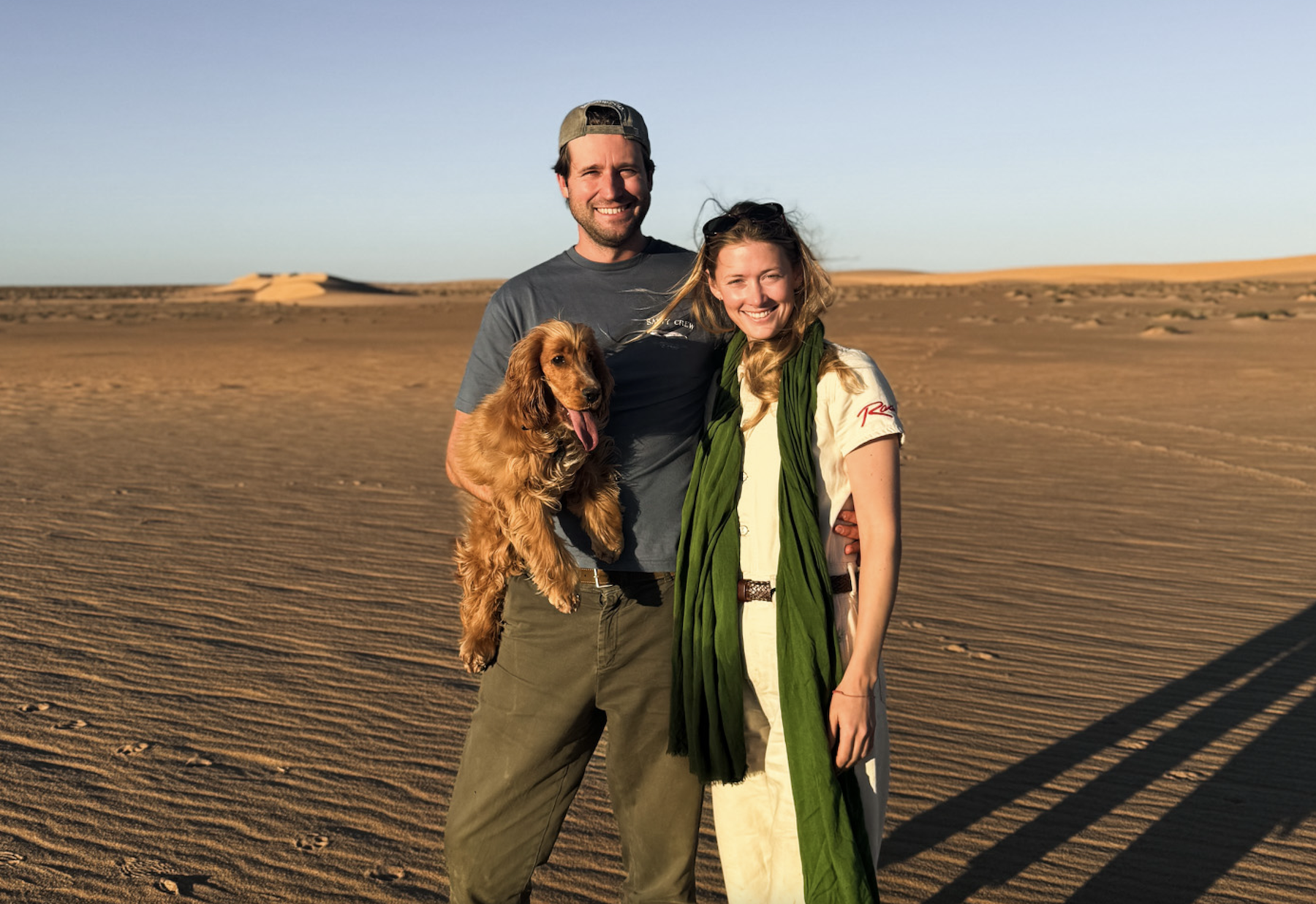
We’re Johnny (34), Marie (31), and Susi the Cocker Spaniel, who went on a real adventure when she was eight months old. We’re not professional adventurers, and we had almost no camping experience before the trip. We bought a car, requested unpaid leave from our employer, sublet our apartment, and hit the road. In that order.
We set off from Hamburg on December 2, 2025, and arrived in Cape Town on April 20, 2026. In between were 140 days, about 23,000 kilometers, and 23 countries along the Trans-Africa West Route.
We’re back in Germany now, and to be honest, we haven’t quite settled back in yet. The trip has changed us, and we’re already looking for our next adventure. Maybe we’ll drive that route again—or maybe we’ll take a completely different one. One thing we know for sure: we won’t wait another fifteen years.
"We aren't dramatically different people after the trip. But we are braver."
Can you still remember the moment when you knew, “We’re going to do this now”? What happened back then?
In July 2025, we’re in Tanzania. We’re sitting in a small propeller plane flying over the Serengeti, the endless savanna stretching out below us, and we see elephants. After a week-long safari, we’re on our way back to Germany. We look at each other and are thinking the same thing: We can’t just go back to our everyday lives now. We’re not done with this continent yet—or with adventure. We made the decision to do the Trans-Africa trip in August 2025. We bought the car in September. Starting in November, we were off work and had sublet our apartment. It took less than four months from the idea to our departure.
What phrase, thought, or moment changed your lives? Maybe it was something one of you said. Maybe someone else said it. Or maybe it was simply that one moment when everything suddenly became clear.
Johnny had been harboring that dream for a long time—at least since he’d lived in Cape Town for a year in 2010. Marie said later: He’d been saving that dream for a different life, without ever seriously planning it. That’s exactly the problem with big dreams. You put them off until a future that never comes.
In Tanzania, the dream caught up with him. And the phrase that ultimately decided everything was simple: If not now, then when?
How did family and friends react? More like: “Awesome!” or: “You guys are completely crazy.”
“Are you crazy?” – “That’s way too dangerous!” – “How are you going to handle your jobs? That’s not going to work.”
So: not exactly “awesome.” We explained it a little and ignored it a little. Looking at others helped: If people drive this route alone or even by bike, then surely we can manage it in a Land Cruiser.
What we hadn’t anticipated at all was how much energy it took to reassure our family back home. We ourselves almost always felt safe and therefore didn’t feel much need to send daily updates. For our family, that was exactly the problem.
Which one of you actually had to convince the other? Or were you both on the same page from the very beginning?
No one. Marie didn’t need any convincing—she was on board right away and then laid out the specific next steps. The dream came from Johnny; the plan came from Marie. Without that combination, we’d probably still be sitting on the couch watching YouTube videos today.
What was the hardest part about actually setting off?
The decision itself. No question about it. Not the visas, not the car, not the borders—but the moment when you stop dreaming and start taking action.
What kind of car do you drive—and why that one in particular? Is there a story behind it?
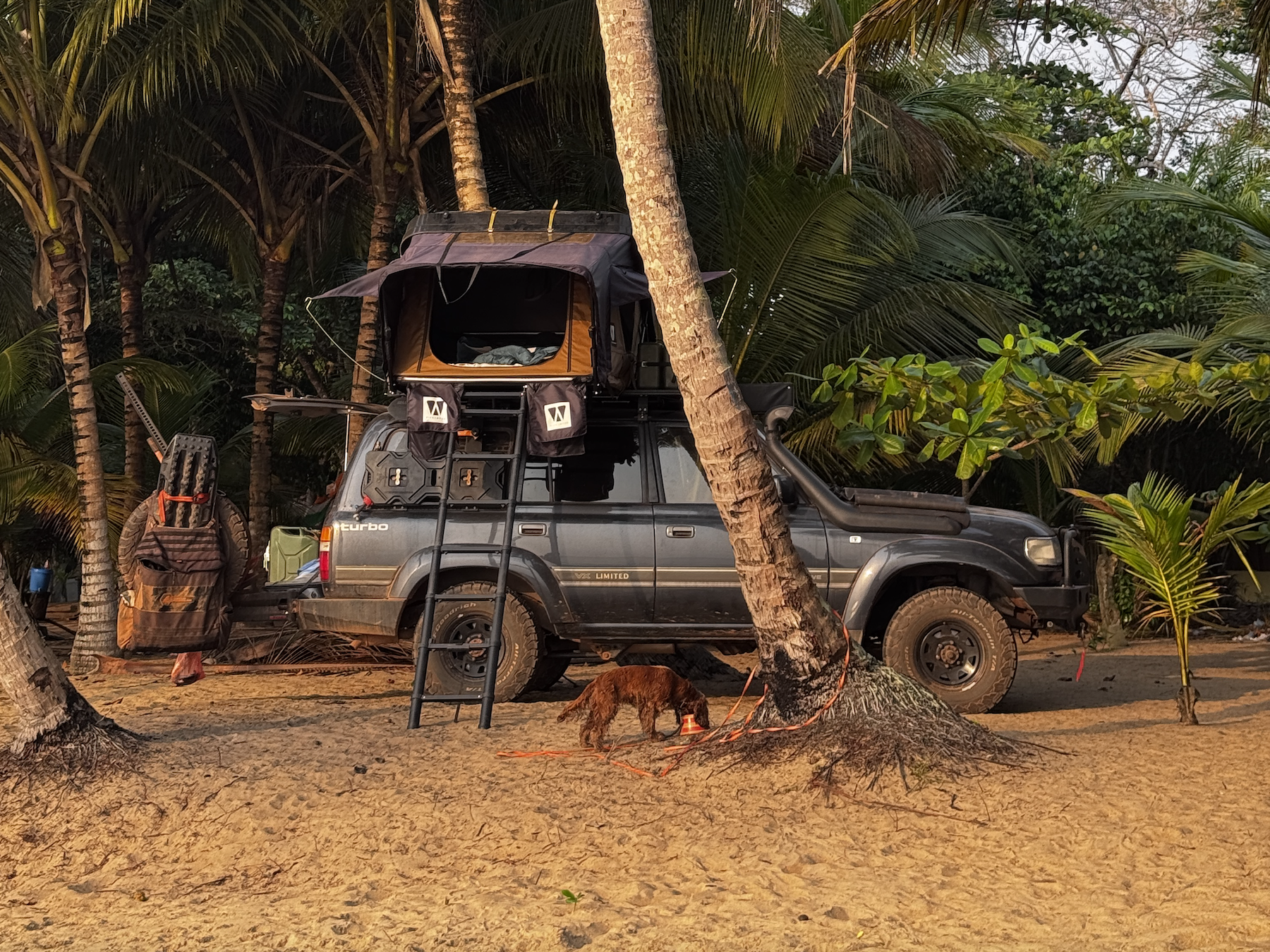
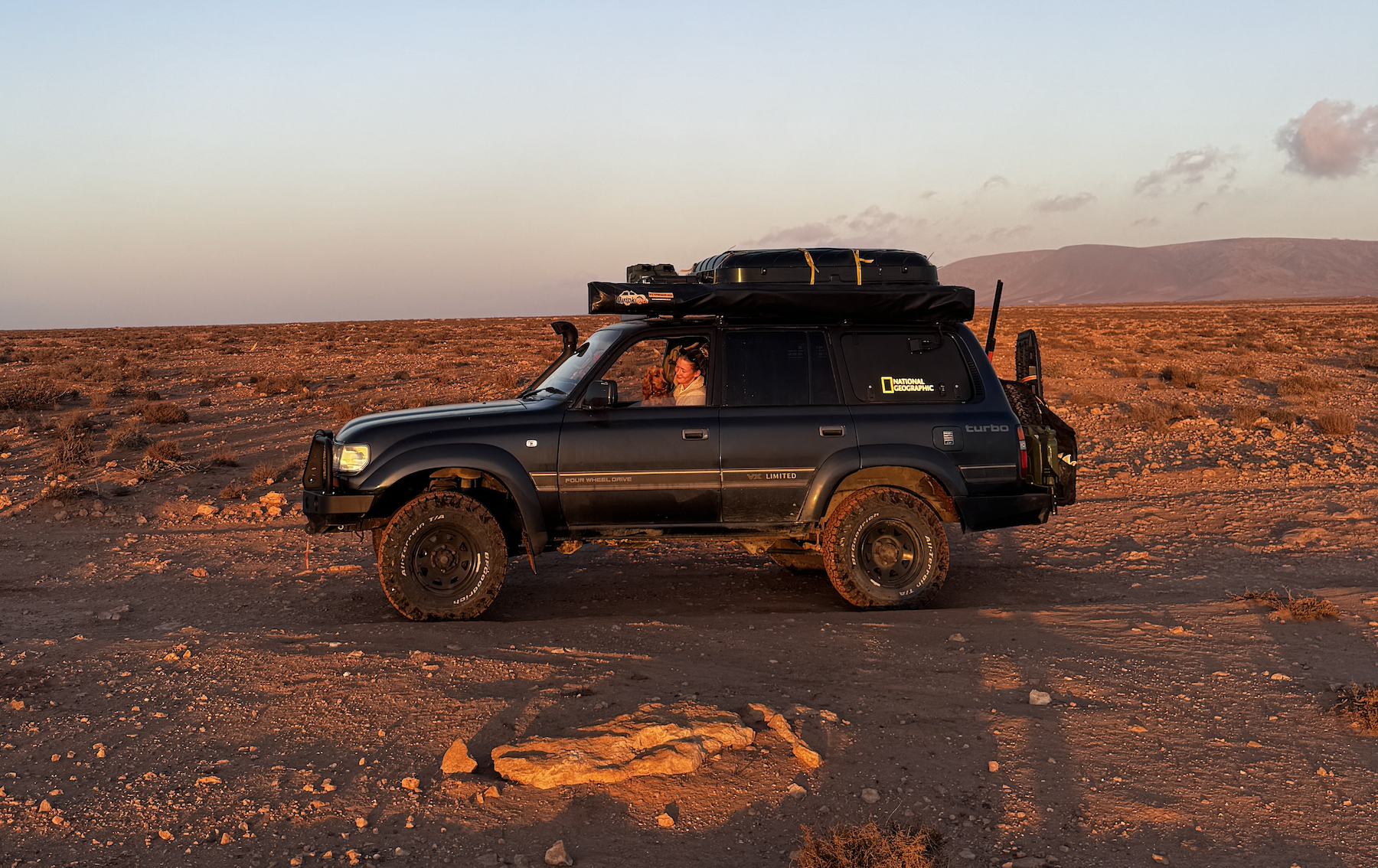
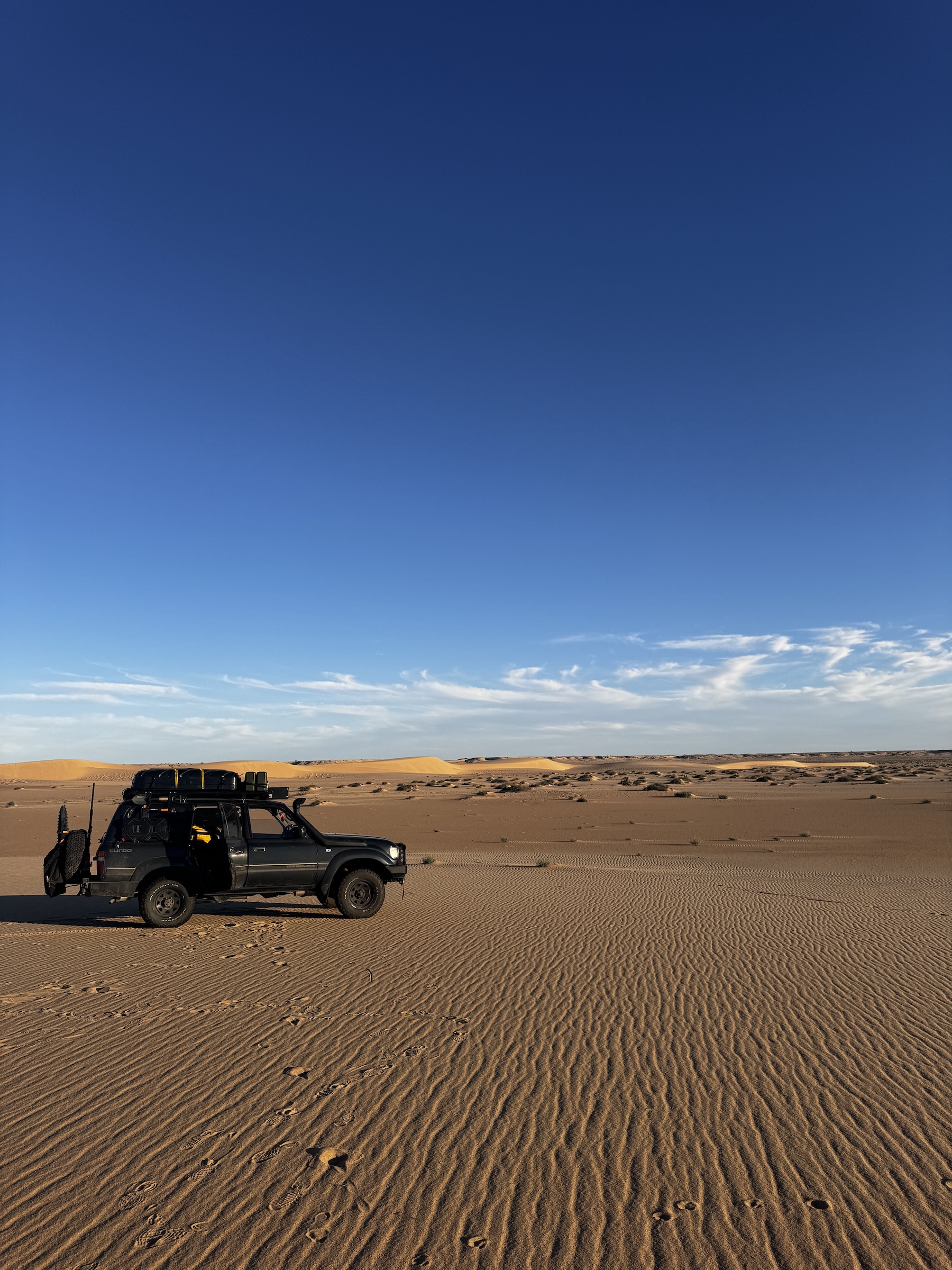
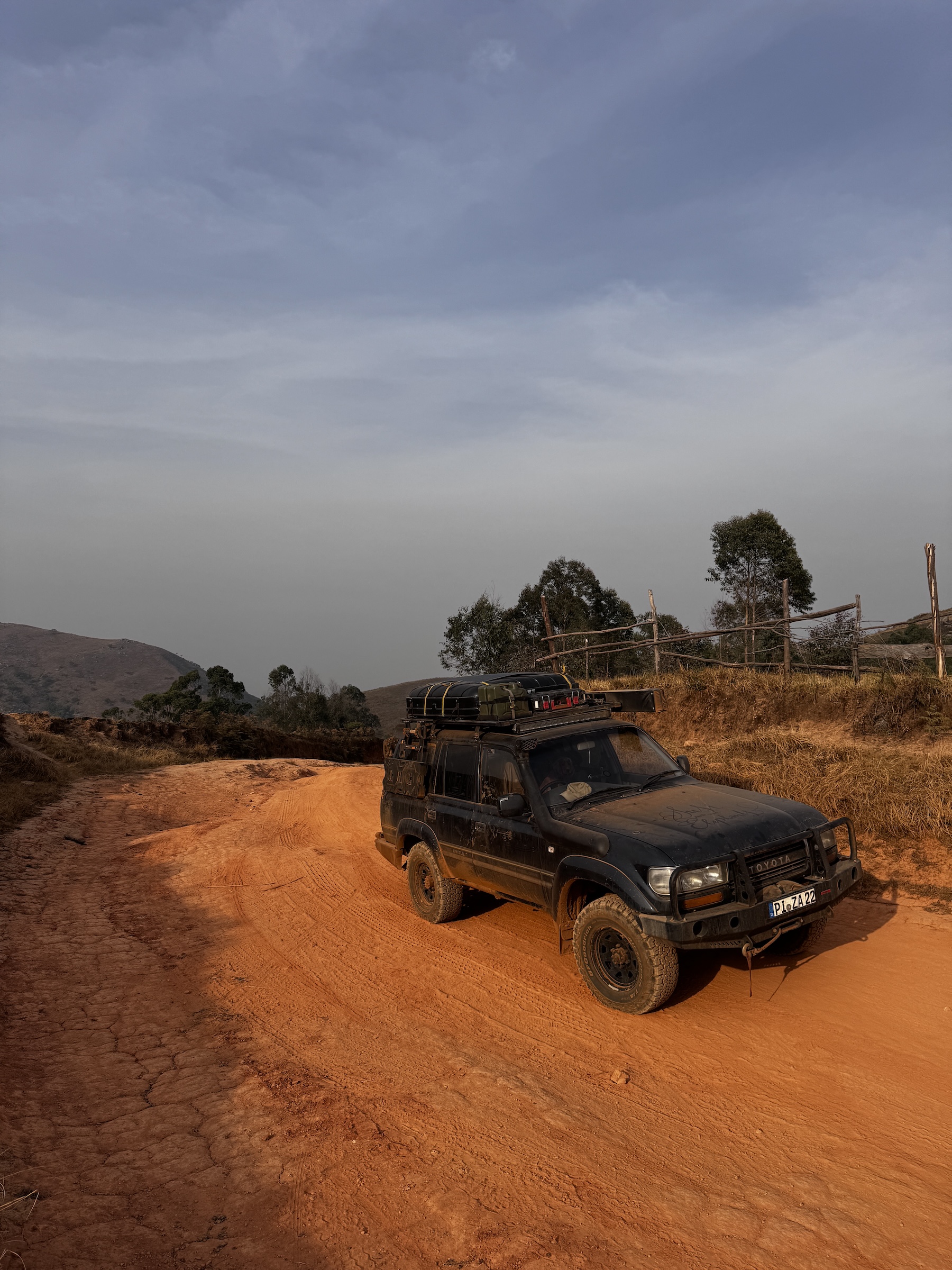
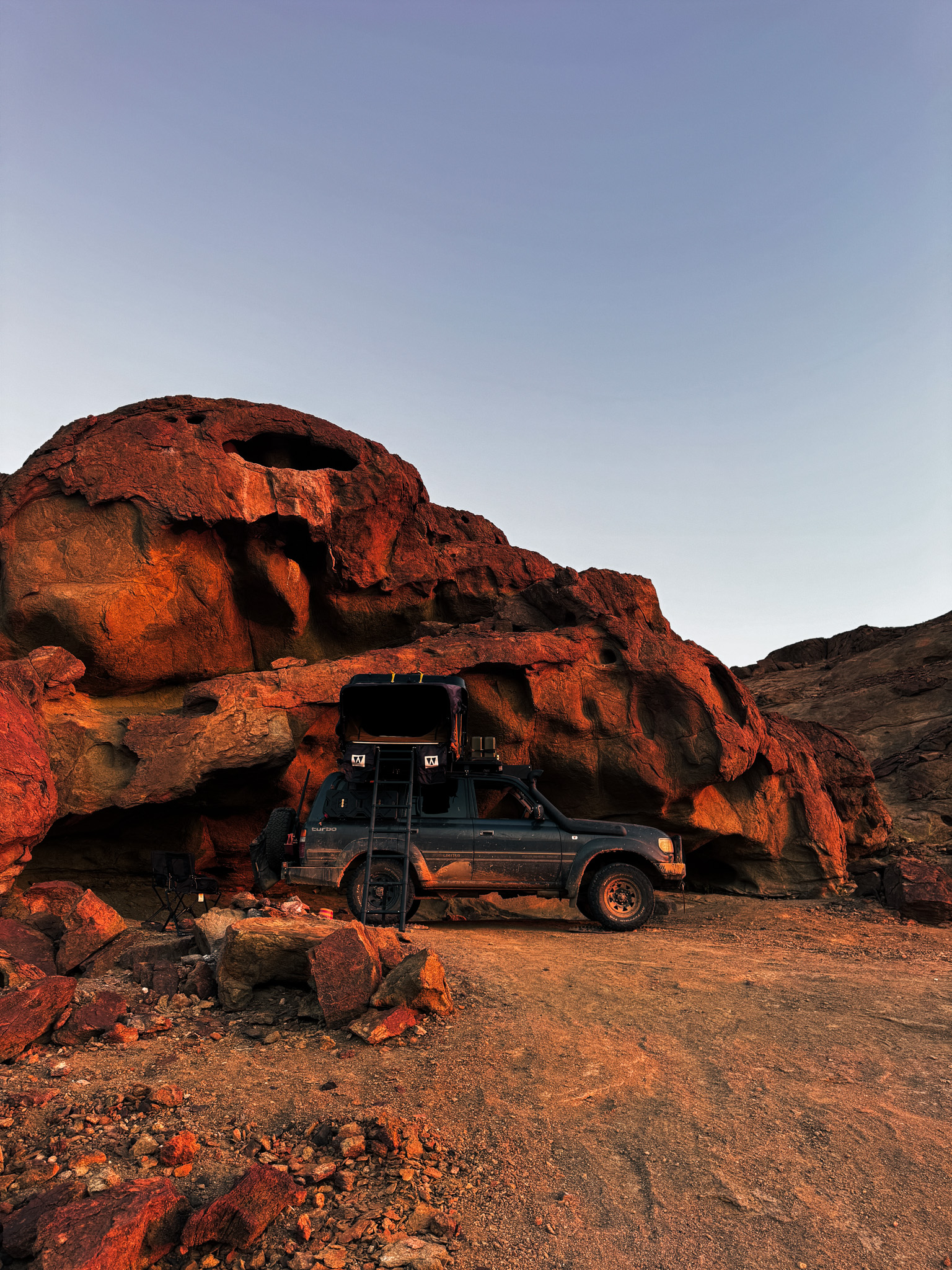
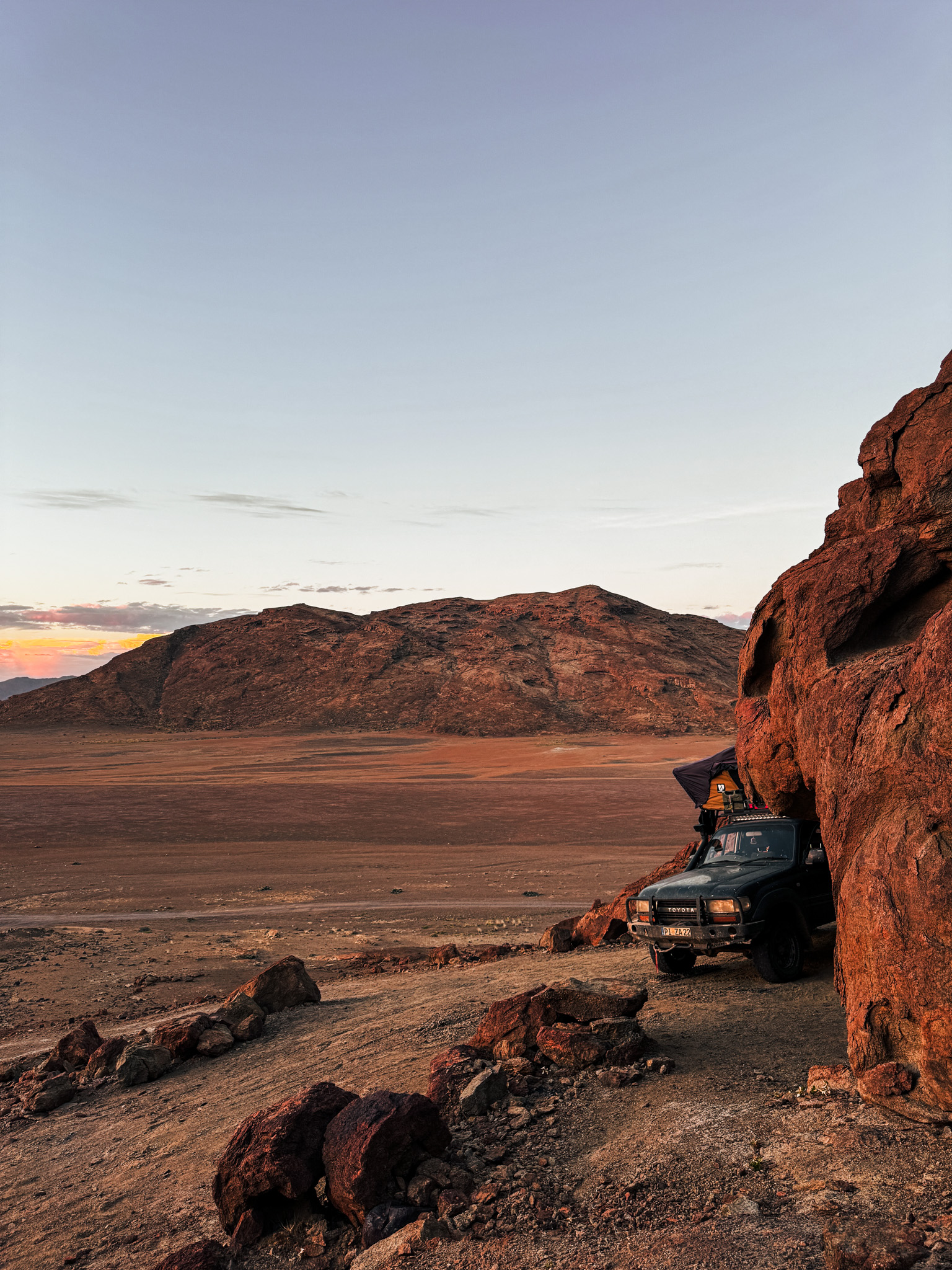
We’re driving a 1991 Toyota Land Cruiser HDJ80 with 270,000 kilometers on the odometer. We found it in the classifieds; after checking it out on the lift and taking it for a test drive, we bought it on the spot. Two months later, we headed for Africa.
The deciding factor was a saying many people know: “Take a Defender if you want to go into the bush. Take a Toyota if you want to come back.”
We weren’t stranded a single day because of the car, so we never regretted our choice. At the end of the trip, we shipped the car back to Europe.
Were there any situations along the way that probably would never have happened without your vehicle—for better or for worse?
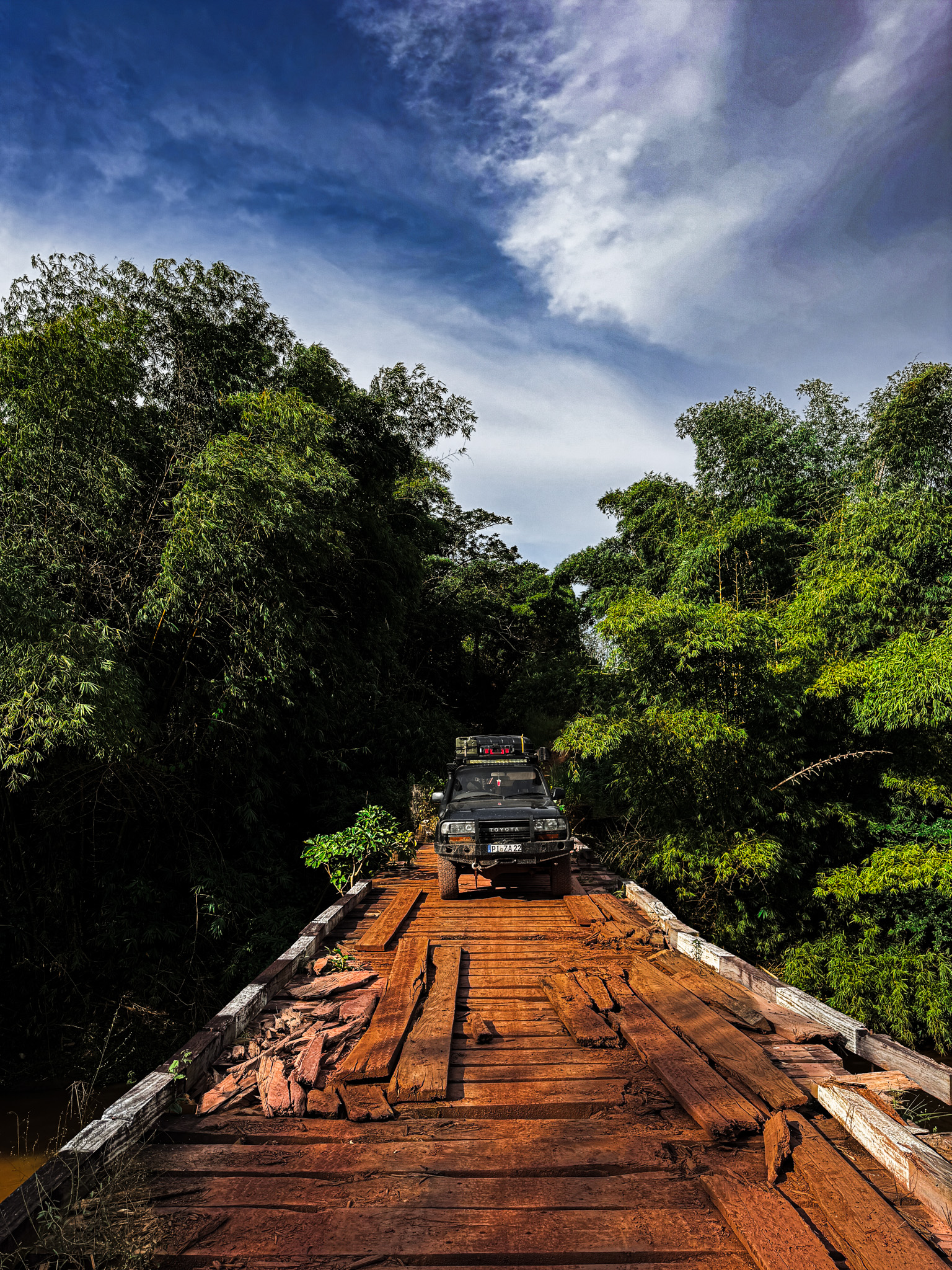
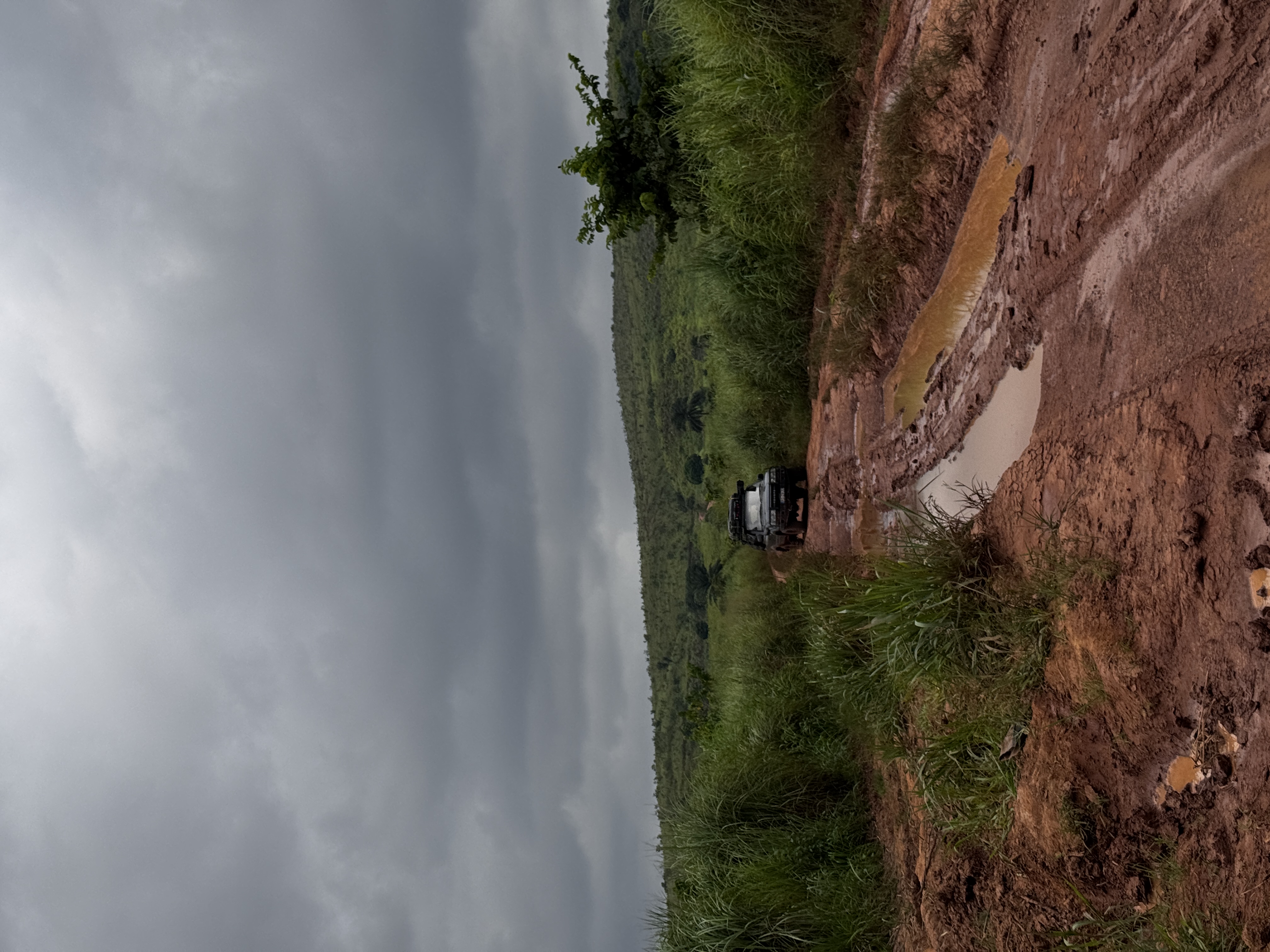
To be honest: You can drive the Trans-Africa route even in a 4x2. Much of the route is densely populated, the main roads are mostly in good condition, and if you stick to them, you’re almost always close to the next town. But we didn’t find the real adventure until we deliberately left the main road. The Mauritanian desert. The mountains in eastern Nigeria. The 200 kilometers in the Democratic Republic of the Congo between Tombo and Luozi. The riverbeds of Namibia. In the end, those were the highlights of the entire trip, and you can only get there with an off-road vehicle you trust.
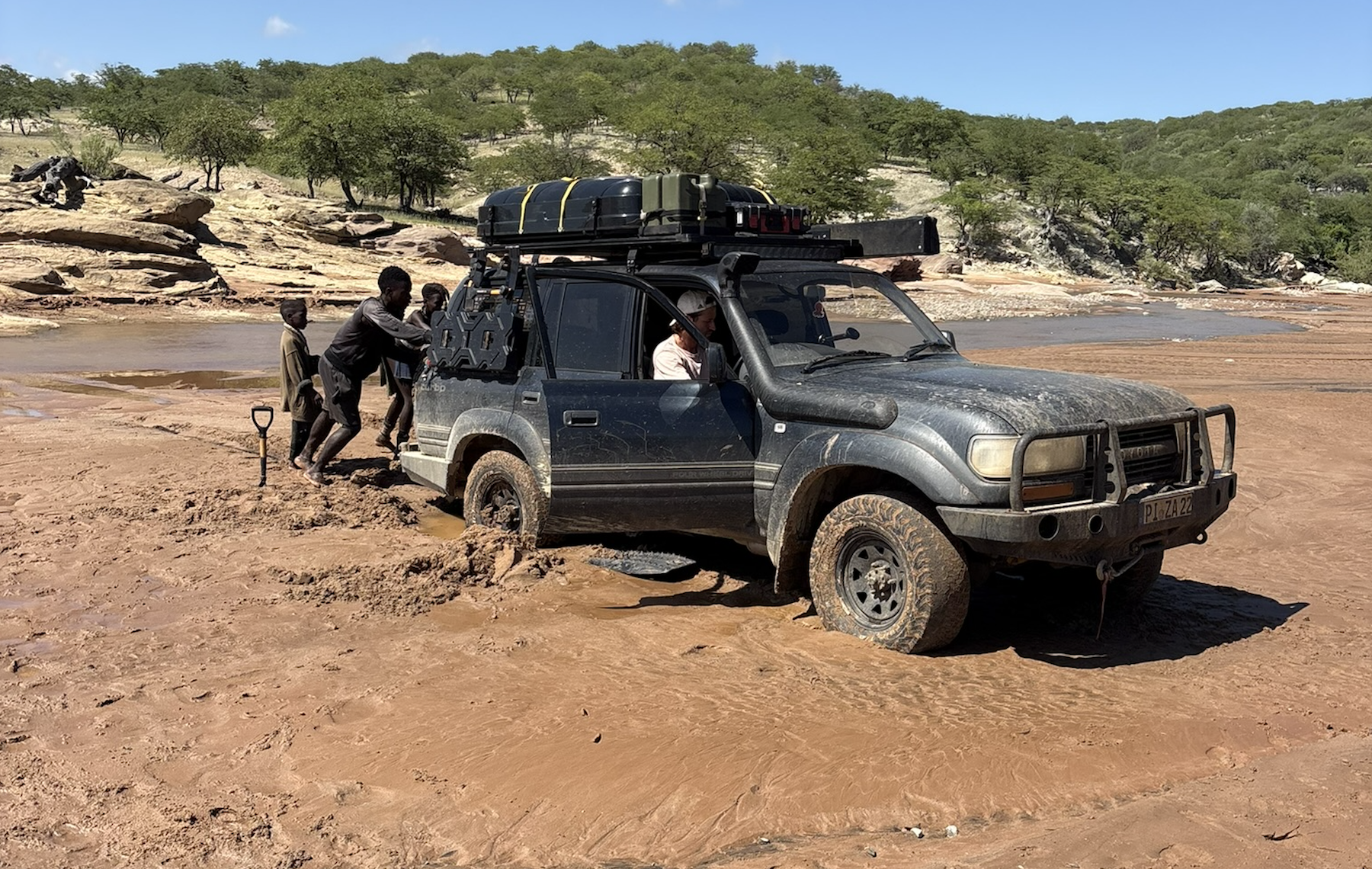
There were moments when we thought it was all over: Once we were at such a steep angle that we expected the car to tip over. Another time, we sank so deep into a water crossing that we thought we were stuck. Neither of those things happened. We didn’t get seriously stuck even once during the entire trip, and we never used the winches.
How do people react to your vehicle? Are there any encounters or stories that came about precisely because of this?
The feedback from local repair shops was always “strong car.” The car is well-known and appreciated; it’s extremely capable off-road, rugged, easy to repair, and yet comfortable.
What do you love about your vehicle? And what sometimes drives you to despair?
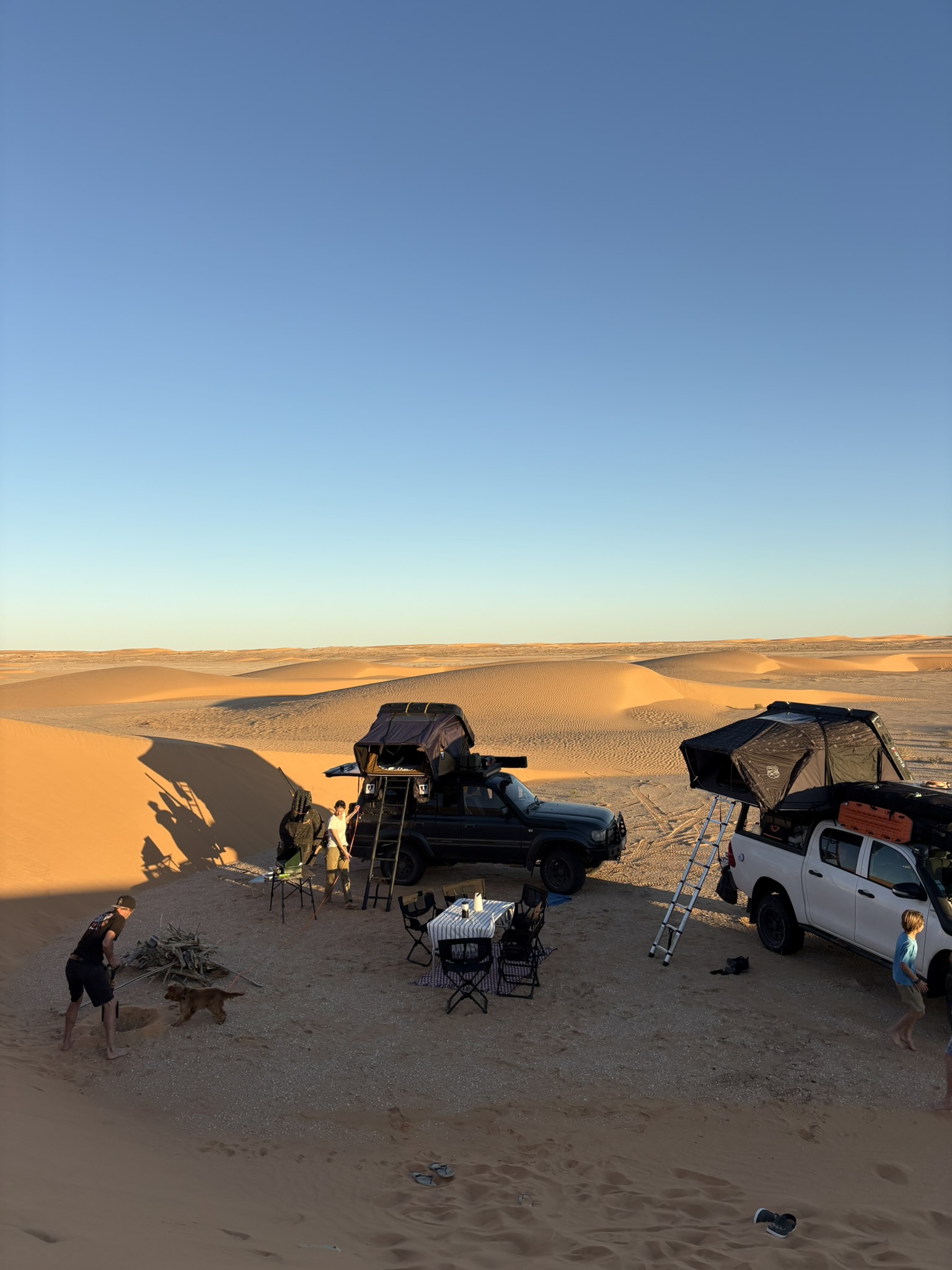
We loved the roof tent. You have to climb up and down the ladder every time, but you sleep elevated, safe, and often with an incredible view. Eventually, it feels like a real little bedroom.
We weren’t entirely satisfied with our power setup and the refrigerator. Both were budget-friendly options—not particularly efficient and problematic on several occasions while on the road. Instead of 200 watts, the solar panel often only delivered 70 to 90, and the refrigerator broke down several times. We’d upgrade both for our next trip.
If you were to set out again today: Would you choose this exact vehicle again? Why?
Yes, without hesitation. The ’80s model has permanent four-wheel drive, two solid axles, is extremely capable off-road, and at the same time surprisingly comfortable: wide seats, plenty of space, and air conditioning. In the ’90s, it was marketed as a luxury SUV, and on some days in the humid heat of West Africa, we really appreciated that.
What does a typical day look like for you guys on the road?
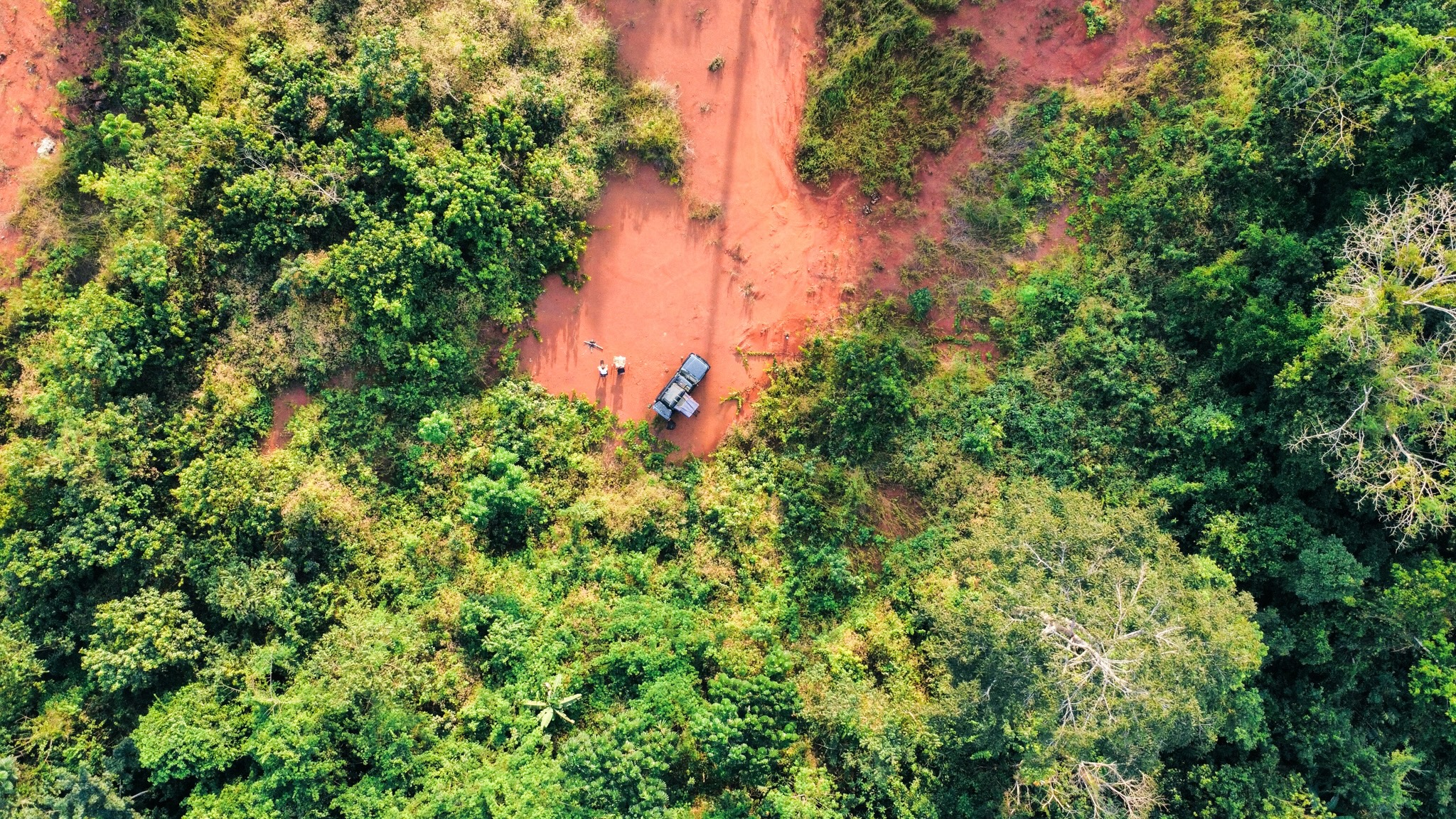
We wake up in the rooftop tent, lift Susi down—after a few weeks, she’s already jumping into our arms as soon as the zipper is open. Johnny makes coffee and breakfast and plans the route; Marie takes care of Susi and later takes over the border crossings; in the evening, she cooks. This clear division of labor fell into place early on and has helped us enormously in our daily lives.
In between: driving. And the questions that make up our day-to-day life. Where will we be tonight? Where can we get water? Where will we fill up on gas? What will we eat?
That’s the thing that really surprised us. It wasn’t the borders or the trails that were the challenge, but the logistics of everyday life. The time to read a book or lie in a hammock was much scarcer than we’d thought.
Tell us about a day you’ll never forget.
Johnny’s birthday in the Democratic Republic of the Congo—perhaps the most adventurous day of the entire trip. We slept overlooking the Congo River; during the day, we drove on the toughest off-road trails of the trip; at noon, we crossed the river on an old, rusty ferry; and in the evening, we lay in a convent and could still hear the prayers as we fell asleep. All of that happened in a single day. When someone asks us what this trip feels like, we think of that day.
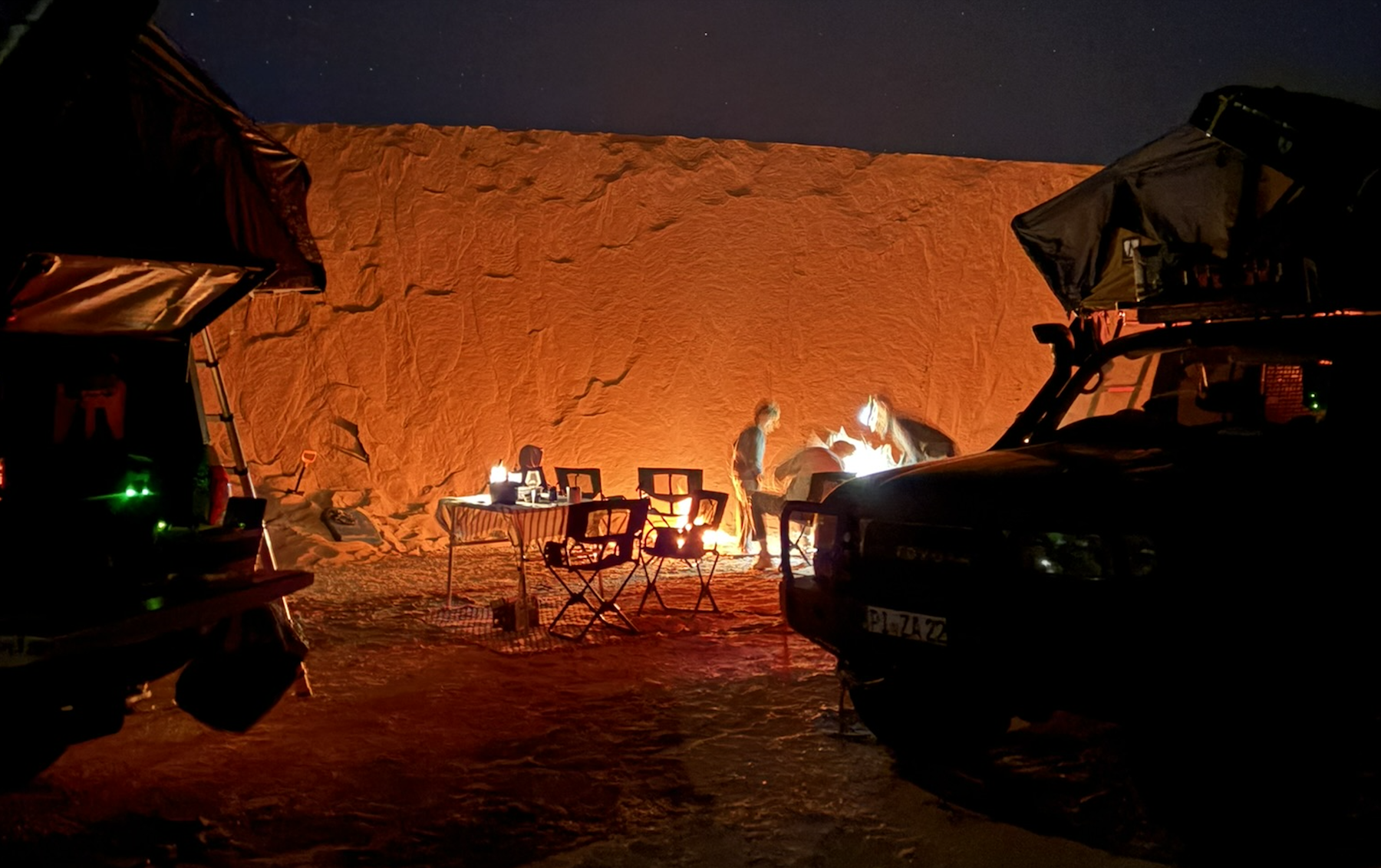
And then there were the nights by the fire, in general. Every time we built a campfire, it was clear: This is a good spot. In the Mauritanian desert, by the waterfall in Guinea, on the beach in Ivory Coast, in the Congo rainforest, in the vast expanses of Angola. Those were the moments when we realized why we’d set out on this journey.
When did you find yourselves thinking along the way, “What the heck are we actually doing here?” What had happened?
Ghana, about halfway through. We’d been on the road for two and a half months, having traveled through Morocco, Western Sahara, Mauritania, Senegal, The Gambia, Guinea, and the Ivory Coast, and had experienced an incredible amount. And suddenly the question arose: What else could possibly happen now?
It wasn’t anything dramatic. More like a creeping exhaustion. The routines were well-established but tiring: packing and unpacking, finding a spot to park, cooking, sleeping, and starting all over again the next day. On top of that, we were never alone—all that attention can be exhausting. And our experiences started to feel repetitive. Markets all look the same, conversations follow a pattern, and the excitement for each new situation starts to fade. This slump lasted about two weeks.
And when did you think the exact opposite? “That’s exactly why we’re doing this.”
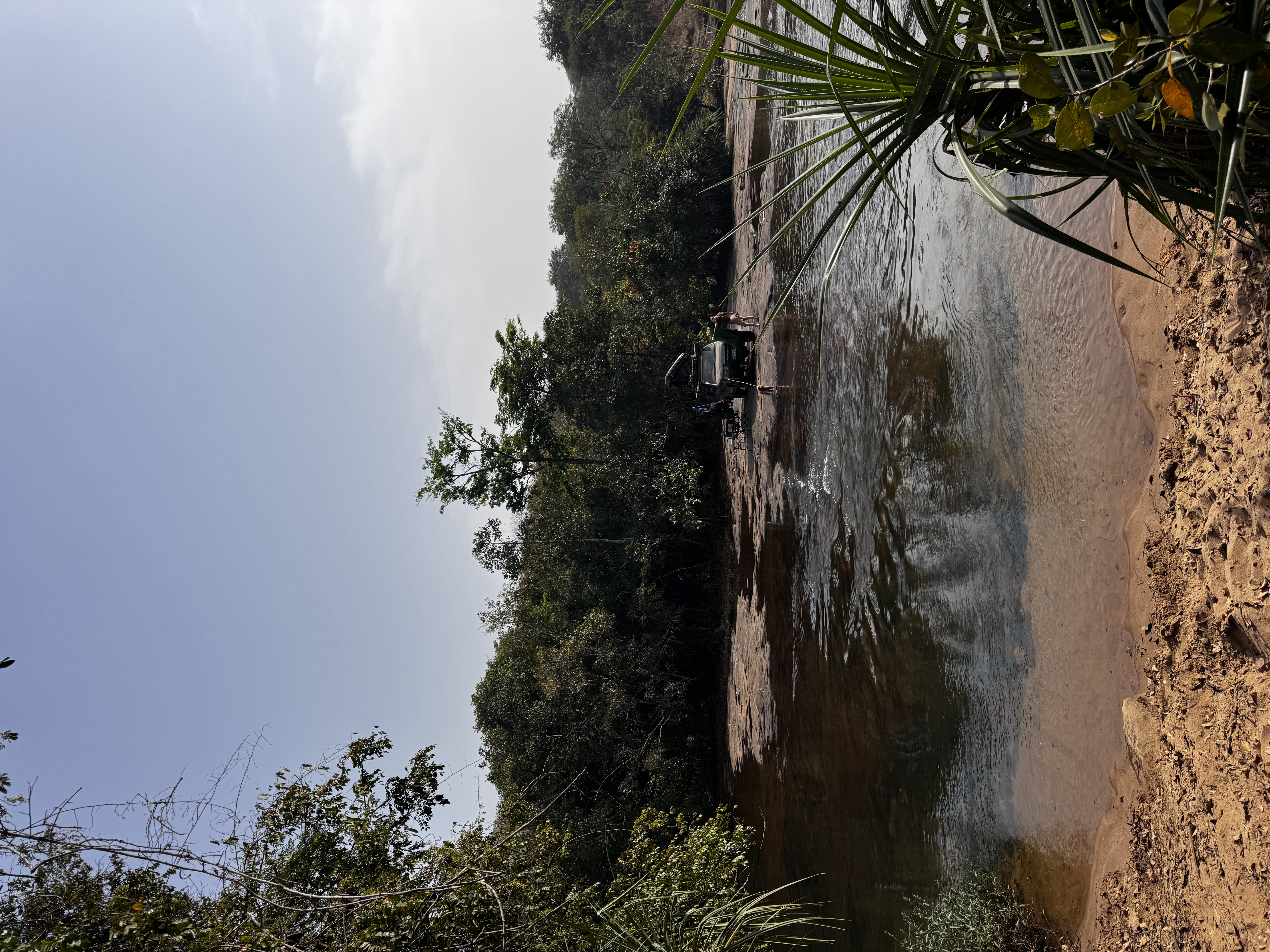
At the Kambadaga Falls in Guinea. We parked the car on large rocks in the riverbed, right in front of a massive waterfall; we were able to swim and were completely alone. For us, perhaps the best spot of the entire trip.
But also all the other evenings by the campfire or that moment on the ferry across the Congo.
What story do you tell over and over again—even though everyone you know has heard it a long time ago?
The three days in the Democratic Republic of the Congo. Four men with AK-47s at a checkpoint, the toughest dirt road of our trip, a rusty ferry across the Congo River, a waterfall without a single other person in sight—and all of it in 72 hours.
"It wasn't the borders or the slopes that posed the challenge, but the logistics of everyday life."
Seriously, what story is there that hardly anyone back home believes to this day—even though it happened exactly like that?
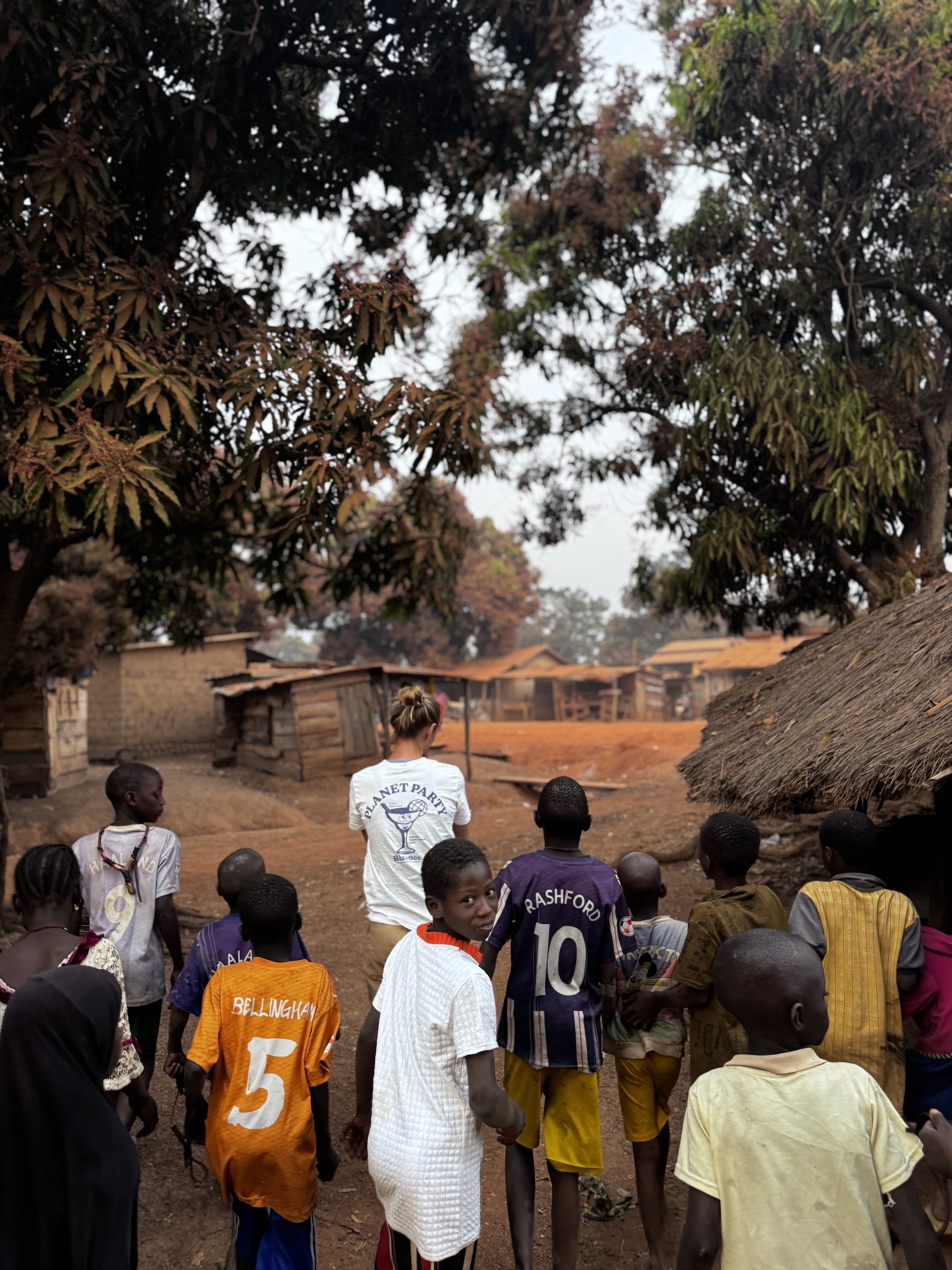
That we felt right at home in Nigeria. We entered the country with a healthy dose of respect and had even teamed up with another overlanding couple specifically to cross the country in a convoy. And then the people turned out to be open, warm, and full of incredibly positive energy.
A teacher we struck up a conversation with while walking our dog one evening invited us to her school the next morning. We were welcomed like pop stars. The kids touched our skin and our hair, asked a thousand questions, took a thousand selfies—and in the end, we swapped sweaty T-shirts and phone numbers.
Back home, hardly anyone believes it, because the image of Nigeria is completely different.
Tell us about an incident that you can laugh about yourselves today.
In Guinea, a few kids stole Johnny’s shoes from the spare tire backpack in the back of the car. We chased after them, threatened to call the village chief, and the shoes were returned immediately. We were amazed at how well that worked. In village communities, the chief still holds real authority—that became very clear that day. It was stressful at the time, but in hindsight, it’s a funny story.
What was the most expensive lesson of your trip? Not just financially.
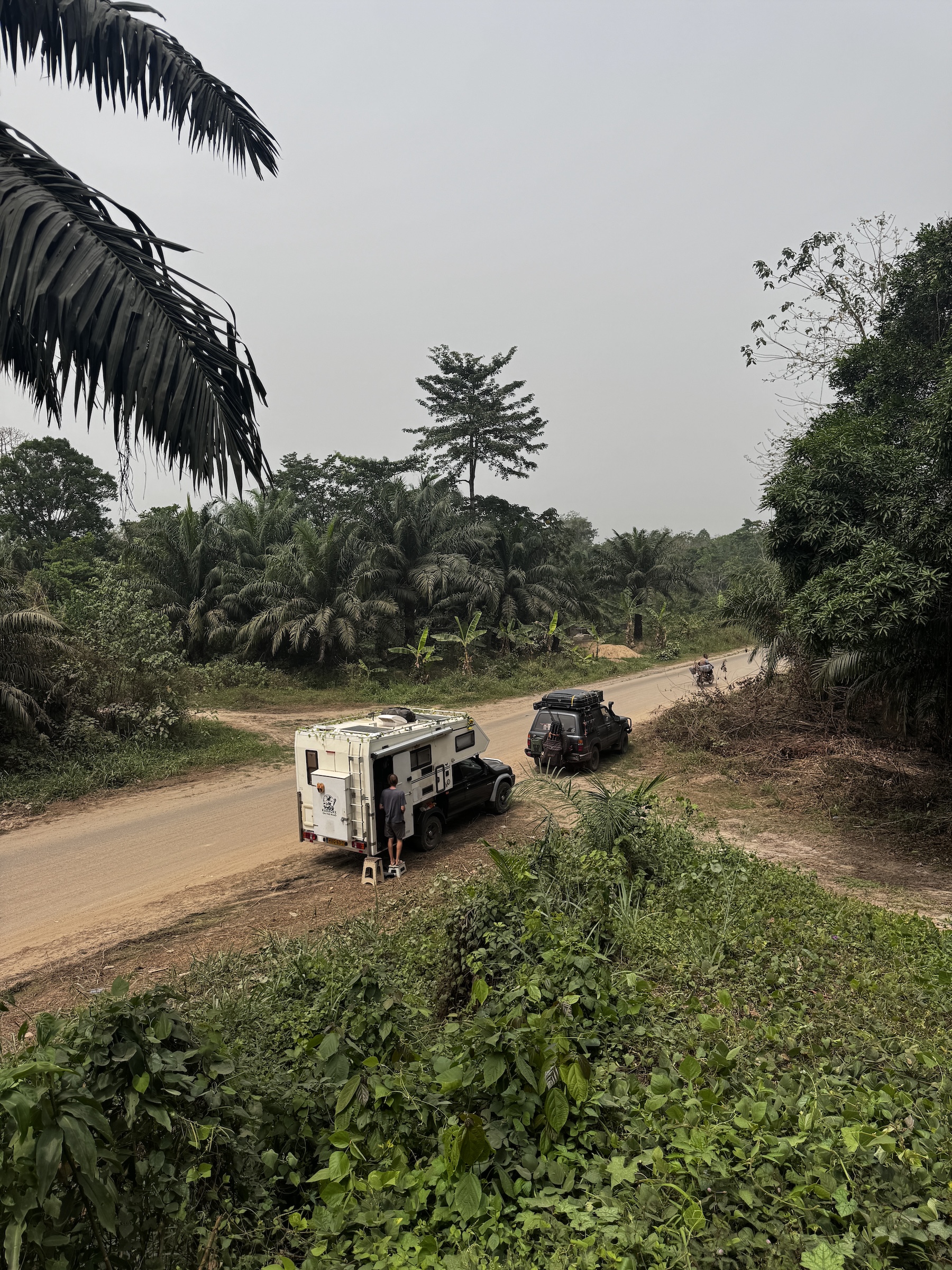
At the repair shop in Yaoundé, we actually just wanted to have a leak in the air conditioning system sealed and a quick check done. In the end, the entire front axle was overhauled—though not very thoroughly. In Luanda, we then had to have one side redone for 650 euros because water had gotten into the differential. In Cape Town, it was the other side’s turn.
The real lesson isn’t about the money, but the mindset behind it. Only go to a repair shop if you have a specific issue. Know exactly what needs to be done beforehand, and stay on top of it.
What would you do completely differently today—and why?
Take more time. We were on the road for five months and had to constantly check the calendar. Looking back, the sweet spot is probably more like six to eight months. Then we could have taken detours, stayed longer in beautiful places, and really taken a proper mental break halfway through the trip. We would have liked to see Sierra Leone and Liberia, spend a few more days in the Congo—maybe Kinshasa—and perhaps Gabon.
At the same time, we’re grateful to have been on the road at all. We made the most of the time we had.
Who is the person you still can’t get out of your head? Why?
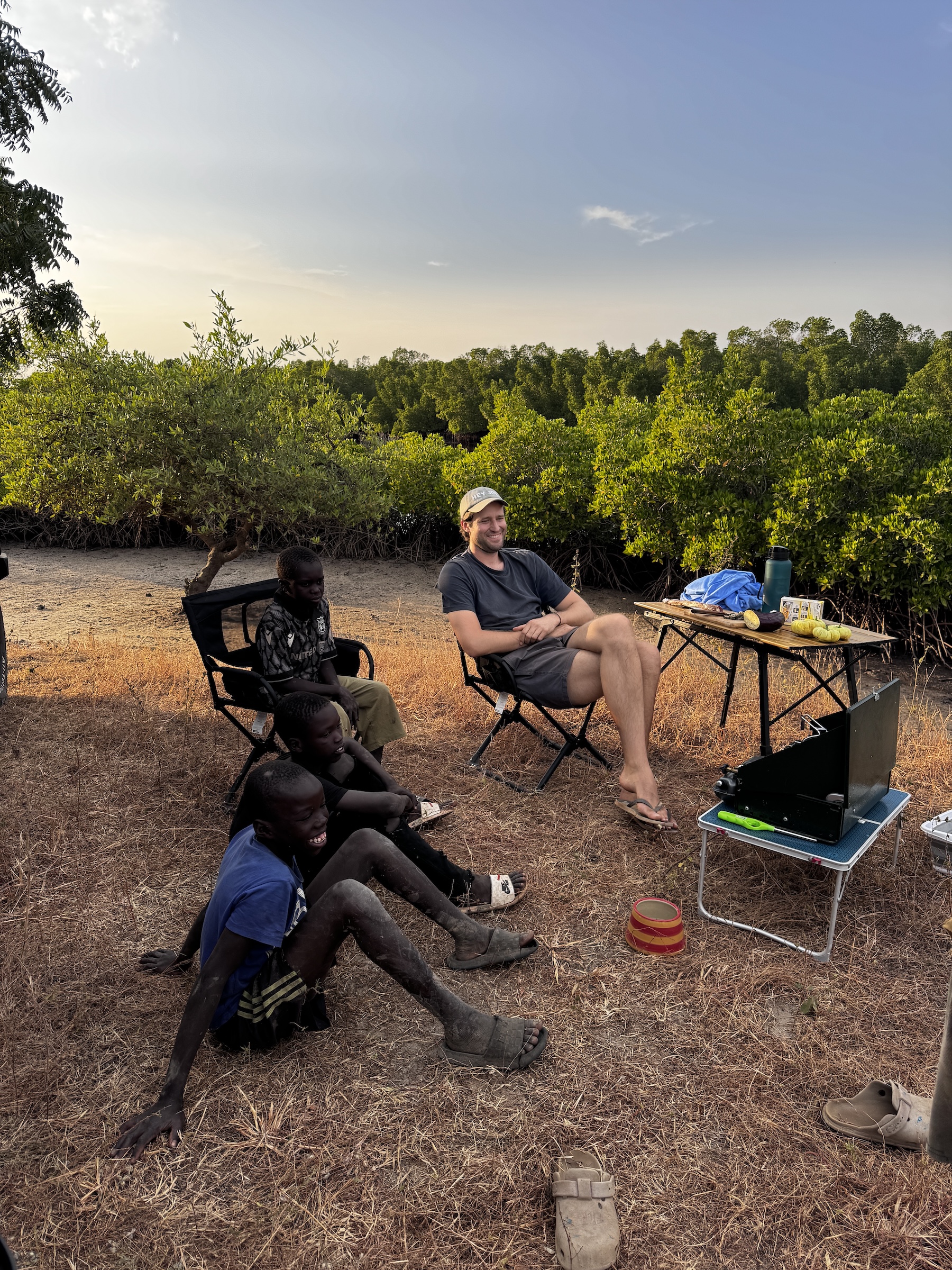
Village chief Gabriel in Senegal. After spending days along the densely built-up coast, we found a spot in the middle of a mangrove forest. In the evening, Gabriel and a few children stopped by. We invited them over for dinner; we had fried African tomatoes, which taste like eggplant. The next morning, we ate fresh oysters together, and at noon he invited us to his home. Despite the language barrier, we spent a lot of time together.
The children were friendly and respectful and played gently with Susi without teasing her. We gave them one of our two soccer balls, and at the end we shared a bar of chocolate. It was an encounter based entirely on respect. There weren’t many like that.
Was there an encounter that changed you? A story you’ll never forget?
Visiting a school in Nigeria—but not quite as you’d expect. At the time, it was overwhelming. But as we drove on, an uneasy feeling set in. Why are we actually the attraction here? Because so few white people come here? Because white skin is associated with wealth in people’s minds? Because an old colonial image still lingers?
We didn’t find an answer to that. But the question stayed with us for the rest of the trip. We’re a white German couple with European passports and bank accounts, and that opens doors that are closed to most local people. We can enter places where others cannot. We can leave at any time. We can afford a doctor or veterinarian who is unaffordable for the average family there.
"Once you've taken a shower using just one liter of water, a regular faucet feels like a luxury."
The question everyone asks: How do you finance this lifestyle? And how do you deal with the uncertainty that might come with it?
To put it bluntly: with savings and unpaid leave. We both had jobs, worked for a few years after college, and paid for the trip with our savings. We sublet our apartment, which covered our fixed living expenses at home.
While traveling, we spent around 15,500 euros—that’s a good 110 euros a day for the two of us plus our dog. On top of that, of course, is the car—our biggest expense.
What was your biggest luxury on the road—even though it didn’t cost any money?
A shower. No question about it. There were times when we went four or five days in a row without showering. You get used to it surprisingly quickly—you lower your standards, wear the same T-shirt a few days longer, or wash up in a river. But when a real shower is waiting somewhere—at a campsite, a hotel, or once even in a park manager’s office—it’s a little celebration.
Have you ever taken a full shower with just one liter of water? We have. After that, a normal faucet feels like pure decadence.
What’s the best part about traveling together?
It’s realizing how well you work together. We established a routine early on with clearly assigned tasks, and whenever we faced challenging obstacles or tricky situations, we worked through them together—and then made a point of celebrating afterward, with a high-five or a cold Coke.
Plus, shared joy is simply better. On my own, these experiences would only be half as valuable. Traveling together multiplies the joy.
And what’s really rough sometimes?
That there’s nowhere to retreat to. Nowhere. That was the hardest part of the whole trip for us, and it built up slowly. You live in a few square meters—you can handle that. What was harder was that you’re never alone, even in front of everyone else. We thought there would be true solitude in West Africa. In fact, sooner or later someone shows up everywhere—in the rainforest, on the savanna, in the mountains. You park at a remote spot, think you’re on your own, and ten minutes later, ten kids from the nearest village are standing next to the car, watching you boil water. Most of the time, it’s nice. After a long day, it’s just too much.
What do you regularly discuss while on the road?
We’d go over many of our experiences in the evenings and try to make sense of them. Time and again, the discussion came back to the question of what we’re actually showing. As travelers, we have a responsibility, and as “content creators,” we have a separate one. Which encounters belong on Instagram and which don’t?
And then there were occasional arguments over trivial things because we were tired—who’s cooking, who’s walking Susi, who’s using how much water, or who’s eating how much chocolate.
Do you think your trip would have been different if you’d been traveling alone?
Definitely. On our own, we wouldn’t have done some things at all and would have experienced them completely differently. What became clear to us along the way: Other travelers are the only ones who truly understand what you’re going through right now. Friends and family listen, but they’re thousands of kilometers away. With locals, honest communication is often difficult due to language barriers and a palpable power imbalance.
When you’re traveling as a pair, you automatically have that with you: someone who’s had exactly the same day.
"The fact that there was nowhere to retreat to was the hardest part of the whole trip for us."
You traveled with your dog. Would you do it again?
Yes, without a second thought. And that’s even though Susi made it the toughest week of the entire trip.
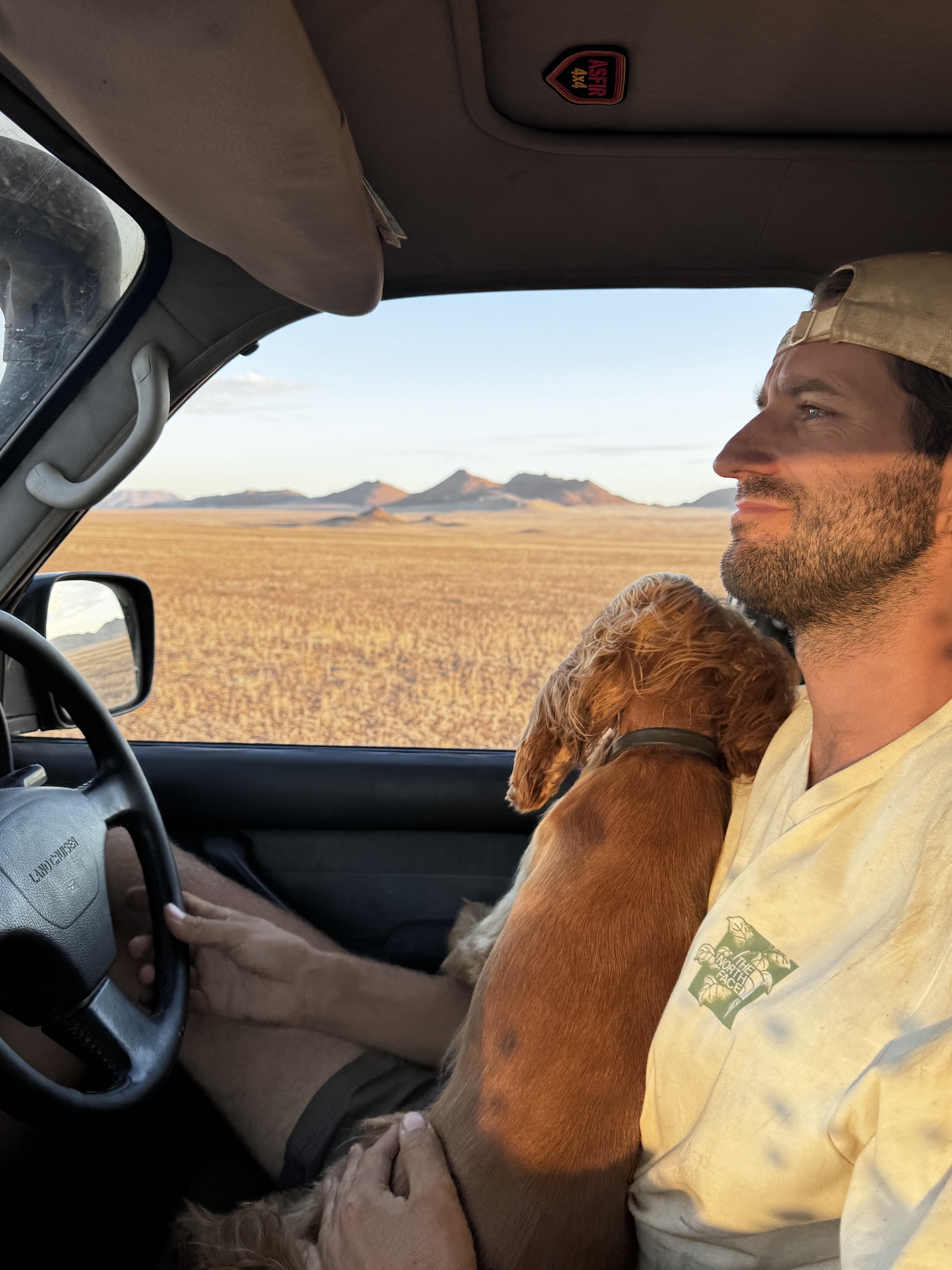
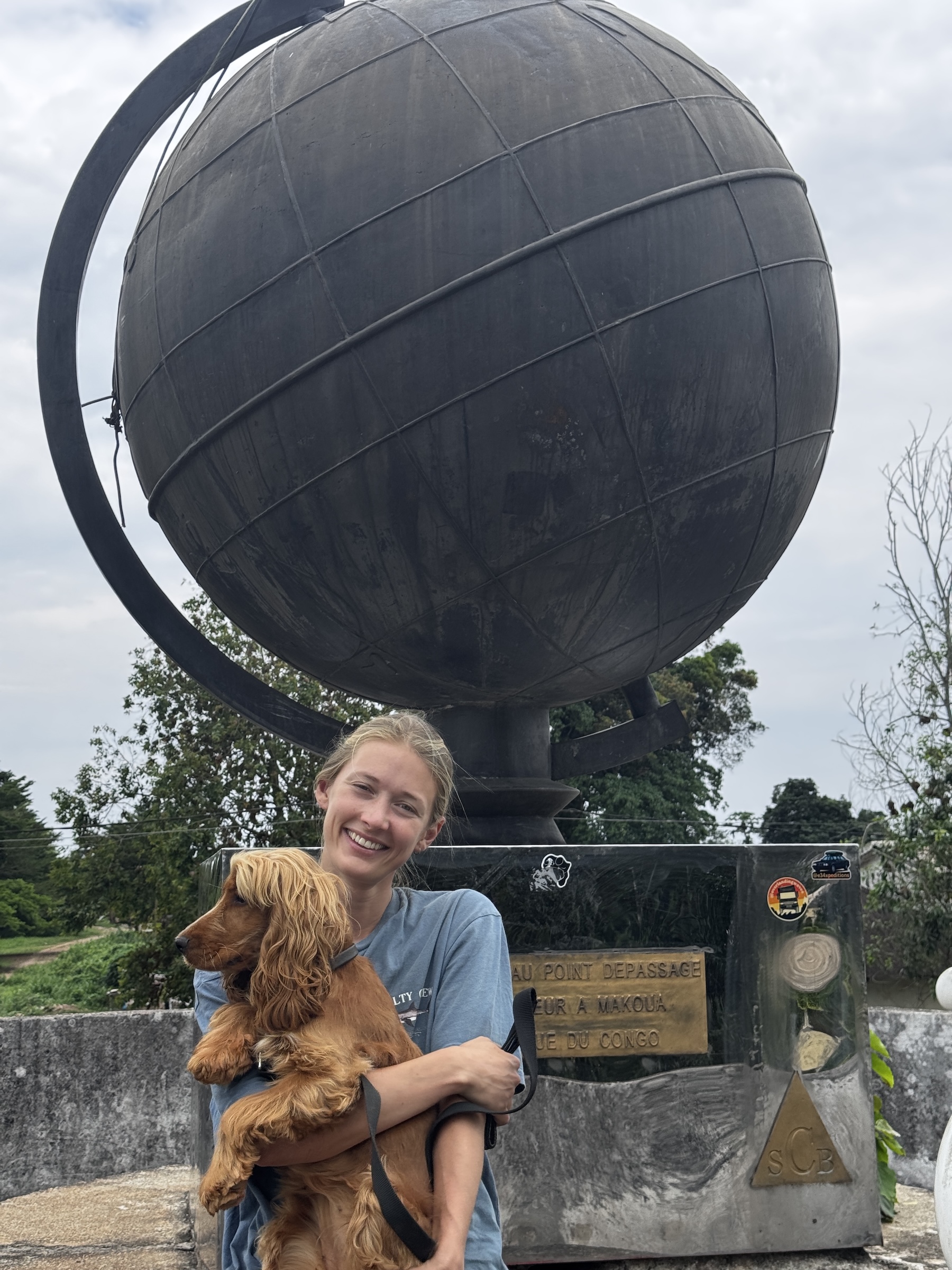
Susi was eight months old when we set off. She loved riding in the car right from the start—especially with the window open, her nose sticking out, and her floppy ears blowing in the wind. Every morning we’d lift her out of the rooftop tent, and after a few weeks she’d already be jumping into our arms as soon as the zipper was open. The paperwork was the least of our problems: along the entire route, we were asked for her papers only three times.
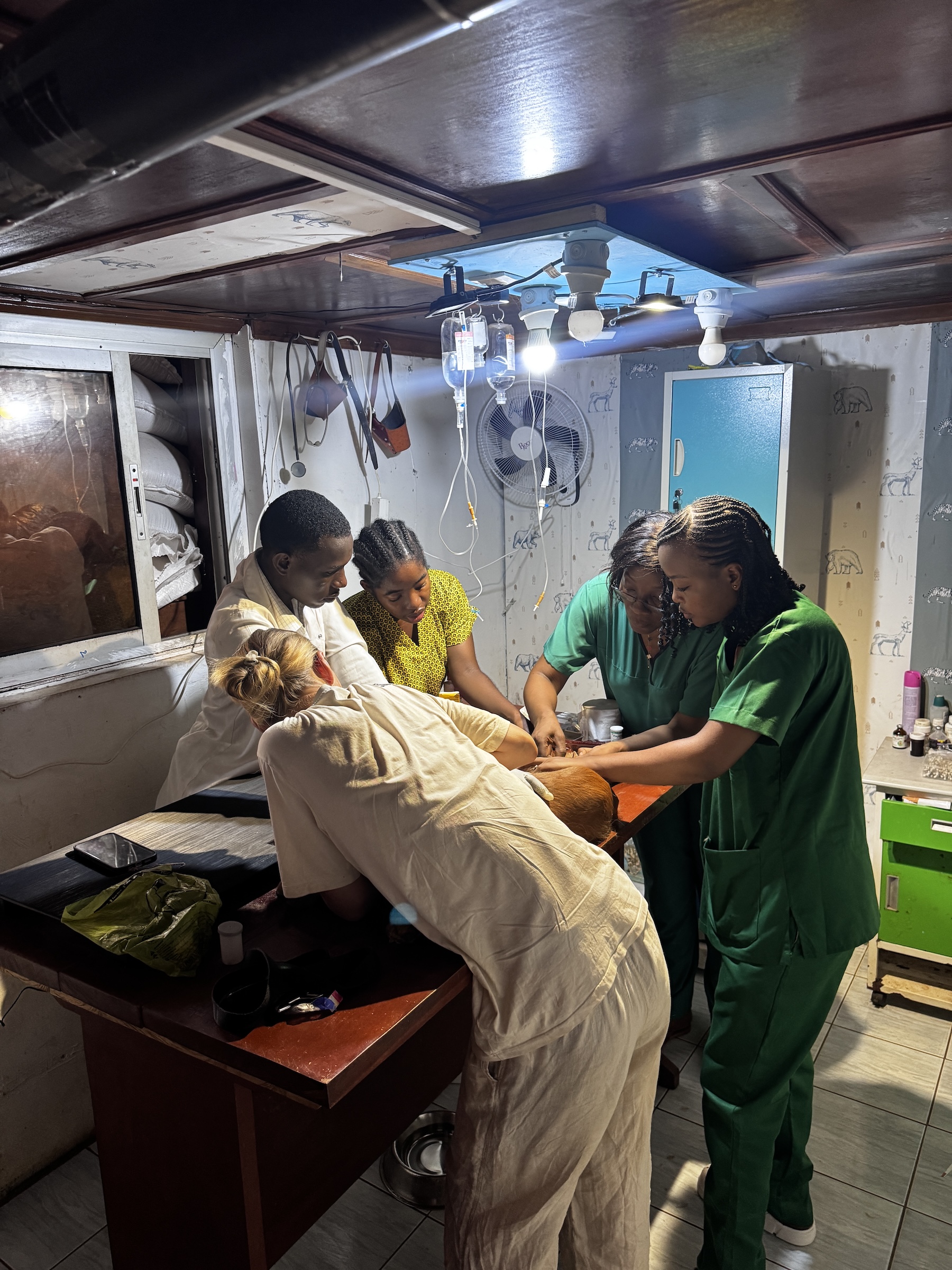
Our concern for her, on the other hand, was greater than our concern for ourselves. Africa is a challenging environment for a dog: heat, ticks, snakes, and stray dogs. In Yaoundé, things took a serious turn. Susi had ehrlichiosis, a tick-borne infection that is life-threatening if left untreated. We spent a week on edge and at times were genuinely afraid for her life.
A local veterinarian accompanied us and even came to the hotel in the evenings. The resources and facilities there simply aren’t up to the standards we’re used to. As a result, we ultimately had to make a few adjustments ourselves, relying on our own research and a veterinarian friend in the Netherlands who offered remote advice.
And yet: The dog made this trip all the richer, in ways we could never have imagined beforehand. Our bond with Susi has grown so close—in a way that would never have been possible back home. Seeing her dash across the desert sand, swim in the ocean, and sniff around in the rainforest are among our most cherished memories.
Be honest: What's one question you really can't stand hearing anymore?
"Wasn't that incredibly dangerous?"
Safety was the topic that sparked the most questions, both before and after the trip. During the trip itself, it was the least of our concerns. We were never threatened, never seriously robbed. We saw many weapons, especially at military checkpoints, but not a single one was pointed at us. What really stuck with us, though, were the people—how open and hospitable everyone was everywhere we went.
This isn’t downplaying the risks—there are real dangers. But the discrepancy between the headlines and our actual day-to-day experience was enormous over the course of several months.
What aspects of travel are romanticized on social media, even though the reality is sometimes quite different?
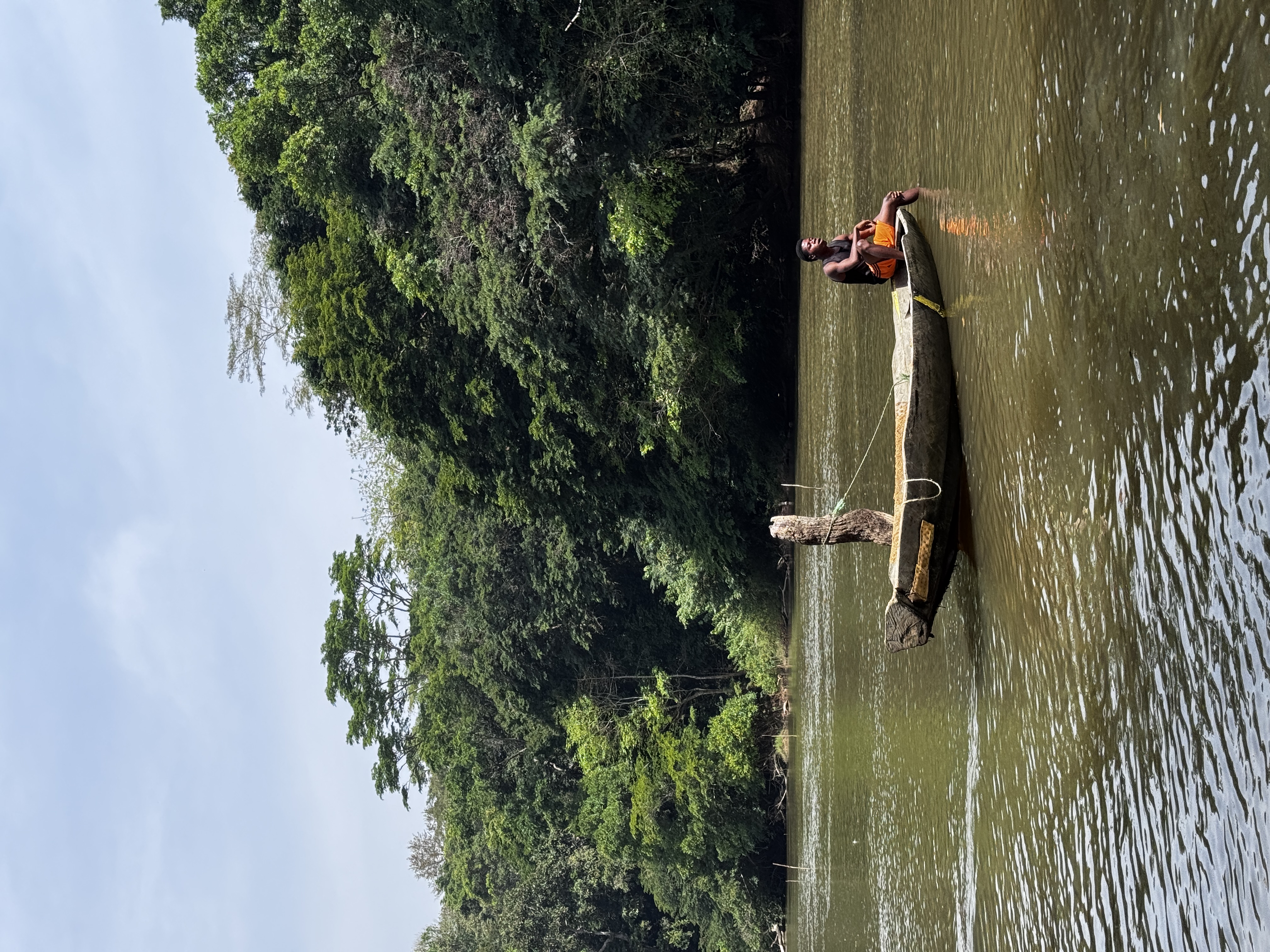
You can’t see the humid heat in any photo. Dry desert heat is bearable. The humid heat in the tropics is something completely different. You’re completely drenched the moment you move a meter. Every task immediately drains your energy, and most of the time, sitting is the only thing you can still do. We had days when we just drove around, simply to sit in the air-conditioned car.
What did traveling teach you that no school in the world could have taught you?
Self-confidence. We set out to do something that many people shy away from, and we did it. That changes how you view your own life, your job, your plans—all the things you wouldn’t otherwise dare to do.
We aren’t dramatically different people after the trip. But we’re braver. We dare to ask more, want more, and take more risks.
What was your opinion before your trip—and would you say the exact opposite today?
That you’re constantly paying bribes on a route like this. That’s what we’d picked up from every documentary about West Africa. In fact, in five months there were maybe two or three situations where we really felt pressured—most notably at a checkpoint in Senegal and at the border with the Democratic Republic of the Congo. The rest was just bureaucracy and waiting. We never paid a bribe.
If you could give your “past self” one piece of advice before leaving—what would it be?
Listen less to others and more to yourselves. That’s not meant to sound arrogant; we just felt that we’d done a lot right on our own, and other travelers later confirmed that to us.
When was the last time you thought while on the road, “Damn… how lucky we are to be able to live this life”? What was happening at that moment?
Whenever a fire was burning. And every time we watched Susi dart across the desert sand, swim in the ocean, or romp through the rainforest. Our bond with her has grown so close—something that would never have been possible back home.
Coming home, by the way, was harder than we expected. We were the last to get off the plane because we needed a moment. All around us were people in fancy clothes, with headphones, briefcases, and silver rolling suitcases. Our first thought at the airport was: Is that it?
On our first day back home, we got in trouble because our car was parked 20 centimeters too far forward from a driveway. And because Susi stepped onto the edge of a playground.
What does “One Life. Live It.” mean to you personally?
It means not saving your dreams for another life. That’s exactly what Johnny had been doing for fifteen years.
We now know that we don’t want to go back to the old world forever. What will come of it remains to be seen. The only thing that’s certain is that something inside us has opened up that was closed before. We only have one life.
Incidentally, this has also become quite practical. While on the road, we noticed how little time we spent on our cell phones—we didn’t watch a single movie in five months, even though we’d downloaded some specifically for that purpose. Back home, we turned this into rules: no cell phones in the bedroom; the device stays in a box by the front door. We get up earlier and structure our day more around the sun and nature. It’s nothing spectacular, but it’s our way of not just checking the trip off our list.
If someone reading your story also finds the courage to set off—what advice would you give them to take along?
If you wait for the perfect moment, you’ll never set off. It takes a mix of preparation and the right mindset. Get ready, but you don’t need a day-by-day itinerary. We like Mike Tyson’s quote: “Everyone has a plan until they get punched in the mouth”—a lot of things get decided spontaneously along the way. A plan can only serve as a guide.
A few honest words to add, because we don’t want to talk anyone into anything. This trip isn’t for everyone. If you’re fundamentally afraid of it, you shouldn’t go. There are plenty of moments at borders and checkpoints where things take a long time, someone is holding a rifle, or they won’t hand over your passport right away. If you panic in those situations, you’ll experience more stress than adventure. And if you need comfort no matter what, you won’t be happy here.
But those who can handle uncertainty, remain curious, and accept the unexpected as part of the plan will gain something that hardly any other trip offers.
Is there a project, a person, or an initiative that has become particularly dear to your hearts while traveling? Or something we absolutely should share with the OLLI community?
We’ve written everything we’ve learned into a travel guide—radically honest, with real costs, real mistakes, and the reality of safety rather than the headlines. We’ve experienced, paid for, and written down everything in it ourselves.
And for anyone who finds the route appealing but doesn’t want to tackle it alone: We also offer the Trans-Africa West Route as a guided expedition. The next group will travel from January through May 2027, in a small group of four to six vehicles. We’ll lead the way; you’ll follow. All the key details are on our website.
More about Marie and Johnny