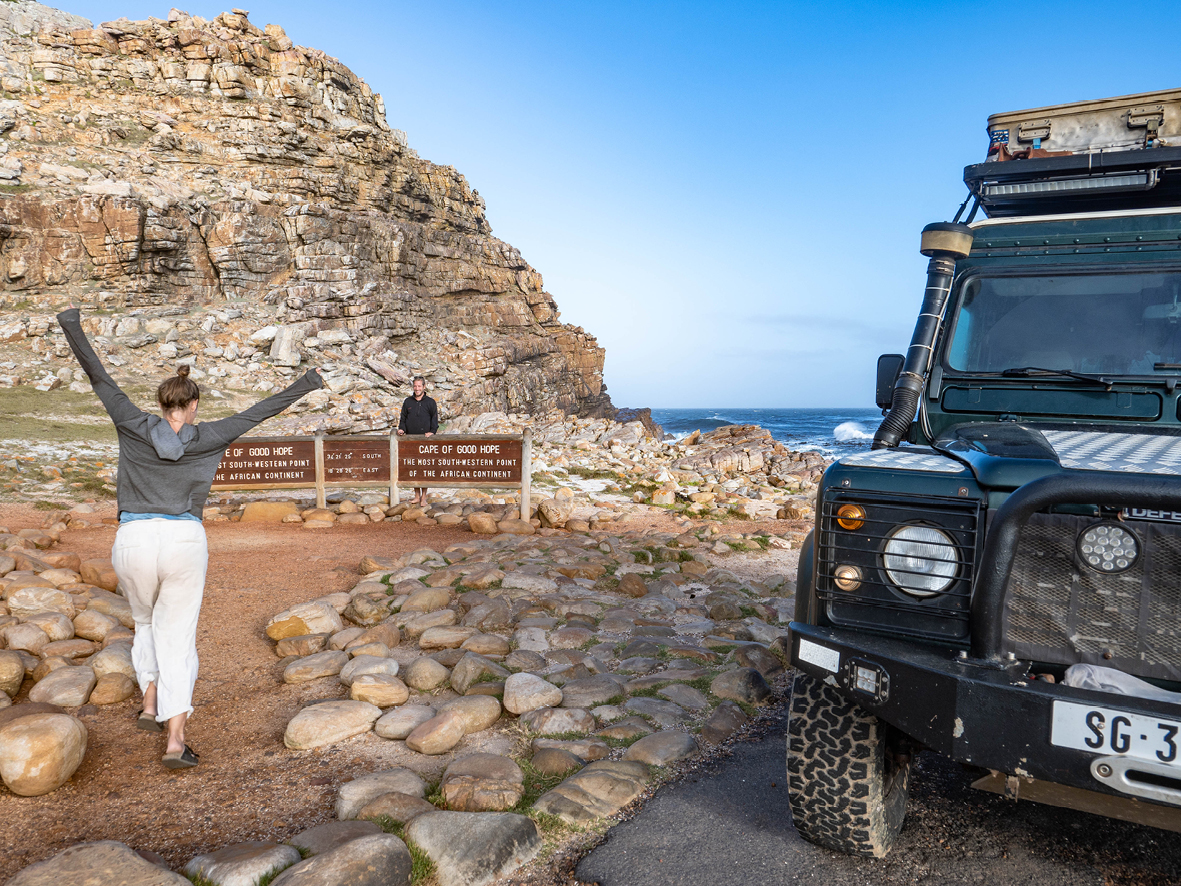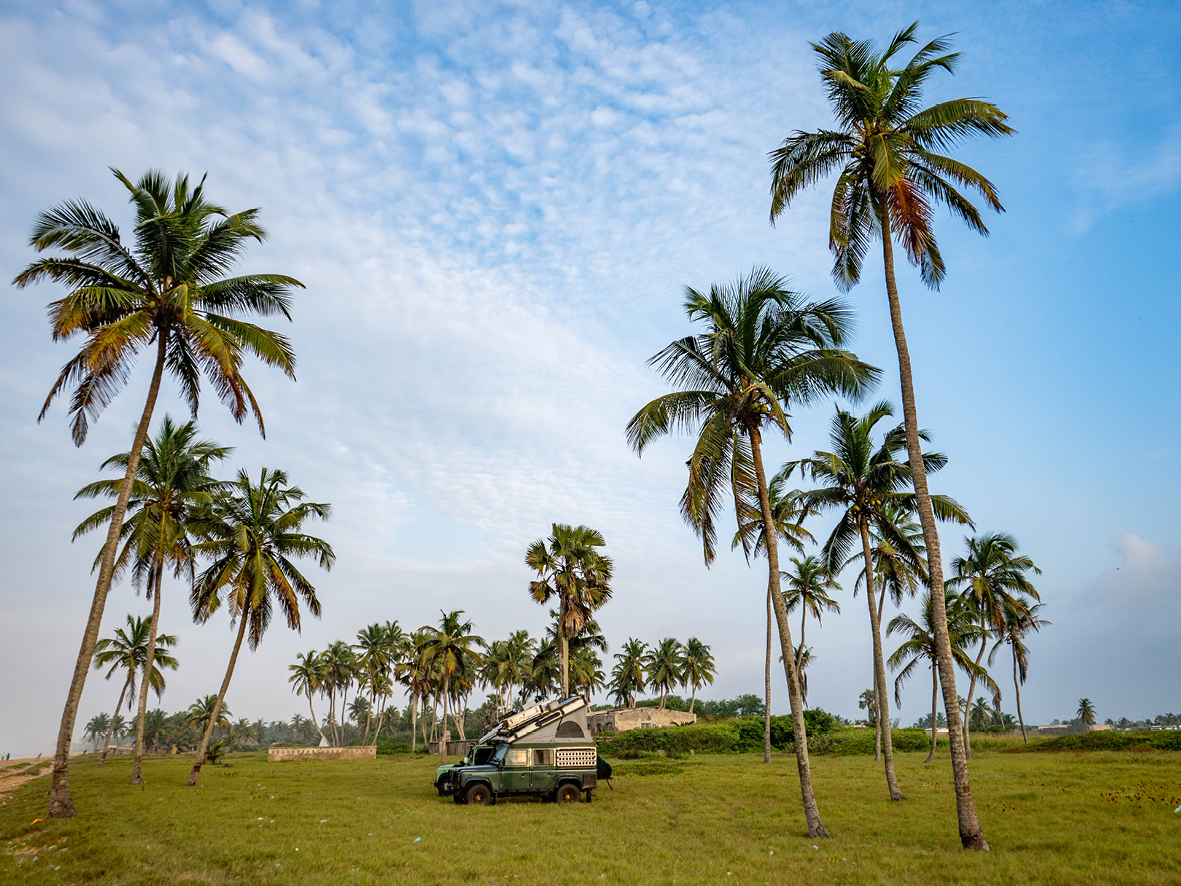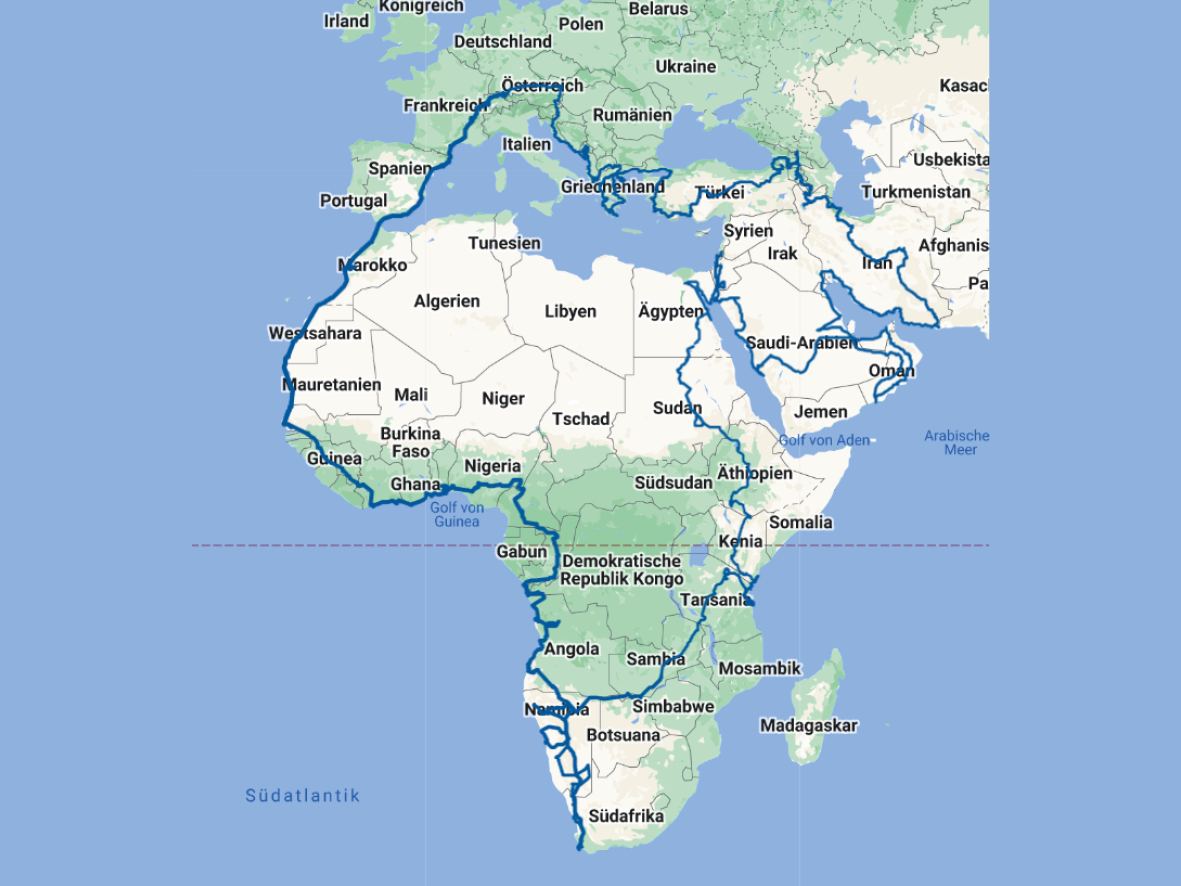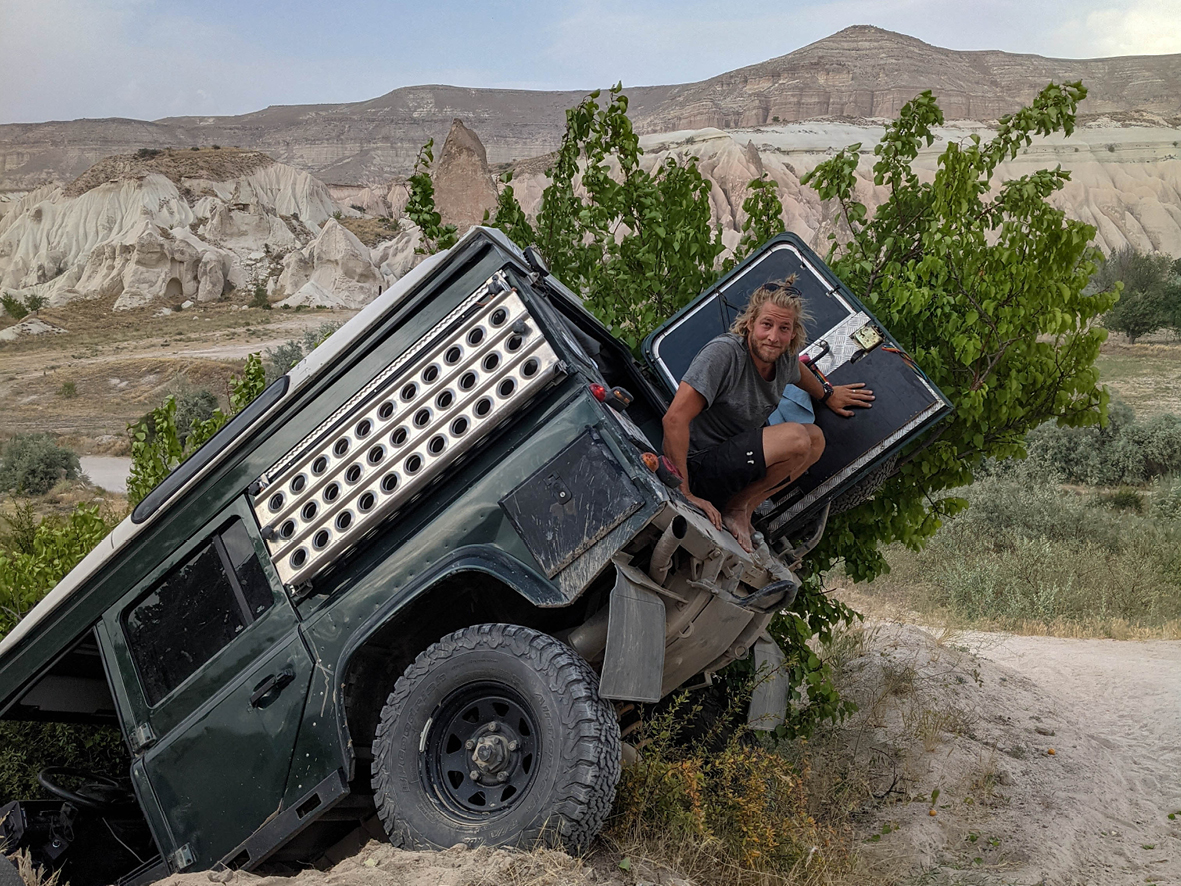
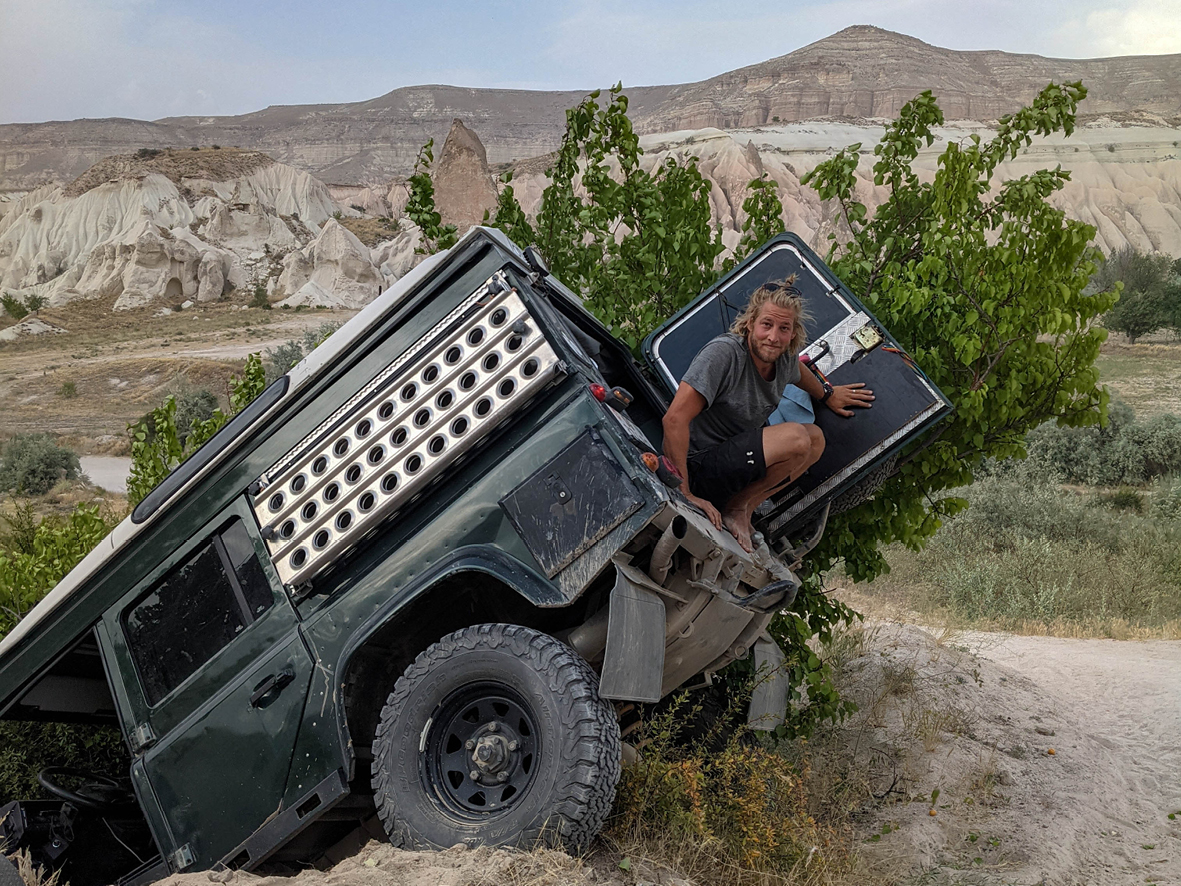
Two and a half years, 44 countries, 91,000 kilometers - and an adventure that almost failed due to a rollover accident, a prison stay and countless car breakdowns. But Martina and Toby kept going. Because giving up was never an option.
We talk to people who live their lives differently - consciously, courageously, sometimes radically. Not to impress, but to inspire.
This is not about empty phrases. Not about gloss. It's about real answers - to the questions you ask yourself around the campfire when no one is making small talk anymore. Because when you're on the road, you have a lot to tell. And often more to give than you think.
About you and your journey
Tell us briefly about yourself: Who are you?
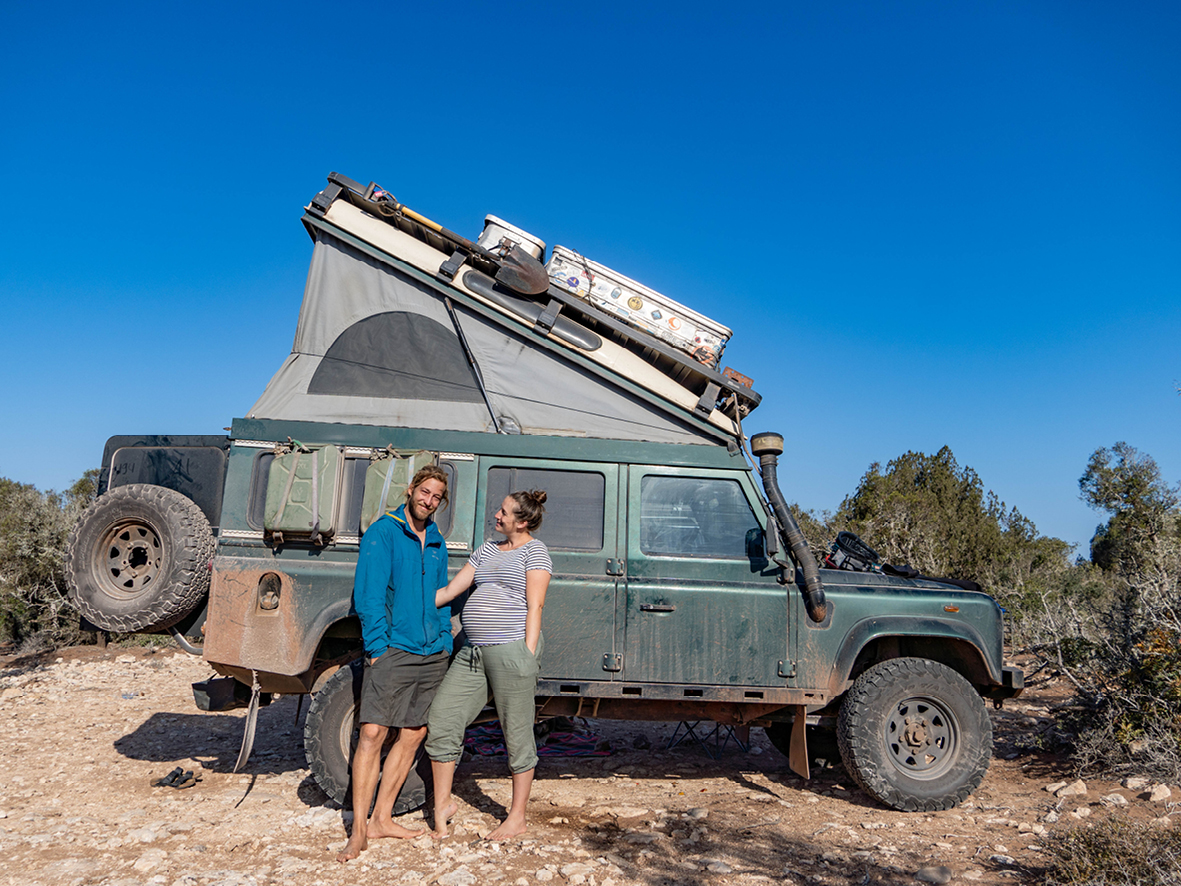
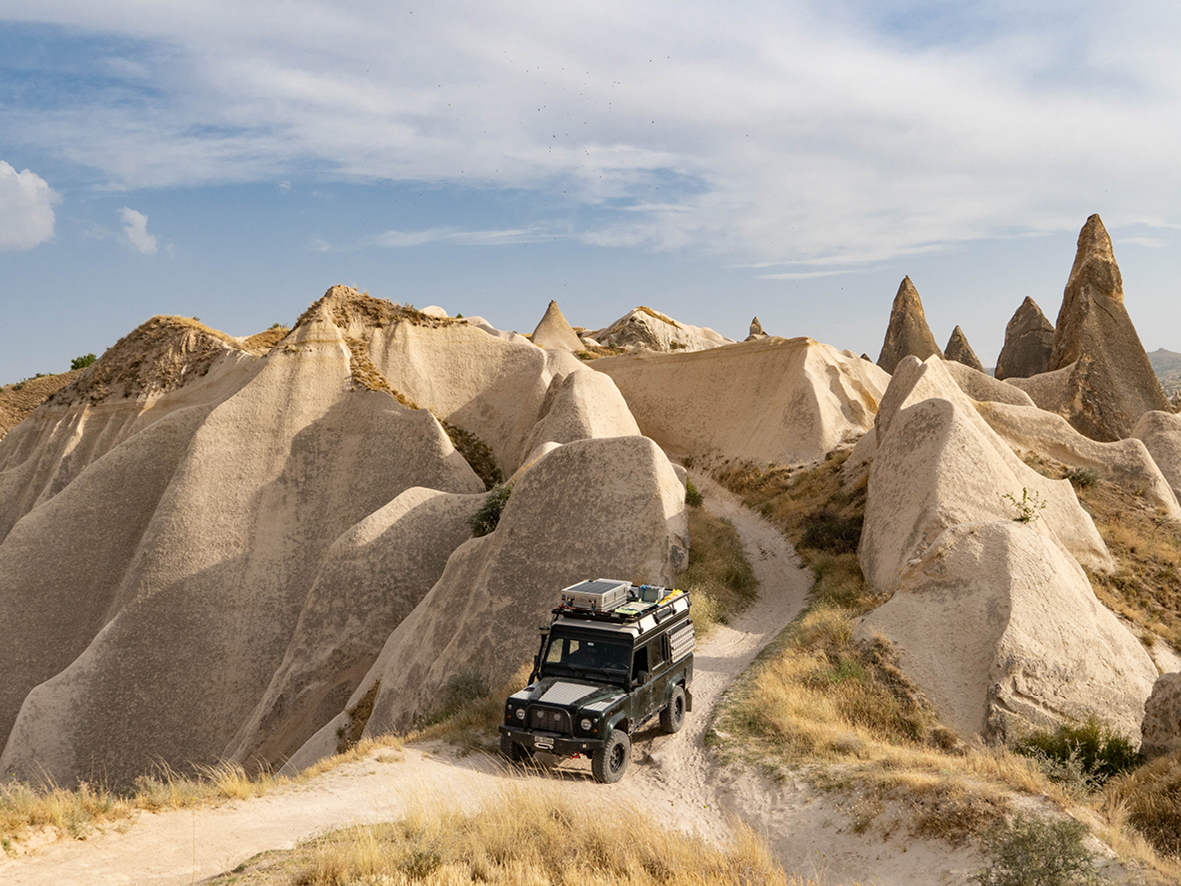
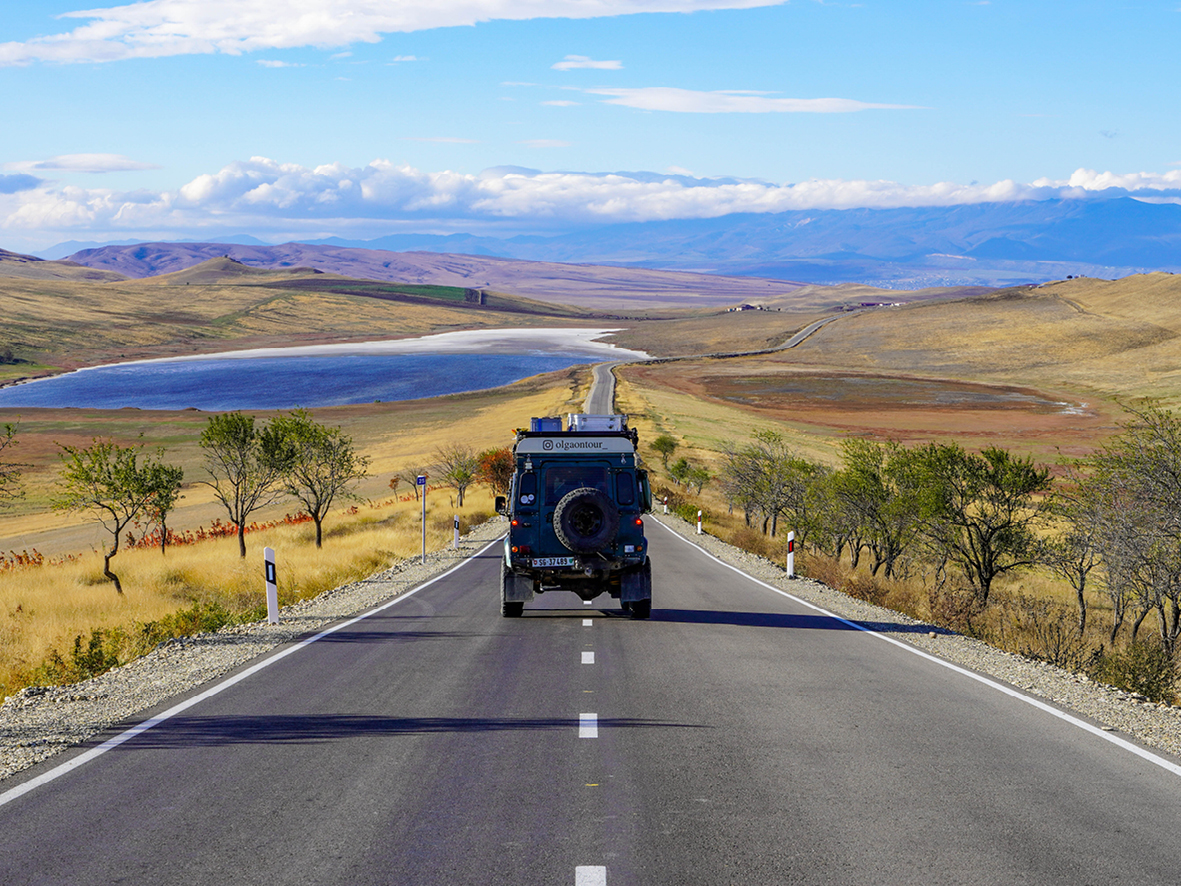
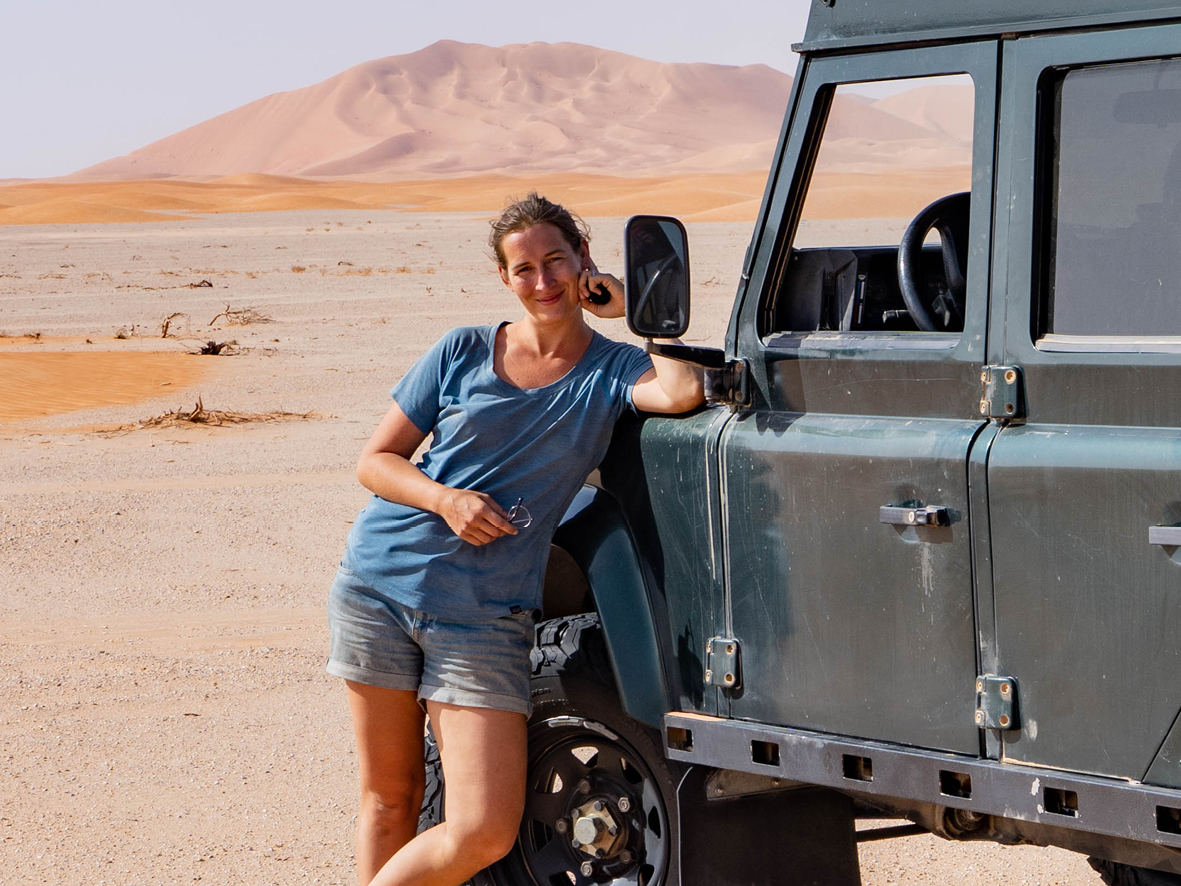
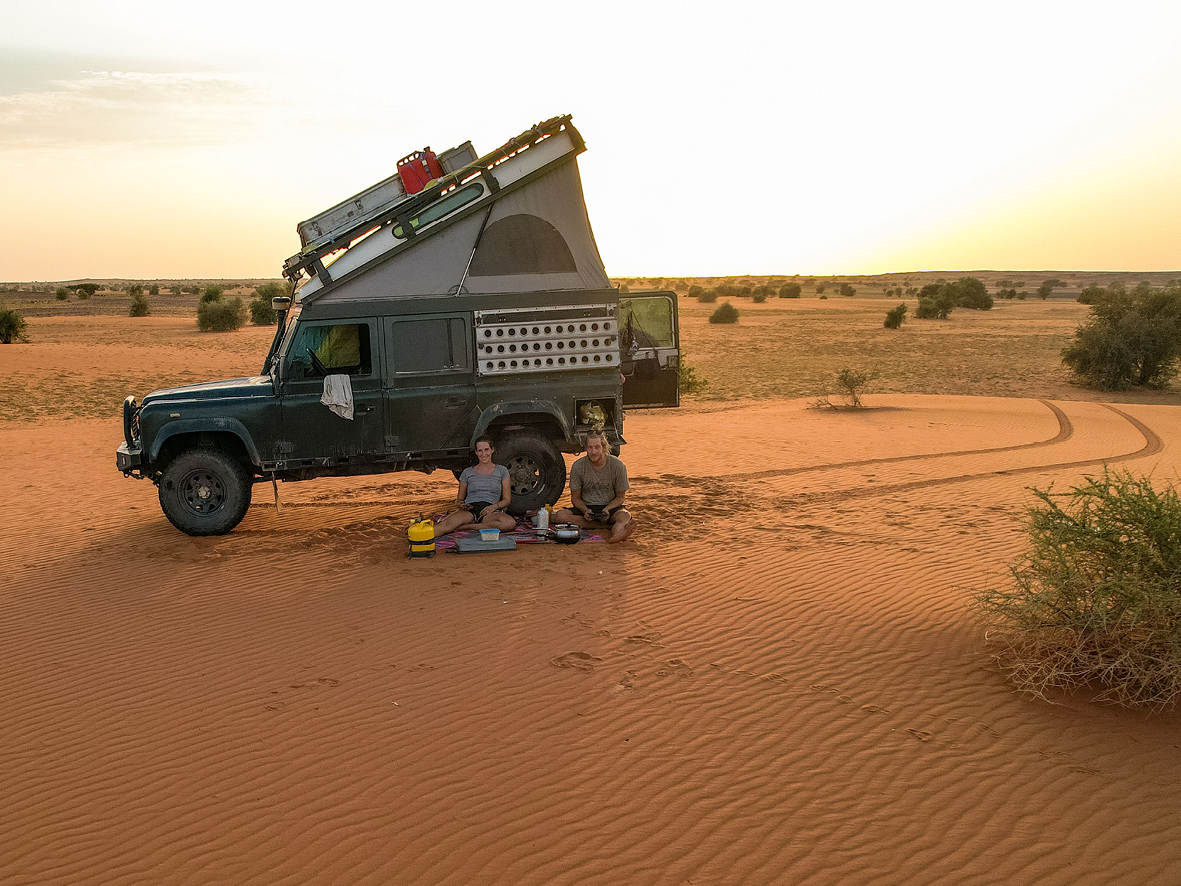
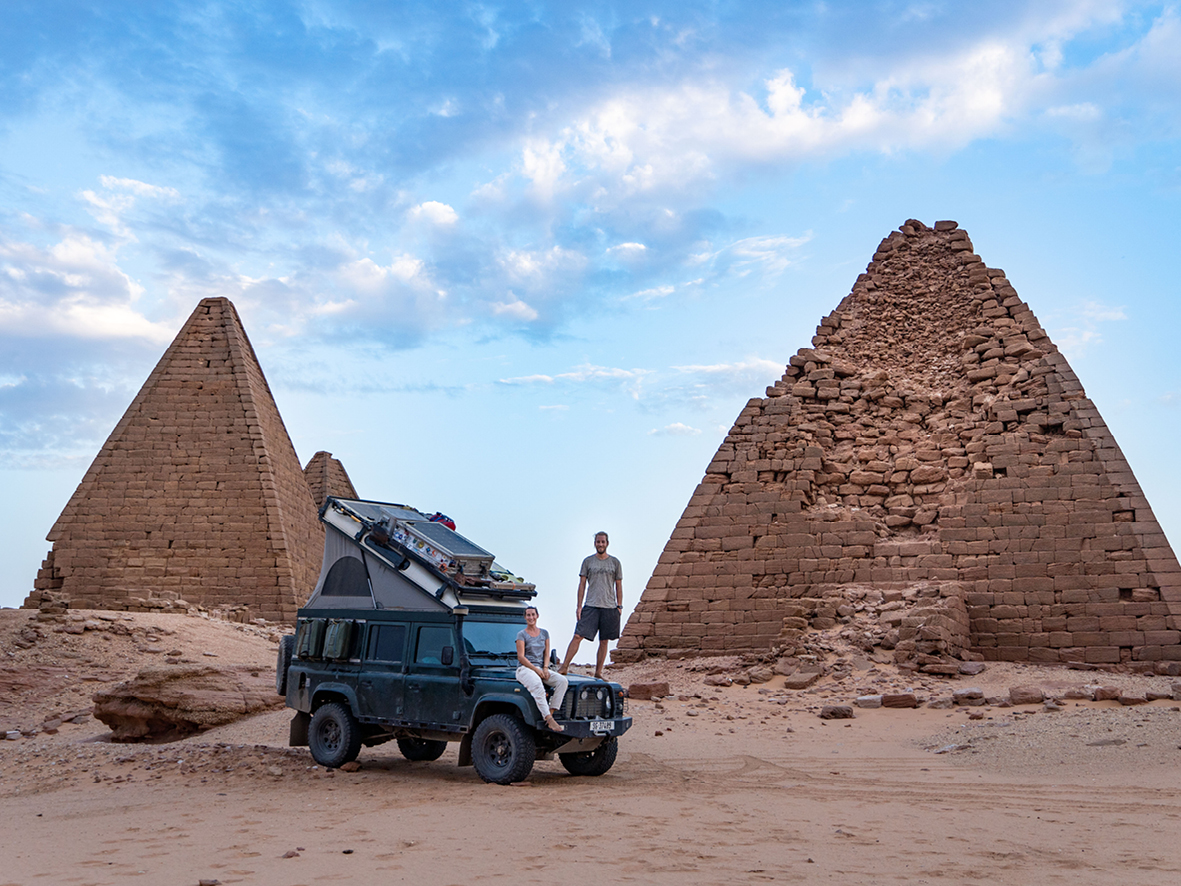
We are Toby and Martina, a Swiss couple with an old Land Rover Defender. We were on the road for 2.5 years - in the Middle East and Africa. We've been back home since 2023, when our first son was born. We now have two children and a dog.
Do you remember the moment when you felt for the first time: We want to get out. We want more out of life?
The dream of an unlimited overland trip began for us - or more precisely for me, Toby - in 2011, when I met two Swiss people with Defenders on an adventure trip in the Yukon who were traveling in exactly the same way. It took ten years for us to fulfill this dream - but at some point the time had come. And I was able to infect Martina with this dream - luckily.
What does traveling mean to you - beyond postcard motifs and bucket lists?
Being able to live in the day, without time pressure. We never had fixed plans, expectations or obligations. This gives us space and freedom in planning our day and allows us to react to spontaneous circumstances and get involved with them. That gives us joy and the freedom we are looking for.
The question everyone is asking
How did you finance this trip?
We saved for five years to make our 2.5-year trip possible. Now we are back home and living a "normal" life ... Although - normal? Well, we work much less than those around us, because time as a family is worth much more to us than a lot of money in our bank account. But now it's also more difficult to save money for the next trip. But we'll manage somehow.
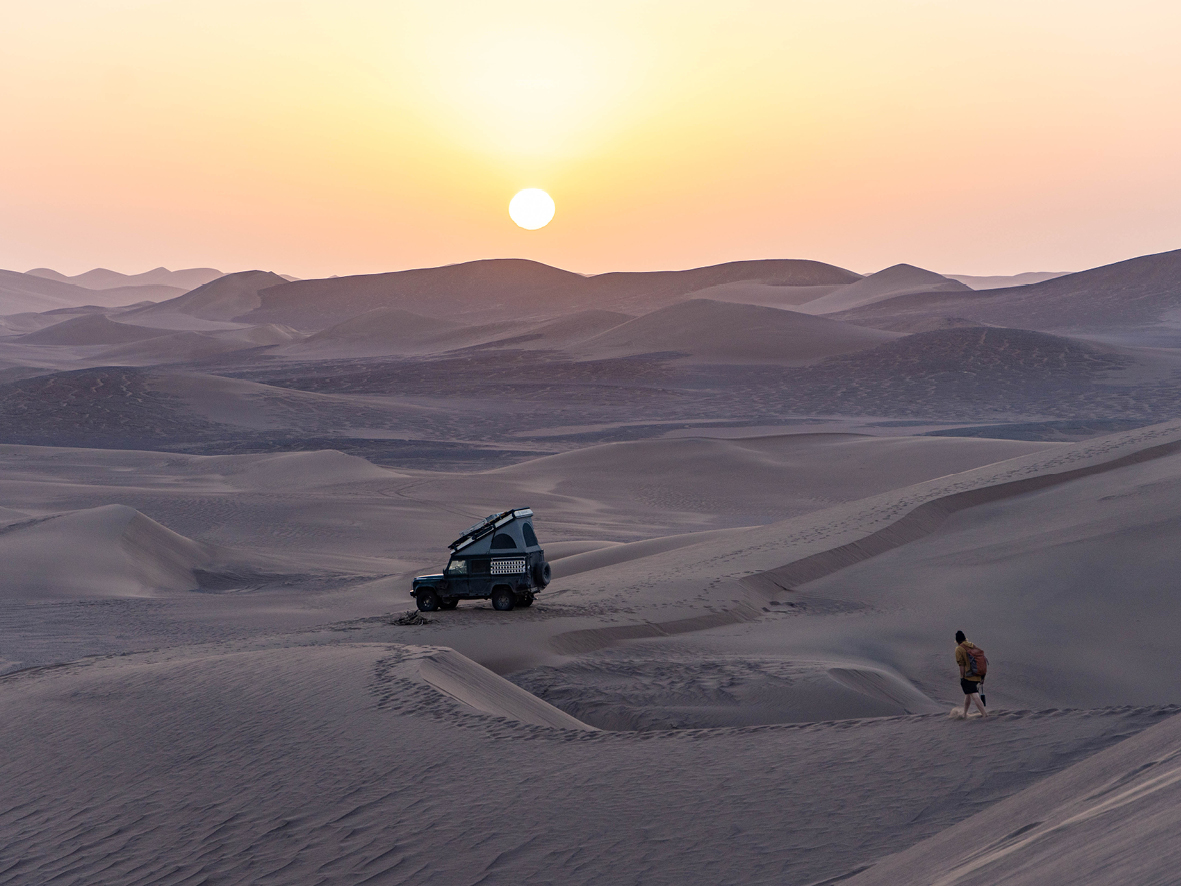
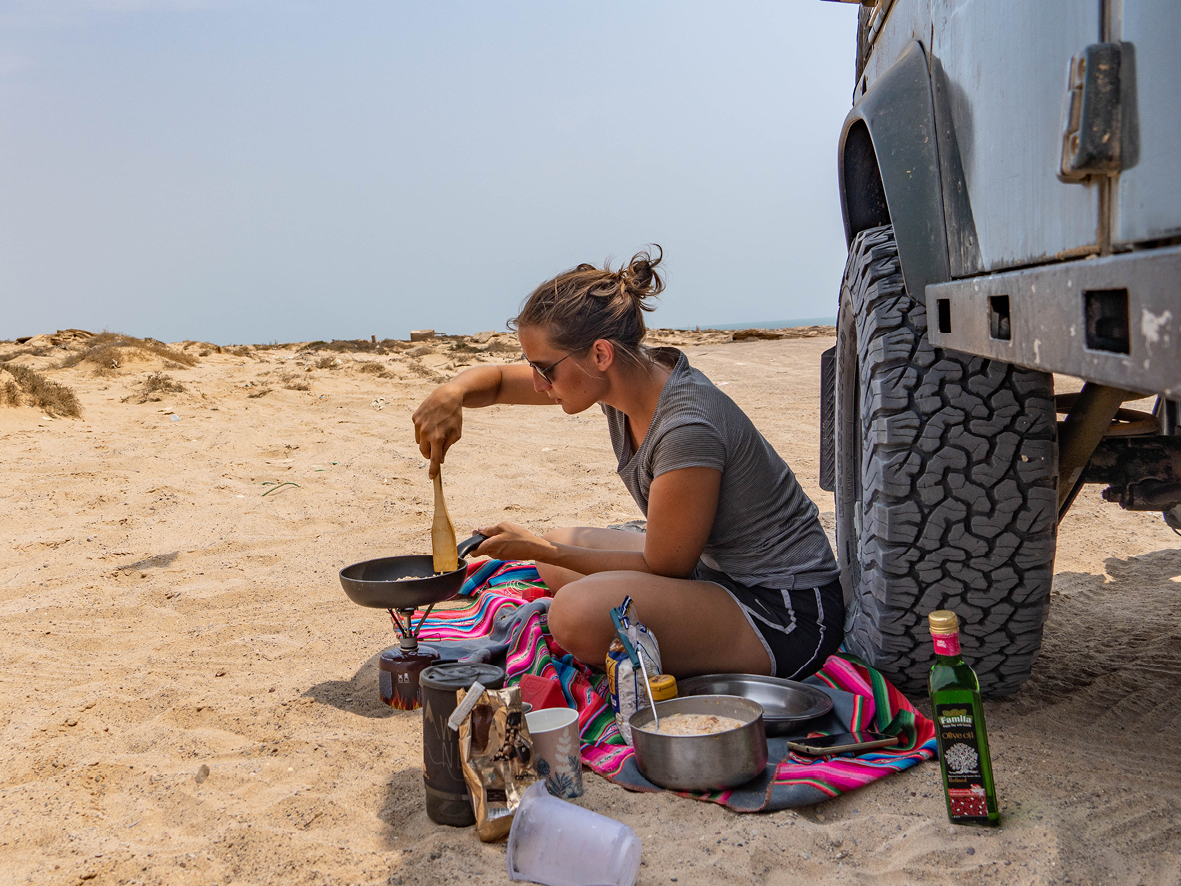
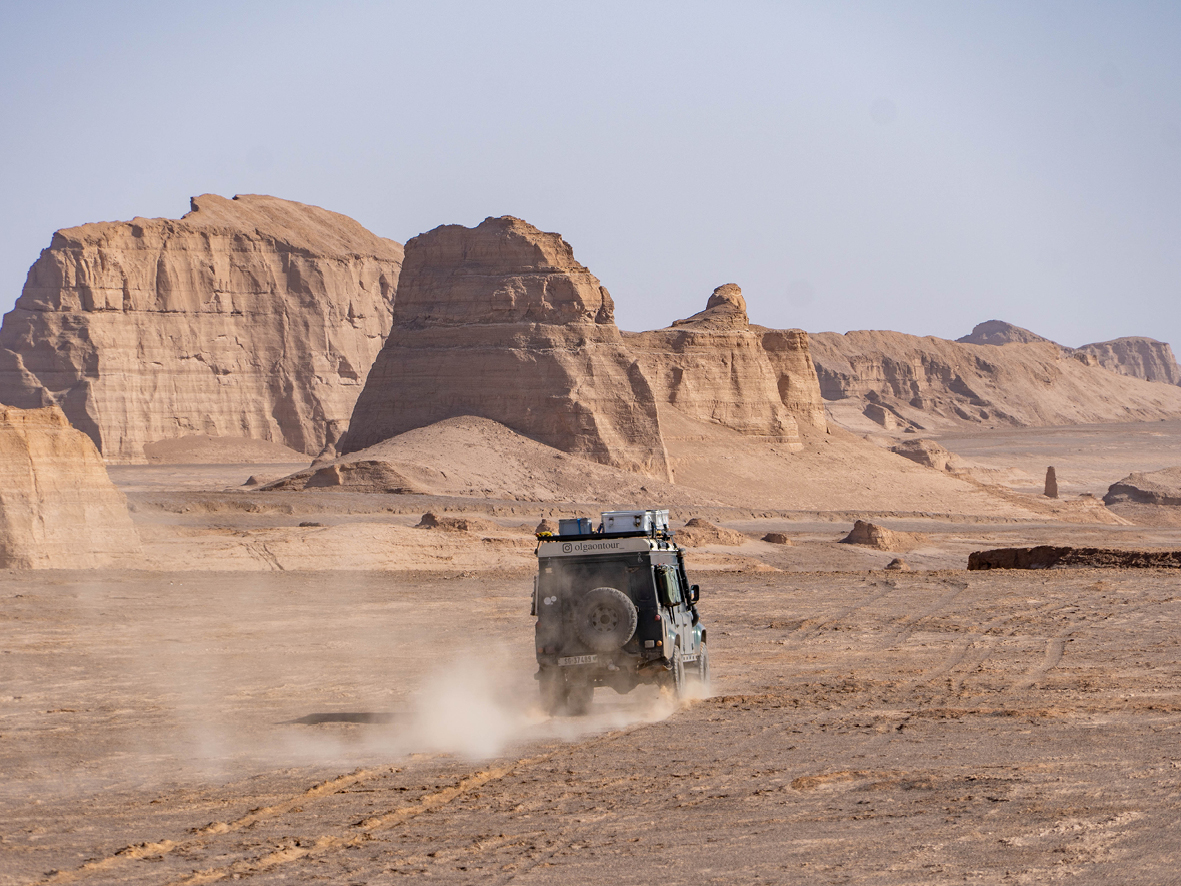
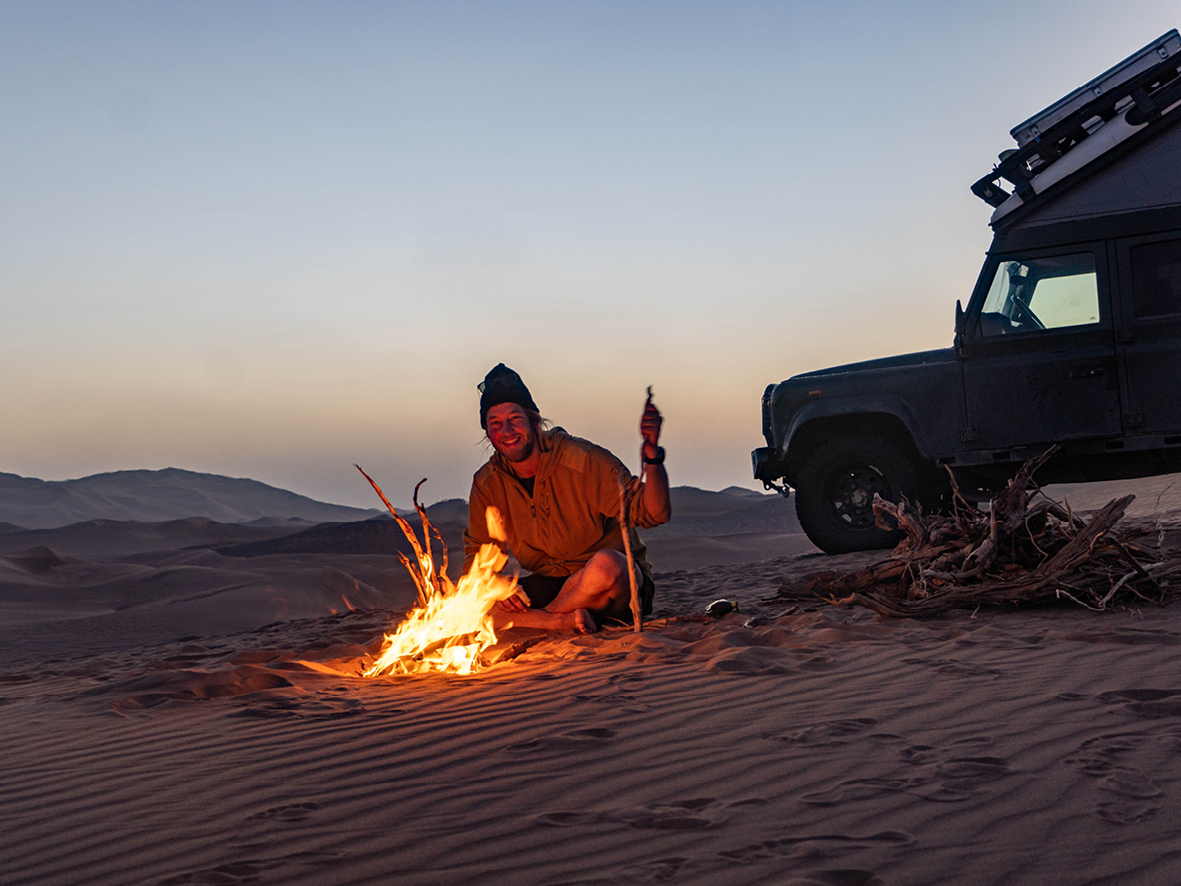
What was your everyday life like on the road?
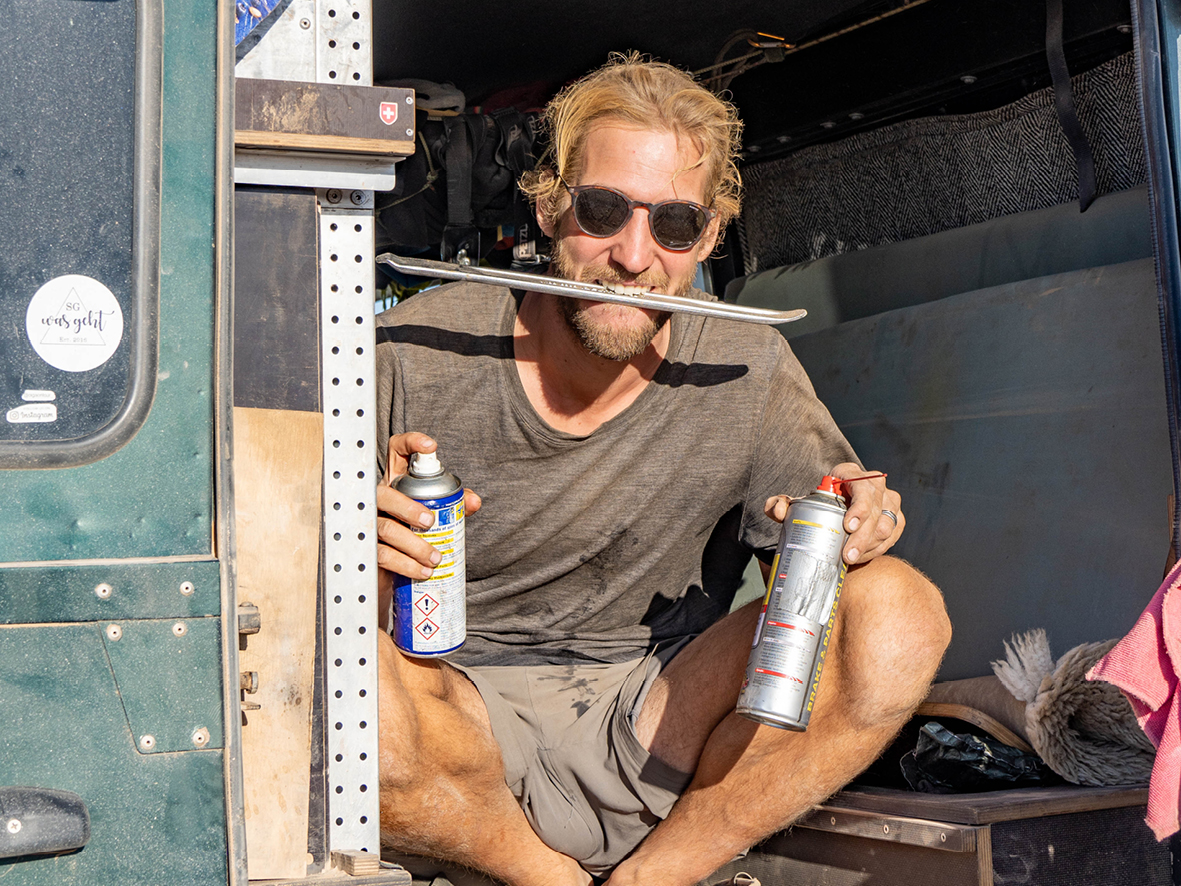
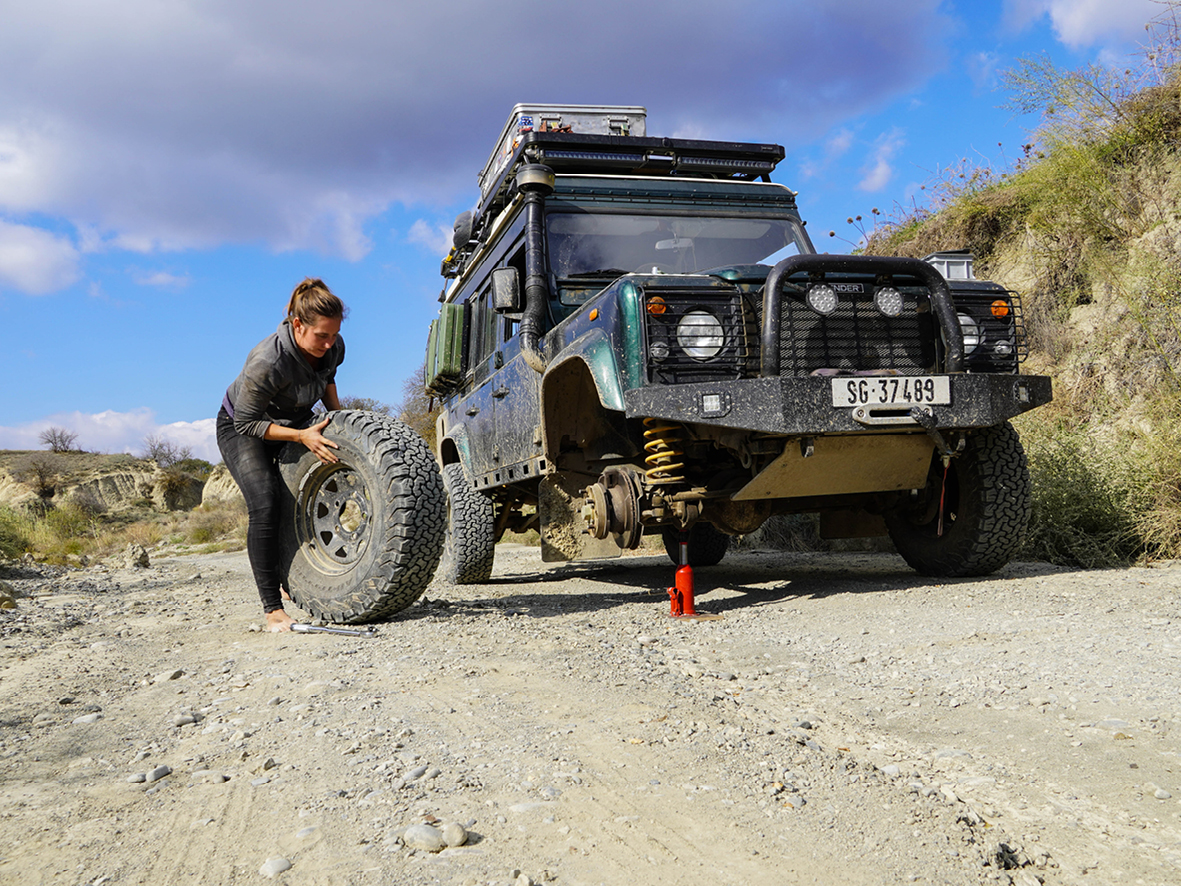
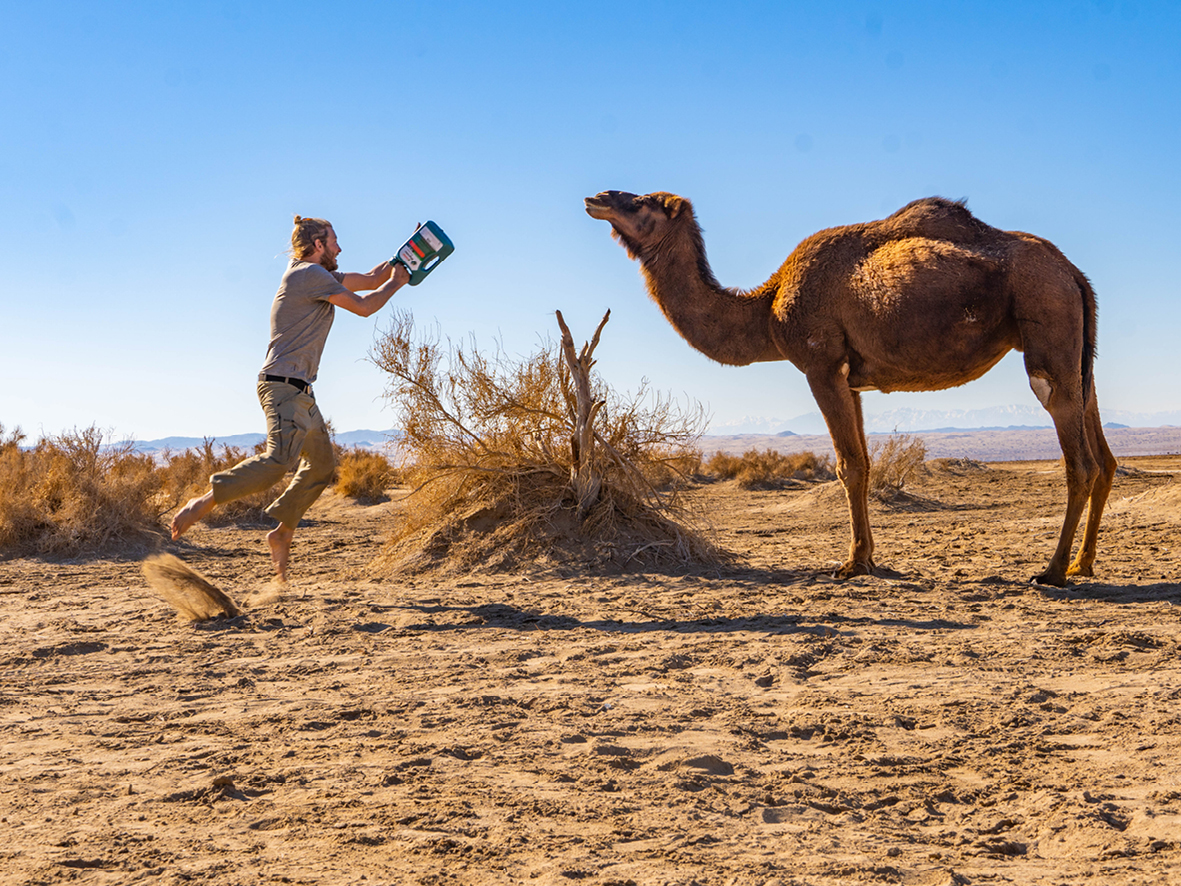
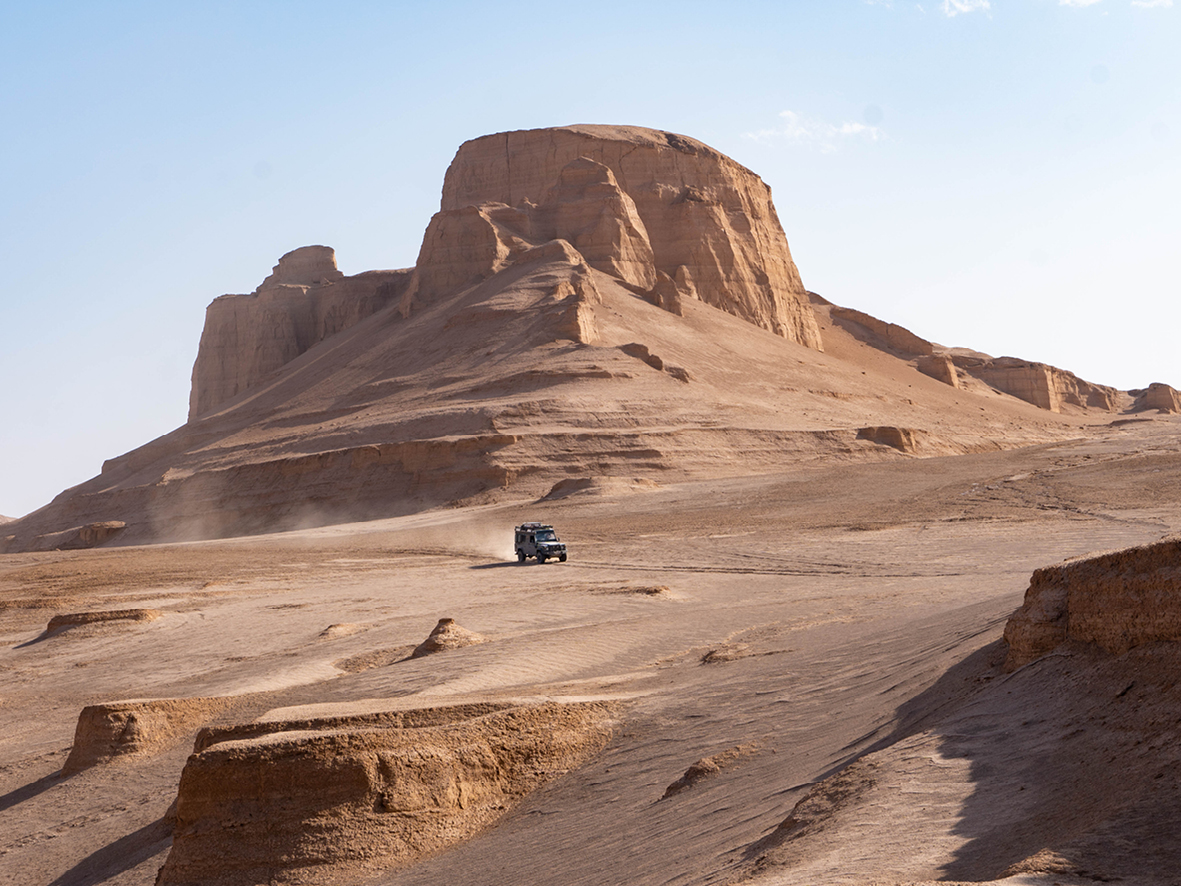
We had different kinds of everyday life when we were traveling. There were driving days, when we often didn't even stop to eat. Then there were organizational or repair days. Although these are part of everyday life on the road, they are so chaotic that they hardly had anything repetitive or mundane about them. And then there were also relaxation and discovery days, where we were simply present in our surroundings.
What all these days had in common: Black tea in the morning was a must - and watch out, there was probably a new car problem coming up.
Were there moments when you wanted to give up everything?
Some moments on a long journey are more memorable than any sunset. We will never forget three of them: the rollover accident in Turkey, the 48 hours in prison in Ethiopia - and the moment we found out we were going to be parents.
Your rollover accident in Turkey sounds like a nightmare. How did you organize it on site - from the rescue to the repair?
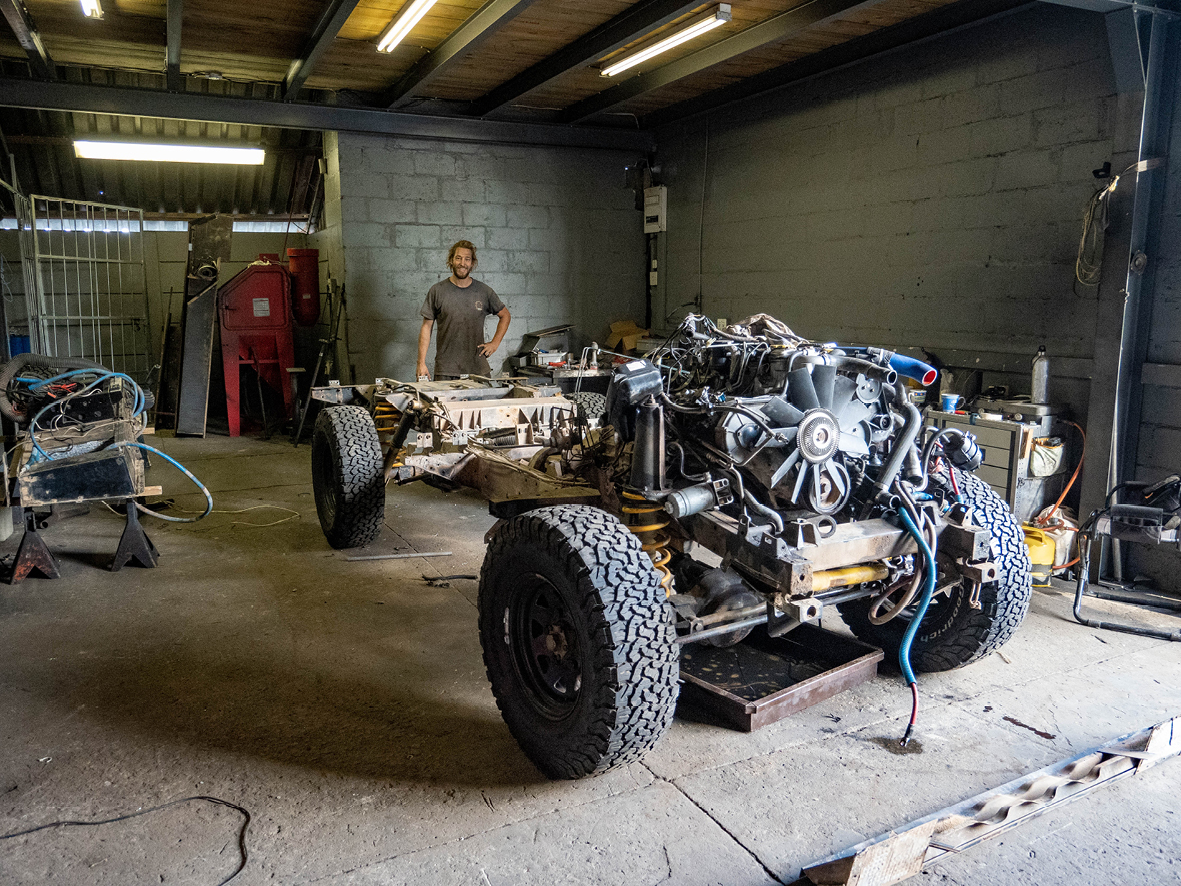
Fortunately, we met a Defender mechanic two days before the accident. We sent him a photo. As he knew the region well, he was on site about two hours later with two Defenders, a tractor and a translator. With this support, we were able to rescue ourselves and then even drove to the workshop. The Defender is simply always roadworthy - almost always ;)
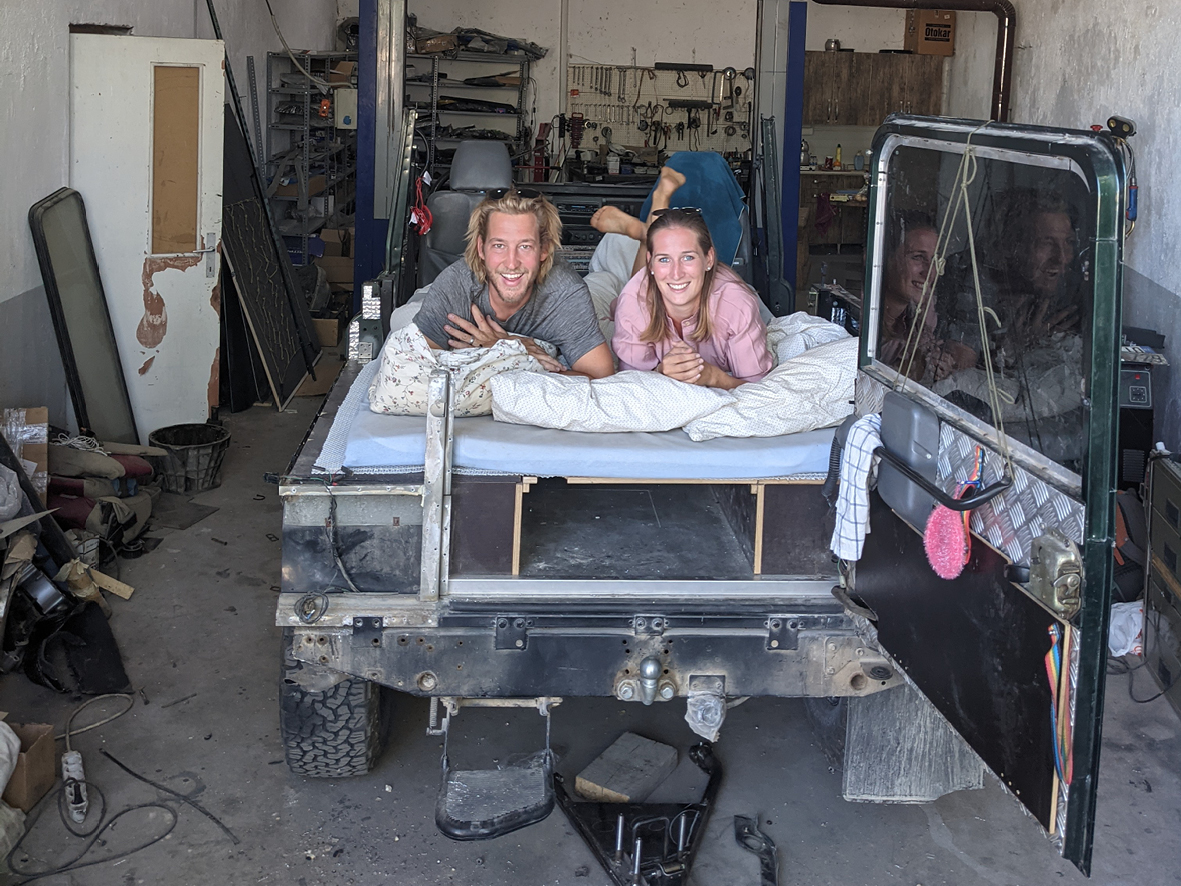
The repair took three months. Our mechanics only spoke Turkish and naturally lived their mentality to the full. That's why the whole organization, preparation and actual repair took a very, very long time - it was chaotic and a great test of patience for us.
"This time really allowed us to settle into the journey."
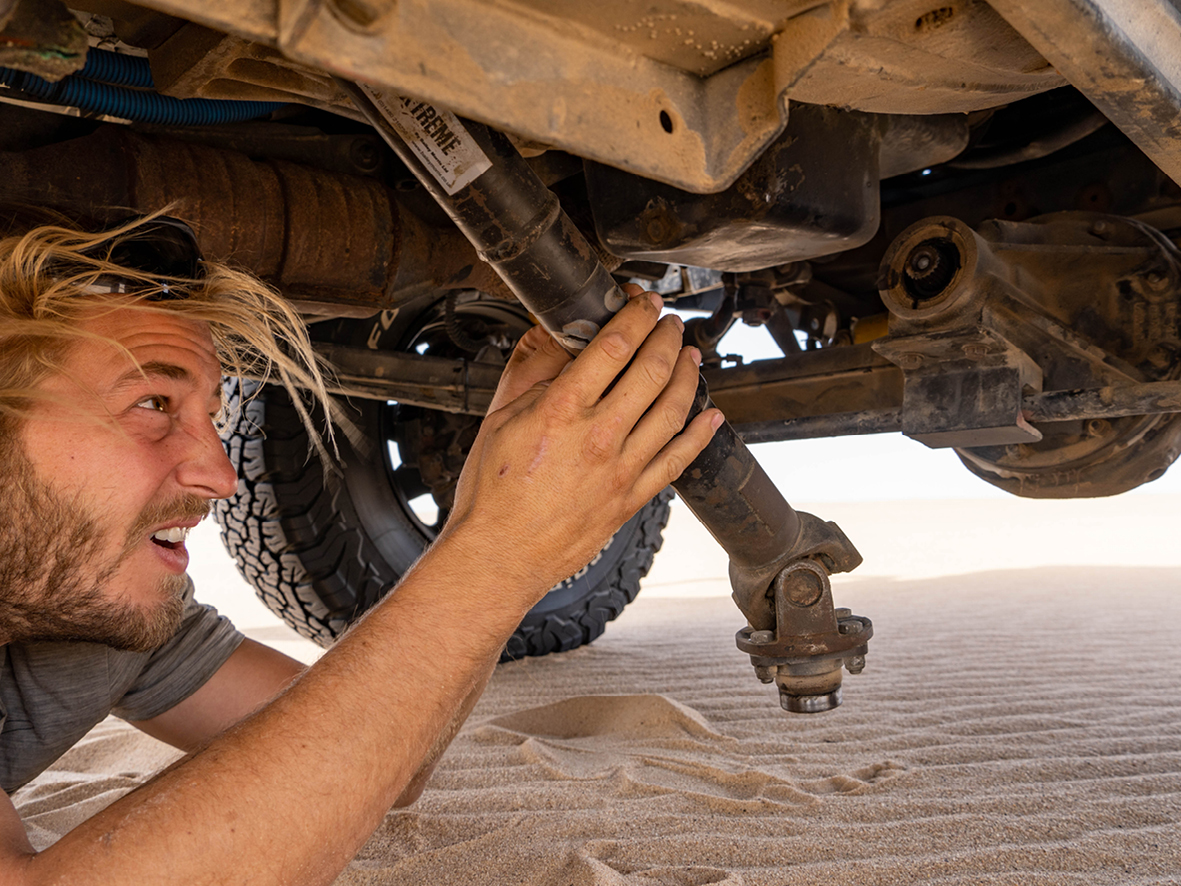
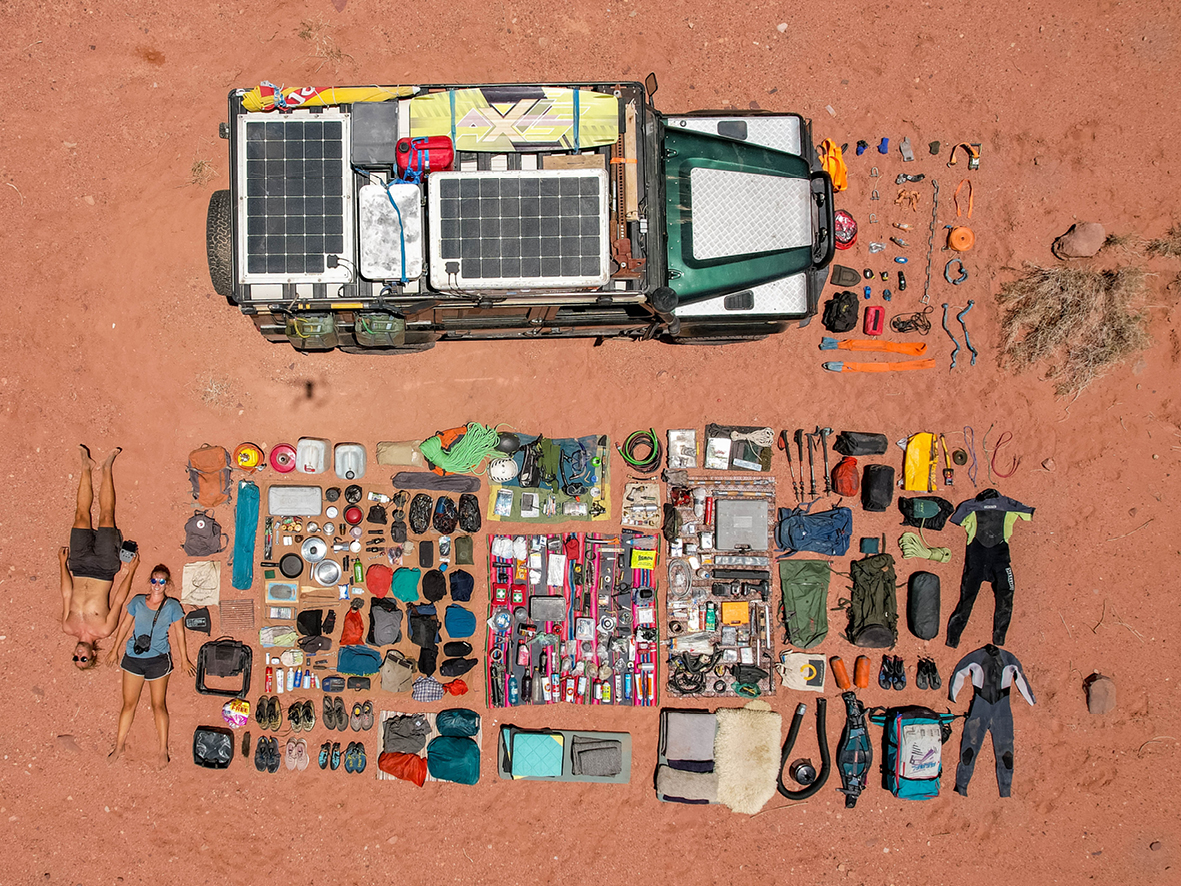
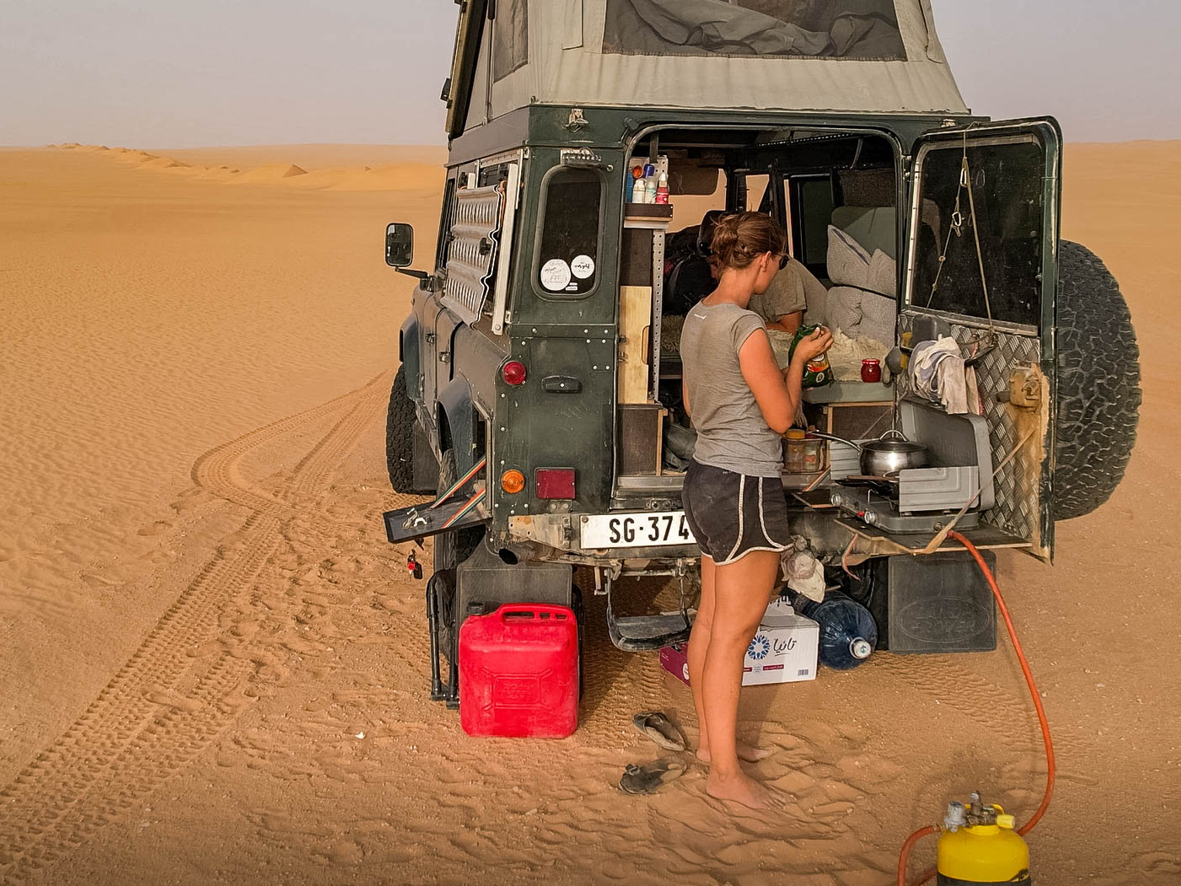
We became part of the workshop, slept in the car or on the workshop floor every night, drank tea with the people, cooked together - and Toby learned a lot about Defenders. New vehicles came in every day that needed to be repaired, and Toby helped out. We were able to put this knowledge to good use on the rest of the trip.
And what lessons would you pass on to other travelers if the worst should suddenly happen?
Stay calm. Bear the emptiness. Take time to make decisions. We Central Europeans often want an immediate solution and don't want to lose any time. But certain things take time. If we had listened to the advice of our friends and the insurance company, our car would have been towed home, declared a total loss and ended up in the scrapyard.
But we decided to keep going, to fight for our dream and to continue traveling the world. It was anything but easy - and it took time.
You were also in prison: 48 hours in an Ethiopian prison - how did that feel at the time?
Great fear of the unknown: What else will happen? How long will it last? We kept reminding each other to stay in the moment and only think one step ahead. Otherwise we - or especially me (Martina) - would have gone crazy with fear.
" Giving up was never an option."
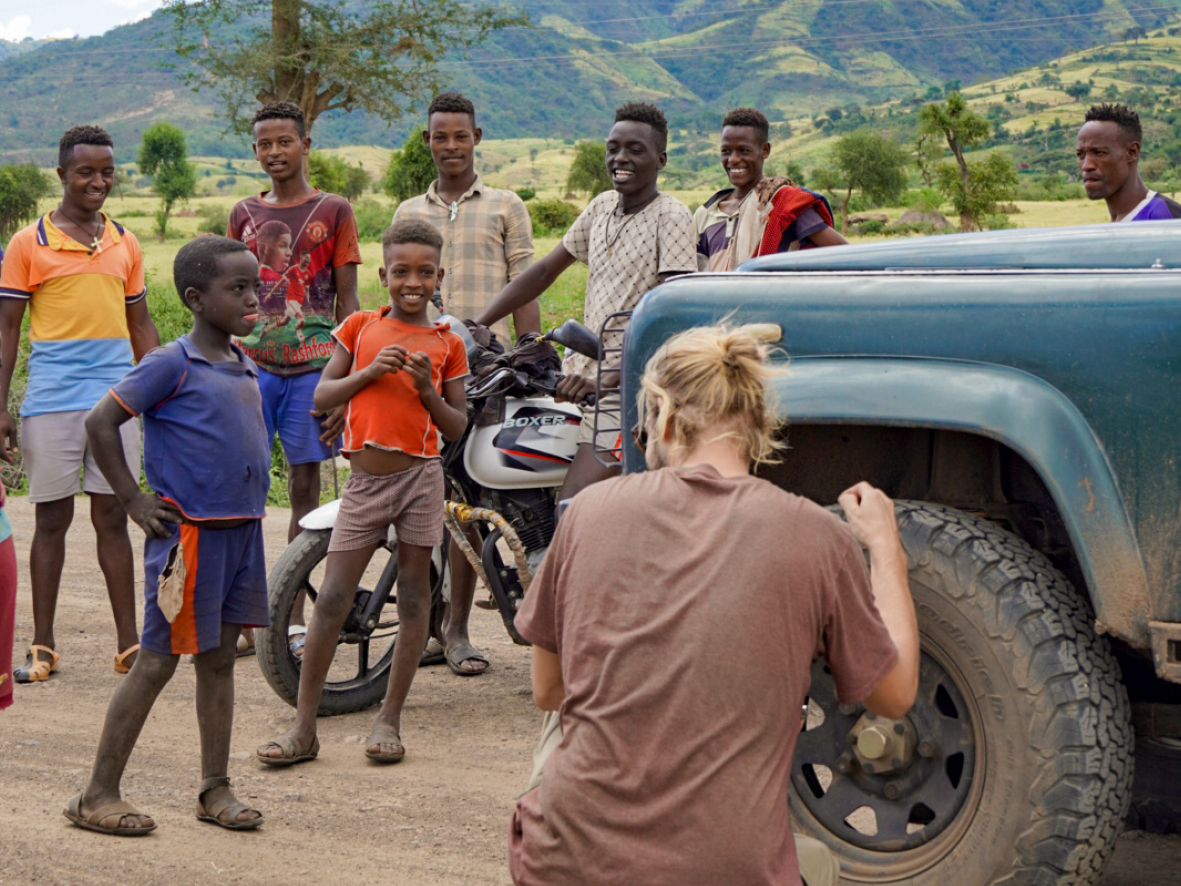
What specifically did you do to get out of it?
Cooperated. Kept calm. Took the questioning seriously. You always have to be respectful and calm when dealing with officials. The more nervous, stressed or unfriendly you become, the less you achieve. Fortunately, we already knew this from many previous encounters - and we stuck to it.
What advice would you give to other travelers in such a situation?
If possible, get your embassy on board. This doesn't guarantee a solution, but it does put pressure on the officials. And communicate: Repeat your point of view everywhere. Explain yourselves. It is easy for the wrong version of the story to be passed on from official to official. But again: stay calm and respectful.
And then you get pregnant on the way - that can happen :) But then what?
We asked ourselves the same question! Just a few days earlier, we had decided to travel the west coast of Africa. This meant a high risk of malaria, many days of driving, very bad roads, numerous complicated borders and visa requirements - an adventure that is difficult to plan in terms of time. Not exactly the best thing for an impending birth. You can see how we solved this in our movie.
What did you think about - health-wise, organizationally and emotionally?
Basically, we could have imagined having a baby on the other side of the world. Babies are born everywhere, we felt safe. But for us, the financial aspect was the main deciding factor. We hardly had any budget left. And a birth costs money - especially the time afterwards. In addition, the support of my family was very important to me when we had a newborn.
Was there a moment when you thought: "Now it's getting really complicated" - or did you feel supported?
We were very often overwhelmed - with all our thoughts, the possibilities, the restrictions and our needs. Talking to friends and deciding not to make an immediate decision helped us a lot.
"People are good and want to do good - but sometimes their uniform gets in the way."
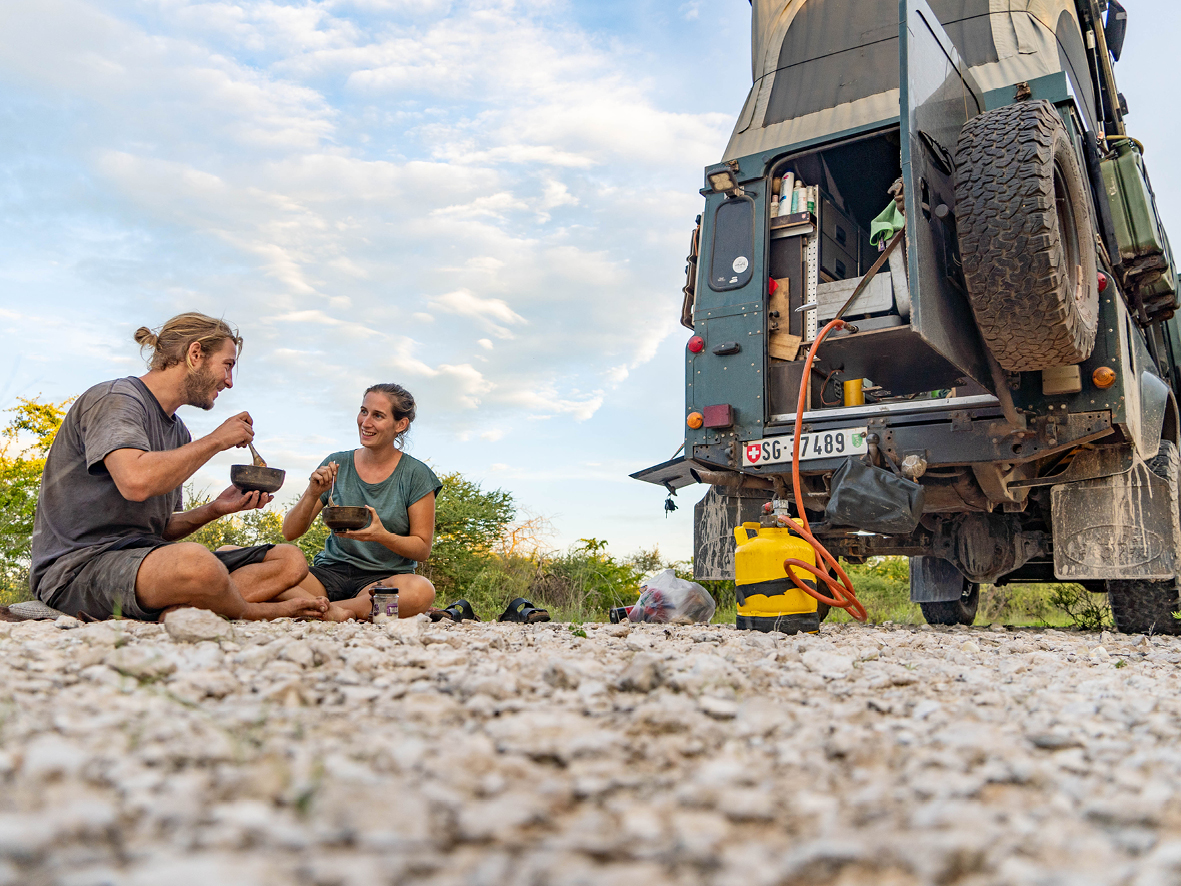
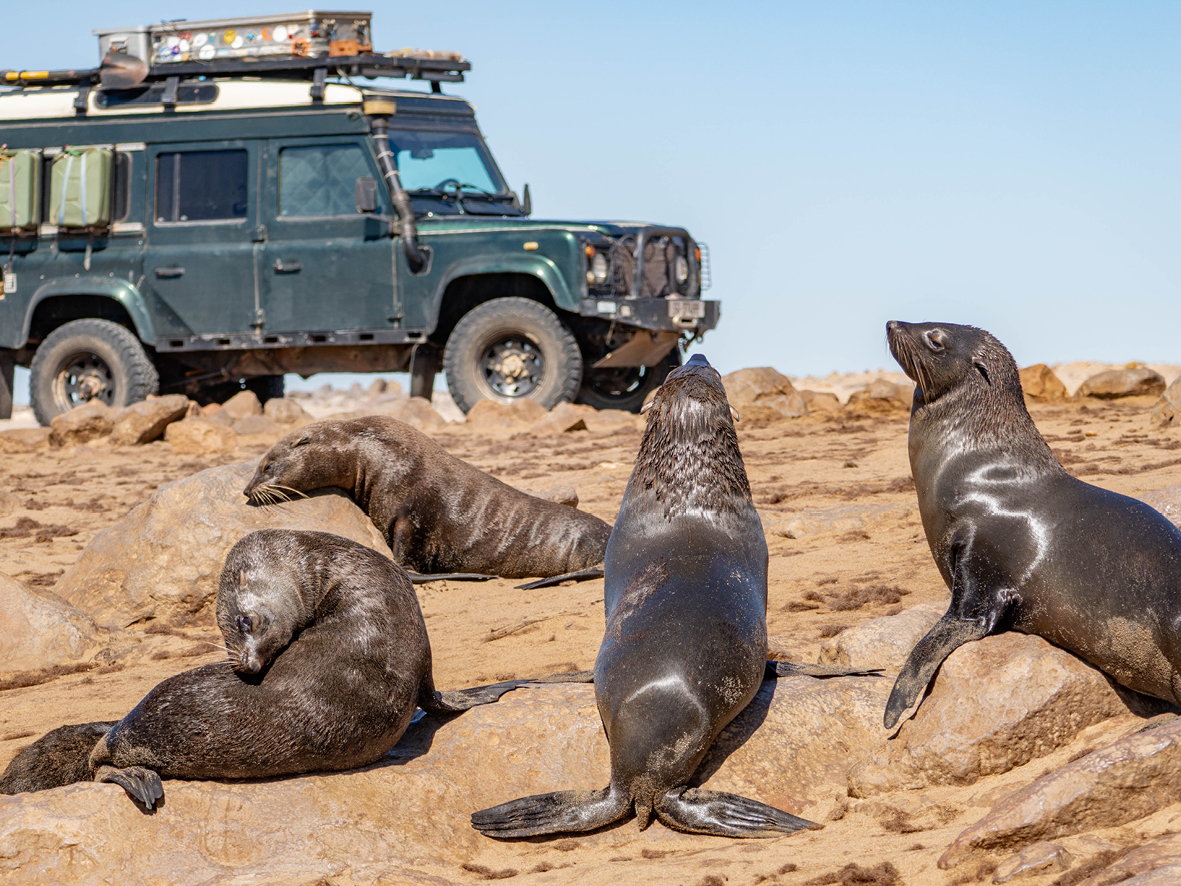
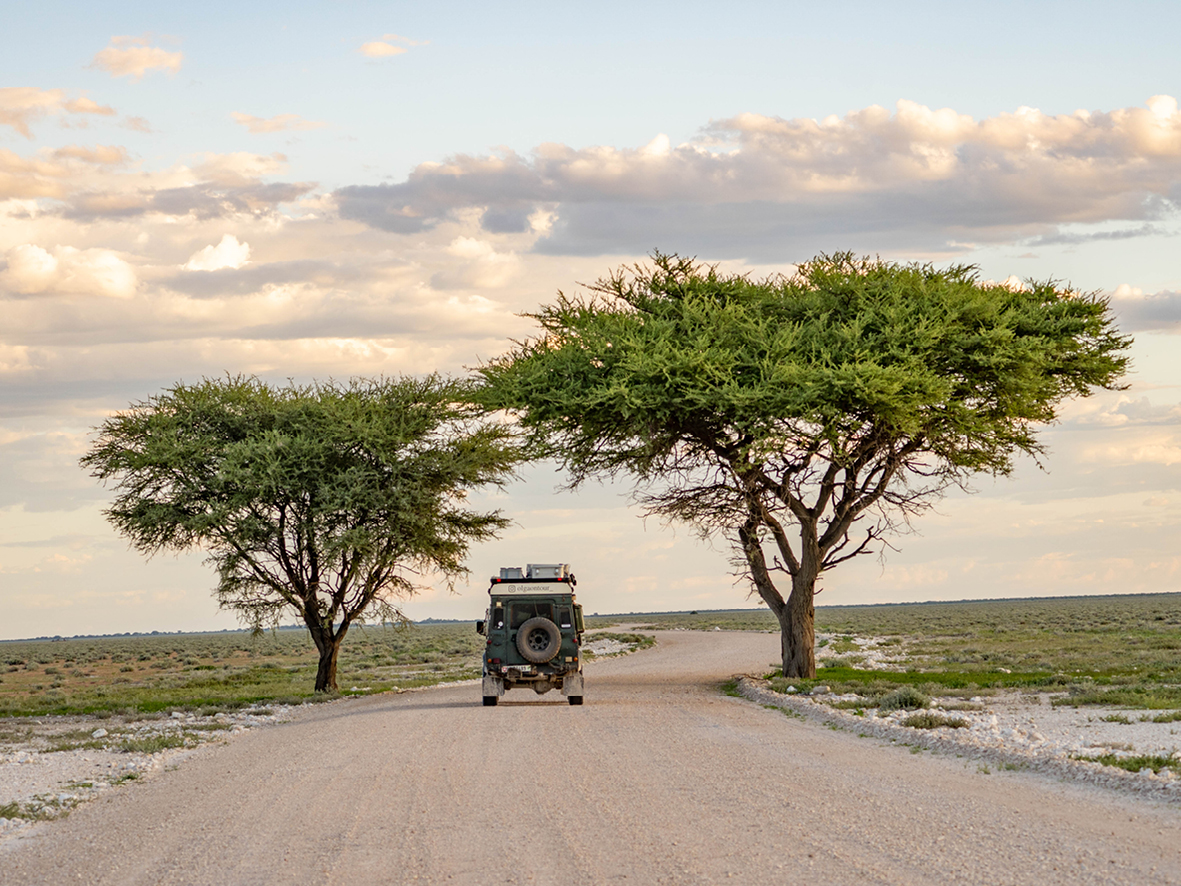
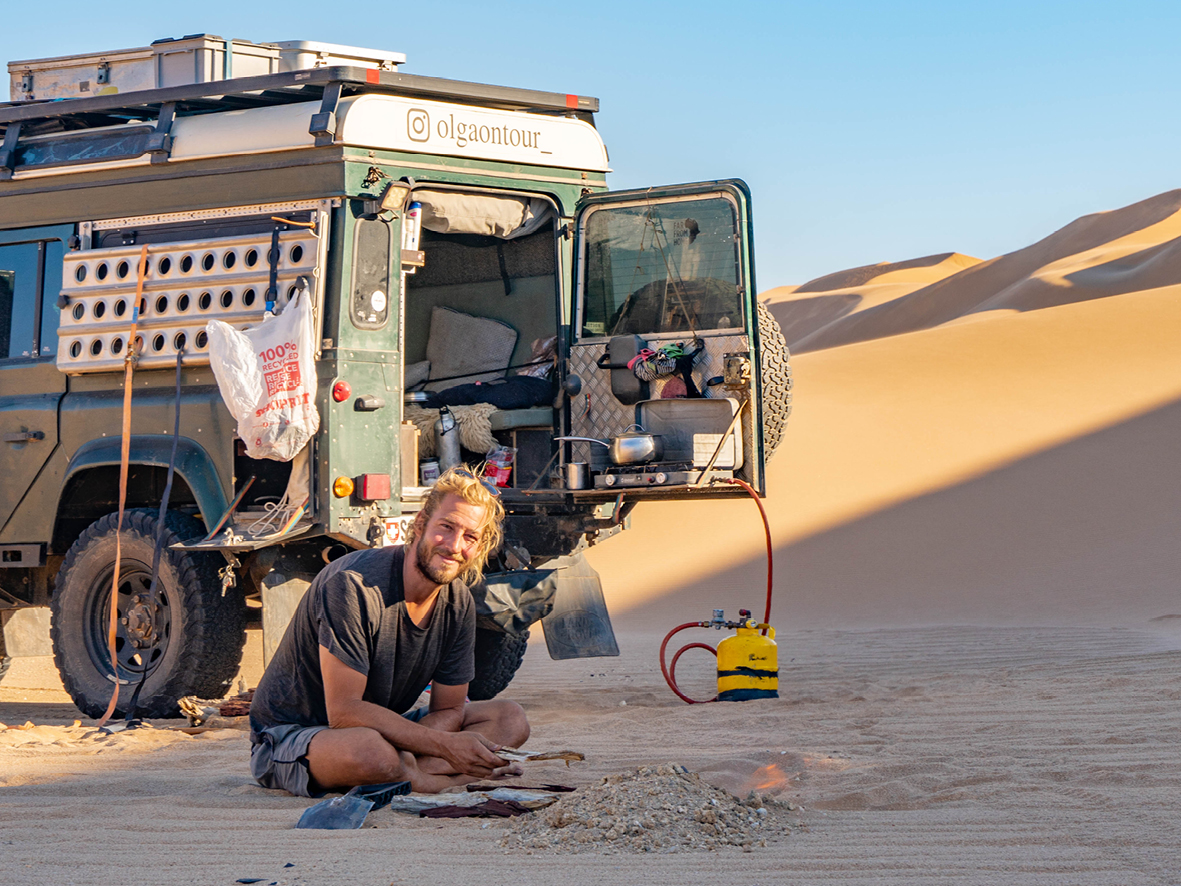
Has your view of the world changed as a result of being on the road and all your experiences?
Definitely! We quickly realized that people are good and want to do good. Only their uniform and the role they play sometimes prevent them from doing so.
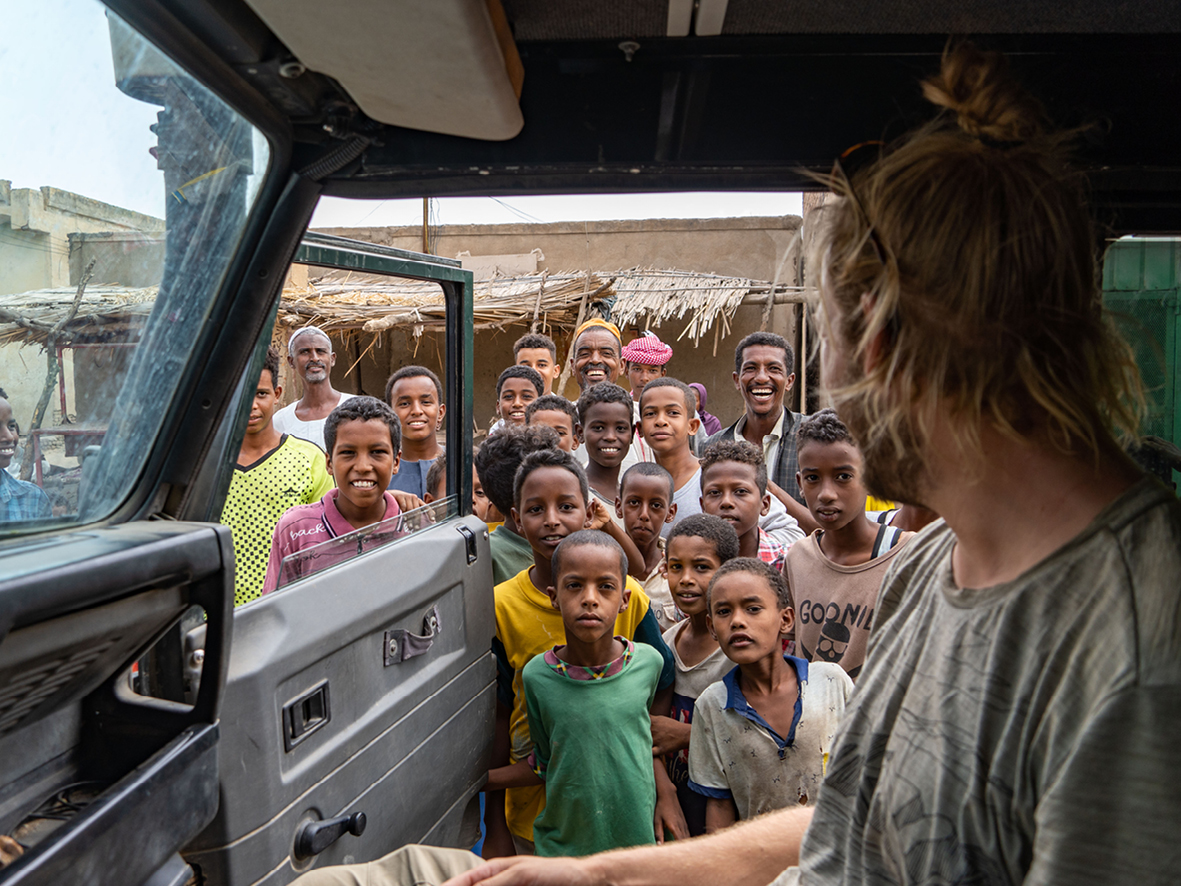
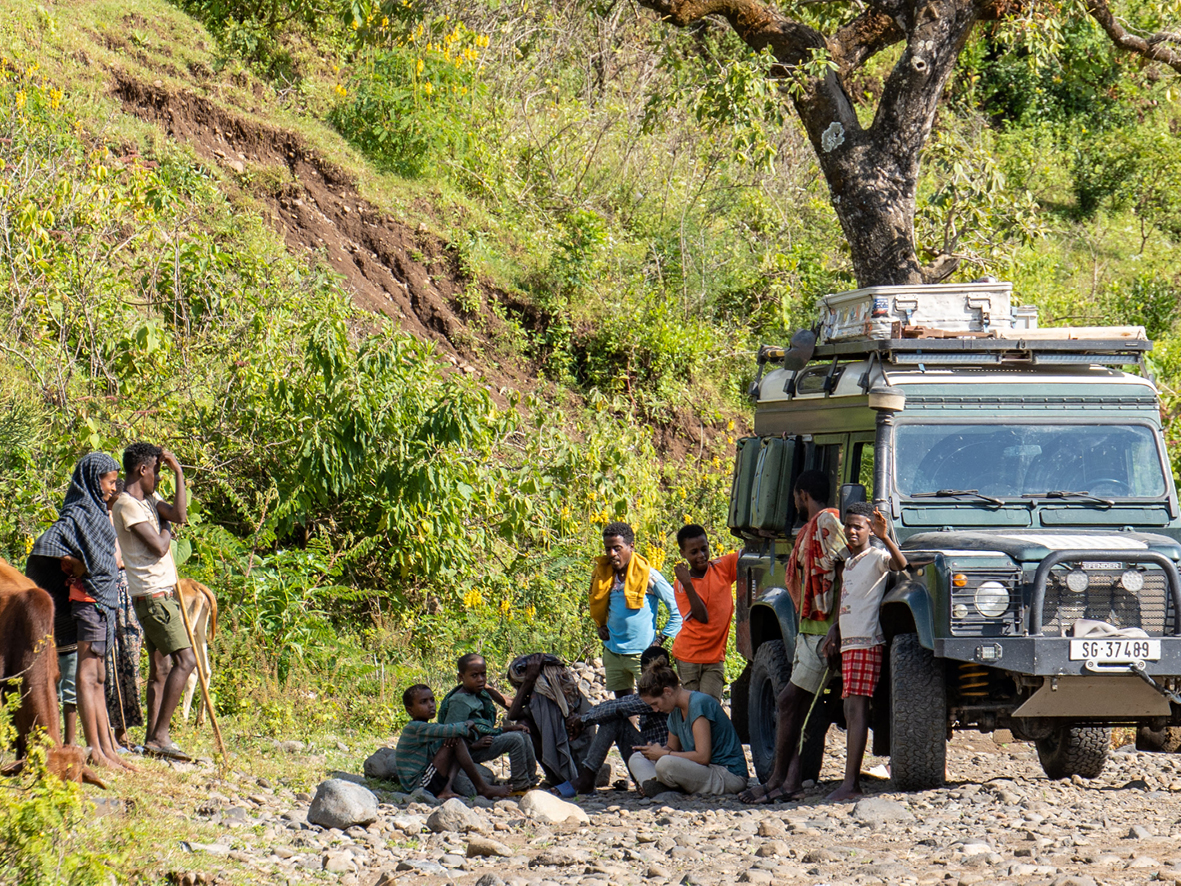
On our trip, it wasn't the places that made the biggest impression on us - it was the people. Countless encounters, fleeting and profound, short visits and long conversations. People who invited us into their homes without hesitation, even though we were strangers. People who shared what they had - often more than they could afford.
For example, a British man who lived in Saudi Arabia gave us his front differential so that we could continue our journey. He was actually also dependent on his car, but found another solution until he had the spare part.
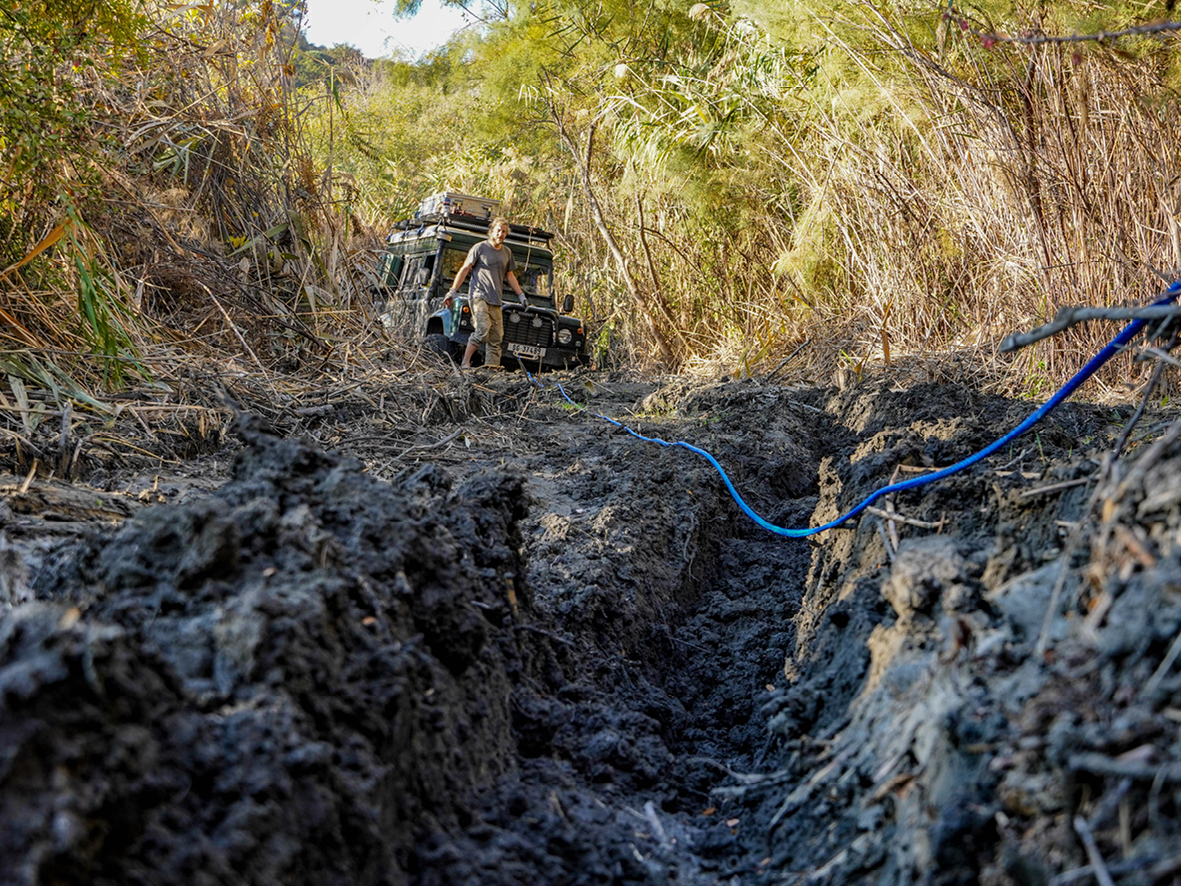
Or the Arab who gave us a new fridge because ours was broken. The Iranian who walked the streets with us for two days to find the right spare part. The Georgian who pulled us out of the deep mud in the forest with his truck. The Sudanese who invited us to breakfast in his village. The Iranian who came with his bulldozer to pull us out of the wet sand. The Arab who brought us urgently needed spare parts from Dubai to Oman. The South African who gave us his workshop for a month and a complete restoration of the car (due to a broken chassis). The list is long - and could be much longer.
When you look back on your trip today: What would you do differently - and why?
We would slow down when we were stressed. Whenever things got hectic, we stepped on the gas pedal even more instead of taking time to calm down. In the middle of the trip, we had this realization and felt that we were often driven and restless inside.
We weren't able to put it into practice very well until the end - but we got better and better. Next time we would travel more slowly and, especially in pressure situations, take the stress out and stay in the situation so that calm can return.
What we have noticed is that a place becomes more beautiful the longer you stay there. You only notice the surprising little details when you actually arrive and enjoy it.
"The world is better than you think - you just have to experience it."
You made a movie about your trip. When and how did the idea come about - before the trip, on the road or afterwards?
We started filming on the road and realized at some point that we were experiencing some pretty extreme, challenging things. We documented them without knowing what to do with them. Towards the end of the trip, it became clear: not YouTube, not Instagram - we wanted a movie.
To finance the whole thing, we started a crowdfunding campaign, which was fortunately successful. As a result, we were able to hire a filmmaker who viewed the entire 170 hours of footage and is now working with us on the final edit.
What else do you dream of - personally, honestly?
We dream of getting to know the Silk Road and the culture of the East. And we very much hope that we can show our young children the world and make this dream come true one day. Of course, there are some hurdles - but they are there to be overcome.
Is there a project that is particularly close to your heart?
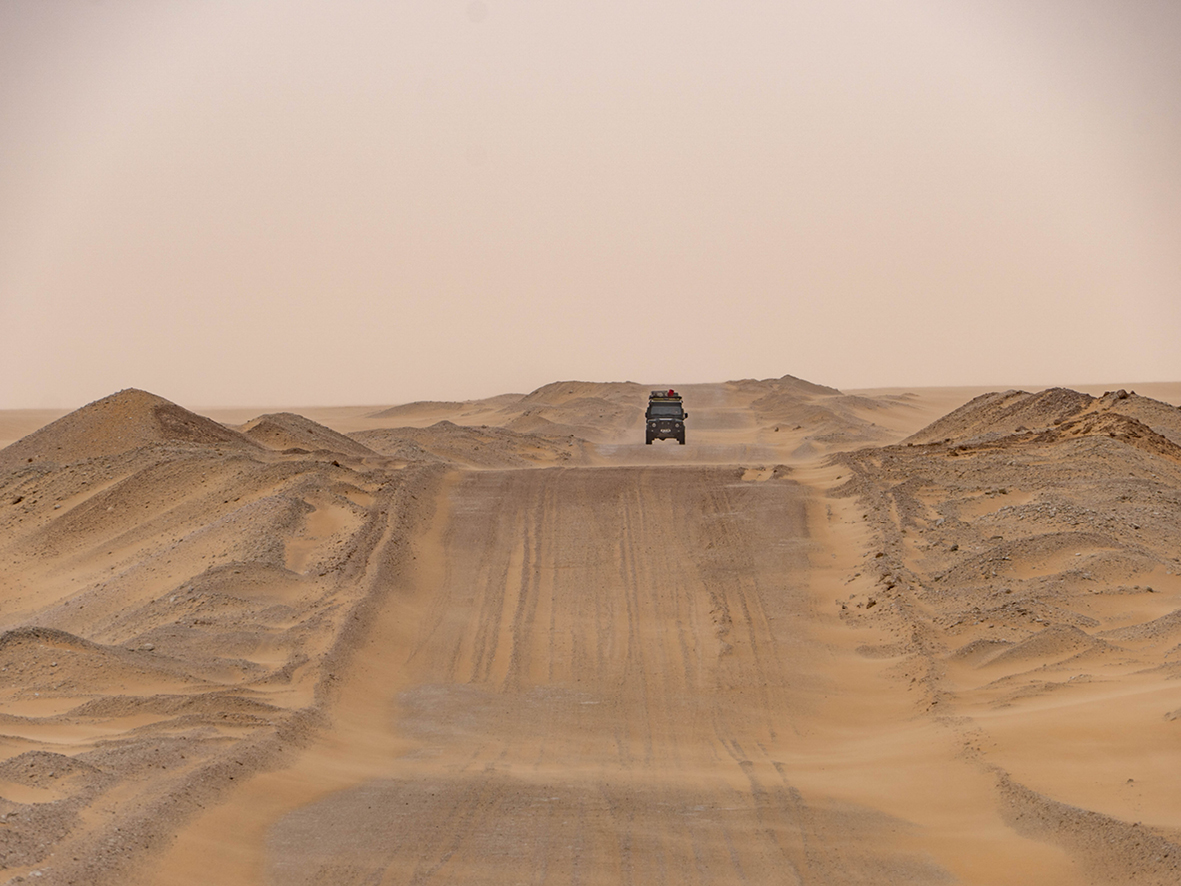
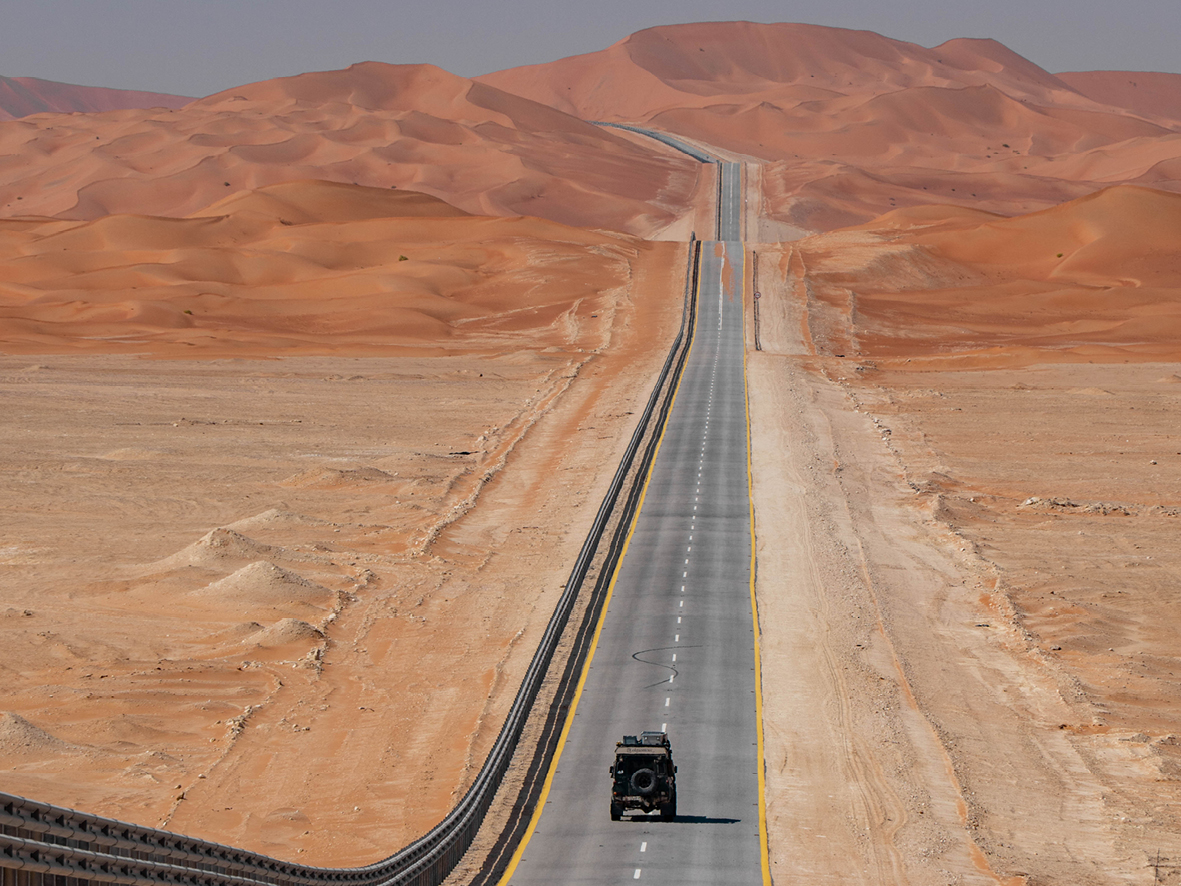
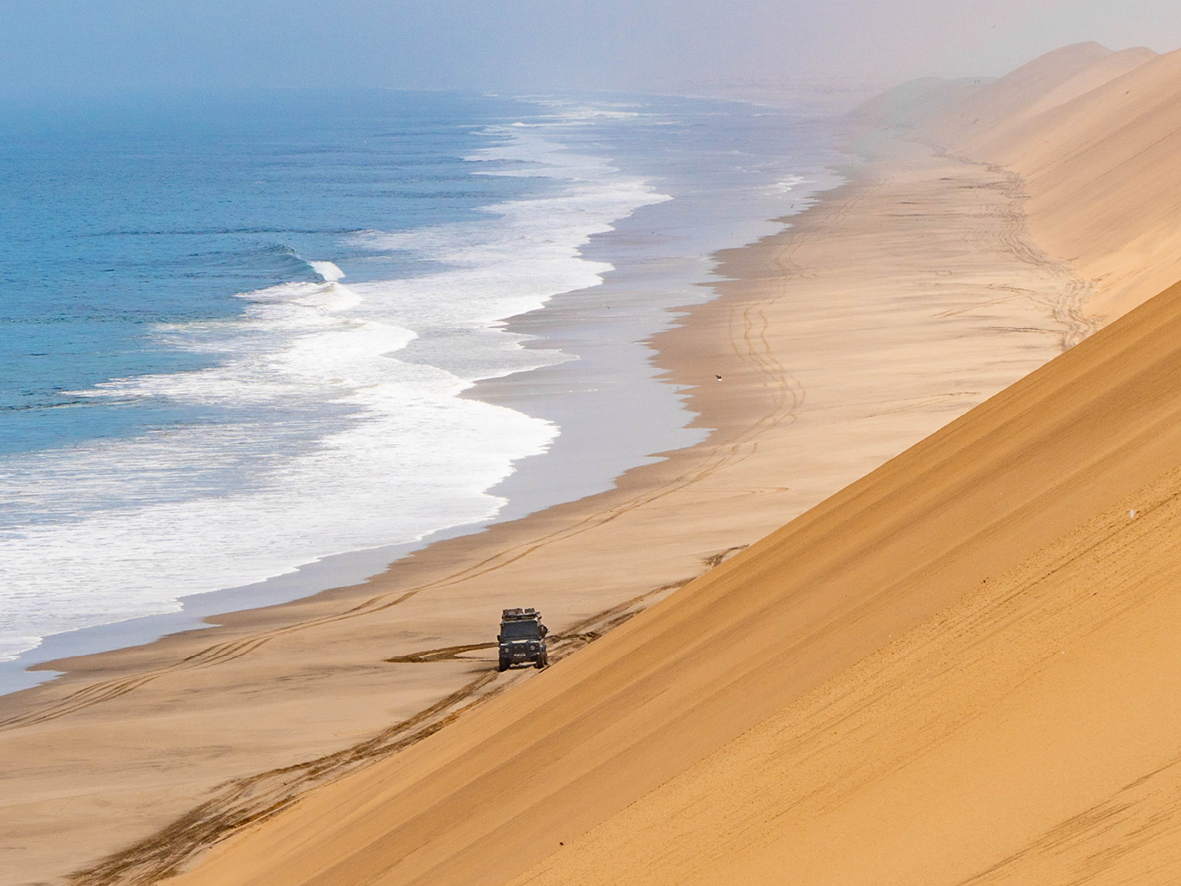
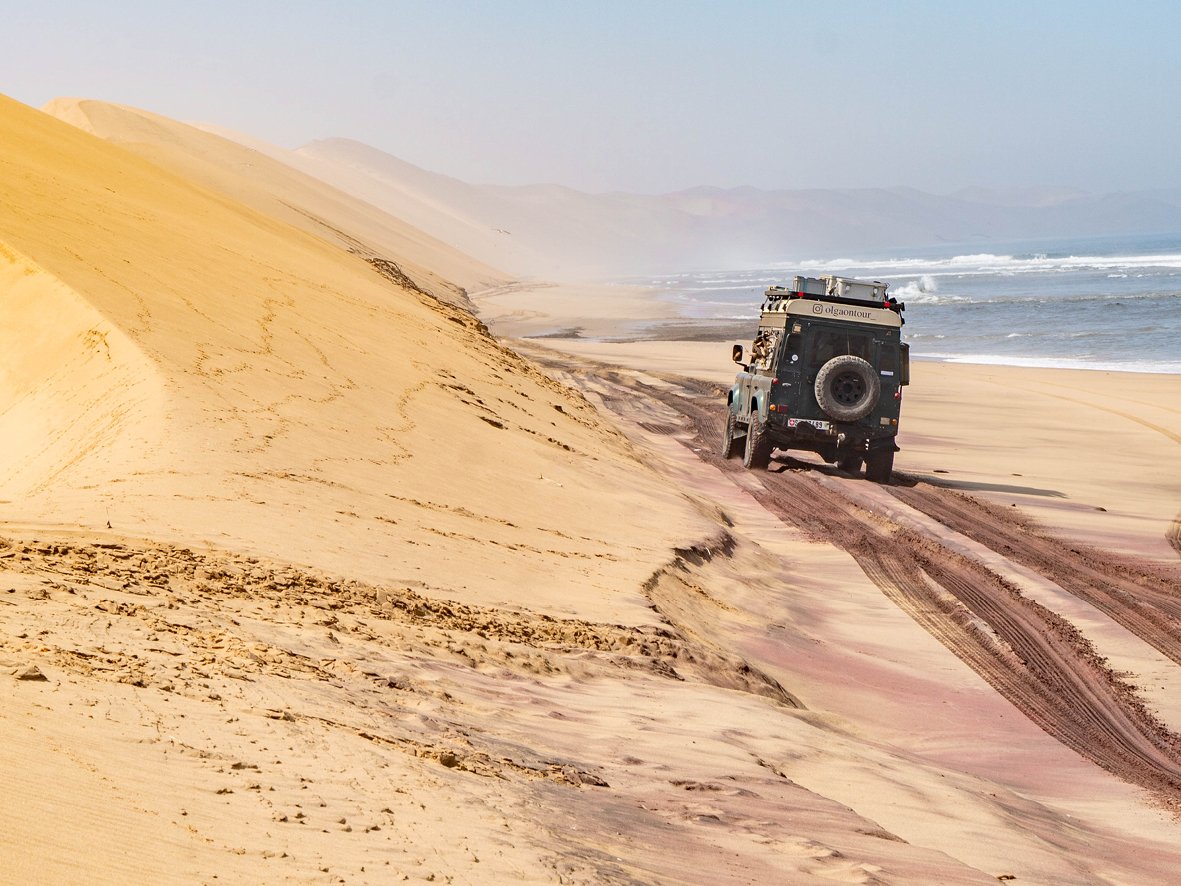
Yes, our travel film "Always on" tells of our most impressive moments on the road - the rollover accident in Turkey, 1000 kilometers through the desert, our time in an Ethiopian prison and what it was like to be pregnant on a trip around the world.
If you want to delve even deeper into our story, you can find all the information and dates on our website or on Instagram.
Website: olgaontour.ch
Instagram: @olgaontour_