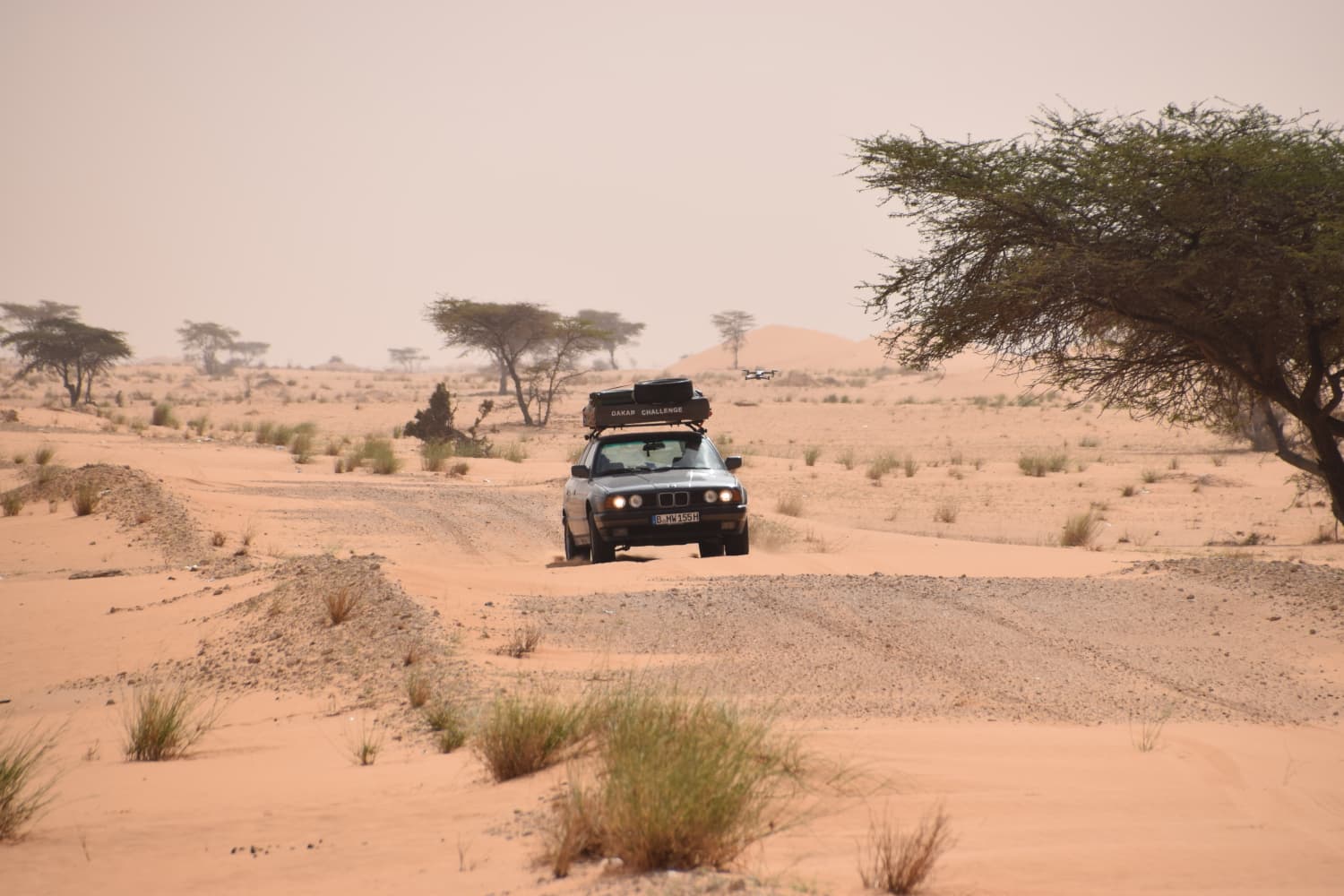
In 2025, Emanuel quits his job and sets off. First in the direction of Central Asia. The journey could have ended after 26,000 kilometers - instead, he continues. Today he is traveling alone in Africa. In a 1988 BMW E34, which he simply calls "Theodor". A vehicle that on paper is made for many things - but certainly not for this kind of journey.
We talk to people who live their lives differently - consciously, courageously, sometimes radically. Not to impress. But to inspire, to question and to show: There is another way. And that's okay.
This is not about empty phrases. Not about gloss. It's about real answers - to the questions you ask around the campfire when no one is making small talk anymore. Because when you're on the road, you have a lot to tell. And often more to give than you think.
Emanuel & Theodor - driving a BMW E34 through Africa without knowing where it ends
We talked to him about what makes someone set off like this, why trust is sometimes more important than preparation and what happens when you start to orientate yourself not on plans, but on what feels right on the road.
About you and your journey
Emanuel, who are you - and what did you do before you decided to swap your life for this journey?
I've been traveling full-time since April 2025. Before that, I worked as a regional sales manager for a German company. It was a classic job with a clear structure, responsibility and a pretty well-paced daily routine. At some point, I realized that it was challenging but no longer really fulfilling. The idea of traveling had been there for a while, but it kept getting postponed. Until the point when it became clear that there would never be a perfect moment.
Your journey didn't start in Africa, but towards Central Asia. It was originally intended to be a completed stage. What changed along the way?
After the tour through Central Asia, the plan was actually to return home. The route, the experiences, being on the road - it was all intense, but I had the feeling that it was a well-rounded conclusion. And it was precisely this feeling that was missing. Instead, it felt wrong to just stop. I then drove on towards Dakar, more on impulse, without much of a plan. Once I got there, however, it quickly became clear that this wasn't the end point either. So I continued south, all the way to South Africa.

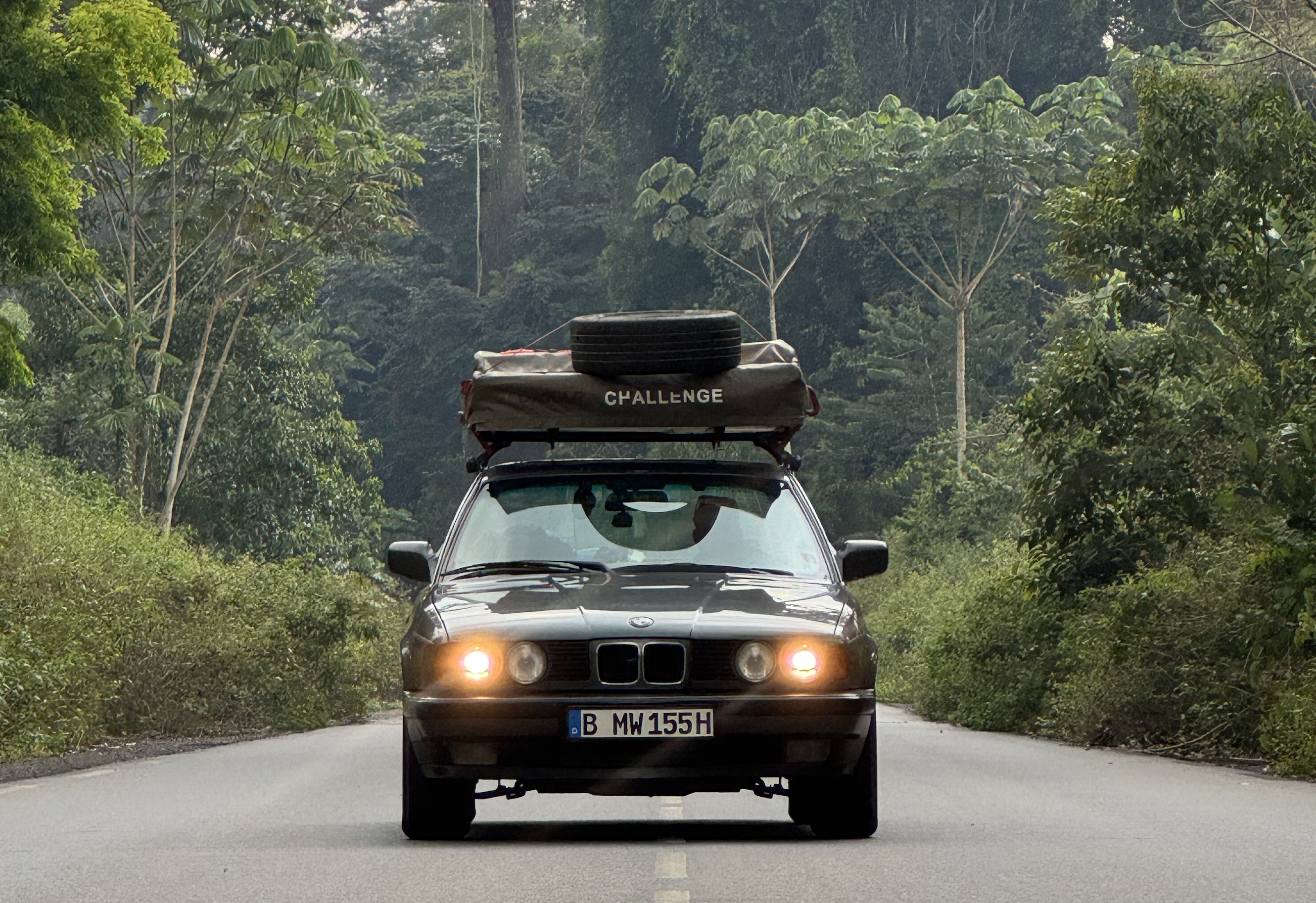
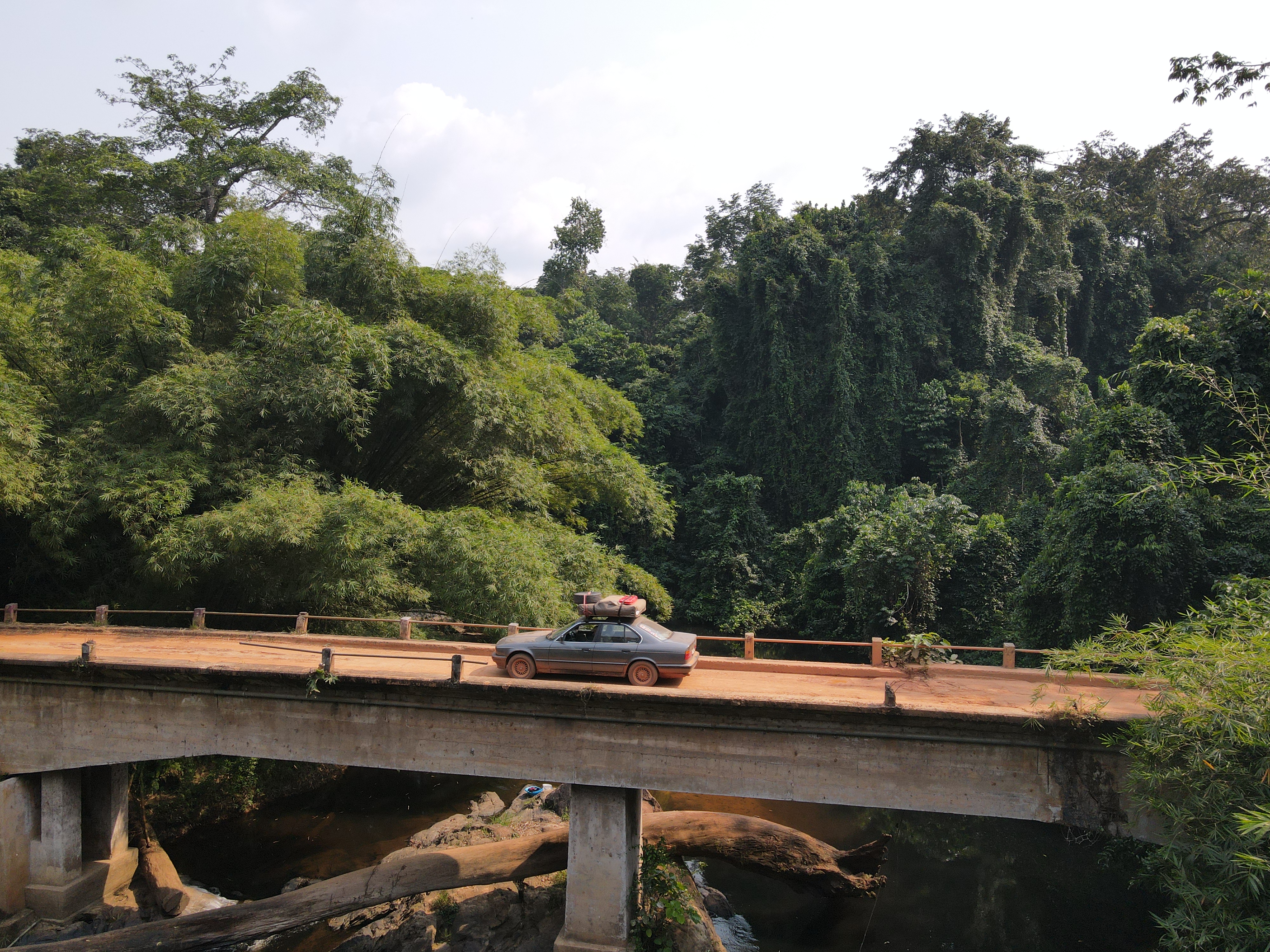
You are driving a BMW E34. Not a classic overlanding vehicle. Why exactly this car?
I've had the BMW since 2018. I know the car, I know how it behaves and I have confidence in its substance. For me, that was more important than any theoretically "better" car. Of course, there are cars that are better suited to such journeys, but in the end it's about what you feel comfortable with and what you can rely on. This trust has also been confirmed. From Germany to Angola, I didn't have a single breakdown.
What technical modifications did you make to prepare it for this trip?
No extreme modifications. A slight lift, a sturdy underride guard for the oil pan and, above all, a good general condition without any maintenance backlog. I didn't want a completely rebuilt vehicle, but one that was solid and that I knew what I was getting into.
You say you trust your vehicle. Were there moments on the road when this trust was really put to the test?
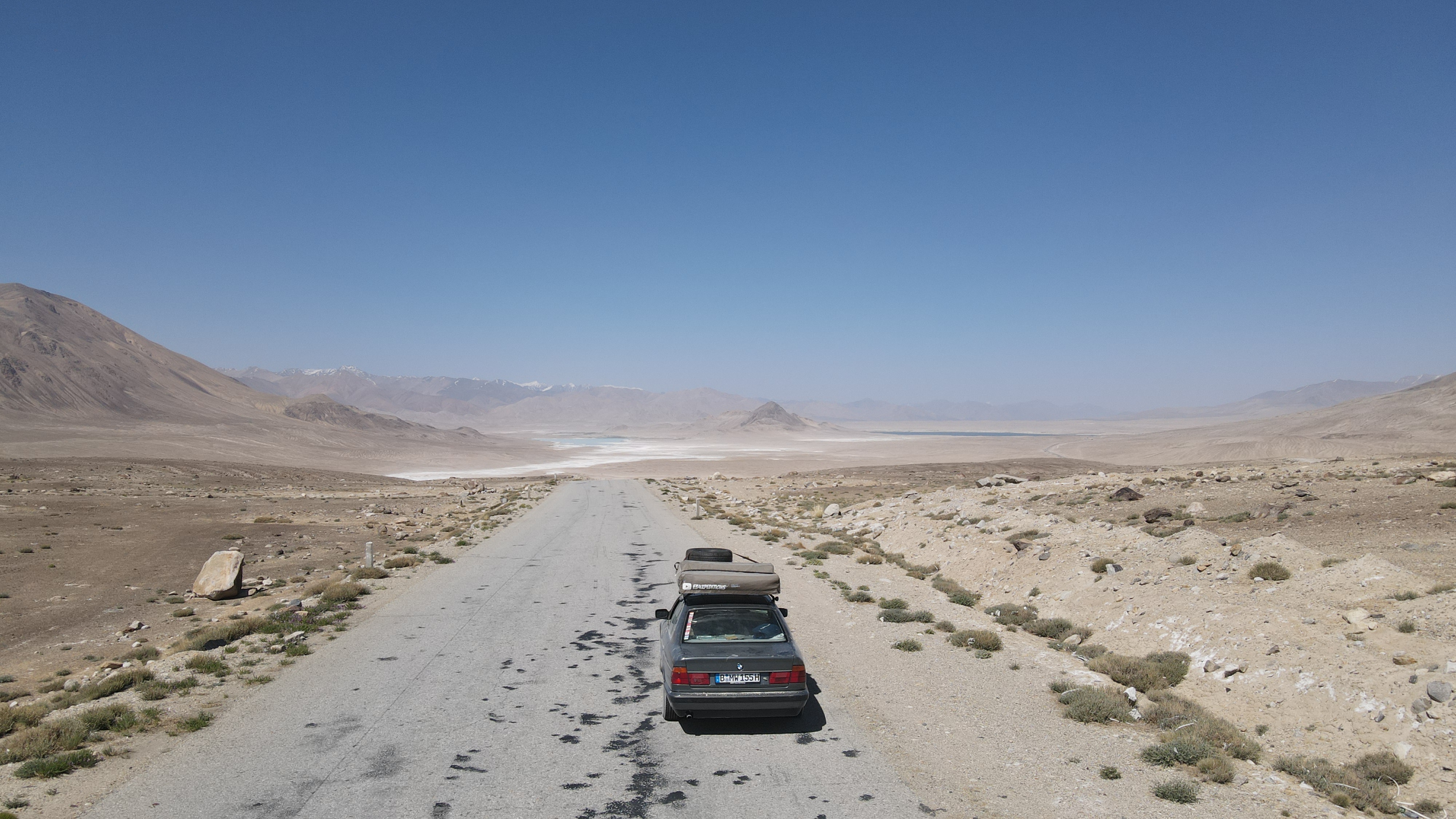
Yes, definitely. In Tajikistan, my radiator burst at an altitude of around 4,200 meters. That wasn't a place where you can get help easily. I had to help myself and find a temporary solution to get anywhere. That was one of those moments when you realize whether you can rely on the vehicle and yourself. Later, in Siberia, another wheel bearing broke. That had to be done in a workshop, simply because the right tools were needed. But all in all, those were the only real breakdowns in over 50,000 kilometers.
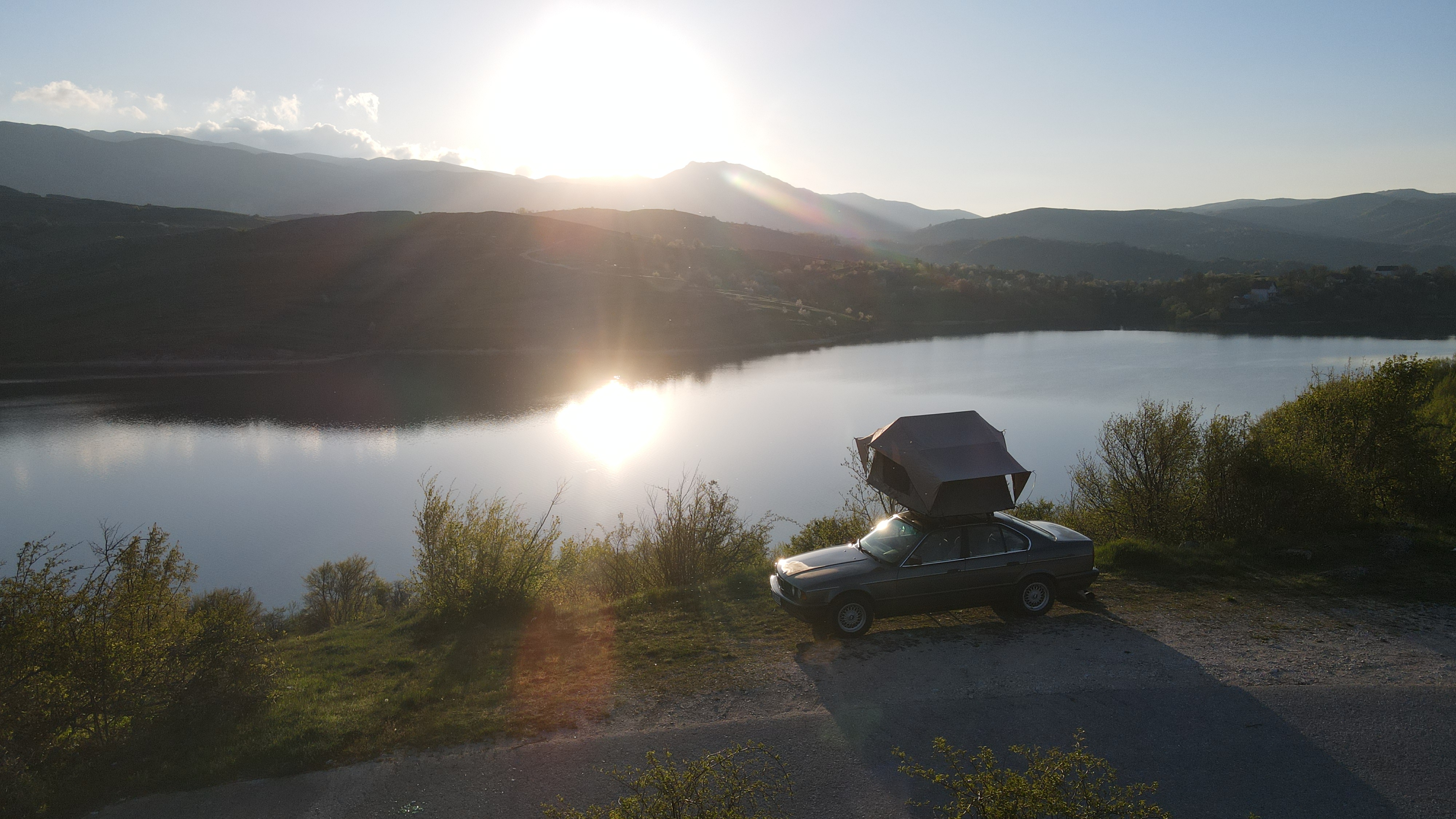


You consciously only plan roughly and decide a lot on the go. Is that freedom for you - or something you first have to learn to endure?
I think it's both. Of course it's freedom because you're not tied to a fixed plan. But at the same time, it also means that you have to accept uncertainty. If you plan too much in advance, you quickly run the risk of just following a plan. Then it's no longer about experiencing the trip, but working through it. That's why I only set myself a rough direction and decide a lot of things spontaneously. That works better for me.
Were there things along the way that were much easier than you expected - and others that took more effort than you thought?
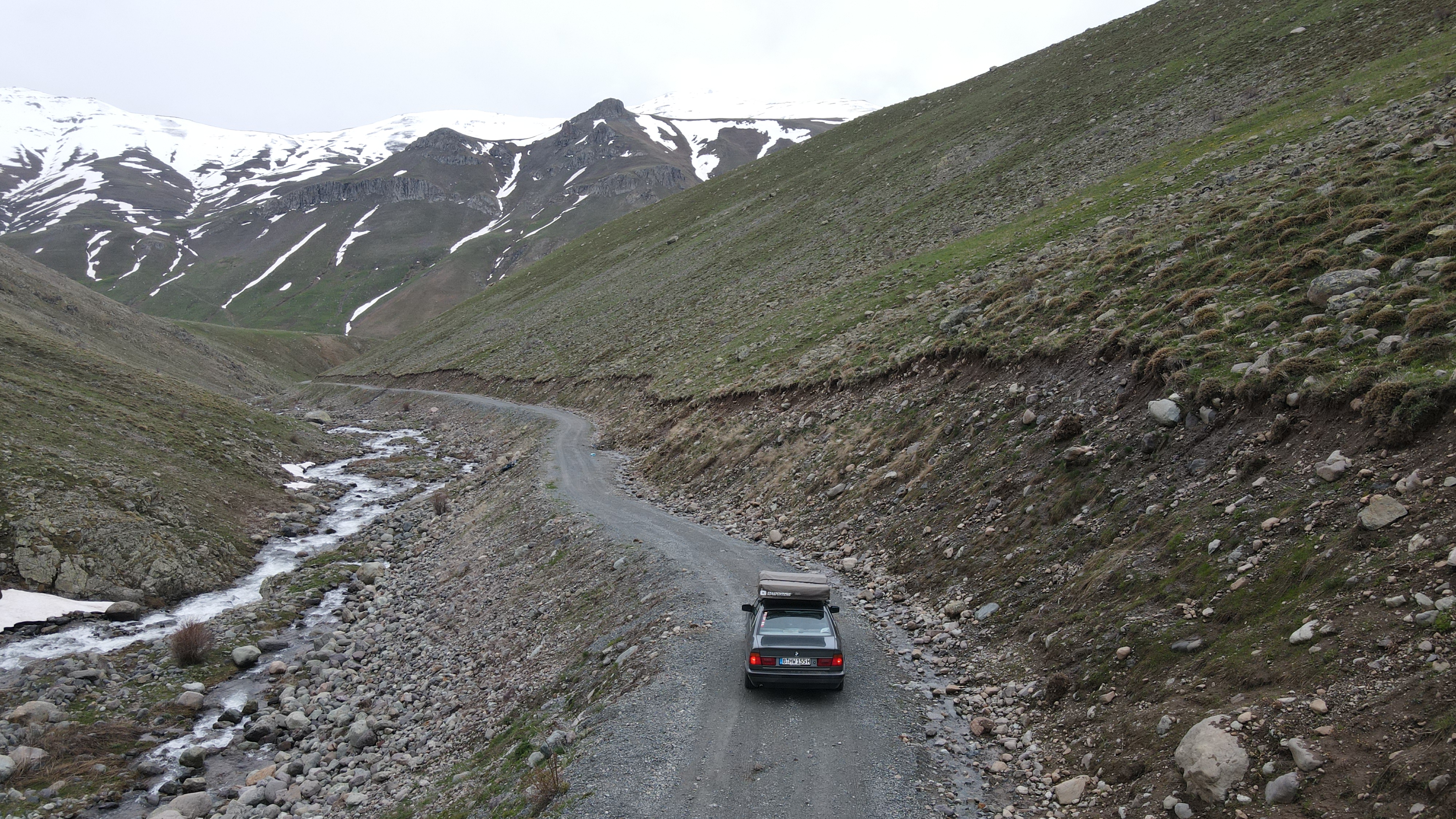
It was actually surprisingly easy to drive the BMW through terrain that it wasn't actually made for. You adapt, drive more carefully and often get further than you think. Some visa processes, on the other hand, were much more laborious, for example in Nigeria. That takes time, patience and sometimes even nerves.
Was there a moment when you had serious doubts - not about the trip itself, but about whether it was a good idea?
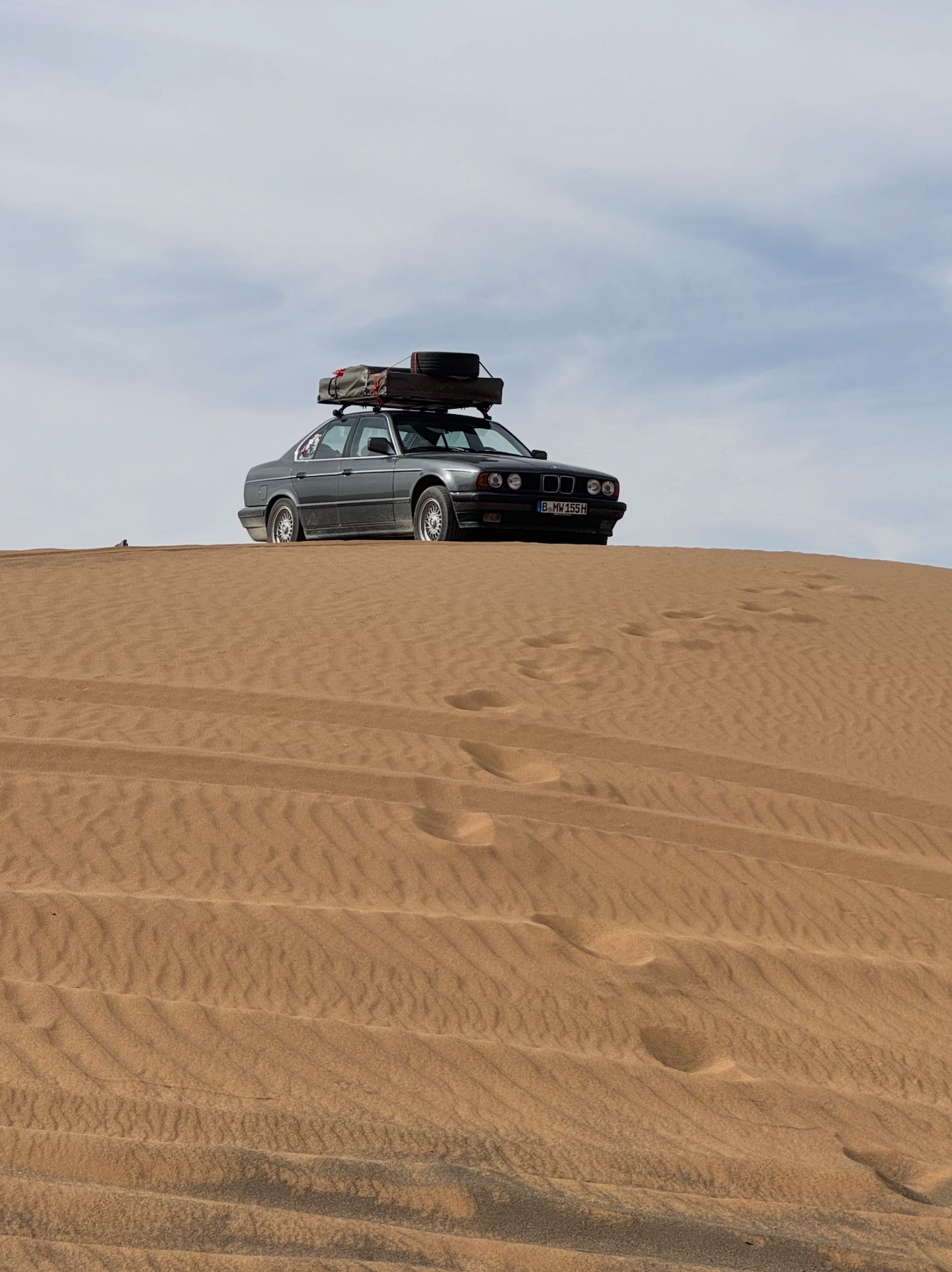
Yes, in Morocco. I got stuck in the soft sand, relatively close to the Algerian border, on an old route of the Paris-Dakar. I spent the night there because I just couldn't get out. It wasn't until about 20 hours later that a Toyota Hilux came along and pulled me out. At moments like that, you realize that you've gone very far out of your comfort zone.
You've now traveled through very different regions - from Central Asia to Russia and Africa. What has remained special to you from these stages?
It's often the places that are hard to put into words. In Tajikistan, I was riding at an altitude of 4,655 meters, which is a landscape you hardly know. Crossing the Sahara was impressive, as was the jungle in Cameroon. And then there are those moments like crossing the equator, which are actually unspectacular, but still feel special because you know where you are.
And the people? Were there any encounters that have stayed with you?
Yes, especially in Central Asia and Russia. I spent a few days with a Russian family in the Altai Mountains, we camped together and spent time together, even though we didn't know each other beforehand. I have very positive memories of this kind of hospitality. In general, I met a lot of open and helpful people along the way.
Africa is considered by many to be difficult or even dangerous. You said that the warnings are not just nonsense. How do you experience this on the ground?
You have to take a differentiated view. Attacks and kidnappings occur in some regions, that's a reality. Corruption is also part of everyday life in many countries; I was asked to pay money countless times by police officers. But I have never bribed anyone. If you act respectfully, stay calm and adapt, you can get through most situations. It's important to take the risks seriously without letting them limit you completely.


Has your own image of Africa changed along the way?
It has partly been confirmed and partly changed. Africa is extremely diverse and cannot be lumped together. There are regions that are very challenging and others that are incredibly open and pleasant. Many of the ideas people have in Europe are too generalized.
How did family and friends react to your trip - especially at the beginning?
Of course there were worries at the beginning, which I can understand. Traveling through Africa alone sounds risky to many people at first. But that changed over time. Those around me have seen that I can deal with the situations and there is now much more confidence.
When you look back on the trip: Would you do it again - and if so, again with the same car?
I don't think I necessarily need to cross Africa completely a second time. But if I were to do it again, it would definitely be with the same vehicle. The BMW has proved its worth and I would choose it again.
In conclusion: "One Life. Live It." - what does that mean to you personally, if you take it seriously?
For me, it means that everyone is responsible for their own happiness. You can wait, plan and think for a long time, but in the end you just have to go for it at some point. I wanted to find out for myself whether such a journey is possible with simple means. That you don't need a perfect setup for it, but the courage to do it. That's what freedom means to me.
Follow Emanuel & Theodor on:


