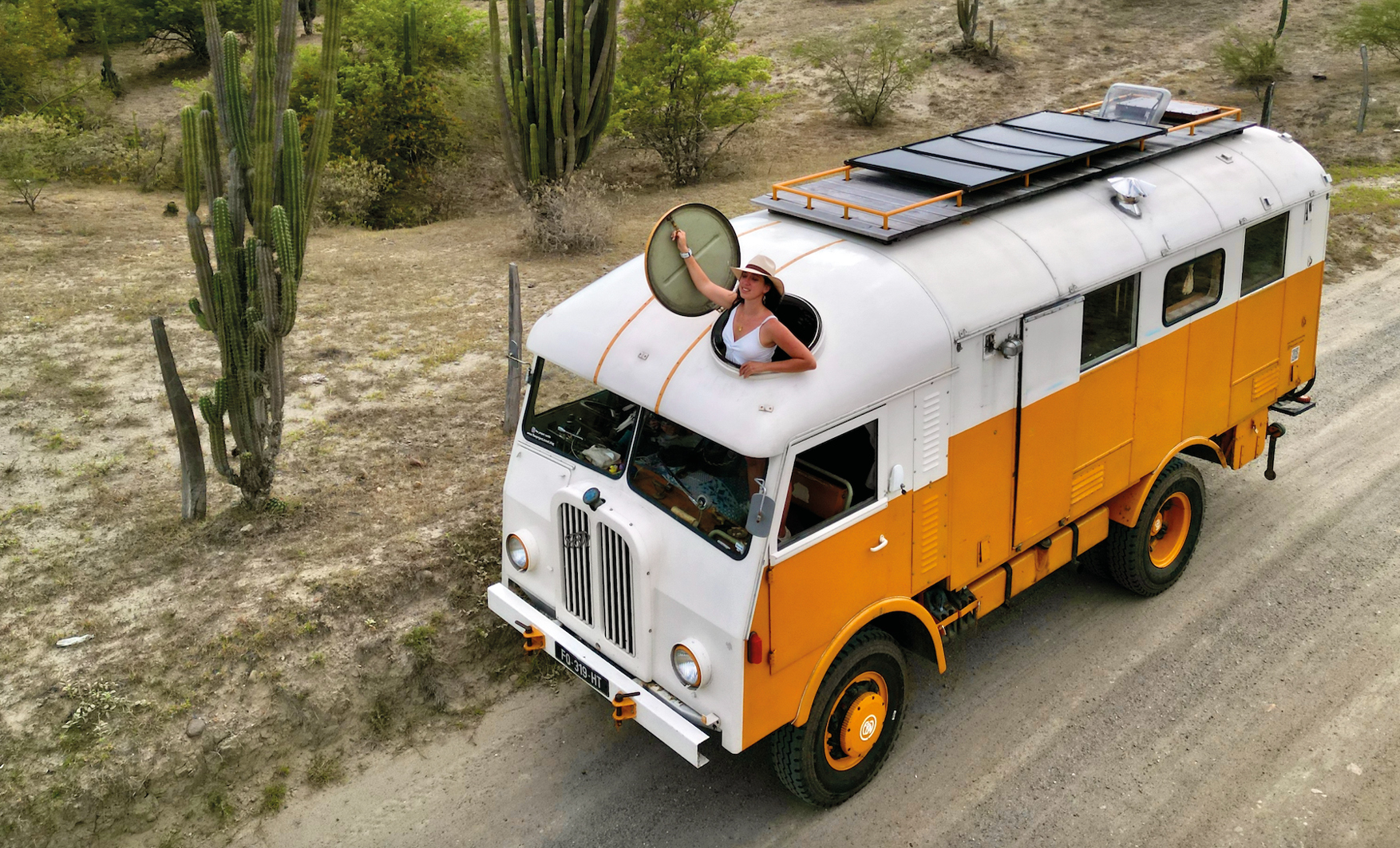
Estelle Ohanian and Dan Wilhelm have been traveling around the world since June 2023. Their home is Woody, a 1957 Swiss FBW AX40: weighing ten metric tons, with a top speed of 50 km/h, and one of only eight remaining examples worldwide. It’s the only one of its kind traveling around the world. They’ve already covered more than 80,000 kilometers and visited 24 countries. It’s not exactly fast—but that’s exactly the point.
OLLI Friends are people who get out there and do their own thing. We tell their stories—about being on the road, about arriving, and about everything that happens in between.
Tell us… Who are you—and what drives you?
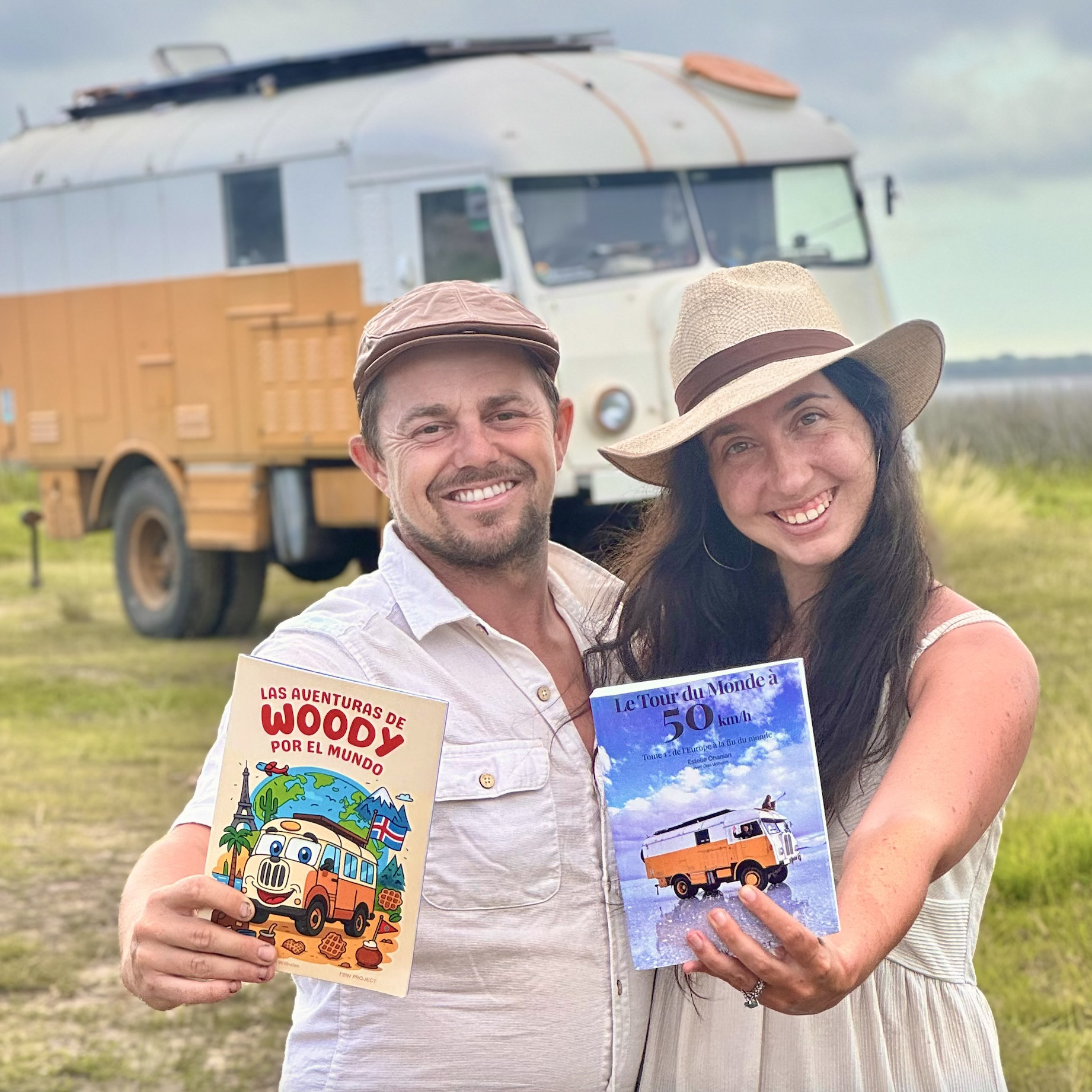
We’re Estelle Ohanian and Dan Wilhelm, a French couple who together make up the FBW Project. Estelle is an engineer, firefighter, author, and passionate open-water swimmer. Dan works as an operations manager in the industrial sector; he’s also a chef and a marathon and trail runner.
In June 2023, we set off on our world trip in a 1957 Swiss army truck. Since then, we’ve traveled more than 80,000 kilometers through 24 countries and participated in 14 humanitarian and environmental volunteer projects. We’re currently in Brazil, and in 2027 we plan to continue on to Asia.
Along the way, we take part in nature conservation and aid projects, share stories of our adventures, and give talks together. Estelle also tells the story in her book *The Slow Road: 30 mph Around the World – Volume 1: From Europe to the End of the World*, which is available worldwide in English, French, and Spanish.
What does “One Life. Live It.” mean to you?
Not putting off the things that matter to us until “someday.”
We want to explore, learn, meet people, and put our skills to use where they’re needed. That could mean helping out with a nature conservation project, responding to an unexpected emergency, or sharing something we’ve learned ourselves.
But for us, life also means being mindful. You can drive right through a country and miss everything. Or you can drive at 50 km/h and discover a whole new world along the way.
We’ve learned to slow down and, as a result, enjoy life more fully. With a top speed of 40 to 50 km/h, our truck has taught us this lesson quite thoroughly. And we don’t regret it.
“You can drive right through a country and miss everything. Or you can drive at 50 km/h and discover a whole new world along the way.”
What are you traveling in—and why exactly that vehicle?
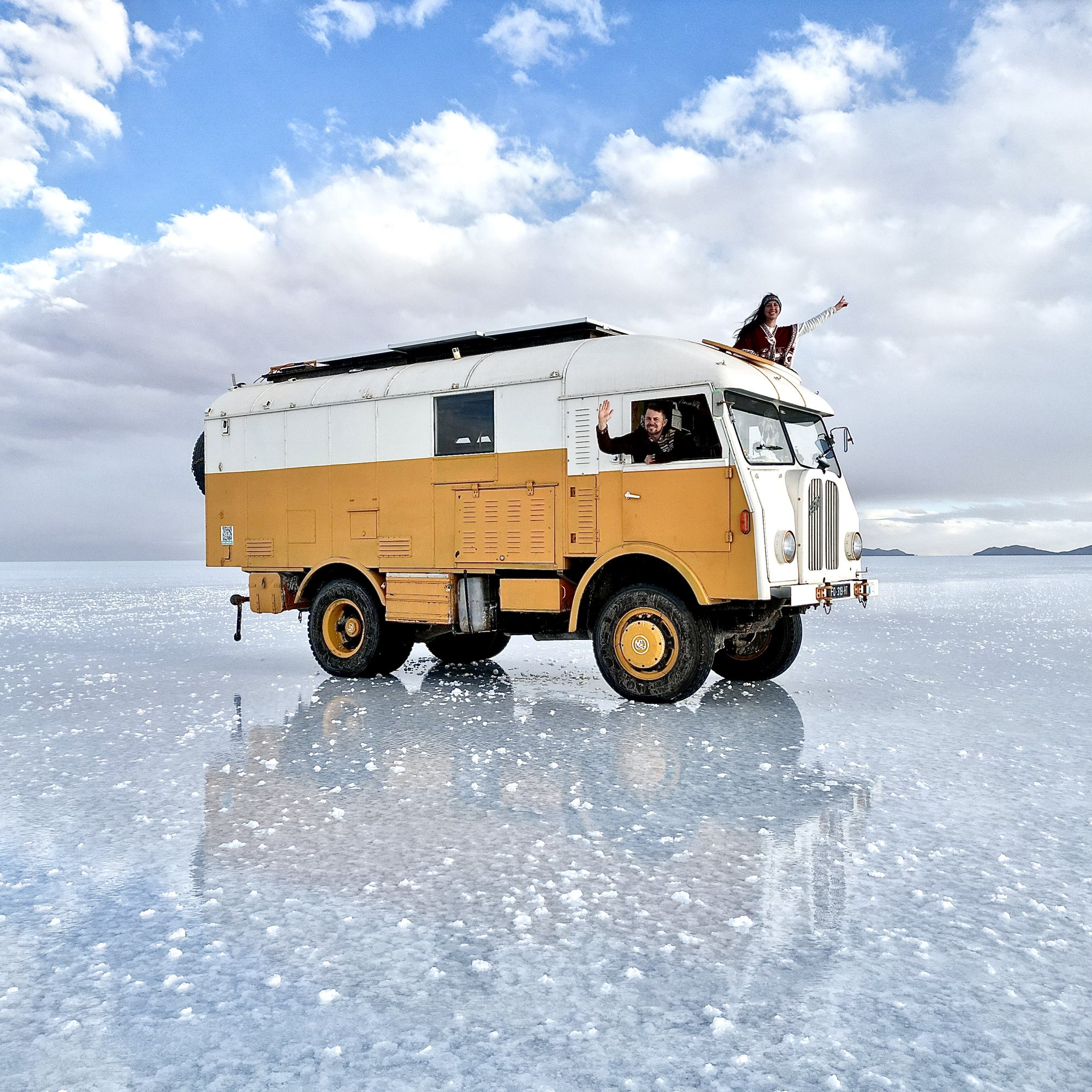
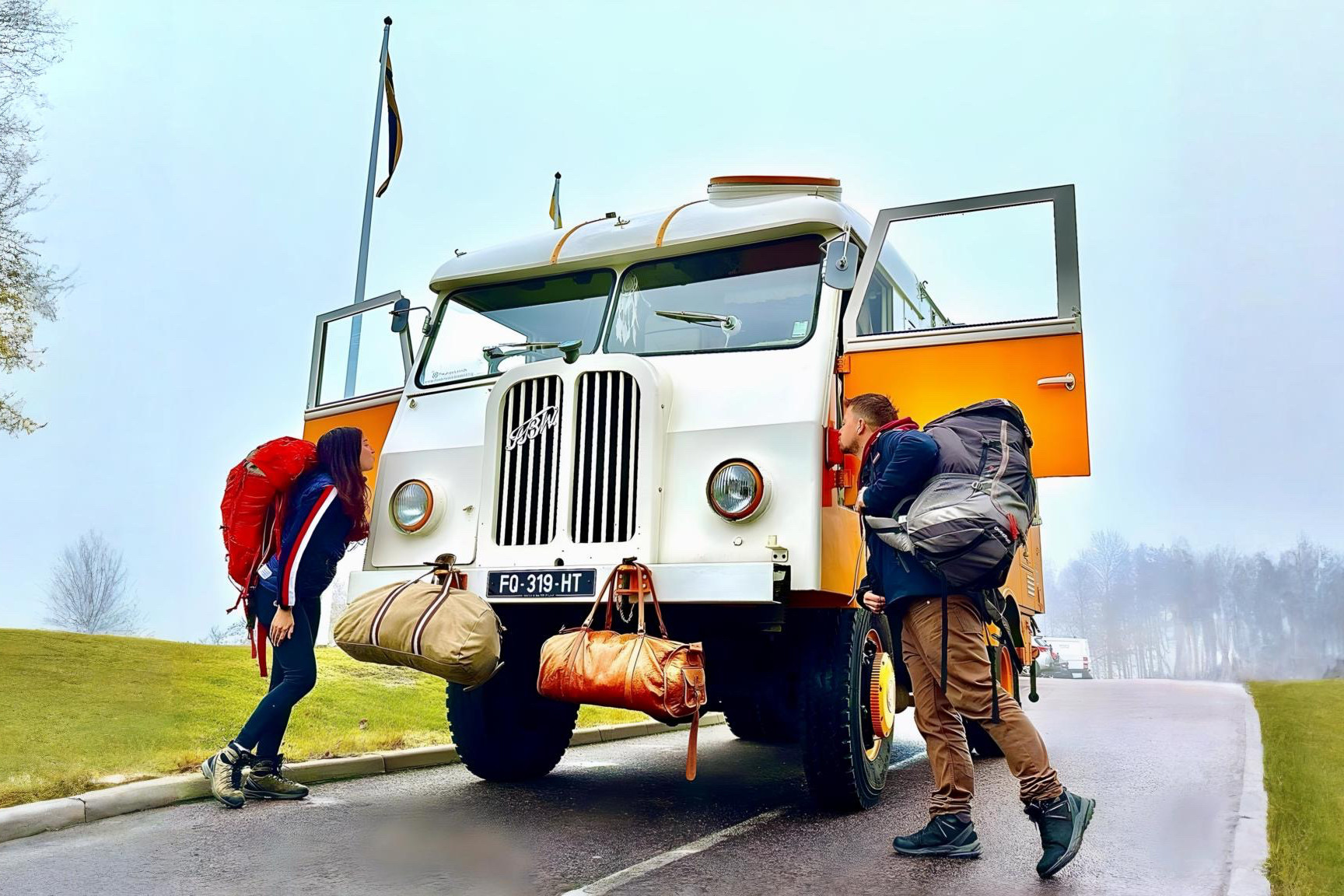
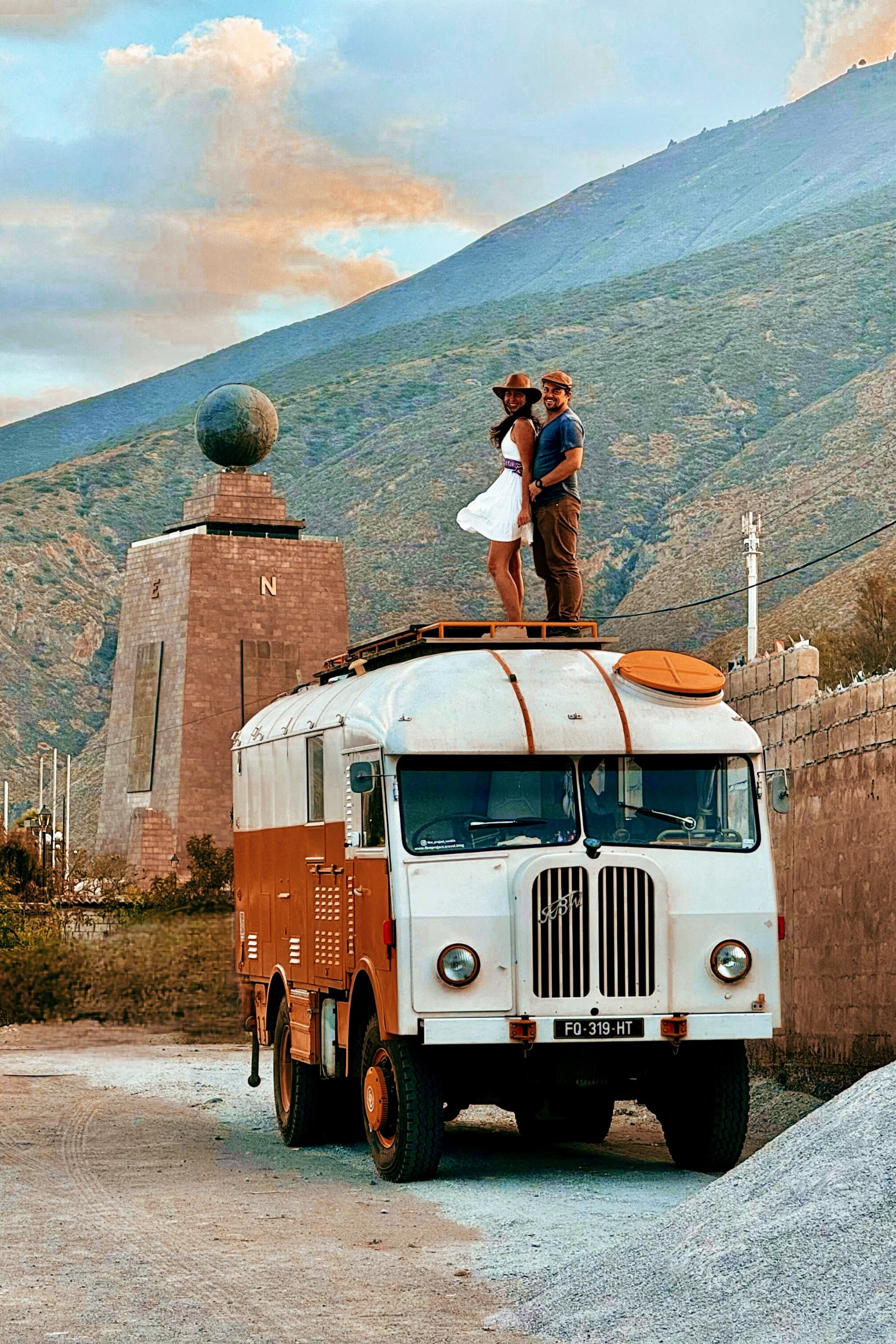
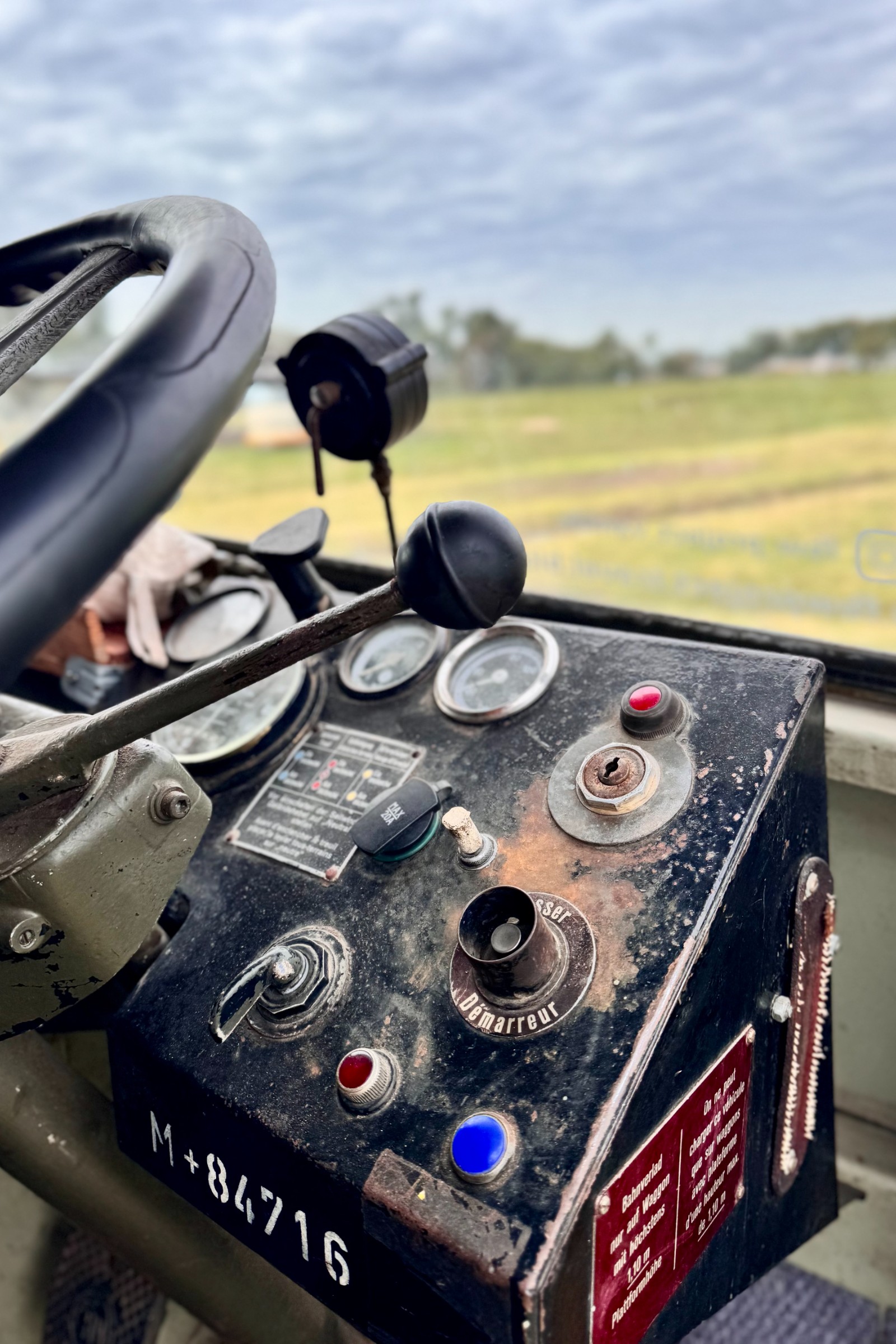
Our home is Woody, a 1957 FBW AX40, formerly a radio truck for the Swiss Army. It weighs about ten metric tons, has a right-hand drive, and has a top speed of 50 km/h. It’s one of only eight surviving FBW AX40s worldwide—and the only one traveling around the world.
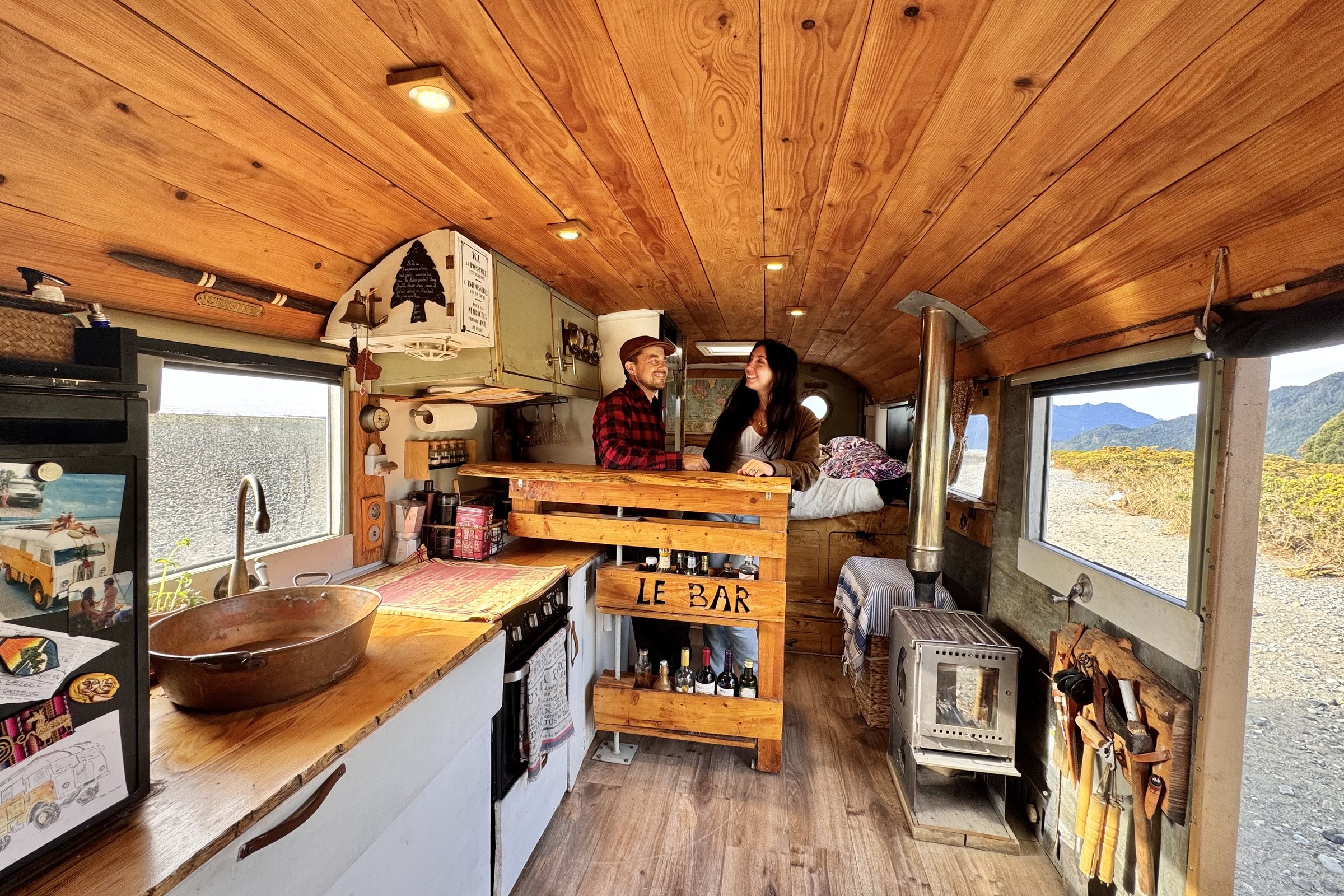
Inside, we have about ten square meters with a wood-burning stove, a shower, 120 liters of water, and solar panels. Woody is our home, our workplace, and the foundation for our entire project.
Traveling in a vehicle like this turns the journey itself into an adventure. Woody sparks conversations wherever we go, and its speed sets the rhythm of our trip. It stands out because it’s one of a kind—and that was exactly one of the reasons we chose it.
We believed it must be possible to drive around the world at 50 km/h. So we wanted to take on this challenge.
What experience from your travels will you never forget?
An unexpected rescue operation during a snowstorm at an altitude of about 5,000 meters in Bolivia.
We were traveling through Sud Lípez when the worst snowstorm in a decade suddenly turned our trip into an emergency. Under those conditions, Woody was the only vehicle capable of helping to rescue people.
This experience has stayed with us because it brought together so many of the things that define this journey for us: uncertainty, responsibility, and people helping one another in a place where resources are limited.
“Under these conditions, Woody was the only vehicle that could help rescue people.”
What has traveling taught you?
That self-reliance doesn’t mean having to do everything on your own.
We travel with our own home, water, electricity, and our gear. Still, some of the most important things we needed along the way would never have fit in our truck: local knowledge, practical help, and the generosity of strangers.
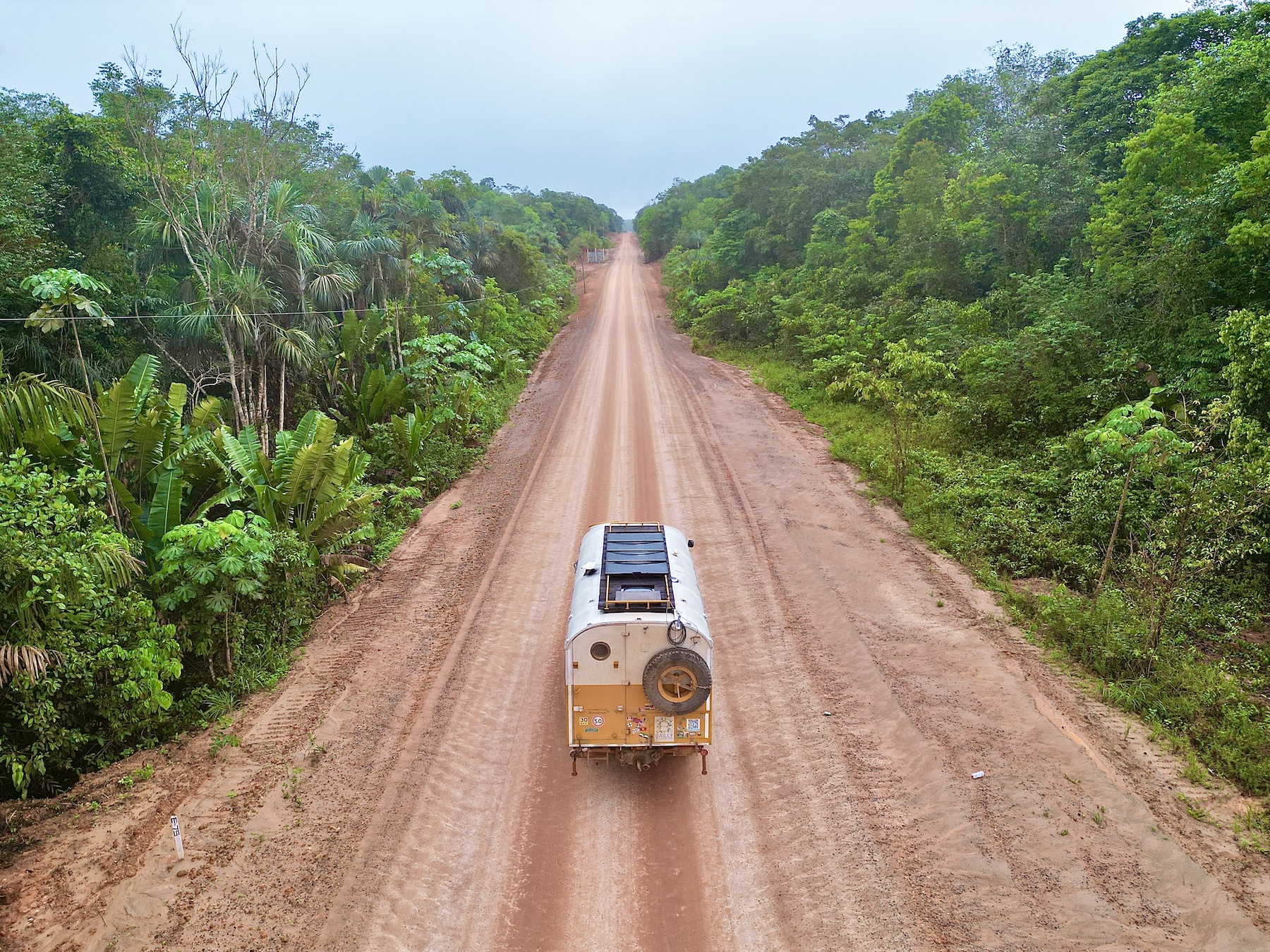
On the Transamazônica, in the Andes, and during breakdowns, people have time and again become an integral part of what makes this journey possible in the first place. Asking for help and being willing to help others are both important skills for us.
What else would you really like to experience?
Asia is our next big chapter, planned for 2027. We’re also preparing for the Ultra-Trail d’Angkor in Cambodia.
But it’s not just about travel destinations for us. We want to continue combining travel with meaningful projects, swimming and running adventures, and encounters that challenge what we think we know.
And there are even more stories to write: Estelle is already working on the second volume of our journey.
Plan A or Plan B?
Prepare thoroughly—but still be ready to change the plan at any time.
With a 1957 truck, preparation is key. The same goes for border formalities, distances, water, and road conditions. But no amount of planning can prevent every breakdown or anticipate every encounter.
Estelle’s technical background helps us with organizing and problem-solving. And the road gives us plenty of opportunities to practice improvising.
Alone or together?
Together. This is our shared adventure—and after all, our home is only ten square meters.
We do everything as a team. Estelle focuses more on strategy, projects, and the big picture, while Dan handles the operational side and makes sure things actually get done day to day. We complement each other pretty well.
At the same time, we each have our own passions. Estelle swims in the open ocean, even in cold water without a wetsuit. Dan runs marathons and trail races.
Getting to know people is a central part of our journey. But just as important are the quiet moments when we can finally process everything we’ve experienced.
Comfort or freedom?
Freedom—with a little home that lets us keep moving forward.
We live in ten square meters and travel at a pace where rushing isn’t an option anyway. But having our own space to cook, sleep, and warm up makes a huge difference on a long journey.
Our wood-burning stove is a good example of this: when it gets really cold outside, these ten square meters become a very welcoming home.
When something goes really wrong…
First, let’s try to understand what’s happening and what needs immediate attention. Then let’s figure out what we can do ourselves with the resources we have—and who can help us.
Estelle brings her experience as an engineer and firefighter, while Dan brings his experience from operations and as a cook. So we bring different practical skills to the same problem.
Above all, though, we rely on people. Things have gone wrong many times on this journey, and we don’t try to handle everything on our own. We ask for help, listen to local knowledge, and work together with the people around us. Human solidarity is an essential part of how we keep moving forward time and time again.
What reliably drives you up the wall while on the road?
Bureaucracy. Especially when an administrative error suddenly becomes your problem.
At the border between Argentina and Brazil, we discovered that a previous visa extension had been correctly recorded for Dan, but not for Estelle. We spent two days dealing with paperwork and waiting until the matter was resolved.
An even bigger challenge was shipping Woody from the U.S. to Colombia and handling the vehicle import ourselves. No one there had ever done it that way before. We worked on it every single day for three weeks—and at the time, we didn’t speak any Spanish yet.
A mechanical problem can be difficult. But at least you can start looking for the broken part.
“A mechanical problem can be difficult. But at least you can start looking for the broken part.”
Invitation or itinerary?
The invitation. People are at the heart of our project.
In the towns we pass through, we open Woody up to visitors—just as we do at events or in schools. We talk about our project, our stories, and our books.
And given the way Woody looks, people are constantly waving at us from the side of the road anyway, taking photos, or coming over to ask questions. He opens doors and fosters connections everywhere we go.
We’ve now found ourselves in other people’s homes thousands of times, eating together and spending time with one another. These encounters are a huge part of our journey.
Which is harder for you: setting off or coming back?
Setting off was difficult because there was always one more thing to do. You’re constantly thinking, “We still have to finish this, organize that, fix this…” And suddenly it becomes very easy to keep postponing the departure because nothing is ever really finished.
So we set a firm departure date, told everyone who’s important to us, and invited them to a farewell gathering. That made it real: we had to set off, even if not everything was perfect yet.
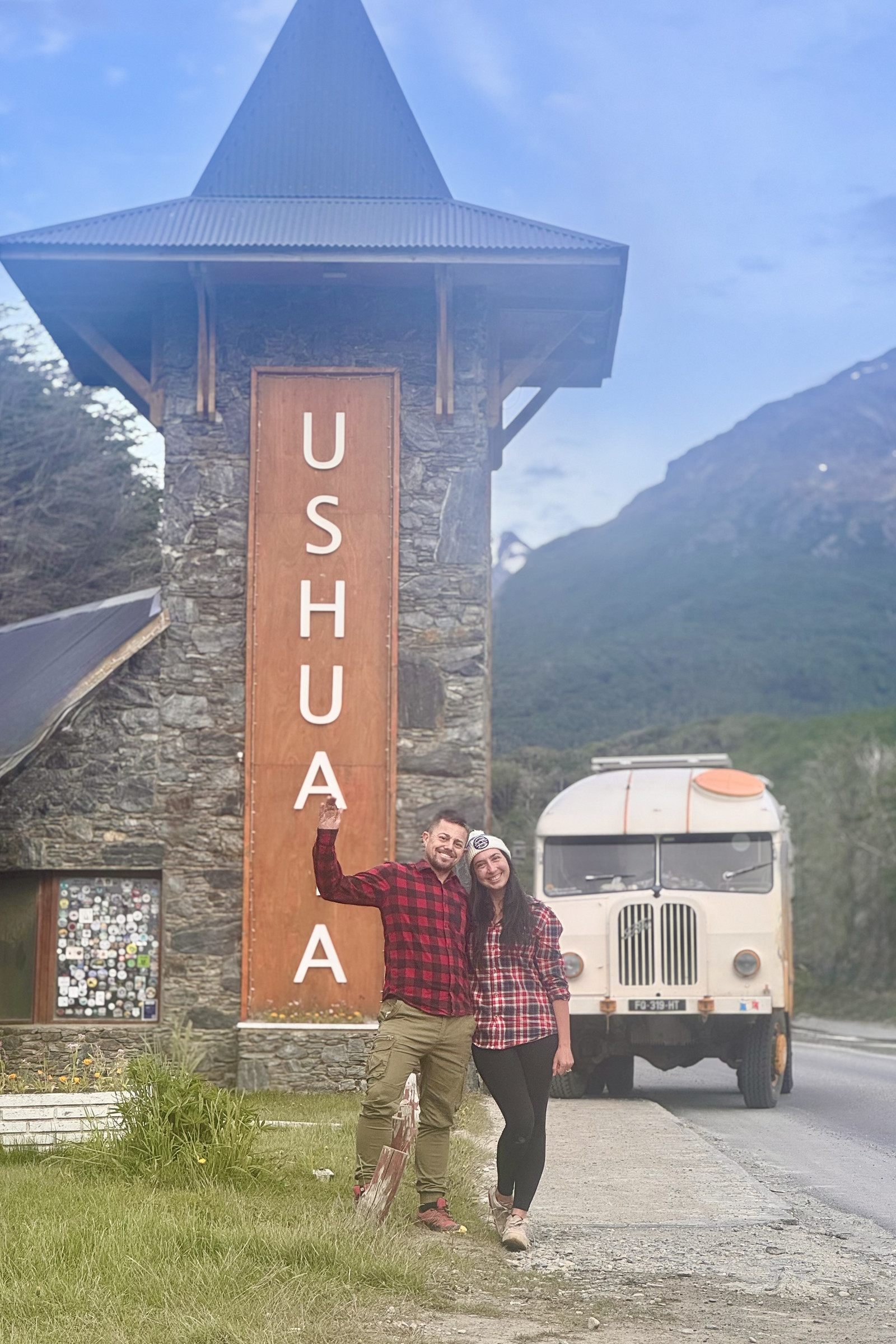
What are some of the ways you drive each other crazy sometimes?
Estelle loves buying souvenirs and bringing things back to the truck from everywhere. She loves objects that have a story behind them. Dan is much less attached to material things, so her ever-growing collection can drive him a little crazy.
For Estelle, it’s Dan’s clumsiness: He’s constantly bumping into things, dropping things, or making noise. In a space of ten square meters, nothing goes unnoticed.
What dish do you cook over and over again while on the road?
Dan loves to cook bœuf bourguignon, the French classic.
Cooking is his passion, which is why a proper kitchen in the truck was essential for him. We have an oven and everything that goes with it—just because we live on the road doesn’t mean he has to go without the dishes he loves.
What are the three things you can’t travel without?
Our portable solar power station. We can take it with us everywhere, whether we’re traveling with Woody or heading out to explore without the truck. It’s indispensable.
Our reusable water bottles. They come with us everywhere.
And Estelle’s smartphone. She takes photos and videos everywhere, documenting the expedition and the people we meet. That’s why a smartphone with a really good camera was essential for us.
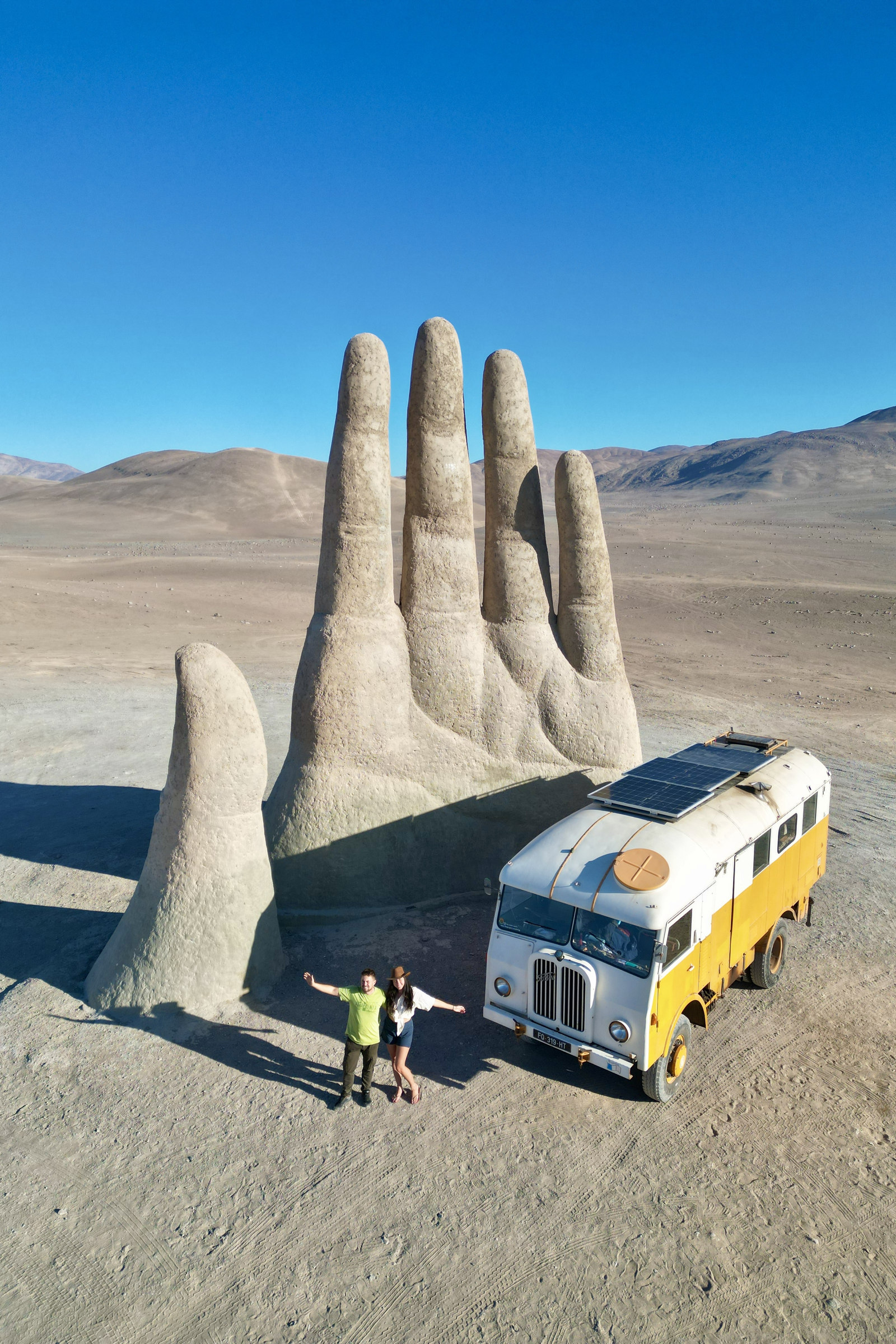
ESTELLE, DAN & WOODY
Estelle Ohanian & Dan Wilhelm
Project: FBW Project
On the road: since June 2023
Vehicle: FBW AX40
Year built: 1957
Previously: Swiss Army radio truck
Name: Woody
Weight: approx. 10 metric tons
Top speed: 50 km/h
To date: more than 80,000 km · 24 countries · 14 humanitarian and environmental missions
Current location: Brazil
Next major destination: Asia 2027
Follow Estelle & Dan on:
- Website: FBW Project
- Instagram: @fbw_project_vanlife
- Facebook: FBW Project
- YouTube: FBW Project
BOOKS BY ESTELLE OHANIAN
Estelle also chronicles her journey in print: *Le Tour du Monde à 50 km/h – Tome 1: De l’Europe à la Fin du Monde* followsEstelle, Dan, and Woody on their trip around the world. The travel book has also been published in English as *The Slow Road: 30 mph Around the World* and in Spanish as *La Vuelta al Mundo a 50 km/h *.
For younger adventurers, there’s also *Les Aventures de Woody autour du Monde*: an illustrated children’s book in which the FBW AX40 itself becomes a curious explorer of the world.
Learn more here.