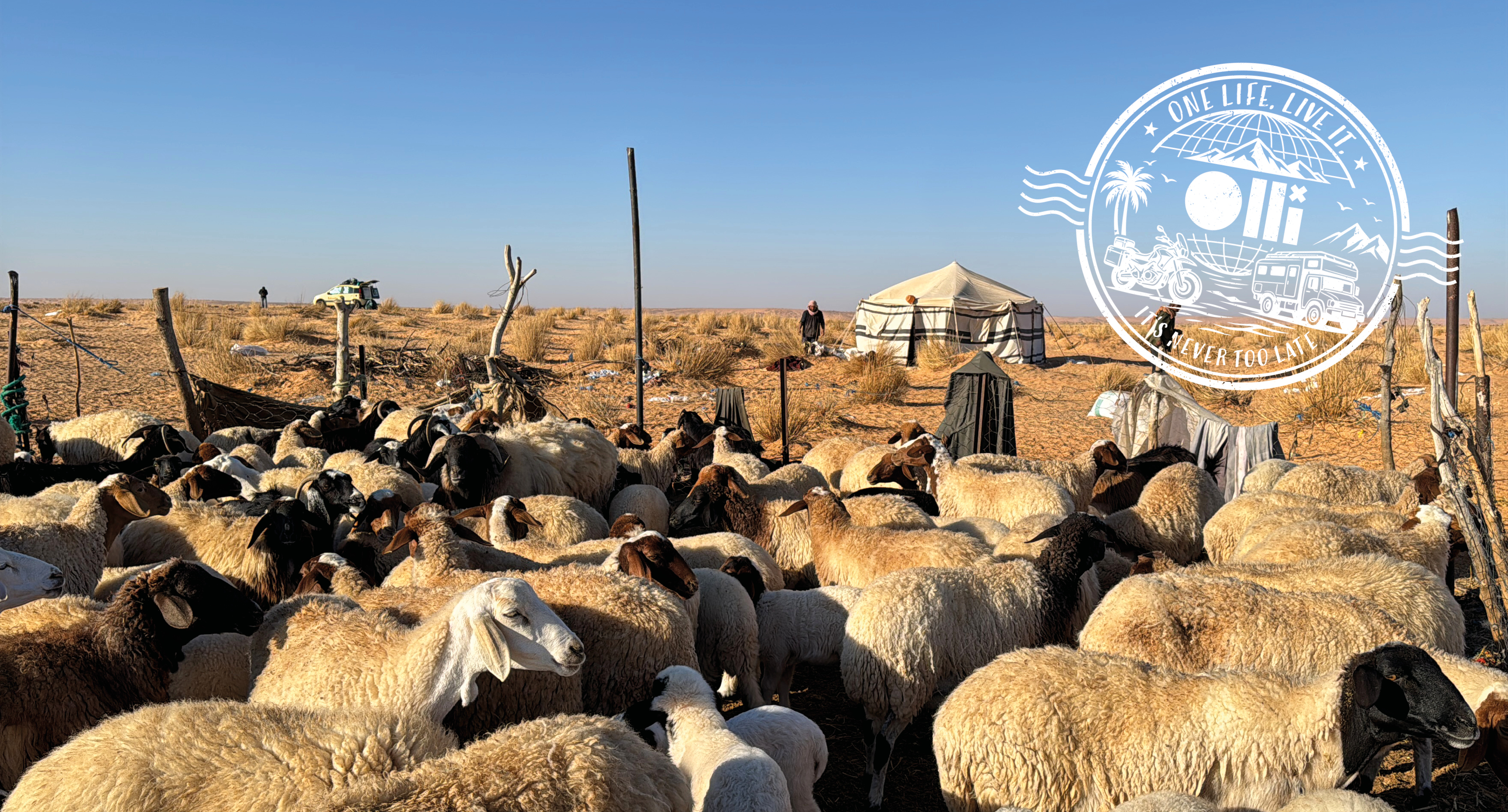
GREETINGS FROM … are short field notes. Friends of OLLI send us their impressions from their travels.
Douz, Tunisia. A lively festival, sandstorms, camels, and somewhere beyond it all, the endless tranquility of the desert. Martina & Dylan are traveling through Tunisia in their Fiat Panda 4x4 “Felicita” and meet two shepherds with 200 sheep on the edge of the Sahara. A story about camel-leather balghas, flatbread baked in hot sand—and people who’d rather live under the stars than in a city.
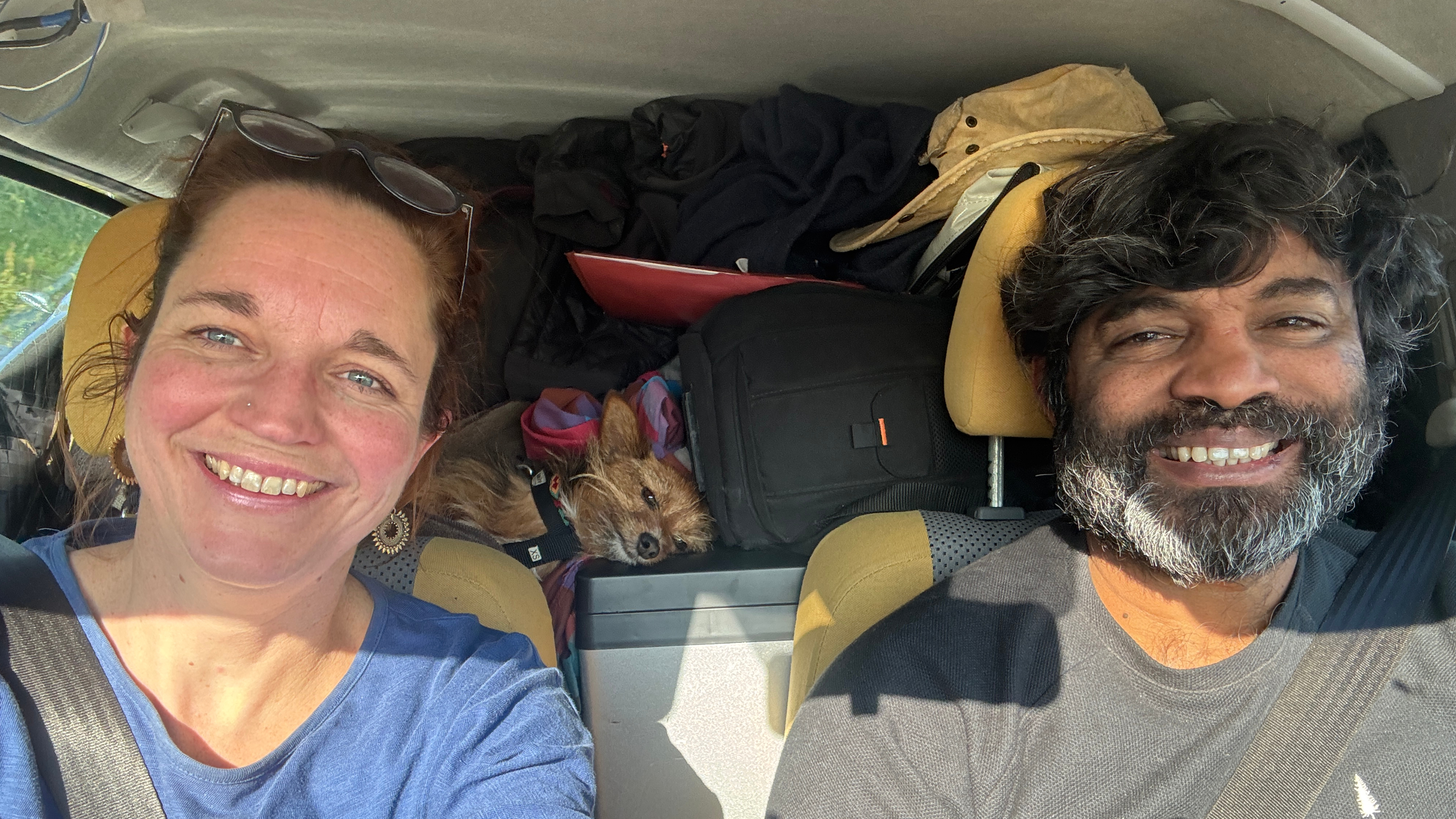
Hi, we're Martina & Dylan
Strictly speaking, our greetings aren’t coming directly from Douz. We left the city behind a few days ago after attending the annual Sahara Festival—loud, lively, and full of life—before heading back out into the desert.
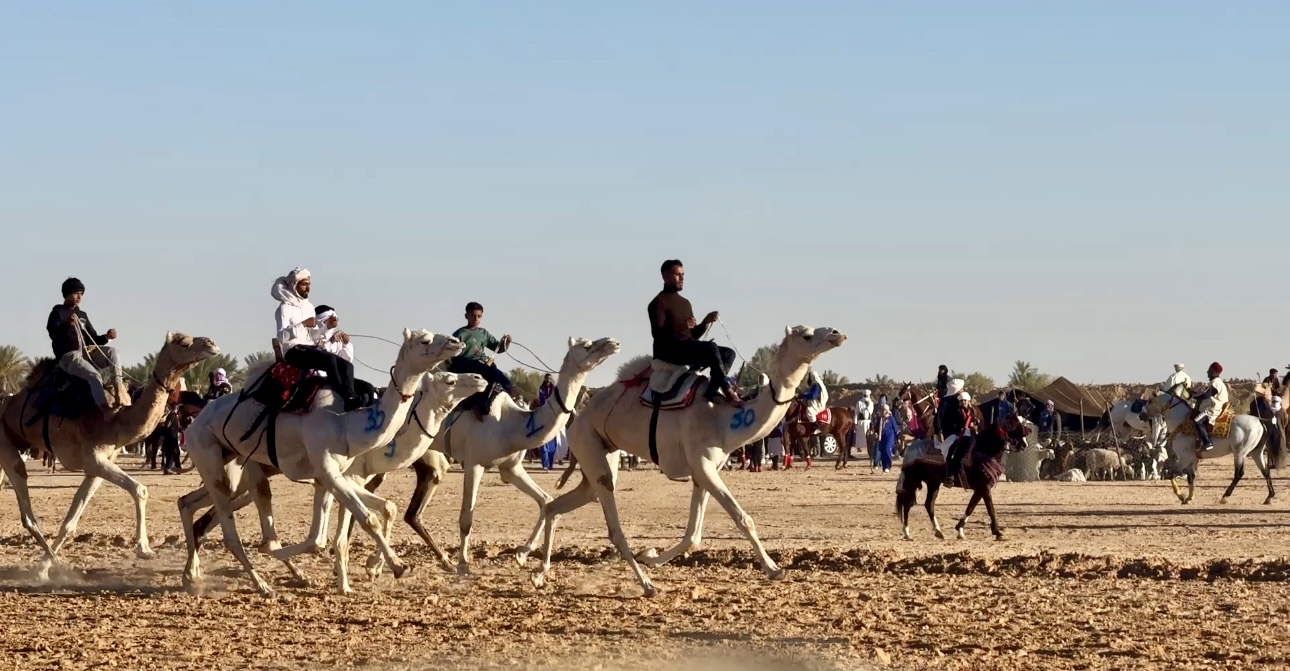
Every December, Bedouin tribes from Tunisia, Algeria, Morocco, Libya, Niger, and Egypt gather at the Sahara Festival to celebrate their shared culture. The horsemen in their traditional garb on richly adorned horses make an impressive sight, and the long legs of the camels galloping through the desert sand are fascinating. The town square is a colorful jumble of musicians, dancers, popcorn vendors, clowns, and merchants selling just about everything.
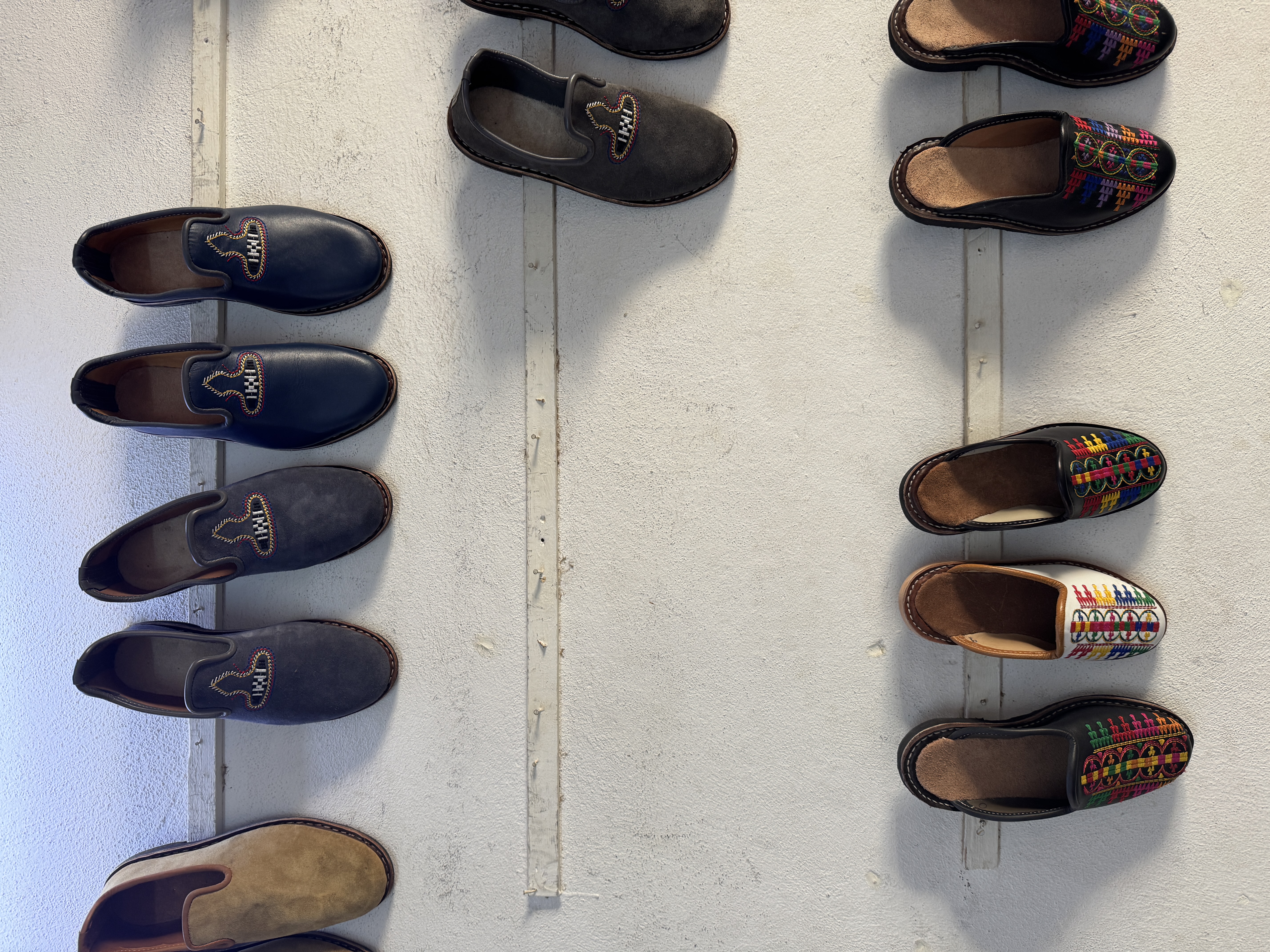
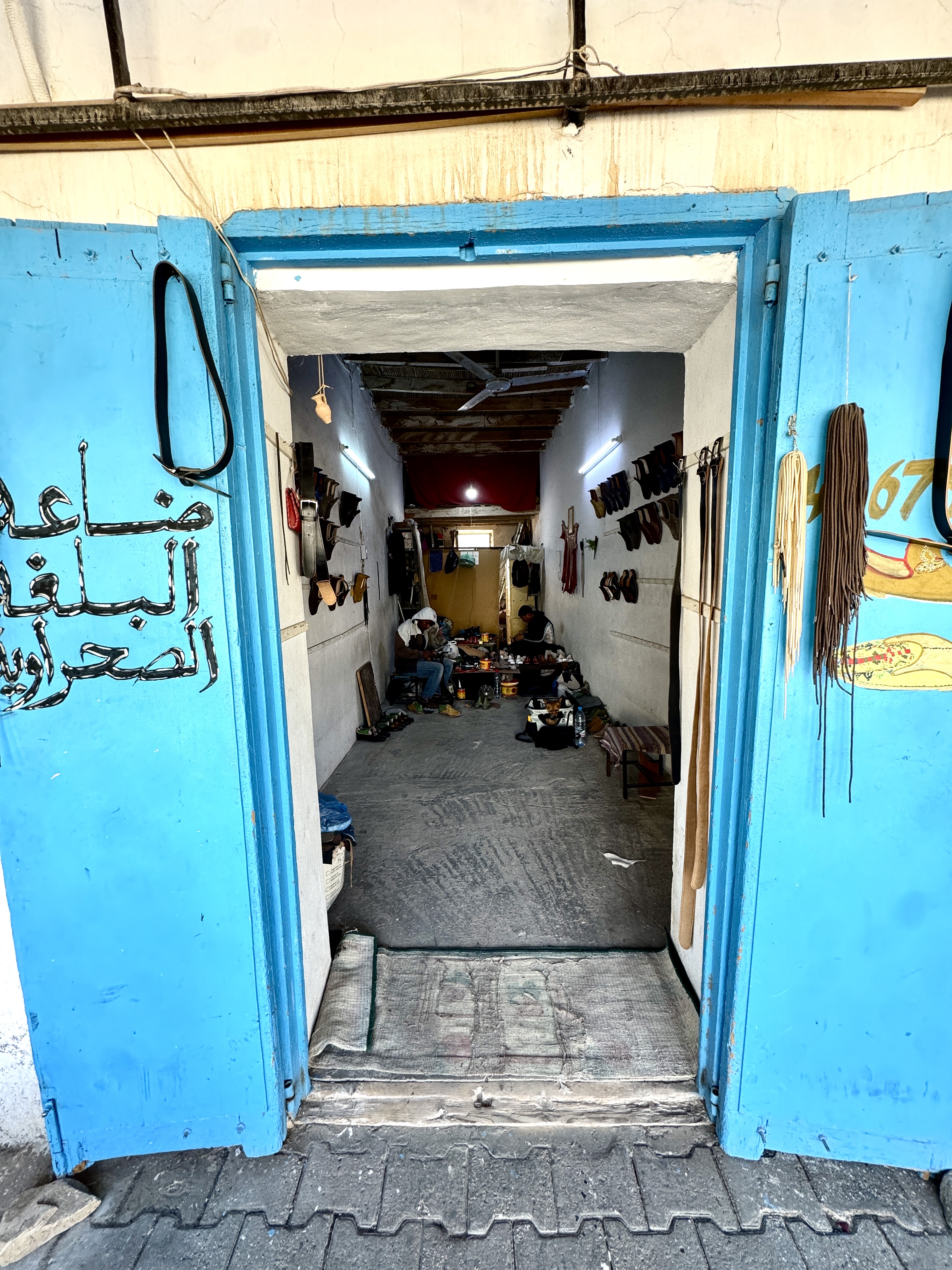
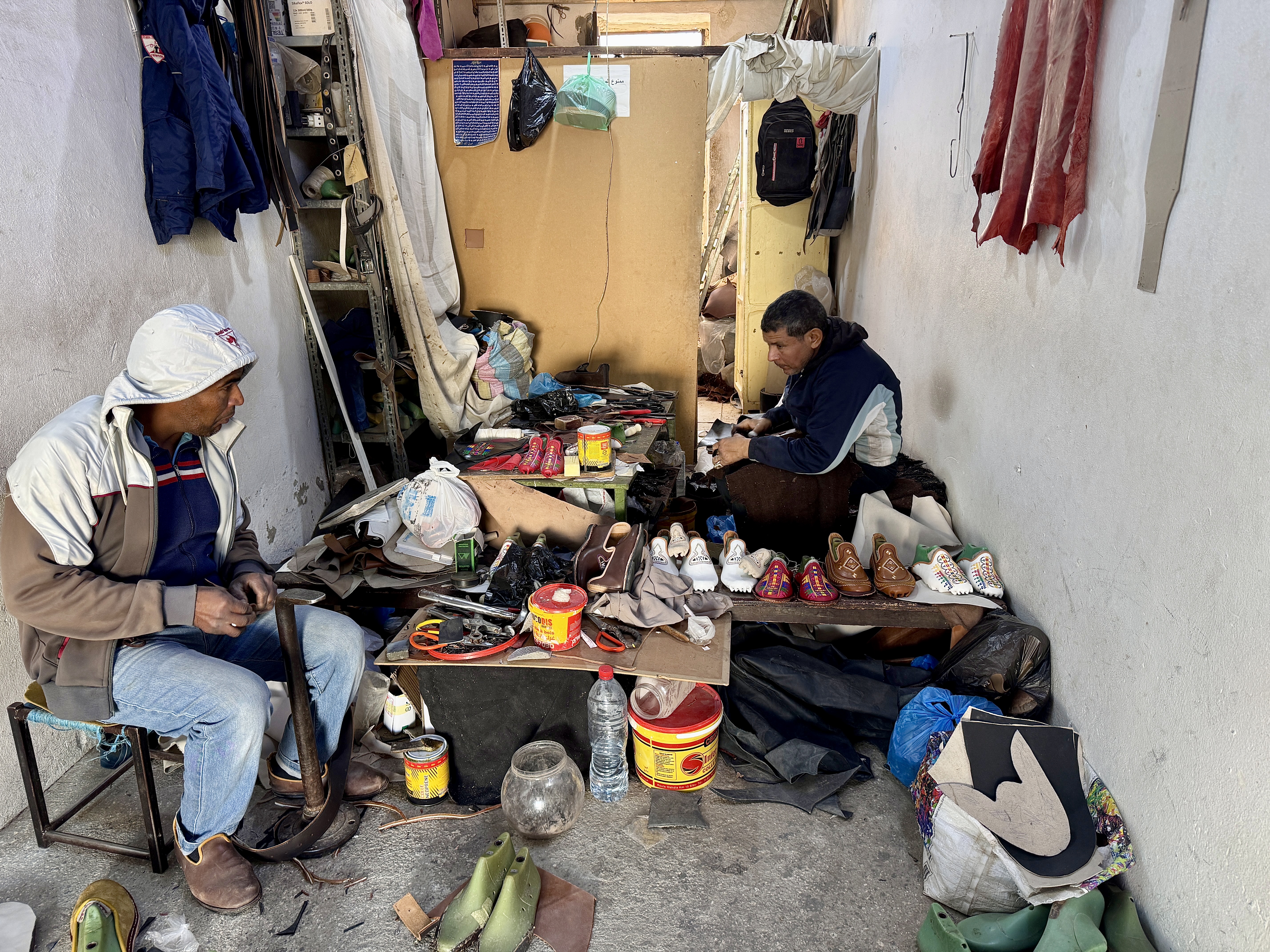
Before we left the city and the hustle and bustle behind us in our 20-year-old Fiat Panda “Felicita,” we not only stocked up on water and food, but also stopped at a shoemaker’s. Leather shoes have been handcrafted here for generations. Loosely translated, we’d call them “Sahara slippers”; locally, they’re known as balghas. Hand-sewn shoes made of camel leather, perfectly suited to life in the desert.
And we need exactly two pairs of them. Not for ourselves, but as a gift for “our shepherds.”
Because just under two weeks earlier, we’d met two shepherds with their flock of about 200 sheep on the edge of the Sahara. It was already dark, and we were looking—coming from the main road—for a place to spend the night in our mini-camper. After a long search, we suddenly spotted a fire in the distance.
“Let’s see who’s there,” Dylan said.
A few bumpy sand dunes later, we found ourselves standing among bleating sheep and barking dogs in the light of their flashlights. With open, slightly shy smiles, they invited us to join them. A pot of couscous with tomato sauce was simmering over the fire; we contributed the grilled fish we’d bought in town and spent our first evening under the sparkling night sky of the Sahara in new company.
Thanks to translation apps, hand gestures, and drawings in the sand, we were able to communicate. Where we’re from. Where they’re from. How long they live out here before heading back to Douz to see their families for a few days.
“Are you father and son?” No, they laugh. Acquaintances.
“Do those sheep belong to you?” Of course. Who else?
Do the animals find enough to eat out here? Yes, they say. But to do that, they have to travel with them for a long time.
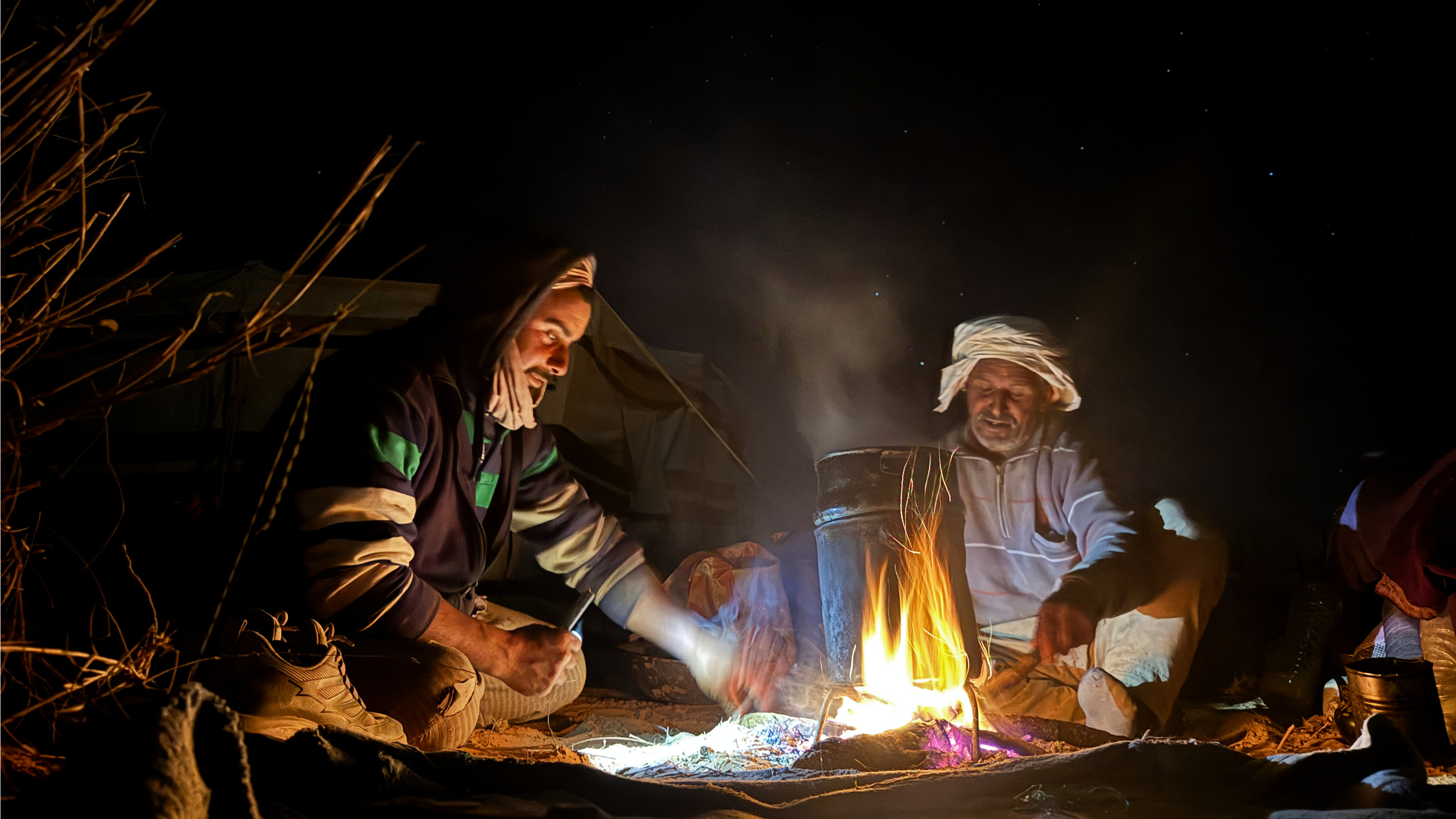
For us, that was the sign to call it a night. The two of them had obviously had a long day. So we set up camp a few meters away from their nomad tent. While they’re probably snuggling under sheep’s-wool blankets, we press the button on our auxiliary heater until we’re no longer cold. Then we turn it off again. It’s easier to sleep in the silence of the desert.
Early in the morning, Punchi wakes us up. Our little terrier needs to go outside, and because of all the herding dogs around, she can’t go out on her own. Luckily, she doesn’t have to. Because when I turn around a few minutes later to walk her back to “Felicita,” the sun rises, glowing bright red, over the horizon. A picture-perfect moment that gets even more beautiful shortly afterward.
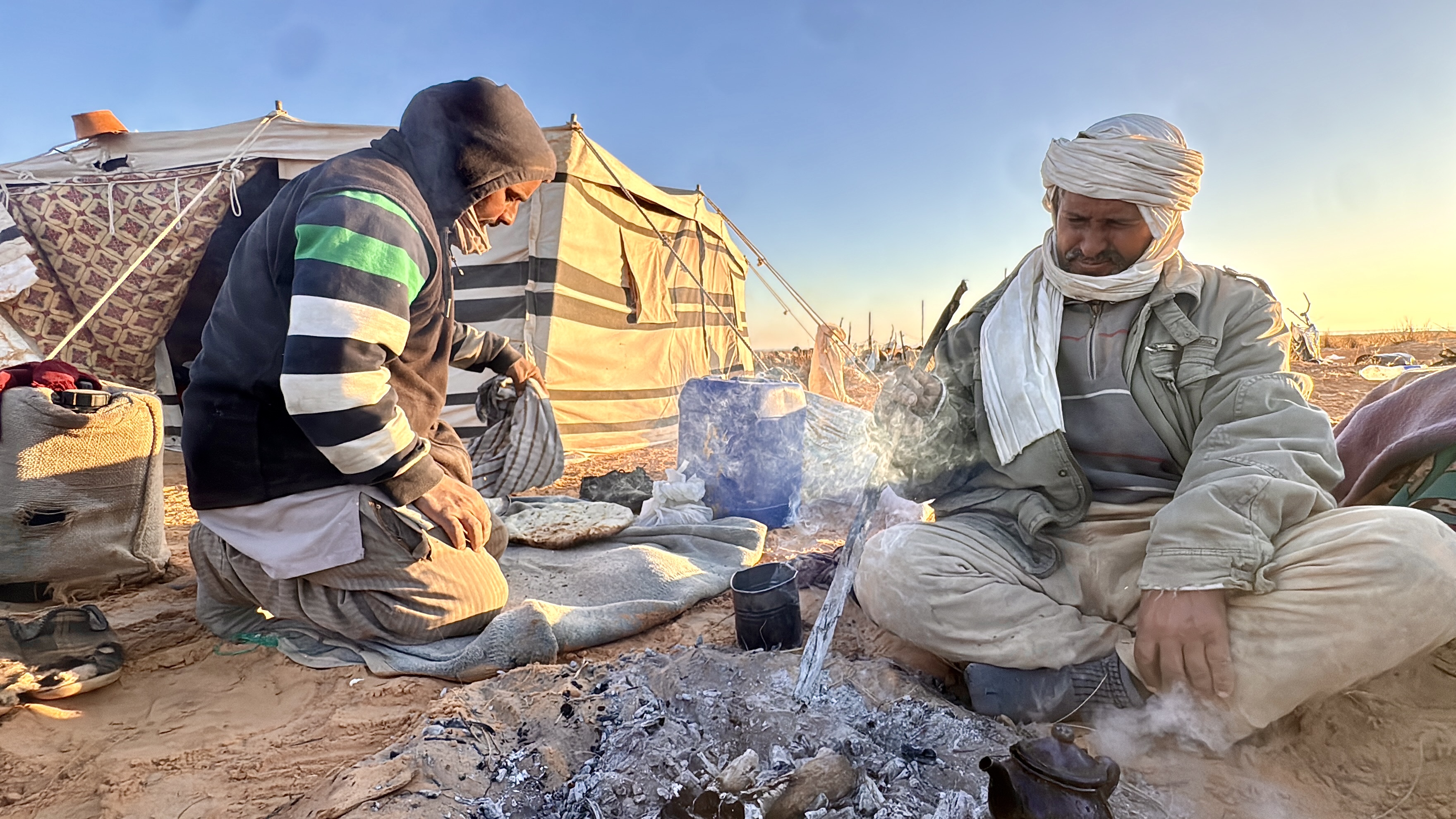
Mohammed and Hamza have already built a fire and are waving at me.
“You’ve got to see this. Now. Otherwise it’ll be too late,” I call out to Dylan.
Mohammed, the younger of the two, is already kneading the dough for the flatbread. A little later, it will be buried between hot ashes and sand and, in no time at all, turn into a crispy breakfast. Bread dipped in olive oil, served with dates and sweet tea—it couldn’t be simpler or better.
After that, the workday begins for the two of them. The sheep are brought in from their night pastures, fed, and herded to the watering hole. Then the shepherds set off with their flocks. They tell us they don’t eat anything during the day. It’s not until the evening, back at camp, that they have couscous again.
Before Hamza runs after the sheep across dry sand and through thorny bushes, he points to his worn-out shoes and asks if we might have a new pair for him. Unfortunately, we don’t. We don’t carry spare shoes in our small camper.
That’s exactly why, a week and a half later, we visit a shoemaker in Douz before heading back out into the Sahara—in the hope of finding Mohammed and Hamza again. After the noisy city, we’re drawn back to the silence and simplicity of the desert.
And even though life there is rough and hard, the two men like it.
“Live in the city all the time? La, merci.” No, thank you.
We understand them. We, too, haven’t been city people since we moved into our van ten years ago.
💡 Did you know that traditional Saharan shoes are perfectly adapted to the hot desert climate? In Tunisia’s souks, they’re still made today from goat, sheep, or camel leather. They’re lightweight, breathable, and prioritize flexibility and comfort in the sand over thick soles. Many are still sewn by hand and are an integral part of North African desert culture.
Particularly popular are the open, heel-less “babouches” or “balghas,” which can simply be slipped off at the back—practical and uncomplicated. Today, they’re often worn as house shoes as well.
But modernity has long since made its way here, too. Even though it’s winter, we see plastic slippers almost everywhere instead of traditional leather shoes. Almost everyone here wears something between Adiletten and Crocs on their feet. Whether on a motorcycle, on a camel, in the hospital, or at the supermarket—plastic flip-flops have become a completely natural part of the scene.
Best regards
Martina & Dylan
More about Martina & Dylan
They are travel book authors, filmmakers, and speakers. During the COVID-19 pandemic, they also developed a composting toilet for campers because they were never really satisfied with existing solutions. They’ve been living in a van since 2016 and have had quite a few adventures along the way. With their “Impandable” project, they’ve been traveling around the world in a Fiat Panda 4x4 since last year. Today, their daily life alternates between being on the road and working at the FlowerPott workshop in Switzerland.