After 60 years full of dreams and records - what else is there to come for the iconic 911? Perhaps a small team with a big, crazy idea.
At 3 p.m. on a bitterly cold afternoon in December 2023, Porsche works driver Romain Dumas has to decide: turn left? Or make his way home? But there are two catches. Turning back would be tantamount to the failure of a mission that has been meticulously planned for four years. He would also be abandoning a torturous, exhausting expedition that lasted three weeks just a few meters from its destination. But turning left would mean crossing a narrow expanse of ice some 6,600 meters above sea level with a 45-degree incline, below which a near-vertical abyss 500 meters deep opens up. The three-time Le Mans winner and experienced off-road racer shifts into first gear and steps on the gas. The origins of Dumas' dilemma can be traced back to a bus trip on the Mediterranean island of Mallorca in September 2019. During a management conference there, Frank-Steffen Walliser, then head of the 911 and 718 model series, was confronted with a bold idea that others in his position would probably have simply smiled wearily at. "Why don't we try to drive a 911 to a height where no car has gone before?"
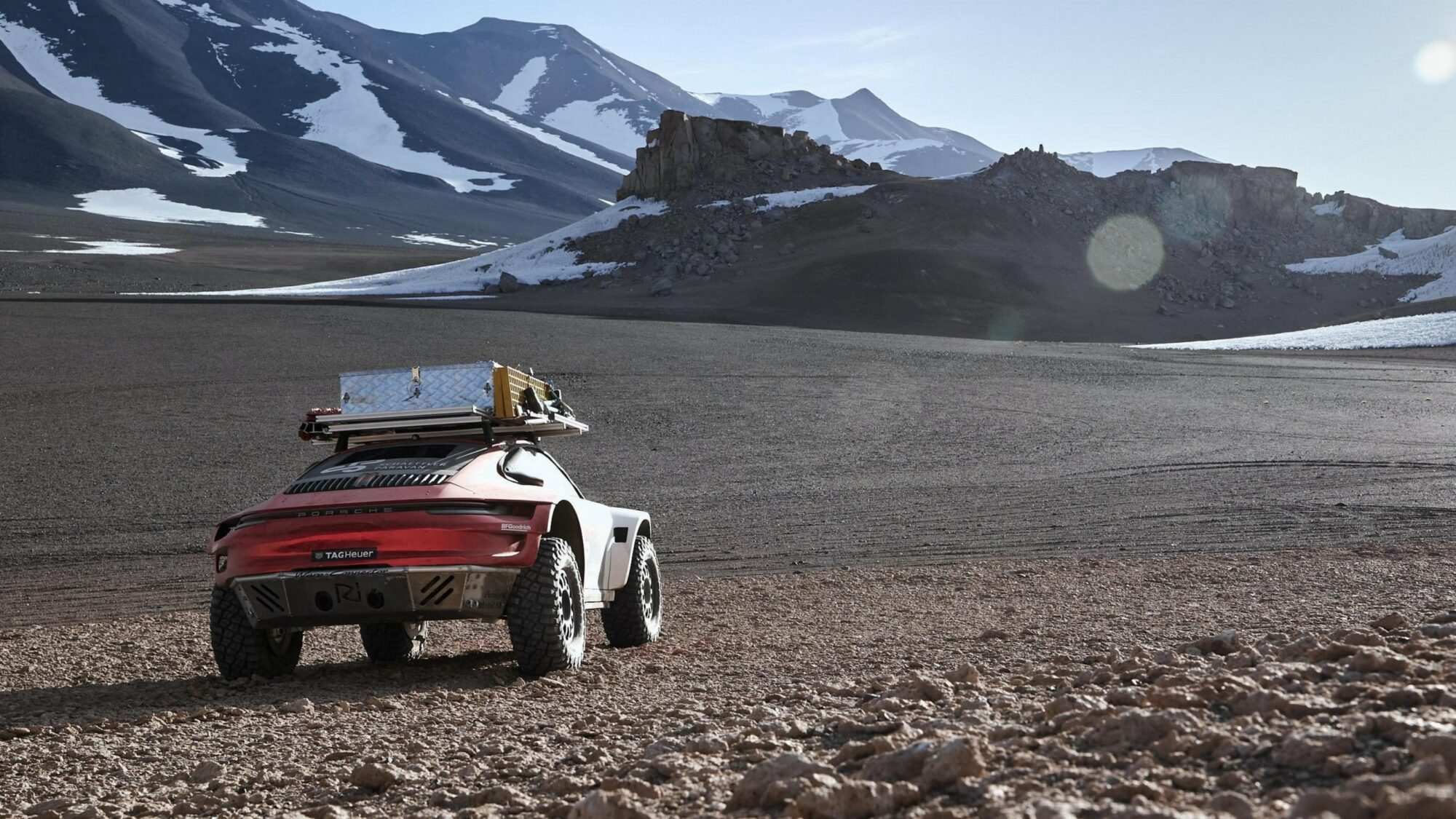
"I still remember well when the idea was first discussed," says Walliser, who is now responsible for overall vehicle architecture at Porsche. "And I immediately said: 'Let's give it a go'. It is in the nature of a sports car manufacturer to break records - no matter what they are." Three extraordinary months of intensive and secret development followed. What was to become known as "Project Kilimanjaro" began almost in secret. The Ojos del Salado volcano on Chile's northern border with Argentina was one of the few places on earth that lent itself to such an altitude record. The assumption was that a trip to more than 6,000 meters above sea level would at least theoretically be possible here. The mountain, remote and inhospitable, seemed intimidating, full of unknown and very real dangers. "After a few discussions, we were confident we could do it," explains Walliser. "But we decided not to tell anyone. I did inform the Chief Development Officer Michael Steiner that something was going on. But then we simply spoke directly to the people we wanted to be involved." At the beginning of October 2019, a 911 (992) was brought to the workshop for testing by a hand-picked team from various areas of Porsche vehicle development. There it was first dismantled. The original team consisted of fewer than 30 people, including 911 model series manager Michael Rösler, project manager Jens Kayser and Achim Schulz, Head of Sports Car Axle Development.
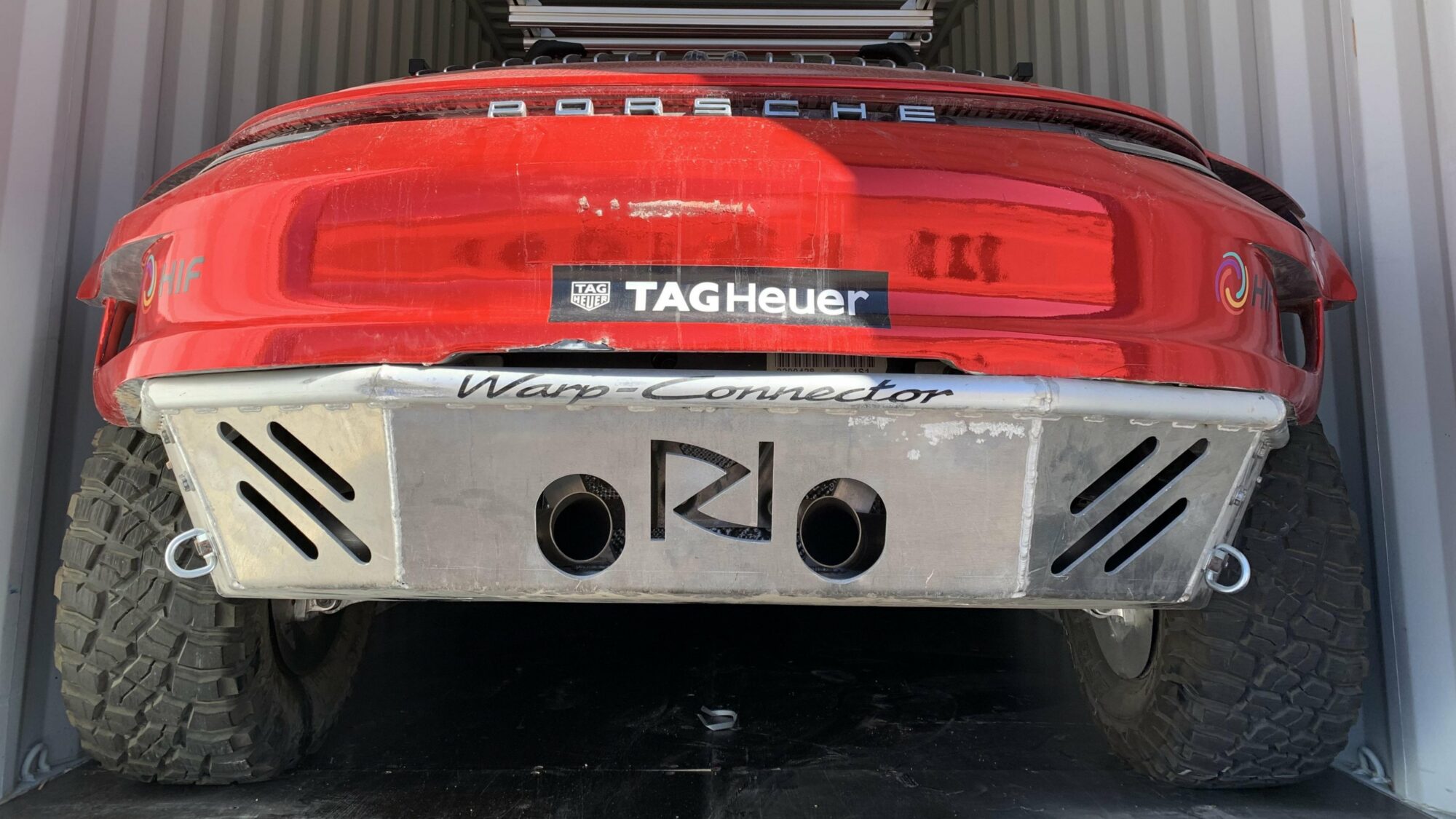
As if in a secret laboratory that operates under the radar and has unusual freedom, the project was started. The budget was limited, so it was decided right at the start to use components from production vehicles wherever possible, such as the drivetrain of the 911 Carrera 4S (992). It was assumed that the 3.0-liter bi-turbo six-cylinder (911 Carrera 4S: combined fuel consumption (WLTP) 11.1 - 10.2 l/100 km, combined CO emissions* (WLTP) 253 - 231 g/km) would be able to perform at altitudes of well over 6,000 meters. "The only way to prove this was to test the expected conditions in the altitude simulation chamber that Porsche had built in the 1980s for the development of the PFM-3200 aircraft engine," says Michael Rösler. The initial tests indicated that only minimal adjustments to the 911's engine control system would be necessary to deliver more than enough power for altitudes of up to 7,000 meters. The first ascent Just nine weeks after work began, the top-secret vehicle, affectionately known as "Doris" because of its "off-road independent suspension", completed its first test run. Doris drove on a chassis with portal axles, tailor-made dampers and huge off-road tires, which together offered an astonishing 350 millimetres of ground clearance.
Achim Schulz was responsible for the overall technical concept, which also includes the "Warp Connector". This was conceived back in 2008 during the development of the RS Spyder (LMP2) and was originally intended for use in the Porsche 919 Hybrid (LMP1). "The system almost completely eliminates body roll," explains Schulz, "but at the same time maximizes traction on uneven surfaces and with extreme chassis articulation."
An initial test run in a disused quarry 150 kilometers east of Stuttgart was encouraging: all systems worked as planned. Just one week later, at the end of December 2019, the team set off for Chile.
The first expedition was a test run, both for the team and for Doris. It began with a slow acclimatization process, which was necessary for the engineers and the driver to cope with the extreme altitude and freezing temperatures of up to minus 20 degrees Celsius. Safety was a top priority: regular medical checks were carried out to monitor the effects of sleep and oxygen deprivation as well as the relentless cold. Apart from a few easy-to-solve problems with the cooling system, the 911 completed the first ascent of the volcano flawlessly. With British off-road driver Ian Brown at the wheel, it managed to pass 6,100 meters of altitude - then the onward journey was halted by an impending snowstorm.
And the wait for the next attempt was to take on unforeseen dimensions: Due to the corona pandemic, the team had to hold out until the winter of 2022 before heading back to Chile. But this time with new strength and a new partner: French Porsche works driver and Le Mans winner Romain Dumas and his RD Limited racing team.
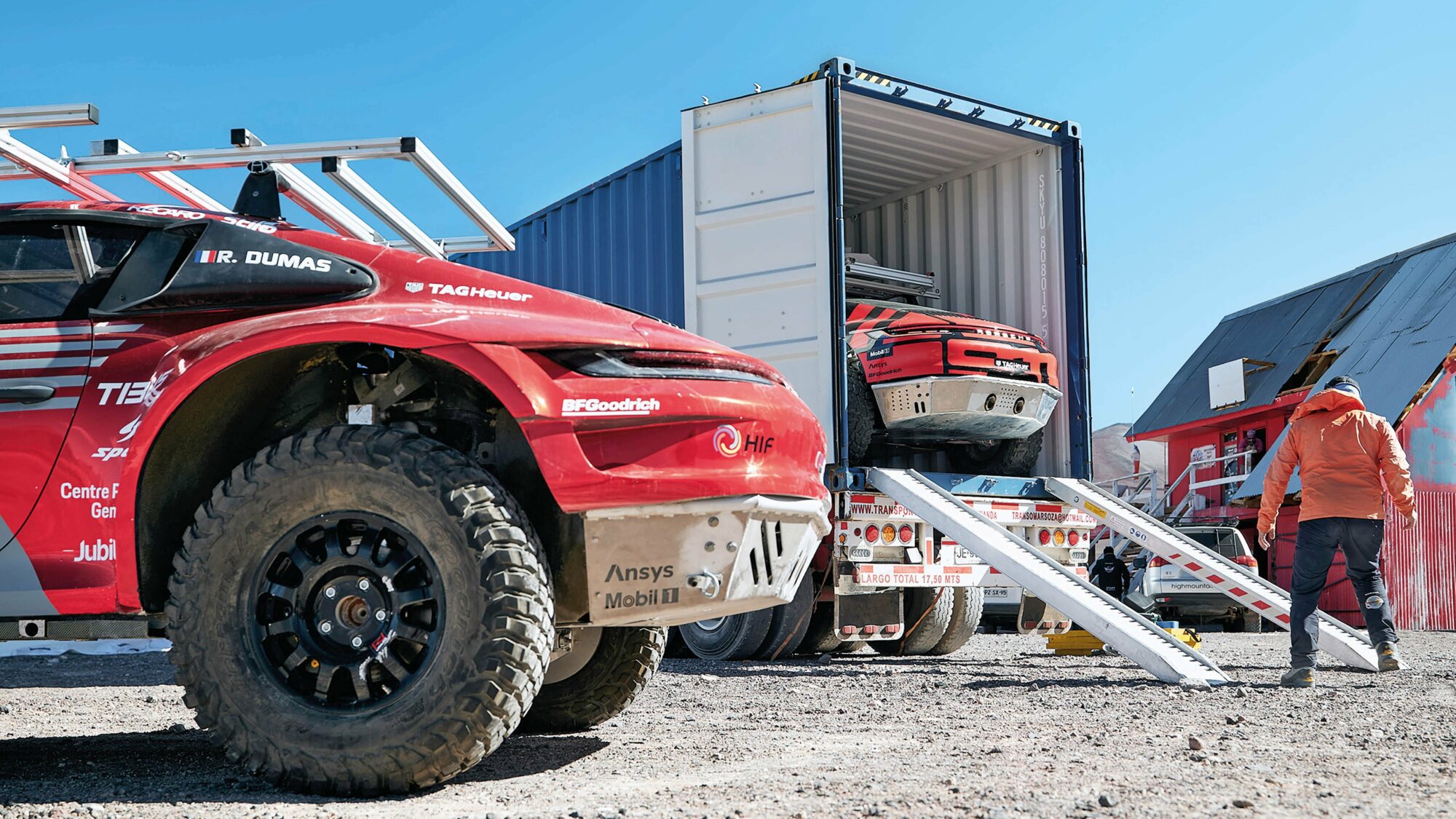
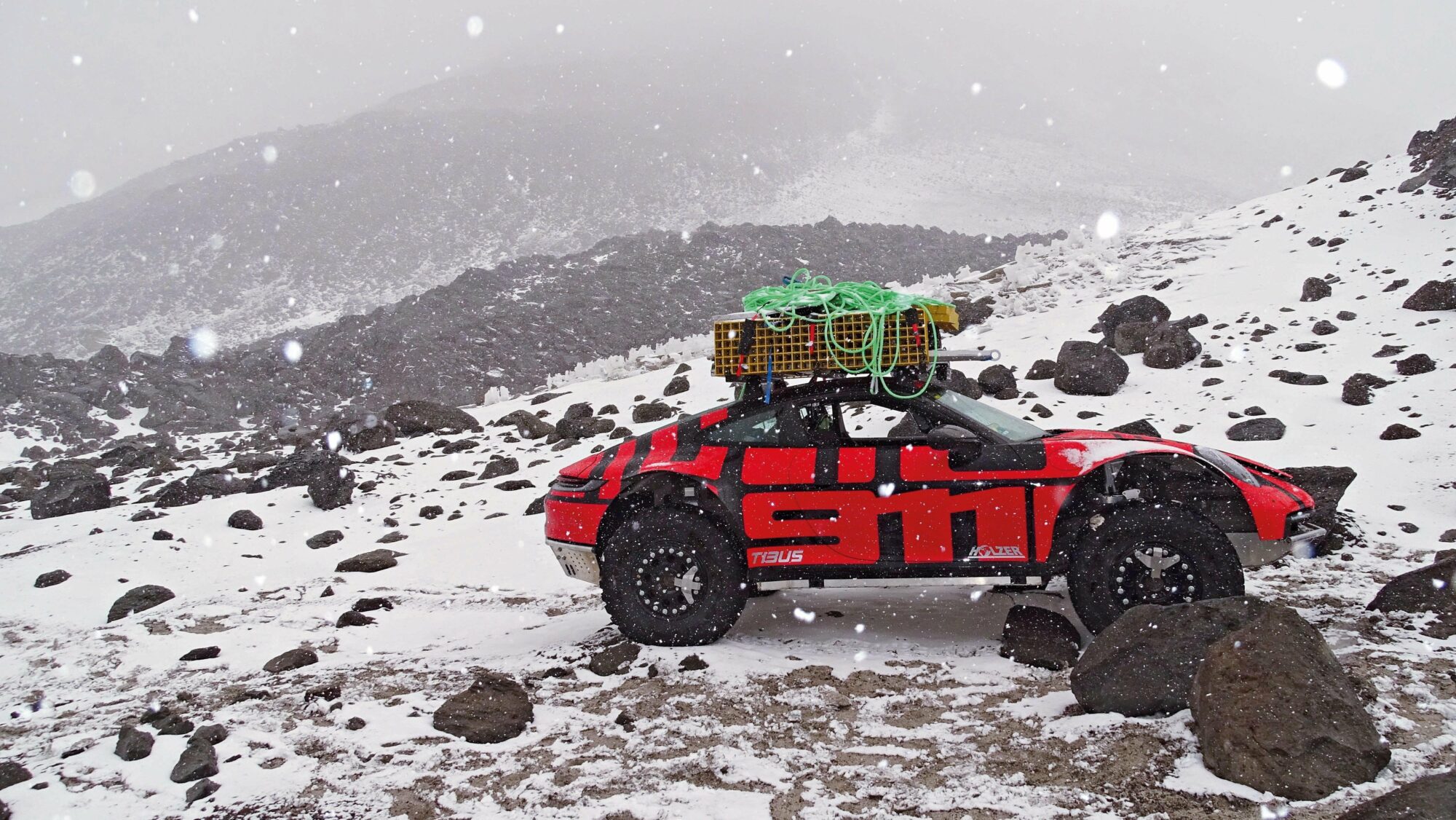
Dumas and Walliser are old friends and the racing driver's passion for extreme sports proved to be an asset for the second attempt. "I was attracted by the human challenge of overcoming my own limits," says Dumas. "But also the development of a sports car that is capable of doing something that seems impossible on paper." The most important thing, he says, is preparation, just like at Le Mans. "If you build the right car and put together the right team, you have a chance of winning." In collaboration with the Weissach engineers, RD Limited began to develop an improved sister car for Doris. Christened "Edith", it was equipped with a much larger winch, which made it necessary to relocate the cooling system behind the driver's seat. Edith was considerably lighter and equipped with both custom-made shock absorbers and wheels that enabled a reduced tire pressure of just 0.4 bar. The vehicle was also fitted with a unique steer-by-wire system, which made driving over the rocky and rugged surfaces of the volcano easier.
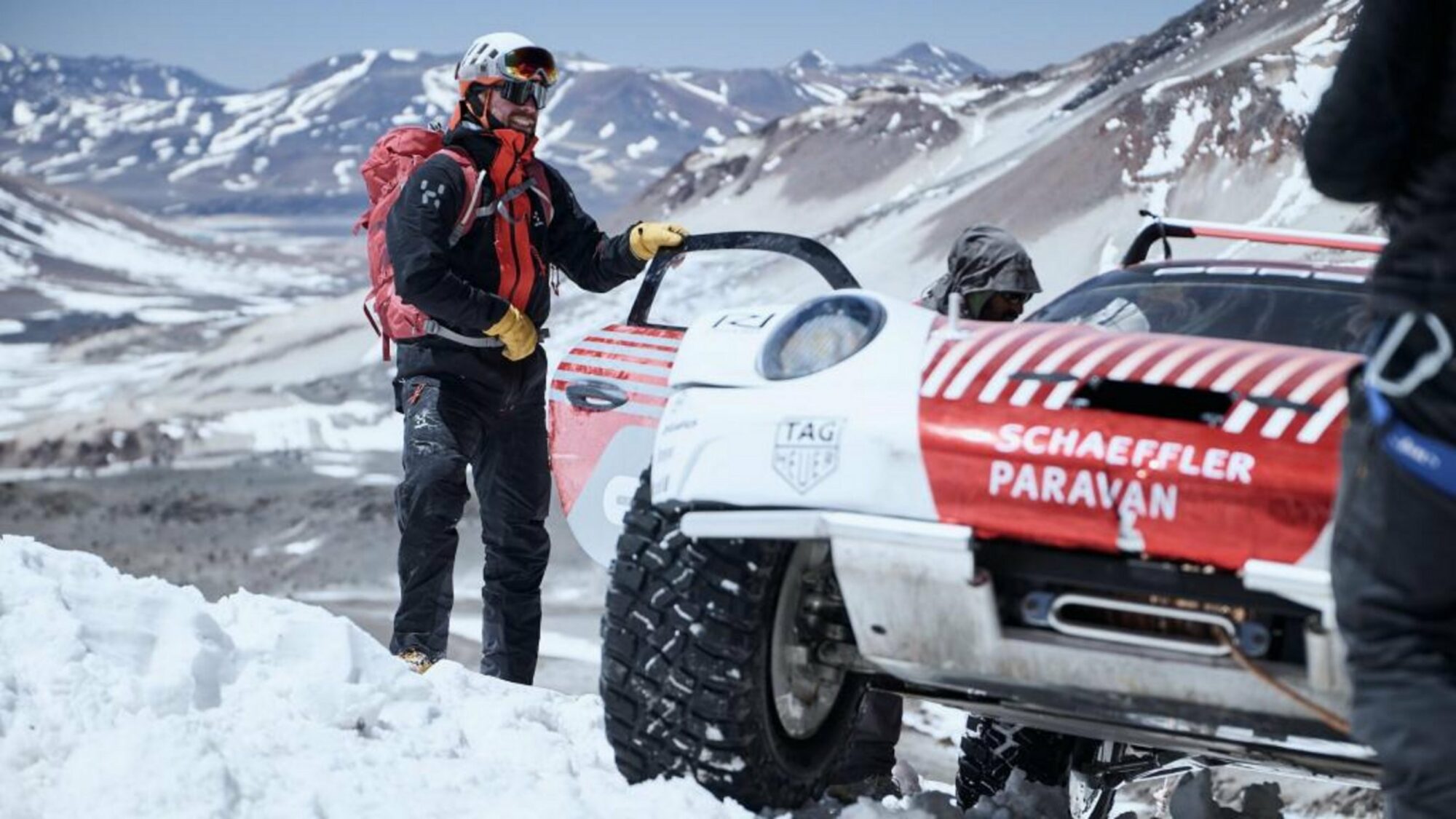
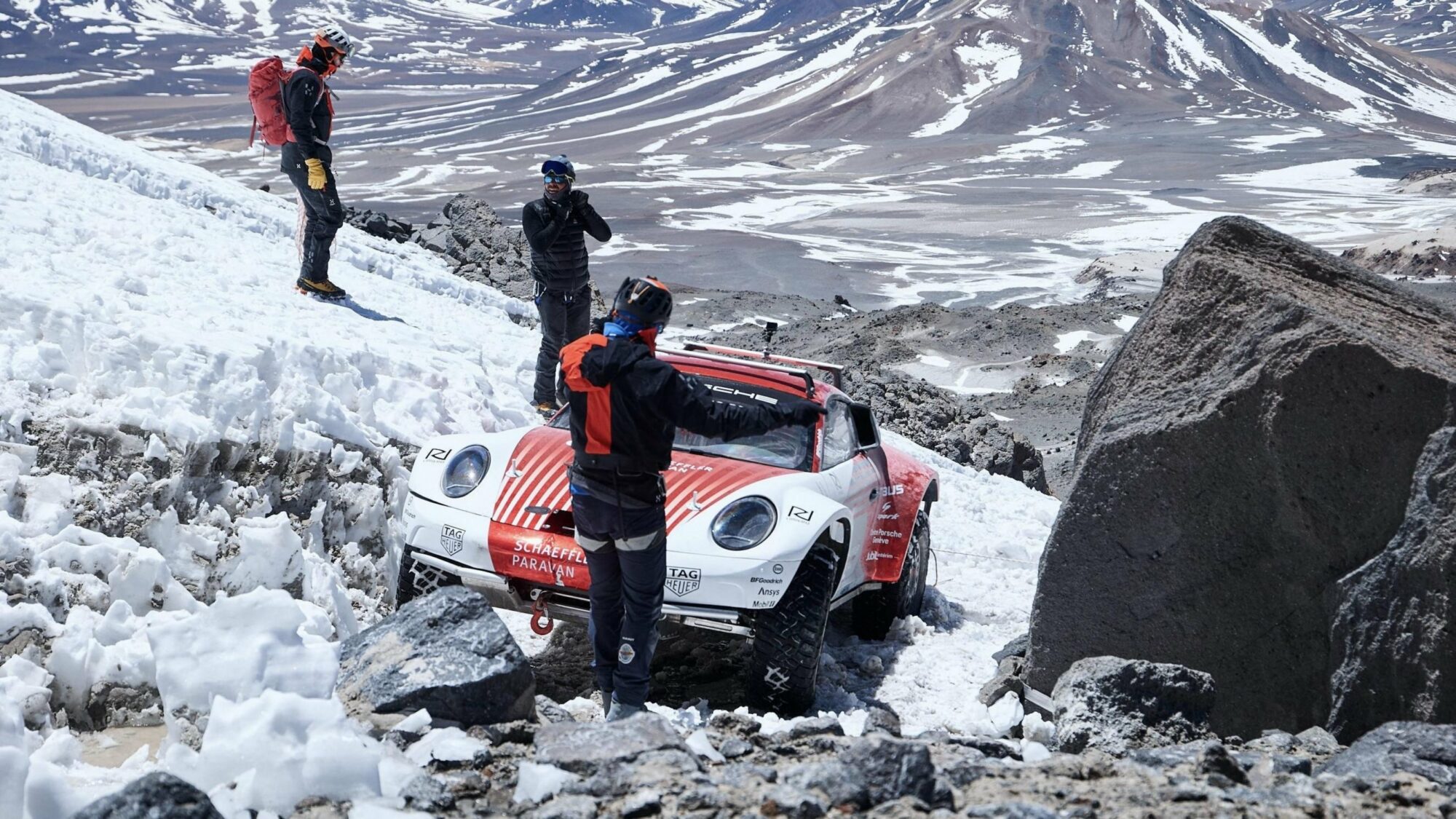
The risk of damage to the steering was also reduced. In addition, the system offered the advantage of being able to absorb a large proportion of the harder impacts that had proved tiring for the drivers during long and strenuous journeys at the wheel. Dumas prepared his team meticulously and recruited respected European mountaineers, Chilean mountain guides and two experienced alpine doctors. In addition, the expedition equipment was optimized to make the adverse conditions on the Ojos del Salado more bearable. Nevertheless, the weather still had the last word in 2022: although both vehicles were able to complete the ascent, the expedition had to be aborted for the second time just over 6,000 meters above sea level due to snow and ice.
Being so close to the record but having to return home without it was a bitter pill to swallow for everyone involved. But after the two aborted attempts, it was easier to return: "It was all about confidence," says Jens Kayser. "We had the data - we knew that we could do it and that the vehicle was capable of it." At the end of 2023, the team flew back and began the arduous process of acclimatization and ascent once again. At 3.30 a.m. on December 2, 2023, they set off again towards the summit. This time, the weather was on the kind side - a record attempt seemed possible.
Porsche sets the world record on the Ojos del Salado
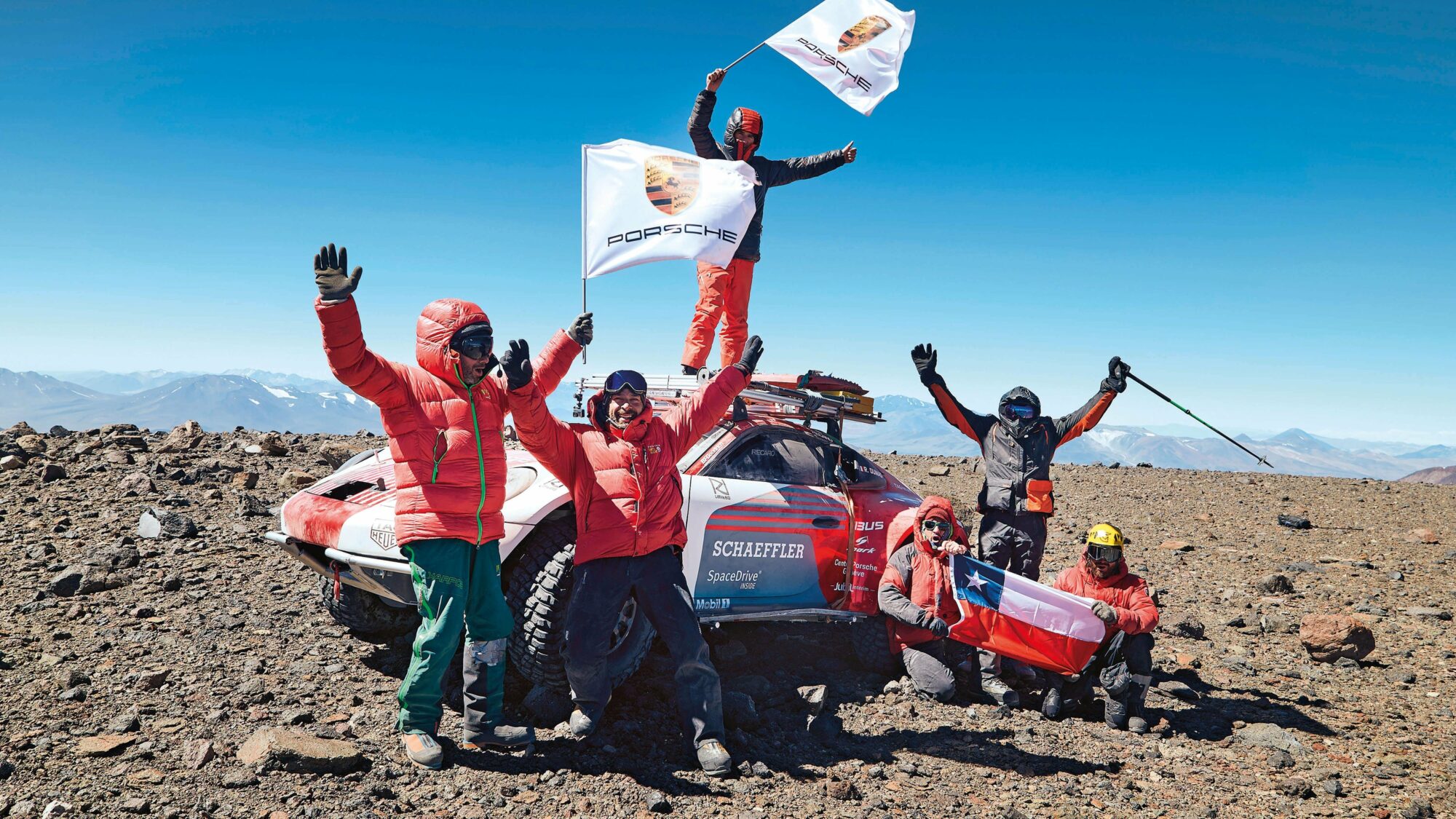
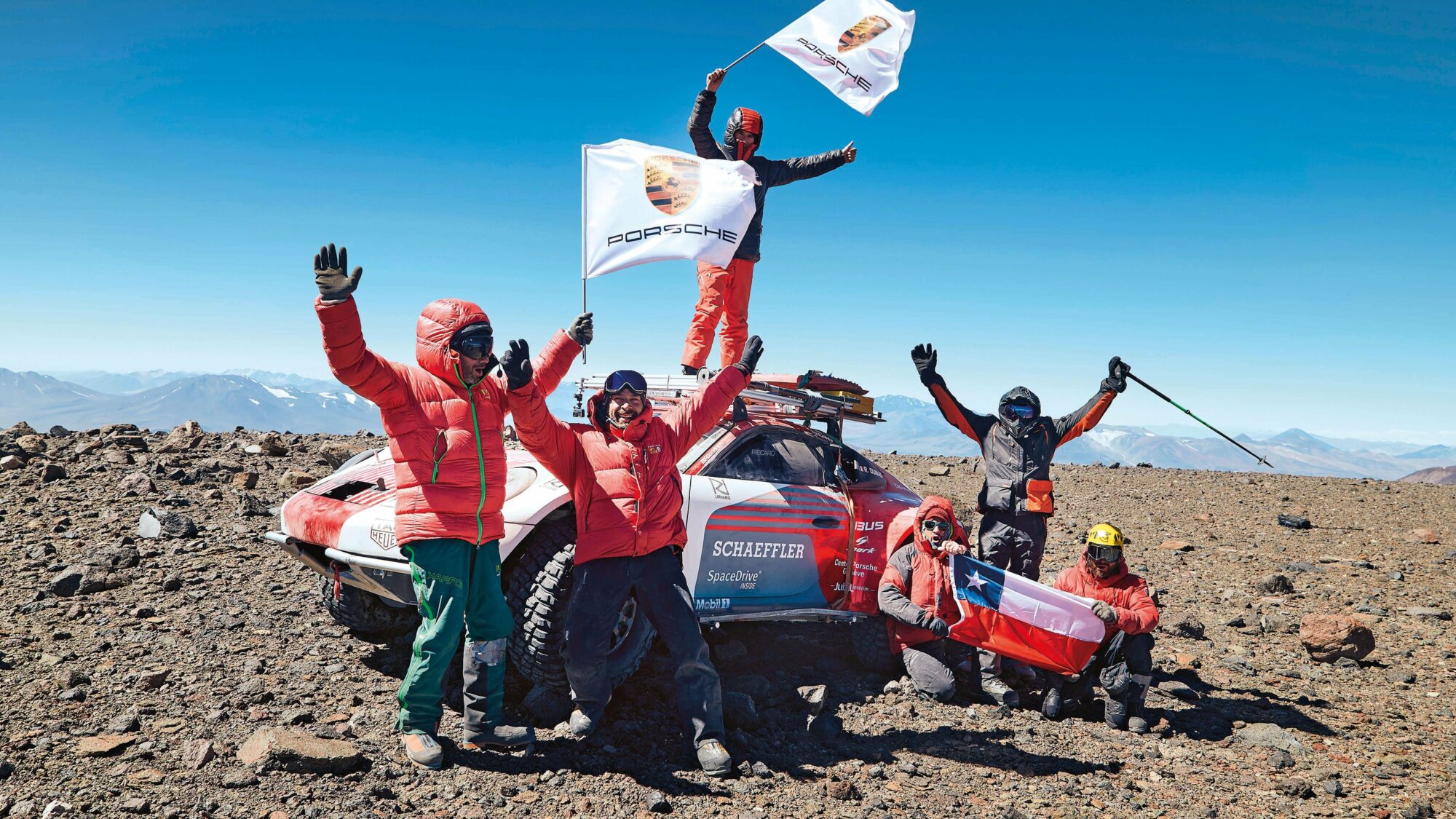
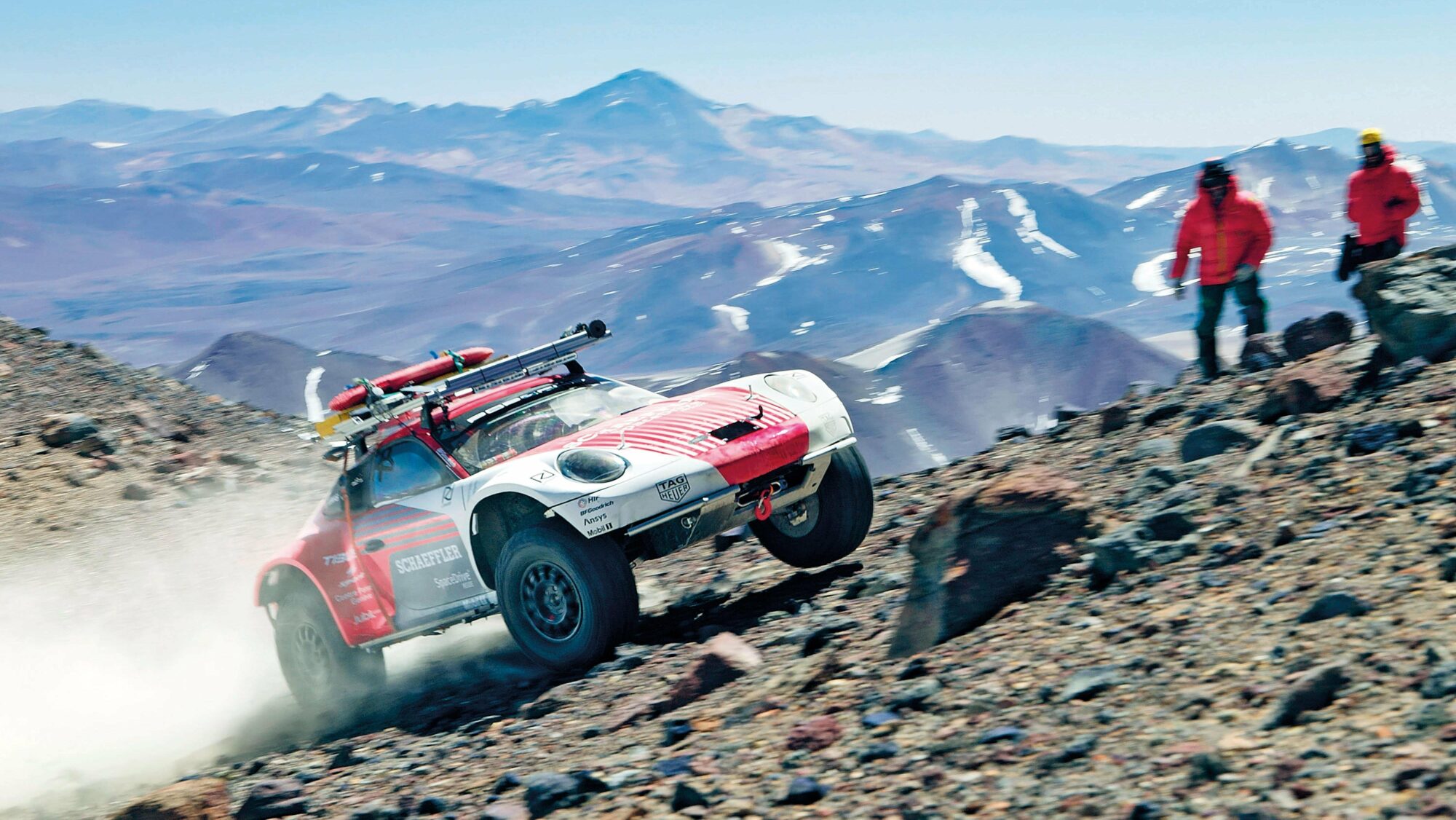
And then Dumas was faced with the decision: turn off - or abort? He made up his mind. And drove left along the narrow, frozen ridge. Relying on the lightness and maneuverability of the eFuel-powered 911, he was about to cross terrain that no other vehicle had ever tackled. He dodged boulders, some he drove over - and then he tackled the 45-degree cliff face with grim determination. Because he knew that turning back was not an option. With a final acceleration, amidst a spray of volcanic ash, the racer and Edith reached the crest of the western peak of the Ojos del Salado.
The GPS recorded 6,734 meters above sea level. Never before has a vehicle on this planet driven at higher altitudes. A world record!
Editor's note: the last altitude world record was 6,694 m above sea level with the Unimog and anyone who has ever stood on a mountain above the 5,000 m mark knows how damn thin the air is up there and what an incredible effort every meter of altitude requires.
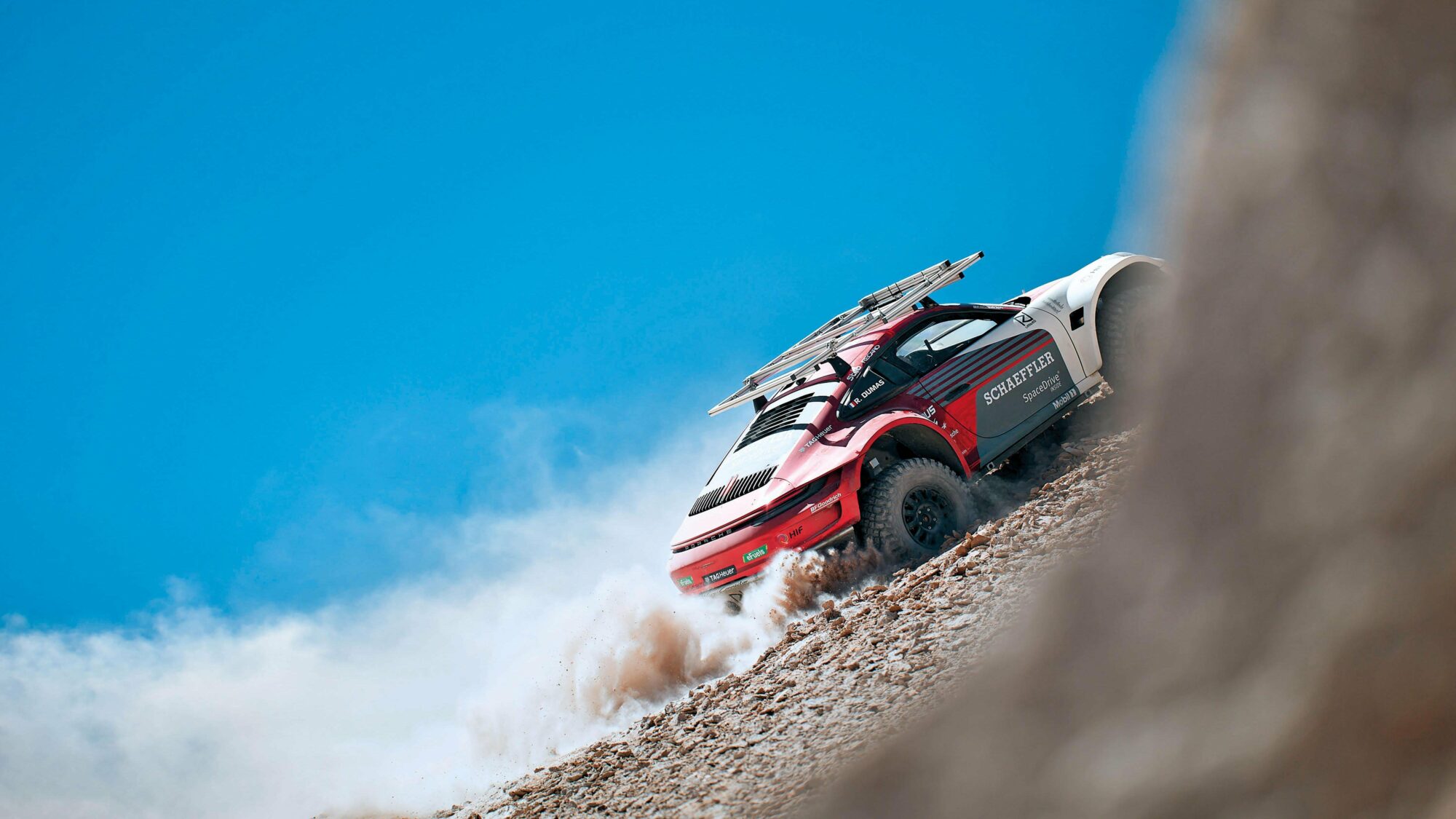
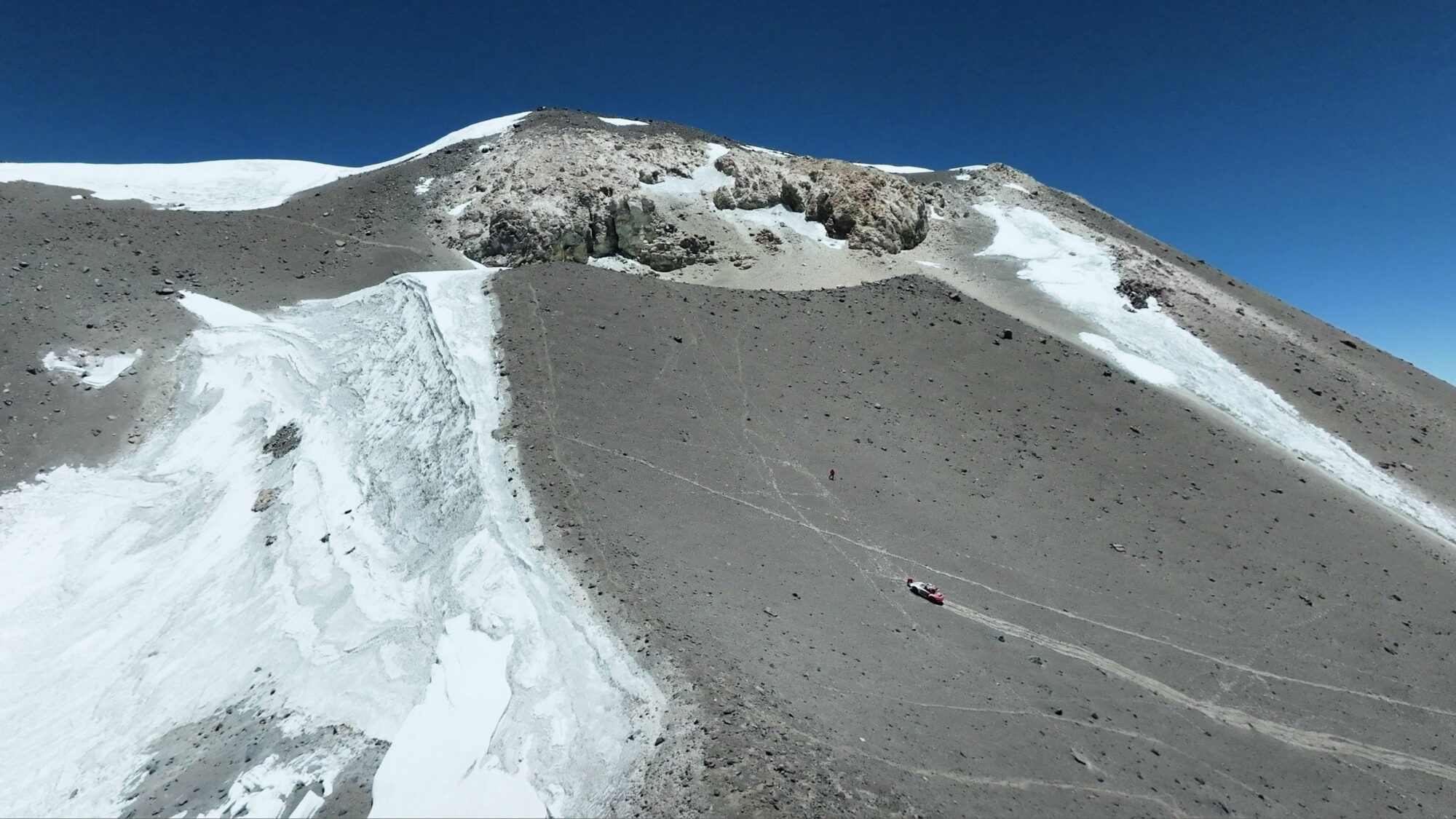
"Sure, at certain moments I was scared," admits Dumas. "There were moments when I wondered what the hell I was doing there. And after 6,400 meters, I knew that I would fall very far if something went wrong." Turning left before the summit was a decision without a return ticket. "But the chassis, the power and the agility of the 911 made the impossible possible." And of course the people. For four years, they believed in their dream, ventured up the volcano again and again, conquered hostile terrain - and never lost sight of their goal.
This text first appeared in Christophorus Magazine, issue 410. Author: Matt Master, Photos: Porsche, Jens Kayser, Copyright: Dr. Ing. h.c. F. Porsche AG