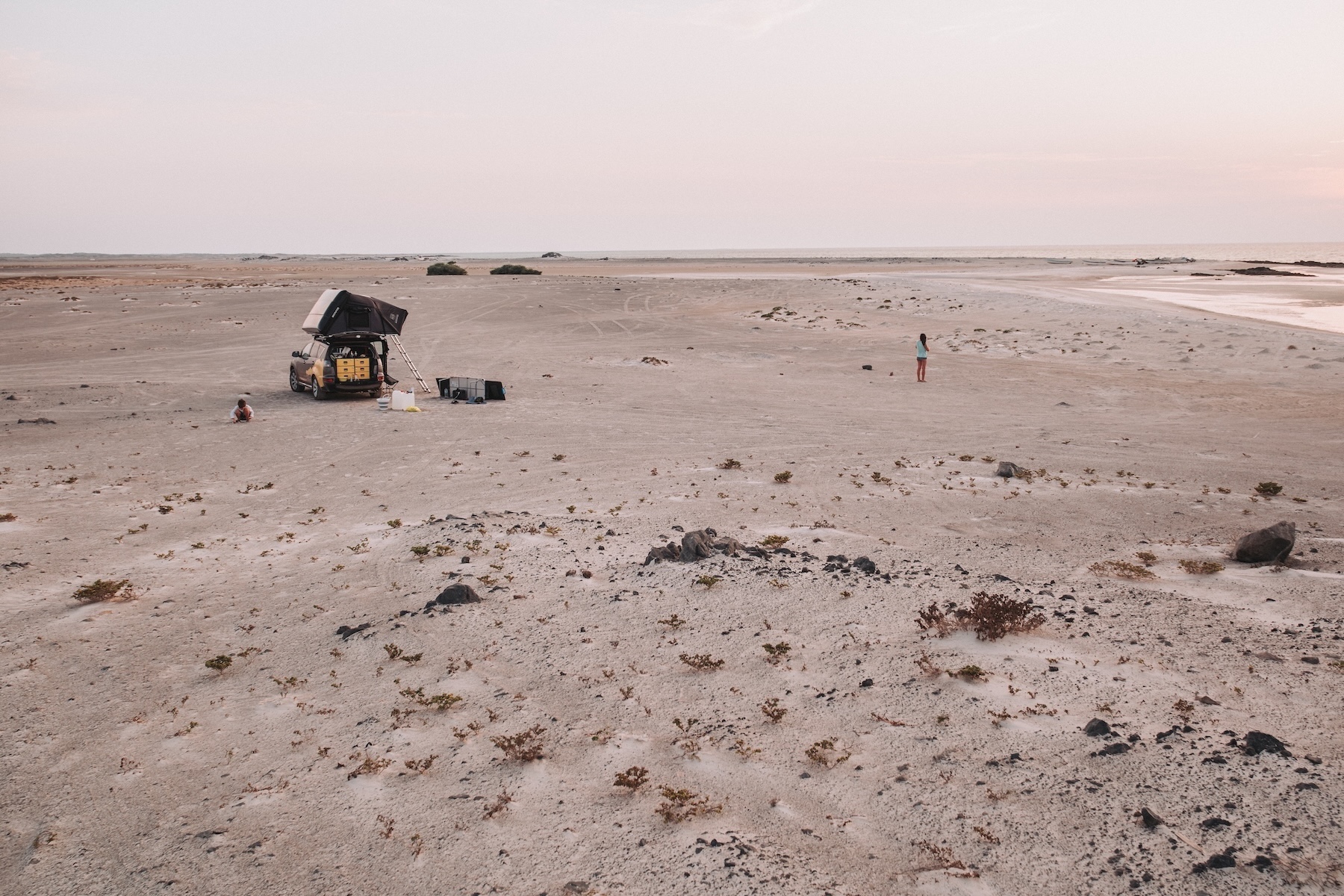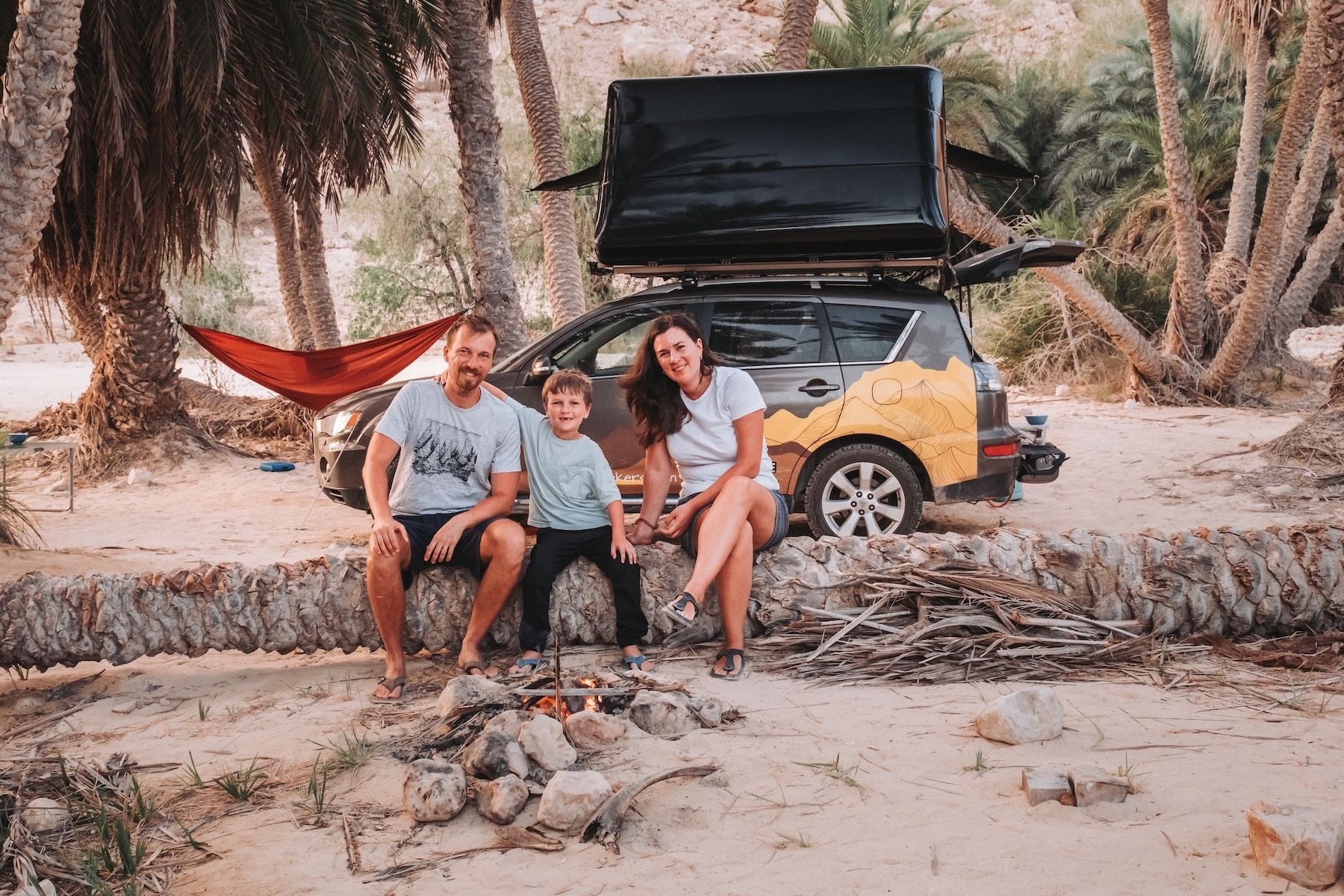
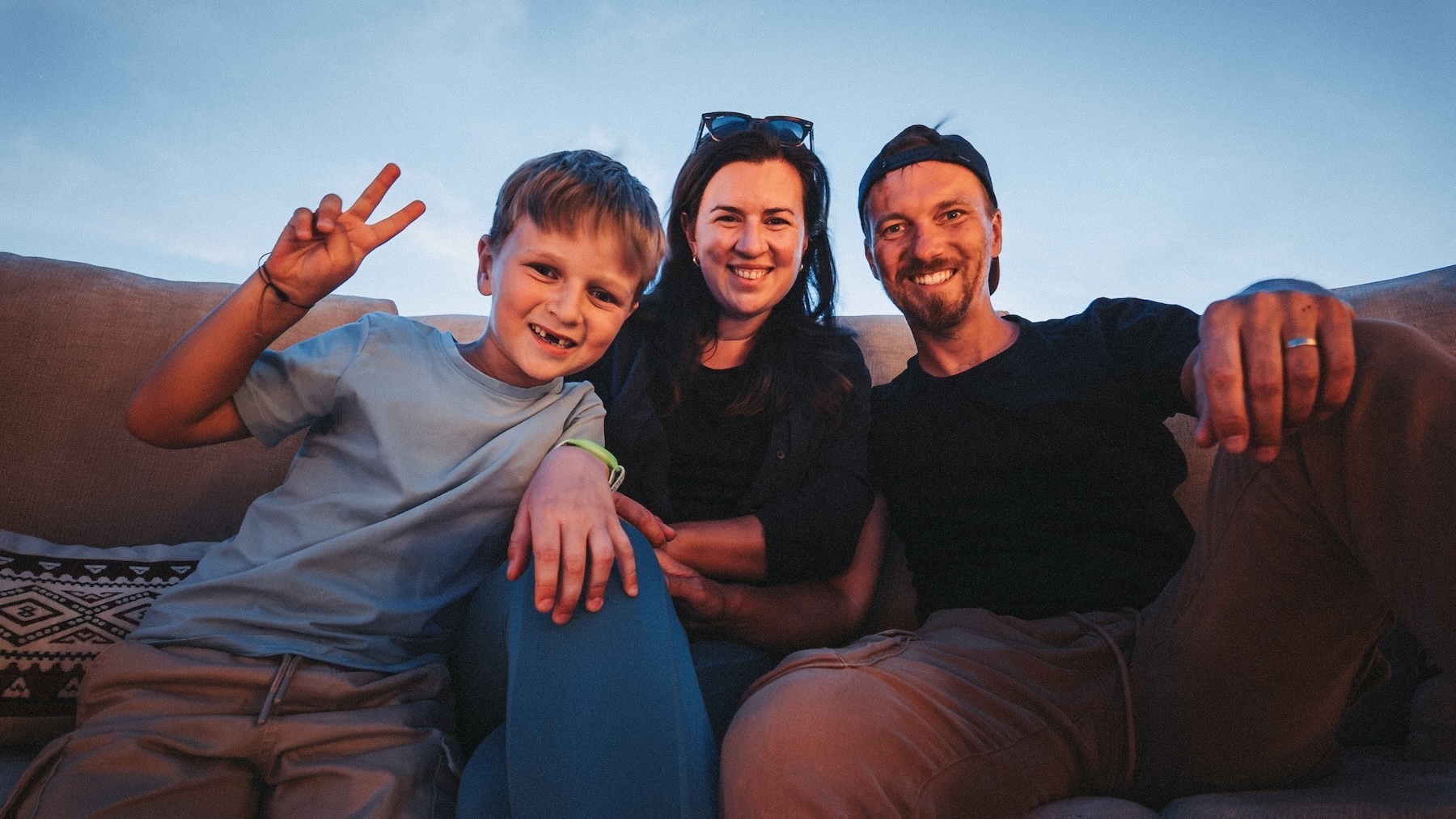
Peter, Jana, and their six-year-old son Jojo are the Sisu Seekers, an overlanding family from Slovakia. In a 2009 Mitsubishi Outlander equipped with a rooftop tent, they traveled a total of 38,000 kilometers through Turkey, Kurdistan, Georgia, Armenia, Iraq, Kuwait, Saudi Arabia, Oman, Jordan, and Syria. Their goal: to spend time together as a family before Jojo starts school—with a simple 4x4, a small budget, and the belief that travel becomes truly valuable precisely when it gets uncomfortable.
In the OLLI Stories, OLLI Friends share their tales of travel, off-road adventures, and life on the road—and show just how many different ways “One Life. Live It.” can look.
TELL US ...
Who are you, what’s the story behind “Sisu Seekers,” how and where have you traveled so far—and where are you today?
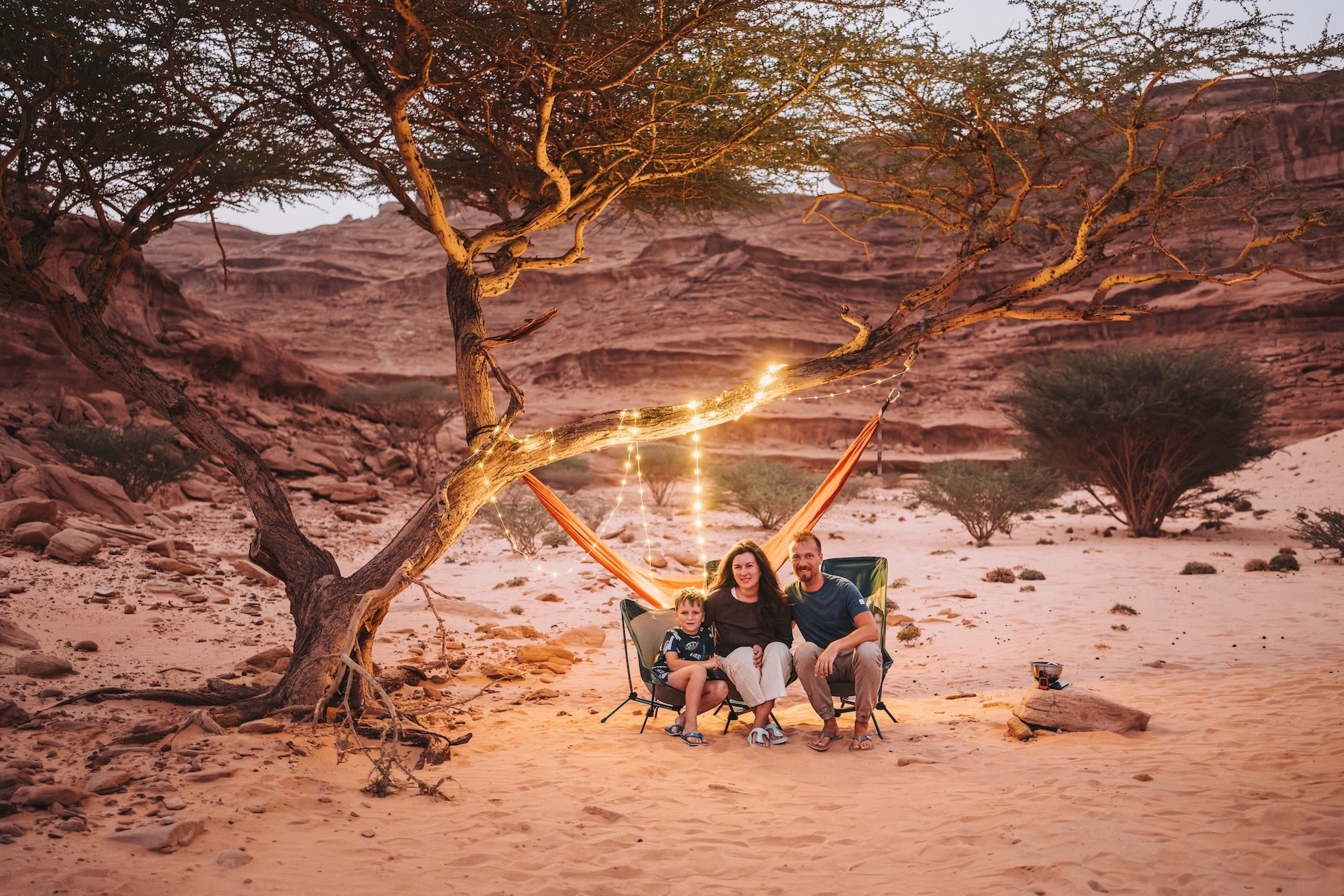
We’re Peter, Jana, and Jojo, a family of three from Slovakia. With nothing but a dream, our last savings, and our Mitsubishi Outlander, we decided to leave everything behind. We chose the open road over routine, challenges over comfort, and family above all else.
We knew the road would put us to the test. There would be difficulties, inconveniences, and days that would push us to our limits. But we also knew that the reward would be far greater: deeper bonds, an unbreakable connection, and a life full of memories forged through challenges we overcame together.
We believe that true adventures lie off the beaten path, in the heart of unexplored destinations and unique cultures.
"Our philosophy is inspired by the Finnish concept of ‘Sisu.’ It means extraordinary determination, courage, and resilience—the inner strength to keep going, to push beyond one’s limits, and to face challenges at every step of the journey. That’s where our name—Sisu Seekers—comes from, because we deliberately seek out situations that push the boundaries of what “sisu” means.”
We bring this mindset with us on our travels and hope to inspire families to discover the world with the same spirit of adventure and outlook on life.
What sets us apart is our ability to push the boundaries of family travel while ensuring safety and practicality, even when traveling with a child. We traveled through the Caucasus and the Middle East until we wrapped up our expedition in the summer of 2026, shortly before our little one started school.
Right now, we’re in Slovakia. Jana is back at work, and I’m putting together a presentation for travel festivals. At the same time, I’m working on our content for Instagram and YouTube and reaching out to brands about potential collaborations so that we can hopefully hit the road again soon. Basically, we’re looking for ways to sustain this lifestyle in the long term.
"We believe that traveling shouldn’t be easy, because you can’t learn much from a trip that goes off without a hitch."
WHERE IT ALL BEGAN
When did you realize that this was what you really wanted to do—and why were you willing to leave your jobs and your normal daily lives behind to do it?
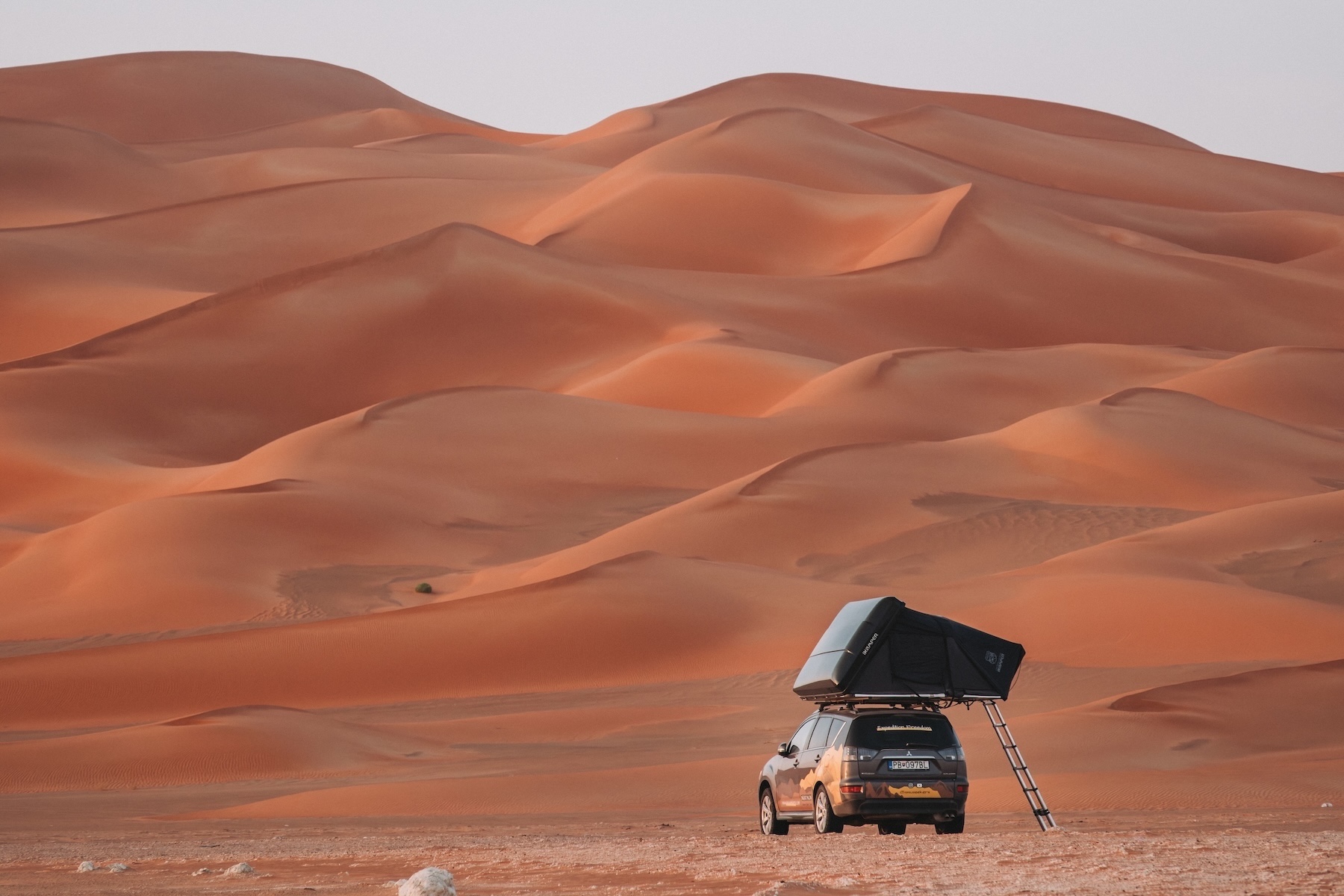
We remember it very clearly. It was December 2024 when we both took a month off and flew to Oman with our four-year-old son, Jojo. We rented a cheap Chinese car that looked like a Land Cruiser on the outside, but in reality, it was a joke on wheels. The first time we got stuck in the sand, a local pulled us out—and in the process, our car’s tow hook just snapped off. But that didn’t matter. That’s exactly the kind of stress that makes you feel alive, instead of that artificial stress at home when you have to finish projects by a deadline, fill out tax forms, or deal with a broken company website.
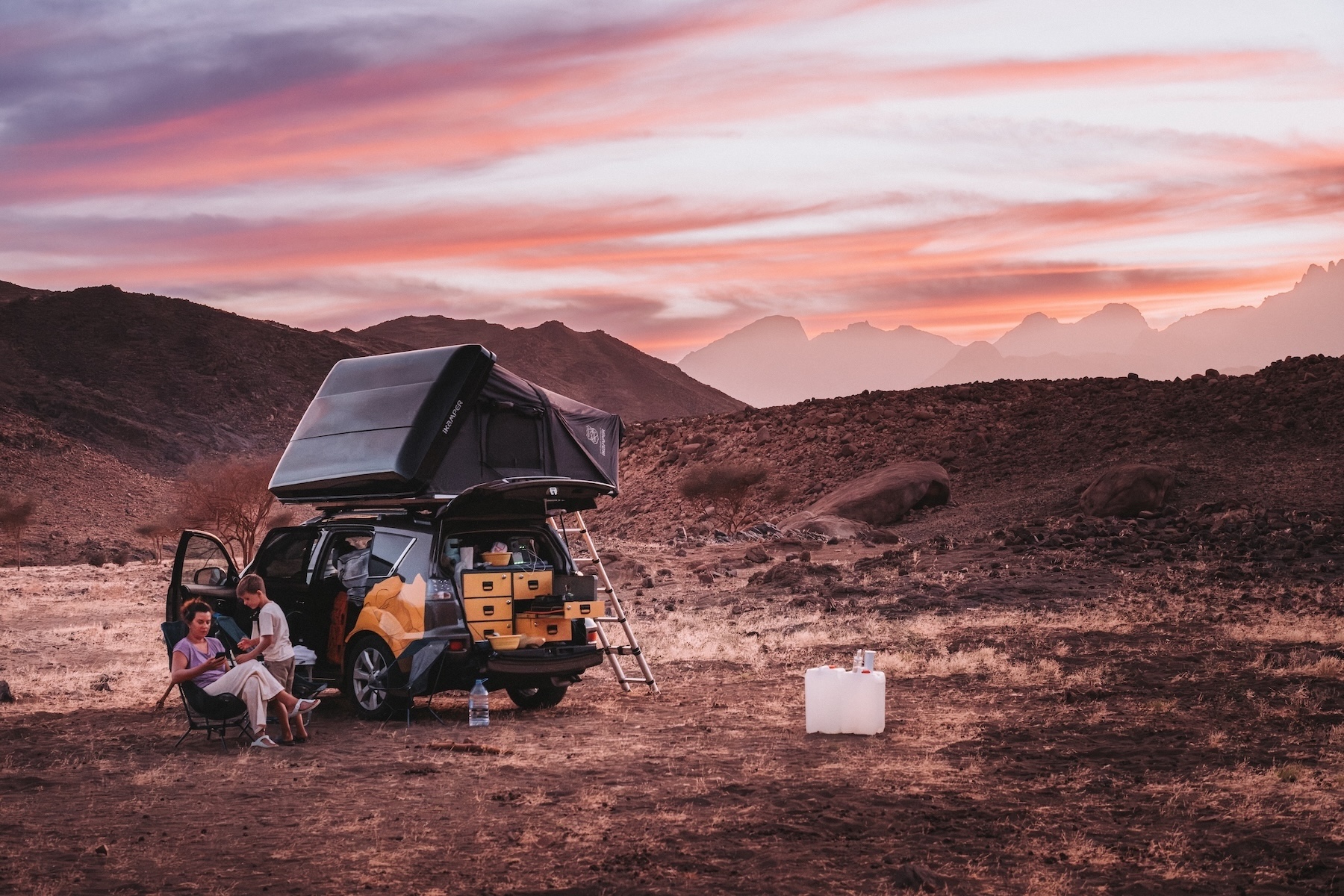
It was the first time we’d traveled as a family the way we’d always imagined. Just being out there, in nature, far away from everything and everyone. Wild camping and waking up in remote places was priceless. It brought us closer together in a way that would hardly have been possible if we’d stuck to our normal daily routine at home. And it was more than just a bond. It was more like we’d found our way back to each other through the adventure.
The month flew by, and we knew that this was it. For our families, this wasn’t a surprise—it was more like a natural next step. They all know that we love traveling to “misunderstood” countries and that we feel most at home when things get uncomfortable and we’re challenged both physically and mentally. We believe that travel shouldn’t be easy, because you can’t learn much from a smooth trip. But when everything goes wrong, that’s when the adventure begins—and that’s exactly where we feel at home.
Before we had Jojo, we’d traveled to about 80 countries and experienced some of the most challenging travel conditions in the world. From the challenges of politically unstable regions like Sudan, Syria, Iraq, Iran, and Mauritania, to crossing the Sahara, to numerous trips to the Middle East, we felt we might have just the right amount of experience to pull something like this off—even with a child.
It took months to get everything sorted out, and in May 2025 we were finally able to set off. On the day of our departure, we could hardly believe we were actually doing it. We had both quit our jobs and were determined to make the most of this last year before Jojo starts school. In fact, we bought ourselves time to be together and do what we love. And people say you can’t buy time? We actually bought time, and that investment will only become more valuable in the future.
"Getting stuck is a perfect icebreaker when you want to immerse yourself in the local culture."
YOUR VEHICLE
What kind of vehicle did you set out in, why that one in particular—and what all did you experience on the road with your Outlander?
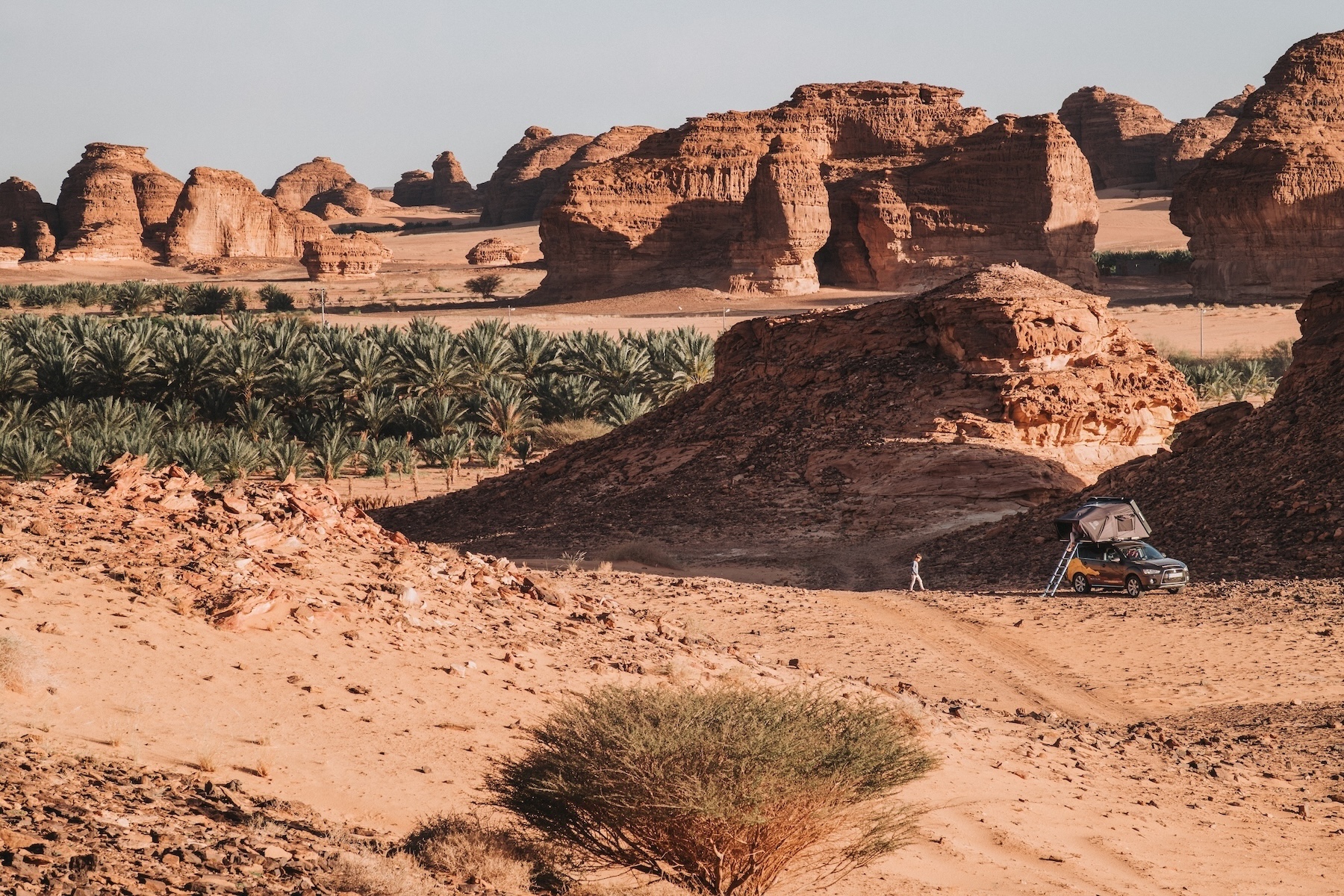
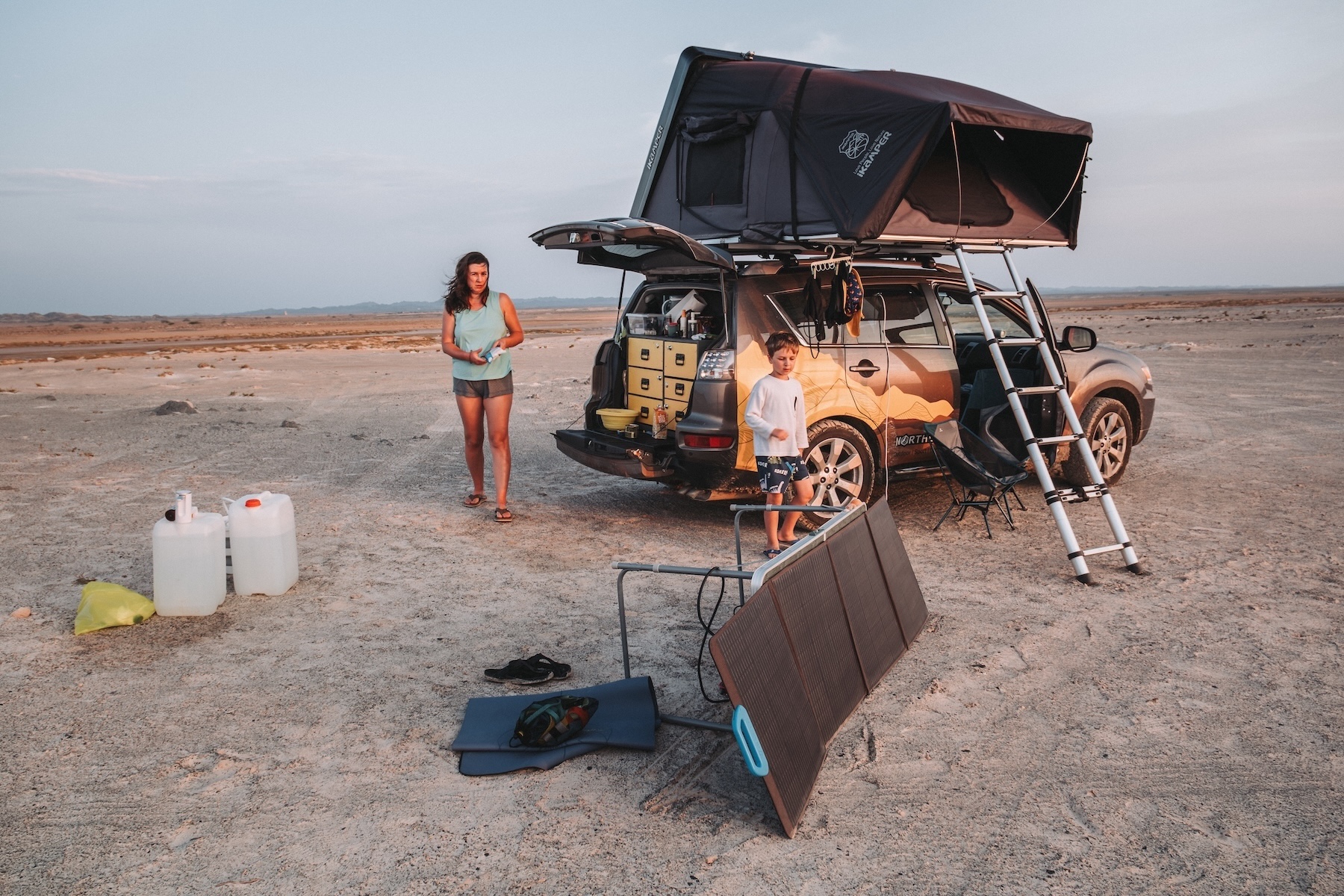
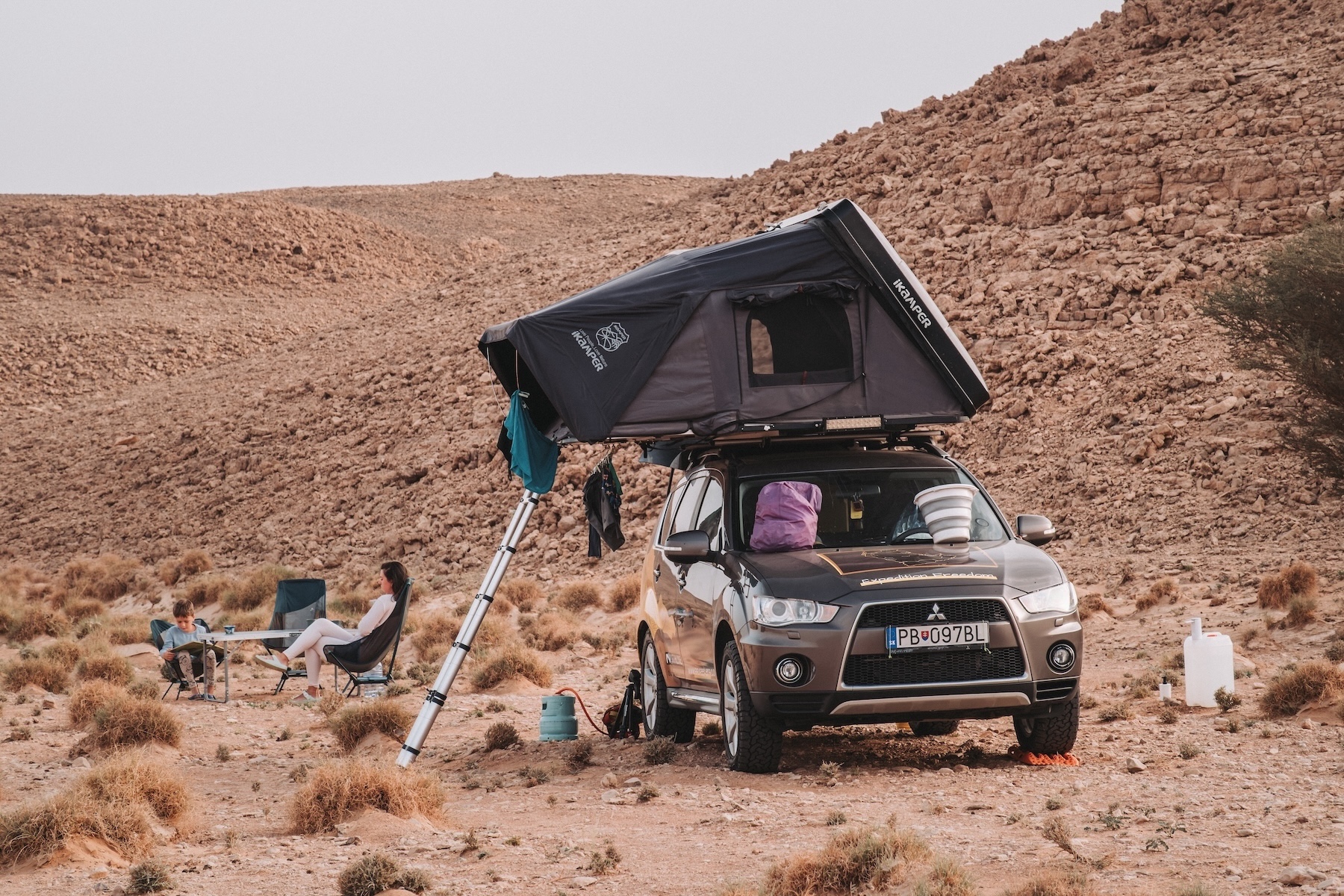
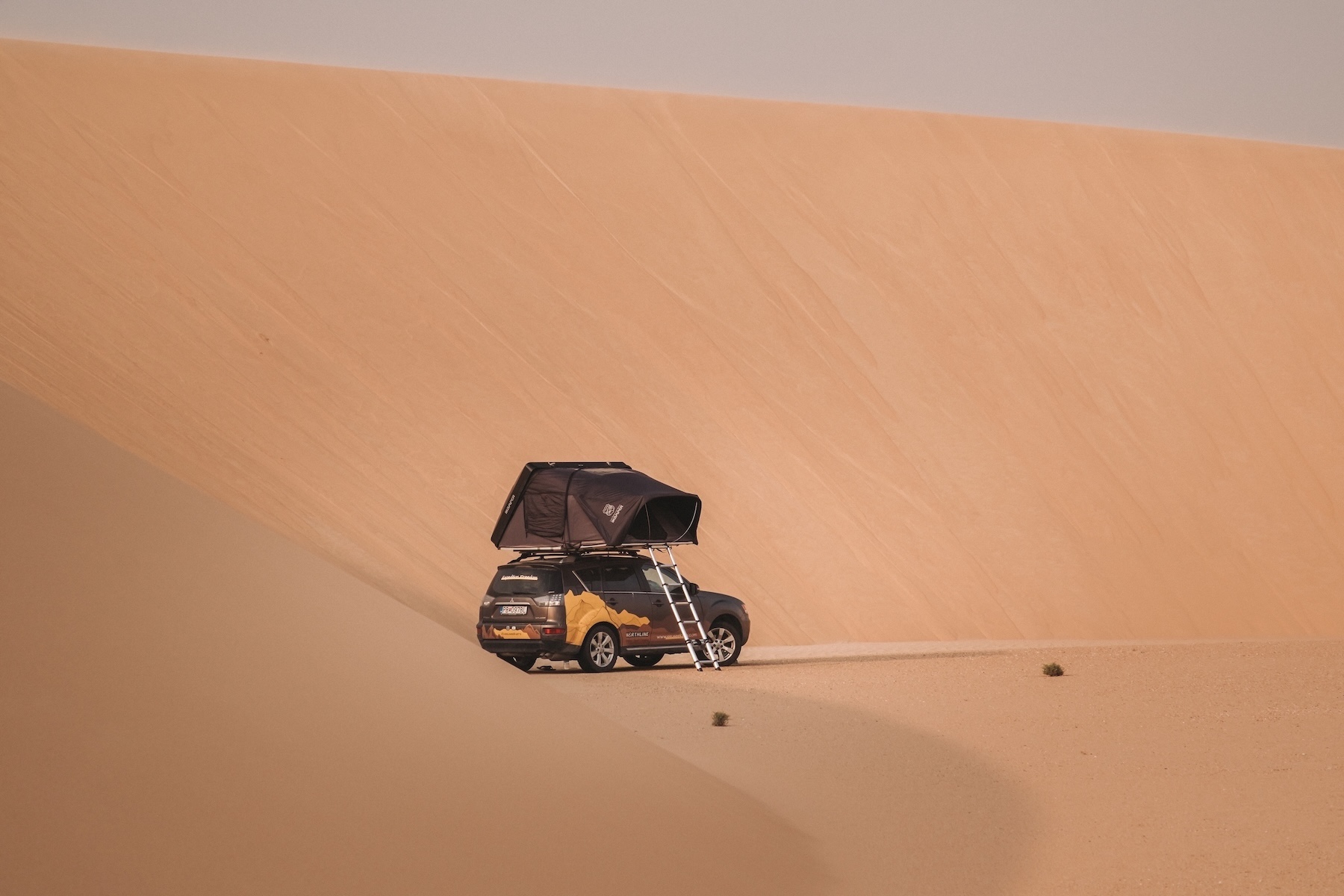
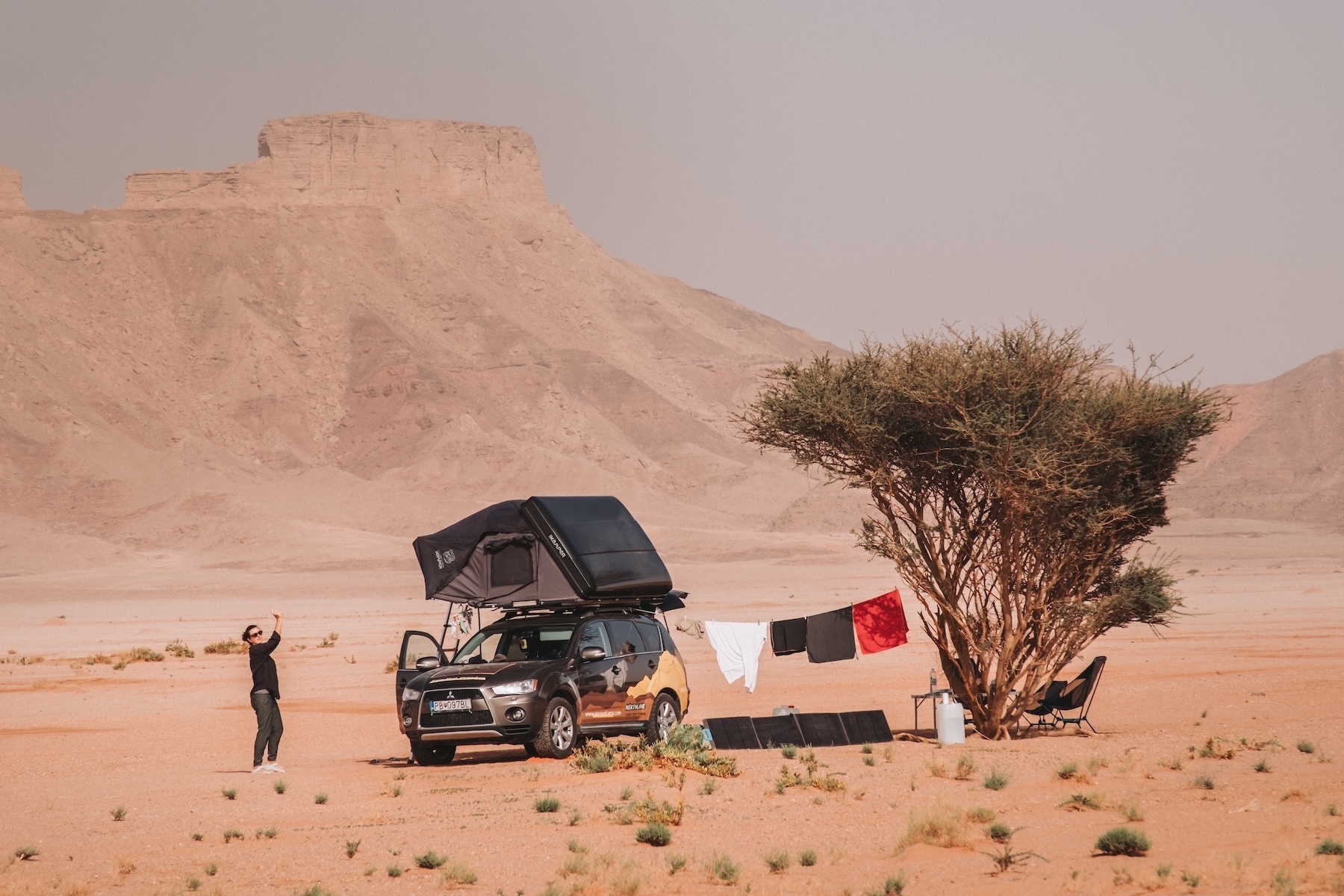
We set off in a perfectly ordinary 2009 Mitsubishi Outlander with an iKamper rooftop tent. The only modifications were a built-in drawer system in the back of the car and a set of cheap Chinese all-terrain tires, because we couldn’t afford BFGoodrich tires. I think by now you can tell that we were practically asking for trouble. On the first day, the electrical system failed; on the second day, we had a flat tire; on the third day, the engine started losing power, and so on. We learned along the way to deal with unpredictable situations, and that became part of our new daily routine. Every day was a mystery, and we enjoyed living in the moment.
If you’re traveling somewhere remote in the Caucasus and think: “Thank God we have a 4x4; otherwise, we’d never have made it here,” you can be 100 percent sure that some crazy local will show up in an old sedan with virtually no ground clearance, as if it were no big deal at all. If, on the other hand, you’re traveling in the Middle East, people will take pictures of your car because they’ve never seen such a small SUV before. Over time, we learned what we could and couldn’t do, but we try anyway, because getting stuck is a perfect icebreaker when you want to immerse yourself in the local culture.
Once in Iraq, my tank was filled with gasoline instead of diesel. The labels for diesel and gasoline are confusing in Iraq, and the gas station attendant said he was filling it with diesel, but in the end, I drove about 100 meters on gasoline until the engine stalled. Who would have thought that this would be the day I’d be taken into custody, have my car and passport confiscated, and find myself waiting for a trial in Iraq? Long story short: The mechanics were paid behind my back, and the gas station manager demanded some crazy amount of money from me—though only after the mechanics were long gone. I refused to pay, the police were called—and that’s how things unfolded. So yes, that day I got a pretty intense glimpse into the culture.
Once we were back home, we all agreed that this car would never leave Slovakia again. But you know how it goes. We’re already planning our next trip and don’t have the money for a Toyota Hilux, so… :)
"We actually bought ourselves some time—to be together and do what we love."
ON THE ROAD
You had a long way to go and little time—and then war broke out in the Middle East, too. How did that change your trip, and to what extent did it push you to your limits as a family?
In 90 percent of cases, we only camped in one place for one night. Not because we didn’t want to stay longer, but because we still had so much ground to cover and so little time to do it. Between our trips to the Caucasus and the Middle East, we came home for four months because Jojo was in preschool and it was mandatory for him to attend kindergarten in person for at least part of that year.
So, in effect, we had five months for our trip through Turkey, Kurdistan, Georgia, and Armenia, and only three months for our trip through Iraq, Kuwait, Saudi Arabia, Oman, Jordan, and Syria. This route was longer than the first one, and we had less time for it. That’s why we had to think very carefully about how many nights we could spend in each place.
The other factor was the war in the Middle East. The situation was that I set out by car toward Iraq, where Jana and Jojo were supposed to fly to Baghdad and join me. In the meantime, war broke out in the Middle East. Iraq closed its airspace, one flight after another was canceled, and after two weeks of chaos, our family was finally reunited in Oman.
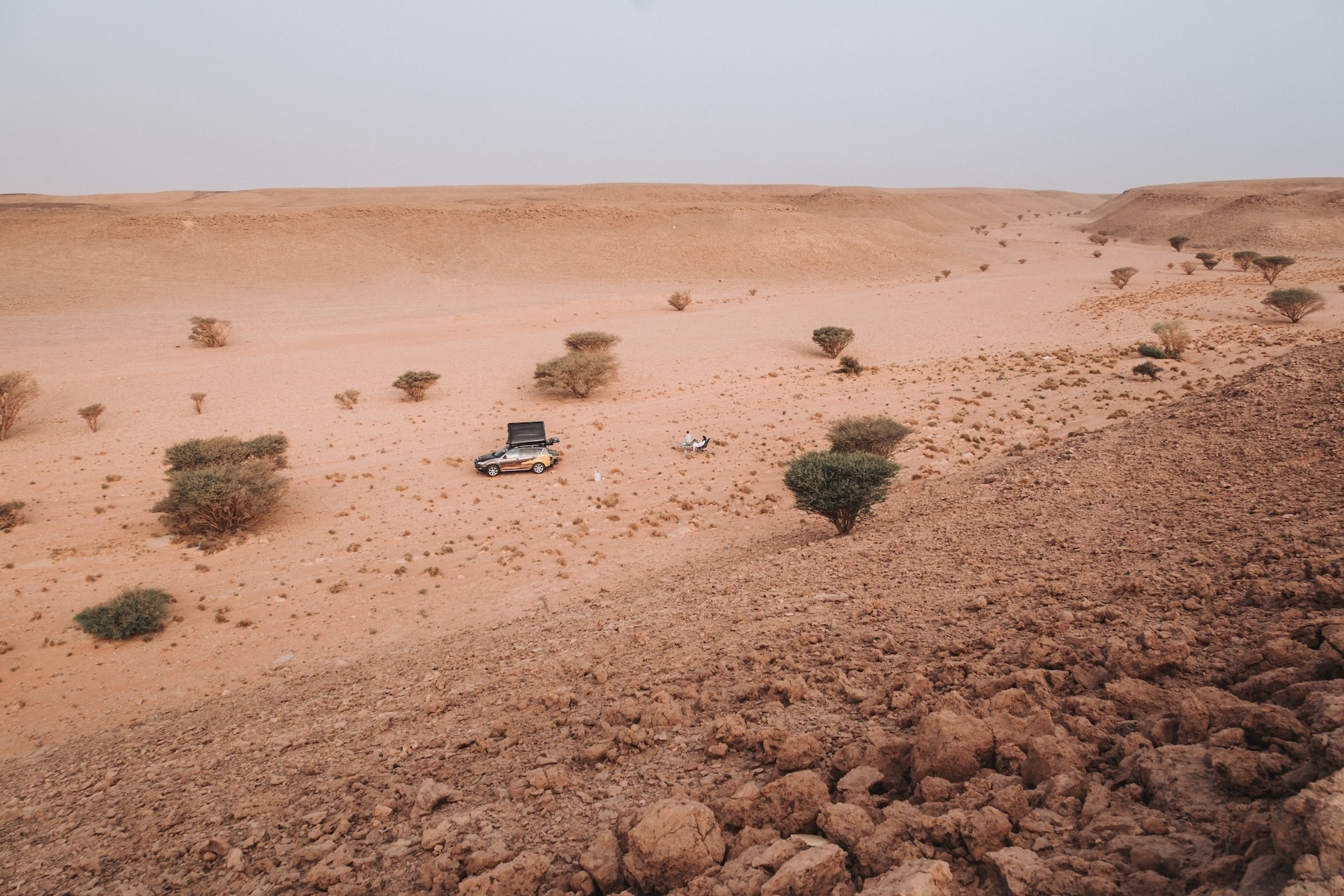
In the photos from our trip, you might see wild beaches and oases—pure paradise. In reality, we were alone in the middle of nowhere, following the news from morning till night, and living every day with stress and uncertainty. Often we had no cell service and had to rely on satellite messages from home. Some countries began closing their land borders. Suddenly, going home was no longer an option.
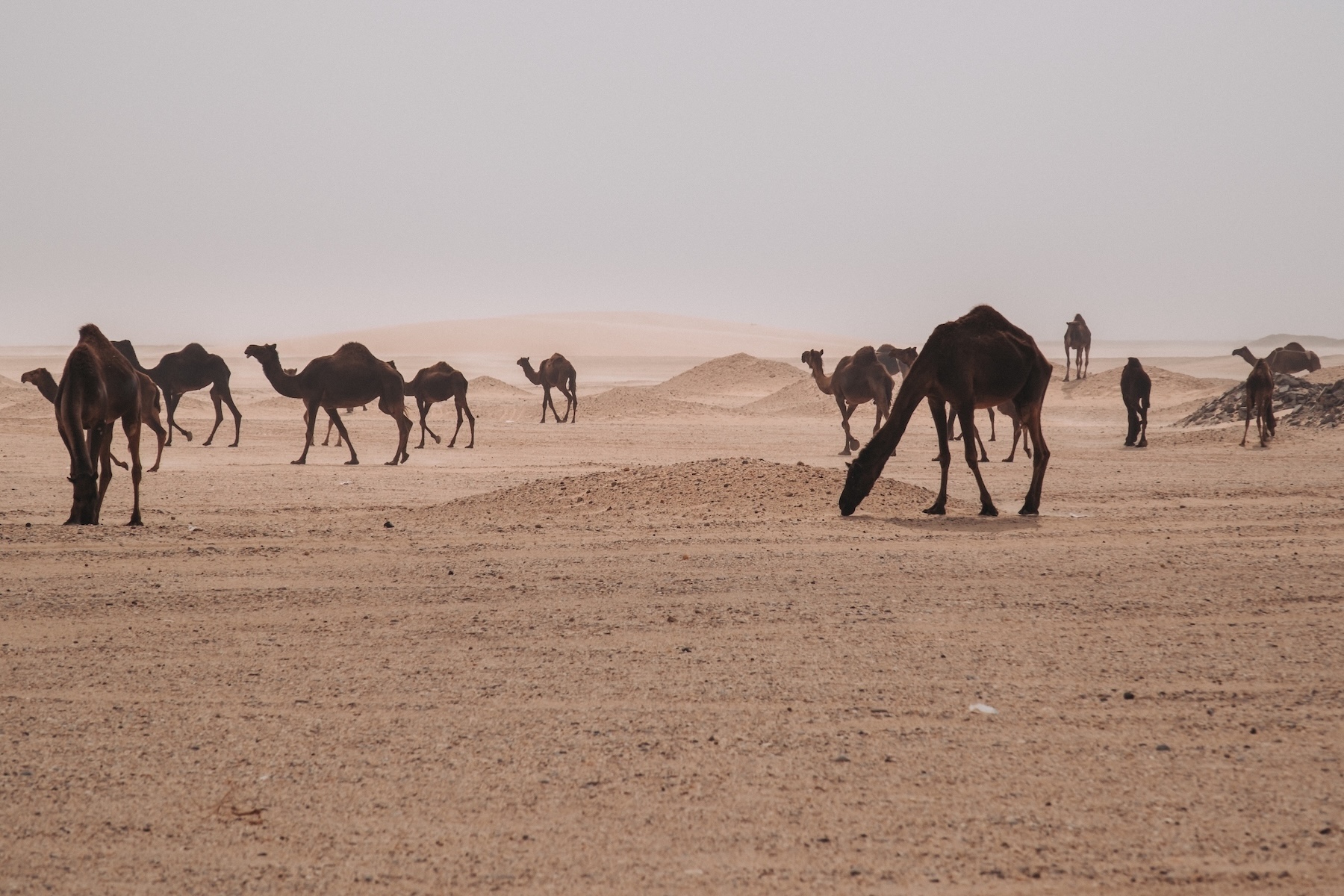
We crossed the world’s largest sand desert. All night long, we were repeatedly woken up by our cell phones. Emergency alerts came in about drones and missiles directly overhead. We drove on to the border with Yemen, to the remote Farasan Islands, and to tourist destinations where there were no tourists. Imagine Al-Ula or Petra without a single tourist. And in the end, we were stranded in Syria at a closed border. So yes, our days were pretty much filled with living on the edge.
“When everything goes wrong, that’s when the adventure begins—and that’s exactly where we feel at home.”
LET'S BE HONEST
What story do people back home still find hard to believe—even though it happened exactly as told?
People don’t understand how we managed to do it with a six-year-old in the back seat, in such a short time, and while we were wild camping in a different spot every night.
Tell us about a breakdown or mishap that you can laugh about today.
We didn’t have any diesel engine oil or filters with us. We didn’t realize it would be so hard to find replacement parts for a diesel vehicle.
What was the most expensive lesson your trip taught you? Not just financially.
It’s a cliché, but the best things in life are free.
What would you do completely differently today—and why?
Probably not much. The road has taught us that things will work themselves out and that what’s meant to be will be.
“When we got back home, we all agreed that this car would never leave Slovakia again. But you know how it goes. We’re already planning our next trip and don’t have the money for a Toyota Hilux, so … :)”
PEOPLE
The people you meet play a big role in your travels. Which encounter has stayed with you the most—and why did it touch you so deeply?
There are many people we still think about. Every expedition is all about the people you meet. They’re a huge part of every trip, and that’s usually where the best memories come from.
When my wife and I sit together over a glass of wine and look back on all our adventures, we usually end up talking about one particular person. It was in Saudi Arabia, in the city of Najran on the border with Yemen. We had just fled the Eastern Province, where we’d been under aerial threat for several days. After sleepless nights, we were extremely tired, stressed, frightened, and hungry—but at the same time so happy to be alive, unlike the innocent victims of the war who didn’t have that luck. That day, a ceasefire was announced, and we decided to celebrate by having a meal at the best restaurant in town. It was so expensive that we ordered the cheapest dish on the menu. We just wanted to enjoy that brief moment of being in a safe and beautiful place, eating delicious food, and not having to worry about the world outside for just a minute. Just our little bubble of peace and tranquility.
Just as we were about to leave, we were stopped by a man who was looking for the people who had parked that strange car from Europe in front of the restaurant. He was shocked when he found out that we were a family with a six-year-old child. He introduced himself as the owner of the restaurant—which is actually part of a restaurant chain in Saudi Arabia—and told us about his lifelong dream of traveling with his family just like we were. His children are now grown up and live in different countries, and all he has left are 0.5 GB of family photos on a laptop. No adventures, no bold decisions, no spontaneous “Come on, let’s just do this” moments outside the comfort zone—the very things that bring a family together because they have to solve problems together and keep going when things get tough. This man stood there looking at us as if we were some kind of sacred beings from another planet. He saw his own life reflected in us, and it brought him so much joy just to be there with us. In the end, he instructed the kitchen to pack us ten (!) different dishes for the rest of our journey and made sure our refrigerator was filled to the brim.
This encounter touched us deeply, because usually in this part of the world you meet incredibly hospitable people who live in the most remote areas and literally own almost nothing, yet outdo all expectations of hospitality and treat you like a god. We always try to explain that we’re completely self-sufficient and instead offer our own resources to people who need them, but we often find ourselves in situations where the culture of giving is so strong that “no” simply isn’t accepted. But this time, the roles were reversed, because we met someone who didn’t need money but had realized that money can’t buy back lost time.
We really identified with that, because we were on this trip to buy ourselves time with our child before he starts school. And we’re doing this for exactly that reason: We don’t want to end up one day with just 0.5 GB of family photos and nothing else.
This encounter was very intense for us because of the timing and the situation. But it also came at a moment when we were feeling very lost and questioning everything. It was incredible to hear from someone else that what we’re doing actually makes sense and is worthwhile.
“Of course we were scared! But that was part of the reason we did it—to feel alive.”
THE QUESTION EVERYONE IS ASKING
How did you finance eight months and 38,000 kilometers as a family—and what did this adventure actually cost you?
Before the trip, Jana worked full-time at a manufacturing company, holding various positions there, while I worked part-time for the same company. In my second job, I worked as a delivery driver. We used everything we could save to fund our trips to the Caucasus and the Middle East.
Five months and 15,000 kilometers through Turkey, Kurdistan, Georgia, and Armenia cost us 8,000 euros.
Three months and 23,000 kilometers through Iraq, Kuwait, Saudi Arabia, Oman, Jordan, and Syria cost us almost the same—the total bill came to around 8,500 euros.
The total costs include everything for a family of three. When we returned home, we were 1,000 euros in debt. :)
TRAVELING TOGETHER
What does it mean for you to travel together as a family so intensively—especially when things get tough, you disagree, and decisions suddenly have real consequences?
The best part of traveling as a family is experiencing both the difficulties and the everyday joys together. Life’s small triumphs, like a warm meal or the moment when you finally stop shivering after a cold shower in a strong wind. Being there for one another and truly present. Not just for 30 minutes, after which each of us goes back to our own room. It’s all about the here and now. It’s anything but easy, but it gives you so much in return.
On the other hand, we argued a lot about whether Jana and Jojo should come to join me in the Middle East despite the war and the rapidly deteriorating security situation in the region.
After we were reunited in Oman and were able to assess the situation on the ground, we talked a lot about how we should get home, since it was becoming increasingly difficult to find an open corridor leading overland to Turkey and thus to Europe.
When traveling as a family, every decision we made was a well-considered one, but even well-considered decisions sometimes involve risks. That’s why we always had to make sure we were on the same page when making our decisions. Reaching an agreement sometimes meant a lot of discussion, because we didn’t take the security situation lightly.
In Syria, we spent an entire month organizing a crossing into Turkey via the officially closed border. We asked our embassy in Turkey to send a diplomatic note to the Turkish Ministry of Foreign Affairs. There were daily diplomatic inquiries requesting permission to cross. We drove straight to the border and received confirmation from the Syrian side that they would let us through, but the Turkish side rejected our request and left us stranded. It’s one of those strange borders where, as an EU citizen from any country, you can enter visa-free—except from Syria. Our visas were slowly expiring, and at the same time, there were rumors that Iraq might also close its borders to foreigners, so we decided to split up. Jana and Jojo flew from Aleppo to Turkey, and I drove through the desert into Iraq and through former ISIS territory, where, according to our information, no foreign tourist had made such a crossing in 15 years. It worked.
HAND ON HEART
What’s one question you’re really sick of hearing?
“Weren’t you scared?” Of course we were scared! But that was part of the reason we did it—to feel alive.
What do most people think about your life on the road, even though it’s just not true?
That we’re rich. 😀
What does social media romanticize about traveling, even though the reality is completely different?
It makes it seem like everyone is happy and everything is great. Hardly anyone talks about the difficulties, the inconveniences, the problems, and the sense of accomplishment you get from small successes. Almost no one talks about traveling with kids this way.
WHAT REMAINS
What has traveling taught you that no school in the world could have taught you?
That people are good everywhere.
If you could give your pre-trip self just one sentence of advice, what would it be?
The chain of events on this trip was so incredible and unpredictable that it would have been impossible to imagine. We actually started to believe in fate.
ONE LIFE. LIVE IT.
What does “One Life. Live It.” mean to you personally?
Let’s answer that with this quote: “In twenty years, you’ll be more disappointed by the things you didn’t do than by the ones you did. So cast off the lines. Sail out of the safe harbor. Catch the trade winds in your sails. Discover. Dream. Explore.”
If someone reads your story and finally finds the courage to set out on their own adventure, what would you like to say to that person?
Just do it. Regret comes from the things you didn’t do. In the worst-case scenario, it won’t work out the way you thought it would, and you’ll go back to your normal life. But then you’ll know what it’s like, because at least you tried. No regrets.