Mercedes Sprinter 906 4x4 World Travel Vehicle
Technical specifications
- Vehicle Categories: Expedition Vehicles (Overland Trucks)
- Brand: Mercedes-Benz
- Model / Type: Sprinter 906 315 4x4
- Year of manufacture: 2008
- Mileage: 264.189
- Power (hp): 150
- Drive type: All-wheel drive (4x4 / AWD)
- Transmission type: Manual transmission
- Total weight: 3t
- TÜV / MOT / MFK / CT: 2027
- Location: Göteborg
Description
Hello,
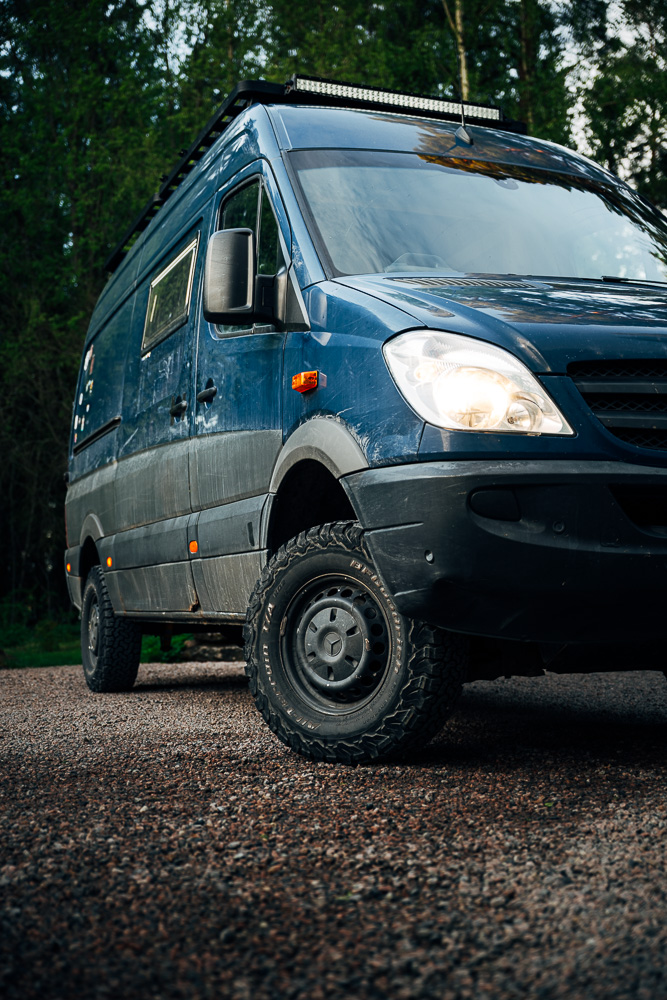
We’re selling our Mercedes Sprinter 906 315 4x4, which we converted into a vehicle for traveling the world.
The vehicle was a faithful, beloved companion to us from Patagonia to Canada and back to Europe. You could almost say it was a member of the family. But life circumstances have changed, and it no longer makes sense for me to keep “our big girl.”
Looking for a good, loving home for it.
I hope the car will grow just as dear to its future owners’ hearts as it has to ours. I don’t want to lure anyone in with false promises—I’m being completely honest about its condition. If you have any questions, please feel free to ask.
THE VEHICLE
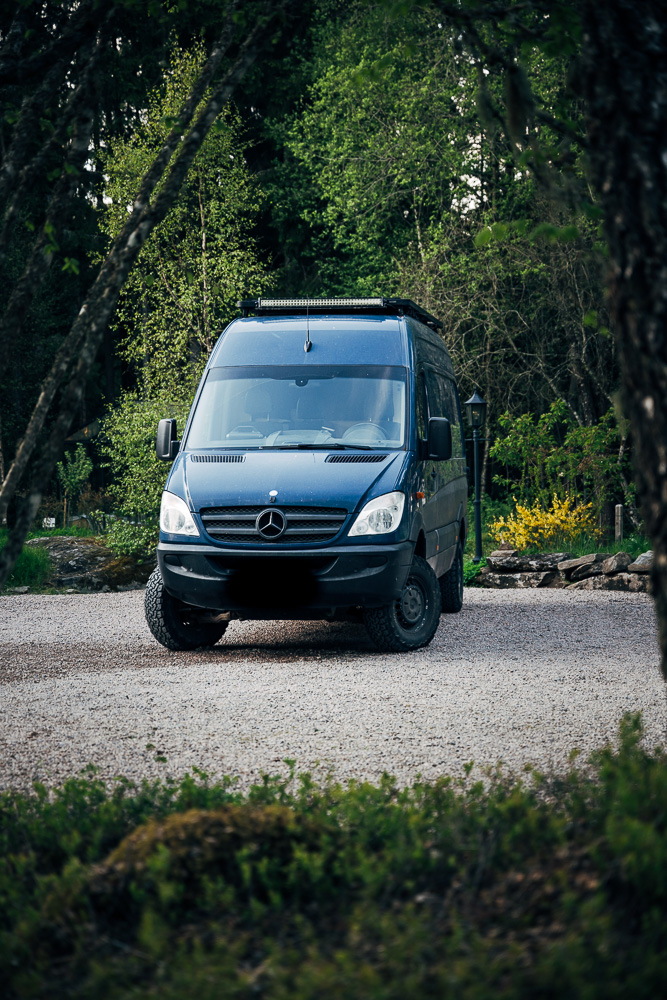
Mercedes Sprinter 906 315 4x4
First registered in September 2008
Mileage: 264,189 km
Oberaigner ZG3 all-wheel drive (selectable)
Selectable low-range gear
6-speed manual transmission
Reinforced front stabilizer bar
Tow hitch (ball joint removed for legal reasons in South America—particularly in Argentina, so the ball joint would need to be replaced)
OM646 engine
Parktronic
ESP
Heated and power-adjustable exterior mirrors
Hot-water auxiliary heater (“engine-driven auxiliary heater”)
Heated rear window
Semi-automatic Tempmatic climate control
3665 mm wheelbase L2H2 (standard length, high roof)
3.5 metric tons maximum gross vehicle weight
100-liter diesel tank
Fog lights
Driver's seat armrest
Driver and front passenger airbags
Grab handles for entry
270° rear doors
Black tinted rear windows
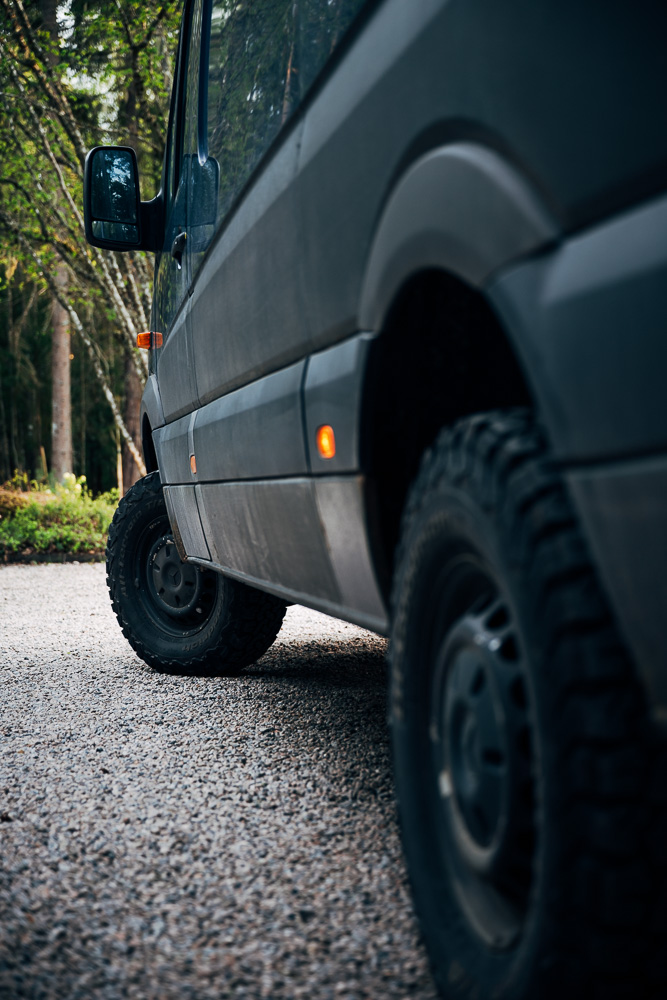
245/75R16 BFGoodrich AT tires
We chose this vehicle for our round-the-world trip because it is the last generation before the introduction of AdBlue and similar systems
THE CONVERSION, MODIFICATIONS, AND EQUIPMENT
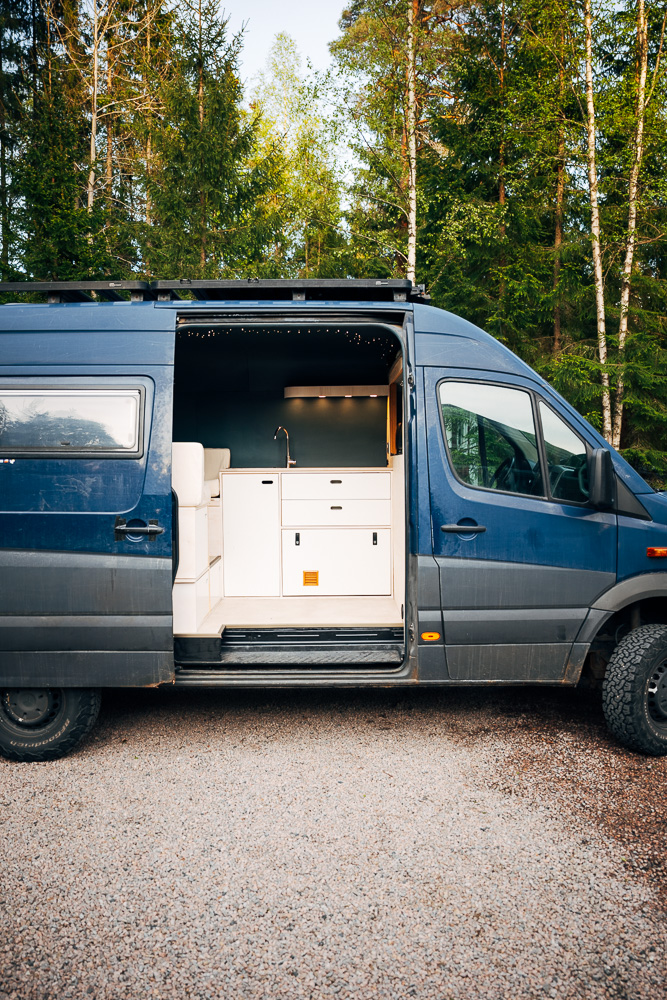
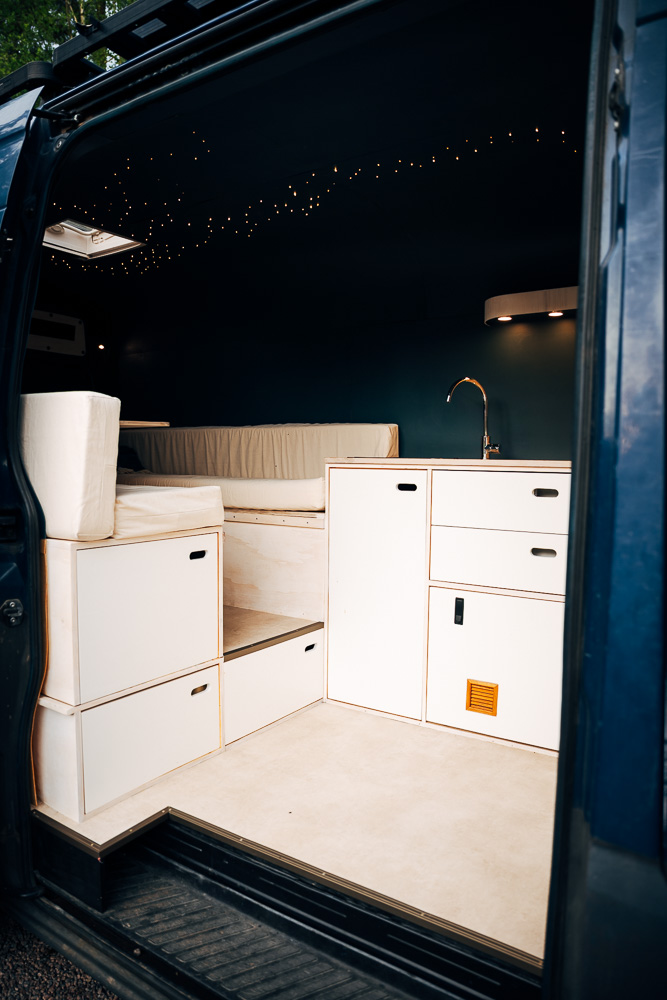
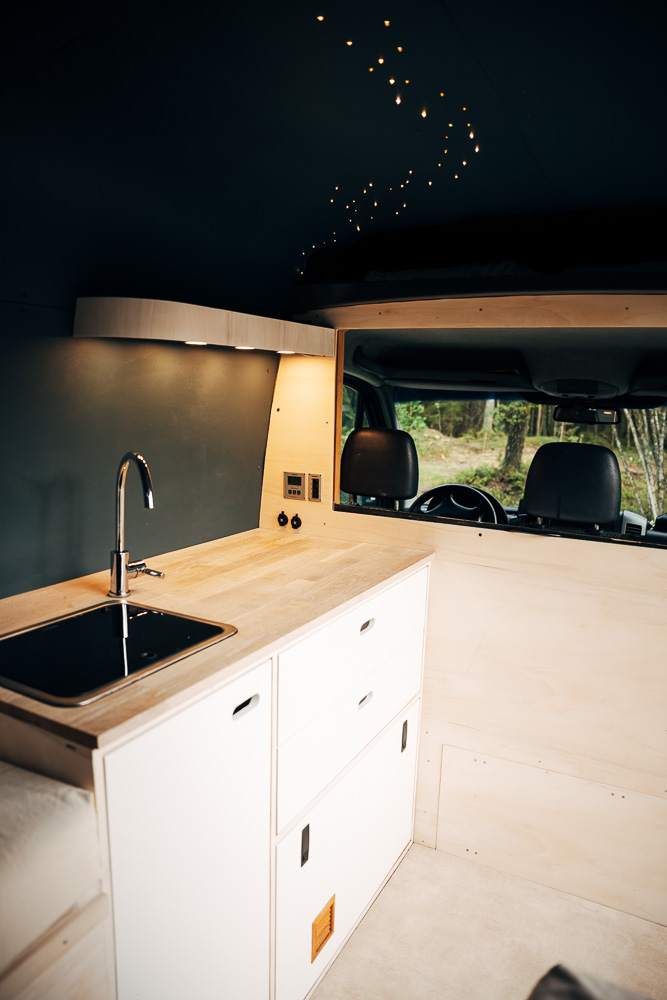
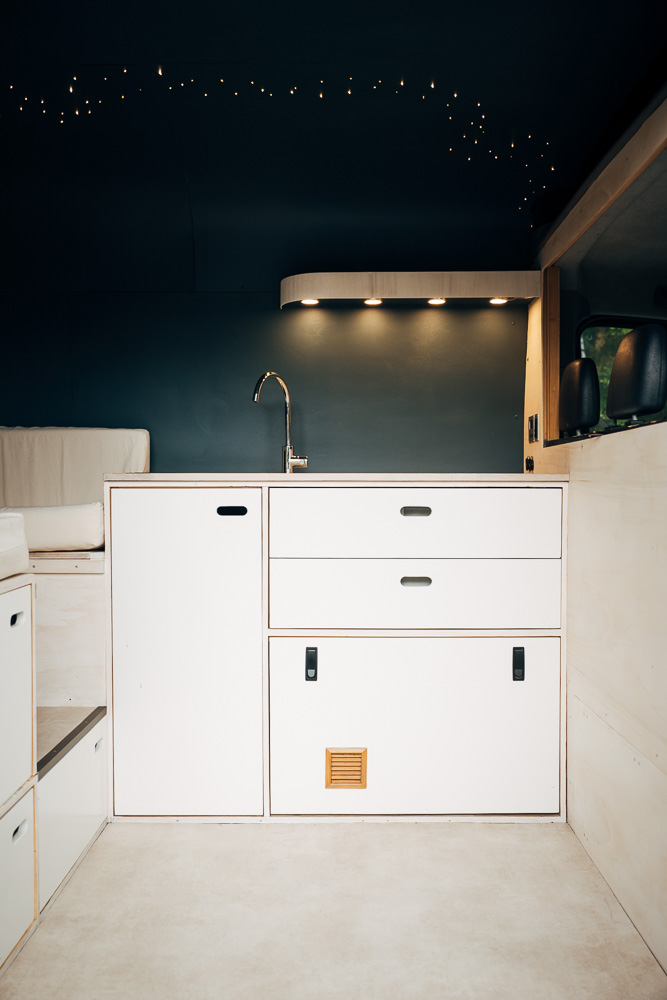
Plenty of space, unobstructed lines of sight, headroom and standing height even for someone 190 cm tall, comfort and coziness in a Scandinavian design, combined with long-term off-road capability: This means using materials of substantial thickness; no high shelves, as these shift the center of gravity unfavorably and can quickly rattle loose during vehicle movement on rough trails, etc. Instead, all storage space is located deep within the vehicle to maintain the center of gravity and allow plenty of room to move around. The conversion was carried out in collaboration with two master carpenters.
Weight kept as low as possible to stay under 3.5 T even when fully loaded. I recall once measuring just under 3 T on a CAT scale in the U.S., with luggage but no passengers. According to the Swedish vehicle registration, it weighs 3.1 metric tons with full tanks and the driver. Either way, there’s plenty of room to spare for everything you might want to bring on a trip lasting several months to several years.
An outdoor shower is installed at the rear. This maximizes the living space inside the vehicle.
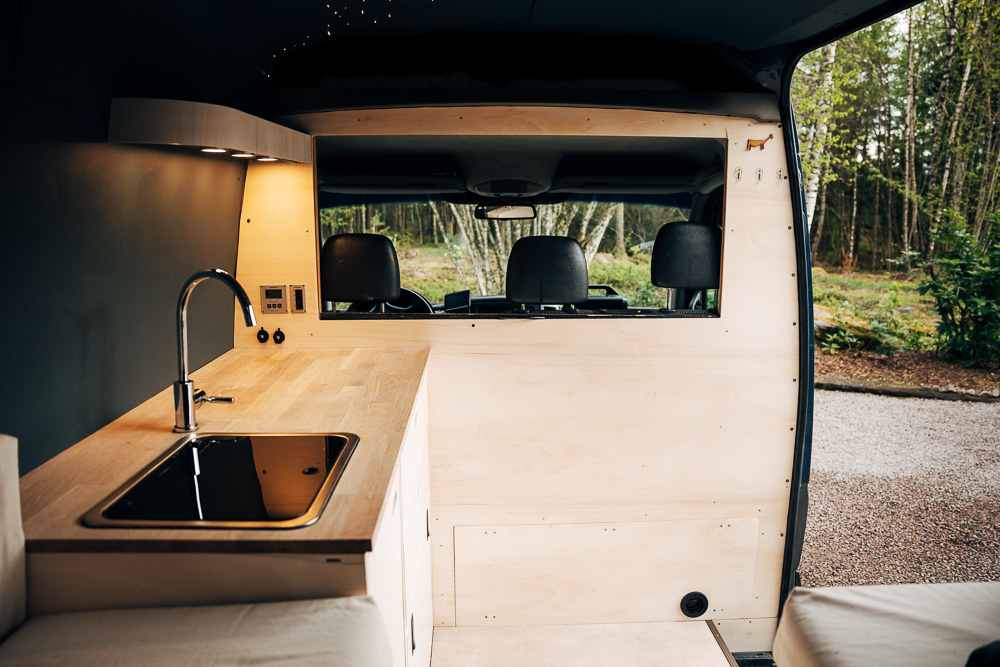
The driving area and living area can be separated for privacy and, above all, to retain heat. This is useful both in winter for the living area and in tropical heat, so the air conditioning can focus on the driver’s cab. The partition is designed as a walk-through and painted with chalkboard paint, meaning the black surface can be written on with chalk and easily wiped clean.
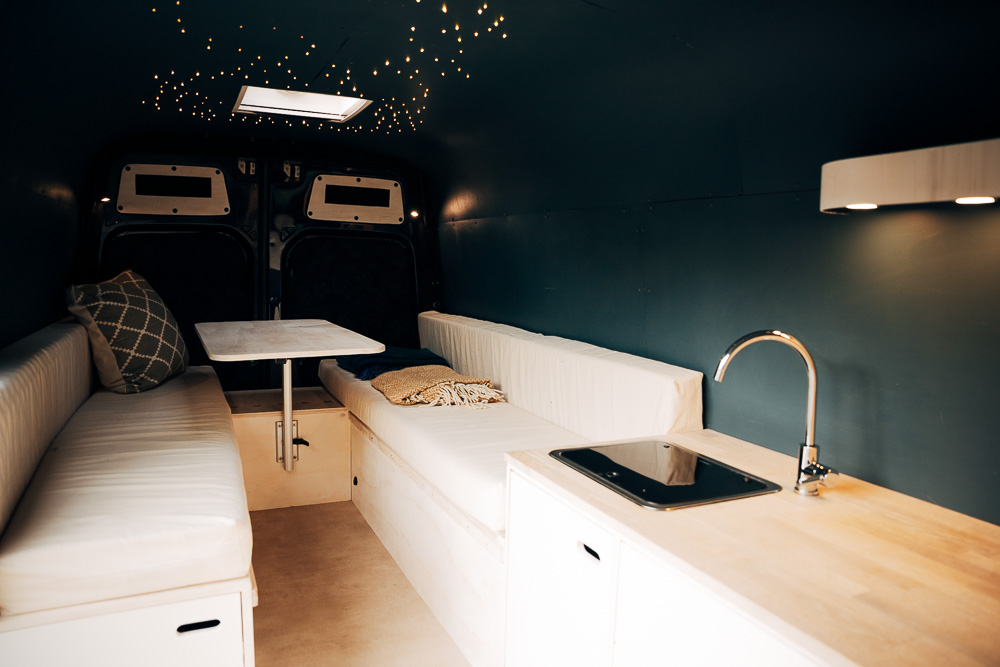
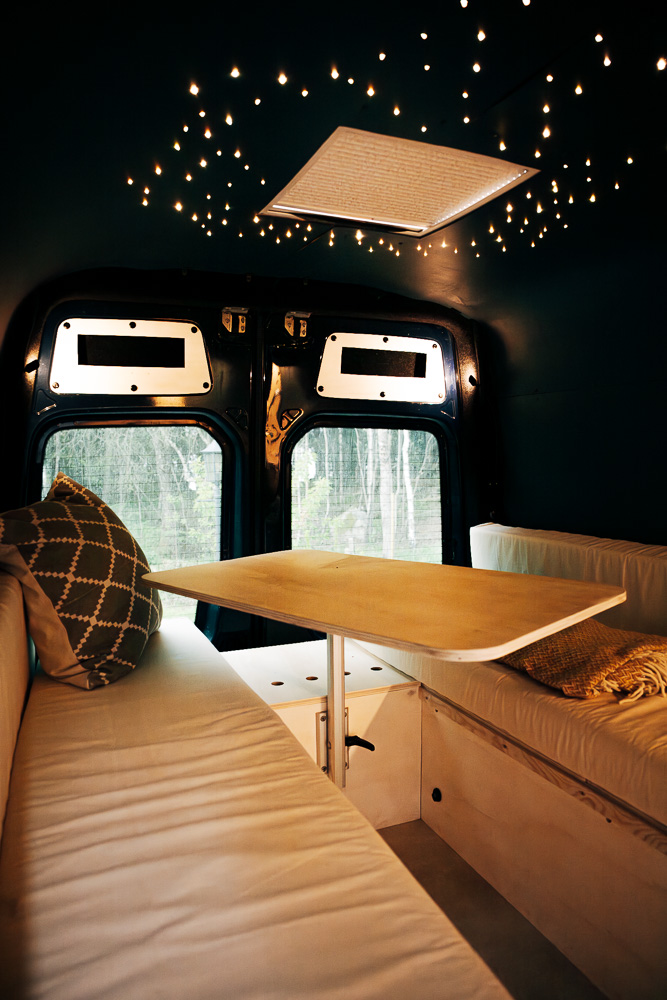
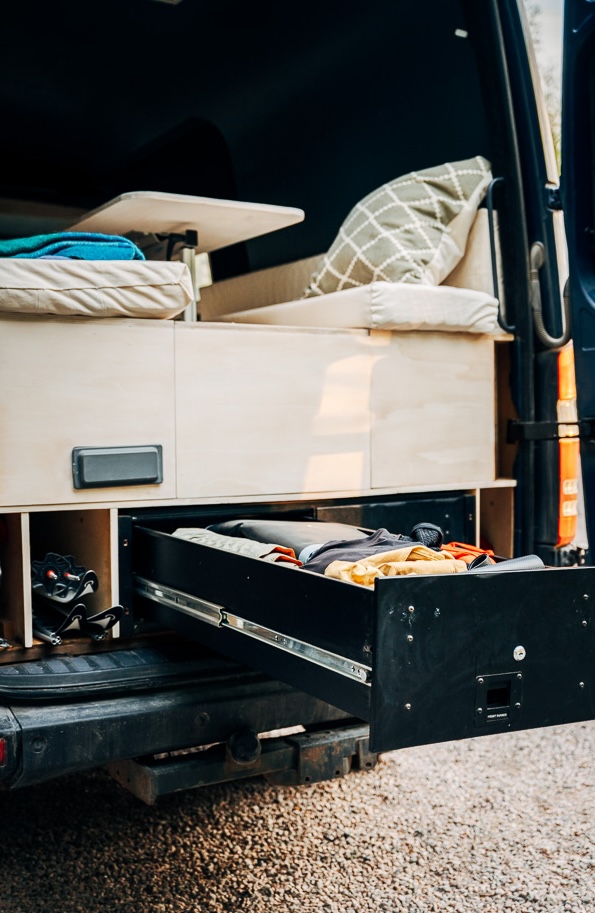
The U-shaped seating area converts into a bed measuring approximately 175 x 200 cm in just two minutes. This provides ample sleeping length even for tall people. And during the day, it offers a very comfortable space for up to 6 people.
The tabletop can be mounted on the Frontrunner extension in the rear in just a few simple steps if you want to sit outside.
It was important to us to be able to draw fresh water from rivers and lakes without sacrificing space for long hoses and pumps, as is the case with permanently installed water tanks.
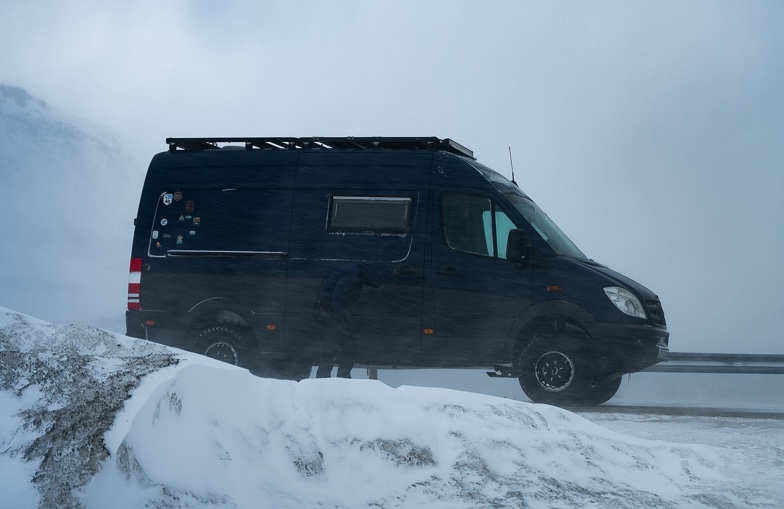
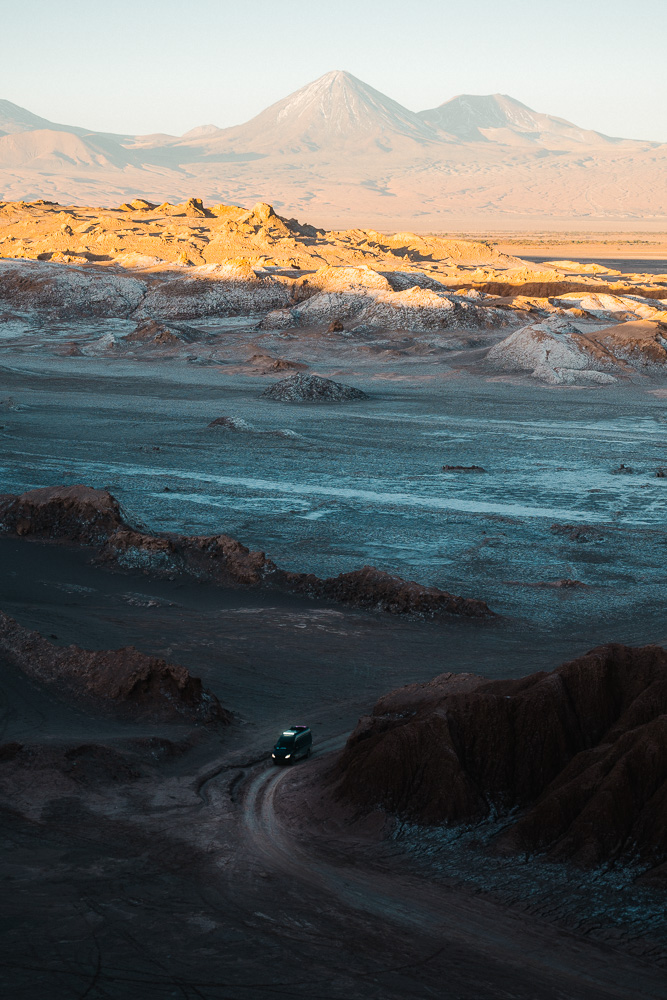
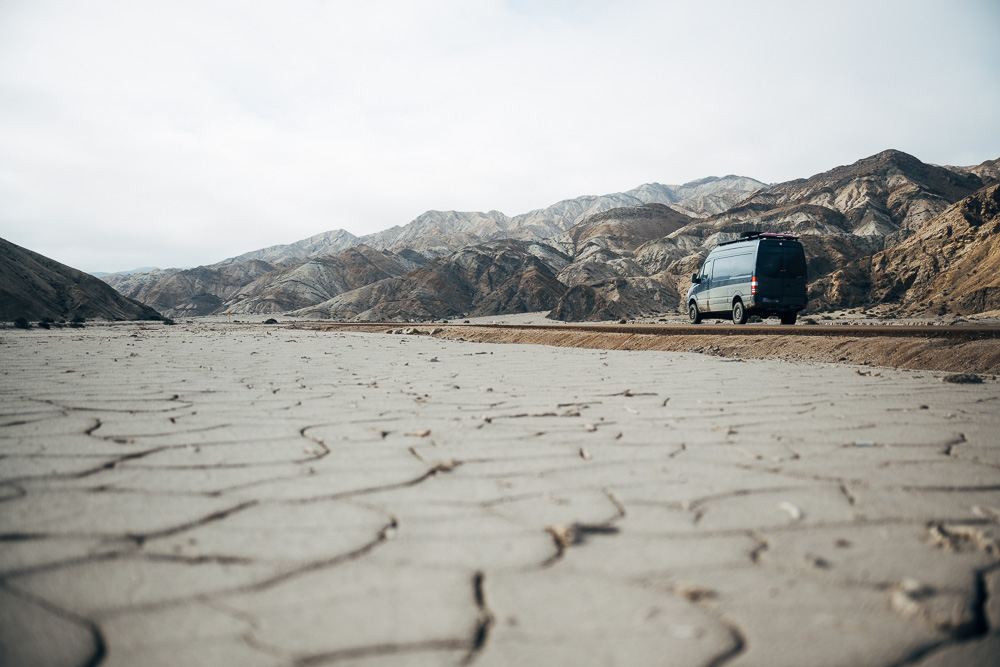
This living concept has proven itself perfectly during a 3-year world trip and subsequently as a vacation vehicle in Northern Europe—from two winters in Patagonia to freezing nights at over 4,500 meters in the Altiplano. From the heat of the Atacama or Death Valley to the cold of northern Norway in winter. From the endless expanse of the Argentine Pampas over some of the world’s highest mountain passes (over 5,000 meters) into the Brazilian tropics. From -30°C to +46°C.
COMPONENTS
Underbody protection
Fully equipped for round-the-world travel, including trips to high altitudes and regions with poor fuel quality!
Rearview Camera
Bilstein B6 4x4 suspension
Starline alarm system, GPS-enabled with its own cellular connection (including remote deactivation, etc.), professionally installed at an authorized dealer
Sliding door track, blackened
Wheel well flares
Lower vehicle section painted dark gray, similar to the Raptor
Dometic S4 side window, 900x400
Roof window should also be Dometic
Insulation: Armaflex 19 mm (surface) & 9 mm (struts). Doubled on the large panels.
Solid construction made of poplar plywood
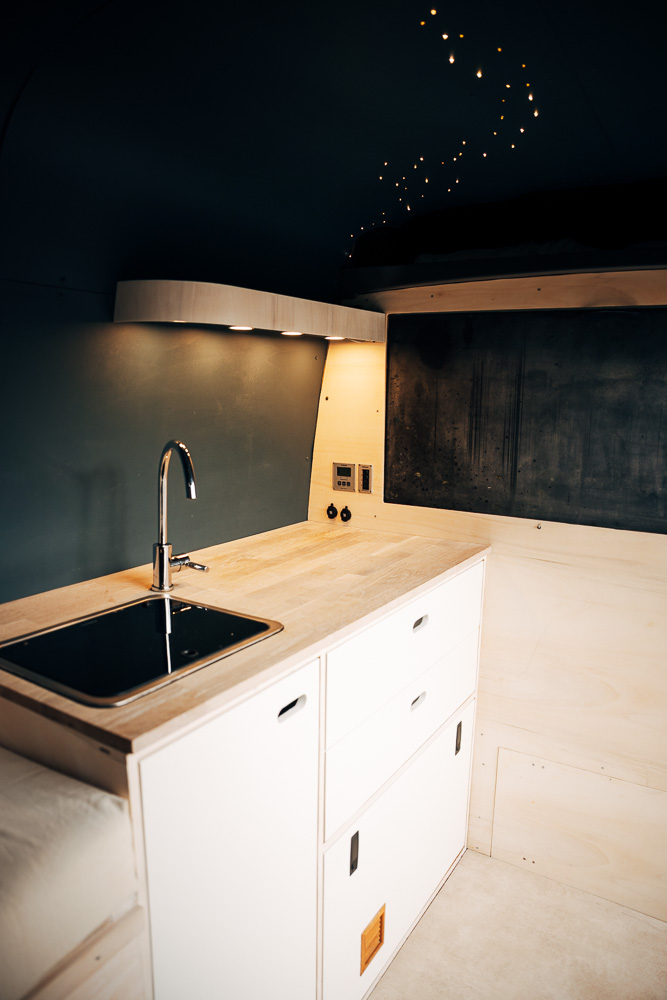
Solid oak countertop
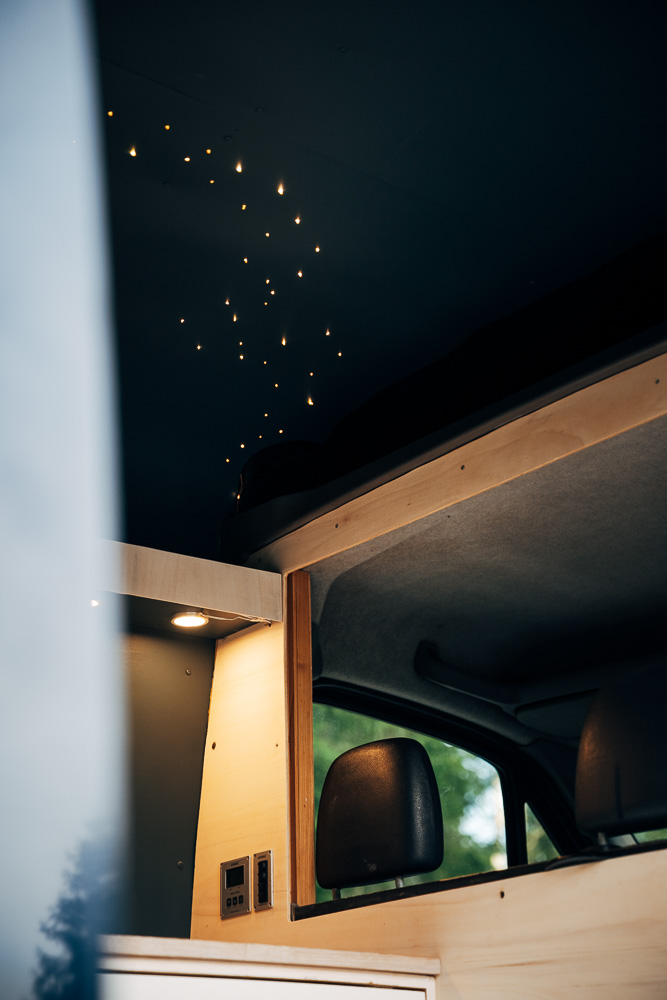
200 LEDs integrated into the headliner (not just glued to the outside)
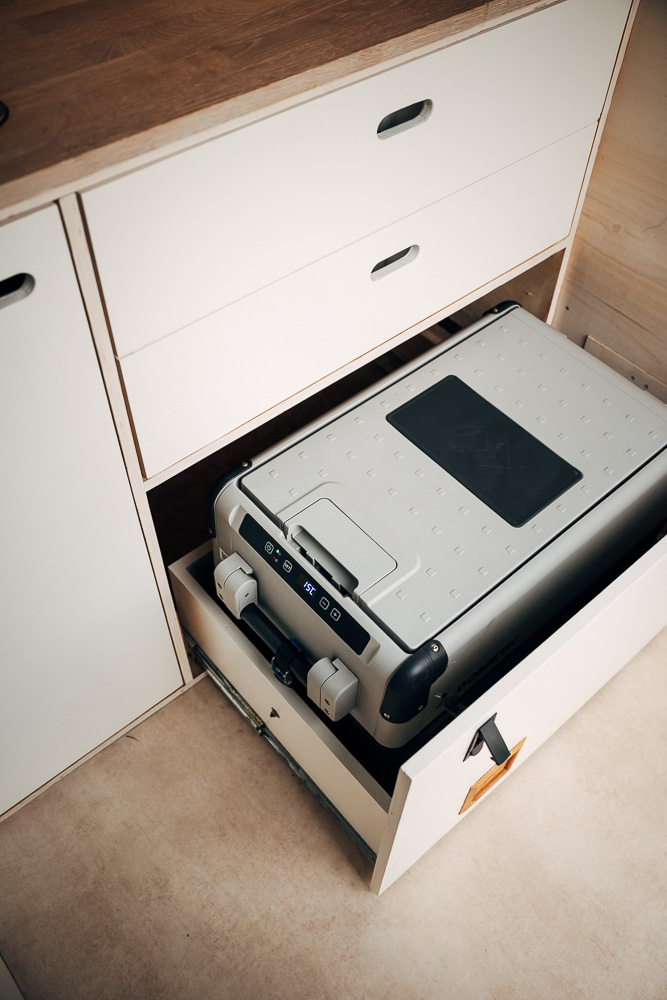
Cooler: Dometic CFX 35W
Magnetic window insulation in the rear
Dometic sink
Lilie water pump / Shurflo pressure water pump
Frontrunner roof rack with tie-down straps and adjustable anchor points
Frontrunner light bar / work light (incredibly bright)
Mounting bracket for additional lighting (side and rear)
Frontrunner heavy-duty drawers in the rear
ELECTRICS (professionally installed in collaboration with a motorhome electrician):
Charging electronics: Votronic VCBS 45/30/350: 350-watt MPPT solar charger, 30A AC charger, 45A B2B battery booster alternator charger
Displays: Votronic LCD Charge Control S & Votronic LCD Battery Computer with Smart Shunt
2x 155 W shingle-style solar panels
Inverter: Victron Phoenix 12V/500W 230V with Bluetooth
200Ah LiFePo lithium battery
12V outlets in the front and rear cabins.
USB outlets in the front and rear of the cabin.
HEATING
Autoterm Air2D diesel heater (professionally installed by an authorized dealer)
Elgena KB6 hot water boiler (currently not installed)
WATER
2x 30-liter fresh water tanks.
53-liter gray water tank
MAINTENANCE HISTORY
Purchasedin 2019 with 175k km. Former government vehicle.
New glow plugs
Anti-rust treatment
Service
Engine oil
Brake fluid
2021
New Alternator / Generator
New Brake Mount
New rear leaf spring
New steering gear
Injectors replaced at Bosch Service
New auxiliary 12V battery (engine-powered heater)
Service:
Engine oil
Rear differential oil
Steering gear oil
Wheel alignment
2022
New thermostat
Water pump replaced
New windshield
New viscous fan
New Bilstein B6 rear shock absorbers
New rear leaf spring mounts (left/right)
4 new tires: BF Goodrich AT 245/75 R16
New front wheel bearings
Service:
Engine oil
2023
At 229,000 km, complete engine overhaul by an engine specialist in Germany following a leak (exhaust gases in the coolant):
Cylinder head surface ground, new valves, gasket, etc. Possibly new intercooler (listed on the invoice, but I don’t recall ordering that)Air conditioning compressor overhauled
Service:
Engine oil
Coolant
2024 & 2025
Complete restoration lasting several weeks Interior:
All wood surfaces have been sanded down and either refinished or oiled.
New floor.
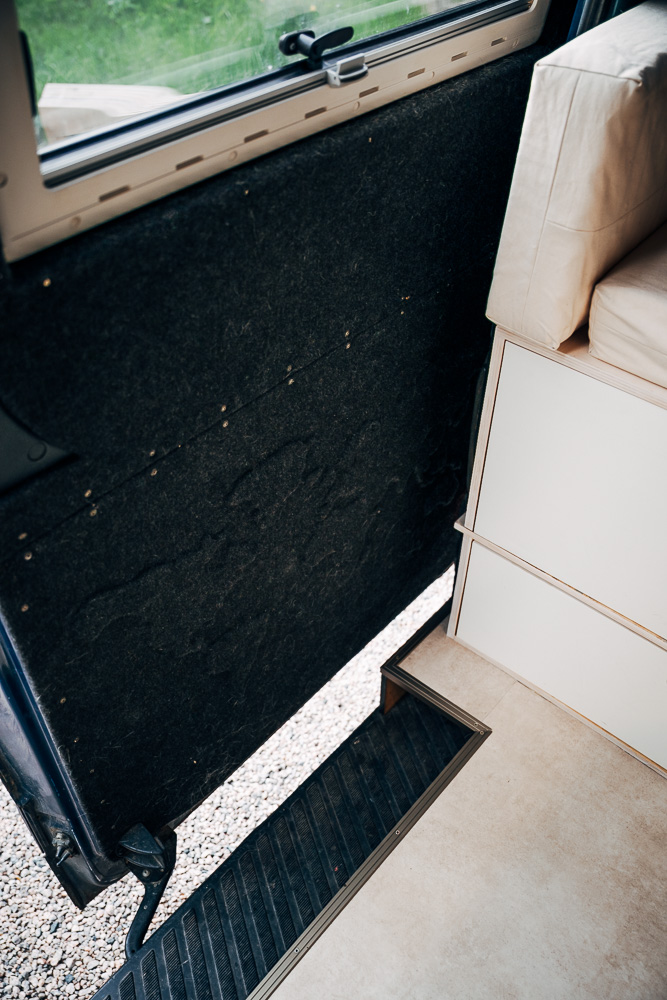
A relief map of the world was incorporated beneath the felt on the sliding door
New kitchen countertop
Completely new upholstery with heavy-duty cotton canvas.New sliding door rollers and suspension
New rear door lock
New starter battery
New Autoterm Air2D diesel heater
2026
V-belt and V-belt tensioner, new
Bilstein B6 front shock absorbers (left/right), new
A-arms (left/right), new
Strut mount/shock absorber mount, left/right, new
Driveshaft / propeller shaft, new
Handbrake, new
Brake lines, new
Linkage rods, new
Sliding door handle, new
Service:
Engine oil
Transmission fluid
Transfer case oil
Front differential oil
Rear differential oil
Brake fluid
Wheel Alignment
KNOWN DEFECTS
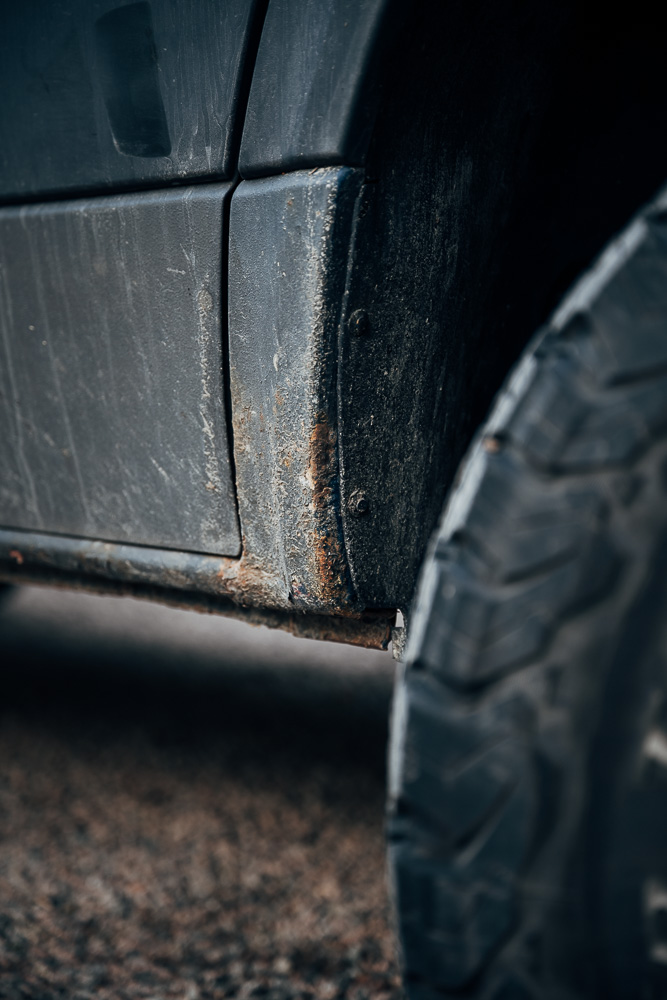
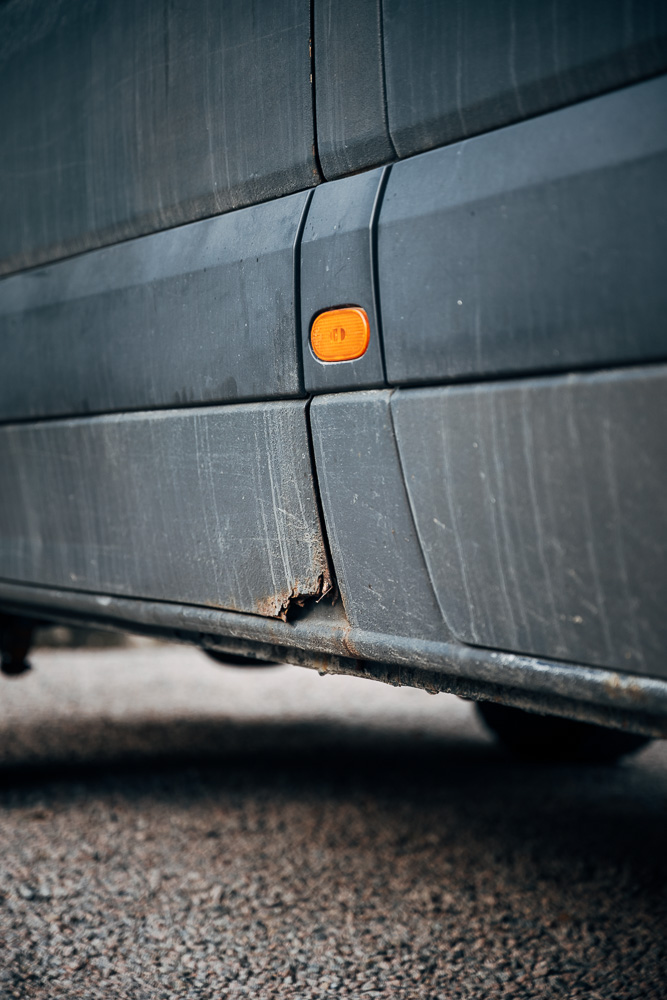
The classic Sprinter problem: rust.
All around the entire lower section, especially the wheel wells and the lowest parts of the sliding door.
A piece of sheet metal on the lower sliding door has broken off. A stone chip has punched a hole in the wheel well.
The Swedish “TÜV” classified it as a cosmetic flaw earlier this year, meaning there are no rust issues on parts relevant to the TÜV inspection. All load-bearing parts and the underbody look very good to me, considering the vehicle’s age.
Since this is a common Sprinter issue, to my knowledge, replacement panels are available for all affected areas (side door, sills, etc.), which a body shop could weld in if desired.The swiveling, height-adjustable, and retractable table has a bit of play in the aluminum.
I wouldn’t rely on the parking sensors
There are dents on the sliding door and the rear door (we were responsible for one of them, but not the other; both happened many years ago).
The “Raptor paint” has developed cracks over the years.
1st and 2nd gears are difficult to engage, especially in cold weather
One of the interior blower vents is broken.
The sliding door could use readjustment again, but it works perfectly fine.
The 200Ah LiFePo battery has reduced capacity compared to when it was new. During its last use (March 2026), it operated without any problems for 6 weeks in northern Norway during the winter, but the estimated original 5–6 days of complete self-sufficiency—i.e., no sunlight and no engine starts—are no longer achievable. In addition, there seems to be a voltage drop for half a second every few days (audible via the diesel heater). You can drive off immediately with the system; personally, I would probably invest in a new 200Ah lithium battery in the medium term.
The driver’s cab’s automatic lighting isn’t working right now (lights come on when the door opens). It’s probably just a fuse; I’ll look into it in the next few days.
The paint has a patina all over in the form of surface scratches from bushes, low-hanging branches, etc. I love it (especially in contrast to the super-stylish interior) and would be very reluctant to drive into poorer regions of the world with a new high-gloss paint job that screams “wealth.” But of course, that’s a matter of taste. In short: Just by looking at the vehicle from the outside, you can tell what it’s capable of and where it’s been.
Greywater tank: Drain valve snapped off. A new drain valve should be glued in place.
Every thousand kilometers or so for years now, the ESP warning light has been coming on briefly and then going off again. According to the repair shop, it’s probably a steering angle sensor (self-test error) that sometimes has a bad day.
INCLUDED (spare parts or existing components not currently installed)
Lots of bulbs, lights, small parts, filters
iCarsoft Mercedes-Benz OBD reader
Spare tire 245/75 R16 steel rim with General Grabber AT tire (unused but from 2019)
Underbody guards
New cabin fan
New heating/ventilation control unit
New Lilie water distributor
Elgena KB 6 hot water boiler (decommissioned since conversion to a pressure water pump. Would need to be connected with a pressure reducer, or better yet, replaced with a pressure-resistant Elgena Nautic Compact or similar)
Stern shower
TÜV / HU / REGISTRATION
The vehicle was registered in Germany as a special-purpose motorhome until 2024. The large 245/75R16 tires are officially registered.
Since I have since moved to Sweden, the vehicle is currently registered there.
In February of this year, it passed the Swedish TÜV inspection without any defects. The next HU is scheduled for April 2027 (annual in Sweden).
According to my research, importing it to Germany should be straightforward, since it is an EU vehicle and the chassis number was already registered in Germany. The vehicle registration office stores this data, so an import inspection should not be necessary. No modifications have been made to the vehicle since then, meaning only a regular HU should be required.
Inspection and Test Drive
Viewing and test drive available at any time over the next 5 weeks near Gothenburg in southwestern Sweden.
Travel options:
Flight from any major airport (I can drive to the airport) or the Stena Kiel-Gothenburg overnight ferry; a 7-hour drive from Hamburg; or approximately a 10-hour train ride from Hamburg with one transfer in Copenhagen.
Of course, we’re also happy to set up video calls in advance if you have any questions.
The vehicle can be shipped immediately as-is to South America, Morocco, the North Cape, Cape Town, or along the Silk Road, and has more than proven itself in every situation.
Asking price: €40,000