Jana and Dominik from @allrad_im_staub are on a long-term road trip through the Caucasus and Central Asia in a UAZ Buchanka. In this OLLI interview, they talk about why they quit their jobs, why they chose a Russian UAZ four-wheel-drive bus of all things, how they deal with breakdowns and uncertainty—and how Tajikistan, Kyrgyzstan, and Kazakhstan have changed their perspectives on safety, possessions, and hospitality.
In OLLI Stories, we talk to people who live their lives differently—mindfully, courageously, and in their own unique way. No clichés. No glossy facades. Just honest answers to the questions you only ask yourself once the campfire is burning and the small talk is over. Stories that show: There’s another way.
Who are you? How long have you been on the road? What have you experienced so far? Where are you right now, or where do you live? And what’s next?
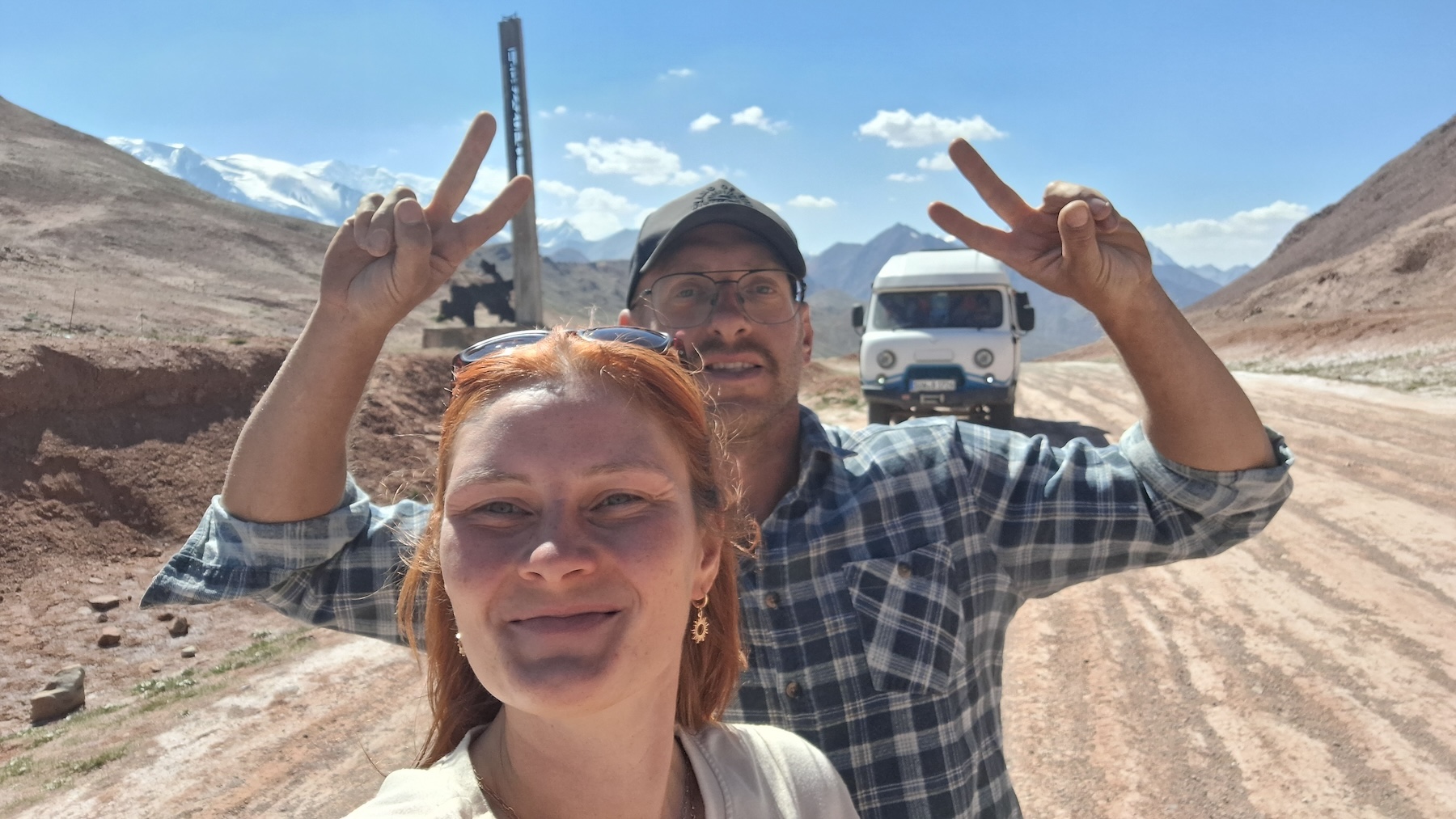
We’re Jana (36) and Dominik (39), raised in the Palatinate—two people who, on paper, had actually done everything “right.” Dominik worked in the chemical industry, and Jana spent 16 years at dmTECH, most recently in a management position overseeing about 40 to 45 employees. Both jobs were secure; there was absolutely no reason to quit. On the contrary: further career opportunities lay ahead of us, and things were going particularly well for Jana professionally. And yet, at some point, we decided to trade all of that in for a life on four wheels.
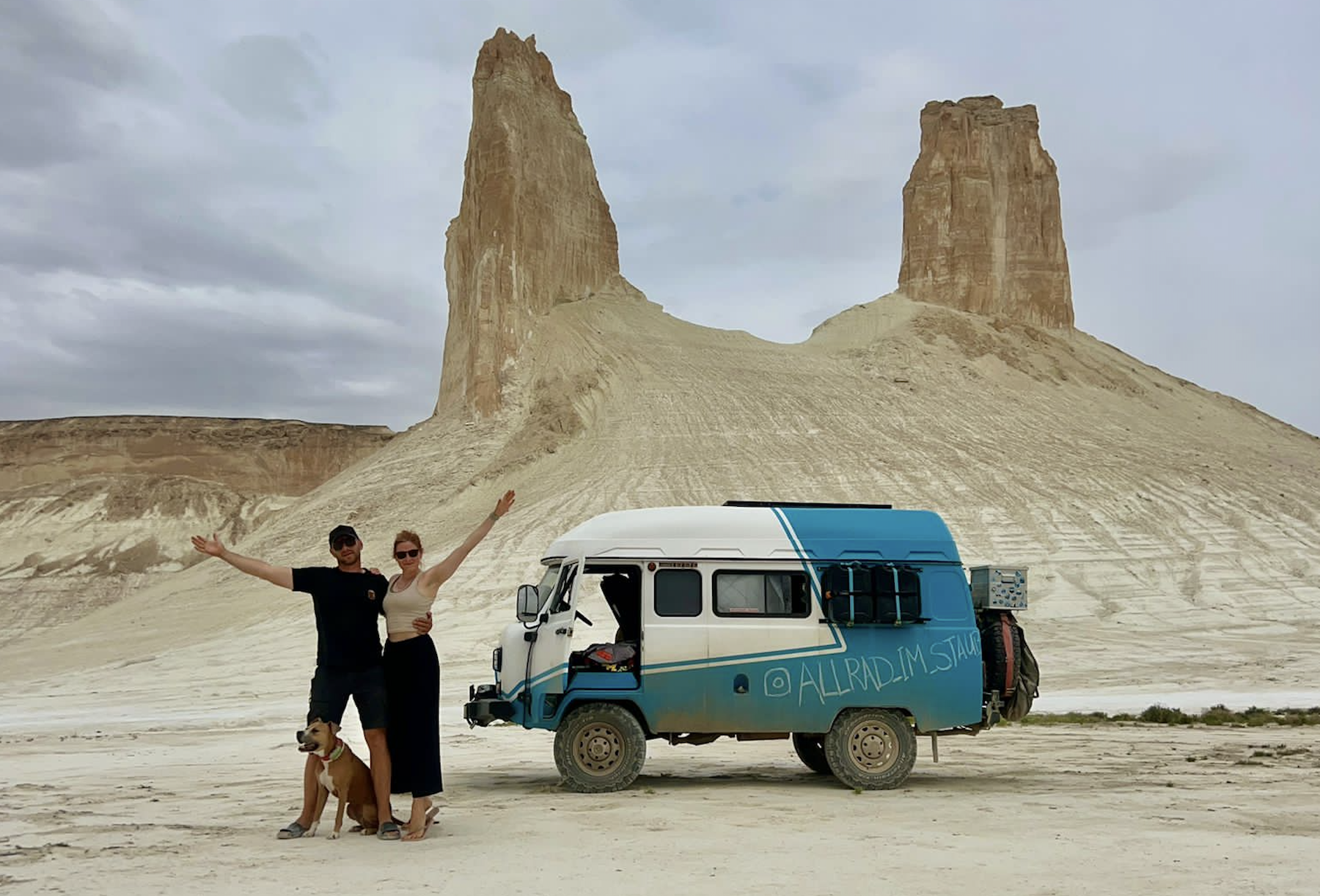
Since March 2026, we’ve been on a long journey through the Caucasus and Central Asia with our UAZ Buchanka and our dog Bella. This isn’t our first adventure of this kind: From April through the end of September 2024, we spent half a year traveling through Eastern Europe and the Balkans in a Ford Transit we’d converted ourselves—as a sort of test run to see what this different life would actually feel like. And even for that first trip into the unknown, we downsized drastically: We completely cleared out our rental apartment, sold or gave away almost all our furniture, organized an entire flea market, and lived with Jana’s parents for the last three months before leaving. In the end, all that remained was what fit into a few boxes, plus two or three pieces of furniture—we haven’t accumulated any more possessions since then. The only thing we held onto back then were our jobs, for which we’d taken six months of unpaid leave.
So we went back to our jobs, saved diligently for about a year and a half, and prepared everything for our second, bigger trip. This time with no safety net—we quit our jobs.
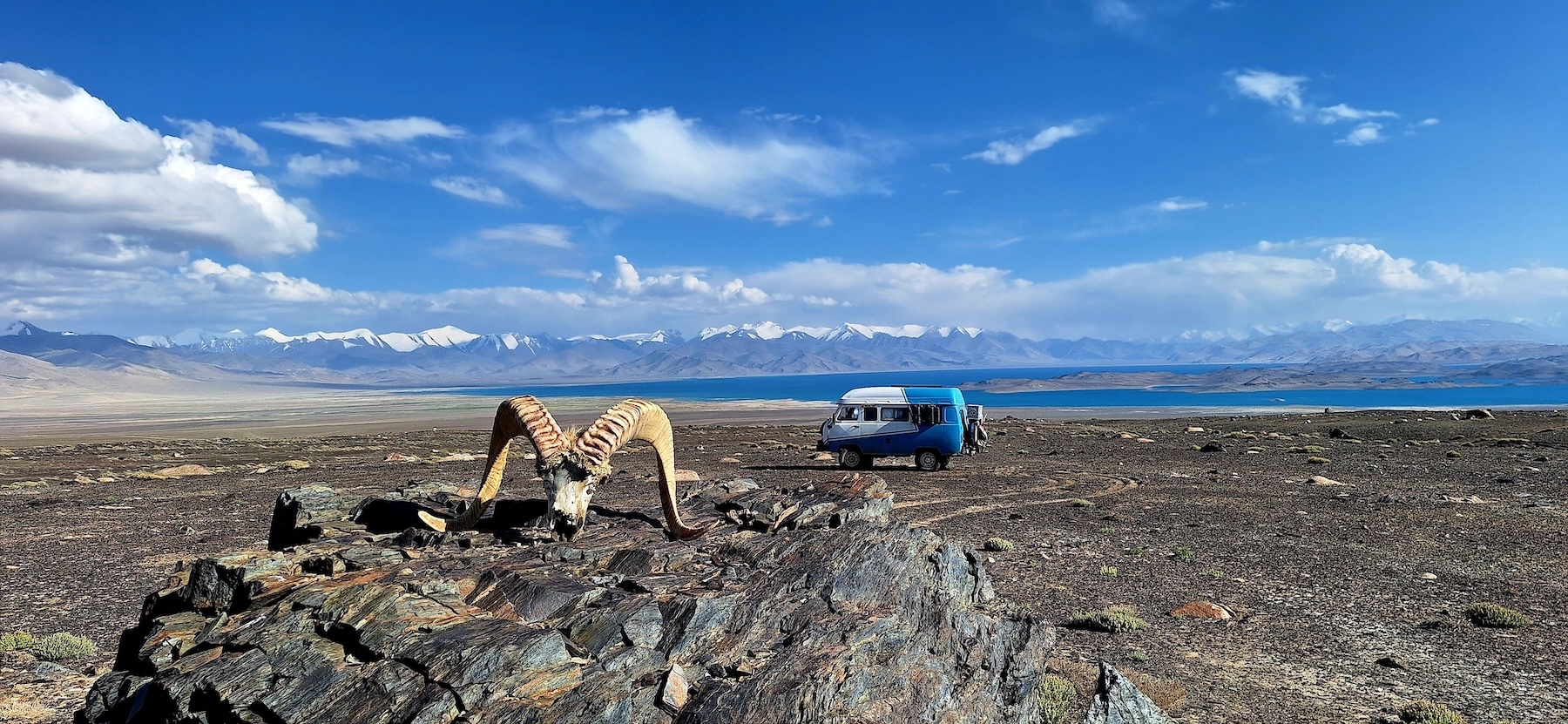
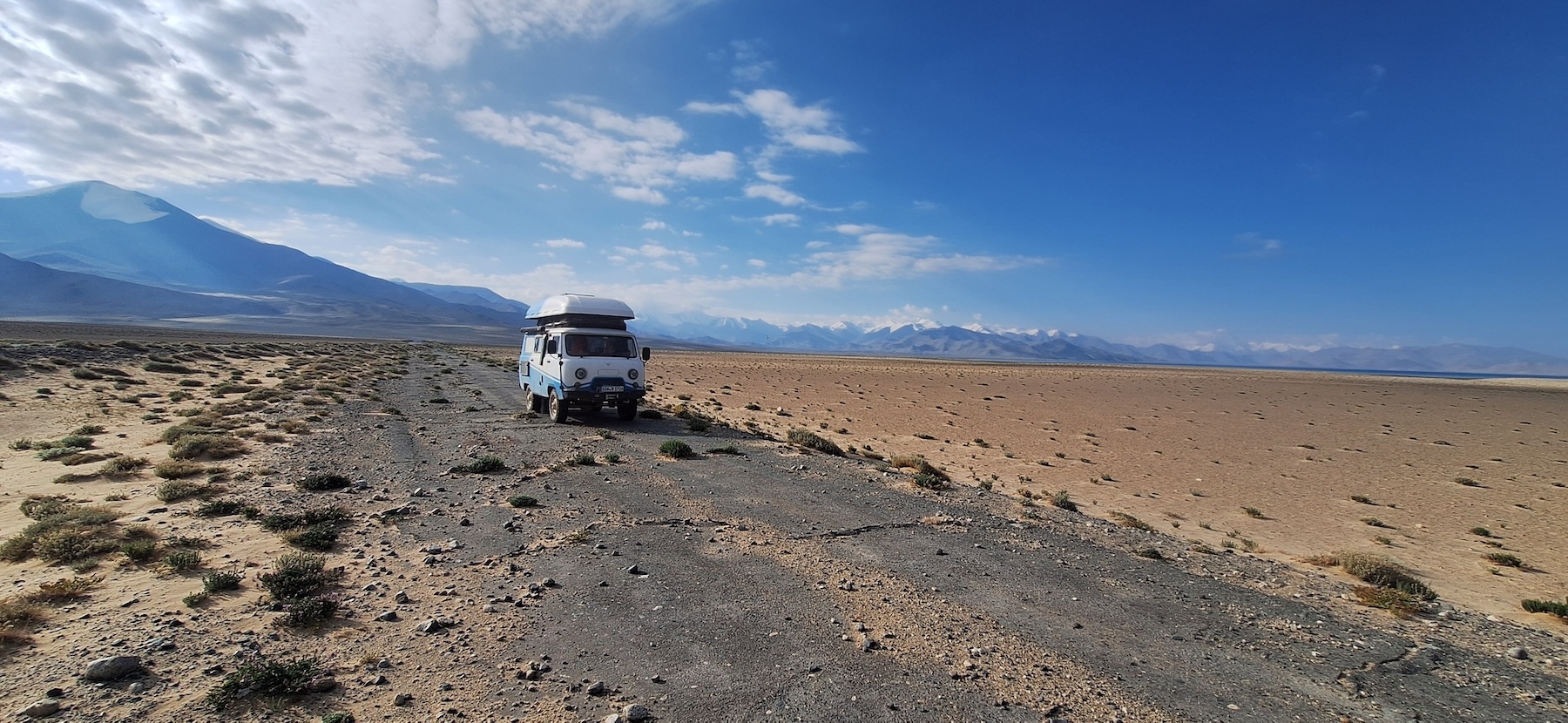
So far, we’ve experienced an incredible variety of landscapes and people, plenty of adventures, and at least as many challenges with the car—after all, we’re not trained auto mechanics, yet we still had to learn how to deal with breakdowns. We’re currently in Central Asia, on and around the Pamir Highway in Tajikistan. We’re deliberately not planning what comes next years in advance—we usually decide spontaneously, depending on how it feels, how long our supplies will last, and how much time visas and the seasons allow us. Because for us, traveling is no longer a project with an end date, but simply our life.
“That’s exactly the story that often elicits nothing but incredulous head-shaking back home: that it’s precisely in the places where people have the least that you find the most genuine warmth and contentment.”
Can you still remember the moment when you knew, “We’re going to do this now”?
That moment actually came during our first six-month trip in 2024. We realized just how much fun we were having living in the van—that independence, the feeling of getting by with so little. At the same time, we realized that our car at the time couldn’t take us to all the regions we actually wanted to visit—hence the desire for a four-wheel-drive vehicle. When it became clear that we absolutely wanted to travel through Central Asia (originally sparked by the desire to go to Mongolia), one thing was certain: We don’t want to go back to that system—especially Jana, who doesn’t want to return to her former, very demanding management job. This six-month break changed both of us—and then it was clear: We’re doing this now.
What phrase, thought, or moment changed your lives?
It wasn’t a single, sudden moment, but rather a thought that a friend of Jana’s once voiced—and that wouldn’t leave our minds afterward.
Essentially, it came down to this: Our life is short, and we never know how much time we really have left. We’d worked so hard, invested so much in our jobs—but at some point, we asked ourselves whether we really needed that much responsibility, that much security at any cost. That led to a decision: to consciously break out of the system. To find out what else life has to offer, what’s possible if you just give it a try—with the full risk that it might also fail. But that very risk was worth it to us. Because either way, we’d end up with something no one could ever take away from us: stories to tell, instead of one day having to ask ourselves, “If only we’d done it.”
How did family and friends react?
Very differently—and, to be honest, exactly the range of reactions you’d expect.
Jana’s parents were the first people we told about the idea, over the phone while we were still on our first trip. The reaction was immediate and unequivocal: “No, no, you two with your ideas—just stay away from that.” For them, everything was suddenly up in the air: the secure job, the apartment, the whole life we’d built up until then, which we’d already been dismantling piece by piece. It wasn’t until we were back and had a calm, concrete conversation about it that they slowly began to understand why we really wanted to do this—the concerns about security and finances remained, but the initial shock gave way to genuine understanding.
With friends and former coworkers, it was almost always the opposite: “So brave,” “I couldn’t do that,” “It’s really cool that you’re doing this”—we heard things like that over and over again. Some even went a step further and said quite openly: “Honestly, I totally envy you.” For us, that was actually the nicest compliment anyone could give us—proof that what we dared to do struck a chord with many people, tapping into a desire they’d love to act on themselves.
Which one of you actually had to convince the other?
Dominik was clearly the driving force—he was the first to say, “We’re really going to do this.” Jana, on the other hand, had a greater need for security—she had a really good job, a good income, and a career she’d invested many years in, and she simply wasn’t used to starting over from scratch. But that didn’t slow us down: While Dominik provided the impetus, Jana worked through her own reservations on her own—in the end, both of us were equally committed to the decision.
What was the hardest part about actually setting off?
The surprising thing is: Actually setting off wasn’t the hardest part at all—we were already “on fire” by that point. The really big change came before that, before our very first trip in 2024: We completely cleared out our rental apartment, sold or gave away almost all our furniture, held a garage sale, and lived with Jana’s parents for the last three months before leaving. All that remained were a few boxes with the bare essentials and two or three pieces of furniture—we haven’t accumulated any more possessions since then. Paradoxically, this radical letting go gave us a boost, because we’d “only” taken six months of unpaid leave for this first trip, and that gave us a sense of security: We still had our jobs to fall back on.
Things only got really stressful when we started preparing for our second trip, a good year later: selling our old car, finding and converting the Buchanka, planning the entire route—and all of that while we were living with our parents again and working our old jobs so we could really save up once more. We finally let go of that last safety net we’d held onto the first time around: we quit our jobs. No turning back, no safety net—just the car, the dog, and the open road ahead of us.
“Our security doesn’t lie in possessions or a supposedly secure job, but in the knowledge that we can always make something out of everything life has to offer.”
What are you driving—and why that particular vehicle?
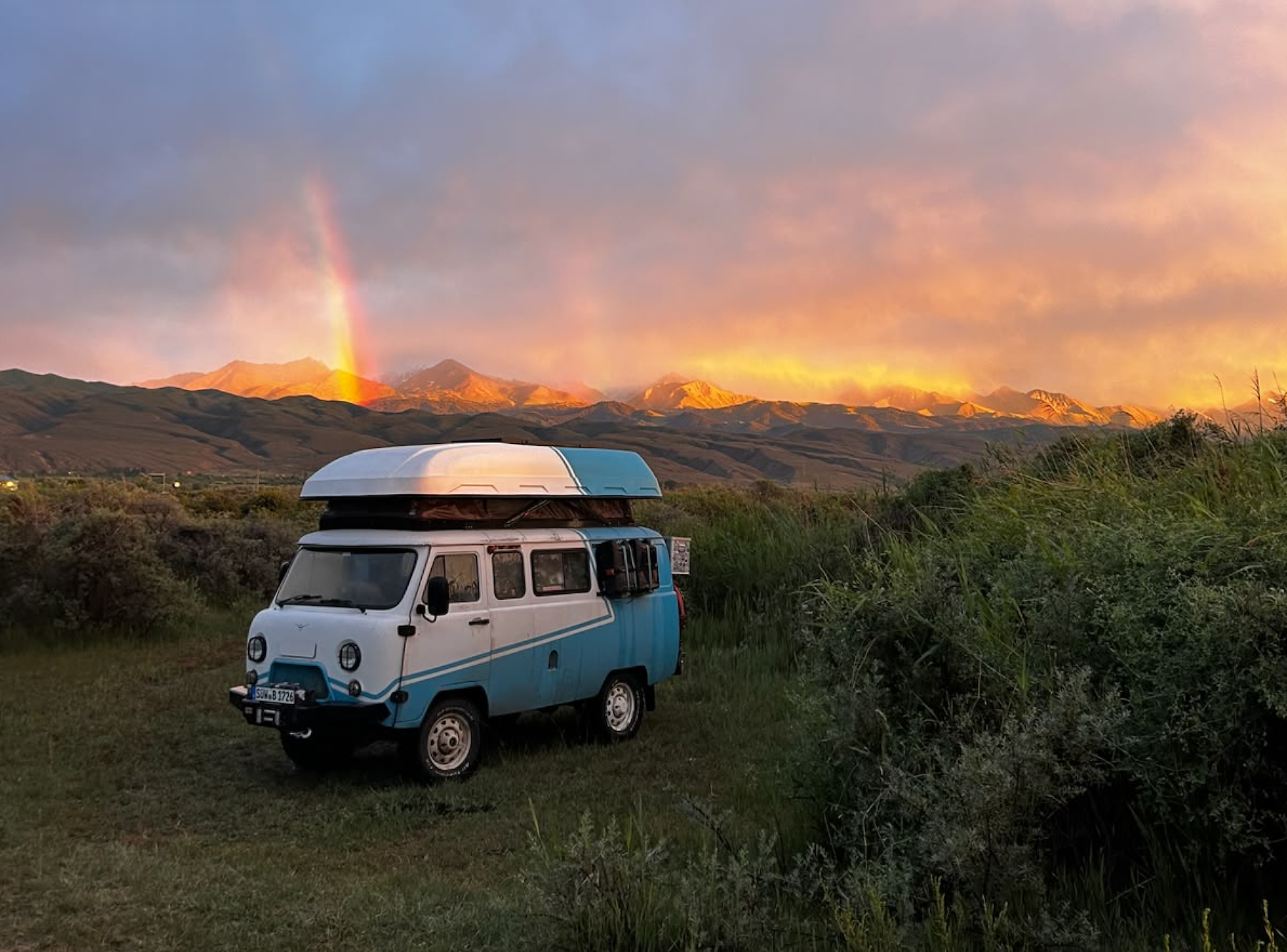
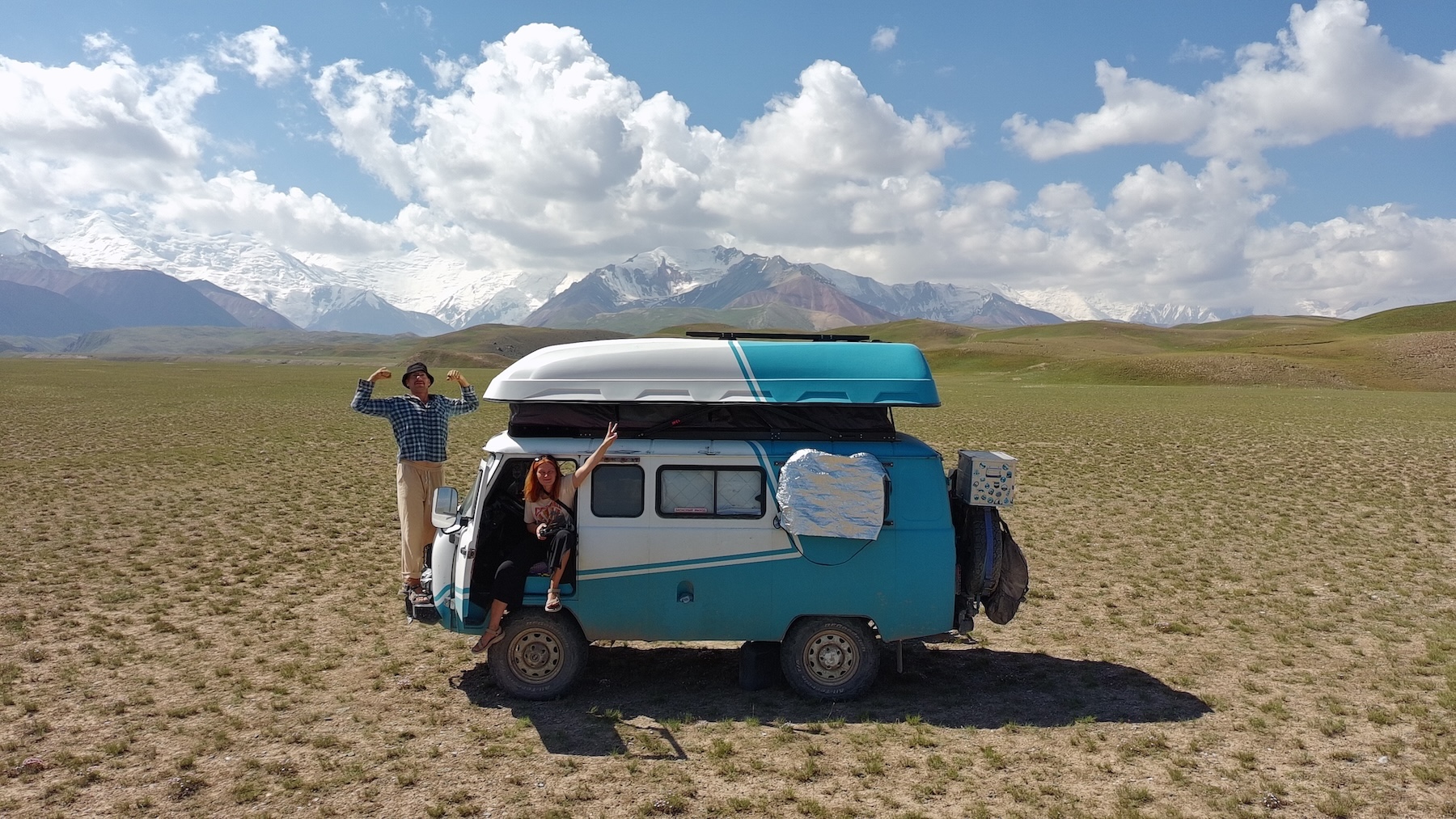
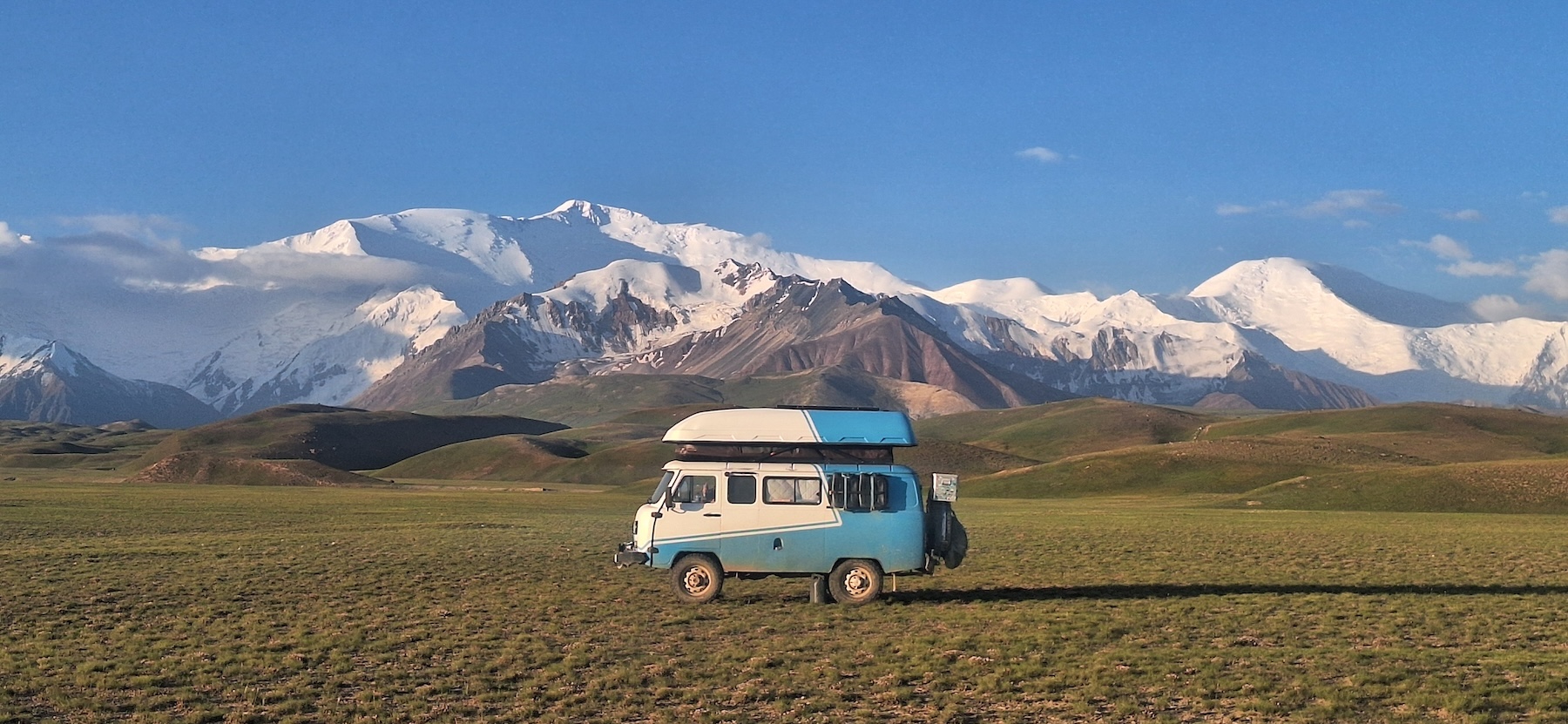
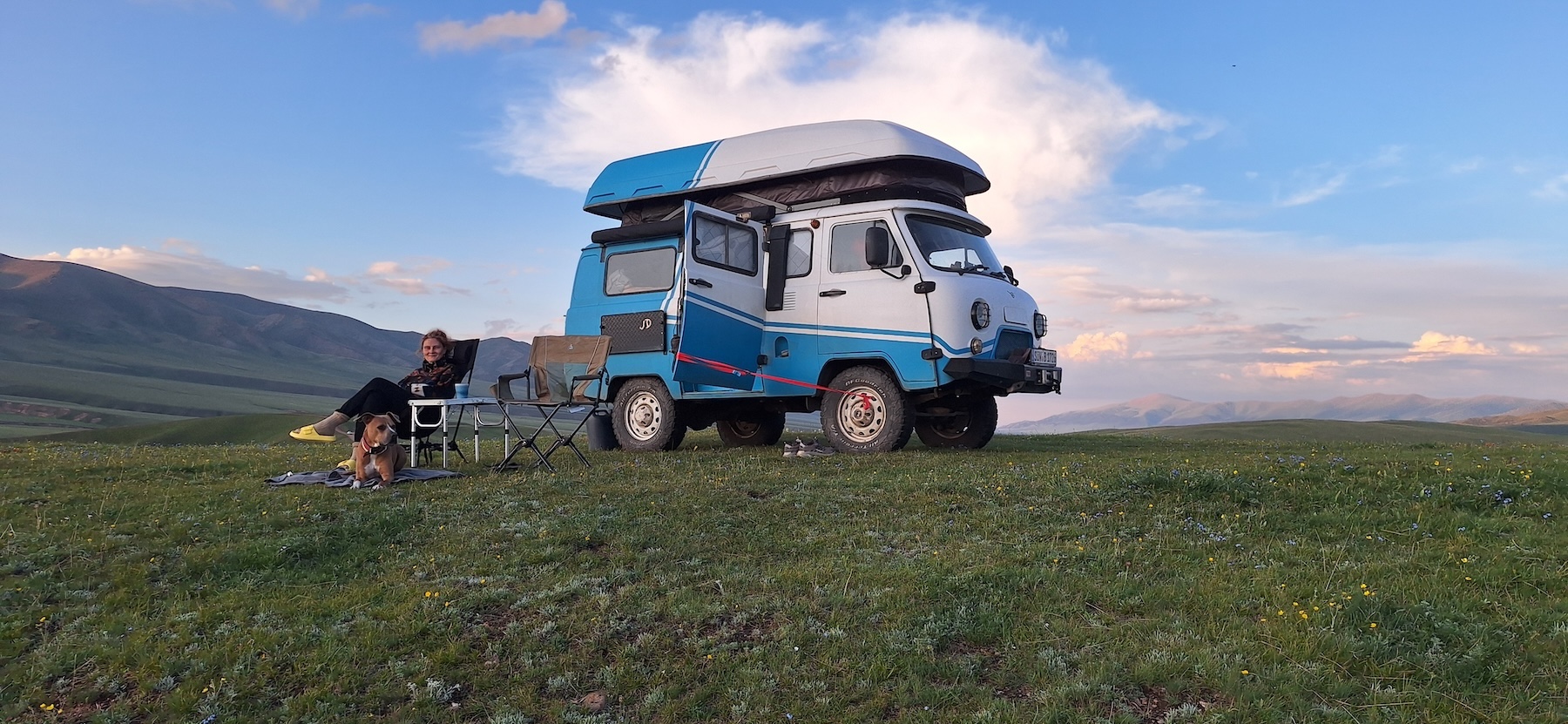
We drive a UAZ Buchanka, an old Russian military vehicle design built around 2021—but not just any one: Ours is a truly special variant, of which there are only a few. It has a pop-up roof that lets us stand comfortably upright inside, and we even sleep “upstairs” on a homemade, roll-out slatted bed frame. It also comes equipped with a winch, a snorkel, a lift kit with special springs and a modified undercarriage, Raptor paint, a spare tire, and four-wheel drive with low-range gearing and a rear differential lock. We outfitted it all ourselves, with exactly what we really need: We’re completely self-sufficient on the road, with our own solar system, water supply, and cooler. Plus, it has an eye-catching blue-and-white paint job, seat, window, and cabin heating—and surely a few other features we can’t even list them all anymore. The only thing missing: air conditioning. But there’s hardly a trail this car can’t handle.
On our first trip, we were still traveling in a Ford Transit we’d converted ourselves—we sold it before our second, bigger trip because it was clear: for Central Asia, we needed something different. Originally, we wanted a Land Rover Defender or a Land Cruiser—we were even close to buying one. But that would have required a loan, and we didn’t want to get caught up in that cycle. Then Dominik found an ad for a Buchanka. We were determined to go to Central Asia, and there are endless spare parts available for this car there, and in principle, almost anyone can fix it. When we sat inside it, it just felt right—even though we knew it was “a little crazy.”
Were there situations along the way that probably would never have happened without your UAZ Buchanka?
All the time. The car is a real magnet for encounters. In all ten countries we’ve traveled through so far, people honk, give us the thumbs-up, and film us. We’ve even been recognized and “spotted” on Instagram by strangers. At every supermarket, people come up to us: “Where are you from? Is that your car?” We’ve also carried out six rescue operations for others using the car—winch, low-range gear, the whole works. The most adventurous of these was actually our very first one, in Georgia: A river that had been a harmless trickle that morning had turned into a raging torrent by the afternoon—and, of all times, that’s when some locals tried to drive across in their vehicle and got stuck right in the middle of it. Using a winch and joining forces, we got them out of there—a pretty wild start to our career as unwitting roadside helpers. We say—half-jokingly—that we’re basically the ADAC of Central Asia. One scene that has stuck with us: In Shymkent, Kazakhstan, while we were stuck in traffic with the window open, someone tried to slip a bill through it—simply because we were driving a car like that.
How do people react to your Buchanka?
We could probably keep our own FAQ list by now, we hear the same questions so often. “What kind of engine do you have in there?” is the classic one, closely followed by “Did you really drive this car all the way here?” —usually accompanied by a look of disbelief that wavers between admiration and slight skepticism. Others ask more practical questions: “Isn’t it incredibly exhausting to drive this?” or “Where can you even get a car like this?” And as soon as we pop up the roof, we’re almost guaranteed to hear: “Is that a boat up there?” Especially in Central Asia, many people also ask us why we, as Germans, aren’t driving a Mercedes but instead this vehicle, which is generally considered rather basic there—it’s precisely this contrast that sparks great conversations every time.
What do you love about your UAZ Buchanka? And what sometimes drives you to despair?
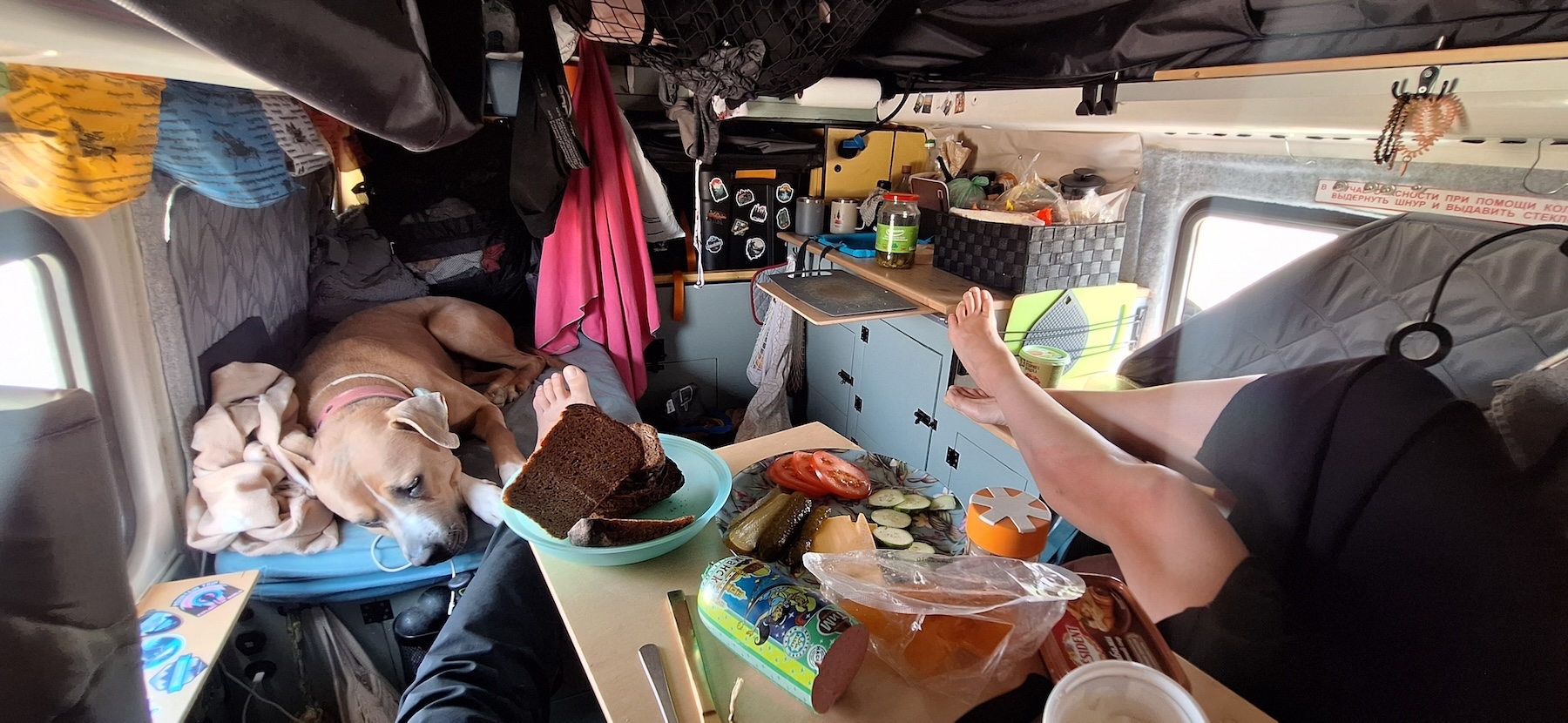
We love how much space this little vehicle offers—a pop-up roof for sleeping upstairs, a living area and kitchen downstairs, and enough room for the two of us plus our dog. We’re also proud of the custom interior, which Dominik built entirely on his own. What drives us to despair is that we have to check under the car and in the engine compartment practically every day to see if everything is tight—it sometimes feels like walking on a knife’s edge, wondering if the engine will even start the next morning. And the constant new noises—you always have to figure out what’s causing them each time.
If you were to set out again today, would you choose this exact vehicle all over again?
Yes, without hesitation. At first glance, you might briefly think of a car with more comfort, fewer glitches, and more reliability. But in hindsight, it becomes clear to us time and again: The journey is the destination, and this very car constantly forces us to step out of our comfort zone. With this car, we’re constantly learning—about the car itself, but just as much about life, about creative solutions to problems we could never have imagined before, and above all, about ourselves. With every problem this car throws at us, we grow a little beyond ourselves. Sure, there are moments when we curse and wonder why we put ourselves through this “crappy car” of all things. But that’s exactly why we’ve met so many people and had so many encounters that would never have happened without these challenges. We’ve learned to tinker with the car ourselves, to make repairs with wire and improvisation that we never would have thought we could handle—and, above all, to stay calm in stressful situations. Who knows how all of this might come in handy someday.
“When we’re old someday, we want to be able to tell funny, crazy, adventurous stories about our lives. Not just about how we once had a good job with a great career path.”
What does a typical day look like for you guys when you're on the road?
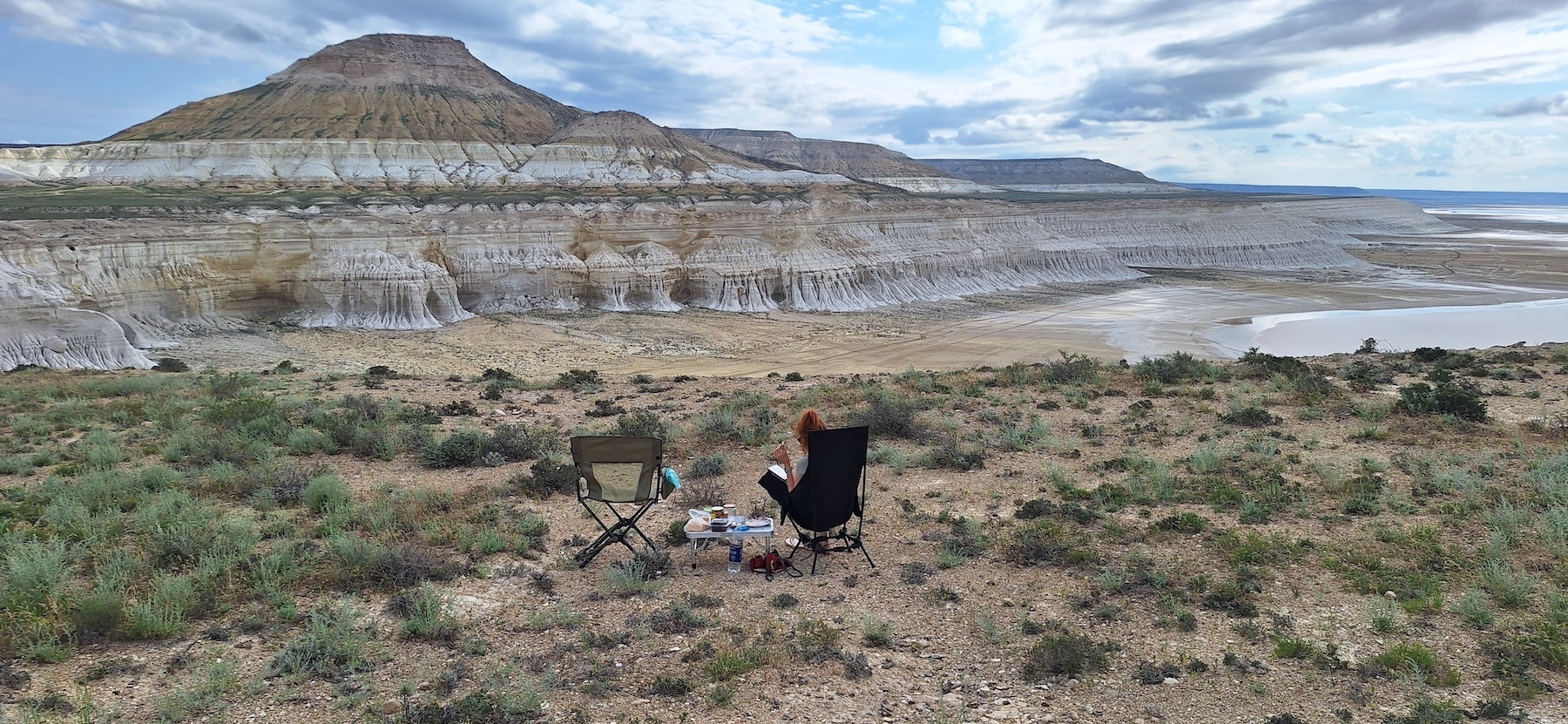
There’s no alarm clock to jolt us awake—we usually wake up on our own as soon as the first rays of sunlight filter through the tarp. Dominik is the first one up in the morning: he takes Bella out for her first walk while Jana stays in bed a little longer. When he gets back with the dog, he makes coffee, and as soon as the aroma of coffee fills the air, Jana gets up too. Then we sit together, drink our coffee, have breakfast, and just enjoy the view for a while, no matter where we happen to be.
After that, we decide on the spot how the day will unfold: Either we stay at the beautiful spot where we are, or we pack up and move on. If we stay, our day looks very different—we read, watch a movie, go for a walk, play cards, have a beer in the evening, and just enjoy the scenery. Strikingly often, our conversations revolve around the future: How should we proceed, what’s next, where does each of us actually want to go? After all, for us, traveling is no longer a project with an end date—it’s simply our life.
Where have you stayed much longer than planned—simply because you didn’t want to leave?
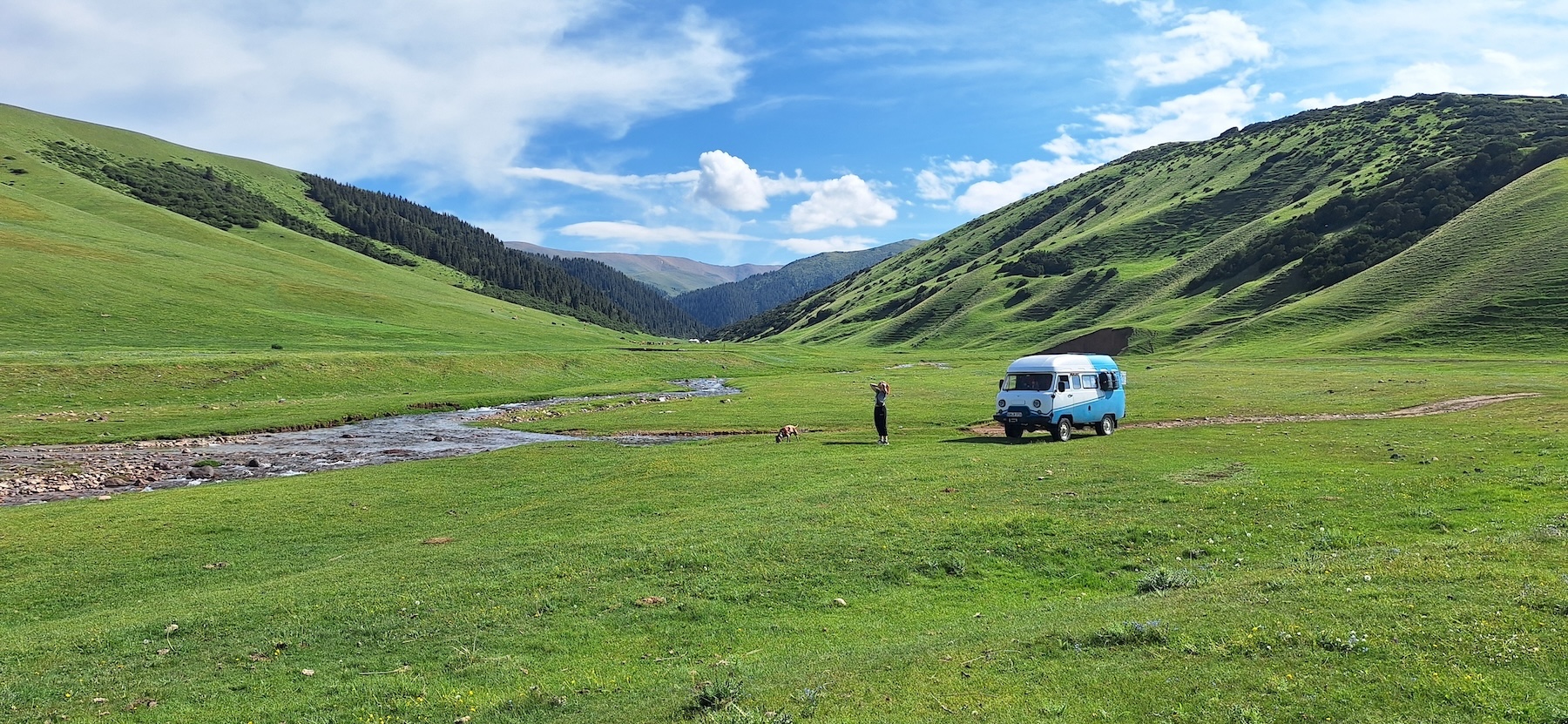
To be honest: almost every place we’ve been so far. Especially in Central Asia, the diversity of the landscapes is so overwhelming that we keep staying longer than we actually intended—the steppe in Kazakhstan, for example, was simply breathtakingly beautiful to us. Our pattern is almost always the same: we prefer to stay where there are as few other people as possible. In the end, it’s usually our supplies that determine how long we stay—we actually always have enough food with us, but drinking water is the limiting factor. As long as that lasts, we prefer to stay rather than keep traveling.
Even on our first trip through Europe, we had more leeway for this because, as Germans, we can simply stay longer there—on the Black Sea in Bulgaria, for example, we spontaneously stayed much longer because it was so beautiful and the weather cooperated. In the end, it’s almost always the same principle: if a place feels right, there’s no reason for us to leave it just yet.
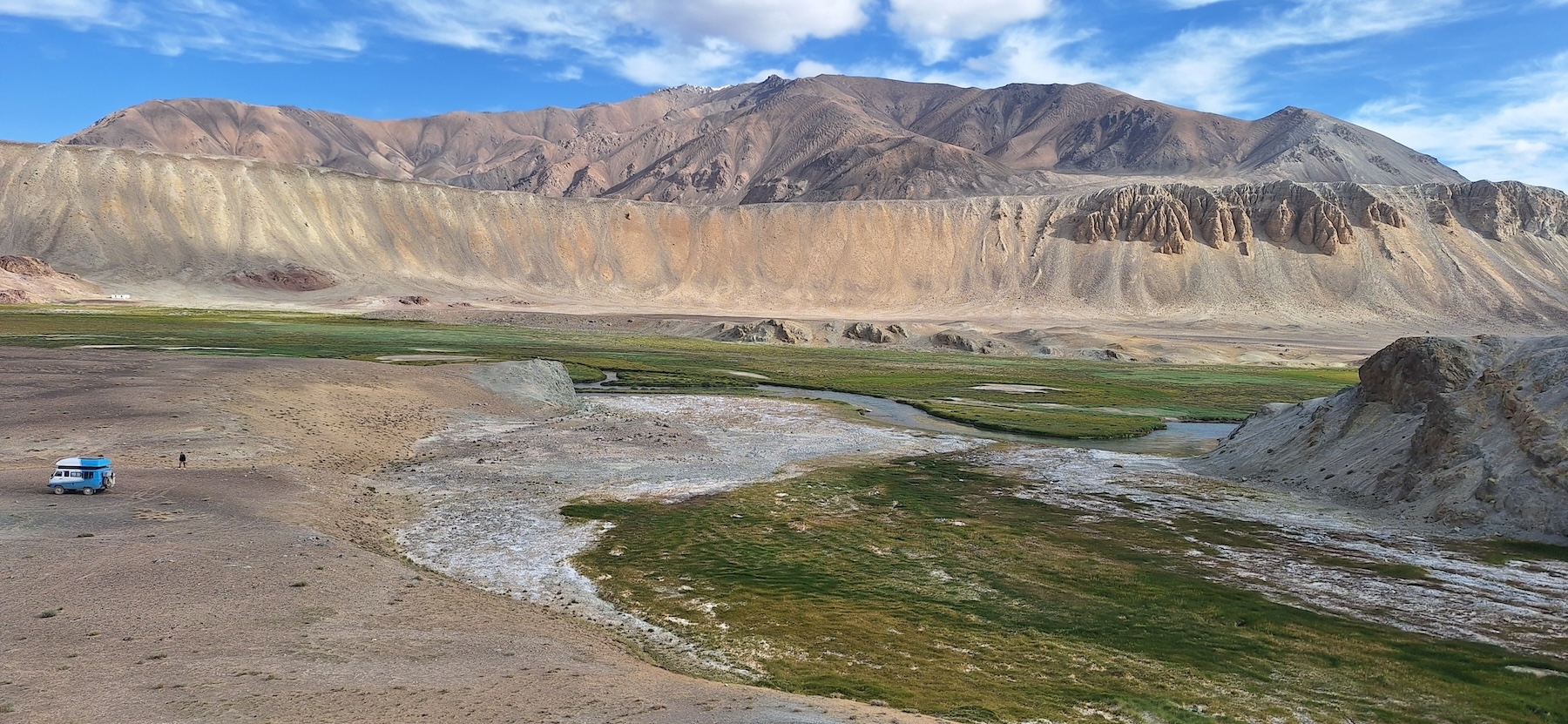
When did you find yourselves thinking along the way, “What the heck are we actually doing here?”
For us, the question should actually be the other way around: “What on earth do we still have to do to make sure we don’t have to go back to our old lives?” We never actually had any serious existential crises about the trip itself—at most, just the occasional very, very bad day that we saw coming.
The winner in this category: Georgia, right at the very beginning of this trip. A suspicious noise while backing up needed to be “quickly checked”—that quick check turned into three days at a repair shop in Tbilisi, including sleeping under the open sky on the shop’s grounds. Sounds romantic? It wasn’t. Right next door, a car wash ran until 4 a.m.; on the other side, the first public buses started honking at 4 a.m.; and for nightly entertainment, we had a live, in-color show: Tbilisi’s packs of stray dogs fighting over their territories in the middle of the night—and we were right in the middle of it all in our tin tent. At that moment, we seriously wondered what on earth we’d done to deserve this. Shortly after that, of course, the car broke down again—our third trip to the repair shop in a row. It also took us three months to finally realize: This isn’t a temporary trip anymore; this is simply our life now.
But here’s the important thing: No matter how chaotic, loud, or annoying things got in moments like those—we never felt like we’d made a mistake by going on this trip. Annoyed by the situation? Yes. Doubted the whole idea? Never.
And when did you think exactly the opposite?
One scene that stuck with both of us, shortly before we left: We were driving through the Palatinate Forest in our new car, through a section where certain vehicles were prohibited—ten minutes later, a forest ranger was standing next to us, asking what we were doing there. It was just a brief moment, but it suddenly made us realize just how much control and regulation is actually the norm in our everyday lives back home—and how liberating it feels that exactly that is simply nonexistent here in Central Asia. It’s precisely in moments like these that we realize: That’s why we’re doing this. And this feeling actually stays with us constantly when we realize where we actually are right now—that just a year ago we were still wondering what Kyrgyzstan would be like, and now we’re actually on the Pamir Highway.
“With every problem this car throws at us, we grow a little beyond ourselves.”
What story do you think hardly anyone back home believes, even though it happened exactly as you describe?
Probably how deep the hospitality here really runs. When we talk about it, we often get a polite but skeptical smile back home—as if to say, “Sounds nice, but there’s got to be a catch.” After all, the picture we see in the news is usually quite different: theft everywhere, danger everywhere—you have to be careful. To be honest, we can’t confirm that image—on the contrary, we’ve often felt safer outside of Germany than we do at home.
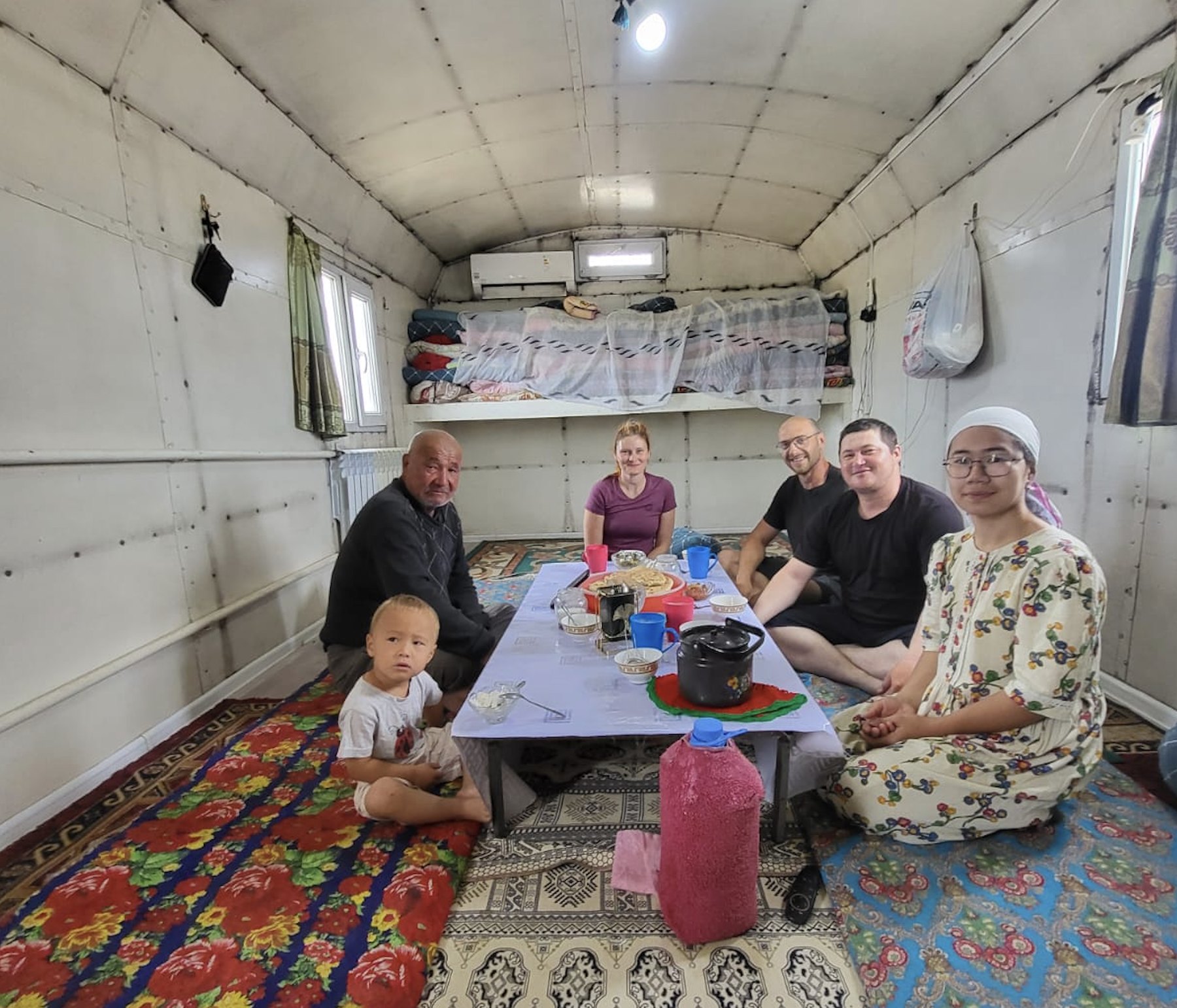
What we’ve experienced instead: Complete strangers knocking on our car window just to hand us some bread. Families spontaneously inviting us into their homes for tea, for a meal, sometimes for an entire evening. And whenever we’ve had a problem, people have suddenly appeared who’ve dropped everything to help—without us ever having asked them to. But what touched us most of all was something else: We spoke with people who truly live with only the bare necessities—without running water, without electricity—somewhere in the mountains. And when you ask them what it’s like to live that way, they tell you with a genuine smile on their face: It’s the most beautiful life you can imagine. The day is long, there are no constant distractions from the internet, you’re together with your family—that’s enough. That’s exactly the story that often meets with nothing but incredulous head-shaking back home: that it’s precisely where people have the least that you find the most genuine warmth and contentment.
Tell us about a mishap you can laugh about today.
We’ve got a whole category just for that. The classic one dates back to our very first trip, in the Ford Transit, and is still Hollywood-worthy to this day: We’re driving, we’re driving—and suddenly our engine dies right in the middle of a railroad crossing in Romania. No train in sight, but still: pure panic; we pushed the car with all our might back off the tracks. Anyone who’s ever experienced this scene in person will never forget it. Shortly afterward, the police drove by, saw us standing there—and instead of making a big fuss, they simply turned on their siren briefly, as if to say: “Get out of there,” and drove on. That was the extent of the drama. But since it was the weekend, we had no choice but to camp out for two nights on the grounds of a Ford repair shop—which included making friends with the security guard and walking to the nearby Lidl. On Monday, a mechanic found us and invited us straight to his house after work: first coffee, then beer, then homemade schnapps—along with half his neighborhood, including his cop buddies. A broken-down car turned into a village party practically overnight.
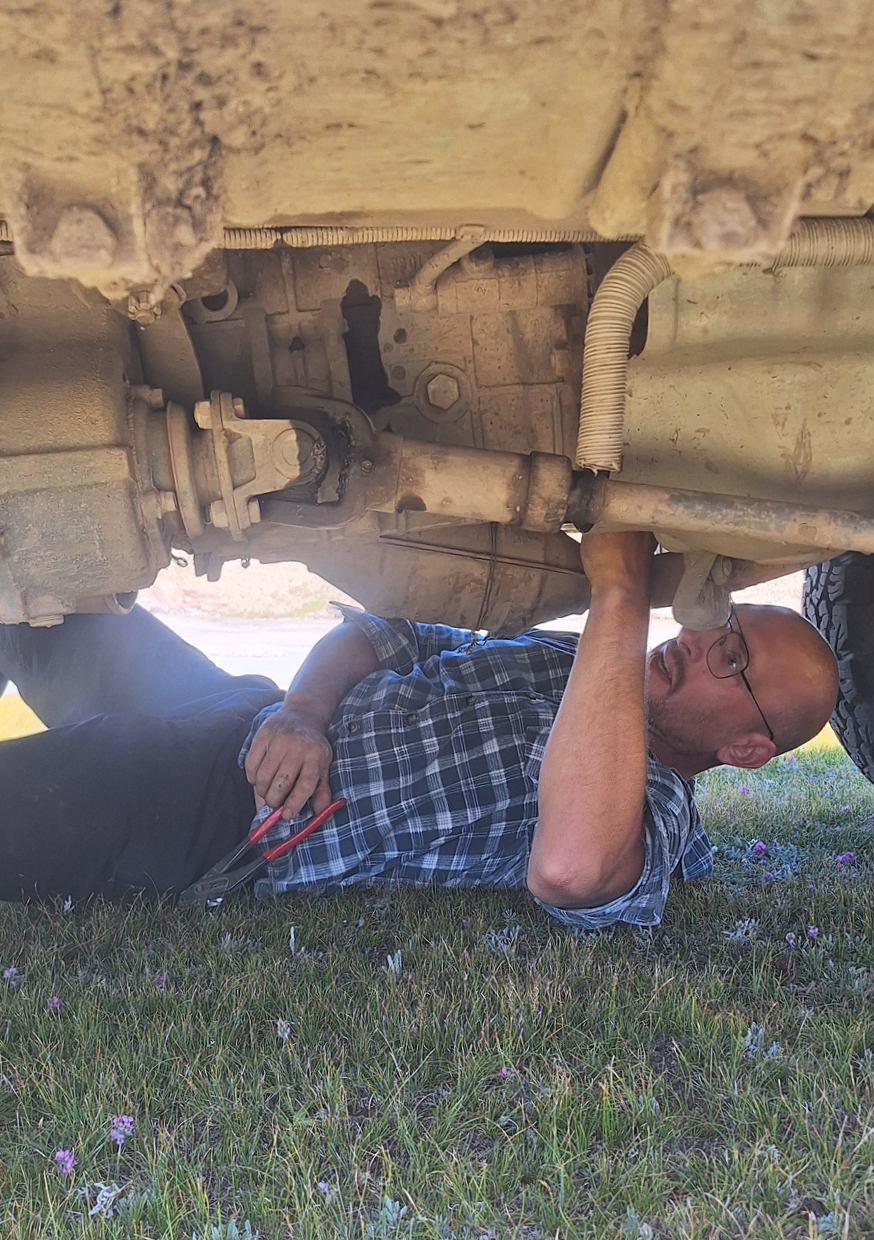
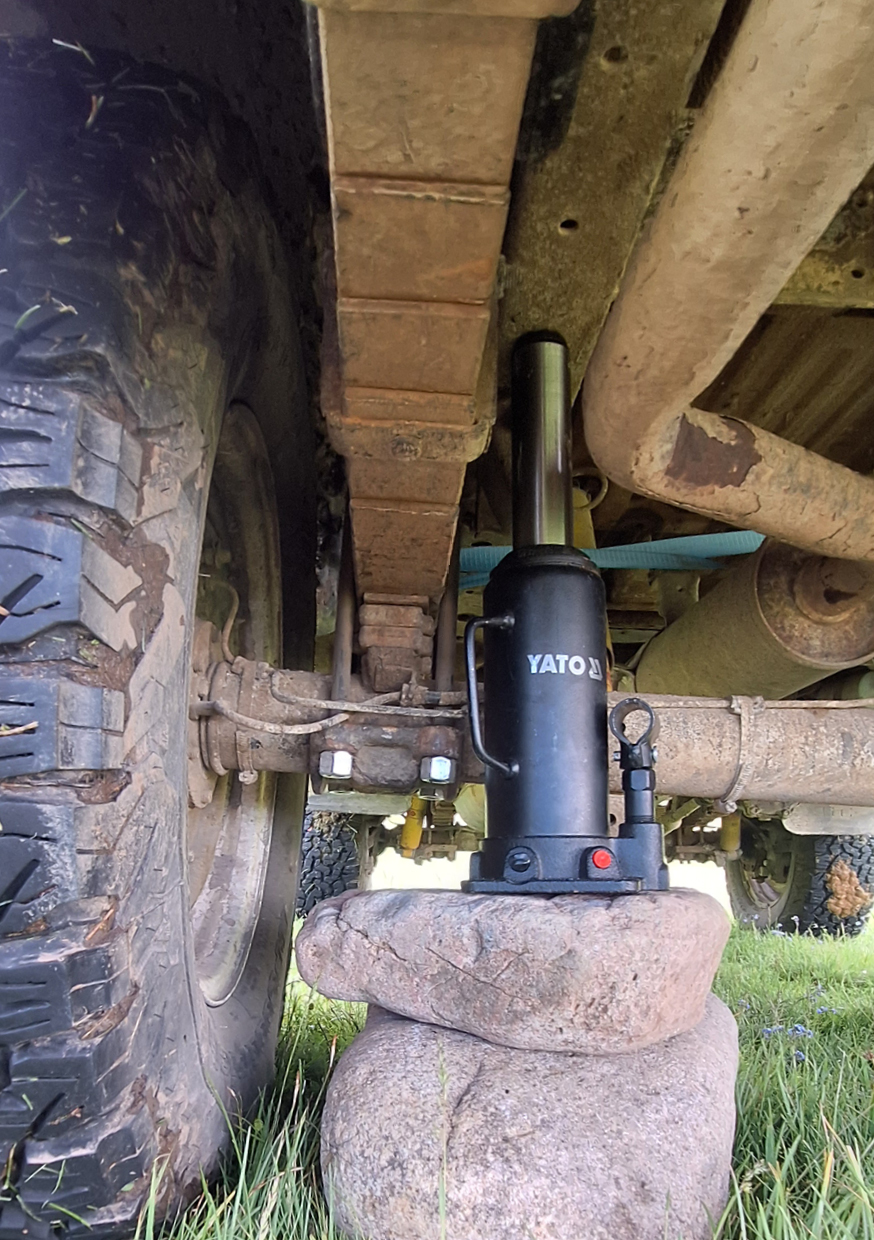
With the Buchanka itself, we’ve had a total of 13 garage visits so far—which is why our followers on Instagram affectionately call us “garage influencers,” since we end up in a garage at least once in practically every country and every major city. The most annoying ordeal was a cracked fuel tank at the filler neck on the Assy Plateau in Kazakhstan: The pressure from all those off-road kilometers uphill was simply too much; the whole ordeal dragged on for weeks, cost us three trips to the repair shop—and in the end, we even ended up with the wrong replacement tank. It’s almost become standard procedure by now: the exhaust system, including the catalytic converter, which once completely ripped apart—Dominik quickly tied everything together with wire so at least nothing would fall off until we reached the next repair shop. And then there was our retrofitted leaf spring, which just fell off while we were on the trail—we had to stop and find it in the dust before we could have it welded back on at the next town. To be honest: With this car, basically every breakdown is something to laugh about, because it’s stressful in the moment but almost always turns out to be solvable in hindsight.
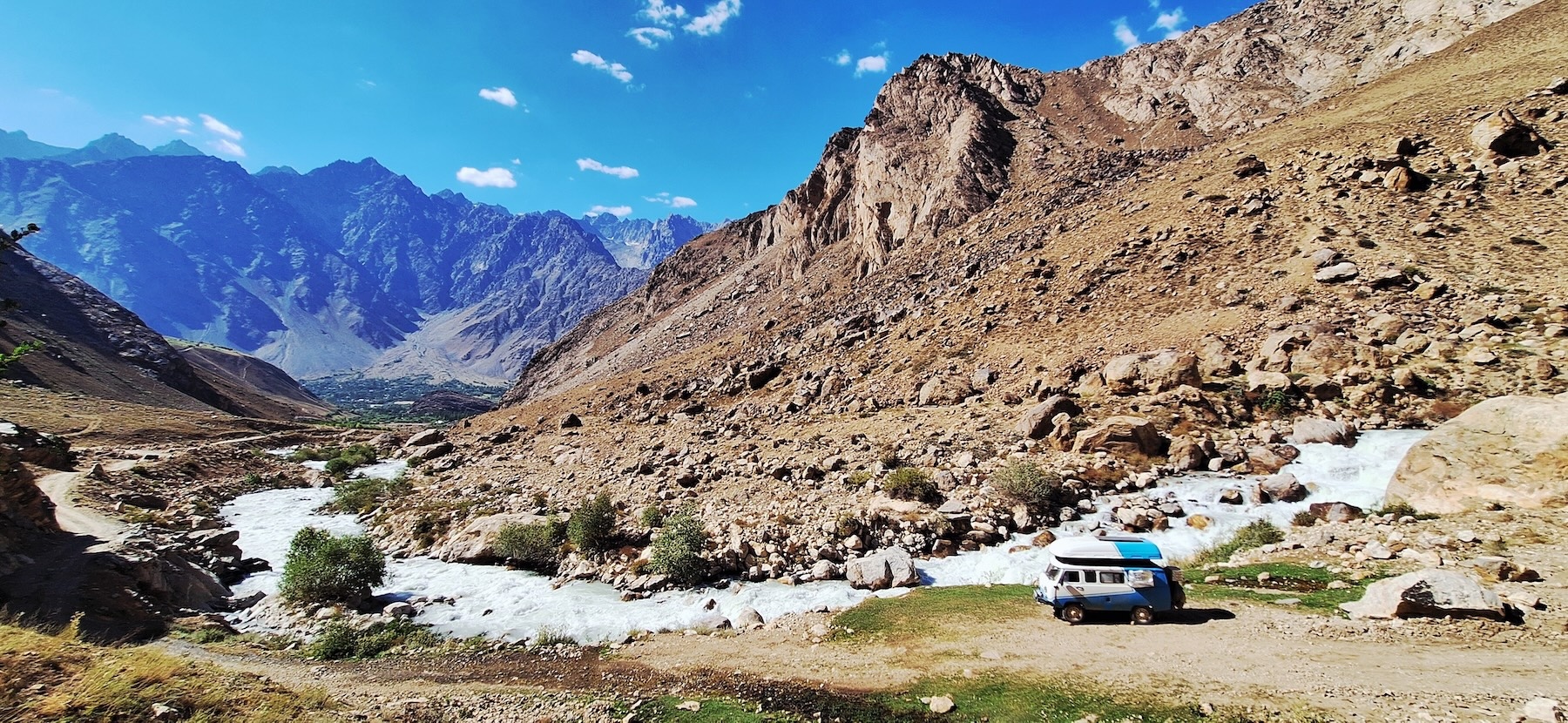
What was the most expensive lesson you learned on your trip—not just financially?
Financially, for example, choosing the wrong vignette category in Hungary, which ended up costing us two traffic tickets and a total of 260 €. Or a welder in Kyrgyzstan who was supposed to repair our exhaust and catalytic converter, took 50 € from us, and then did a shoddy job—another mechanic had to completely redo the weld later. We were annoyed that we didn’t haggle over the price there. A real lesson—not a financial one—was how much we can let horror stories and travel warnings drive us crazy beforehand—for example, before crossing through Russia. In the end, much of it was manageable, even if it was exhausting (e.g., a seven- or eight-hour wait at the border).
What would you do completely differently today—and why?
To be honest, we wouldn’t change much in terms of the trip itself—otherwise, we wouldn’t be where we are today. If anything, we’d take a more relaxed approach to the start of the second trip. The last two or three months before departure were extremely stressful due to the combination of quitting our jobs, converting the car, and not knowing exactly how long the trip would take—that really took a toll on our nerves. Even the decision not to go to Mongolia (due to time constraints, a delayed crossing of Russia caused by garage stops in Georgia, and the risk to our dog from foot-and-mouth disease) is one we wouldn’t have made any differently in hindsight—life on the road simply decides many things for you.
“No travel guide, no photo, and no Instagram post can capture what it means to be part of a foreign family for a few hours.”
Which person still sticks in your mind to this day?
We truly cherish every single encounter we’ve had on this journey—and there have been so many people by now that we can hardly count them all. Still, there are a few who have left a special impression on us.
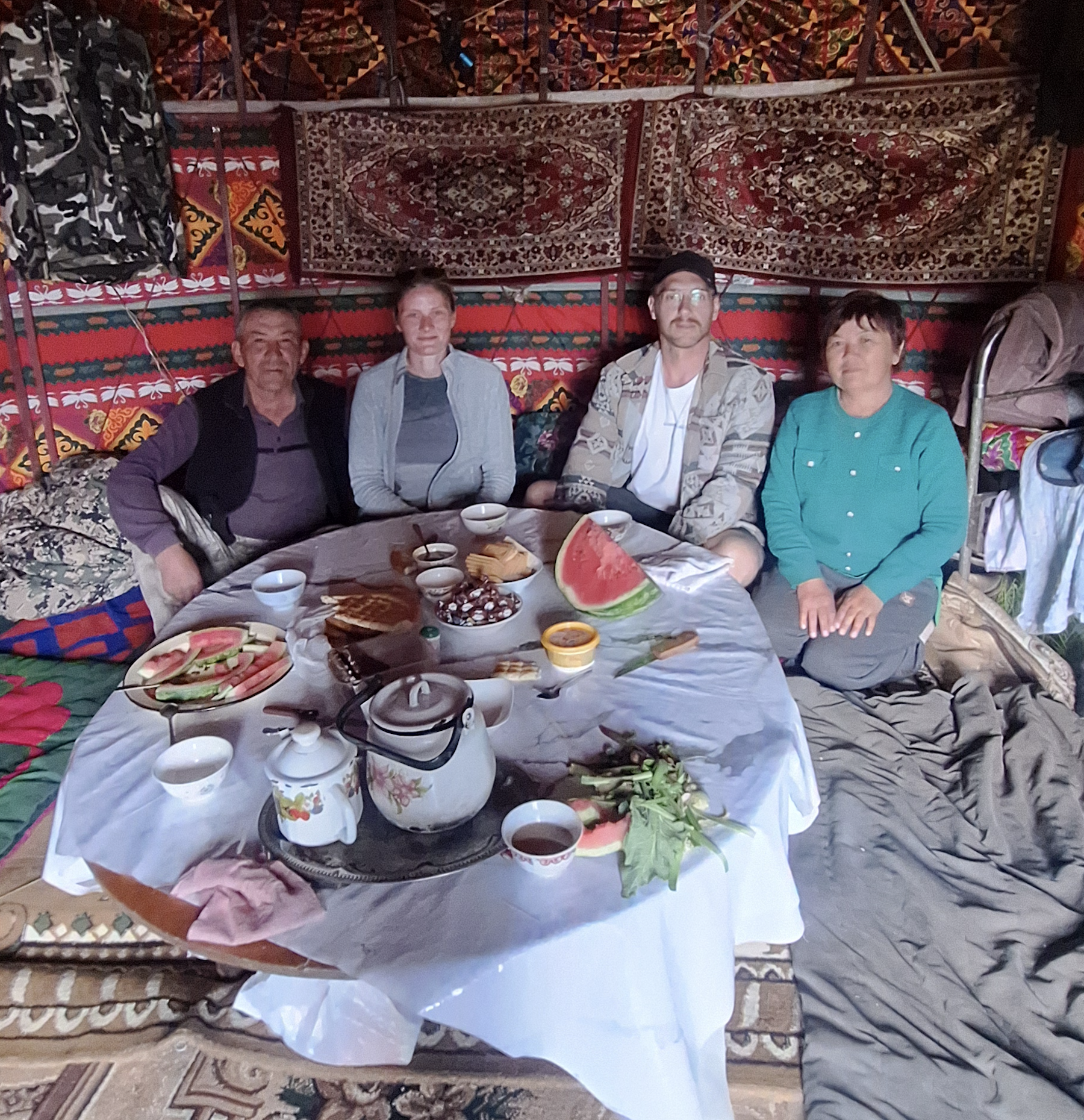
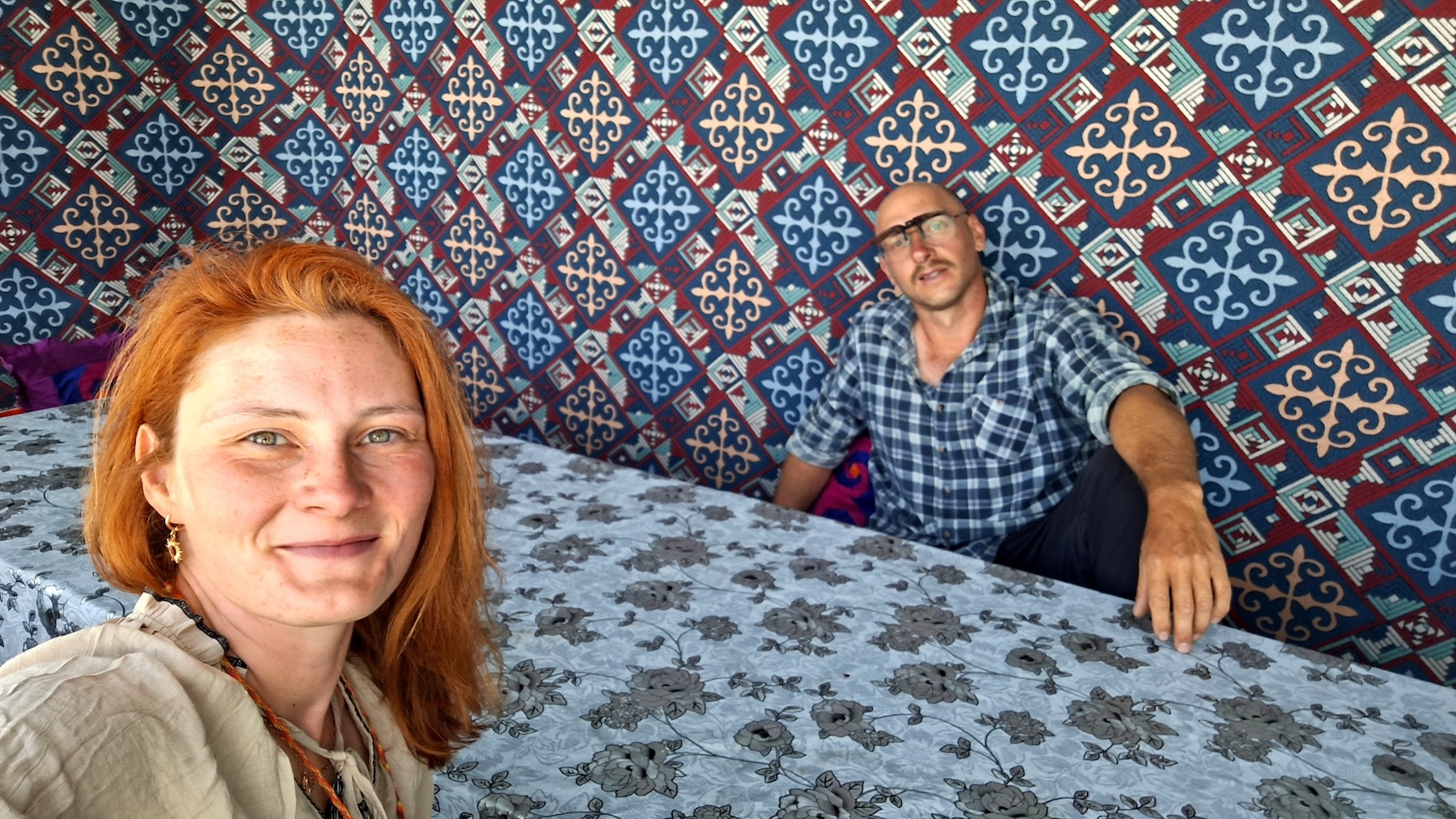
For example, a family on the Assy Plateau in Kazakhstan: A horseman rode past our bus with his daughter, and we struck up a conversation. A brief encounter turned into an invitation for tea in their yurt—and that tea turned into an entire evening with the whole family: his wife, their youngest children, and later even a friend of theirs joined us. We didn’t want to be a burden and had only planned to stop by briefly, but we ended up staying until after dark. We were served plov—that typical, lightly fried rice with meat, probably horse—from a huge communal bowl that everyone helped themselves to. The next morning, as a farewell, we were served laghman, and in that moment, we simply felt like part of their family.
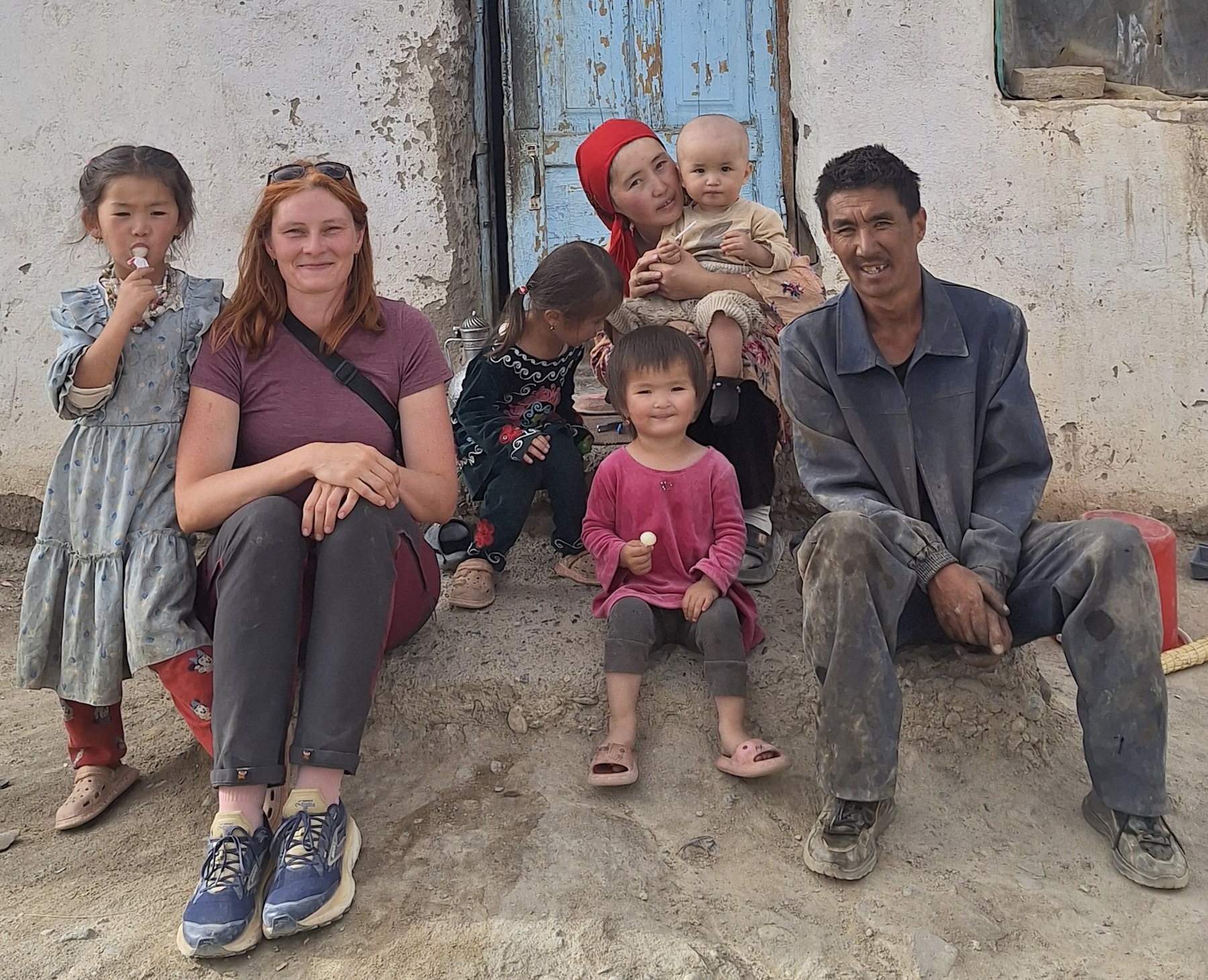
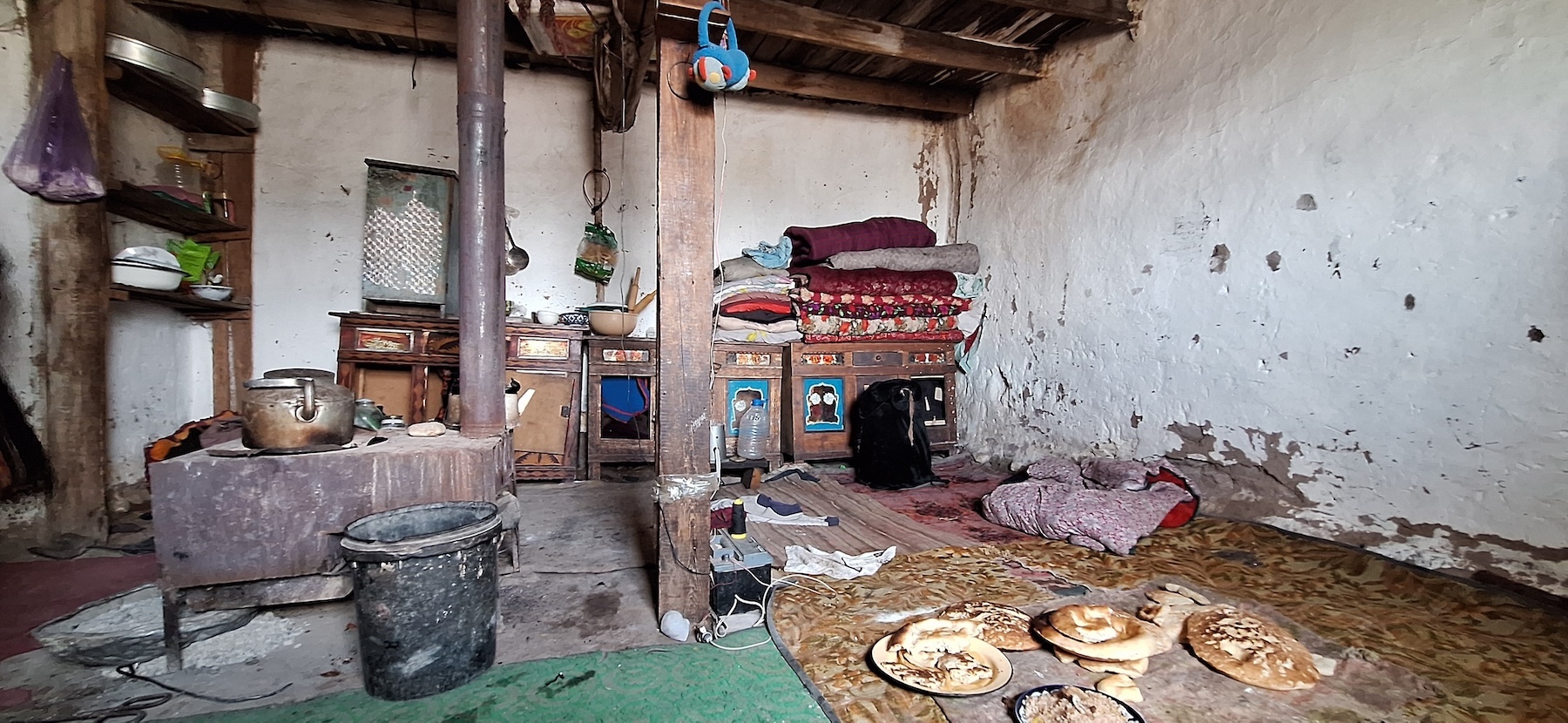
In Kyrgyzstan, near Peak Lenin, we happened to end up on someone’s private property and were spontaneously invited in. The family there had very little—they lived in an old mud hut—and yet they shared their food with us as a matter of course, simply because they were happy that someone was interested in them and striking up a conversation.
And on the Pamir Highway, we ended up at a man named Askar’s place more by accident than anything else. In the end, we slept on his property, ate and talked late into the night, got to know his whole family, and toured his Pamir house. Moments like these are the real reason why we love this life. No travel guide, no photo, and no Instagram post can capture what it means to be part of a foreign family for a few hours—people who have never seen us before but still give us everything they have. It is precisely these encounters that stay with us when the landscapes eventually blur in our minds.
Was there an encounter that changed you?
A woman in a yurt on the Assy Plateau made a particularly strong impression on us. When asked if life up there—without running water, electricity, or heat—wasn’t hard, she replied with a smile: “No, this is the best life there is.” You’re together with your family, you earn a little money—that’s enough.”
And that’s not an isolated case. We hear this again and again from all kinds of people we meet along the way: that they’re content with what they have—and you can really tell they mean it; it’s not just a polite platitude. Many of them deliberately choose not to work as much or be under the kind of pressure to perform that we’re used to in Europe. Such encounters with people who seem completely content despite having few material possessions have left a lasting impression on us and have repeatedly made us question what we actually need to be happy.
“Either way, we’d end up with something no one can take away from us: stories to tell, instead of having to say one day, ‘If only we’d done it.’”
Was there anyone along the way who helped you, even though they really had no reason to?
To be honest, so far it’s almost always been the other way around—we’re more often the ones helping than the ones in need of help. No wonder—our car is practically a mobile workshop: With a winch, tools, and everything you need for minor and major emergencies, we’re usually better equipped than others traveling on the same trails. We’ve already pulled off six rescue operations with the car—winch out, low gear in, vehicle back on its feet. We say—half-jokingly—that we’re basically the ADAC of Central Asia. We’ve also helped out whenever possible—whether with small things like charging travelers’ power banks from our car.
On the other hand, it’s rarely happened that someone has helped us for no apparent reason—so far, it’s usually been the other way around for us, knock on wood. The people who best fit this description are the mechanics we’ve met along the way: They were almost always exceptionally helpful, even when they could have theoretically said they didn’t have the right hose or couldn’t fix the problem. Even though that’s actually their job, this dedication often surprised us.
How do you finance this lifestyle—and how do you deal with the uncertainty?
It’s nothing fancy: good, old-fashioned saving. Even before our first trip in 2024, we set money aside intentionally, and after we returned, we consistently kept saving for about another year and a half—knowing that we’d need those savings for our second, bigger trip. Right now, we’re living off those savings and are in what we like to call “travel and enjoy” mode. A job while on the road would be nice, of course—as a side gig to bring in some digital income while we keep moving. But that’s not specifically on our agenda right now; we’re just seeing what comes up and what life on the road has in store for us.
We’re handling the uncertainty with relative ease. We’re fully aware that our savings won’t last forever and that at some point we’ll have to start thinking about what comes next. But we’re convinced that there’s always a way to make money somewhere if it really becomes necessary. And if all else fails, the fallback option is clear: go back to Germany and work there again. Knowing that we could always get back on our feet if need be takes a lot of the fear out of the whole thing.
What was your greatest luxury while traveling, even though it didn’t cost any money?
Standing in a beautiful spot and simply enjoying the scenery—that moment literally costs nothing, except the time it takes to truly appreciate it. That’s exactly what pure luxury means to us: no price tag, no booking, no reservation—just being there and taking it all in.
Just as precious to us is the time we truly have alone, just the two of us. At home, in the normal daily grind of work, you’re constantly tied up—commitments, work, clubs, appointments. How often are you really just there with yourself and your partner, without anything else getting in the way? Here, that’s our normal state, and that’s exactly what feels like luxury.
And then there’s something else we realize again and again when we pause for a moment: We’re part of a vanishingly small percentage of people who can even take a trip like this—and in our own car, no less, through countries like Kazakhstan or Kyrgyzstan. Sure, there are people who fly there. But traveling through these countries in our own vehicle, feeling safe while doing so, and truly getting to experience these landscapes and encounters—that’s the greatest luxury of all for us. Ultimately, luxury means one thing above all else to us: doing whatever we truly feel like doing, without anyone dictating how our day should unfold. As long as we’re not harming anyone or breaking any laws, that’s the highest form of freedom for us—and thus also of luxury.
“For us, traveling is no longer a project with an end date, but simply our life.”
What's the best part about traveling together?
Waking up together every morning and experiencing the day together from the very first minute—that sounds trivial, but it’s not. In everyday work life, one person usually gets up earlier than the other; everyone has their own rhythm, their own schedule. Here, it’s different: We literally share every morning, every cup of coffee, every sunrise.
And we truly share the experiences—not just afterward on the phone or over dinner, the way you do with friends back home who weren’t there themselves. When we say today, “Do you remember when we went through that?”, the other person was actually there, had the same images in their mind, and felt the same way. That makes the memories somehow much more vivid and real.
But what we appreciate most is that we grow together through situations we probably would never have experienced on our own. For example, when our retrofitted leaf spring broke in the middle of the trail, we had to figure it out together: How critical is this really? Can we keep going? What’s the solution, and how do we stay calm about it?” It’s precisely in moments like these that you realize how you support and strengthen each other—you don’t solve the problem alone, but always as a team. This mix of shared joy and shared challenges is, for us, the heart of what makes traveling together so special.
And what’s sometimes really crappy?
As nice as it is to be together practically around the clock—that’s exactly what’s sometimes the problem. After all, we’re still two independent people, and one plus one on the road isn’t just two, but more like eleven: Everyone brings their own mood and their own needs, but there’s hardly any real space to retreat. At home, you can say, “I’m meeting up with a friend now,” “I’m going to my hobby,” or “I need a few hours to myself.” On the road, that’s simply not possible in that way. Sure, you can go for a walk alone, or one person can stay in the car while the other goes out—but that’s something completely different from truly stepping away from each other’s company.
On top of that: When both of you are tired and exhausted, things can quickly escalate. You trigger each other because neither of you has the capacity left to stay relaxed and patient—and then every little thing can become the tipping point. Sometimes we don’t even realize in time where our own limits lie: We’ll just drive for eight hours straight, even though we really should have taken a break long ago—because we couldn’t find a good place to park, because we had to cover ground, for whatever reason. That’s no longer a conscious decision, but just happens, and in hindsight you realize: We could have spared ourselves that.
What do you guys usually talk about when you're out and about?
To be honest, there’s no specific topic—and “discuss” isn’t really the right word for us anyway. There have never been days when we’ve been angry with each other for days on end; at most, we’ve given each other the silent treatment for an hour, if that. But what we’ve noticed is that there are certain days when things are bound to get more stressful—and that has nothing to do with any specific point of contention, but simply with exhaustion.
Typically, it goes like this: We spend several days completely on our own in the wilderness, far from any civilization, without the internet, totally relaxed. And then we come back to a place like Murgab and have to cram everything that’s been left undone into a single day—shopping, refilling water, taking out the trash, registering somewhere, maybe even picking up dog food. Some of these errands are spread far apart; you first have to search for and find where things are, and getting it all done in a single day can get pretty stressful. By evening, we’re both completely wiped out—and it’s precisely in this state that a single thoughtless word is suddenly enough to turn the mood sour. It’s not really a fight, but our conversations become curt and a little “dumb,” as we call it. Not because we don’t want to listen to each other, but simply because we lack the mental bandwidth in that moment.
We’ve come to realize this about ourselves and handle it more consciously now: On days like that, we try to simply give each other some space for a little while, instead of turning a minor issue into something bigger. So the clear trigger isn’t a specific topic, but the pattern—days spent running errands in the city are the more critical days for us, whereas days without a set schedule are almost always relaxed and enjoyable.
Do you think your trip would have been different if you’d been traveling alone?
For Dominik, the answer is clear: He wouldn’t go on a trip like this alone. He needs someone with whom he can share how beautiful a moment just was or everything that happened that day—and for that, it doesn’t take just any partner, but the right one: someone who’s just as willing to venture into the wilderness, isn’t afraid of the unknown, is adventurous enough for trails that sometimes descend 200 meters steeply over scree and potholed paths, and who’s just as open to meeting new people and experiencing different cultures. He has found that partner in Jana.
Jana, on the other hand, is convinced that she would undertake such a journey alone—for her, it’s not a question of ability or confidence. What would change for her, however, is the quality of the experiences themselves: as a couple, they share the landscape, the encounters, and the adventures—big and small—in real time, rather than just recounting them afterward. That’s exactly what makes the decisive difference for her. Sitting together by the campfire in the evening, gazing into the flames, and philosophizing about life—this “shared space of resonance,” as Jana calls it, is one of the most beautiful parts of this journey for both of them, precisely because they experience it together.
Be honest: What’s one question you’re really sick of hearing?
We have our very own top 3 that we encounter in every country, at every campsite, and at every gas station: Is the engine original? Did you really drive here in this car? And—of course—is that a boat up there on the roof? That last question, in particular, comes up practically every time we pop up our pop-up roof—no matter what country we’re in. By now, we can practically recite the questions in unison before they’re even finished—and to be honest, we’re the ones who laugh the hardest at how reliably these three classics keep coming up.
What do many people think about your life on the road, even though it’s not true at all?
That it’s an “easy-peasy” life—just hanging out in nature, enjoying the scenery, and chilling. Especially on social media, where many friends and acquaintances follow along, this impression quickly takes hold: beautiful pictures, laid-back vibes, a life without chores. In reality, we have a completely normal daily routine that includes grocery shopping, tidying up, and above all: getting water. We’ve gone weeks without a real shower—we wash in rivers or with wet wipes and washcloths.
What many people also don’t see is that—unlike typical tourists—we’re currently literally in a different spot every day. That sounds exciting at first, but it’s also exhausting in the long run: searching for a new spot every day, getting our bearings, and starting from scratch to figure out where to find water or a store. And sometimes things don’t go as planned: You deliberately choose a secluded spot, just wanting to be by yourself—and then suddenly someone else shows up at the same campsite. That’s part of the experience, but it’s not always the romantic “alone-in-the-wilderness” scenario you’d hoped for.
What aspects of travel are romanticized on social media, even though reality sometimes looks quite different?
To be honest, quite a lot—and it starts with the campsite itself. On social media, you almost exclusively see the stunning views: mountains, sunsets, pure idyll. What you don’t see are the really bad campsites you sometimes end up at when you just don’t feel like driving any further and can’t find anything better—right next to the highway, littered with trash, anything but beautiful. Of course, nobody posts those.
Even everyday life is practically nonexistent on social media. You see tidy, nicely staged vans and cars—but the reality is different: with as little personal space as we have, after just a day or two it often looks like a bomb went off, simply because you can’t—or don’t want to—clean up all the time. And all that organizational effort—figuring out where to find water, where the nearest supermarket is, where we need to register, where to get dog food—takes up an enormous amount of time, but it never shows up anywhere. Quite simply because in those moments you’re busy and don’t pull out your phone to document exactly that.
But for us, the idea of traveling with a dog is especially romanticized. Sure, if you have a dog that gets along with everything and everyone, it might seem easy. But there are also many dogs for whom that’s not the case—and especially in countries like this one, but also in Europe, for example in Bulgaria or Romania, you constantly come across herding dogs that guard flocks of sheep or herds of cows and see every strange dog as a threat. You have to be constantly on the lookout: Is a herd coming this way? Is the grass infested with worms? Are there poisonous plants? What if the dog gets sick—as happened to us just recently, in the middle of nowhere with no internet, where we were only able to contact a veterinarian by pure chance via a friend’s Starlink connection. And then there are the very practical limitations: In the summer, you can’t leave the dog in a hot car, but you also can’t take him everywhere if it gets too hot, too loud, or too stressful for him. That means one of us often stays in the car while the other goes shopping—even though we’d actually prefer to do it together. And for the dog himself, every change of location is a minor shock: loaded into the car, driven somewhere, unloaded—without knowing what happened in between—almost like a daily kidnapping where he has to reorient himself every single time. All of this is part of everyday life that you almost never see on social media.
“We’d worked so hard, invested so much in our jobs—but at some point we asked ourselves whether we really needed that much responsibility and security at any cost.”
What did being on the road teach you that no school in the world could have taught you?
One thing above all: There’s a solution to just about every situation—you just have to find it. Whether it’s a broken leaf spring in the middle of the road, a tedious trip to the government office, or Jana’s passport issue that prevented her from traveling through Russia: There’s always a way forward, even if it looks different than you’d planned. And even if that path means you have to do without something or put up with something that doesn’t really suit you—life goes on anyway. A broken-down car doesn’t mean “the trip is over,” but rather “What are we going to make of this now?” It is precisely this confidence that a way will be found for everything—experienced firsthand so concretely and so often—that no school in the world could have taught us.
We were just as impressed by the openness and curiosity we’ve encountered everywhere we’ve gone. The people we meet are almost without exception friendly and curious; they ask us what we’re doing here, if everything’s okay with us, and if we need anything. At first, we were almost overwhelmed by it—you’re just not used to it and automatically think: Why are they doing that? What do they want from us? This skepticism is something we’re familiar with from Germany, where strangers rarely just strike up a conversation out of the blue. But eventually we understood: That’s just the way it is, especially outside of Germany. The people here love travelers—genuinely and without any ulterior motives. And it’s precisely this experience that has changed us: Today, we approach other people in a much more open, curious, and less suspicious way than we would have in the past—a lesson that no school could have taught us in theory; it’s something you simply had to experience.
What was your opinion before your trip—and would you say the exact opposite today?
We unconsciously had a somewhat distorted view of safety in these countries—partly because we’ve consciously stopped reading official travel advisory websites since we realized how much it drives you crazy. Today we’re convinced: We actually feel safer here in some ways than we do in Germany.
If you could give your “past self” one single piece of advice before leaving—what would it be?
“Live your life; don’t listen to others.” And: “Enjoy it—time won’t come back.”
When was the last time you thought while traveling, “Damn, we’re so lucky to be able to live this life”?
To be honest, almost every day—and it often starts with something as simple as getting up together. Coffee in a beautiful place, the silence, the view—all while knowing you don’t have to go anywhere. That feeling also comes over us when we meet people from completely different cultures who greet us with an openness and warmth unlike anything we’ve experienced in Germany. Moments like these often pop up out of nowhere, usually right when we pause for a moment and realize where we actually are—in the middle of Kazakhstan, on the Pamir Highway, in places we didn’t even know exactly where they were a year or two ago.
One example that stands out in our minds: To avoid the midday heat while driving, our alarm once went off at four in the morning. It’s actually a pretty unpleasant time to get up—it’s still dark and cold, and all you really want to do is go back to sleep. And yet, at the exact same moment, the same thought crossed both our minds: “Just imagine if you actually had to go to work right now.” And suddenly, getting up way too early didn’t feel bad at all—it almost felt like a privilege. After all, we were free to decide where our journey would take us that day, whereas at the same time in the past, we would have still been in bed, gathering strength for a perfectly normal workday. It’s exactly these kinds of comparisons with our old life that catch up with us time and again: what we would have been doing at this same time back then—namely, working—and what we’re able to experience right now instead. In those moments, we realize anew just how lucky we actually are to have chosen this life, as exhausting as it may sometimes be.
What does “One Life. Live It.” mean to you personally?
For us, this phrase embodies a simple yet radical realization: We only have this one life. We can’t just start over and say, “The old one was stupid; now here’s a new one”—this one is all we have, and we never know how much time we have left. It could be over today, tomorrow, or in twenty years. Yet so many people live as if they had an infinite amount of it—as if they could still put off actually living their lives until later. That’s exactly what we didn’t want anymore.
For us, “One Life. Live It.” therefore means living this one life in a way that feels right to us—and not the way society dictates. Society has a very clear idea of security: a job, a house, a car, an annual vacation. Our sense of security looks different. It doesn’t lie in possessions or a supposedly secure job, but in the knowledge that we can always make something of whatever life offers—that, if necessary, we’d take any job that helps us move forward when it really comes down to it.
In the process, we’ve also realized how surprisingly little we actually need to be happy. Not twenty cups in the kitchen cabinet, not a third car, not a big house. The most minimalist of arrangements is enough for us: the two of us, the dog, a roof over our heads that’s barely as big as our van. And we’re happier with this than ever before. For us, a big part of this sense of vitality also comes from living in tune with nature’s rhythm again, rather than racing against the clock. We wake up with the sun because light streams through our tarp, not because an alarm clock rings and we have to go to work. When it gets dark, we slowly make our way to bed. Even washing three hours’ worth of laundry by hand sometimes feels really good—you realize that it’s not just your mind that’s working, but your body too, and that’s exactly what makes you feel alive.
And finally, “One Life. Live It.” also means to us: doing what feels right for us, instead of doing what others expect of us—even if that means breaking free from societal expectations. When we’re old someday, we want to be able to tell funny, crazy, adventurous stories about our lives. Not just about how we once had a good job with a great career path.
If someone reads your story and finds the courage to set out on their own journey—what advice would you like to give them?
It’s sometimes harder than you think—but at the same time, it’s way cooler than you think. You can achieve almost anything you want, but it doesn’t come for free: You have to consciously decide what you’re willing to give up—temporarily or even permanently—to get there. It’s not a matter of “sacrifices,” but a conscious decision to do things differently when you no longer want to—or can’t—continue living your old life.
Follow Jana and Dominik on: