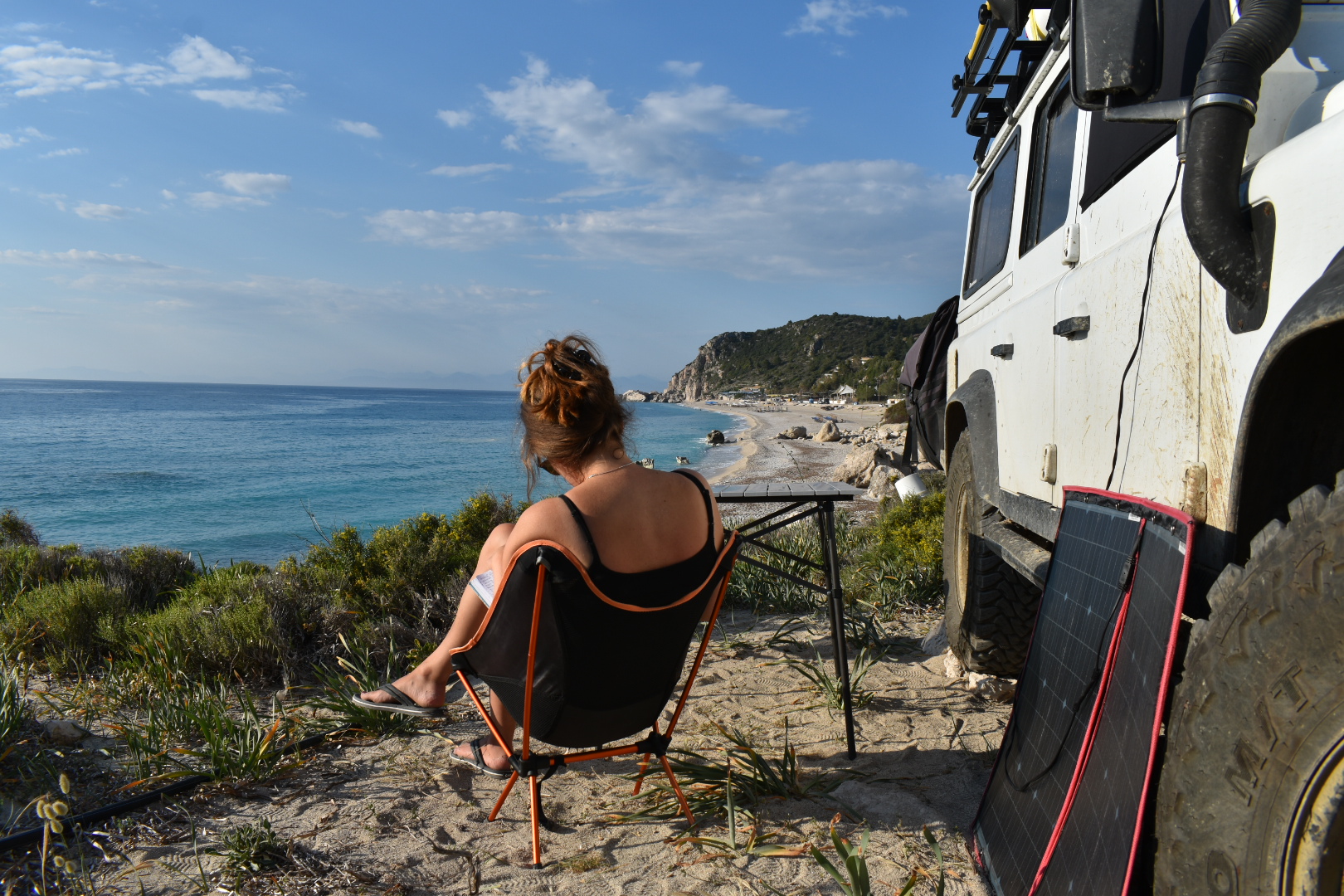
They really just wanted to be on the road a little longer. A vacation turned into a year, and a car became their home. What matters most to them are small roads, unplanned encounters, and the freedom of not knowing in the morning where they’ll end up that evening.
In OLLI Stories, we talk to people who live their lives differently—mindfully, courageously, and in their own unique way. No clichés. No glossy facades. Just honest answers to the questions you only ask yourself once the campfire’s burning and the small talk is over. Stories that show: There’s another way.
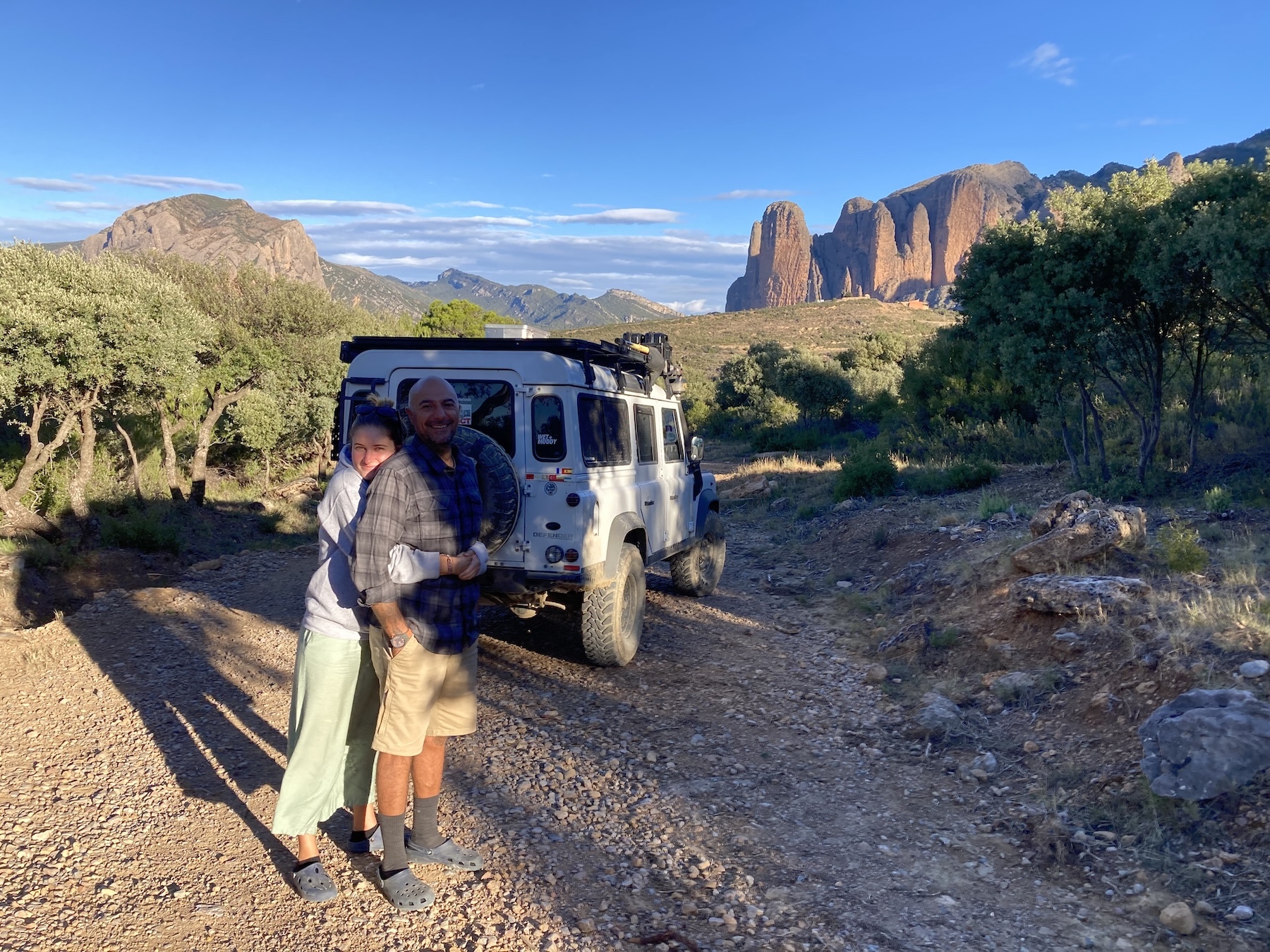
We spoke with Anna Lena and Davide about courage, wanderlust, mishaps, hospitality, and the question of why sometimes you should just stop waiting for “later.”
Who are you? How long have you been traveling? What have you experienced so far? Where are you right now, or where do you live?
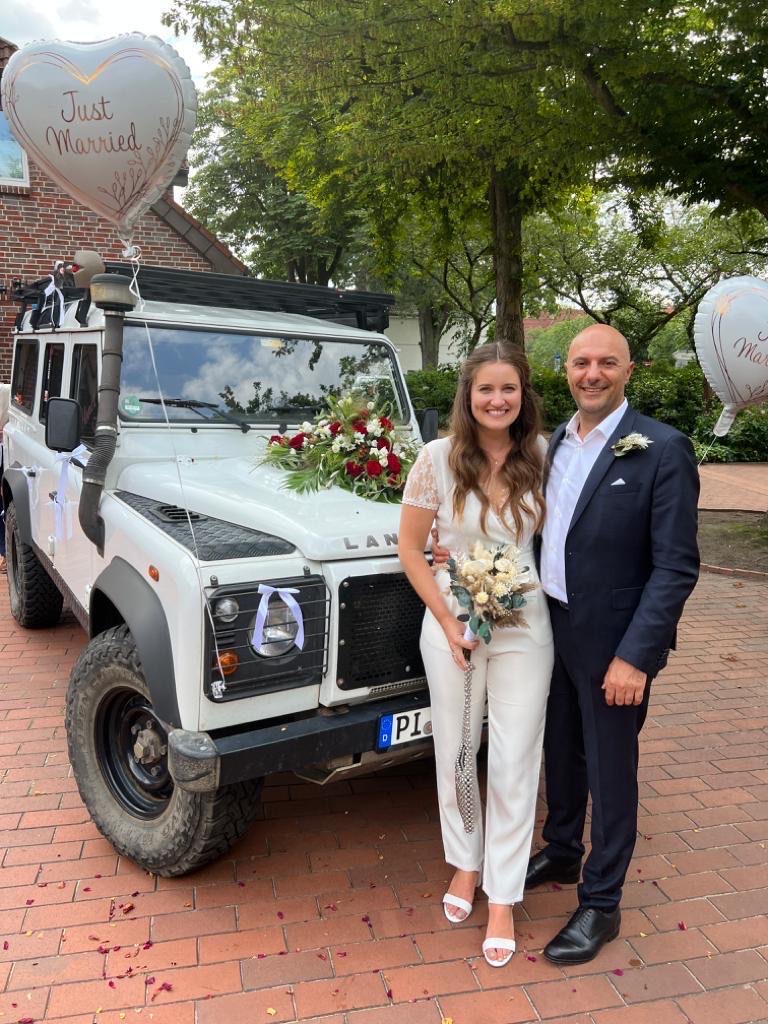
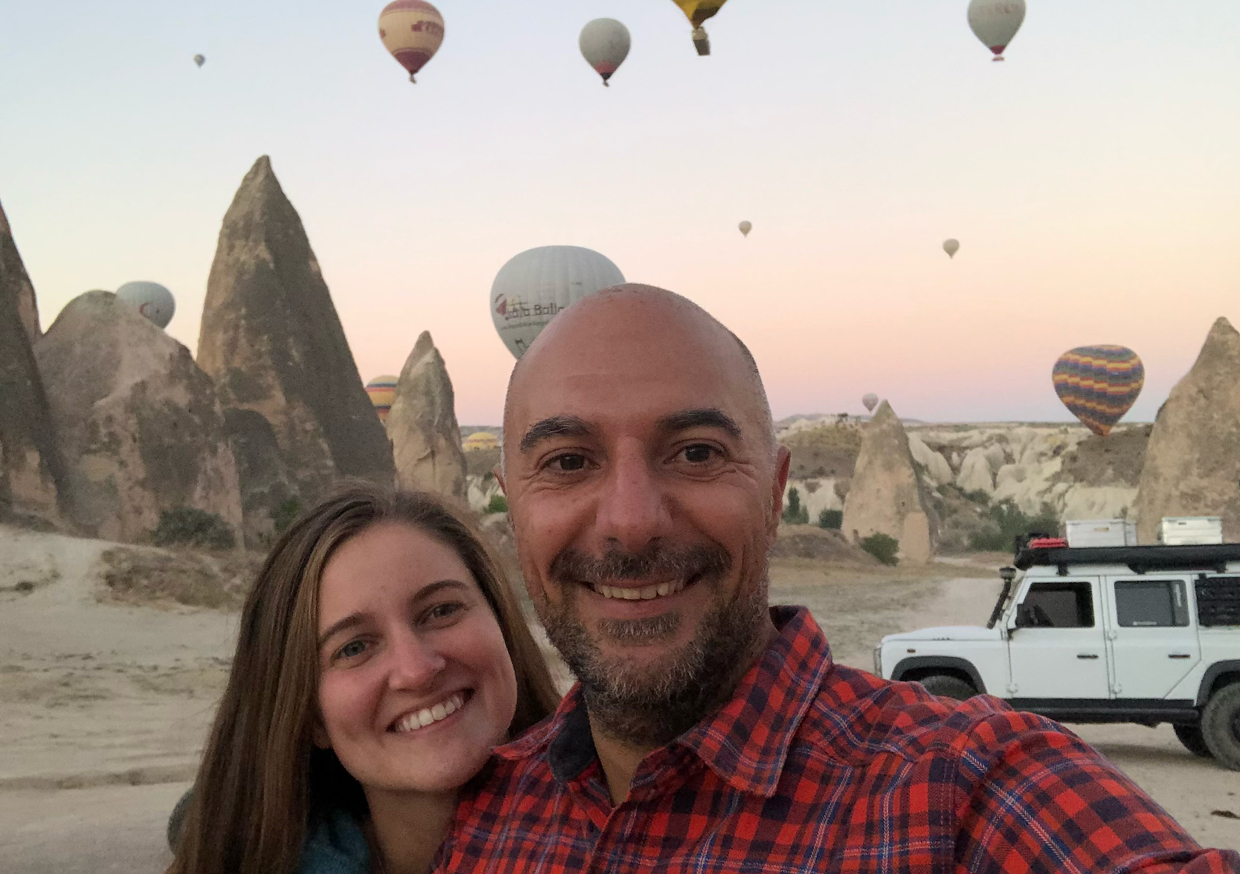
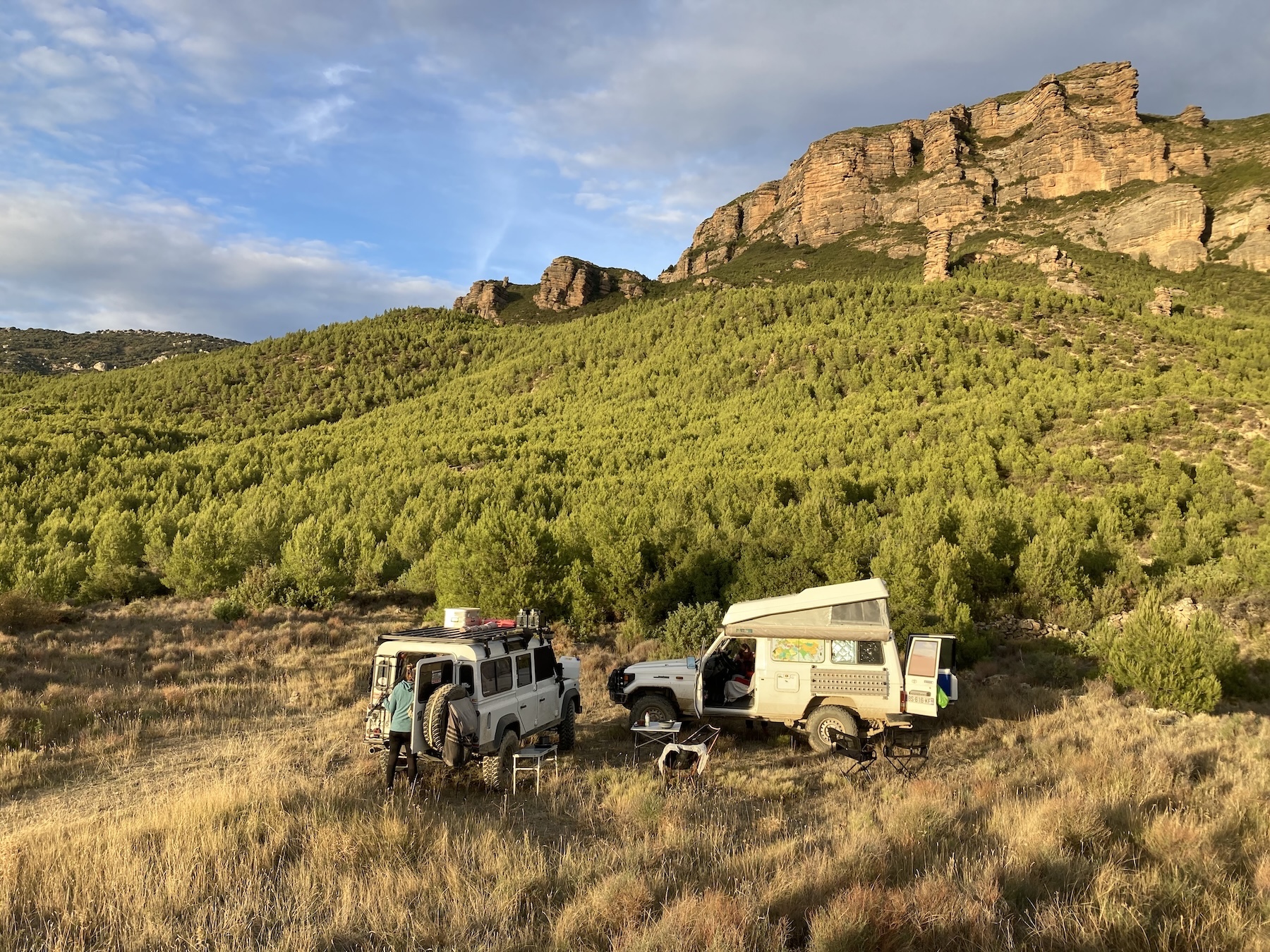
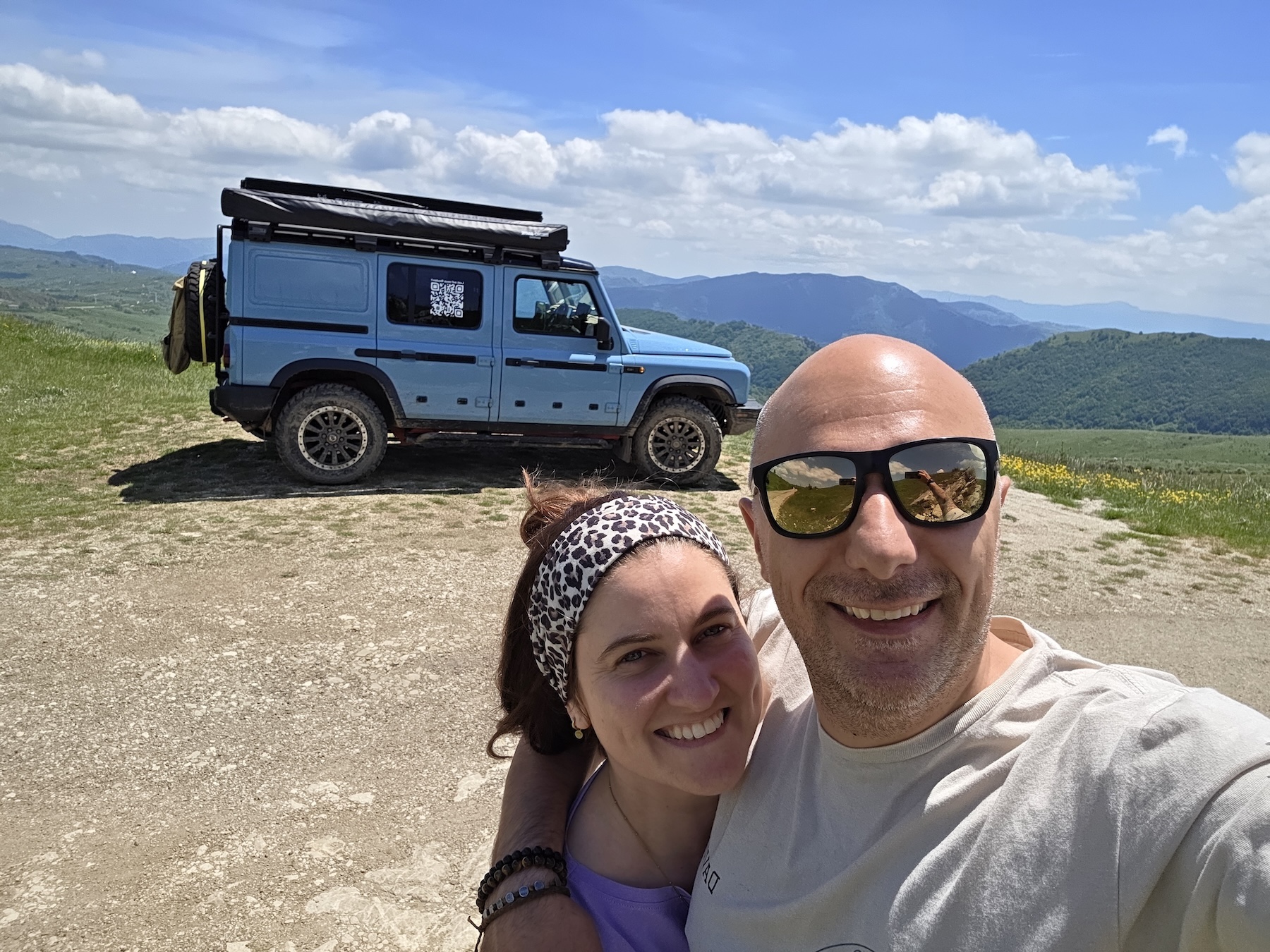
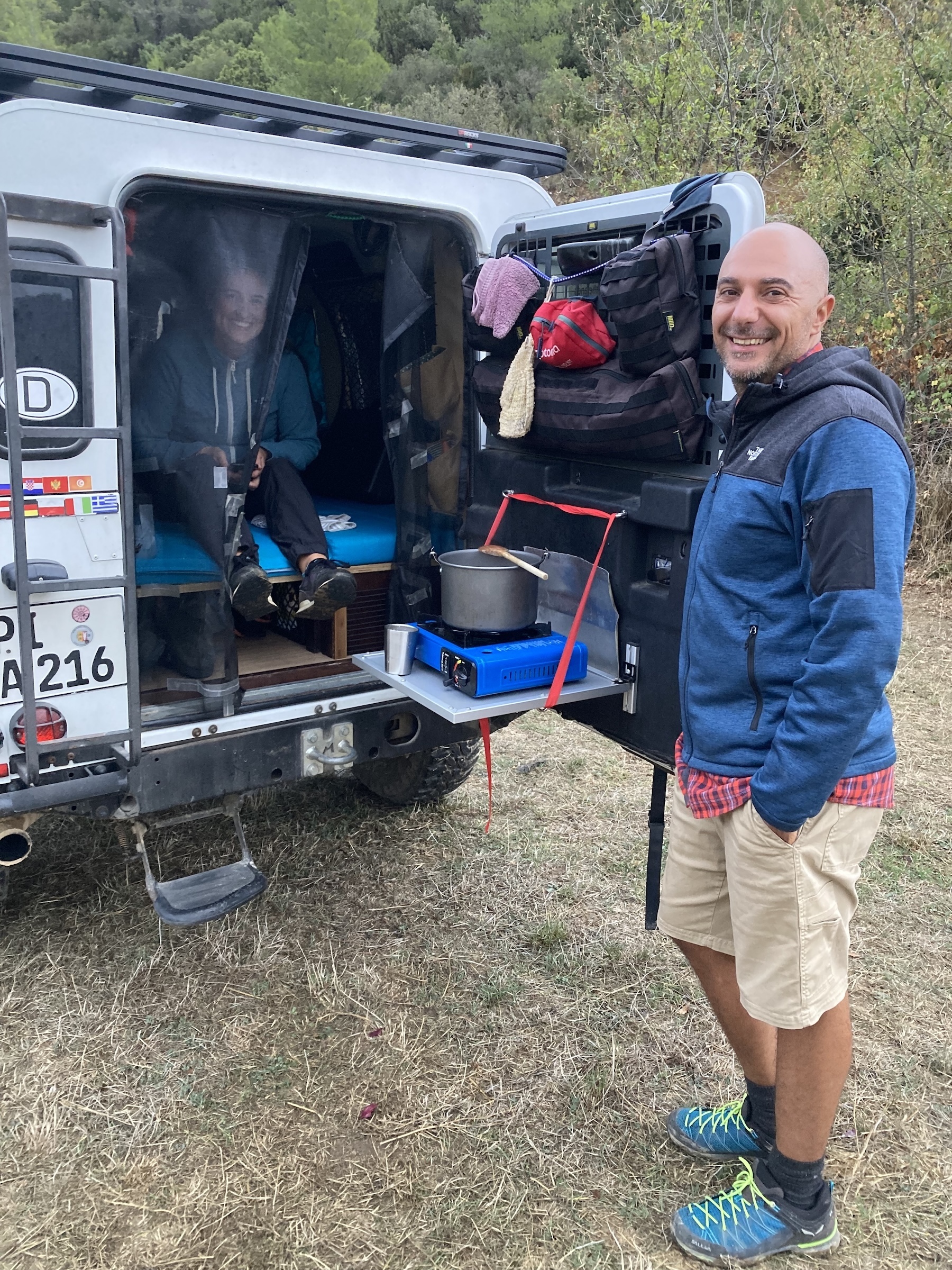
We’re Anna Lena and Davide, a German-Italian couple, and we currently live near Hamburg. We met in London, though, and traveling has actually been an important part of our life together from the very beginning. We’ve been traveling together by car since 2019. It all started with our Land Rover Defender 110, in which we covered more than 100,000 kilometers over the following years.
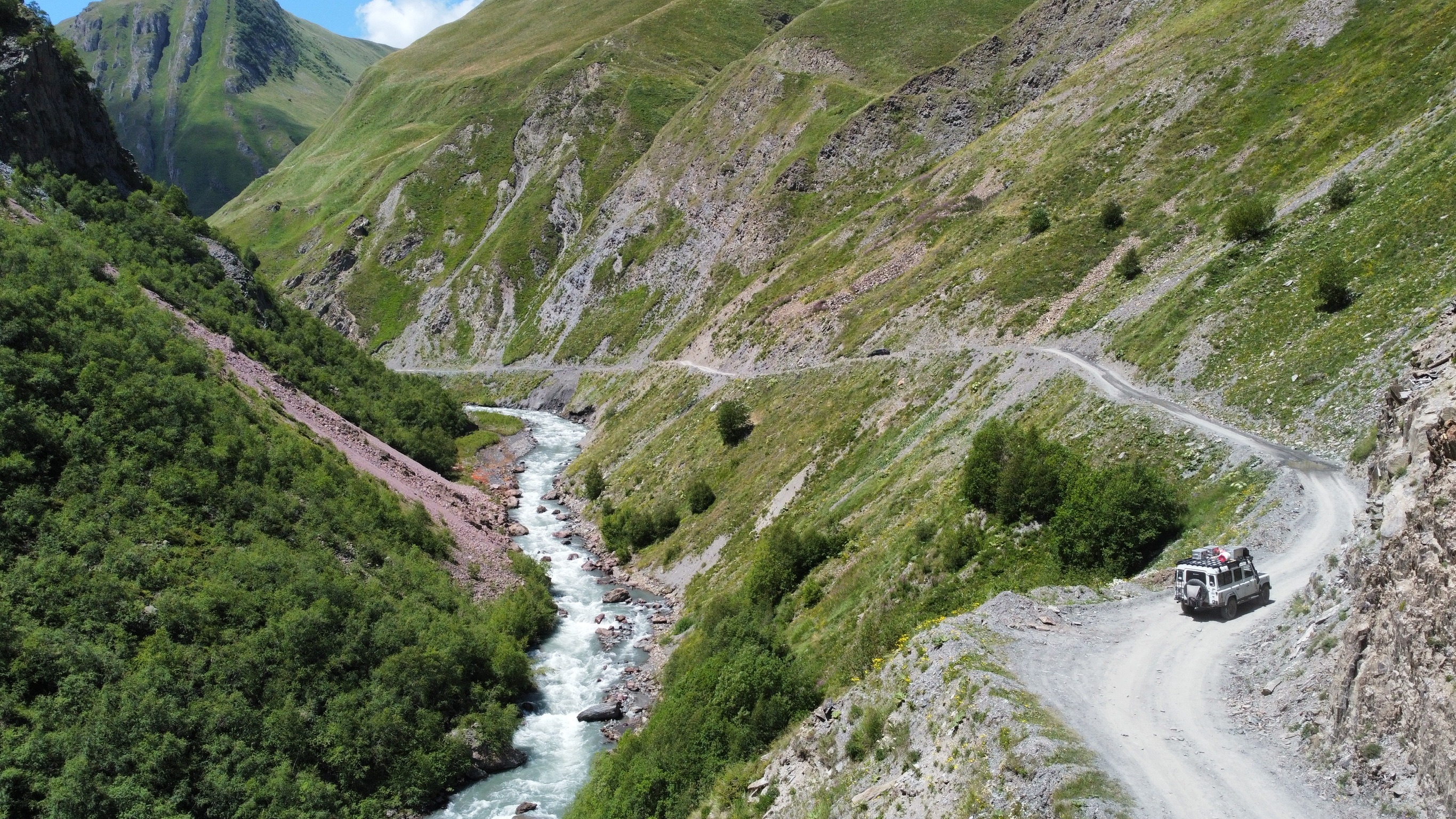
In 2022, we fulfilled a long-held dream and spent an entire year on the road. We traveled through large parts of Europe, visited the Balkans, and drove as far as Georgia and Armenia. We got married in 2023 and went to Morocco for our honeymoon in 2024. Over time, our way of traveling has also changed. We’re less and less concerned with checking off as many sights as possible. We love small roads, remote areas, villages, landscapes, good food, and above all, the unplanned things that happen along the way. Often, those are exactly the moments we still remember years later.
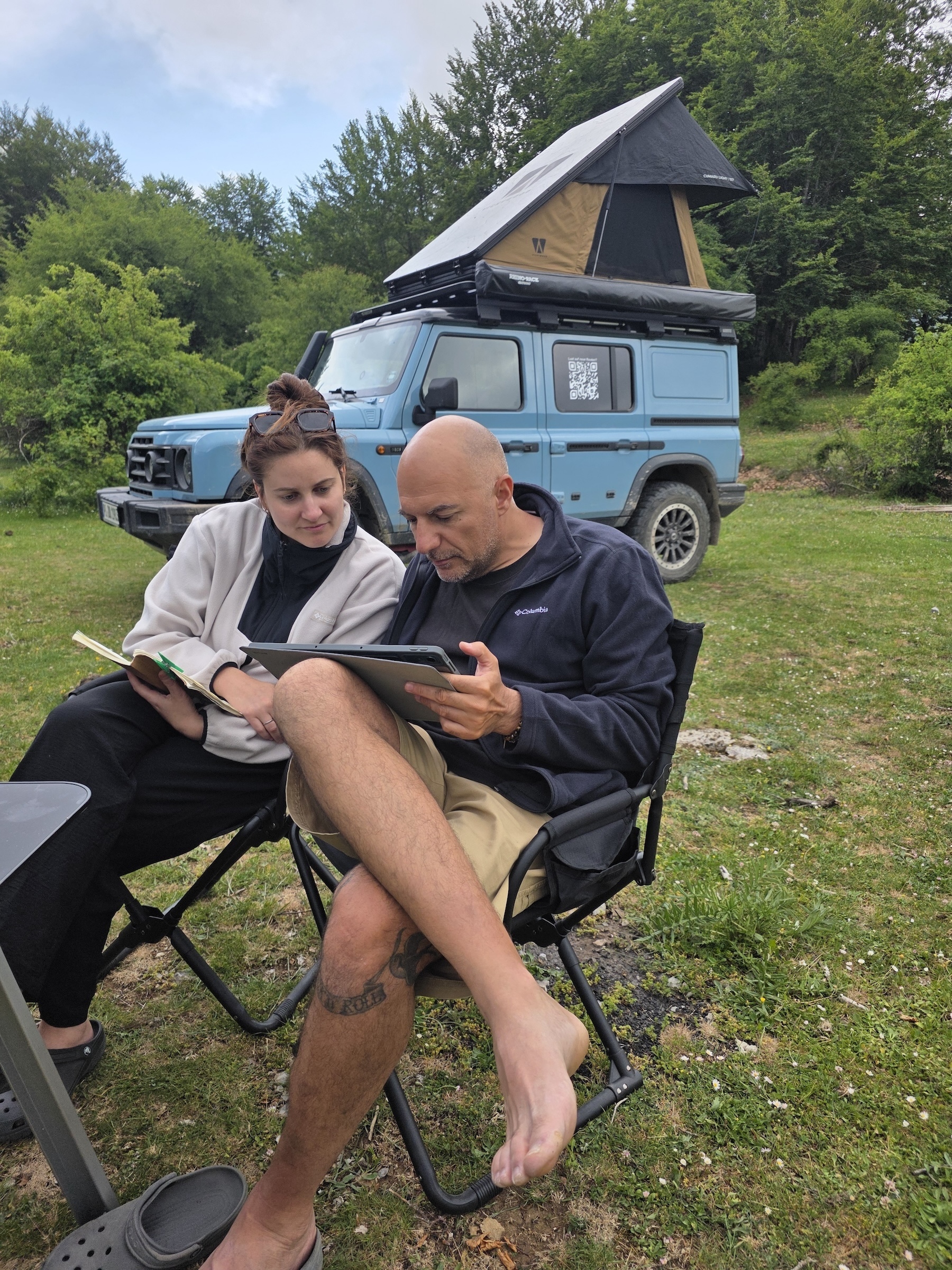
Today, we travel in an Ineos Grenadier. Our home is still in northern Germany, but we don’t know if that will stay that way forever. We could definitely see ourselves moving to Italy someday. We definitely prefer being on the road to being at home. At the same time, though, our daily life still looks pretty normal right now: We both have our main jobs and are simultaneously building up our still-young project, Wanderlust Overlanding, which includes our own on- and off-road travel guides. After all, travel, vehicles, and new ideas have to be financed.
And what’s next?
Definitely many more kilometers. Italy, in particular, has us really captivated right now, and the south especially keeps drawing us back. Basilicata, Calabria, and Sicily are currently pretty high on our list.
And most of the time, anyway, three new ideas for the next trip pop up while we’re still on the road.
“We set out as a couple, and before we knew it, the four of us were back to our everyday lives.”
Can you still remember the moment when you knew, “We’re going to do this now”? What happened back then?
For us, there wasn’t that one cinematic moment where we looked at each other and said, “Let’s quit everything and hit the road.” It was more of a desire that just kept growing. We’d already been traveling a lot in the Defender and used every spare moment for short trips and longer vacations. At some point, though, we realized that just that wasn’t enough for us anymore. That feeling of freedom we’d been seeking while traveling eventually stopped really setting in after two or three weeks. No sooner had we truly settled in than our minds were already turning back to the trip home and our everyday lives.
During that time, we started watching an incredible number of YouTube videos by people who had been on the road for several months or even years. And what started as “How cool would that actually be?” quickly turned into serious research.
We wanted to know: Is this really possible? And if so, how? What happens to our apartment? How does health insurance and other insurance work? How does taking a year off affect our retirement benefits? How much money do we need? How much does a trip like this actually cost? What do we do about our jobs? And what modifications do we need to make to our vehicle?
The more we researched, the more this seemingly huge dream became something tangible.
Our Defender also played a big role in this. During the COVID-19 lockdown, we worked with Anna Lena’s dad to completely overhaul the initial conversion for the long trip and adapt it to what we would actually need while traveling for a year.
And at some point, we reached the point where it was no longer just, “That would be nice someday.”
But rather: “We want to do this. We can do this. We’re going to travel for a year.” Davide quit his job, and Anna Lena took a sabbatical. In 2022, we actually turned the key and hit the road.
What phrase, thought, or moment changed your life? Maybe it was something one of you said. Maybe someone else said it. Or maybe it was just that one moment when everything suddenly became clear.
At some point, it was probably just the thought: If we really want it, we can’t always wait until “later.” You can always find a reason to put something off. The job isn’t quite right right now, the financial situation could be better, maybe next year would be a better time. And at some point, we realized that this perfect moment would probably never come.
So we stopped just talking about it and started actually making it happen. Today we can say: That decision was one of the best of our lives. We haven’t regretted it for a single moment.
What we did underestimate, however, was the return afterward. After a year in which every day was different—we were constantly out and about, seeing new places, meeting new people, and deciding for ourselves where we’d go the next morning—returning, step by step, to a normal daily routine was incredibly difficult. Because although we came back, we were no longer the same people who had set out a year earlier.
Our vision of how we wanted to live had changed. Freedom, time, and being on the road suddenly took on a whole new meaning. We knew we didn’t want to just carry on as before and simply file this experience away as a fond memory.
It was exactly during this time that the idea behind Wanderlust Overlanding began to take shape. At first, they were just scattered thoughts, then they became more and more concrete ideas. Somehow, it was our way of bringing some of what had changed us that year into our everyday lives—and perhaps ensuring, in the long run, that being on the road would have a bigger place in them again.
How did family and friends react? More like, “Awesome!” or, “You guys are completely crazy.”
Actually, much more positively than we’d expected. We’d already mentally prepared ourselves for a whole series of critical questions: How are you going to pay for this? What about insurance? What about retirement? What about your apartment? What about your jobs?
Because we’d done so much research and planning ourselves, we were pretty well prepared for all those questions. In the end, though, they were addressed much more quickly than we’d expected. What really surprised us—and made us incredibly happy—was the tremendous support from family and friends. No one tried to talk us out of the trip. On the contrary: We received a great deal of support.
Looking back, that support was incredibly important. Because even though the decision had already been made, taking such a big step feels completely different when you know that the people back home have your back.
Which one of you actually had to convince the other? Or were you both on the same page from the very beginning?
It’s clear: Davide had to convince Anna Lena.
Anna Lena was never really a big fan of camping. To be honest, the idea of traditional camping—campgrounds, tents, and staying in one place for as long as possible—never really appealed to her. Davide, on the other hand, saw early on what was possible with a camper van and was definitely the driving force behind just giving it a try. Anna Lena then realized pretty quickly that what we were doing actually didn’t have much to do with her idea of “camping.”
It wasn’t about setting up camp somewhere and staying there for two weeks, but about being on the move. Driving on every day, discovering new landscapes, spontaneously turning off somewhere, and often not knowing in the morning where we’d end up that evening.
And Anna Lena very quickly came to love that exact feeling.
When the desire later arose to be on the road not just for a few weeks, but for a much longer time, we didn’t really need to convince each other anymore. We’d both long harbored that desire for freedom and for a big journey.
But Davide was clearly the one who kept saying, “We can really do this.” And he was probably also the one who made sure that, at some point, that desire turned into a concrete plan.
What was the hardest part about actually setting off? Not just dreaming about it. But actually turning the key.
Probably accepting that you’ll never be prepared for everything.
Especially before our long trip in 2022, we could have kept planning for months on end. There would always have been something else we could have optimized on the vehicle, bought, researched, or insured. But at some point, you just have to hit the road.
And that was perhaps one of the most important lessons: Many of the problems you worry about beforehand never actually happen. Instead, things happen along the way that you would never have imagined.
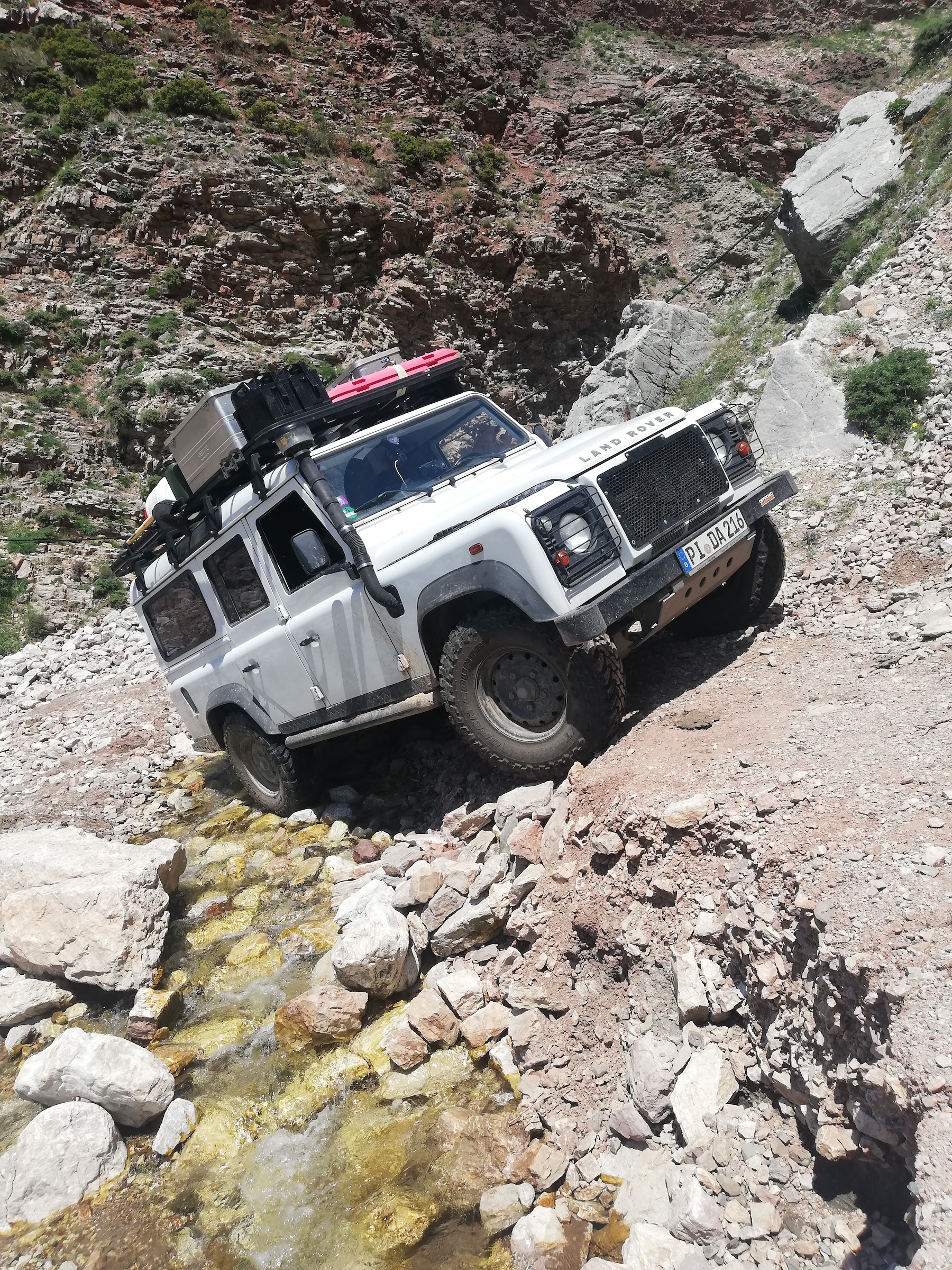
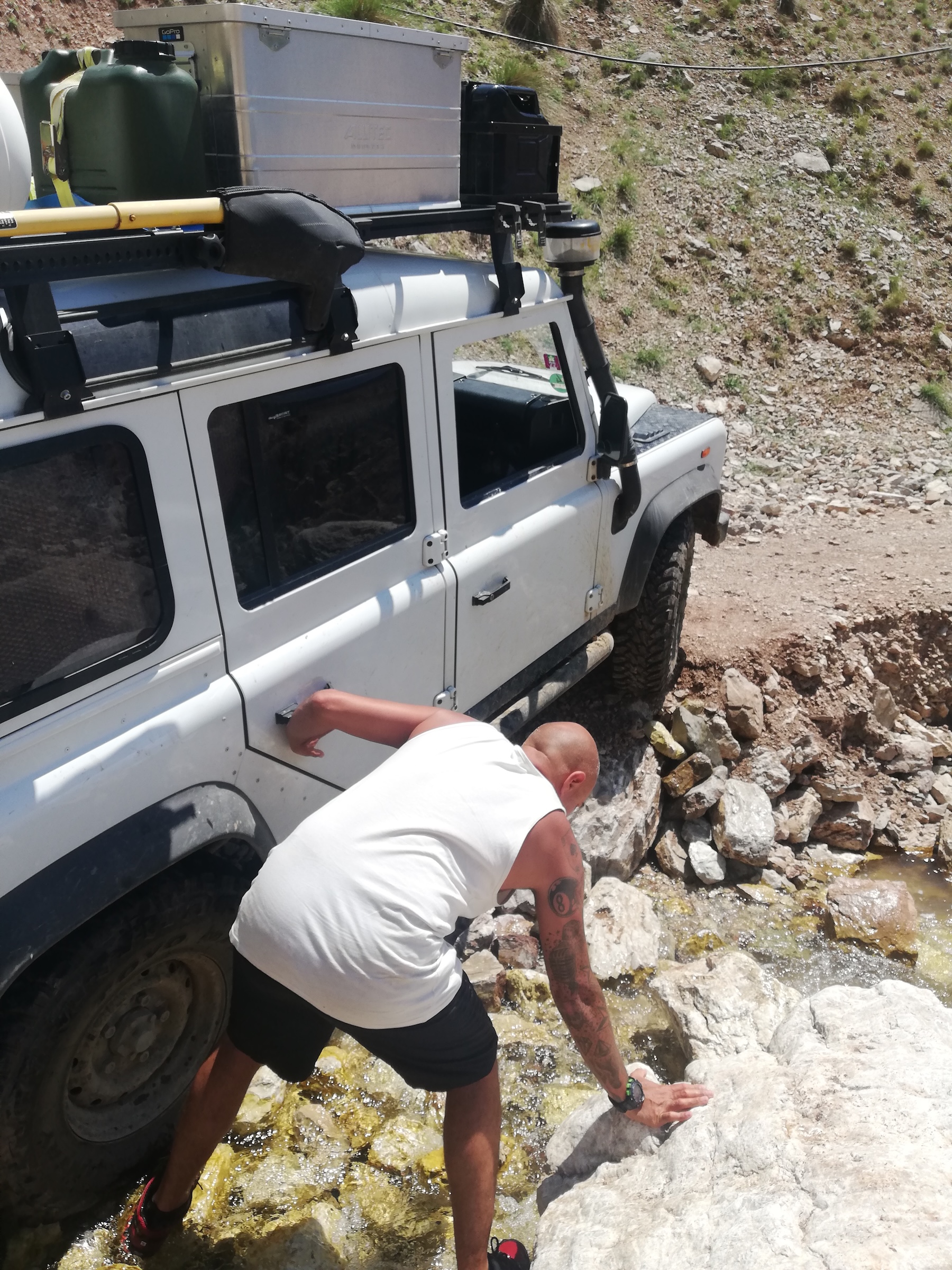
Then you just have to find a solution. Sometimes even in the middle of nowhere, with no cell service and a Defender stuck in a riverbed.
Don't just keep saying, "One day we'll do that." Instead, say, "We're going to do that now."
What kind of vehicle do you use for your travels—and why that one in particular? Is there a story behind it?
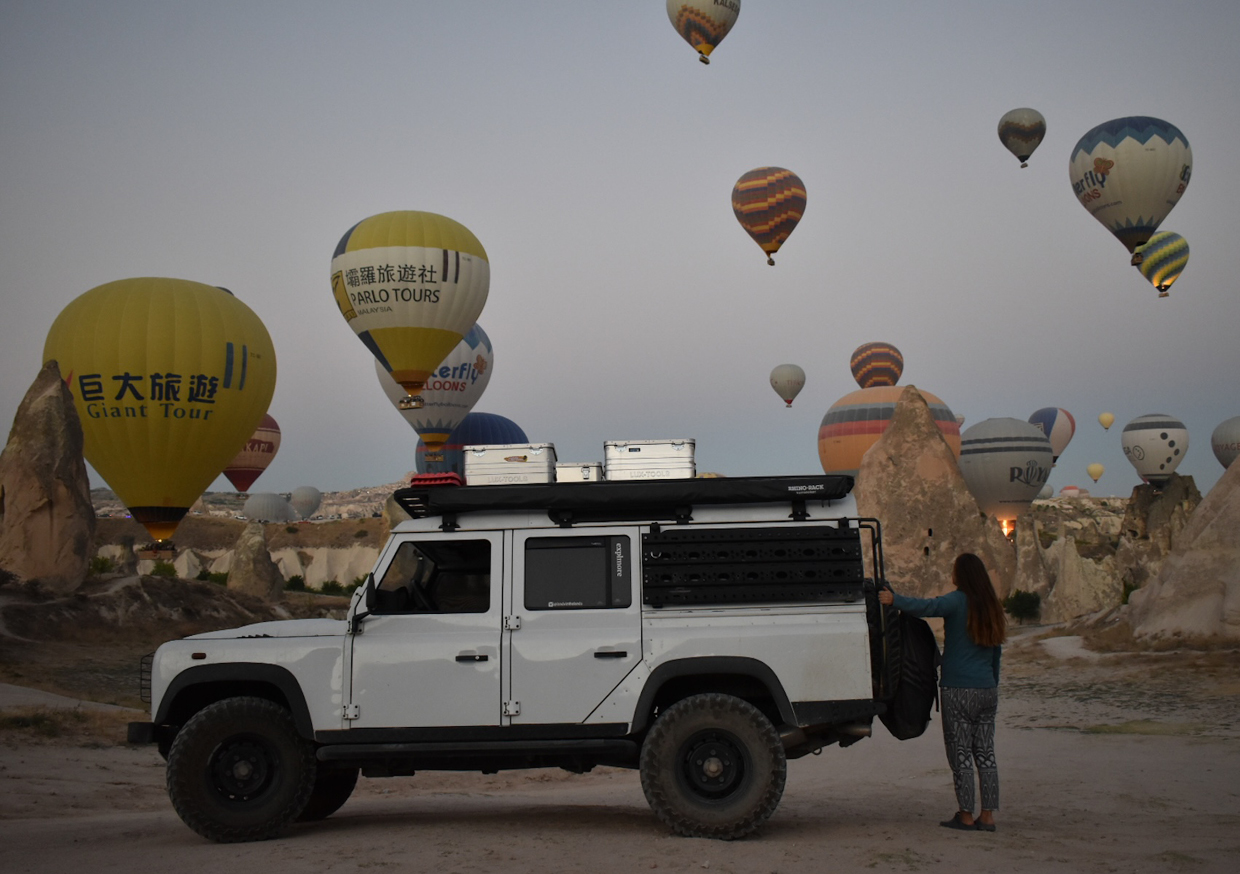
Our travel story is closely tied to our Land Rover Defender 110. The Defender was never just a car to us. During the COVID-19 lockdown, we spent countless hours working with Anna Lena’s dad to convert it into a travel vehicle ourselves. While much of the world was at a standstill, this was our big joint project.
For our year-long trip, we later completely overhauled the initial conversion and made it truly suitable for long-distance travel and overlanding. As a result, we eventually got to know every nook and cranny of the vehicle. Above all, though, the Defender had a completely different emotional value for us than any off-the-shelf travel vehicle. We later drove around 100,000 kilometers in this very car and lived in it for an entire year in 2022.
Today, we’re traveling in an Ineos Grenadier. The switch was emotional because we have so many memories tied to the Defender. At the same time, after all these years, we wanted to try something new and continue our travels in a more modern (and more comfortable) vehicle.
Were there situations along the way that probably would never have happened without your vehicle—for better or for worse?
Definitely. One of our most wonderful encounters, for example, happened only because of the Defender.
In Greece, we once saw a VW Polo that had gotten stuck in the sand. The driver was Russian and didn’t speak English, but it became clear pretty quickly what the problem was. So we used the Defender to pull the Polo out of the sand. For us, that was basically the end of it. But obviously not for her.
The next day, she suddenly stopped by with coffee to thank us again. Shortly after that, she took us snorkeling and showed us a spot we probably never would have found on our own. To this day, it’s one of the most beautiful places we’ve ever snorkeled. The water was gorgeous, and we probably would never have ended up there without that encounter.
What started as a completely mundane situation—someone’s car stuck in the sand—suddenly turned into a memory that still lingers years later. Without the Defender, we might not have been able to pull the Polo out at all. And without the stuck Polo, we probably never would have seen that place.
How do people react to your vehicle? Are there any encounters or stories that came about specifically because of it?
With the Defender, that was actually something very special. Meeting other Defender drivers on the road almost always felt like being part of a small community. You wave to each other, strike up a conversation very quickly, and immediately have a common topic.
Especially on longer trips, we’ve time and again found that such a chance encounter would turn into a really nice acquaintance in no time at all. Some of these encounters even led to friendships that still last today.
For us, Defender drivers on the road were somehow rarely just “other drivers.” It often felt more like meeting someone from the same little crazy family. We’ve rarely experienced this sense of community as strongly with any other vehicle.
What do you love about your vehicle? And what sometimes drives you to despair?
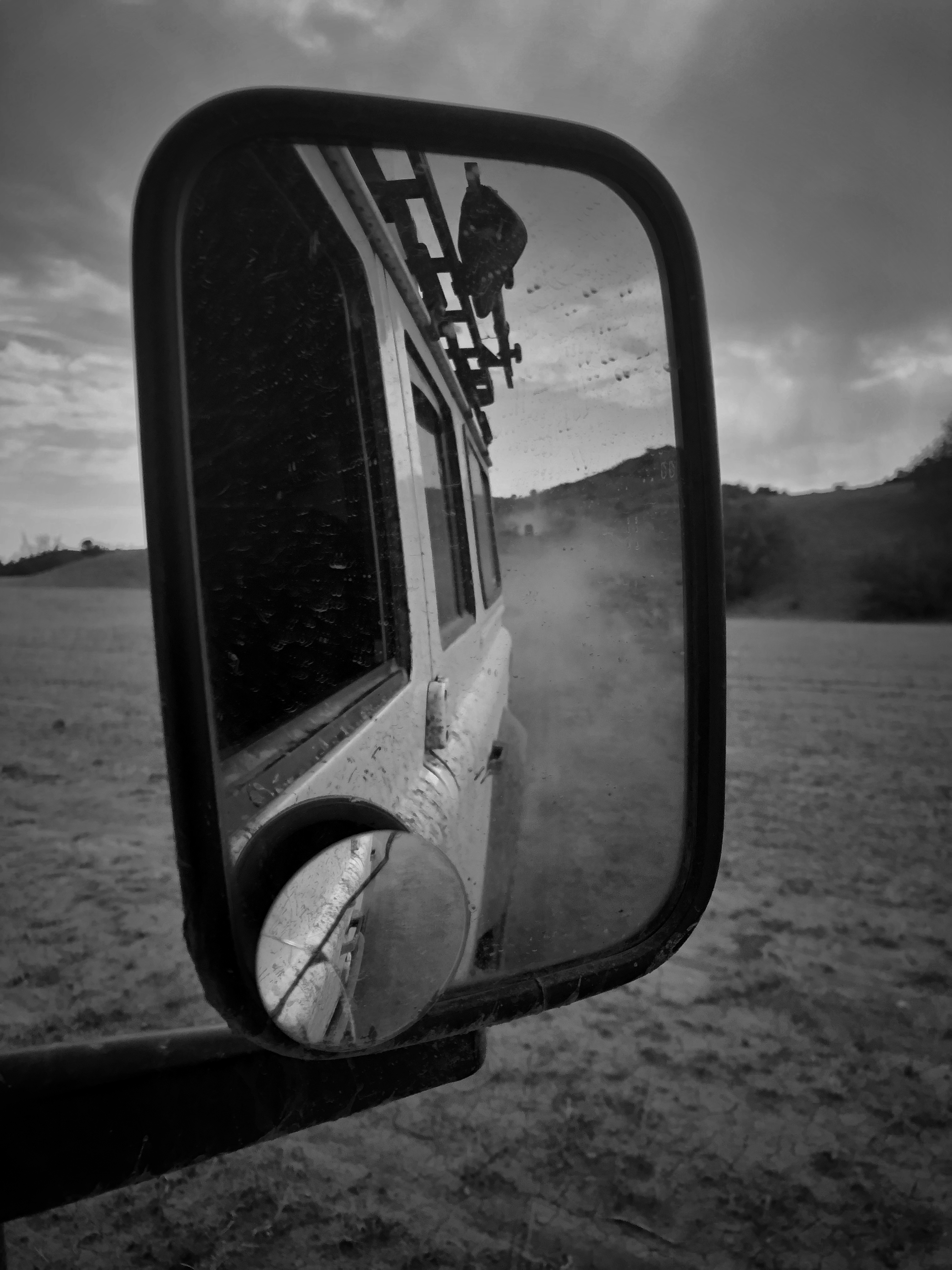
Every Defender driver probably knows these little quirks that are unique to the vehicle. After long drives, your knees hurt from the clutch, the doors never seem to open wide enough, you’ll search in vain for a central locking system, and there’s always something leaking somewhere. Of course, there were moments when exactly those things annoyed us. Still, we loved being on the road with the Defender.
It just had so much character. For us, this car evoked a very special sense of freedom. You always had the feeling: No matter what road lies ahead, we’ll find a way to keep going. And even if something breaks down along the way, you can almost always find a repair shop or someone who can fix a Defender. For us, of course, there was also the fact that we’d put so much time, work, and memories into this very vehicle.
With the Grenadier, it’s almost the opposite right now: we fell in love with it pretty quickly while driving. It gives us a very safe and comfortable driving experience, performs great on the road, and does exactly what we want it to do off-road as well.
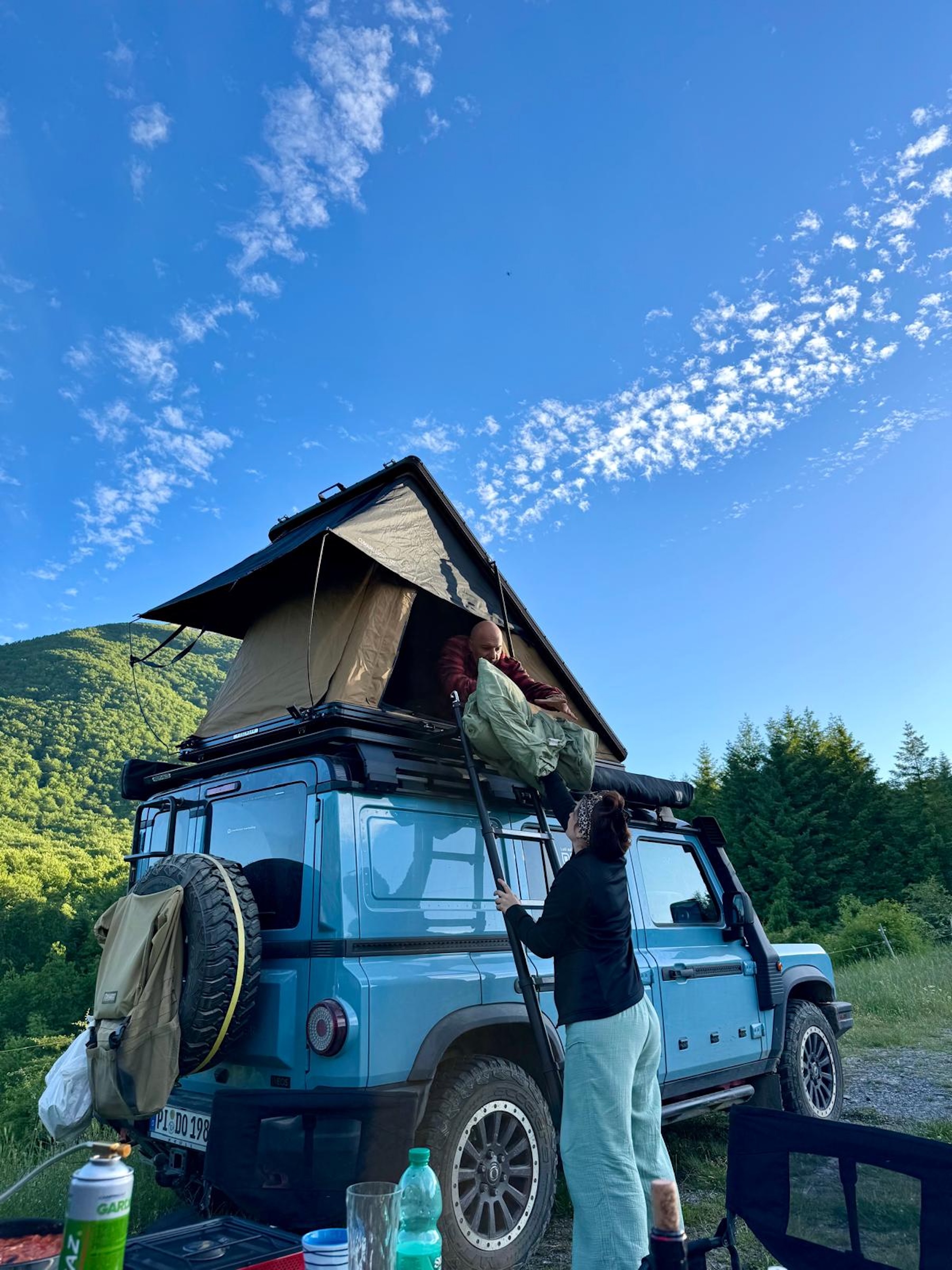
What’s still driving us a bit crazy right now is our setup with the roof tent. We haven’t found the perfect solution yet and are still experimenting and fine-tuning. But that’s probably just part of the process. A travel vehicle evolves with every trip, and eventually you know exactly what works for you and what doesn’t.
If you were to set out again today, would you choose this exact vehicle? Why?
If we could put together the perfect travel vehicle today, it would probably be quite simple: the Grenadier with our old Defender conversion. We loved the Defender’s incredibly practical setup, which had evolved over the years. We knew exactly where everything belonged, what worked, and what we really needed on the road. The conversion was tailored to us and had proven itself over many kilometers.
With the Grenadier, on the other hand, we love the driving experience. It’s more comfortable, feels very safe to drive, and performs really well off-road, too. For us, the perfect combination would actually be the Grenadier’s ride comfort and performance paired with the simplicity, functionality, and familiarity of our Defender conversion.
Would we set out on a long journey in a Defender again today? Probably yes, anyway. For that specific time, it was the right car for us and is inextricably linked to that journey.

What does a typical day look like for you guys when you're on the road?
It really depends on where we are at the moment and, of course, on the weather. We like to get up early when we’re traveling, especially when we want to see something. Our personal goal is actually always to get there before the other tourists.
That was especially nice during our year-long trip in 2022. At some point, we were living almost entirely without an alarm clock and usually just woke up at sunrise. And the crazy thing was: we still felt well-rested. That feeling of rediscovering our own rhythm and not constantly living by the clock was something very special.
But we also have to admit that we love to drive, and longer stretches aren’t a problem for us at all. So a perfect day of travel looks something like this: set out early, check out a few sights along the way, stop for lunch at a small restaurant, then drive a bit further, and in the evening find a nice spot where we can cook our own meal and wind down the day.
Now that we’re doing research in Italy for Wanderlust Overlanding, our daily routine looks a bit different, of course. There’s much more planning involved because we’re not just traveling for ourselves—we also want to thoroughly test out locations, routes, and places to stay. As a result, we often end up at agriturismi or special campsites that we can later recommend to our readers with a clear conscience.
It’s very important to us to adapt to the rules and conditions of each country. If wild camping isn’t allowed somewhere, then we don’t do it. For us, that’s actually a given.
Unfortunately, we see time and again that not everyone shares this view. This is precisely why opportunities are lost in many places—because access roads are blocked, sites are closed, or new bans are imposed. For us, this type of travel is therefore not just about freedom, but equally about respect for the country, its people, and the local rules.
Where did you stay much longer than planned—simply because you didn’t want to leave?
For us, that was definitely Kaş in Turkey. This place somehow drew us in immediately, as if by magic. The people, the food, the incredibly clear water, and that relaxed atmosphere completely won us over.
On our long journey, Kaş was almost like a vacation within a vacation for us. We’d already been on the road for months, but there, for the first time in a long while, we consciously slowed down and stayed longer than we’d originally planned.
And maybe it’s only when you come back that you realize just how deeply a place has truly touched you. Two years later, we were back in Kaş. And even though so much had happened in the meantime, it immediately felt familiar. Almost a little like coming home. There are places you simply find beautiful. And then there are places you form a connection with. Kaş is definitely one of those places for us.
Tell us about an evening you’ll never forget.
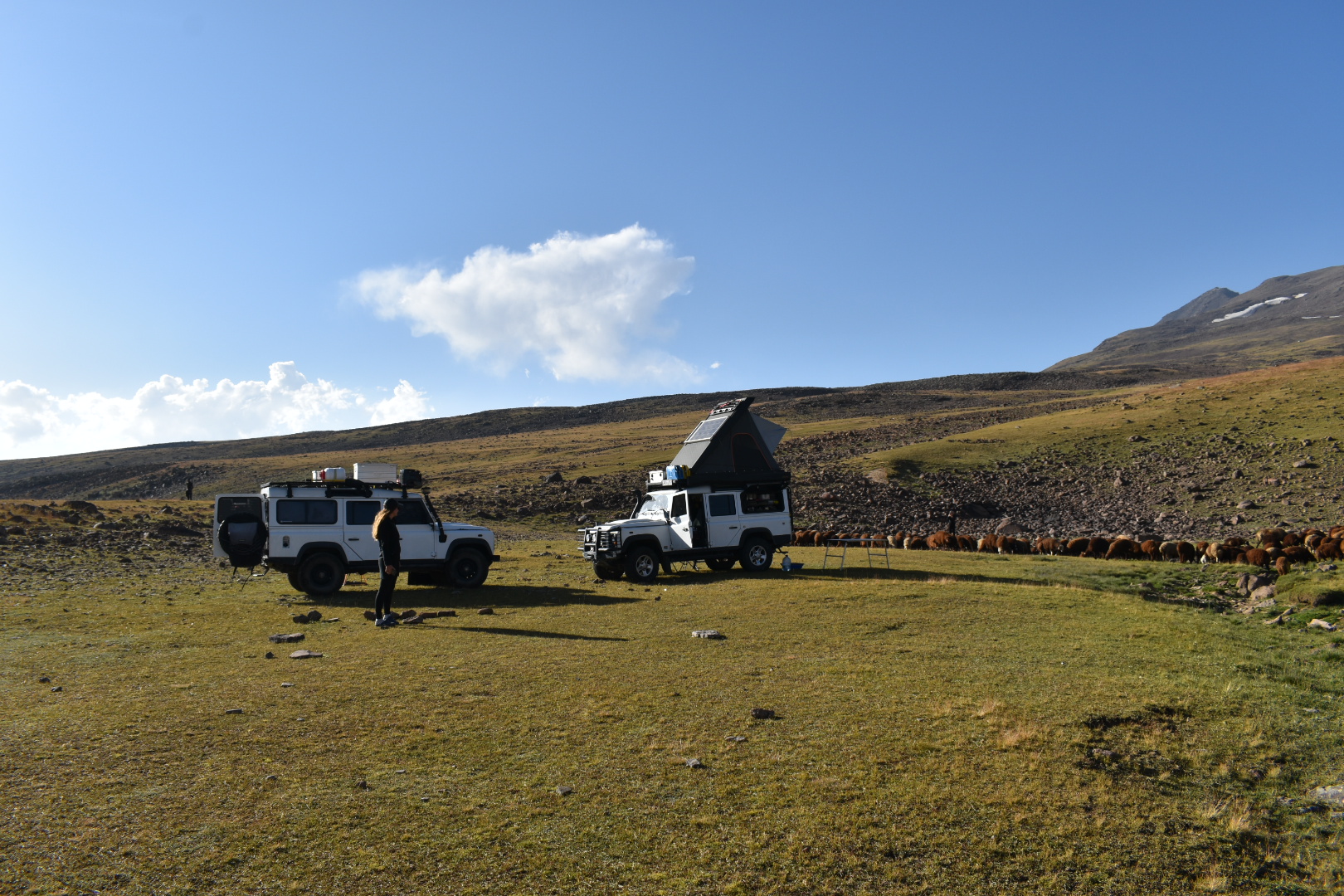
One of those evenings was in Armenia, at an altitude of nearly 3,000 meters at the foot of Mount Aragats. We were there with our new South African Defender friends. There was really nothing around us but mountains, open spaces, and sheep. We were pretty sure we’d be completely on our own up there.
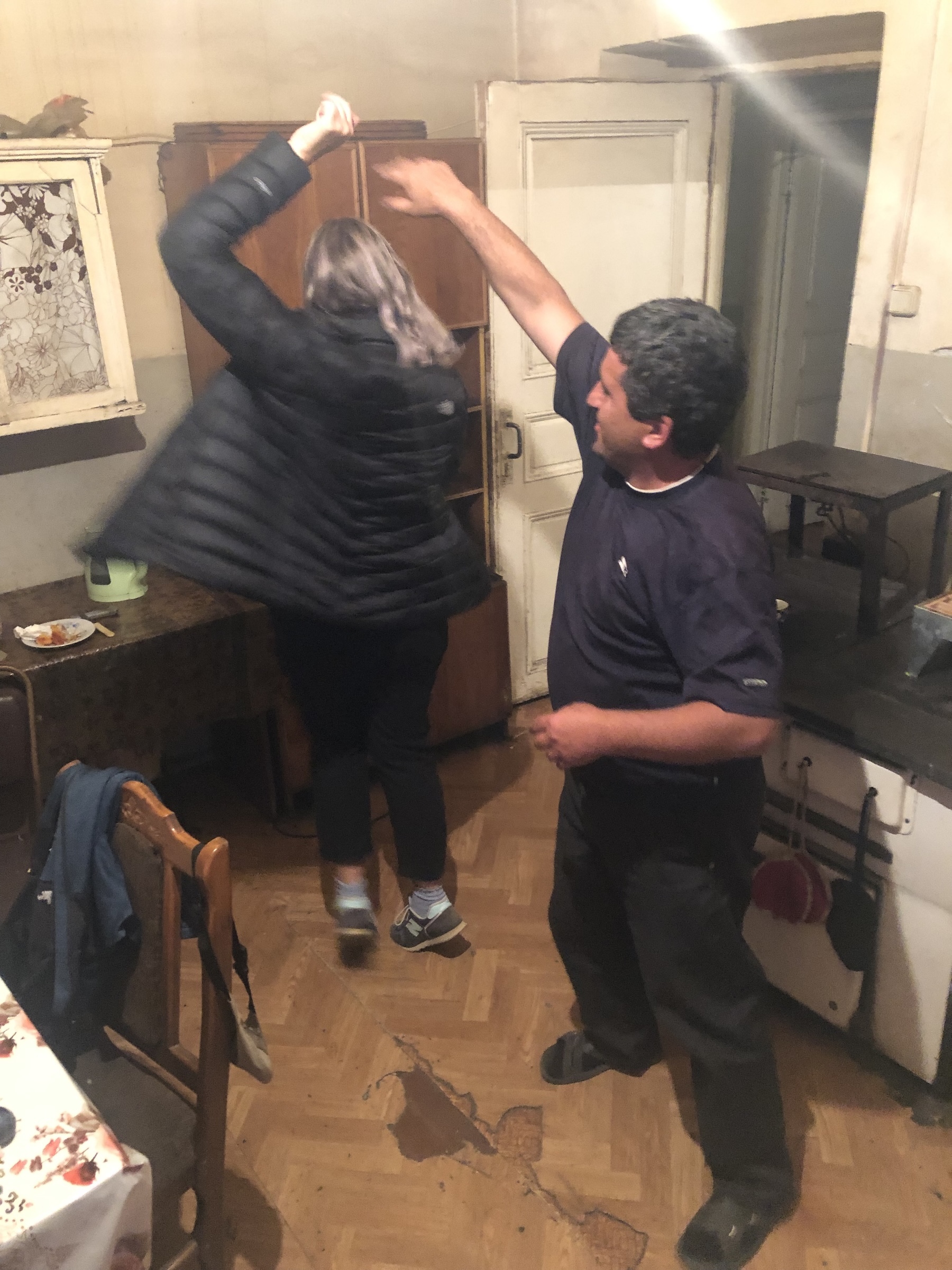
Until, suddenly that evening, a meteorologist and his son showed up. Not far from where we were, there was a weather station where the father had been living all summer. The two of them invited us to come along. Although “invited” is actually too polite a way of putting it. They practically insisted.
We could barely communicate with each other—not a single word—but somehow that didn’t matter at all that evening. At the weather station, there was homemade schnapps, loud music, dancing, and attempts to communicate with gestures and body language. The whole situation was so unexpected and, at times, so bizarre that we couldn’t help but laugh most of the time.
You can’t plan encounters like that. And that’s exactly why, for us, they’re among the most cherished memories of our travels.
"It takes surprisingly little to feel at home anywhere in the world."
When were you out on the road and thought, “What the heck are we actually doing here?” What happened?
During our big trip in 2022, we were driving on a very remote off-road trail in Greece. At one point, the trail led through a narrow riverbed, and that’s where we got the Defender completely stuck. No cell service. No traffic. No people.
In Anna Lena’s mind, the trip was already over at that moment. She was mentally already digging out our insurance documents and wondering how on earth anyone would even get a tow truck to that spot. Luckily, Davide was a bit more solution-oriented.
We started gathering rocks and used them to build a sort of staircase under the wheel. Stone by stone, a ramp took shape, and the Defender was finally able to drive up it with its rear wheel. And eventually, we were actually free again.
But the best part of the story actually came earlier. Anyone who travels through Greece is probably familiar with those little shrines and sacred sites along the roadside where people stop to pray or leave small offerings. Just before we got stuck, we’d driven past one such place and hadn’t stopped this time. Shortly after that: the Defender in the riverbed. Ever since that day, we’ve taken these little spots along the way very seriously and always paid them our respects. After all, you don’t want to tempt fate unnecessarily.
And when did you think exactly the opposite? “That’s exactly why we’re doing this.”
One of those moments came pretty early on in our long journey, on Djerba in Tunisia. We’d spent the night right on the beach and woke up in the morning to the sunrise. The sky was tinged with red, everything was still very quiet, and not far from us, a herd of camels was moving along the beach.
Nothing particularly spectacular had actually happened. And yet that was exactly one of those moments when everything suddenly came together. We sat there, looking out at the sea, at that sky, and at the camels, and could hardly believe that this was really our morning.
That was one of the first moments on this trip that triggered such intense feelings of happiness in us. So intense that our eyes actually got a little misty.
And there was this very clear thought: This is exactly why we’re doing this.
What story do you keep telling over and over—even though everyone in your circle already knows it?
One of them takes place in Georgia. We were there with some new Defender friends at a chacha and wine tasting, where we also cooked traditional Georgian dishes. We ate, tasted, toasted, and just had an incredibly fun evening.
Apparently so much fun that at some point we completely lost track of time. Eventually, we noticed that it had suddenly gotten pretty quiet. We looked around and realized: No one was there anymore. The other guests had long since left, some of the lights were already off, and they’d simply let us keep sitting there together. Only the security guard was still there. No one came to tell us we had to leave. We were just allowed to finish our evening.
It’s one of those little stories that says a lot to us about the hospitality we’ve experienced while traveling. And we’re pretty sure that wouldn’t have happened to us in very many places. In any case, we still love telling the story to this day—even though our friends can probably recite it by heart by now.
Tell us about a mishap that you can laugh about now.
One of our more absurd mishaps happened in Spain. We’d been driving off-road and at some point lost our license plate. Of course, we didn’t notice it right away. No, first we calmly set up our campsite, discussed the best way to position the Defender, looked for the perfect rocks to use as chocks, and arranged everything nicely. And then it hit us: The license plate was gone.
So we packed everything up again, straightened out the car, removed the rocks, and headed back to the police station. The mood was, of course, fantastic. 😄
Today we laugh about it. Back then, it was more the kind of travel moment where you love each other dearly, but maybe it’s best not to talk to each other for five minutes.
What was the most expensive lesson of your trip? Not just financially.
Perhaps one of our most important lessons was how quickly you can let yourself be influenced by other people’s prejudices. Before our long trip, we heard a lot about certain countries. We were warned, heard stories, and, of course, received unsolicited advice about why we shouldn’t go there. A lot of that really got to us beforehand. And then we were actually there.
Very often, we experienced exactly the opposite of what we’d been warned about. We were warmly welcomed, people helped us, strangers invited us in, and we felt incredibly at home in places about which we’d previously heard mostly negative stories. Since then, we’ve been trying much more consciously to form our own impressions and not to judge a country, a culture, or the people there too hastily.
Of course, that doesn’t mean ignoring risks or traveling somewhere unprepared. But there’s a big difference between a realistic assessment and a prejudice. Perhaps that’s exactly one of the most valuable lessons traveling has taught us: to listen less to what “people say” and experience things for ourselves more.
What would you do completely differently today—and why?
We probably wouldn’t do anything completely differently. For us, traveling is all about gaining experiences, trying things out, and learning from them. Especially when it comes to the vehicle and our setup, you often only realize once you’re on the road what really works and what you’d like to change next time.
And somehow, it would also be a shame if everything were perfect right from the start. You continue to grow with every trip and, step by step, figure out what works best for you.
There’s one thing, though, that we make a conscious effort to do more of these days: connecting with the local people. Locals almost always have the best tips, know places that aren’t in any guidebook, and give you a completely different insight into a country.
And when we look back on our fondest travel memories today, a surprising number of them aren’t tied to a landscape or a sightseeing spot, but to people—other travelers, locals, and encounters that weren’t even planned.
"You don't have to be prepared for everything before you set off."
Who is the person you still can’t get out of your head? Why?
There’s not just one. Above all, we think of a few people we met along the way who have since become true friends. We’re still in touch with some of them even years later, and we’ve even gone on tour together again.
That’s probably one of the best things about traveling: You go somewhere as a stranger and come back with friends.
And then, of course, there are encounters that last just one evening but still stay with you forever. Our meteorologist in Armenia definitely falls into that category. A man with whom we couldn’t exchange a single word, who nevertheless invited us to his weather station at nearly 3,000 meters and with whom we spent an evening drinking, dancing, and laughing.
We’ll probably never see him again. But we’ll never forget him either.
Was there an encounter that changed you? A story you’ll never forget?
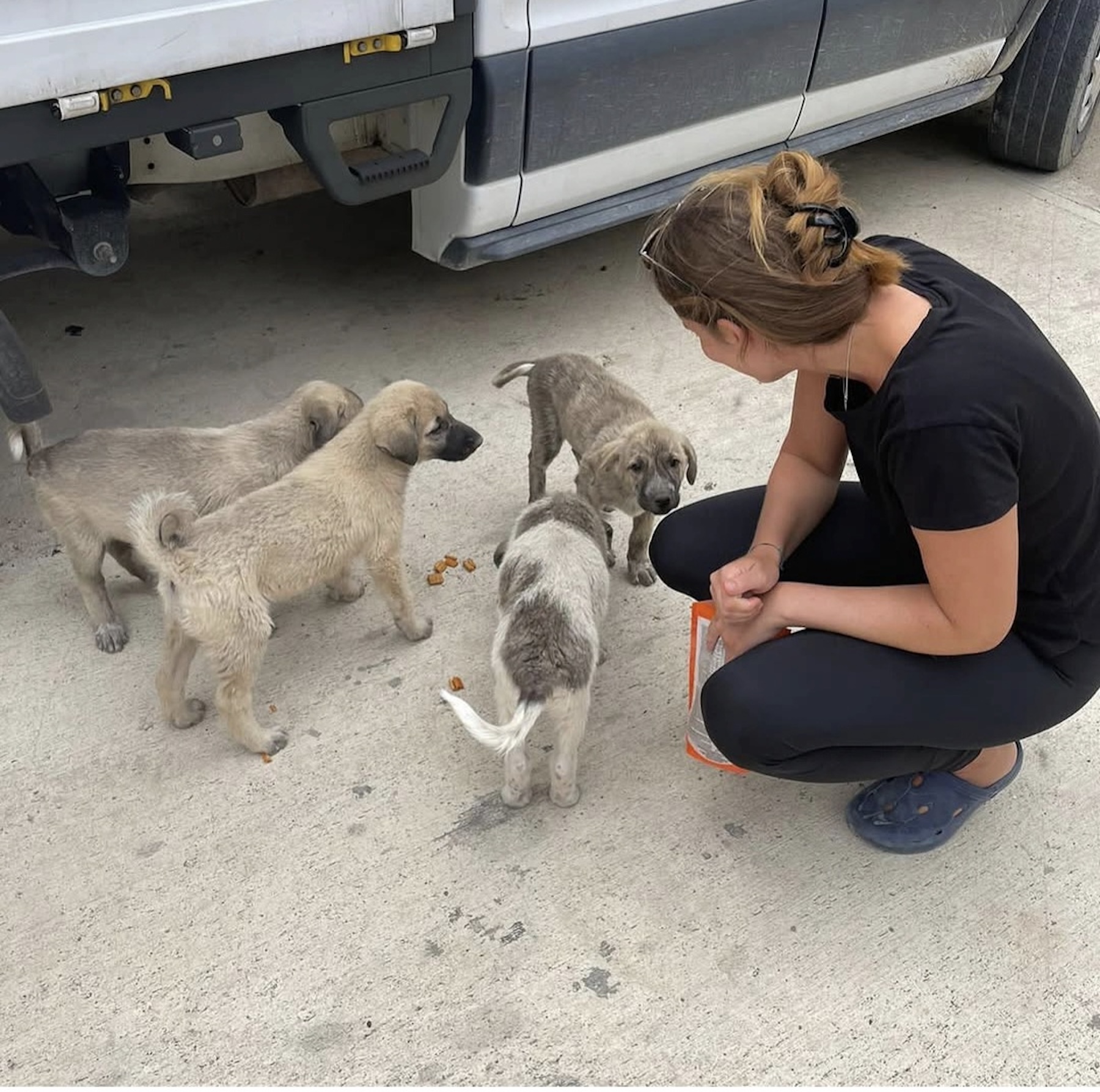
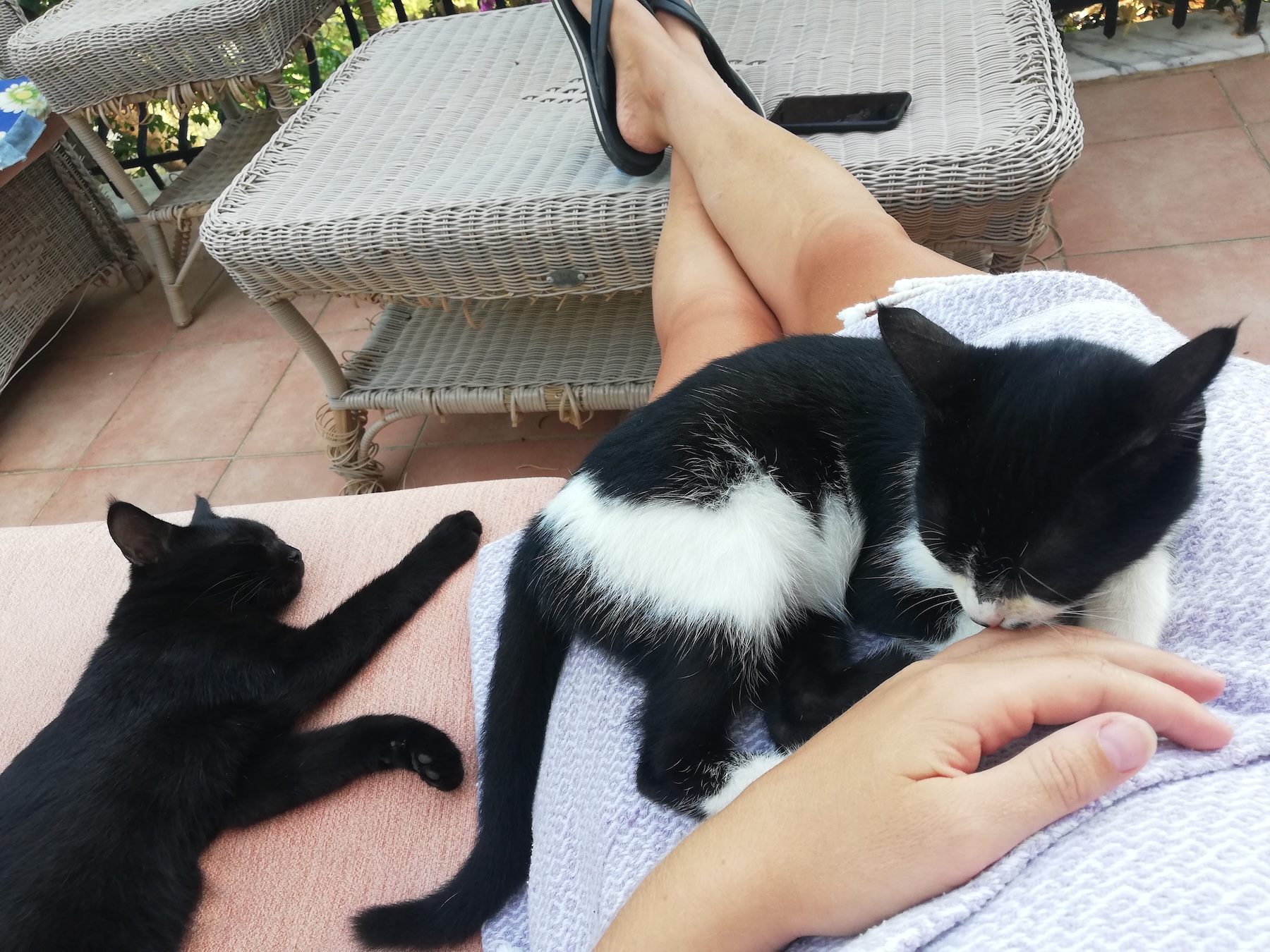
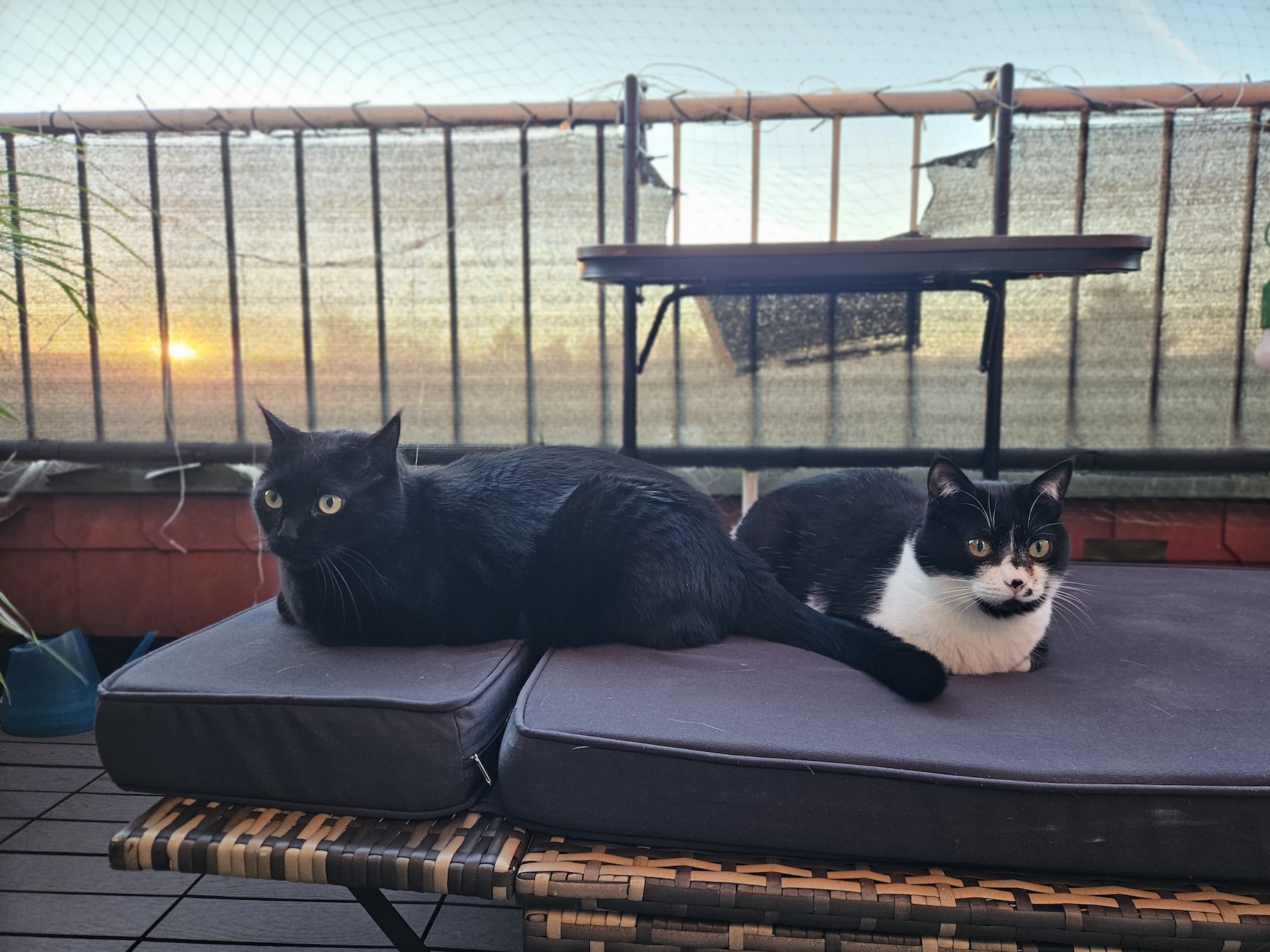
Our encounters with stray animals had a profound impact on us. If you travel for a long time through countries where many dogs and cats live on the streets, eventually you can no longer simply ignore them. We were particularly moved by how much trust and love some of these animals show you, even though their lives are often anything but easy.
At some point, we started always carrying food in the car. To this day, it’s part of our travel gear. And one encounter even led to so much more: At the end of our big trip in 2022, two former stray cats found their way back to Germany with us and now live with us at home.
Perhaps that’s the encounter that has actually changed our lives the most. We set out as a couple back then and eventually returned to everyday life as a family of four.
Was there anyone along the way who helped you, even though they really had no reason to? What happened?
Yes, and one of our favorite stories about this took place on the Turkish Black Sea coast. We were in a small town with some new overlanding friends—a place where foreign tourists probably rarely venture. We really just wanted to do our laundry and had found a laundromat on Google Maps.
So we drove down this tiny street in two fully loaded Defenders. Within no time at all, it felt like we were being watched from every balcony. Then suddenly a man approached us and spoke to us in broken German with an Austrian accent. He told us that he used to drive trucks and had traveled a lot in Austria. When we explained that we were looking for the laundromat, he immediately grabbed his phone and called the owner for us.
While we waited for him, we were first treated to plenty of çay. After all that tea, sleep was practically out of the question for the coming night. Of course, we weren’t allowed to pay anything. “You’re guests,” was all he said.
The owner of the laundromat eventually came just for us and opened the shop. We’d originally assumed we’d just find a few washing machines there and be on our way again after an hour.
It didn’t quite go that way.
We dropped off our laundry and were then sent to a small local restaurant for lunch. The food was delicious, and afterward we suddenly had several hours to explore this little town, which seemed quite quirky to us.
About six hours later, we were able to pick up our clothes. Freshly washed, dried, and even ironed.
We’d actually just wanted to do some laundry, but instead we got tea, lunch, a little tour of the town, and one of those encounters you could never plan. It’s exactly days like these that still remind us today of the incredible amount of hospitality we’ve experienced along the way.
How do you finance this lifestyle? And how do you deal with the uncertainty that might come with it?
It’s nothing spectacular: We work. We both still have our regular day jobs, which we use to support ourselves and, of course, fund our travels.
We financed our one-year trip in 2022 primarily with our savings. In addition, we were able to rent out our apartment during that time, which of course helped us a lot. We calculated pretty precisely in advance what we would need each month and tried to set a realistic financial budget for ourselves.
And in the end, the year wasn’t nearly as expensive as you might initially think. Especially outside of Europe, many living expenses were significantly lower. Diesel was sometimes much cheaper for us, and we often spent considerably less on groceries than we do at home. Of course, this always depends heavily on how you travel and what level of comfort you expect.
Wanderlust Overlanding is still a very new project, and we’re building it up step by step as we go. We can’t make a living from it yet, and we don’t want to pretend that we already can.
Maybe that’s what sets us apart a bit from the image you often see on social media. We’re not your typical full-time travelers who’ve sold everything and have been on the road exclusively for years. We have a normal daily life, jobs, responsibilities, and a home in Germany—and at the same time, we try to make as much room as possible for travel.
Uncertainty is, of course, part of it. Especially with a move like this, you constantly ask yourself beforehand whether you’ll have enough money, whether everything will work out, and what will happen if something unexpected comes up.
But that’s exactly where we’ve learned: somehow, you manage to make it work.
You find solutions, adjust your plans, and often realize along the way that you need much less than you’d thought beforehand. And in the end, this year was worth every euro we saved.
What was your greatest luxury along the way—even though it didn’t cost any money?
Without a doubt: freedom. Not having any appointments, not having to constantly check the clock, and being able to largely decide how to spend each day was probably the greatest luxury of all.
Of course, we still had our daily routines and little worries while on the road. Where will we sleep tonight? Do we have enough food? Will the diesel last? Do we need to refill our water?
But compared to the worries and obligations of normal everyday life, that felt incredibly easy. The crazy thing is that we often weren’t even that aware of this luxury while we were traveling. After a few months, this free life became completely natural and, in a way, just part of our daily routine.
It wasn’t until later—especially after we returned—that we truly understood how special it was to wake up in the morning and know: Today, we don’t actually have to be anywhere.
"On social media, you see the sunset—not the two hours you spent looking for a place to park beforehand."

What's the best part about traveling together?
That we share all these memories together. When we talk today about some small town in Georgia, a street in Italy, or an absurd situation we encountered somewhere along the way, the other person knows immediately what we mean.
Plus, after all those kilometers—and especially after our year on the road—we probably know each other pretty well. In 2022, we lived together for about a year in a space of roughly six square meters. In 2023, we got married. That’s why we like to say: If you can manage that without breaking up, you can actually go ahead and get married without a second thought.
And what’s really a pain sometimes? What do you guys argue about regularly while on the road?
Our daily discussion is pretty straightforward: How should we park the car for sleeping? We really did discuss this almost every evening. Is it just enough? Is the head end higher? Do we need to reposition the car? Is one rock under the tire enough, or would two be better? There are very few exceptions where we agree right away. This topic comes up so reliably that it even became part of Anna Lena’s wedding vows. 😄
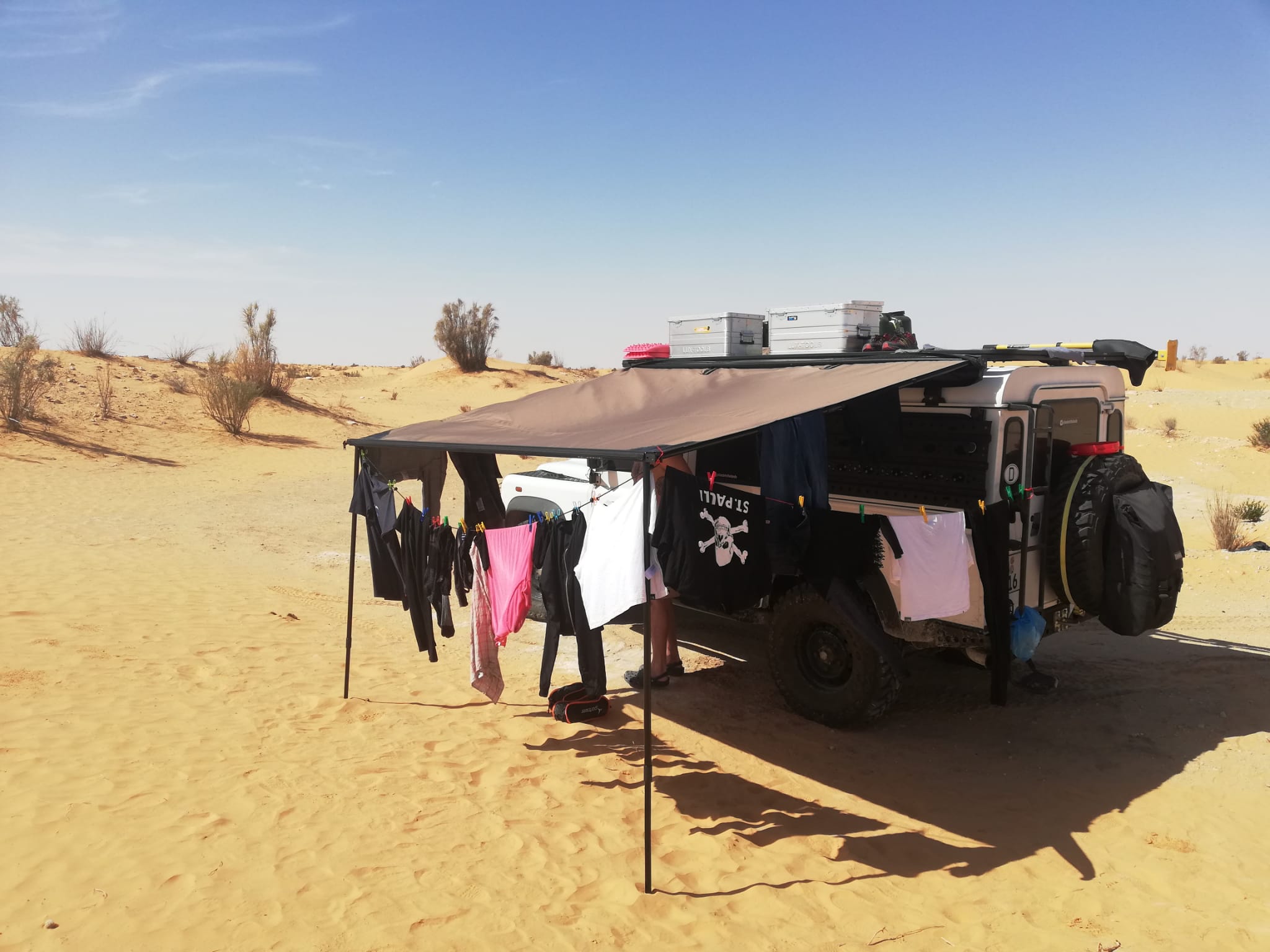
And then, of course, there are the perfectly normal challenges that come with two people living together in a very small space. In the Defender, for example, that sometimes meant getting dressed while half-lying down.
Eventually, we developed a pretty well-oiled system for this: One of us lies as still as possible and makes themselves as small as they can, while the other tries to get dressed somehow. Then the first one steps out and the second takes their place. It sounds absurd, but it becomes part of everyday life surprisingly quickly. And you probably learn pretty quickly in six square meters to laugh at things that would likely drive you crazy at home.
Do you think your trip would have been different if you’d been traveling alone?
Definitely. Anna Lena probably wouldn’t have set out on a trip like this alone in the first place. For her, it was clear from the start that this adventure was something we wanted to experience together. And Davide, too, would probably have experienced the trip very differently on his own. Because a big part of what makes traveling special for us isn’t just the experience itself, but being able to share it with each other in the moment.
Seeing a special sunrise, experiencing an absurd situation, laughing about a breakdown, or simply saying in the evening, “What kind of day was that?” We’d both really miss that shared experience.
Maybe traveling alone would sometimes make you more spontaneous or lead you to make different decisions. But for us, that wouldn’t have made the trip more intense—it would have made it feel more incomplete. We just love the feeling of being able to say at the end: “We experienced that together.”
What's one question you really can't stand hearing anymore?
There are probably two of them. 😄
First: “How can you actually afford that?” Of course, the question is understandable, but at some point it gets a little tiresome because it’s often based on the assumption that you need an incredible amount of money to travel for an extended period. But we simply saved up for a long time, rented out our apartment during our big trip, and realized along the way that this kind of life can sometimes be much cheaper than you’d think.
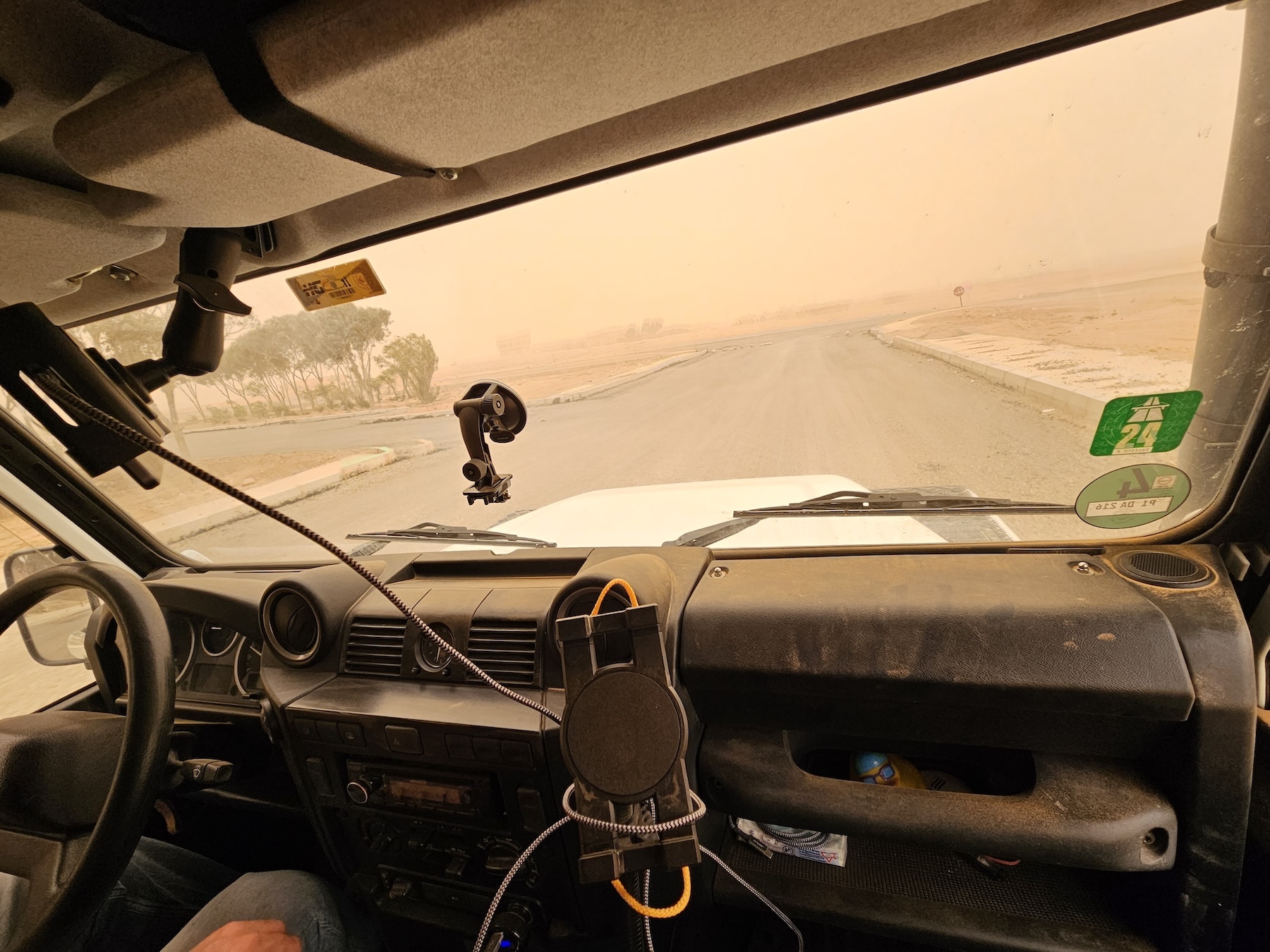
And then there’s the one we hear very often: “Didn’t anything dangerous ever happen to you?” Especially when we talk about countries that many people are wary of, the expectation sometimes seems to be that we absolutely must have brought back a scary story. Of course, we’ve had our share of dicey situations, too—in Morocco, for example. We don’t want to sugarcoat that at all. But moments like those weren’t what defined our travels overall. What has stayed with us much more strongly is the willingness to help, the hospitality, and all the encounters with people who helped us or welcomed us as a matter of course.
What do many people believe about your life on the road—even though it’s not true at all?
That traveling is always a vacation. Of course, there are wonderful days. But being on the road also means organizing, shopping, doing laundry, fixing things, planning routes, crossing borders, searching for water, and sometimes driving for hours on end. And when you’re on the road for a long time, even the extraordinary eventually becomes part of everyday life. That doesn’t make it any less beautiful—just much more real than the image you often see on social media.
What aspects of travel are romanticized on social media, even though reality sometimes looks quite different?
Probably, above all, the idea that travel is always easy and wonderful. The freedom we feel on the road is absolutely real to us and is actually one of the biggest reasons why we love traveling so much. But freedom doesn’t mean that every day is perfect.
On social media, you see the sunset at a secluded campsite. What you usually don’t see is that you might have spent two hours looking for that spot beforehand, the car is parked crookedly, there are mosquitoes everywhere, and you suddenly realize you’re running low on water. You see the dreamy off-road trail, but not necessarily the discussion beforehand about whether you should really drive onto it, or the hours afterward when everything is covered in dust.
And of course, there are also days when you’re tired, getting on each other’s nerves, something breaks, or simply nothing goes the way you imagined. But that doesn’t make traveling any less wonderful for us. On the contrary: it’s exactly this mix of freedom, small challenges, chaos, and the incredibly beautiful moments that makes it so special in the end.
“You go somewhere as a stranger and come back with friends.”
What has traveling taught you that no school in the world could have taught you?
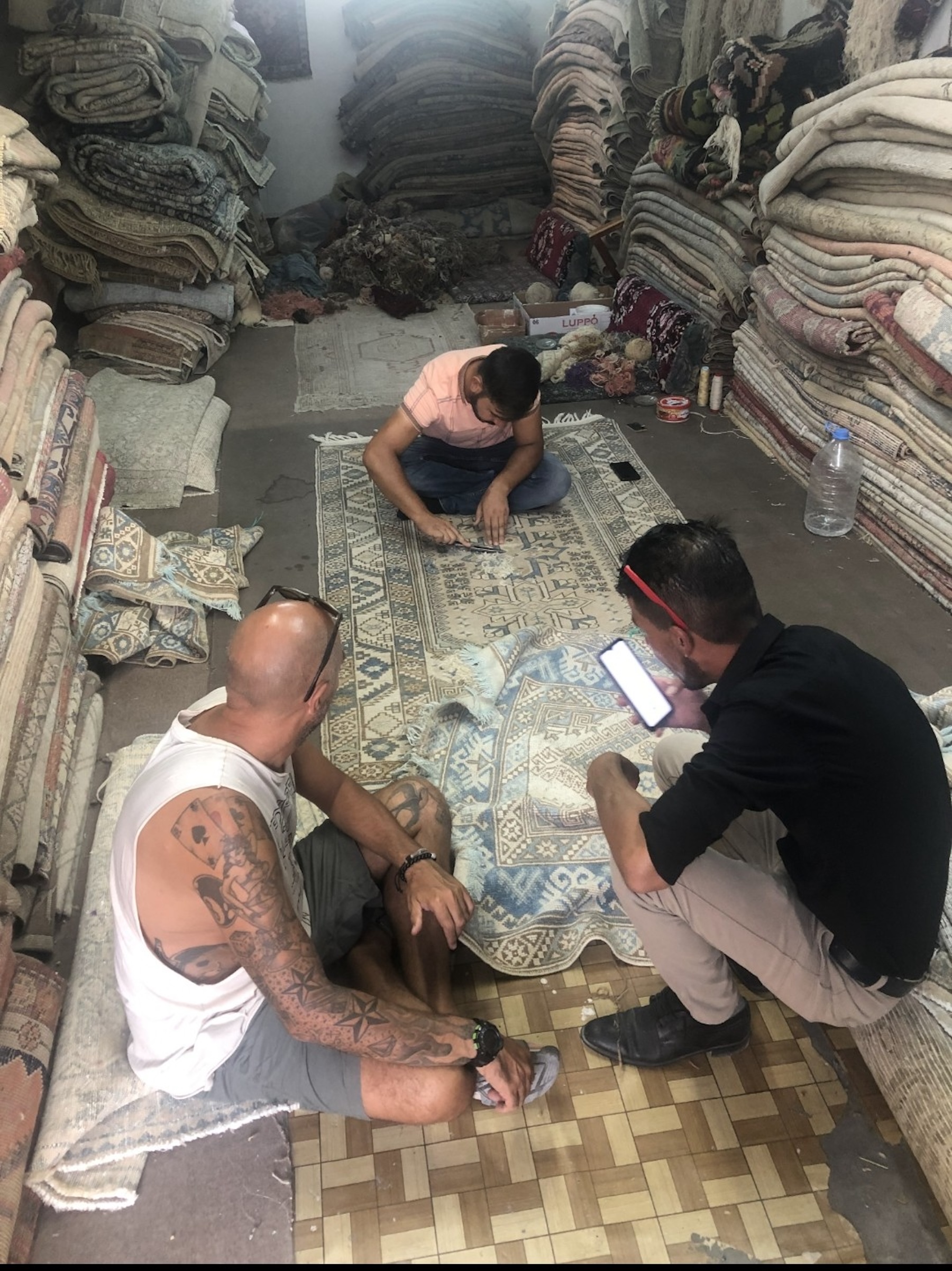
That there’s almost always some kind of solution. When you’re on the road, you can’t spend forever analyzing or putting off problems. When you’re in a situation where something isn’t working, you have to make do with what’s available right then. You also learn very quickly that your own way of living and seeing things is just one of many. The more countries we’ve traveled to, the less we believe that there’s only one right way to live your life.
What was your opinion before your trip—and would you say the exact opposite today?
Before our trip, we would probably have said that home is a specific place—our own apartment, our familiar surroundings, with friends and family nearby. Today, we’d answer that question completely differently. After a year in which our Defender was our home and the view outside our door was constantly changing, we realized that, for us, home has much less to do with a fixed location than we used to think.
While on the road, family and friends kept asking us if we missed home or if we were looking forward to coming back someday. And to be honest: neither, really. What we missed were the people—family, friends, and the moments we shared with them. Davide is Anna Lena’s home, and Anna Lena is Davide’s.
Whether we’re currently in Germany, standing by the sea somewhere in Greece, in the mountains of Armenia, or perhaps living in Italy someday—that’s not what really matters. Of course, we love having a place to return to. But for us, that deep sense of home now comes above all from the fact that we’re together. Perhaps that was one of the most beautiful realizations of this journey: You need surprisingly little to feel at home anywhere in the world.
If you could give your “past self” just one piece of advice before setting out—what would it be?
Don’t worry so much about everything that could go wrong. You won’t be prepared for the things that actually happen anyway. And yet, you’ll almost always find a solution.
What does “One Life. Live It.” mean to you personally?
For us, it means staying open-minded and curious, and giving life room for things you can’t completely plan. It doesn’t always have to be about big adventures. Often, it’s the small decisions that make a difference: taking a different turn, striking up a conversation with someone, staying in one place a little longer, or simply trying something new.
For us, “One Life. Live It.” doesn’t mean constantly having to experience something spectacular. It means not just wanting to live your own life “someday.” It’s not always just saying, “One day we’ll do that.” Instead, it’s saying at some point, “We’re doing that now.”
If someone reads your story and finds the courage to set out on their own journey—what advice would you give them to take with them?
You don’t have to quit your job for a year right away, buy an expedition vehicle, or drive to the other side of the world. Just get started. Your first trip could just as easily be a weekend getaway. The first off-road trail could be ten kilometers from home. You also don’t have to be prepared for everything before you set off. You’ll learn a lot of things along the way anyway. And that’s probably the whole point.
Is there a project, a person, or an initiative that has particularly grown on you while you’ve been on the road? Or something we absolutely should share with the OLLI community?
We can’t single out just one project. But what has really grown close to our hearts on our travels are, for one thing, the many stray animals we encounter. That’s why, ever since our big trip, we’ve always kept food in the car—and two former stray cats are now even part of our family. At the same time, responsible travel is very important to us. Especially when overlanding, we’re noticing more and more often that beautiful places and routes are being lost because rules are ignored, areas are littered, or boundaries aren’t respected.
For us, however, traveling also means being a guest in a country and in other people’s homes. This includes respecting rules, being considerate, and leaving a place just as you’d like to find it yourself. So if there’s one thing we’d like to share with the OLLI community, it’s perhaps exactly this:
Enjoy this freedom, but always with respect for the people, nature, and places that make these experiences possible in the first place.