Chaos Tours: In the Footsteps of the Last Charcoal Burners of the Balkans
FIELD NOTES are stories and experiences shared by our OLLI Friends. Straight from the field.
Narrow, winding roads lead Sylvia Furrer and Holger Hoffmann through dense beech forests to remote villages where the ancient craft of charcoal burning has been practiced for generations.
For nearly five decades, Sylvia Furrer and Holger Hoffmann have been traveling the world together as Chaos Tours. Their curiosity isn’t focused on places, but on people. They seek out encounters with people who preserve ancient knowledge, live by traditions, and can tell stories that hardly anyone else hears. Their reports are therefore far more than mere travelogues—they document ways of life and crafts before they may disappear forever.
Of all the people you might meet while traveling—why do you seek out charcoal burners, of all people?
Sylvia: We’re inspired by people who pass on their culture, way of life, or knowledge from one generation to the next. We want to understand why they do this, how their daily lives are changing, and what the future holds for their traditions.
But it’s not just charcoal burners who interest us. We’re deeply fascinated by the daily lives of nomads and the cultures of isolated peoples, such as the Kalashi, Kogi, Korowai, and Naga.
This exploration has also sparked a growing interest in our own local culture: in the Alpabzug, cattle shows, Swiss wrestling festivals, Hornussen, Carnival customs, Silvesterchläuse—and thus also in the charcoal burners of Entlebuch.
But why charcoal-making of all things? What fascinated you so much about this craft that you followed it through three countries?
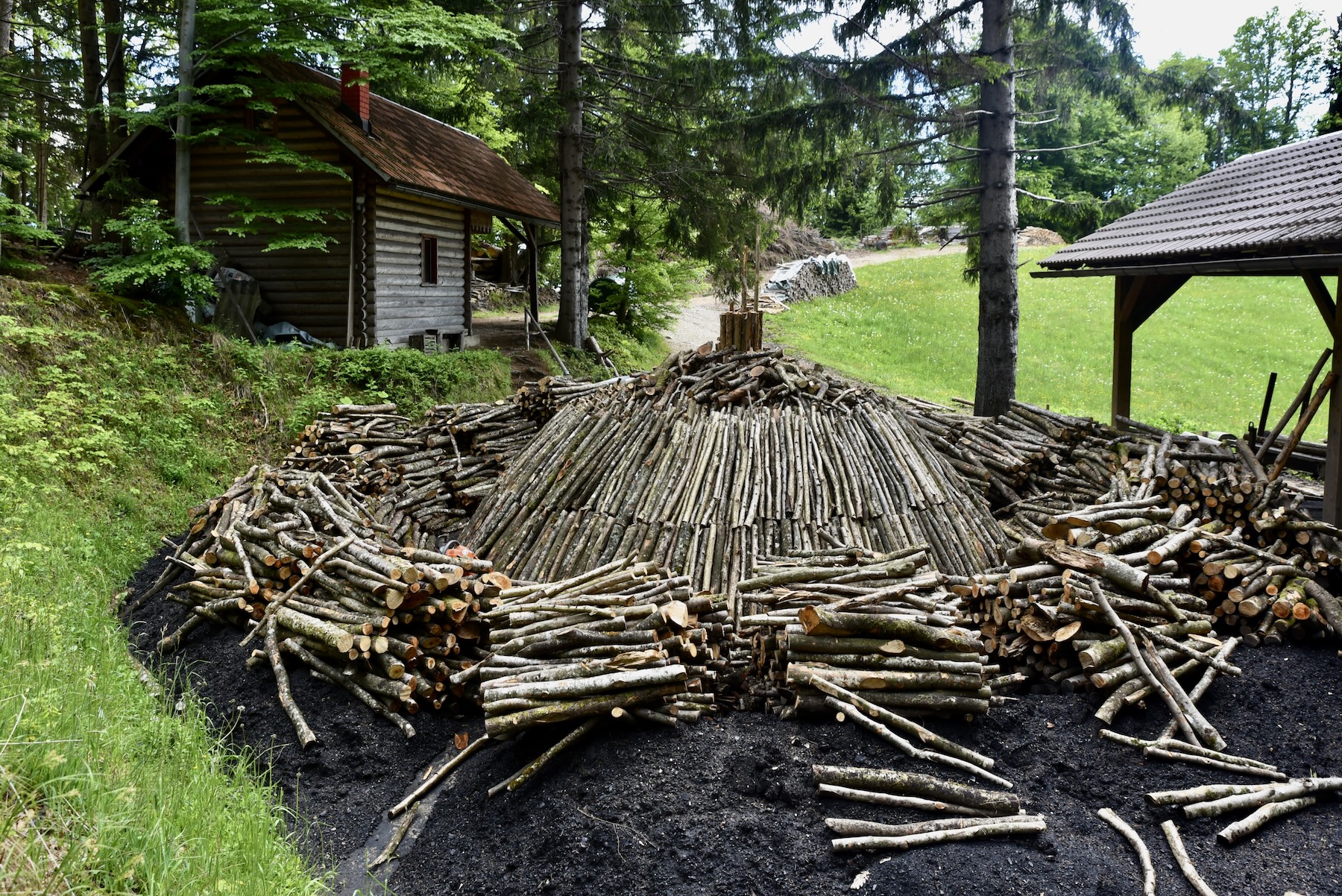
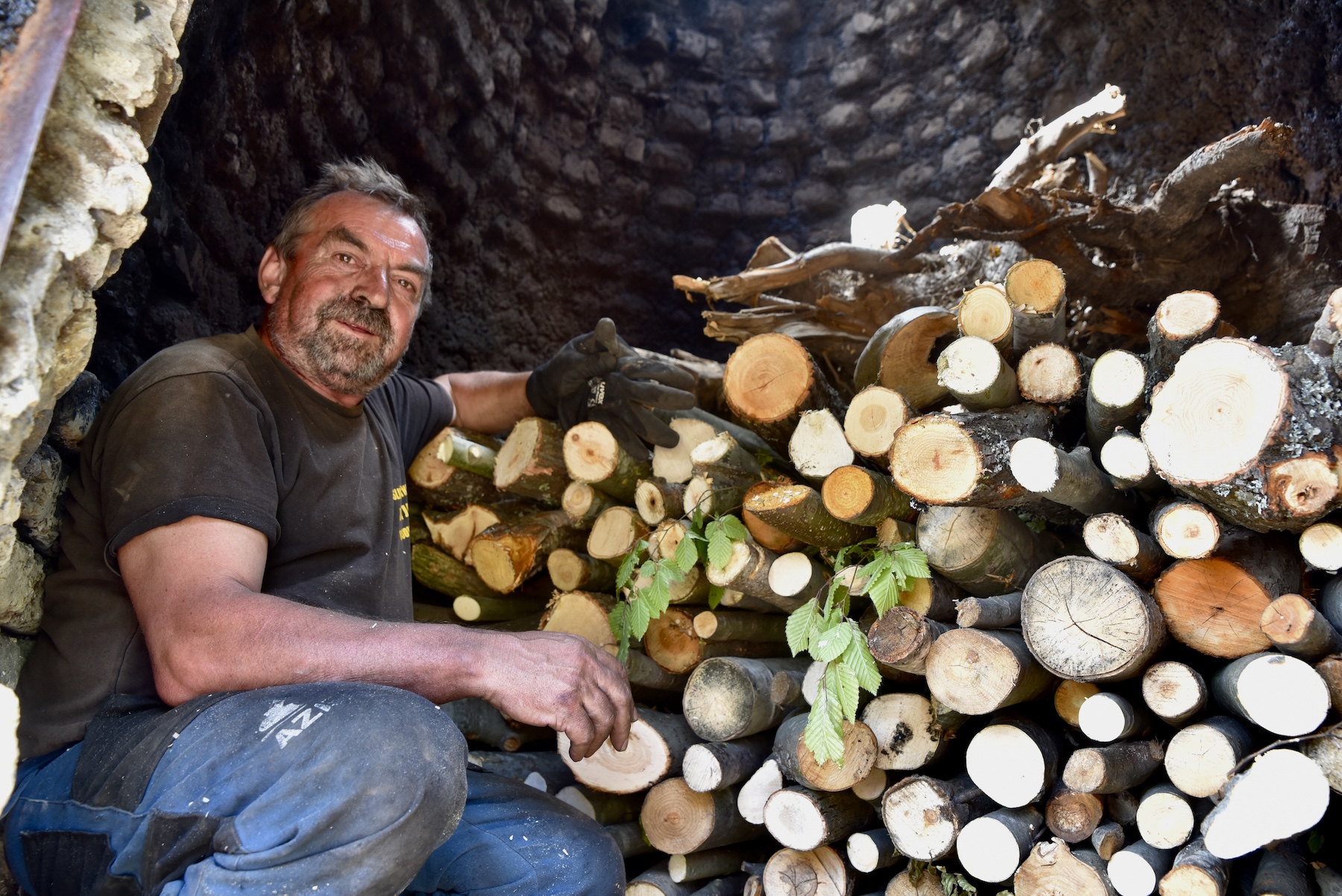
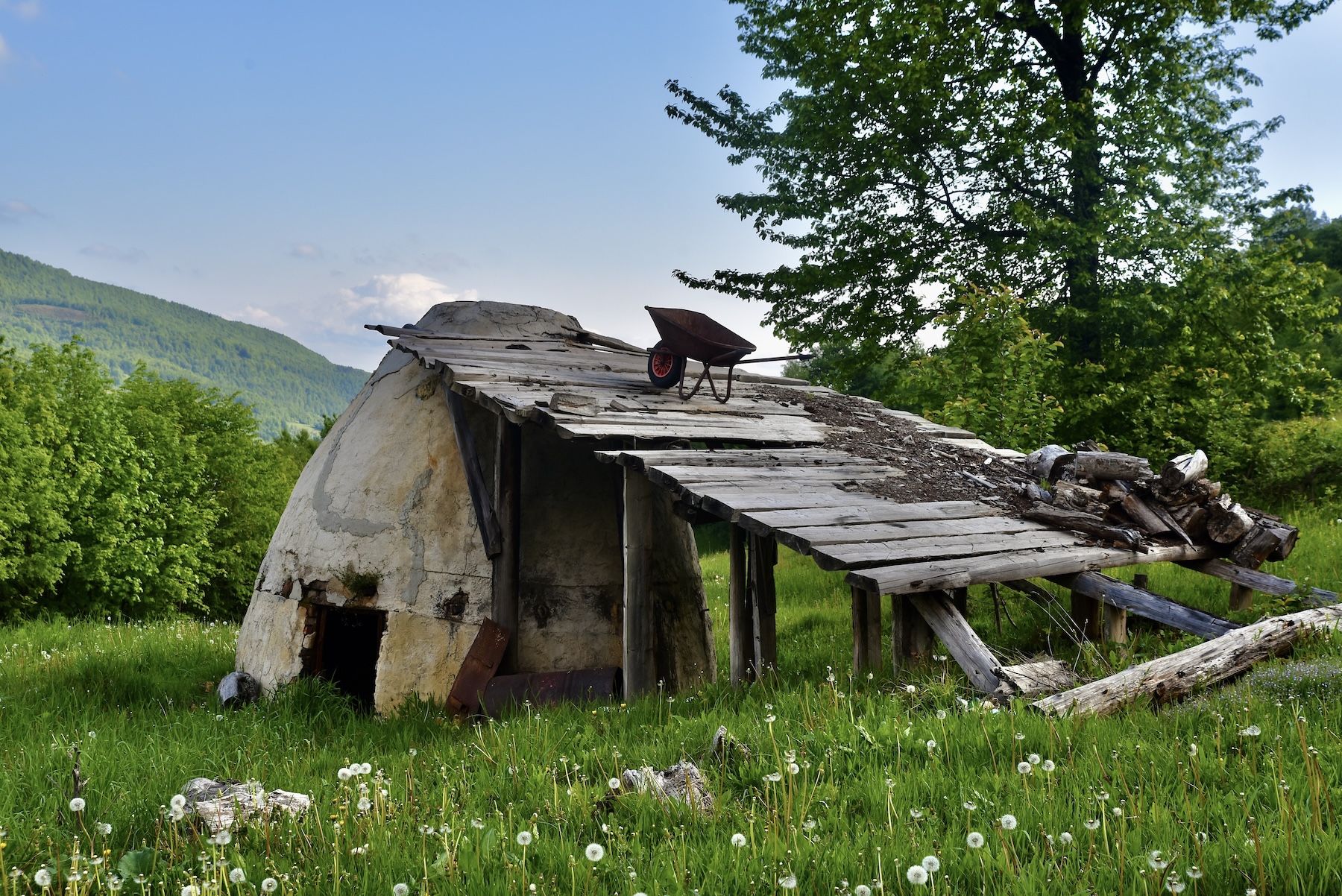
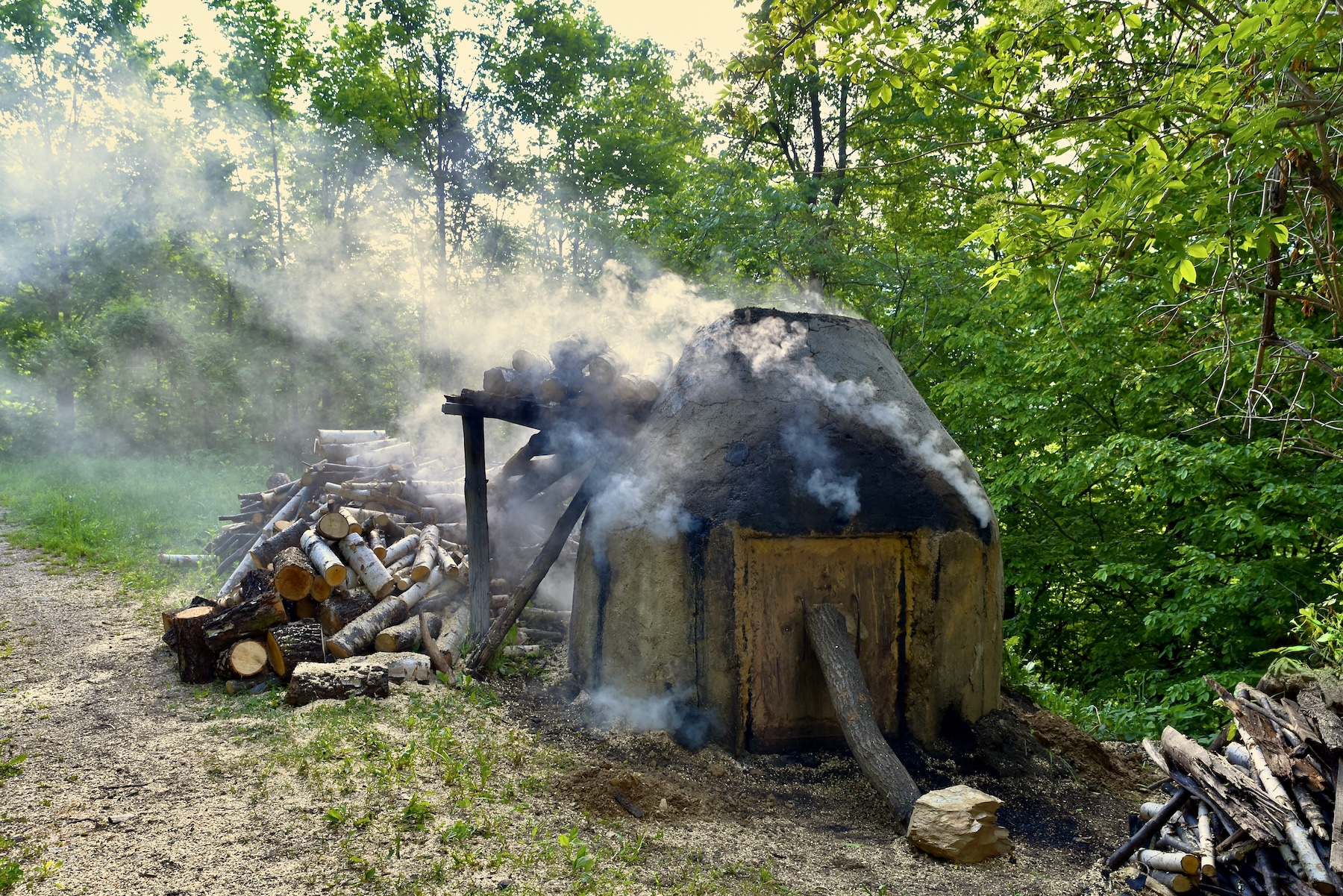
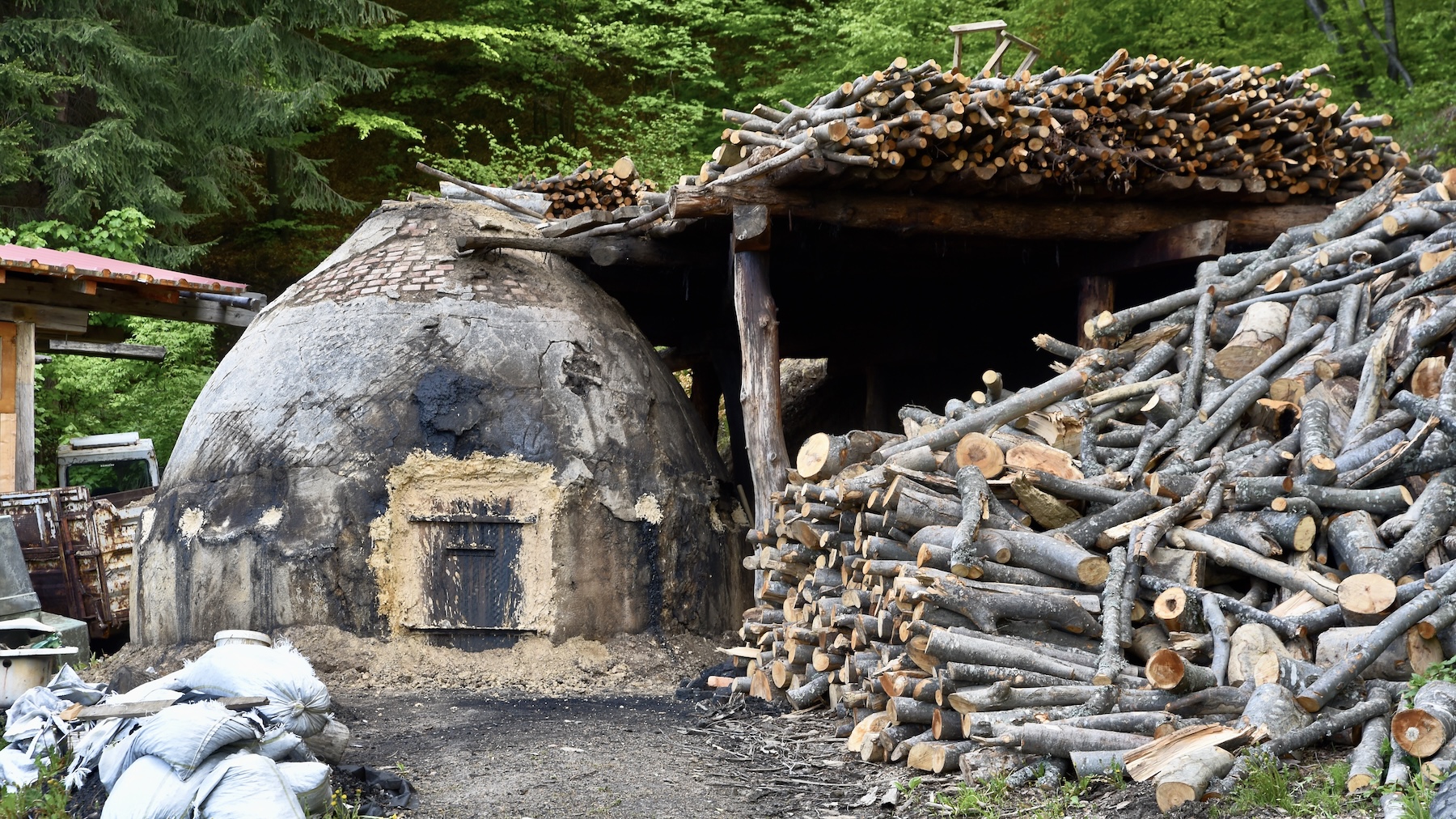
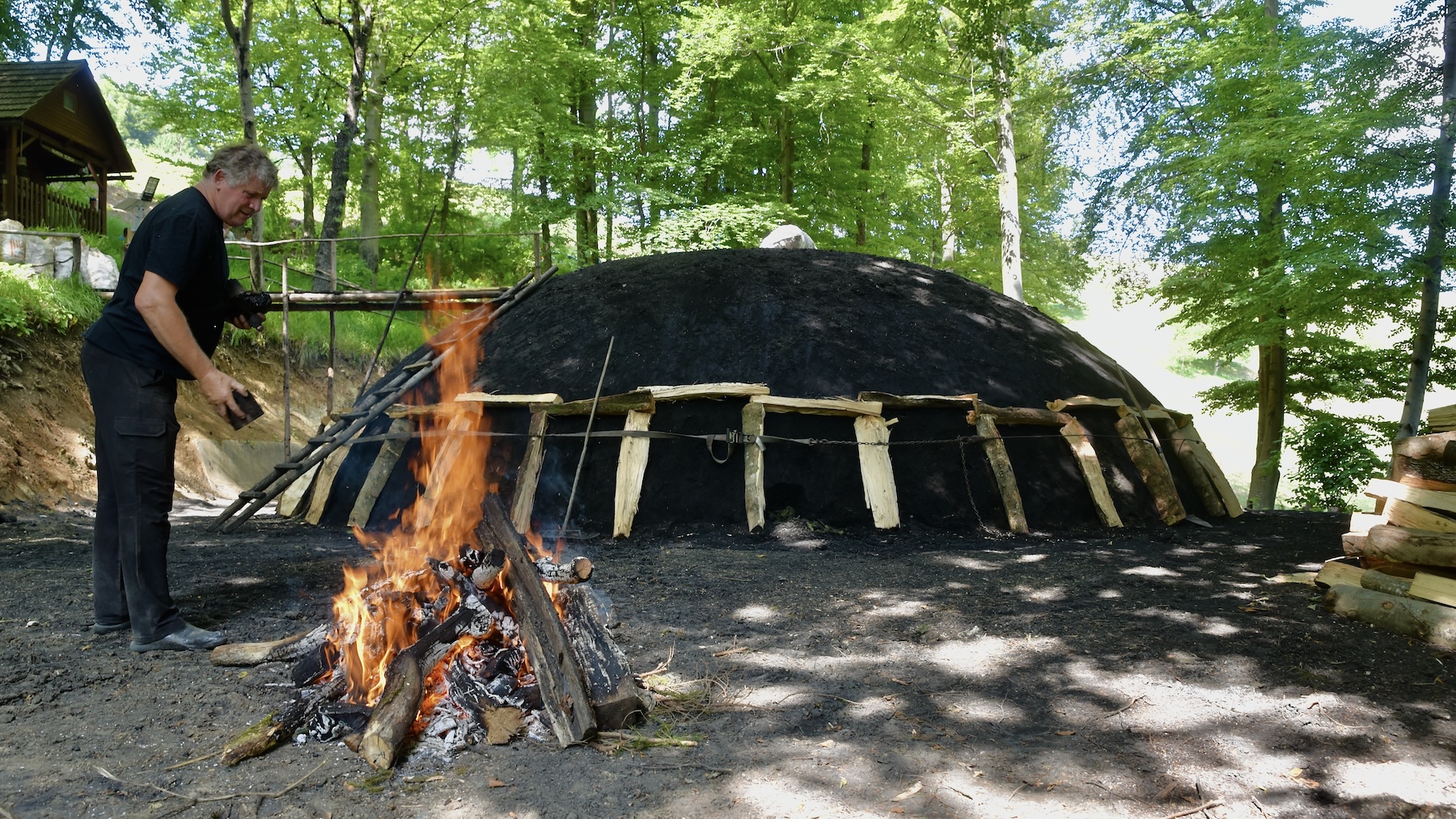
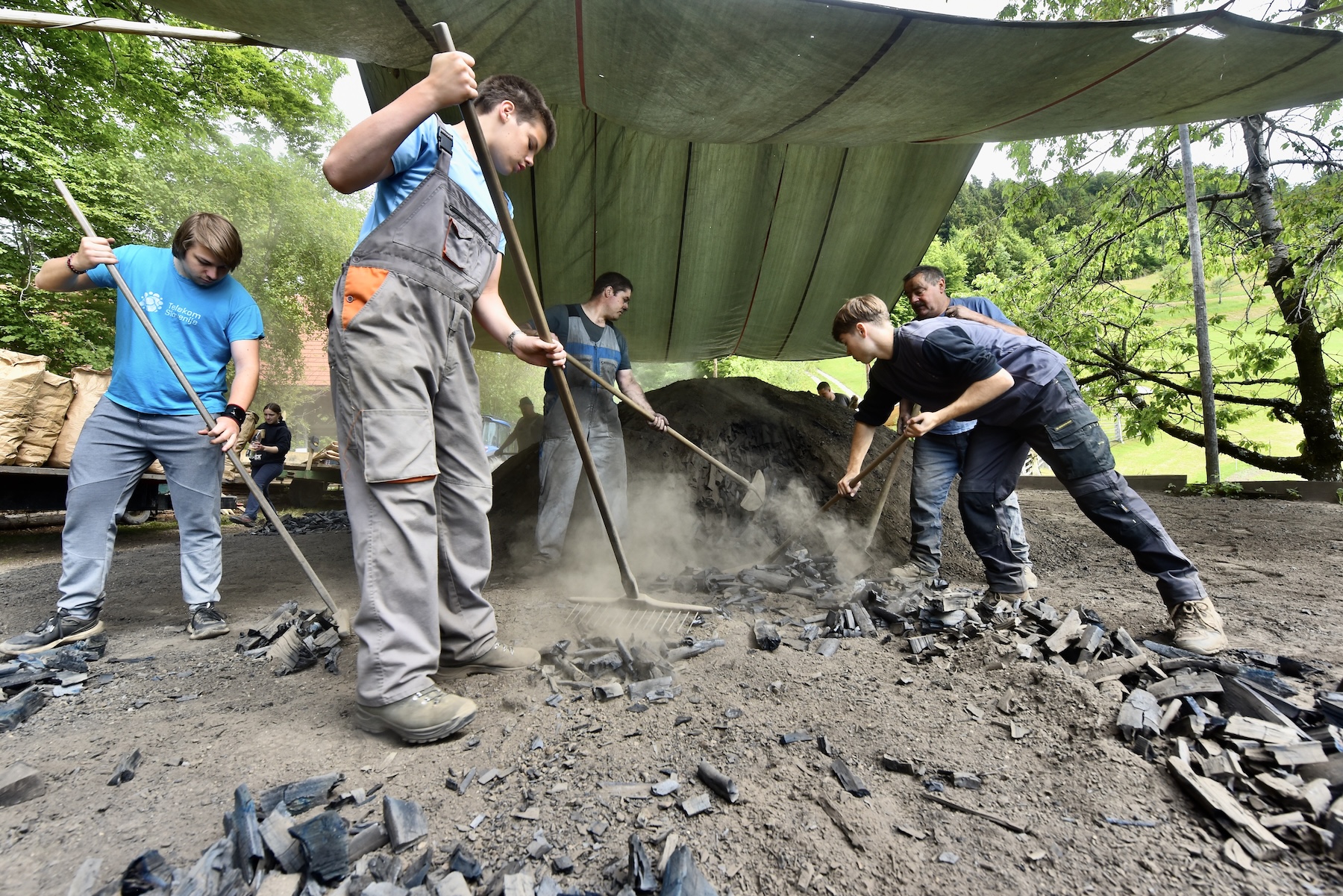
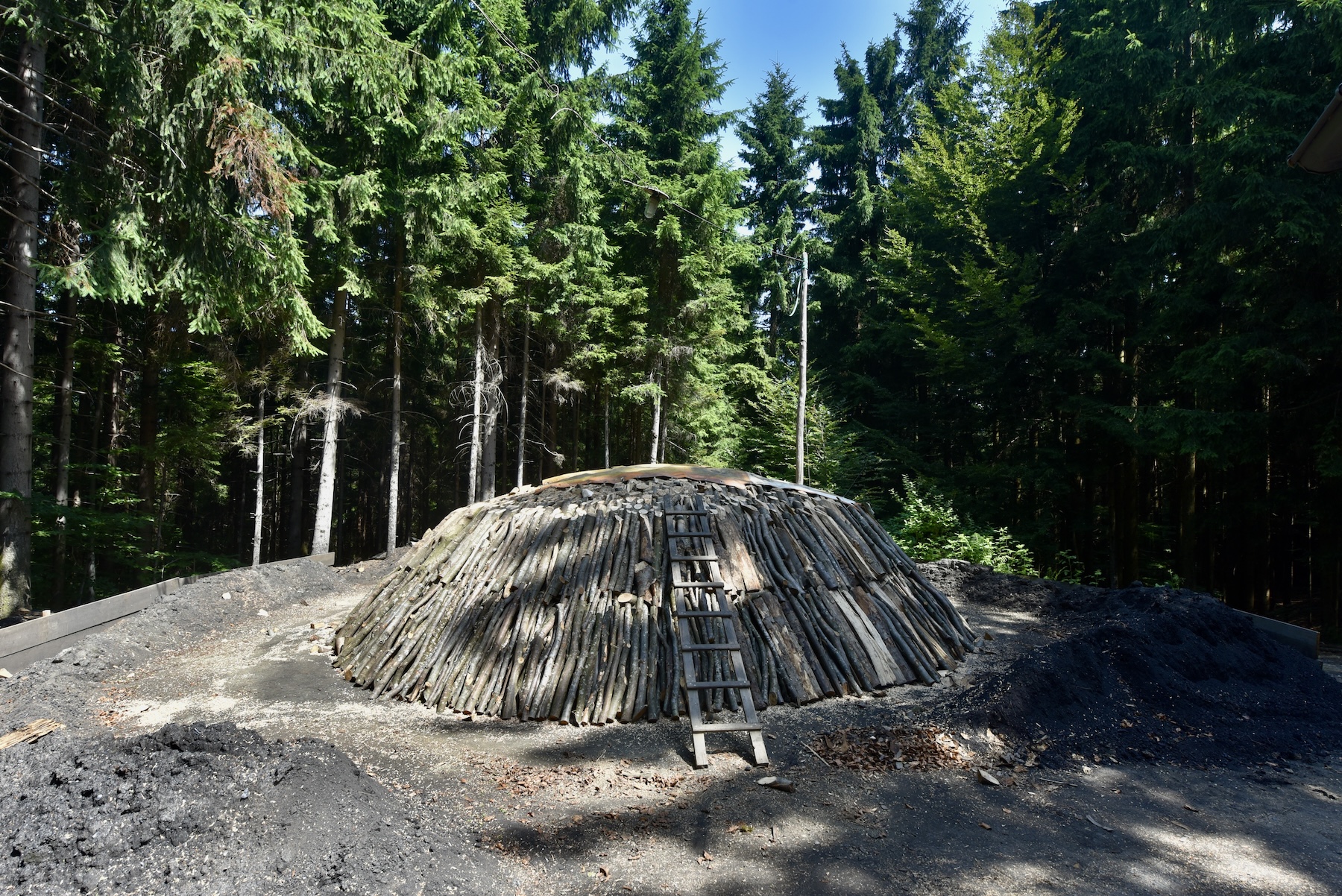
Holger: The craft of charcoal-making and the individual processes involved are truly fascinating. It starts with stacking the wood, then covering it with fir brush and “Lösche”—a mixture of soil, sand, and charcoal dust—and finally lighting the fire. That’s a very special moment for charcoal burners.
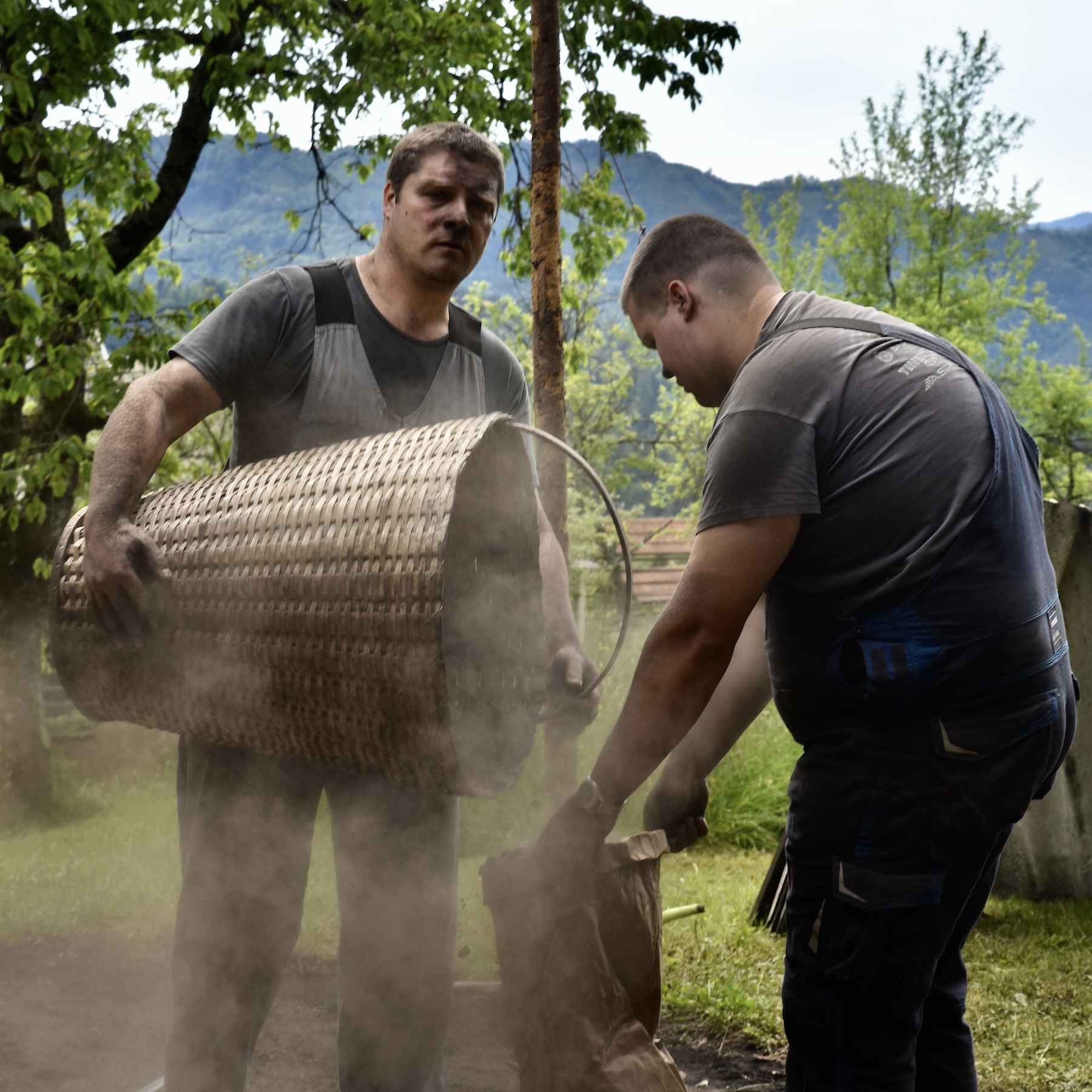
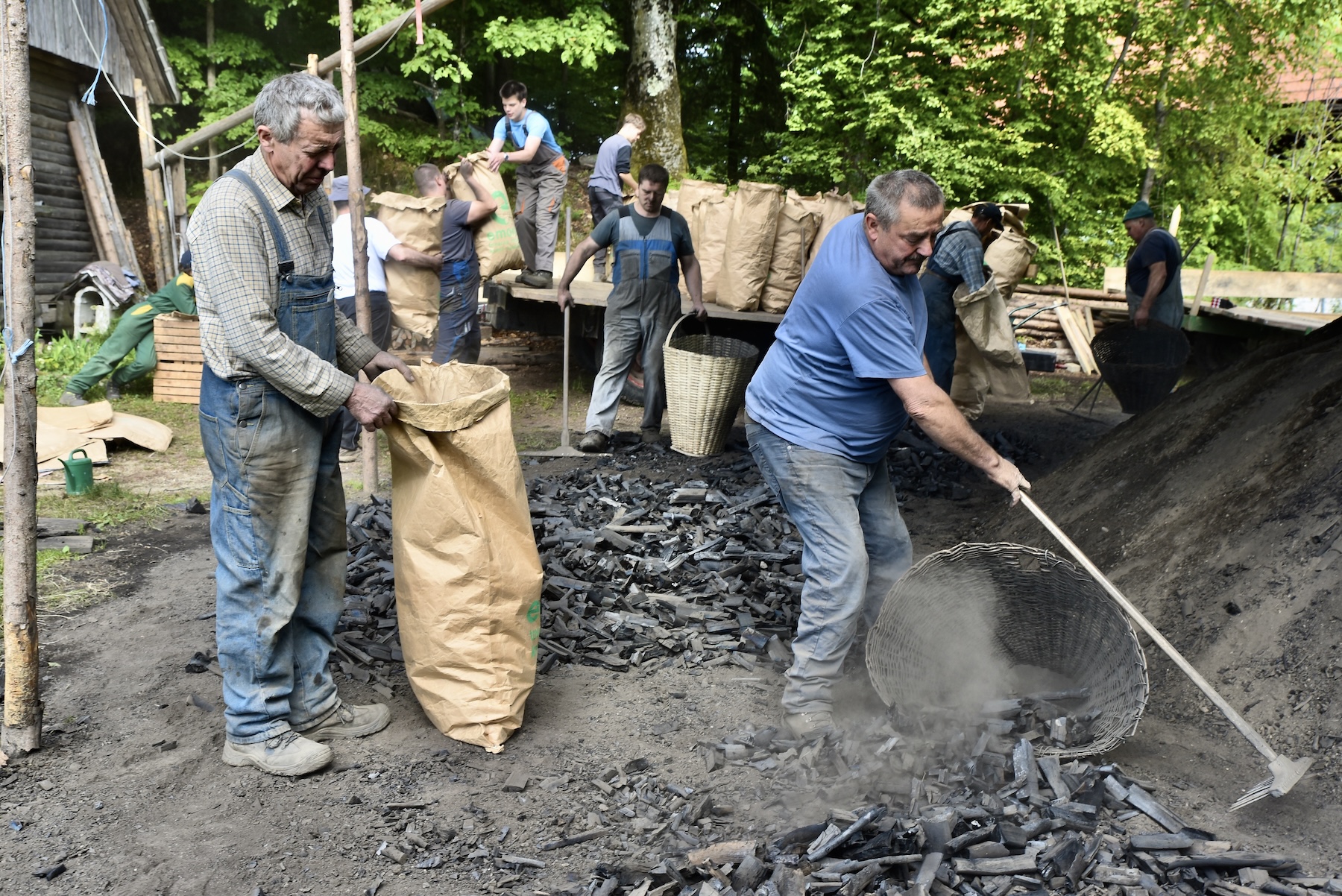
Clearing out and bagging the finished charcoal is also interesting. But the most exciting part is observing the actual carbonization process, especially toward the end. Every single phase also has an incredible aesthetic appeal.
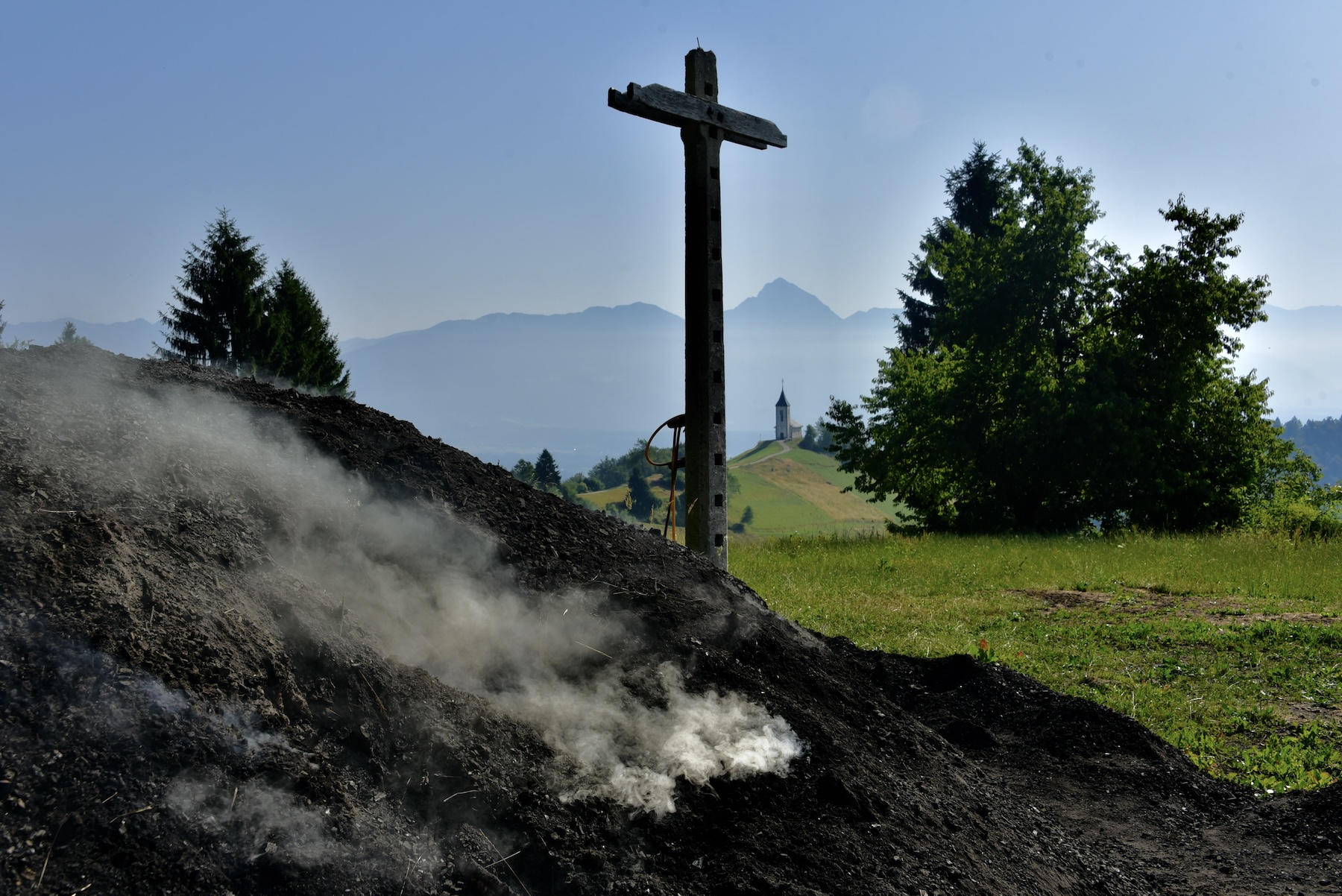
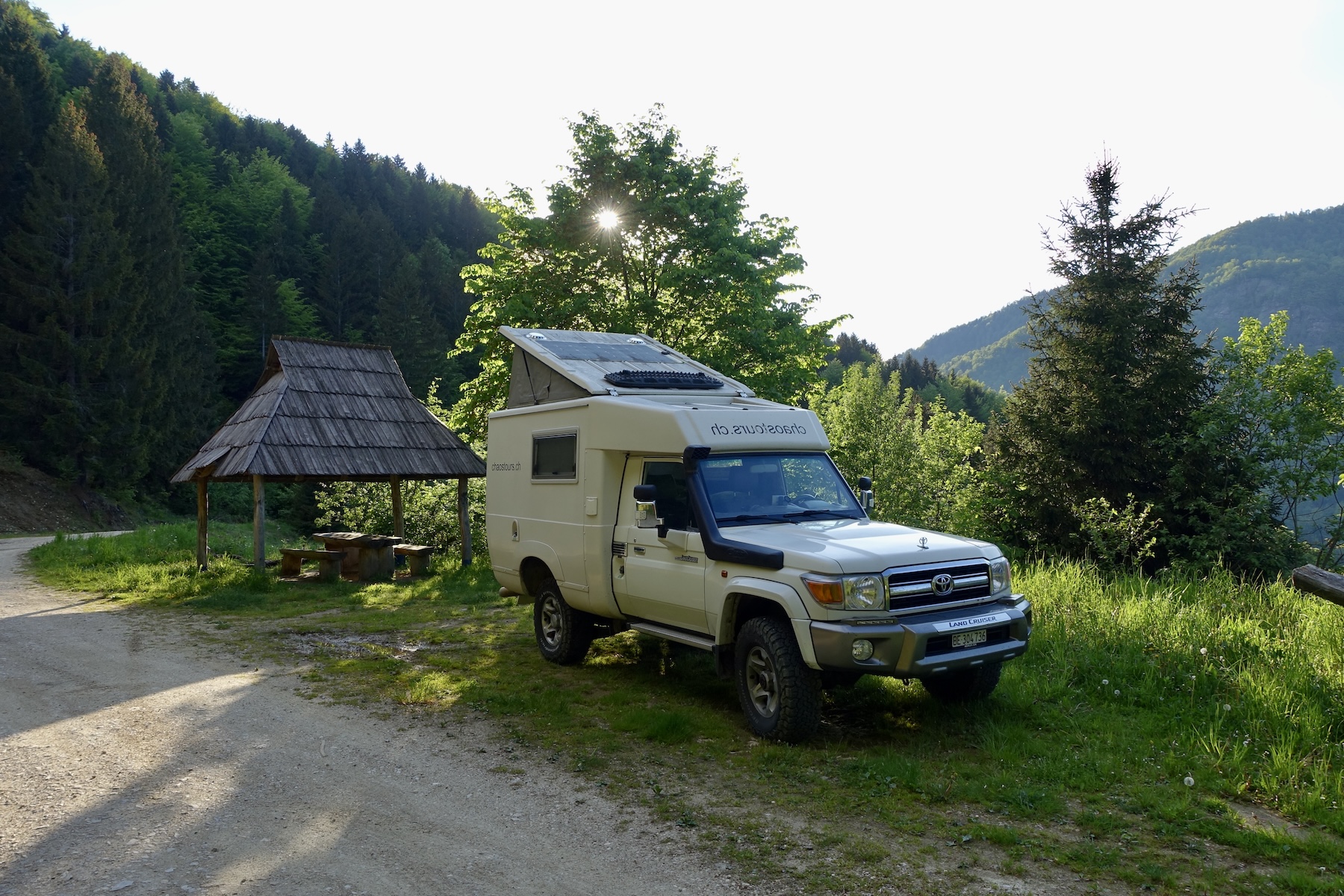
Sylvia: The first time we were allowed to spend the night right next to a charcoal kiln in the “Monsterli”—that’s what we call our Land Cruiser camper—we were repeatedly woken up at night by the charcoal maker, Doris Wicki, whenever she checked on the kiln. As she did so, she poked new holes in the wall of the charcoal kiln. The escaping smoke curled in the pale moonlight and took on different shades depending on the stage of carbonization.
After that, we were “hooked” on charcoal-making.
Holger: By now, we’ve already had the chance to watch five charcoal burners at work in Entlebuch. And it didn’t stop with the charcoal burners in Switzerland. We traveled to Saxony and Saxony-Anhalt, where they make charcoal using steel bells and fireclay kilns, and three times to the Wieser brothers in the Vienna Woods, where they produce charcoal using long kilns—a very fascinating method.
We’ve also been to Gujarat twice, to Romania, and now to the Balkans. Our next destinations are charcoal burners in Ethiopia and Calabria.
Sylvia: It’s also fascinating to listen to the charcoal burners. They talk about how they’re constantly working to improve the quality. It doesn’t always turn out exactly as they’d like. But it’s also wonderful to see the joy on their faces when it turns out well and they proudly hold out a piece of charcoal with a metallic blue sheen.
In general, charcoal burning leaves me with many beautiful images of great aesthetic appeal. The charcoal kiln is shaped like a hemisphere: at first it’s light brown from the stacked wood, then light green from the fir brushwood, and finally black from the charcoal.
"Once we're on the road, we like to let ourselves be guided by new opportunities that unexpectedly present themselves to us."
How did you even come across the Wieser brothers? Were they part of your research from the start, or was it more of a chance encounter?
Sylvia: Norma, the charcoal burner in Eisenhammer, Saxony-Anhalt, raved about the Langmeiler in Austria and the two charcoal-burning brothers and their wives. Doris Wicki, the vice president of the European Charcoal Burners’ Association, also confirmed that the long-mound kilns operate quite differently from the ones in Entlebuch.
Holger then did some research online and contacted the Wiesers by email. We were given a very warm welcome and got a real sense of their love for nature—and especially for the forest. Gertrud Wieser has a collection of about 30 pieces of charcoal from a wide variety of tree species. Each one differs in structure and luster.
How do you even find the last charcoal burners in the Balkans?
Sylvia: The trail began in the Vienna Woods. There we met Gertrud Wieser, one of Austria’s last female charcoal burners. During our first visit, she wrote a name and an address on a piece of paper: Janez Medved, Dole pri Litiji. She said we absolutely had to visit him. Two days later, we were on our way to Slovenia.
Holger: And from there, we were passed along.
"Janez Medved: We absolutely had to visit that place. Two days later, we were on our way to Slovenia."
A name. A place. That’s all. Is that really enough for you to just set off?
Holger: Yeah, in this case, it was. Until then, we’d only ever driven through Slovenia. But what Gertrud told us sounded promising, and we wanted to keep heading toward Romania anyway.
From our previous online research, we knew there were still charcoal burners in Romania. We hadn’t heard anything about the charcoal burners in Slovenia, Bosnia, and Serbia until then.
Sylvia: But that’s typical of Chaos Tours’ travel style. For us, “chaos” means self-organization. We gather as much information as possible in advance on a topic or a potential travel destination, whether online, in books, or through personal contacts. If it doesn’t grab us, we scrap the idea…
Holger: …which happens very often.
Sylvia: Once we’re on the road, we like to let ourselves be guided by new options that unexpectedly present themselves to us.
Holger: Those are also the experiences that usually stick with us the most.
In Slovenia, you meet Janez Medved for the first time. What impressed you about him?
Holger: Even the journey to his farm was a wonderful experience: through dense forests, along streams, with the occasional sign warning of bears or indicating that we were in charcoal-burner country.
When we arrive at his farm, we’re first greeted by a life-size bear carved from wood. Janez Medved, in his early sixties, is sitting in front of the house with one of his grandsons on his lap.
He is primarily a farmer who raises livestock and produces milk; he manages 40 hectares of forest, produces red wine from his own vineyard, and distills slivovitz. He has since handed the farm over to his son and now has more time for charcoal burning, carving wooden bowls, and spending time with his grandchildren.
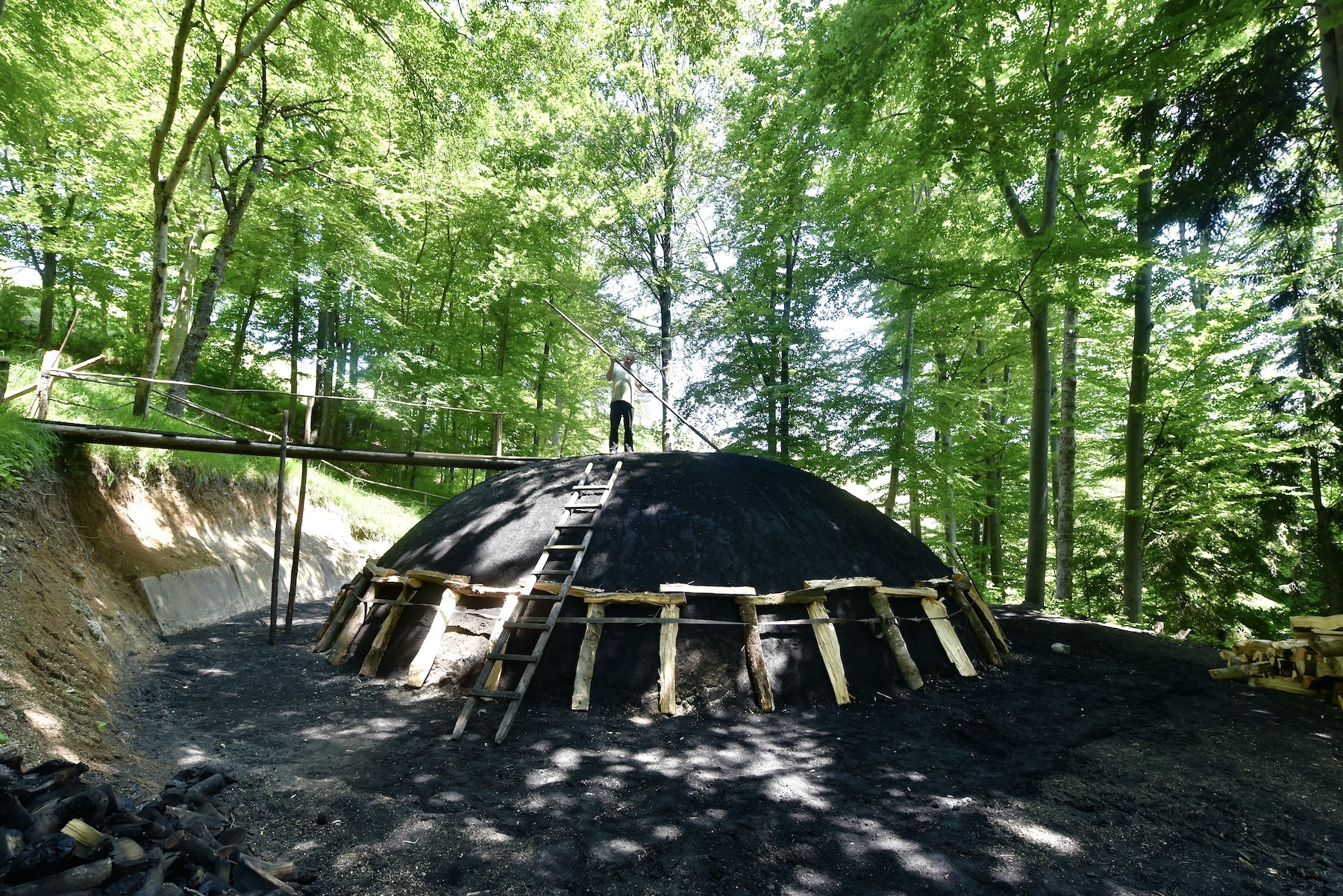
Sylvia: He welcomes us warmly, treats us to slivovitz, and then leads us to the charcoal kiln site at the edge of the forest, 300 meters away. Not without pride, he shows us his newly completed round kiln filled with about 200 ster of wood—the largest we’ve seen so far.
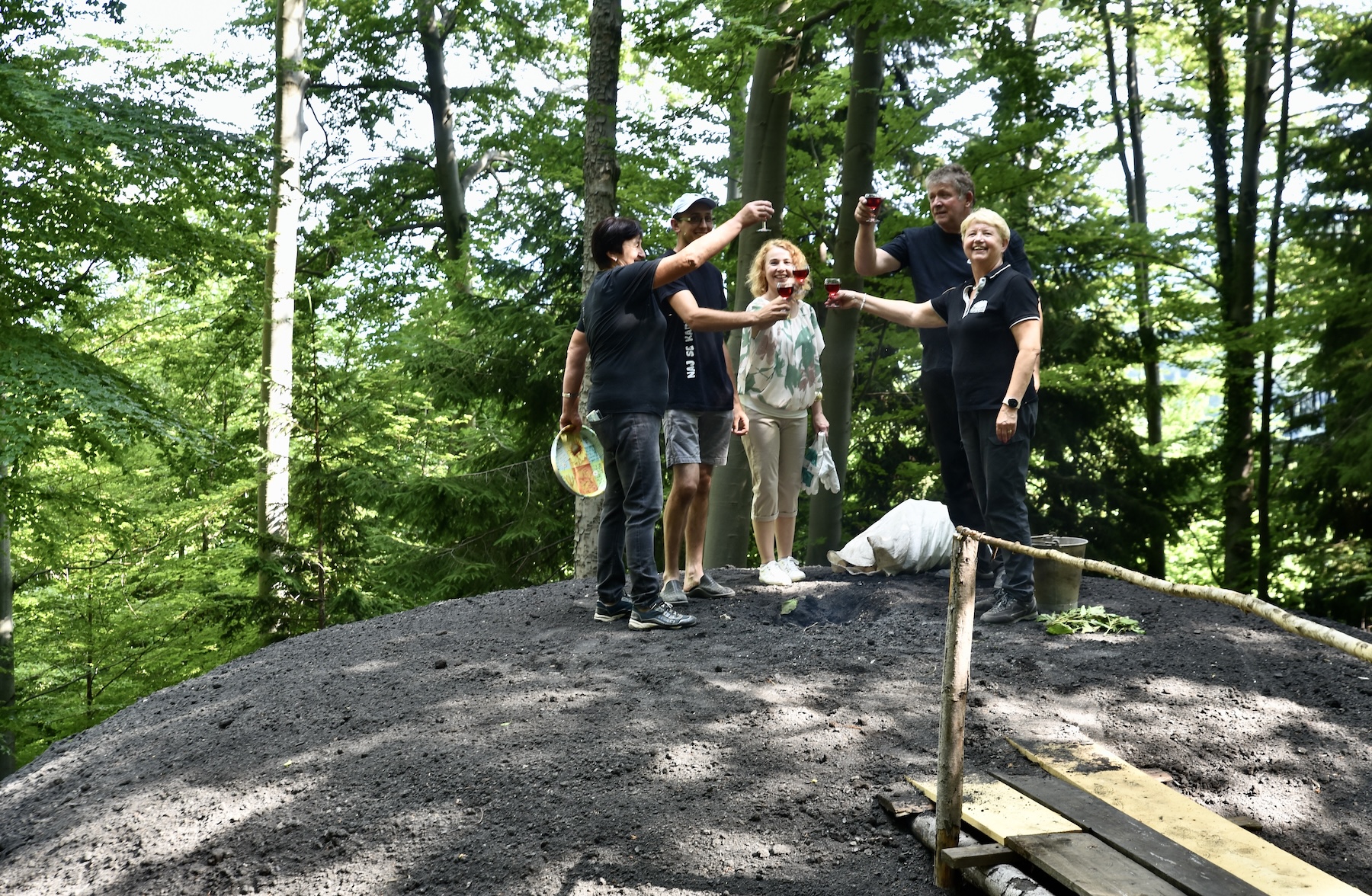
Of course, we immediately want to know when he’ll light the charcoal kiln. In four days, on the eve of their national holiday, which will be marked by a small celebration with speeches, music, and refreshments at their farm. If we can, we should come. We’re warmly invited.
So how did a simple visit suddenly turn into a search for clues?
Sylvia: Four days later, we’re back in Dole pri Litiji. In the meantime, we’d been enjoying the sights of Slovenia that Janez’s daughter had recommended to us.
Before lighting the charcoal kiln, Jože Prah, the president of the Slovenian Charcoal Burners’ Association, gave a speech. Over a light meal, he suggested we also visit the charcoal burners around Selca and wrote down Janez Pegam’s address for us.
Holger: After checking out two more charcoal-burning sites in Dole pri Litiji and attending the open-air folk concert in the evening to celebrate the national holiday, we drive to Selca along narrow, winding roads.
On the way, we spend the night near the church in Jamnik, perched on a rocky outcrop with a breathtaking view of the Steiner Alps. When the owner of the campsite finds out what brought us here, he happily tells us that his neighbor, 500 meters away, has a charcoal kiln “baking” right now.
Sylvia: This charcoal kiln is also beautifully nestled in the landscape.
Holger: The first charcoal burner we manage to track down in Selca piles us into his delivery van and takes us to all the charcoal-burning sites around the village. There are five of them, at various stages of progress.
Finally, we end up at Janez Pegam’s place—a tall, burly man in his late thirties with a good-natured smile. “My farm is small,” he tells us in the kitchen. “I have 25 hectares of forest, eight hectares of meadow, and ten cows. I burn three to four charcoal kilns a year—it’s a nice way to earn some extra income.”
Our conversation is interrupted. Janez Pegam’s cell phone rings. Jože Prah is on the other end, asking if we’ve found him.
Sylvia: We can spend the night at his farm with our little monster. Before that, we’re invited to dinner and given a gift of his own floral, aromatic honey.
The next morning, Janez takes us to the charcoal kiln site belonging to his brother-in-law, Pavel. A dozen men have been busy here since early morning, clearing out the kiln and bagging the charcoal.
"The charcoal burners aren't rich. But none of the people we met seemed unhappy."
Did you ever feel like the story was carrying you along? Like you weren’t searching anymore, but were being found instead?
Holger: Yes, “carries you along” captures it pretty well—like a wave when you’re surfing. You never know how long the wave will carry you until after the fact. On this journey, the wave carried us for a long time.
It does take a bit of luck, but you have to be open to the sometimes surprising opportunities that come your way, be able to trust people and yourself, and then make the most of it. It’s not enough to just hope that the right wave will find you.
It’s always important to show people that you’re interested in them and what they do. Ideally, you bring enough time and some prior knowledge, but also the curiosity to learn even more from them.
We’d heard from Jože Prah that charcoal was still being produced in central Bosnia, but unlike where he was from, it was made in brick charcoal kilns. He didn’t know exactly where the charcoal burners lived.
Since we’d only ever seen brick charcoal kilns in Gujarat, this piqued our interest. I searched the internet and, thanks to an article written in Bosnian, found the charcoal kilns on Google Maps—about 60 kilometers northwest of Sarajevo, in small villages with names we could barely pronounce, such as Podstijena, Rizvići, Vladići, Dragačići, Vukeljići, and Živčići, on the slopes on both sides of the still-young Kozica River.
During my research, I also came across charcoal burners in Serbia who produce charcoal in brick kilns in the area around Klokočevac.
"A successful distillation run is like a successful journey: it requires careful preparation and execution, as well as patience. You have to be willing to accept unexpected setbacks. It's not just the success that brings joy, but the process itself."
So, did that wave carry you all the way to Bosnia and Serbia, too?
Holger: Yes, I think so. We didn’t have as many personal contacts, but the ones we did have were also very warm.
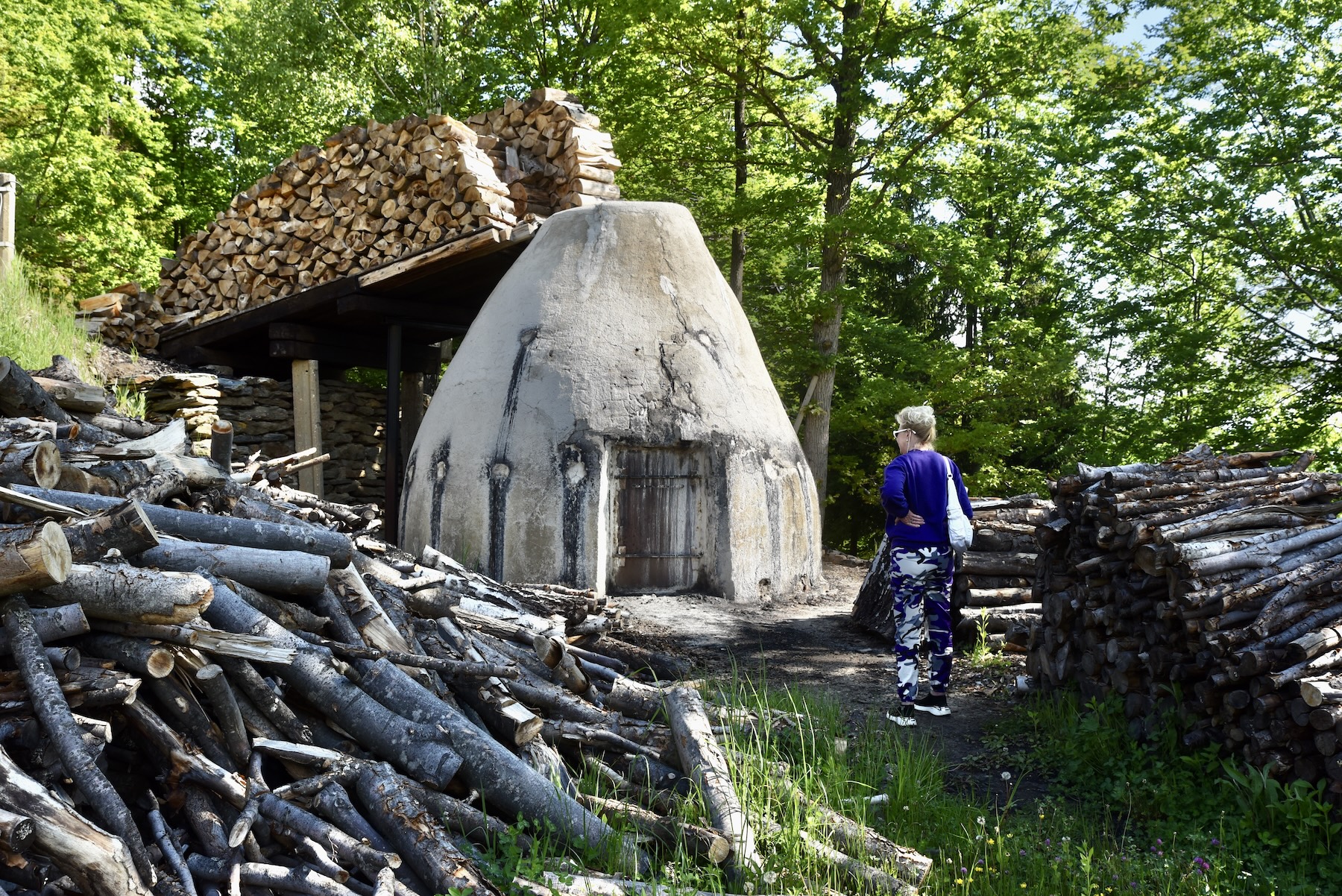
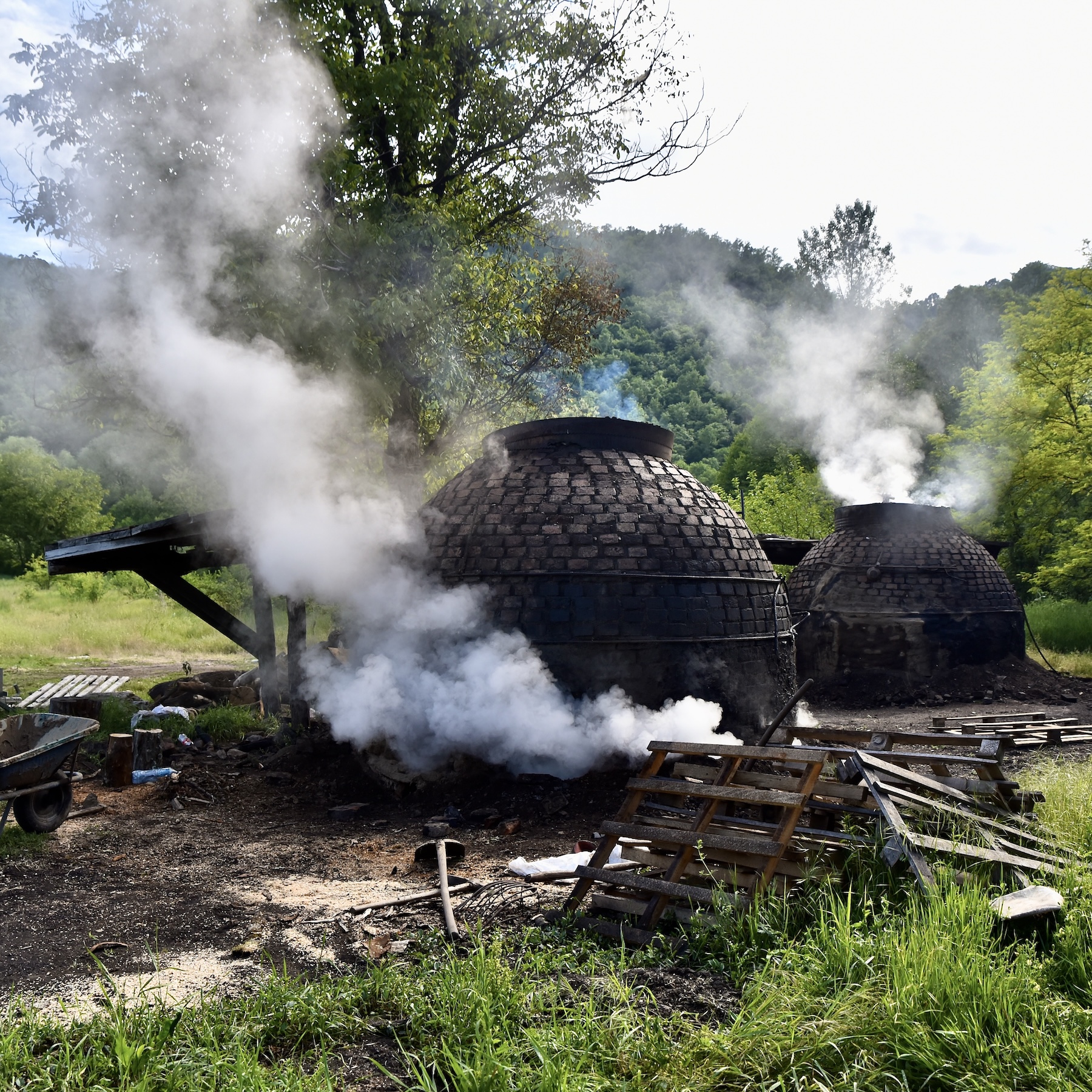
The first coal stove in Bosnia where we stop is run by Omer Hadžić. He’s currently busy stacking wood in the stove. Next to it lie the filled coal sacks from the last firing. They’re waiting to be hauled away.
Omer invites us to have some Turkish coffee, which his wife, Hatidža, serves us at the garden table. It doesn’t take long before Bahrudin joins us at the table—a neighbor who has been living near Munich for 15 years and is currently on vacation in his home village.
Thanks to his good command of German, we learn that there used to be hundreds of charcoal kilns in the area. Today, most of them are no longer in use and have been left to slowly fall into disrepair. In the village, Omer is one of the few who still practices the charcoal-burning trade.
Sylvia: When we arrive in Klokočevac, Serbia, Holger asks one of the men drinking beer in front of the grocery store where we can find Miodrag Danilović. He had found his name online.
One of the men gets into our car and shows us the way. Miodrag Danilović is sitting on a chair in front of his yard, as if he’d been waiting for us. He’s delighted to have visitors from Switzerland, but makes it clear that he’s no longer a young man and that the tradition of charcoal burning is already being carried on by the next generation after his own.
Maja, his grandson’s wife, leads us to the charcoal-burning site, which consists of three brick charcoal kilns. None of them are currently in operation. Maja therefore recommends that we also visit Jaroslav Stevanović’s charcoal-burning site. She says it’s the largest in the village and only two kilometers from here.
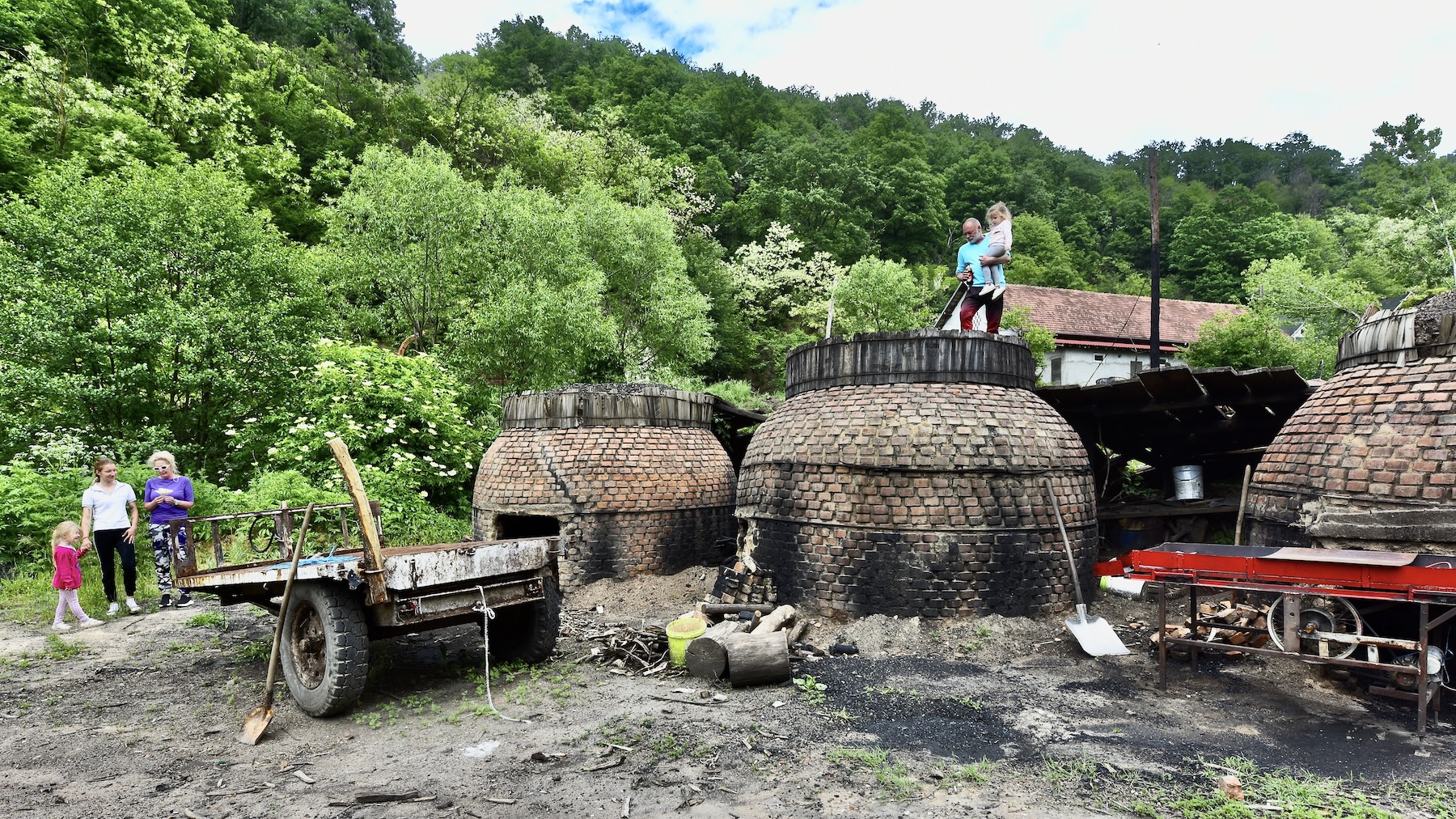
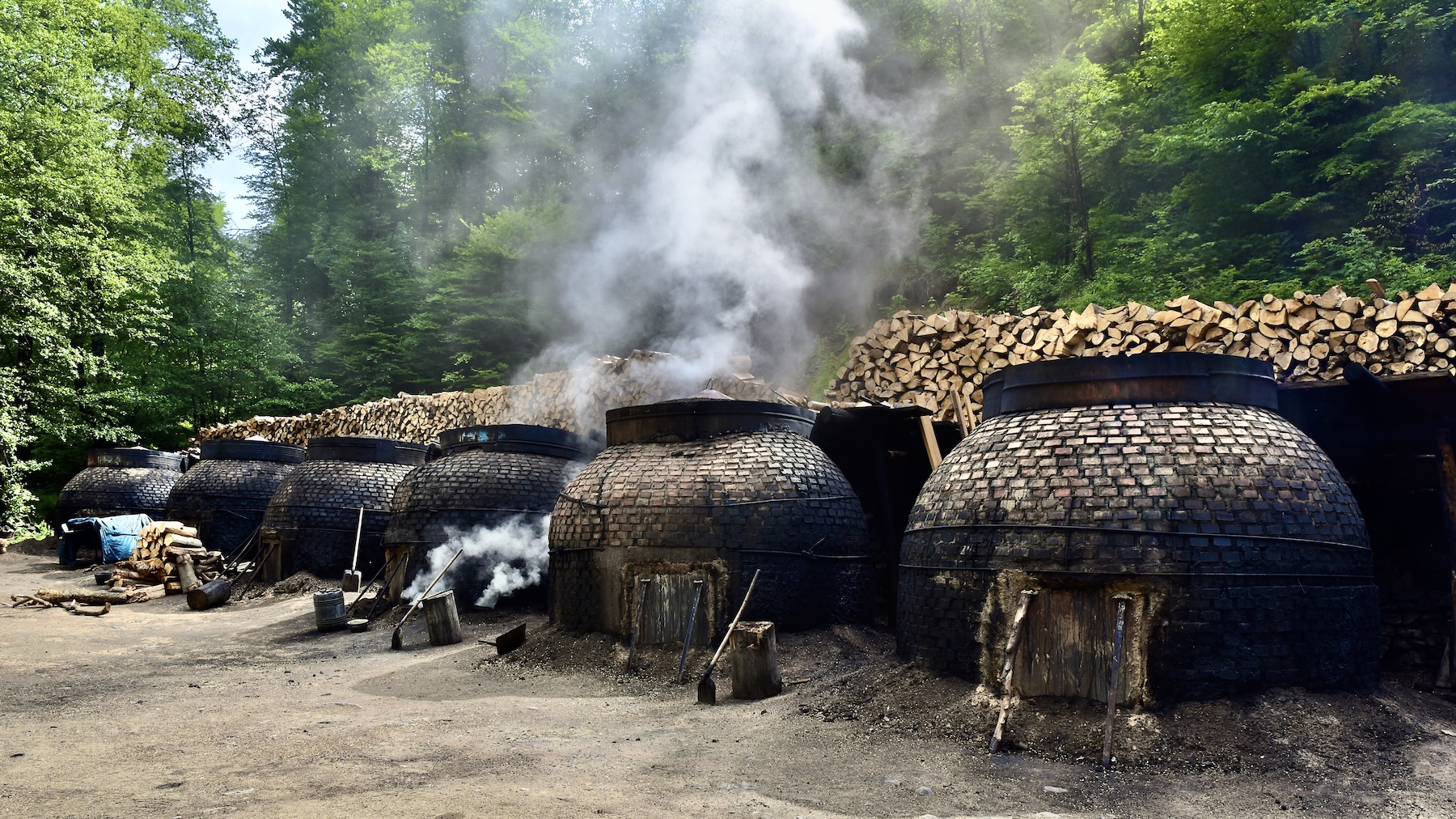
Holger: At Jaroslav Stevanović’s charcoal-burning site, six charcoal kilns await us, lined up in a row. One of them is “burning.” Not a soul in sight.
You traveled through three countries. What touched you most about the people you met along the way?
Holger: All the charcoal burners live in remote, hilly forested areas with very little arable land or pasture. For generations, they’ve all relied on charcoal burning to supplement their income. There are few alternative sources of income in these areas.
They aren’t rich. But none of the people we met were unhappy. Everyone took pleasure in what they did—at least as far as charcoal making is concerned.
Sylvia: We were warmly welcomed everywhere we went. The charcoal burners took time for us, treated us to food and drink, and gave us gifts.
What impresses me most is the matter-of-fact way they make use of the opportunities their surroundings offer, true to the motto: If you have plenty of wood, turn it into charcoal.
"We are inspired by people who pass on their culture, way of life, or knowledge from one generation to the next."
You’ve seen charcoal production in various countries. What has remained the same everywhere—and what was completely different?
Holger: The way charcoal is produced varies. In Slovenia, we came across large round charcoal kilns; in Bosnia, brick charcoal kilns—usually just one per farm; and in Serbia, there were always several—up to six—lined up in a row.
What they all had in common was that they are family-run businesses, the knowledge is passed down from generation to generation, and charcoal-making remains a part of daily life to this day.
Everywhere, there’s a shortage of young people to carry on the tradition.
When you think back on this trip, who’s the first person who comes to mind? And why?
Sylvia: I was impressed by Maja, a young Serbian woman who one moment is playing around on the charcoal kilns with her two blonde daughters and the next is showing how much she enjoys her flower garden.
To me, she embodies a new generation that, while fully aware that charcoal making is a strenuous craft, hasn’t lost its joy in it.
As a farewell, Maja gave me two huge heads of lettuce from her vegetable garden.
Holger: I was impressed by Jože Prah. He’s in his mid-fifties, small in stature, but full of energy. He works as a forester for the Slovenian Forest Service, where he serves as a consultant on wood biomass and tourism development in forested areas.
In addition to serving on the executive board of the Slovenian Charcoal Burners’ Association, he is also vice president of the Slovenian Tourism Association. When he talks about charcoal burning, his eyes light up with enthusiasm.
He successfully lobbies government agencies and politicians for the preservation and promotion of the charcoal-burning craft—something we haven’t seen in any other country so far.
For Janez Pegam, “Jože is a small man, but a great person!”
"The next destinations planned are the charcoal burners in Ethiopia and Calabria."
What can we learn from charcoal burners—even if we’ll never build a charcoal kiln ourselves?
Holger: Perhaps the parallel between a “successful” charcoal kiln, where all the wood was charred to a high standard, and a successful journey: A brilliant idea alone isn’t enough.
It requires careful preparation and execution. You have to stay on top of things to react in time when something unexpected happens.
It takes patience rather than trying to force things, and it’s advisable to minimize risks. Experience helps with that. You have to accept negative surprises.
It’s not just the success that brings joy, but the process itself.
Sylvia (smiles): It’s always better to produce the “char” yourself …
Authors Sylvia Furrer and Holger Hoffmann (photos) have traveled together to more than 60 countries outside Europe since 1977. In recent years, they have increasingly focused on traditional cultures and have repeatedly visited remote areas.
Follow Sylvia & Holger on:
Fascinating posts about their visits with extraordinary people: