The Pan-American Highway ends between Panama and Colombia. In between lies the Darién Gap: about 100 kilometers of rainforest with no road. A team of U.S. veterans rode from Deadhorse, Alaska, to Ushuaia, Argentina. 31,400 kilometers on Kawasaki KLR650s—and right through the Darién, instead of bypassing it by ship. The jungle alone took eight days. Three out of four motorcycles made it through.
We opened the six-meter-high garage door shortly before 3:00 a.m. The temperature in the corrugated-metal hut from World War II dropped as the wind whipped snow and ice inside.
One by one, we pushed the motorcycles with sidecars out into the snow that had piled up at the entrance to our lodging. Under intense halogen light, we made the final preparations for our trip to South America. “I’ve been working here in Deadhorse, Alaska, since I was 20, and I’ve never seen motorcycles up here in the winter,” said a bystander. In the middle of the large, windswept parking lot, I typed “Ushuaia, Argentina” into Google Maps on my cell phone. “Route not available” was the response.
Why There Is No Road from North to South America
Many people don’t know that there is no continuous route between North and South America. The main obstacle is the Darién Gap, also known as El Tapón: a roughly 100-kilometer-wide gap in the jungle between Yaviza in Panama and Turbo in Colombia, home to indigenous peoples such as the Guna (formerly Kuna). Until then, it had been crossed by vehicle only a few times, mostly during the dry season from January to April. It poses an enormous logistical challenge.
As of today: This expedition took place in 2017–18. Since then, the Darién has changed significantly. In 2023, over half a million migrants crossed it on their way north. In 2025, the numbers plummeted almost entirely following stricter controls. Permits, security conditions, and routes from that time are no longer relevant today. Anyone considering a crossing should first check the current travel advisories from the FDFA or the German Federal Foreign Office.
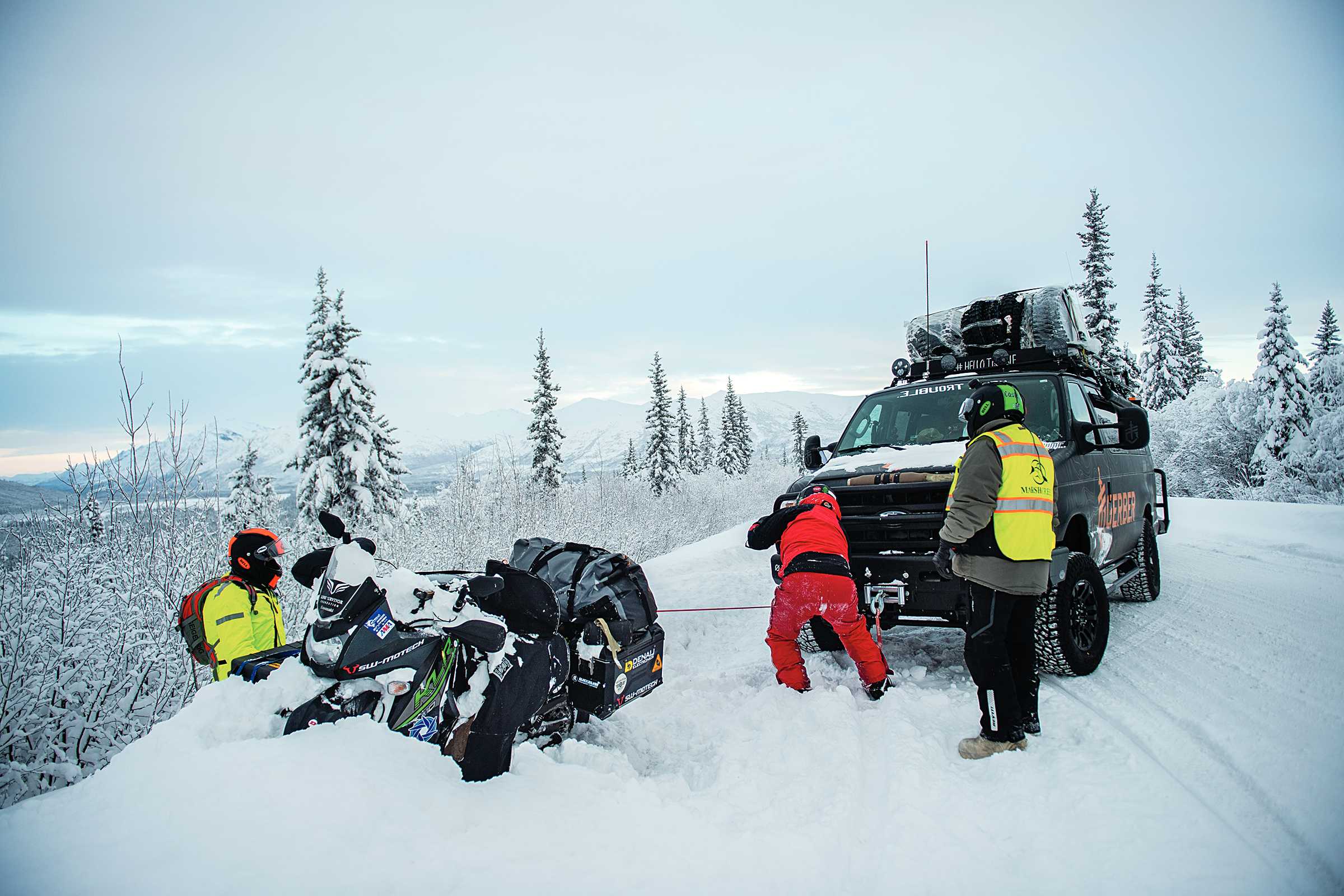
Our decision to launch the expedition on November 11, 2017, was both strategic and symbolic. The team consisted mainly of U.S. Army veterans from Iraq and Afghanistan. And setting out on Veterans Day meant there would be less truck traffic on the first leg of the journey—the Dalton Highway from Prudhoe Bay, Alaska, to Fairbanks—a major advantage on the narrow, snow-covered, winding roads up the Atigun Pass, 240 kilometers north of the Arctic Circle.
Through Alaska on Sidecars: Motorcycles with Two and Three Wheels
Equipped with specially designed sidecars, auxiliary headlights, spare batteries, and heated gear, we rode the 4,800 kilometers through Alaska and Canada in just over two weeks. Only one accident slowed us down. A car that had lost control struck a rider from the side; his bike was repaired that same week.
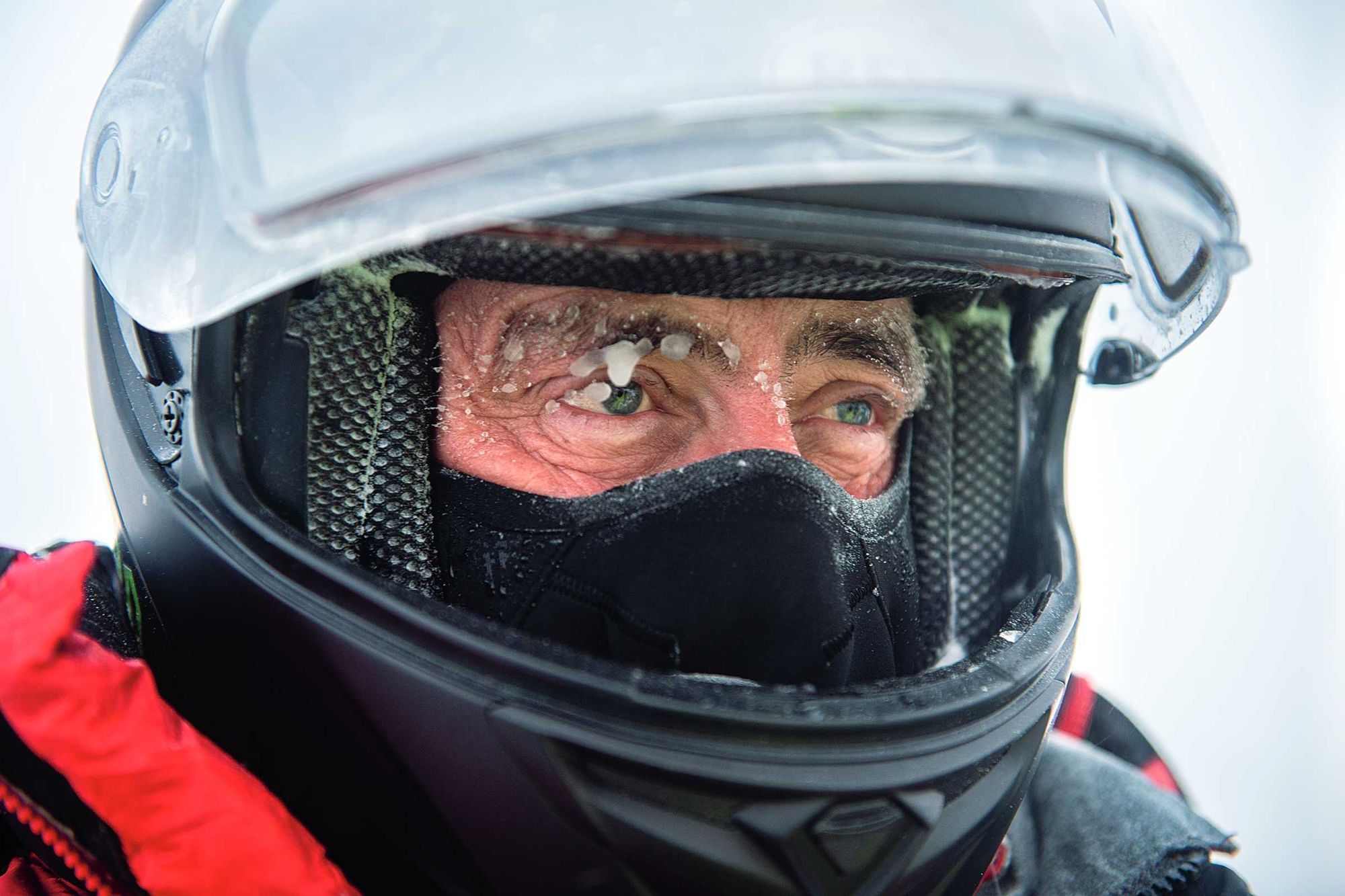
For two weeks, the cold tormented us; our eyelids froze, and every patch of exposed skin suffered.
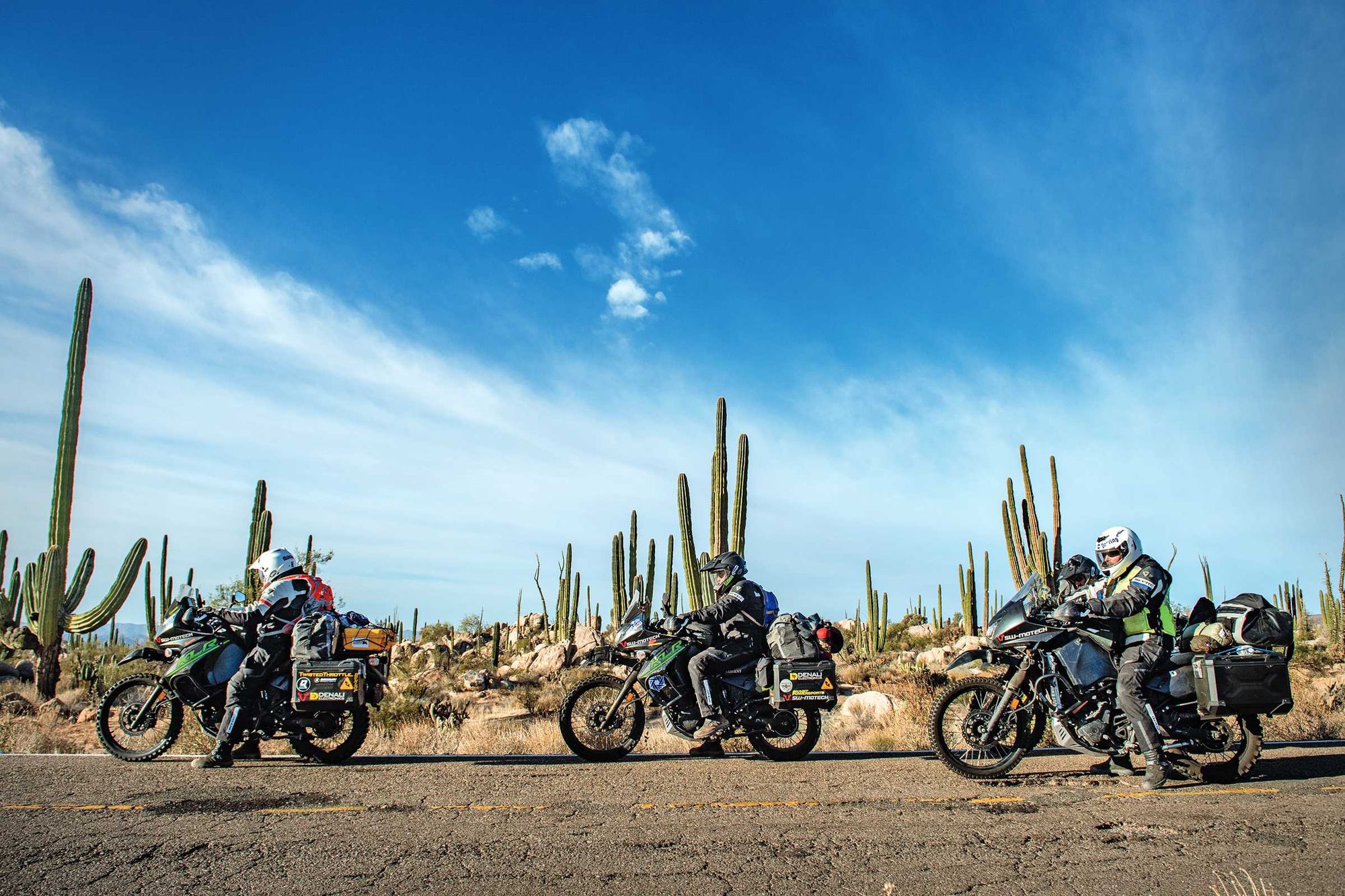
In Bend, Oregon, we left the sidecars behind and continued on two wheels to Mexico and Central America. After temperatures as low as minus 25 degrees, California and the warmth of Baja California in Mexico were a welcome relief.
The longer, warmer days in California and Baja provided a welcome change from the cold, wet weather of the Pacific Northwest—riding became more enjoyable again, and we were able to sleep under the stars.
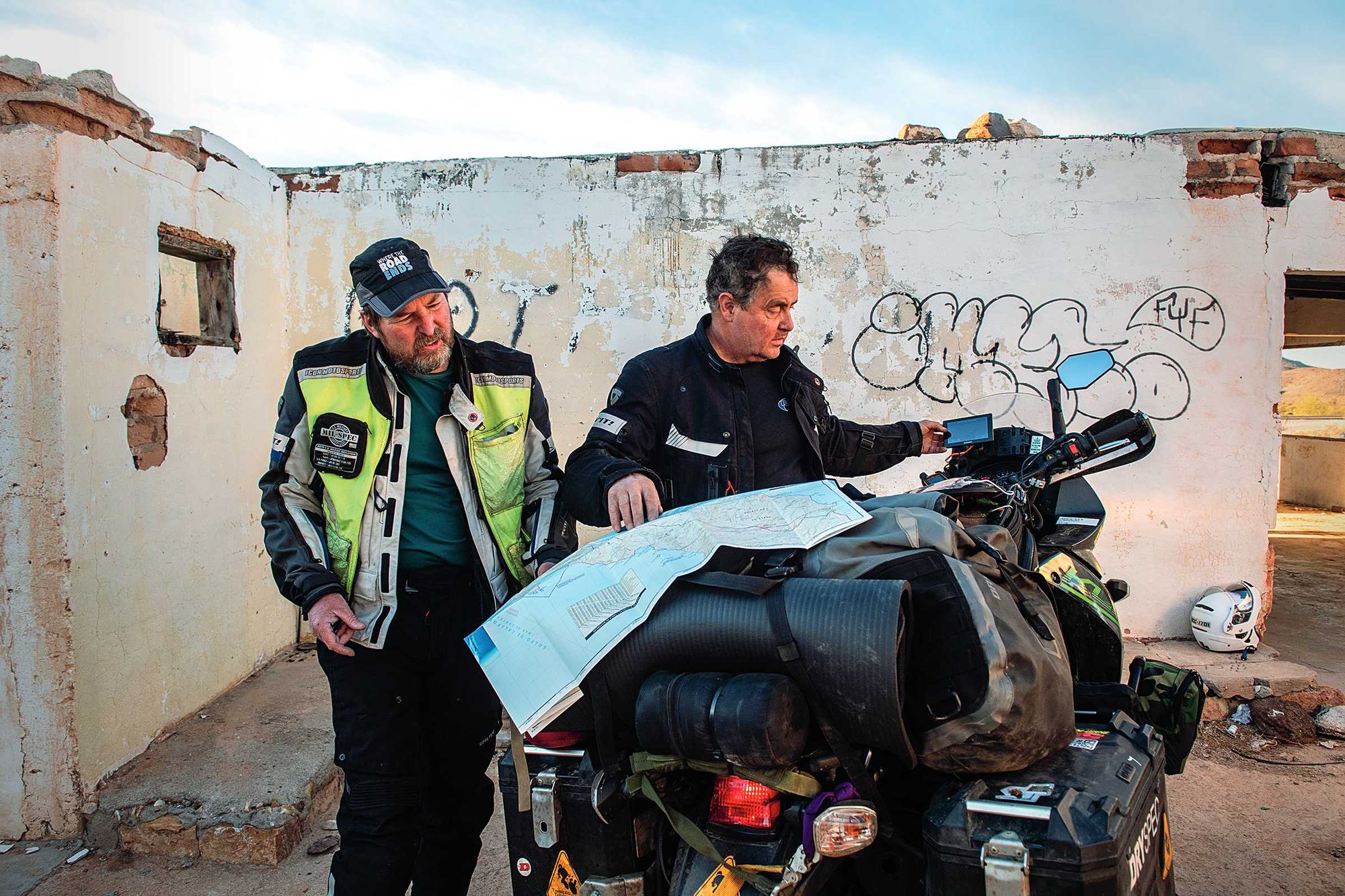
Until our arrival in Yaviza, Panama, on January 10, 2018, it was still uncertain whether we would receive final approval to cross the Darien National Park. We were five days behind our original schedule, but the risk of being turned away in Panama City drove us onward through Central America. We spent Christmas Day in Guatemala, and in Costa Rica we celebrated one night with a KLR club.
Yaviza, Panama: Where the Pan-American Highway Ends
Ever since the first crossings of the Darien in the 1960s, 1970s, and 1980s, the political situation between Panama and Colombia has been tense. With no roads or bridges, only a few villages, and a dense, treacherous jungle teeming with insects and poisonous snakes, the area had long been a hideout for drug traffickers, human traffickers, and paramilitary, anti-government groups at the time of our trip.
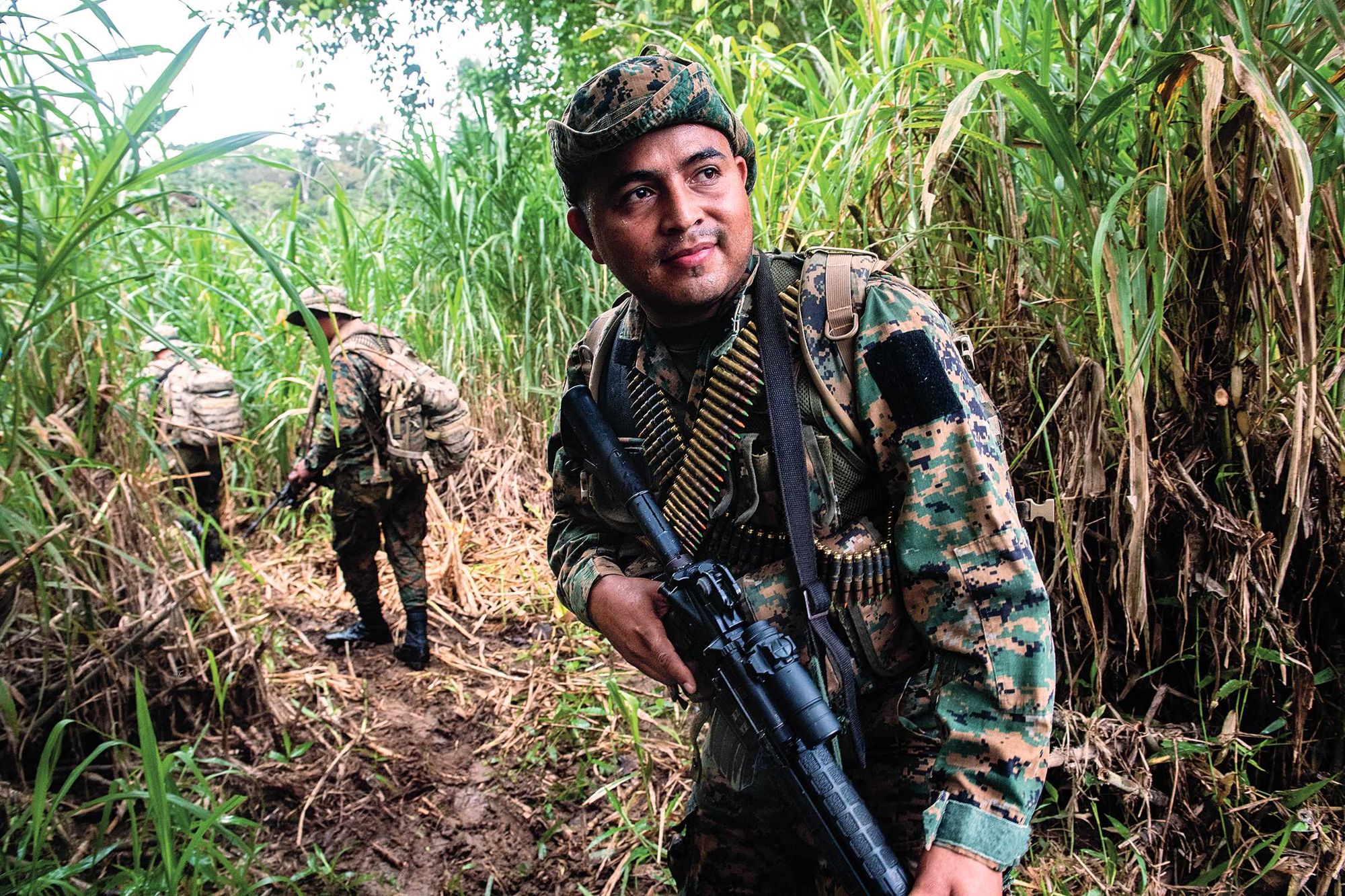
When we arrived in Panama City, we received the news: We were allowed to cross the jungle—provided that an armed patrol from the Panamanian border police, Senafront, accompanied us all the way to the Colombian border.
The road ends in Yaviza, a small village on the river that serves as a central trading post on the edge of the jungle. At the end of the road, a narrow suspension bridge crosses the Río Chucunaque, and then a narrow footpath leads south into the vast, untouched jungle of the Darién.
We loaded four motorcycles onto narrow dugout canoes made of solid hardwood, powered by small outboard motors. Two days later, amid unusually heavy rainfall, we reached the village of Paya, the last settlement in the jungle before Colombia.
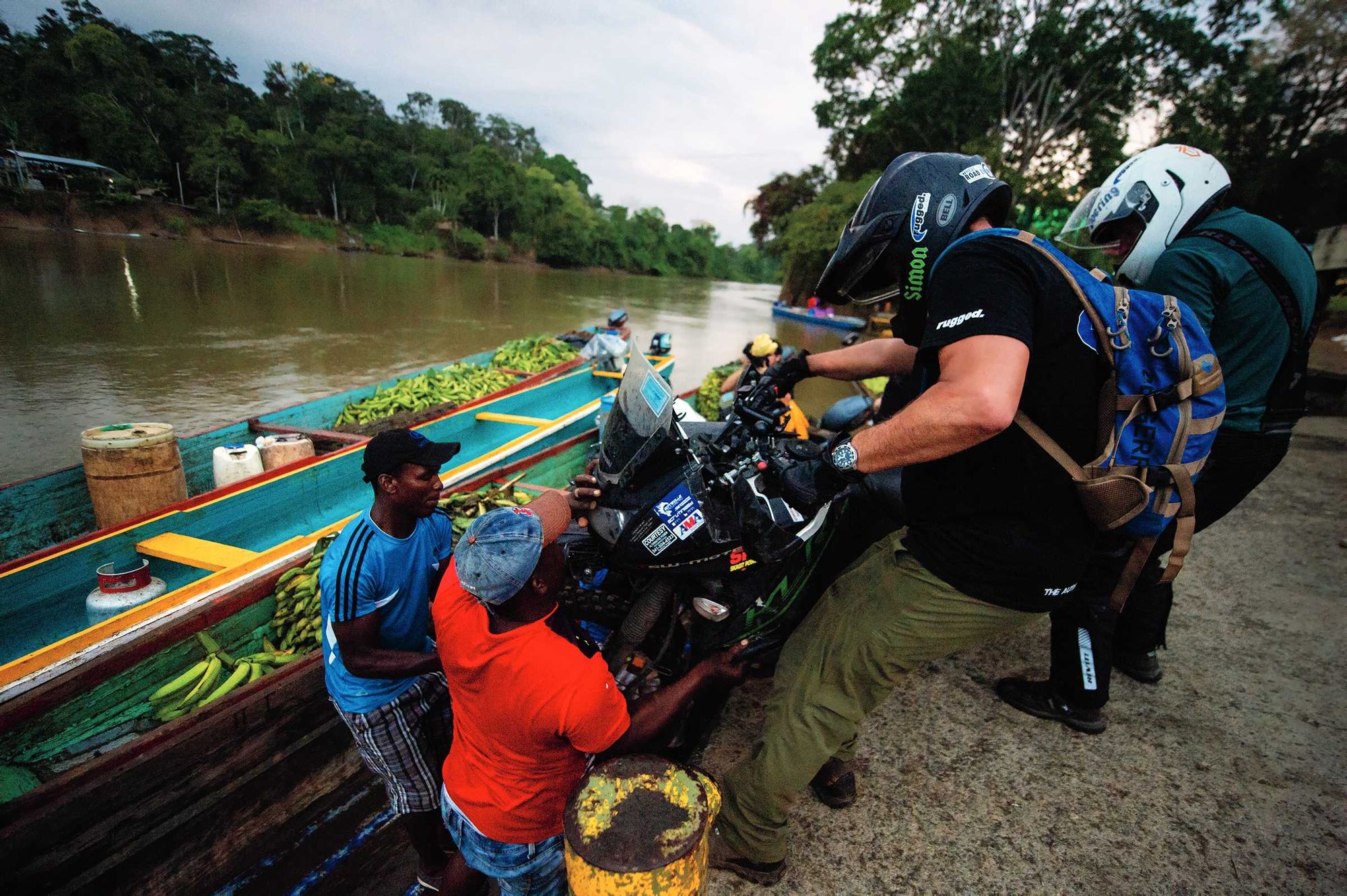
In the middle of nowhere between Panama and Colombia
The heavy rain and deep mud slowed our progress on the motorcycles. After just a few kilometers, the clutch on one of the bikes failed. The other three managed to get a few more kilometers further the next day before they, too, gave up.
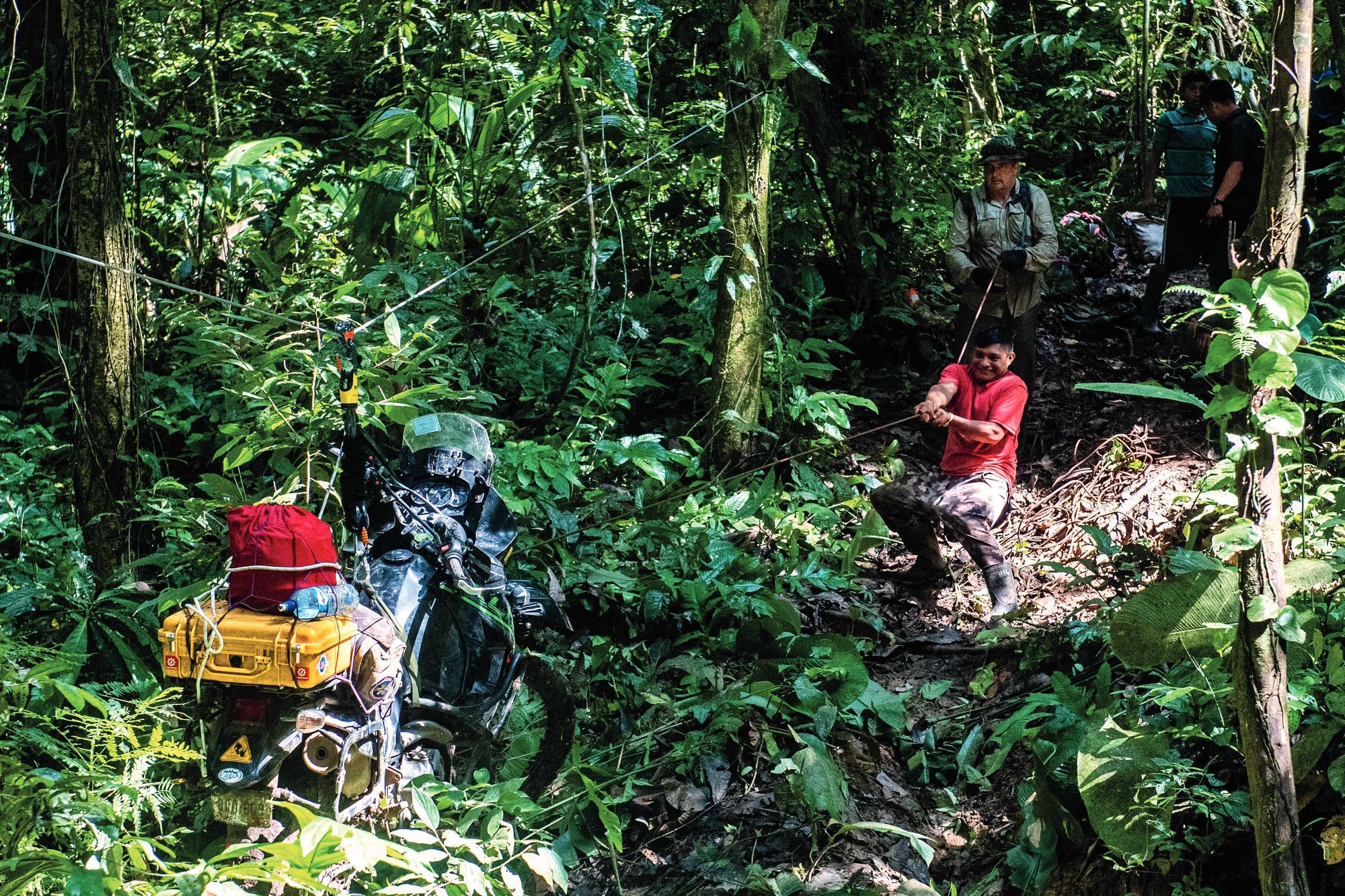
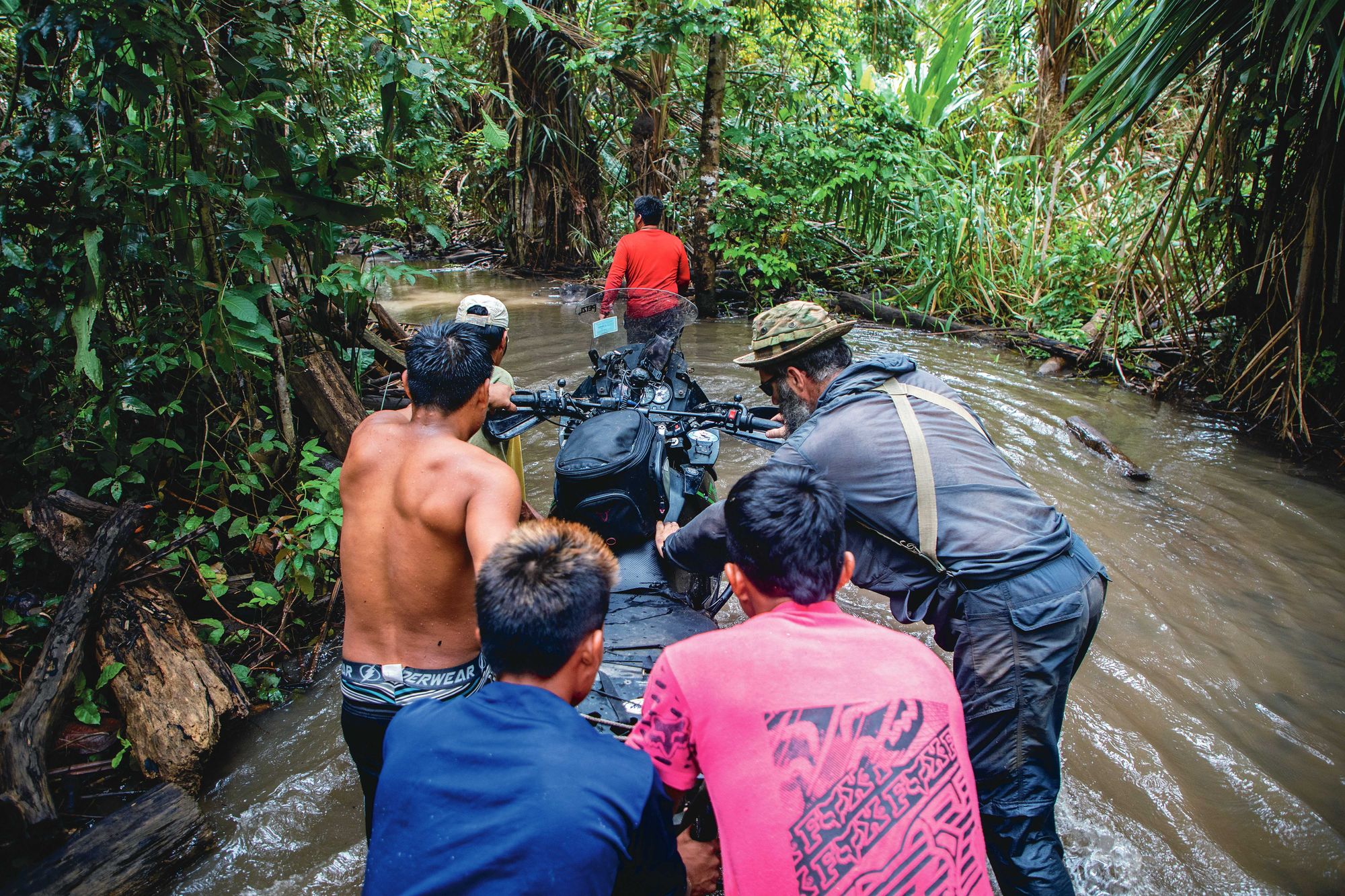
With the help of the local Guna people, we began laboriously pulling the motorcycles by hand.
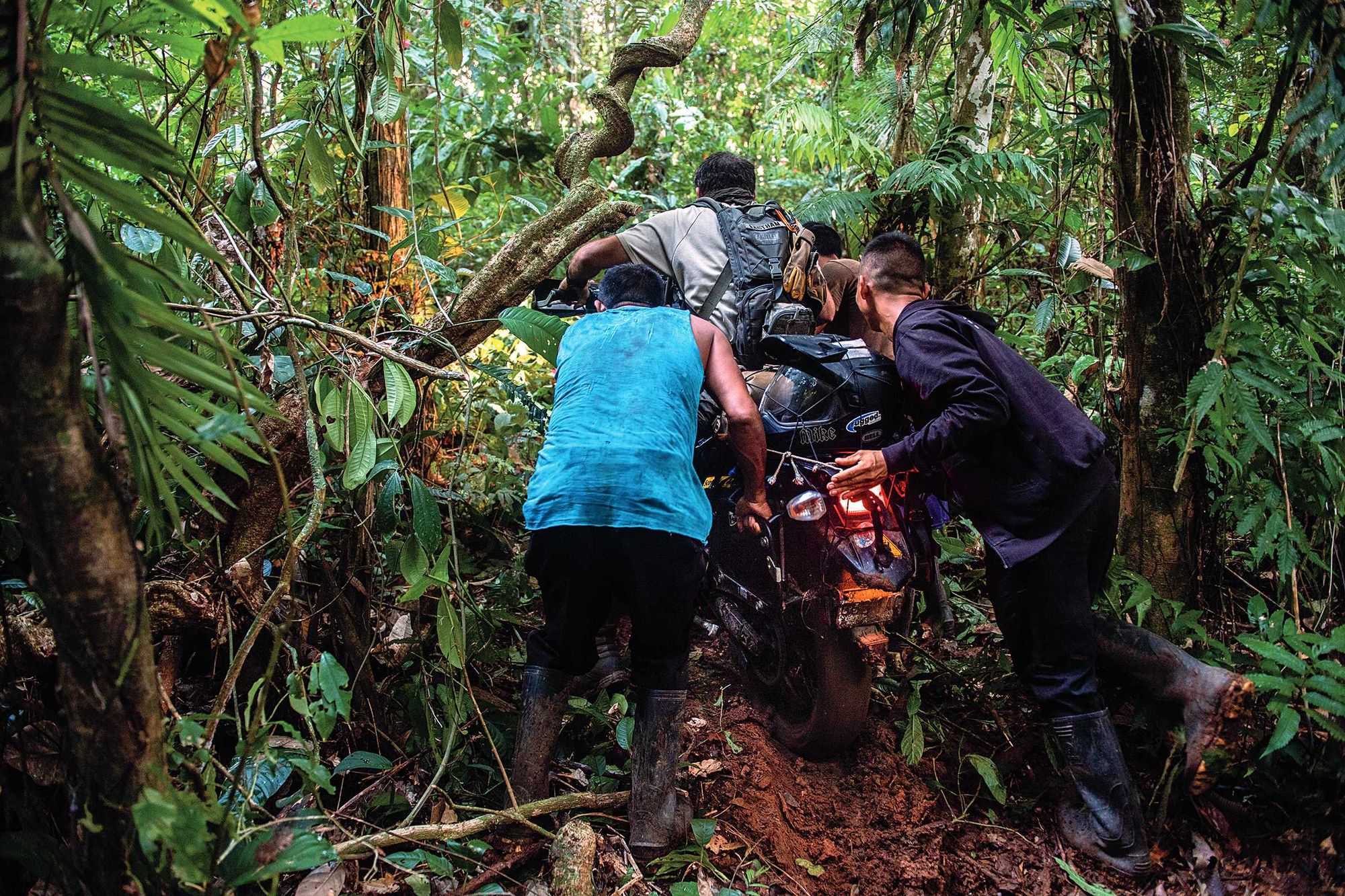
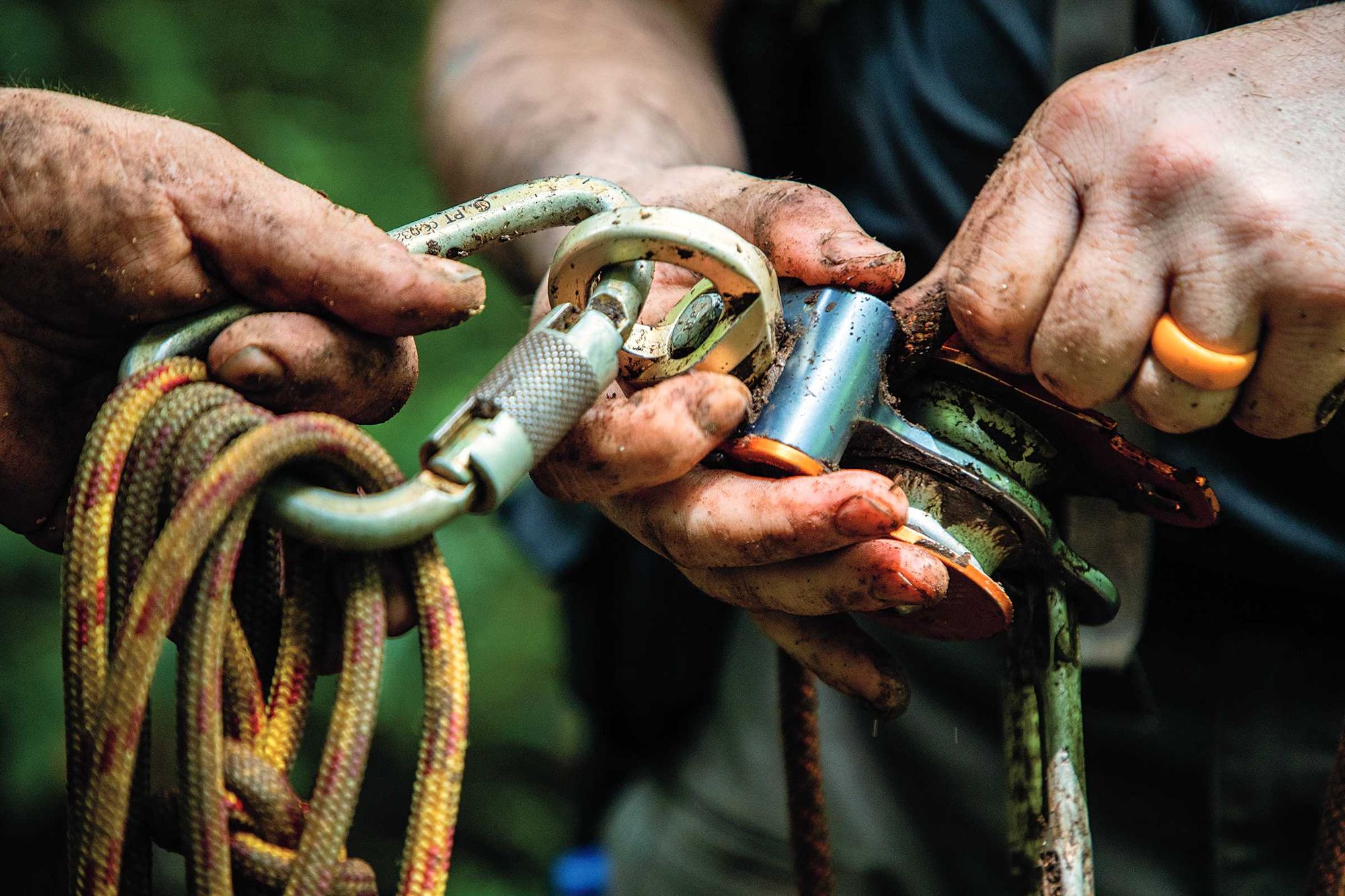
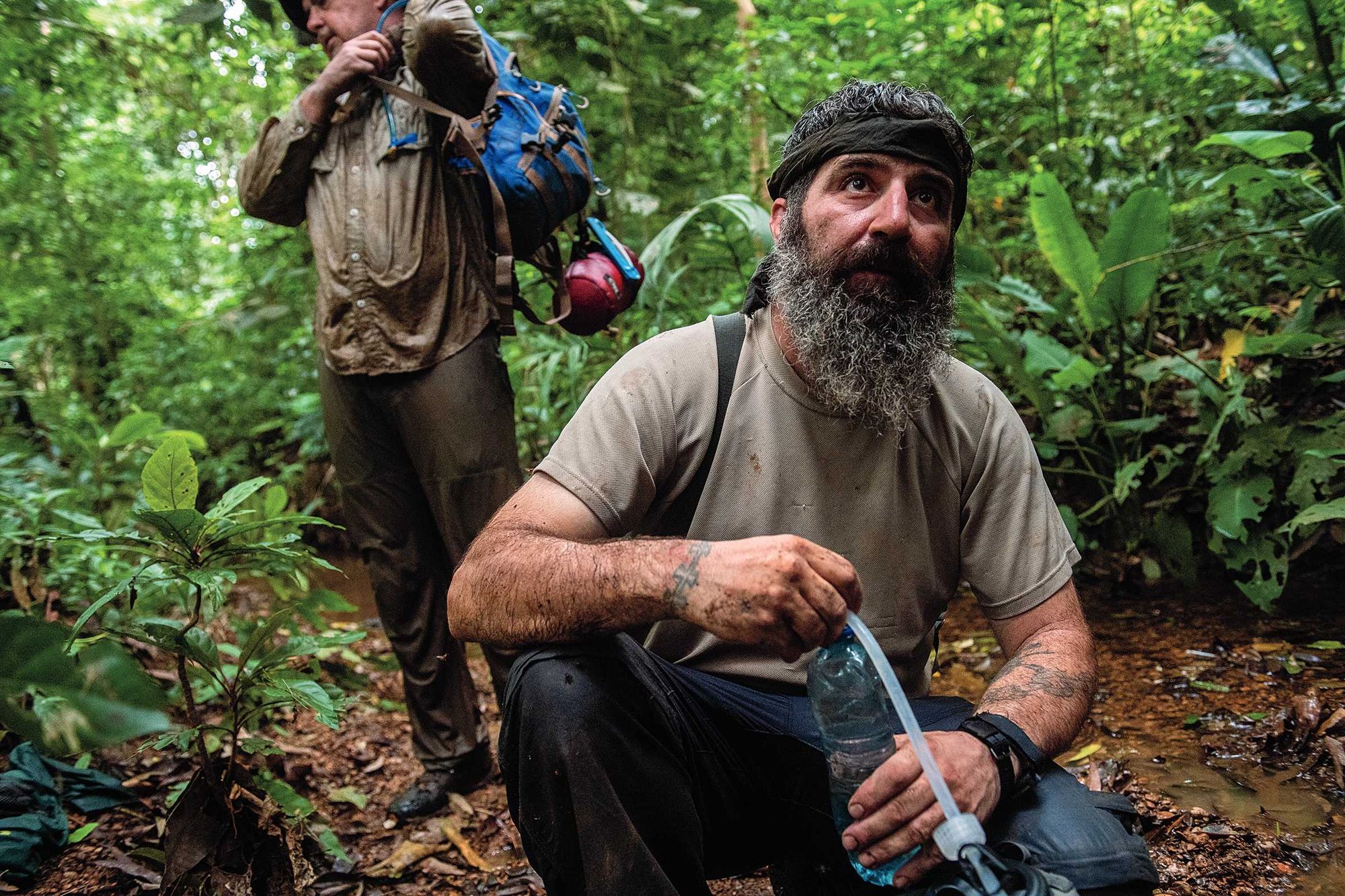
We cut paths through the jungle and worked with pulleys and ropes from sunrise to sunset, eating rice and plantains and filtering muddy water to drink.
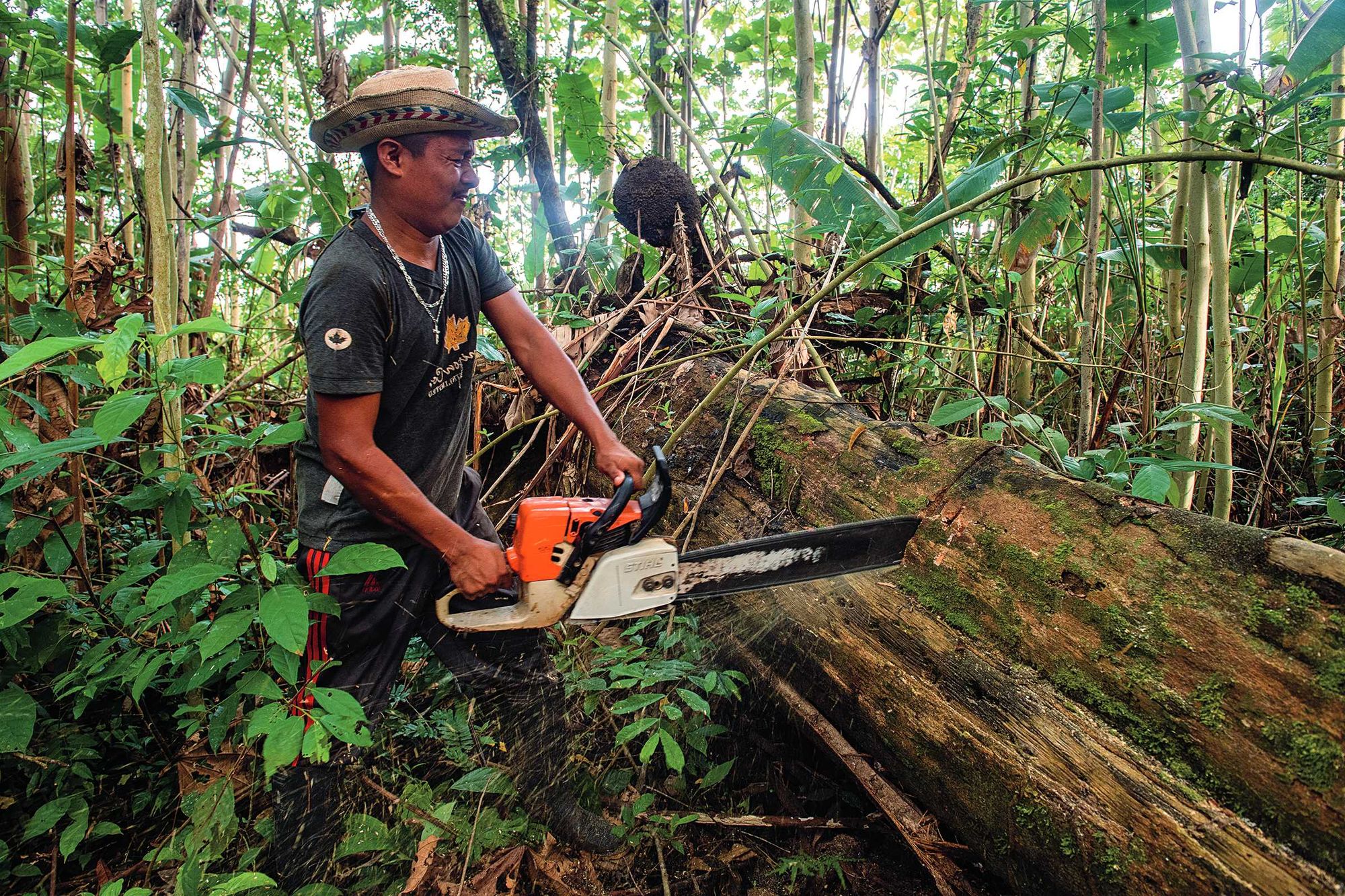
Toward the end of the eighth day, we crossed the Atrato Swamp by boat and left the Darién Jungle behind for the city of Turbo. A few days of rest followed; we picked up replacement parts for the bikes, and then we were back on the road. From Cartagena, we traveled south to Colombia’s famous coffee-growing region and, after a much-needed break, continued on toward Peru. We met up with friends, hiked in the mountains around Machu Picchu, and planned the final leg of our route.
The further south we went, the more we realized that winter was approaching. Heavy rains followed us along the Carretera Austral through Chile and into southern Argentina, where strong winds and occasional snowfalls slowed us down. In five and a half months on the road, we covered just over 31,400 kilometers and arrived in Ushuaia, Argentina.
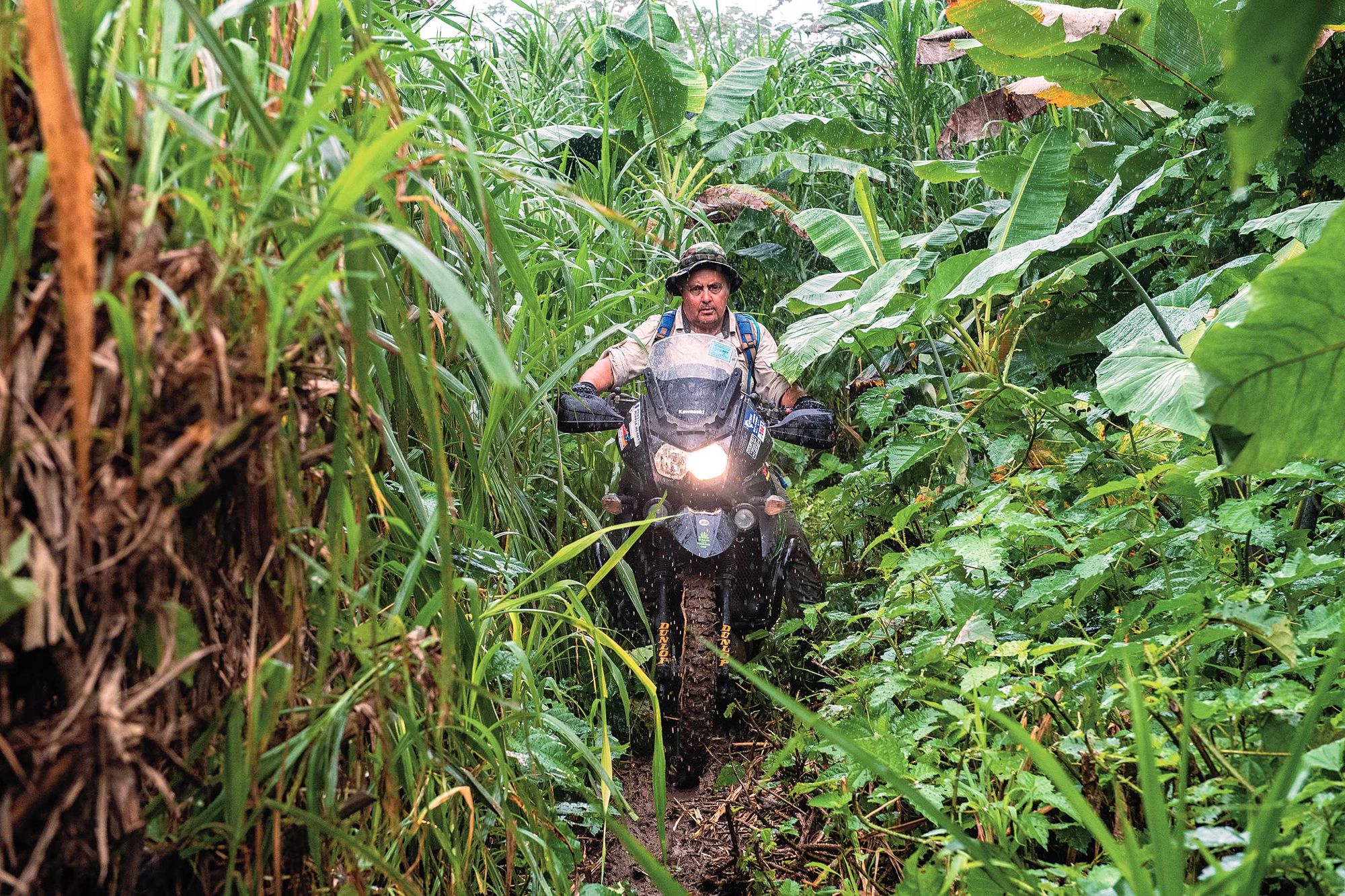
Eight Days in the Darién: In the Scorching Heat of the Jungle
On January 10, 2018, we finally reached Yaviza and began our journey upstream into the Darién jungle. Unusually heavy rains caused the rivers to swell, flooding roads and trails. In the words of one team member: “After three years of planning and months of worry, we’re finally facing the monster.”
Seemingly impervious to the heat and humidity, the local Guna people worked tirelessly, helping to clear the jungle of vines and fallen trees. Only three of the four motorcycles made it through the Darién.
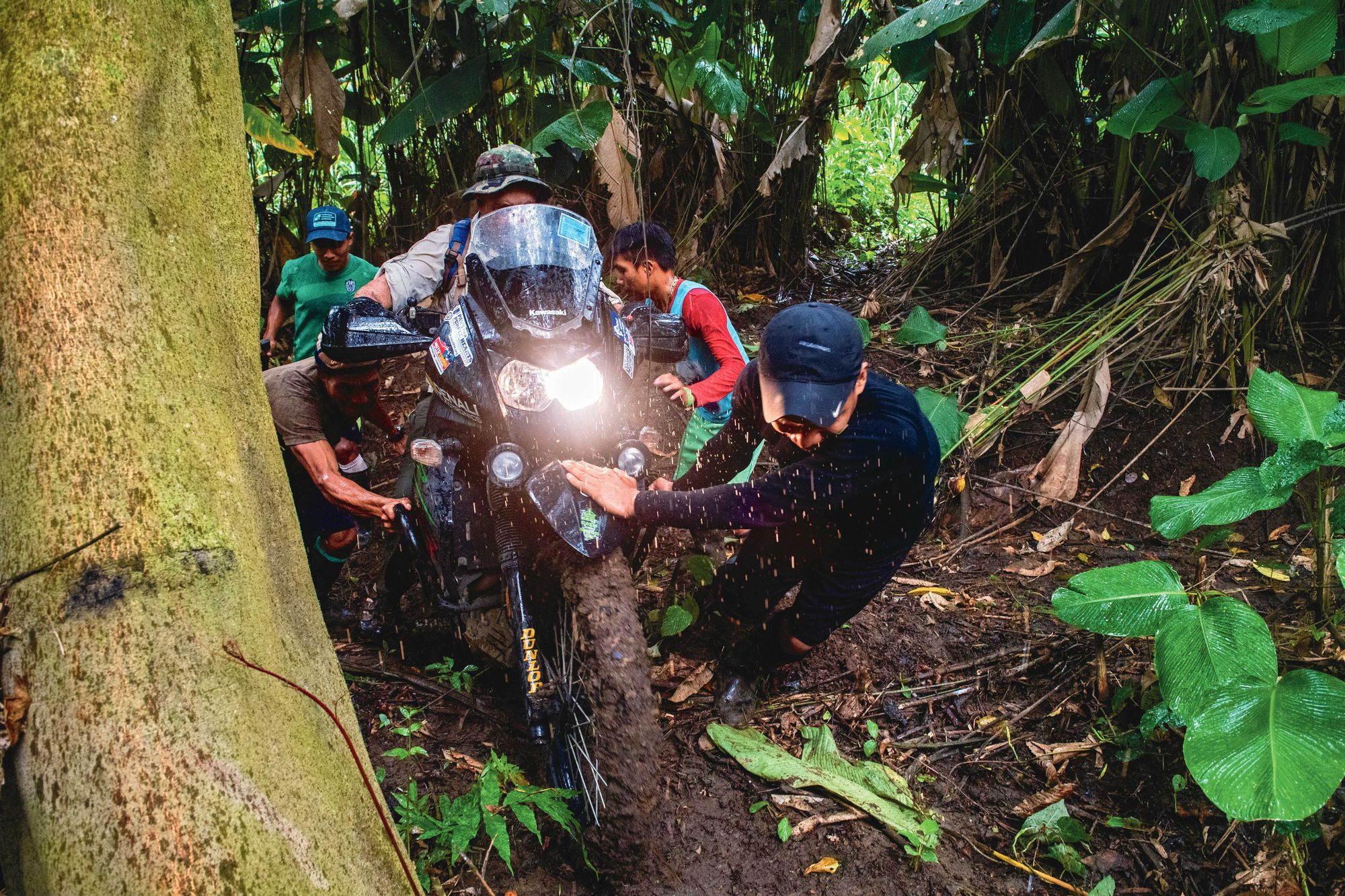
The jungle is a mighty beast
We took turns riding, pushing, and pulling the motorcycles through the dense jungle. The slow, exhausting process was frustrating.
We quickly realized that it was impossible to “ride” the heavy adventure bikes through the jungle, since each loaded motorcycle weighed nearly 300 kilograms.
Vines wrapped around our hands, and roots blocked the front tires, causing us to tip over. About every 30 meters, we stopped to remove mud, twigs, and vines from the chain, sprockets, and fenders.
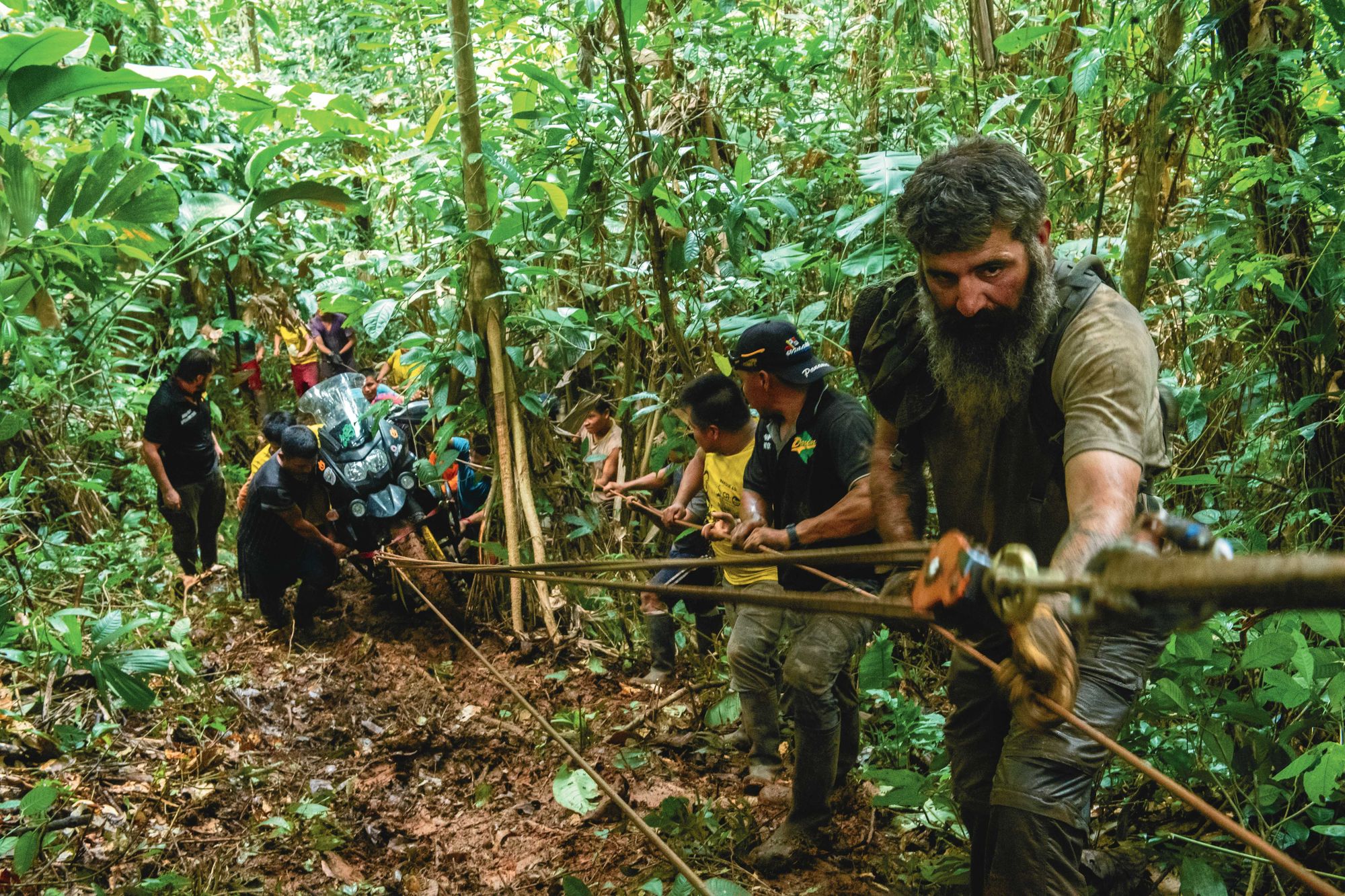
By the end of the second day, the knee-deep mud had taken a heavy toll on the motorcycles. We had to leave one bike behind in the jungle; two others had burned-out clutches.
Every day we were plagued by venomous snakes, scorpions, biting ants, bees, and spiny palms. Our morning mantra was: Check your boots!
The presence of the Panamanian border patrol reminded us of the constant threat posed by drug smugglers and human traffickers.
After two grueling days during which we could only move the bikes a few meters forward using ropes and pulleys, we set up camp and discussed our options for moving forward.
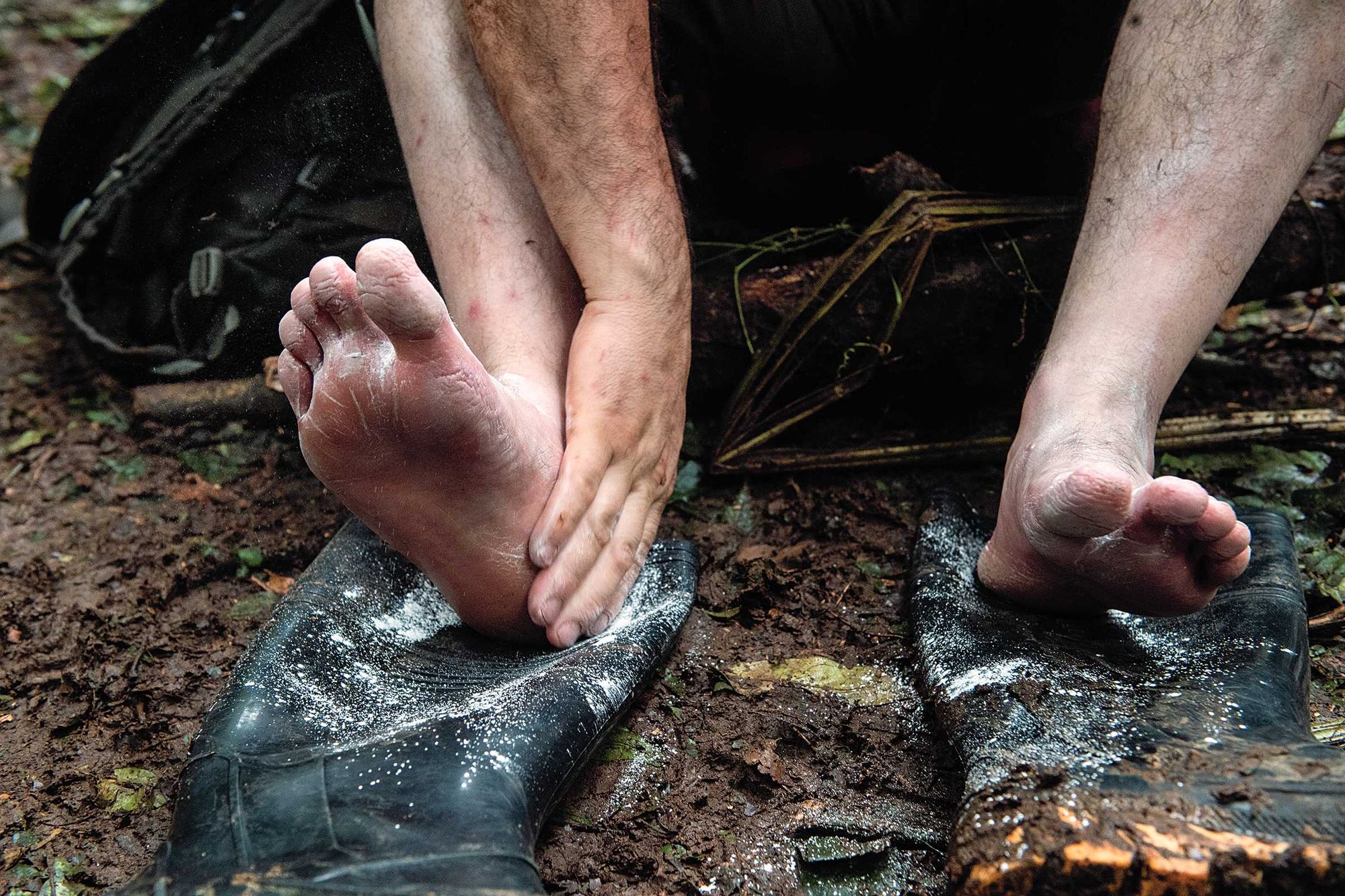
After another day in the jungle, everything was covered in mud. With every step, our boots grew heavier. The mud sapped our energy, destroyed our equipment, and weakened our morale.
The chainsaws were ahead of us; their distant hum occasionally broke the silence. Without the groans and shouts of the men struggling to pull the motorcycles, the jungle was an eerie place. If you fall just a few hundred meters behind, you suddenly feel very alone amid the endless green foliage.
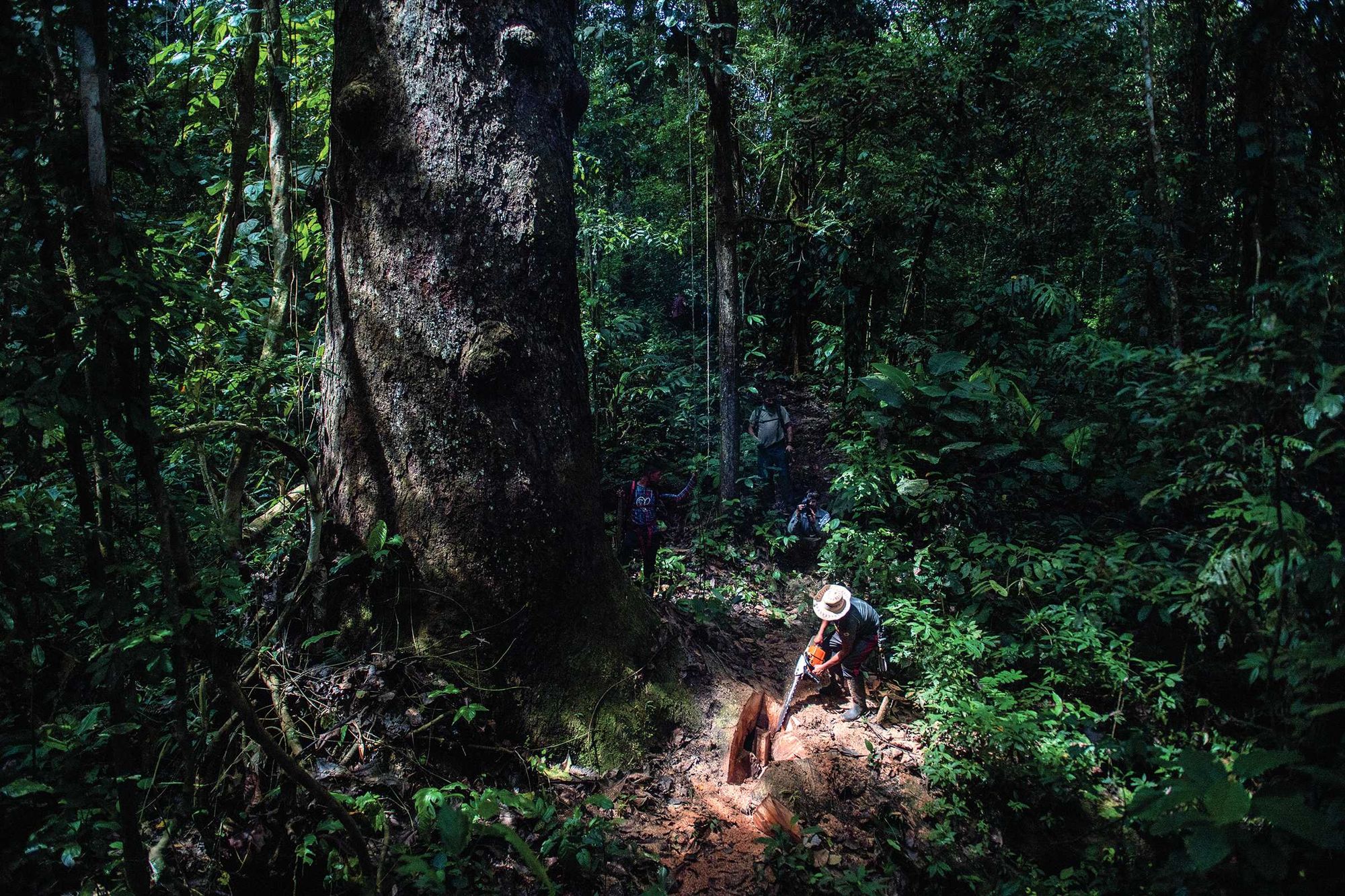
Even though the bikes' clutches were rendered unusable from riding in deep mud, we decided to keep going.
Using ropes and a 1:4 pulley system, we inched forward meter by meter.
At the Panama-Colombia border
Here, members of the Wounaan tribe from the village of Cristales joined us. With renewed courage and the extra manpower, we made up for lost time.
After five days, the dense jungle, prickly palms, heat, and humidity began to take their toll on the team. Teamwork became essential for our survival.
Blisters, insect bites, and foot blisters reminded us with every step of how ill-prepared we were.
Every river brought welcome relief: a chance to rest, have lunch, and wash the mud off our clothes.
One of our Guna friends cooked starchy bananas and rice for dinner and for breakfast the next day. Every other day, we enjoyed a can of Spam with it—a little luxury after a long day of work and sweat.
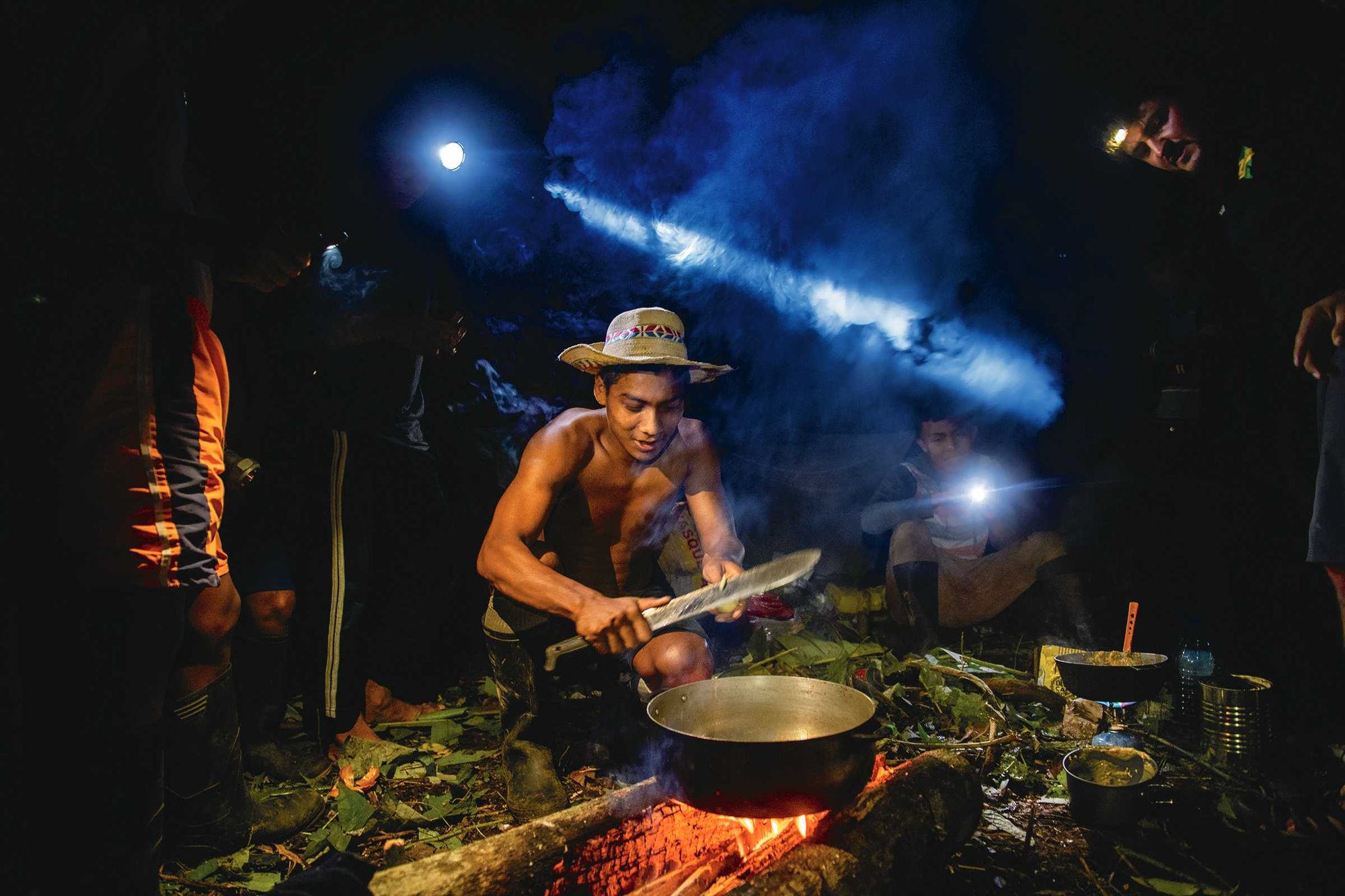
The joy we felt upon reaching the Colombian river network, which flows into the larger Río Atrato, was short-lived. After just an hour by boat, we encountered our final major obstacle in the Darién: the Atrato Swamp.
Every bend in the swamp meant clearing away mud, moving fallen trees out of the way, and dragging the heavy piraguas (dugout canoes) downstream—sometimes on our hands and knees, centimeter by centimeter.
So close to the open river, we felt as though the jungle was making one last attempt to hold us back.
After the Darién Gap: Bureaucracy in Colombia
After eight days in the Darién, we reached the city of Turbo, our gateway to South America. We repaired the bikes and spent a few more days wrestling with Colombian bureaucracy before we were finally able to provide photographic evidence that we had entered Colombia via the northwestern border.
The official roads and even the busy cities were a welcome change from our experiences in the jungle.
For the most part, South America flew by far too quickly. Shortly before reaching our destination in Ushuaia, we wished we had more time to explore all the side roads.
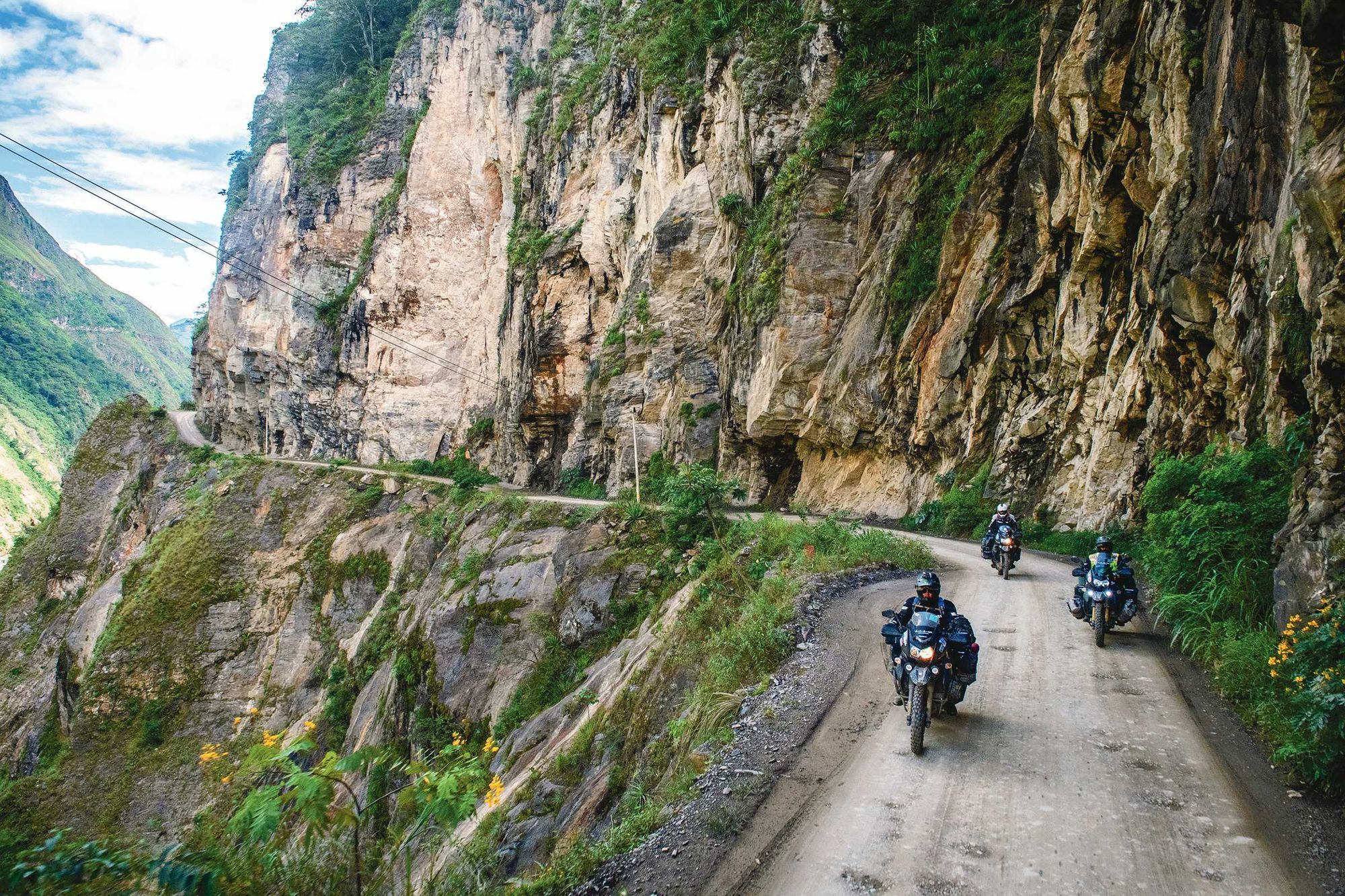
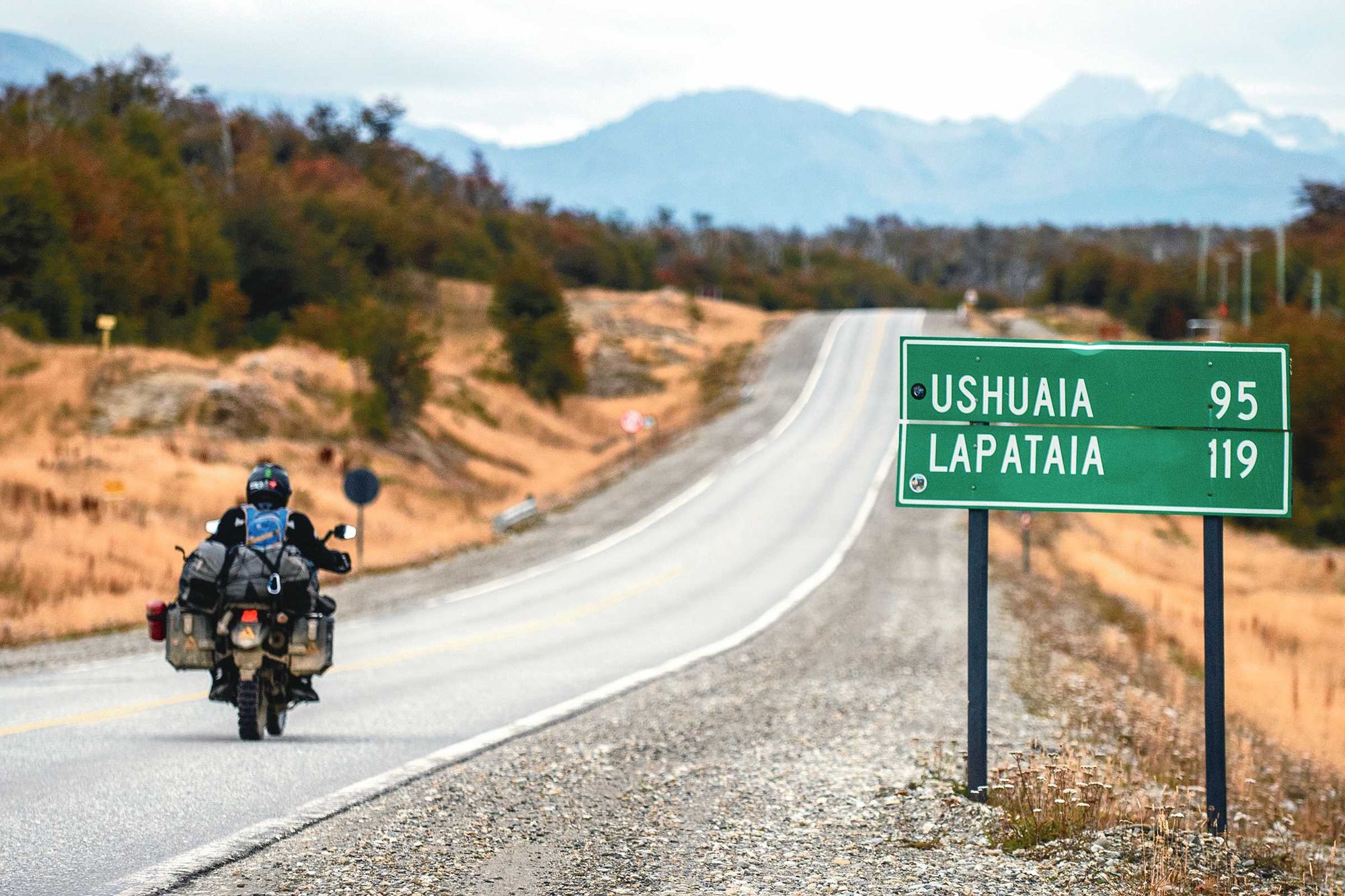
At the end of our journey, we reached the southernmost point near Ushuaia—after traveling 31,400 kilometers on the Pan-American Highway and completing a nonstop motorcycle ride through the infamous Darién Gap. On the one hand, we were relieved that we had made it, but on the other hand, we were sad that it was already over.
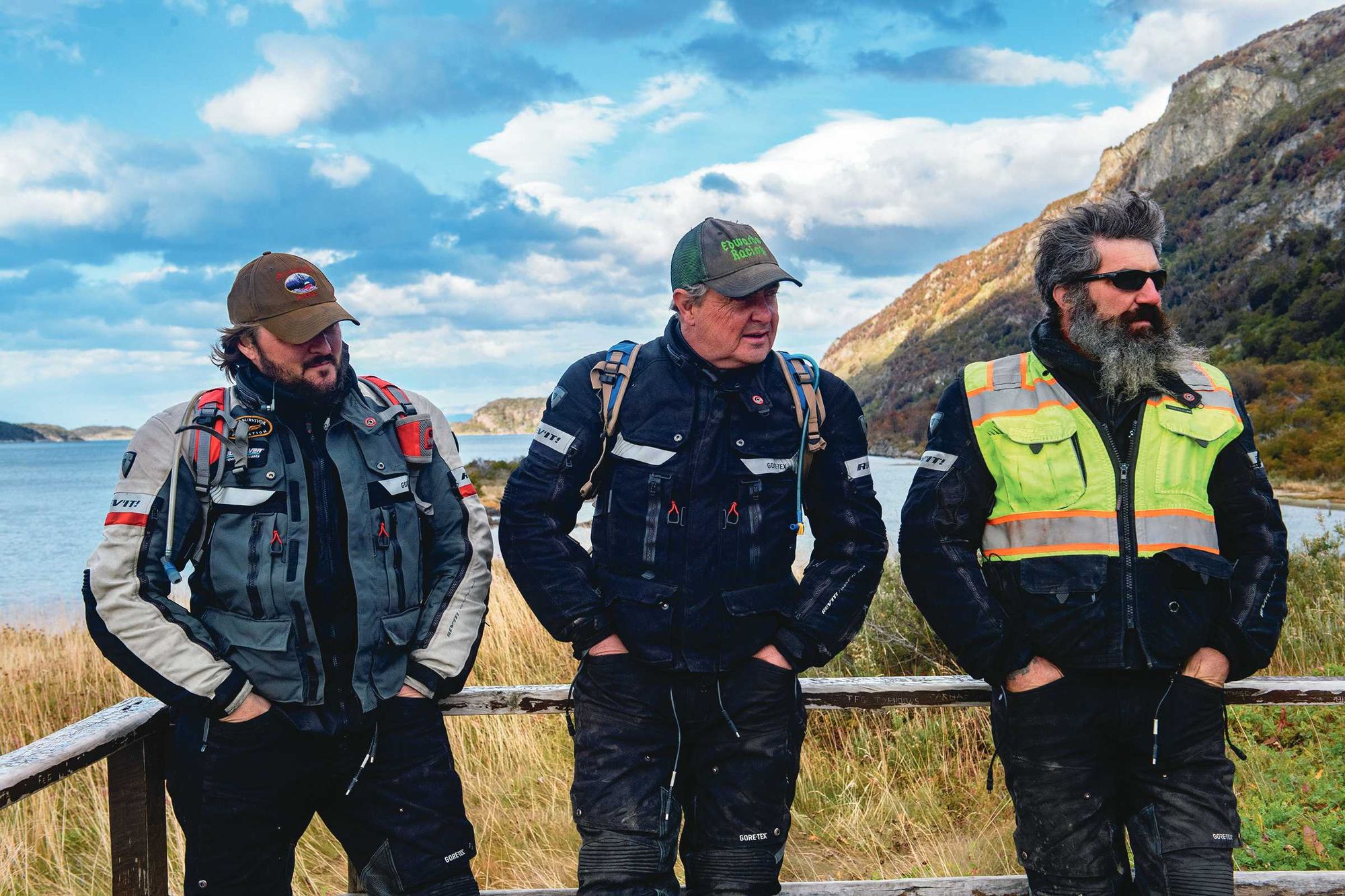
Most of us wondered what adventure might await us next.
The Darién Gap by Motorcycle: The Expedition by the Numbers
- Route: Deadhorse/Prudhoe Bay, Alaska – Ushuaia, Argentina
- Start: November 11, 2017 (Veterans Day)
- Distance: approximately 31,400 kilometers in about five and a half months
- Motorcycles: Kawasaki KLR650, with a sidecar in Alaska and Canada
- Darién Gap: eight days from Yaviza (Panama) to Turbo (Colombia); three out of four motorcycles made it through
- Team: primarily U.S. Army veterans, accompanied by Panama’s border police (Senafront) as well as local Guna and Wounaan people
Photos: Jake Hamby, Alex Manne
In editorial collaboration with Overland Journal Europe.