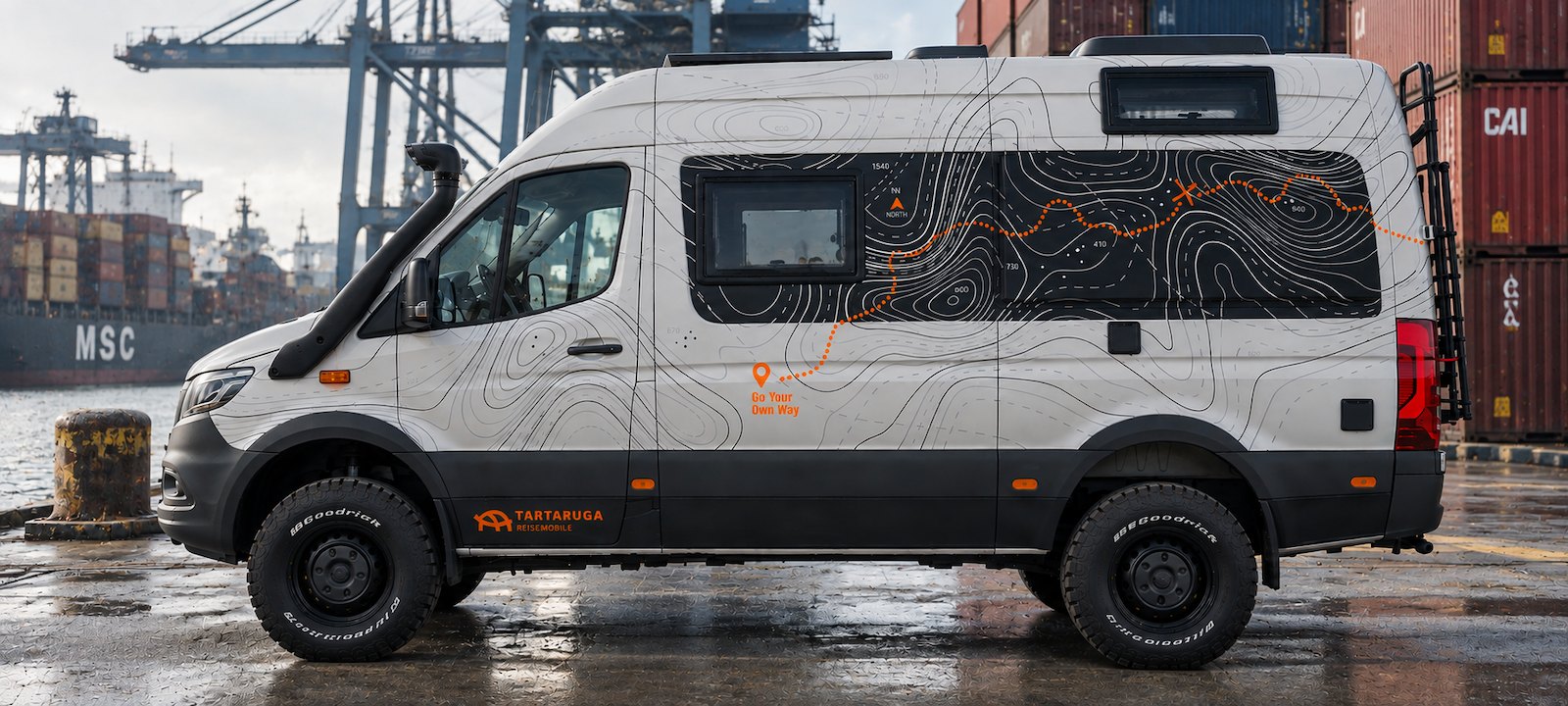
40 years of travel experience. Several motorhomes of his own. Over ten years with a CS built on a Mercedes-Benz Sprinter 4x4. And years spent planning the next one as carefully as possible. Andreas Lanz knew pretty well what he wanted. And yet, in the end, the deciding factor is something that isn’t on any technical spec sheet.
By OLLI · with Andreas Lanz
Planned for years. Practically brand-new. And yet , it’s back on the market. Why? That, of all things, is one of the most important takeaways from this story.
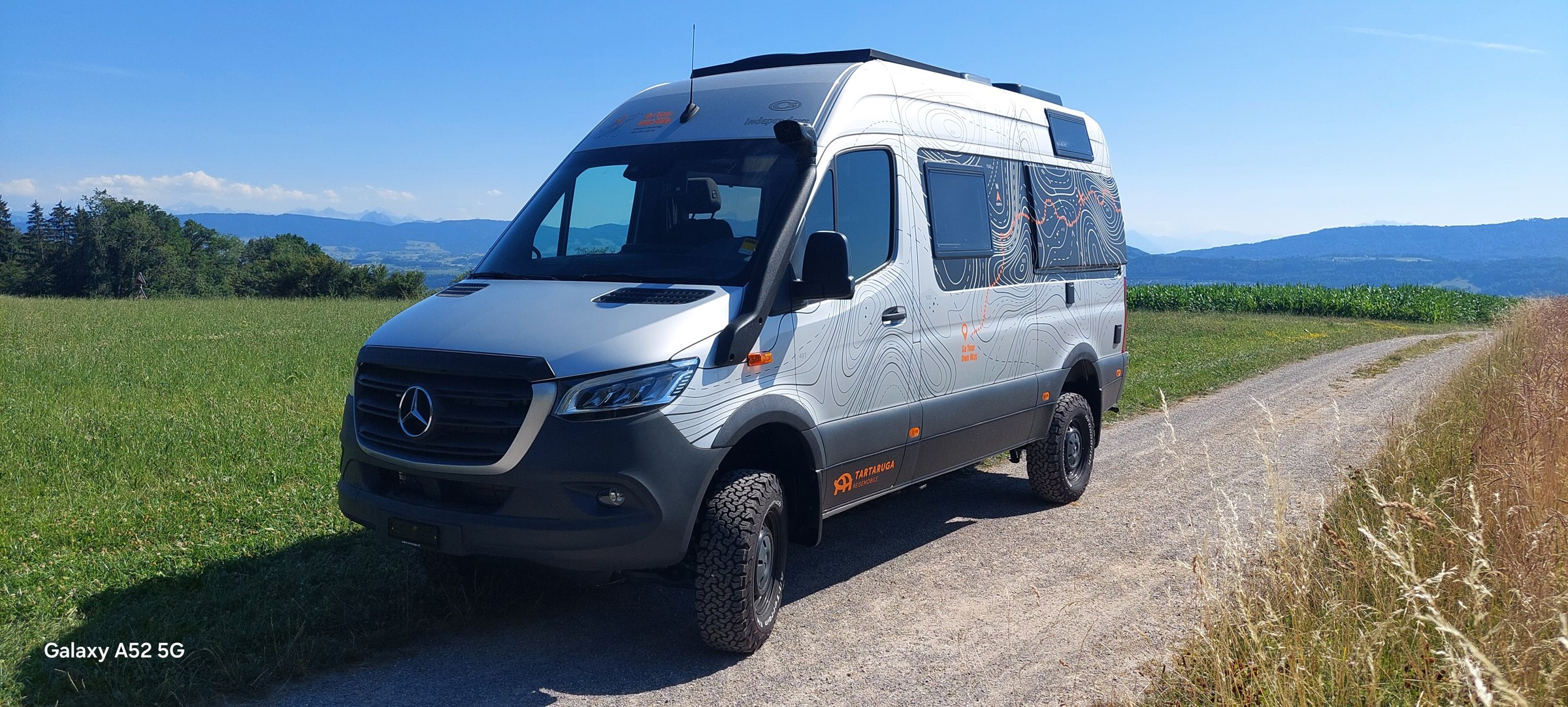
WHAT EXACTLY IS AN EXPEDITION VEHICLE?
Good question. After all, just about anything can be called an “expedition vehicle” these days. The term isn’t protected, and there’s no official definition.
It refers to rugged travel vehicles that keep going where traditional RVs reach their limits: bad roads, dirt tracks, limited infrastructure, and the ability to operate self-sufficiently for several days. This could be an SUV, a pickup truck with a living cabin, a 4x4 van, or a large expedition truck.
The CS Independent is deliberately positioned at the lighter end of the spectrum. All-wheel drive, but not a truck. Self-sufficient, but not a rolling fortress. Suitable for off-road use, but not an extreme off-roader. That’s exactly the point: an expedition vehicle doesn’t have to be as extreme as possible. It has to be a good fit for its expedition.
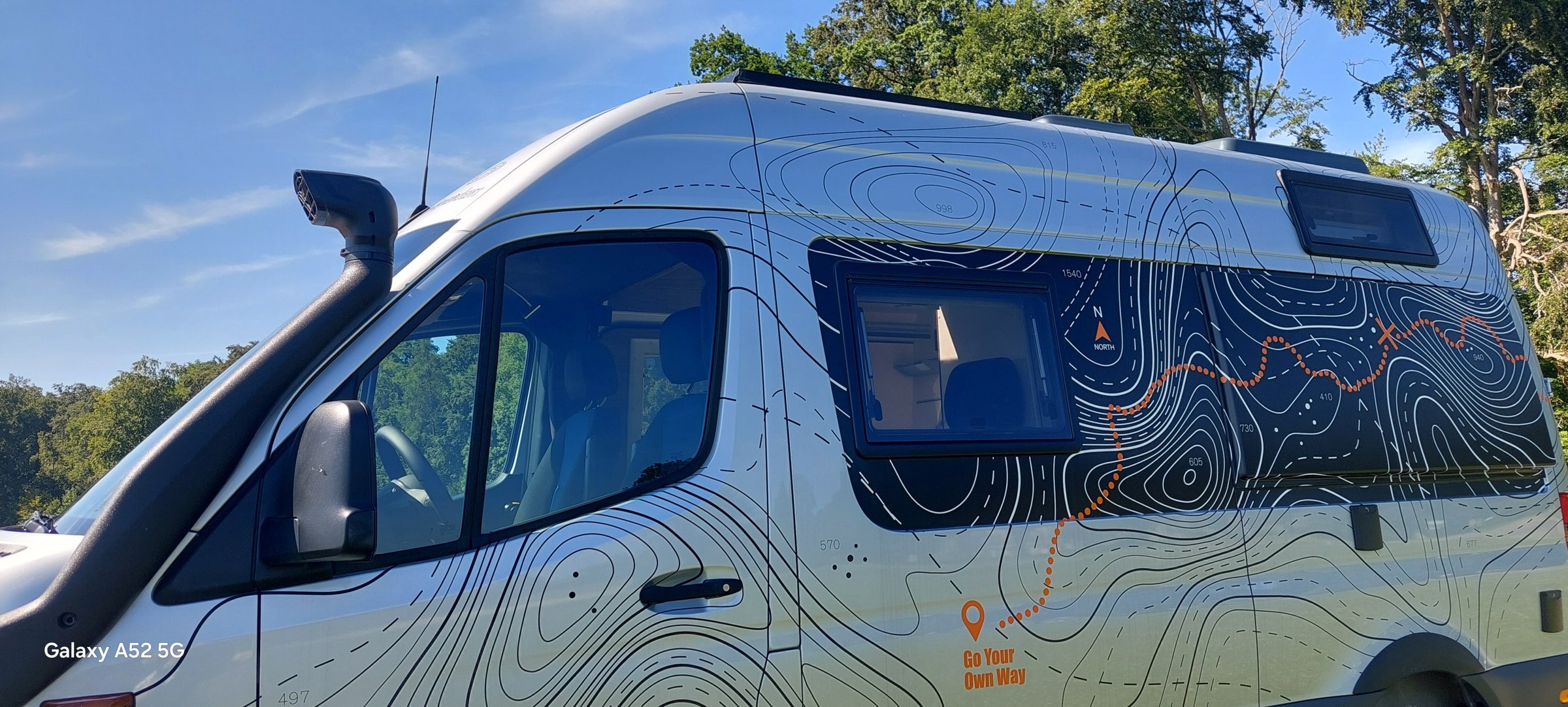
1 / WHICH EXPEDITION VEHICLE IS RIGHT FOR MY STYLE OF TRAVEL?
The short answer: The right expedition vehicle depends on your travel profile—not the other way around.
Where do you want to go? For how long? With whom? In what kind of climate? On paved roads, rough trails, or in difficult terrain? How much space and self-sufficiency do you really need? Only once these questions are answered do the vehicle concept, weight, and features make sense.
Andreas knows pretty well why. In the mid-1980s, he got stuck in an Icelandic riverbed with a rented two-wheel-drive Škoda. Friends had to rescue him with their more off-road-capable vehicles and winches. Shortly afterward, he bought a used VW T3 in the U.S., converted it into a camper using simple means, and traveled through the U.S., Mexico, and Central America all the way to Guatemala.
Many more trips and several of his own motorhomes followed. But when planning for the coming years, of all things, it became clear that the most important question wasn’t a technical one.
Andreas had long dreamed of traveling across other continents for six to nine months at a time after retiring from his career. His wife loves to travel just as much—but not for that long. For her, the idea of leaving their house and home base behind for months on end was out of the question.
After many discussions, they came up with a different plan together: Once she, too, has completely retired from her career, the two would prefer to take several three- to six-week trips per year. One off-road-capable vehicle will remain at home for trips throughout Europe and the Balkans, while another could be shipped to Africa and/or South America and stationed there temporarily for multiple trips.
Andreas himself describes this decision-making process as a long one that is still not entirely complete.
“This travel concept would allow us to balance our different needs while also continuing to enjoy our home base, which means so much to us.”
That’s exactly why choosing an expedition vehicle doesn’t start with four-wheel drive, a battery, or a winch. It starts with the question of how you actually want to travel and live.
First, the journey. Then the car.
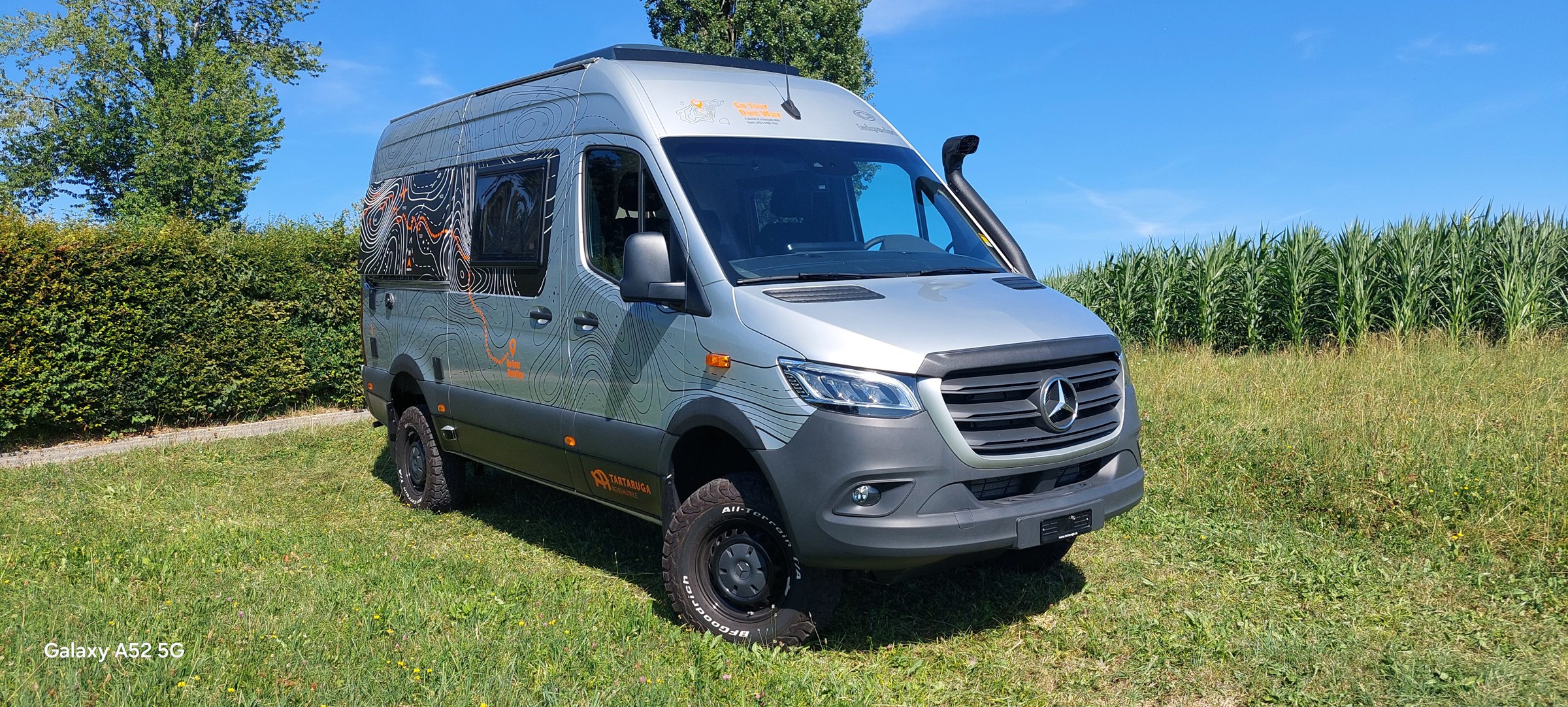
2 / WHAT REQUIREMENTS MUST AN EXPEDITION VEHICLE MEET?
For Andreas, the basic criteria were clear: as compact, rugged, and durable as possible, within the 3.5-metric-ton class, with enough self-sufficiency to travel for several days away from civilian infrastructure.
Added to this were very different travel destinations. A vehicle for hot and dry regions of Africa has different requirements than one for cold, windy, and wet regions such as the high-altitude Andes or Scandinavia.
So, initially, there was no specific vehicle in mind—just a set of specifications.
How much off-road capability does it need? How compact should it be? How important are comfort and living space? How many days should it be able to operate independently? And what climatic conditions must the interior be able to withstand?
It is precisely this order that is crucial. The specifications outline what the vehicle must be capable of. Only then is a decision made as to which vehicle concept best meets these requirements.
3 / WHICH VEHICLE CONCEPT IS THE RIGHT ONE?
Andreas came to a simple conclusion: A vehicle doesn’t have to be able to do everything. It just has to be capable of the trips it’s intended for.
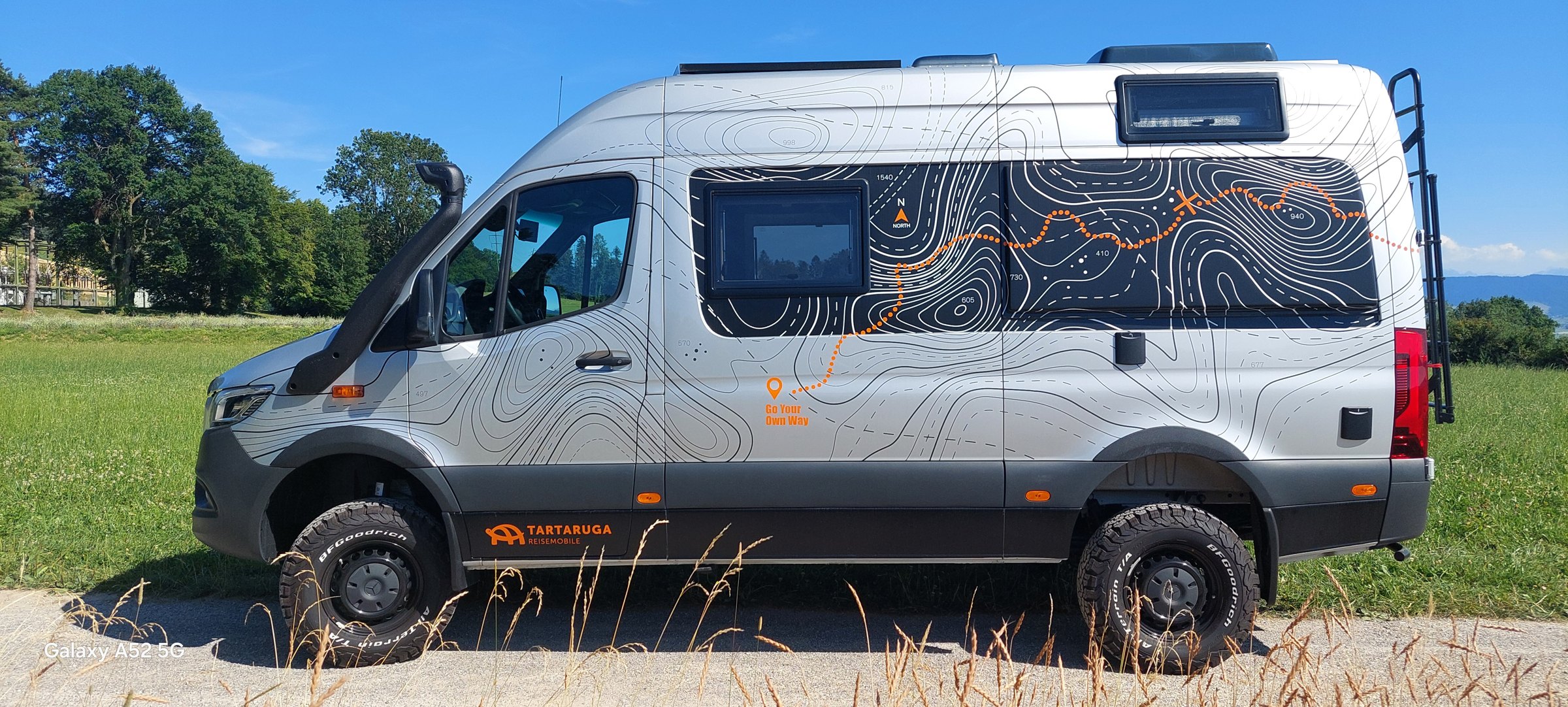
For Europe and trips to colder regions, he wanted a comfortable, well-insulated van with all-wheel drive and sufficient self-sufficiency: the CS Independent based on a Mercedes-Benz Sprinter 4x4. For Africa and other warm regions, it needed to be significantly more off-road capable. So he had a BushCamper built on a Toyota Hilux.
Two ways to travel. Two different vehicles. Sothe question isn’t: Which is the best expedition vehicle? It’s: Which one best suits my travels?
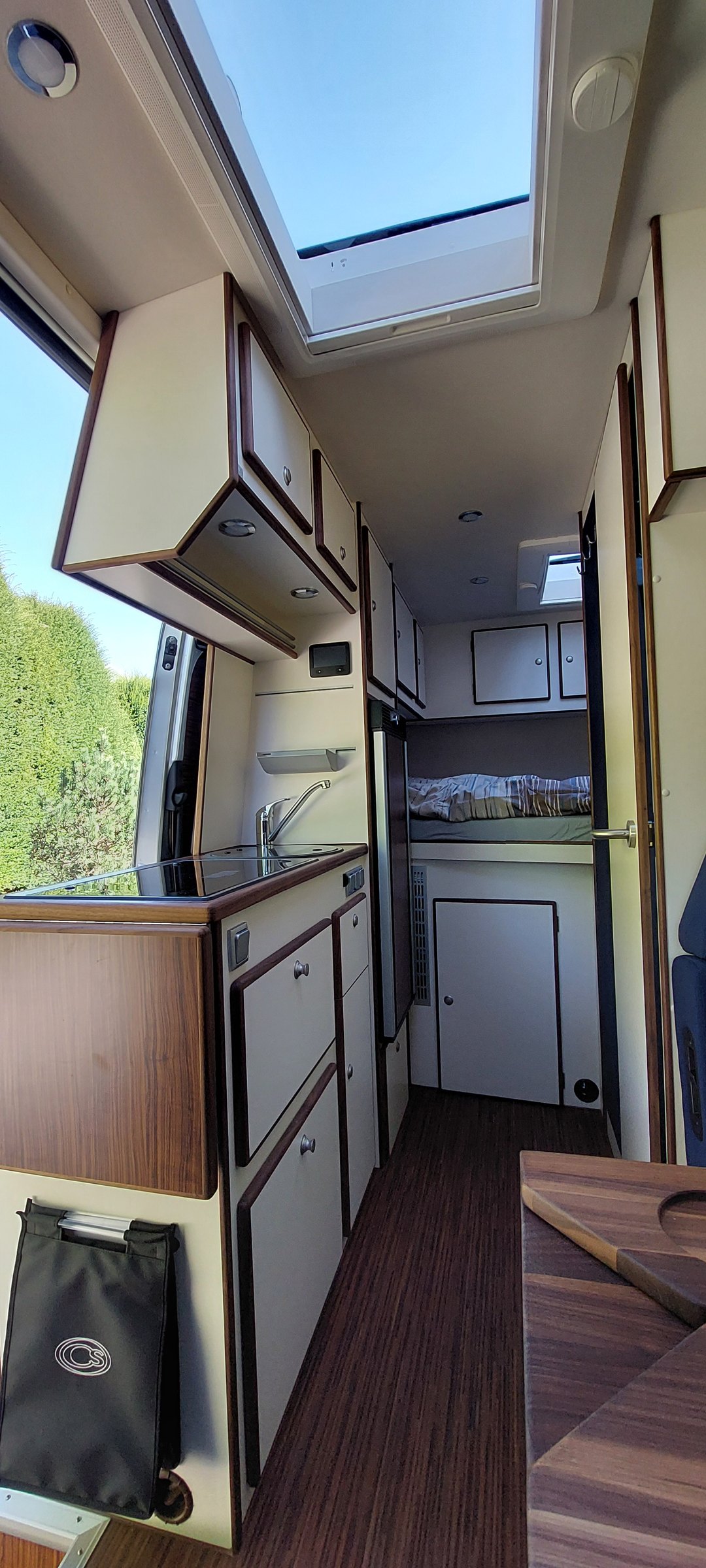
When it came to the panel van, Andreas already knew pretty much exactly what he wanted. For more than ten years, he had been on the road with a CS Duo Independent based on a Mercedes-Benz Sprinter 4x4. He knew the vehicle concept, the interior layout, and the materials from personal experience. Even with the new Sprinter, he didn’t want an extreme off-roader. It needed to handle rough roads and terrain well, while remaining comfortable and suitable for everyday use.
Another plus for Andreas was the global Mercedes-Benz service network.
“The global Mercedes service network is an important factor for me, though not a deal-breaker.”
After all, a large service network doesn’t automatically mean that every replacement part is available on the road. Even with Mercedes, a part might be out of stock or take a long time to arrive . However, Andreas hasn’t experienced any major breakdowns with his vehicles so far. Ultimately , it’s not about buying the biggest vehicle possible—it’s about buying the right one .
4 / HOW DO YOU DESIGN AN EXPEDITION VEHICLE UNDER 3.5 METRIC TONS?
For Andreas, the 3.5-metric-ton class was a given. He didn’t want to switch to a higher weight class. Among the reasons he cites are maneuverability, parking options, operating costs, tolls, and potential restrictions on certain roads, in national parks, and on off-road routes.
As a result, weight wasn’t just an issue that came up later on the scale for the CS Independent. It was factored into the design from the very beginning. With the CS Independent, weight was therefore factored into the planning from the very start. TARTARUGA recorded the base vehicle, the CS conversion, and the retrofits along with their respective weights and used this data to calculate the estimated final weight. This calculation directly influenced what was included in the vehicle—and what wasn’t.
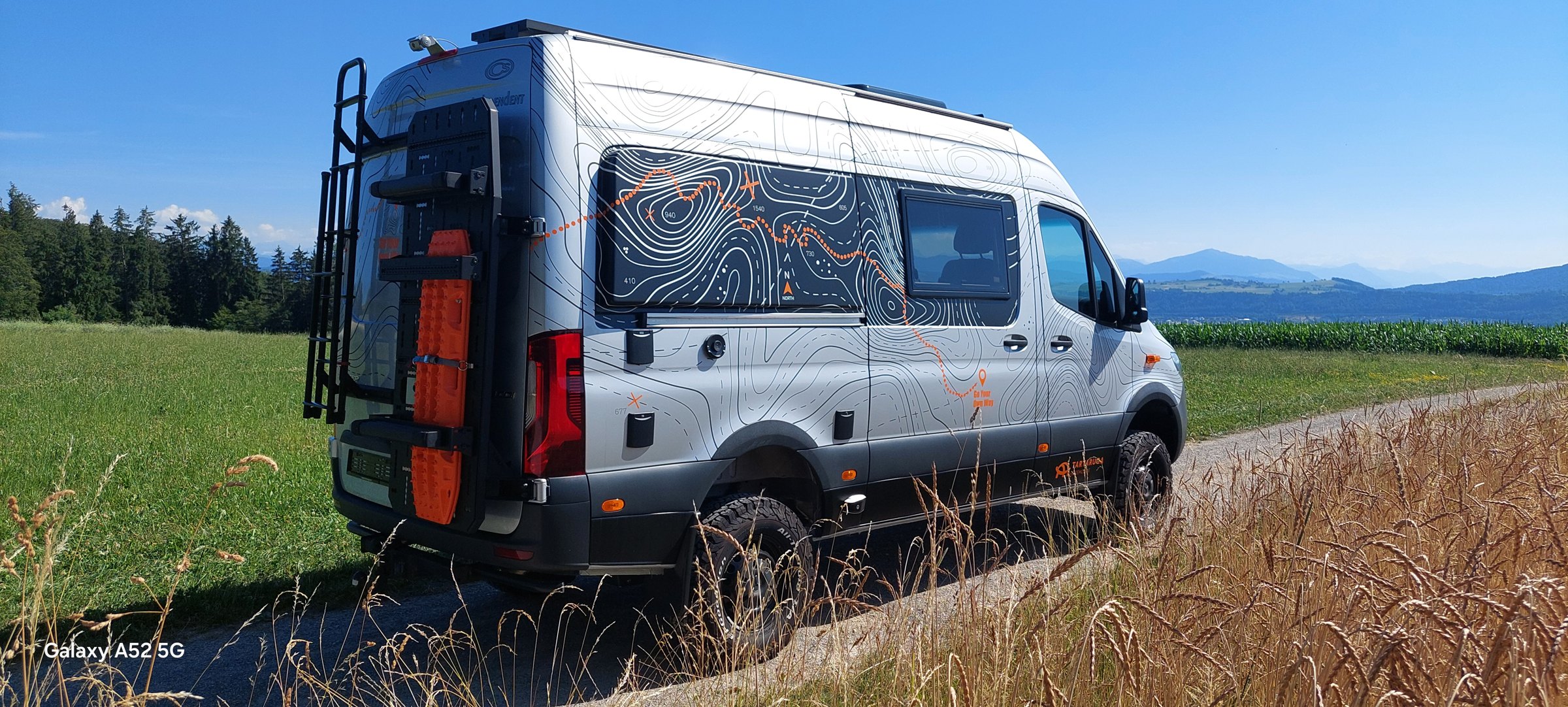
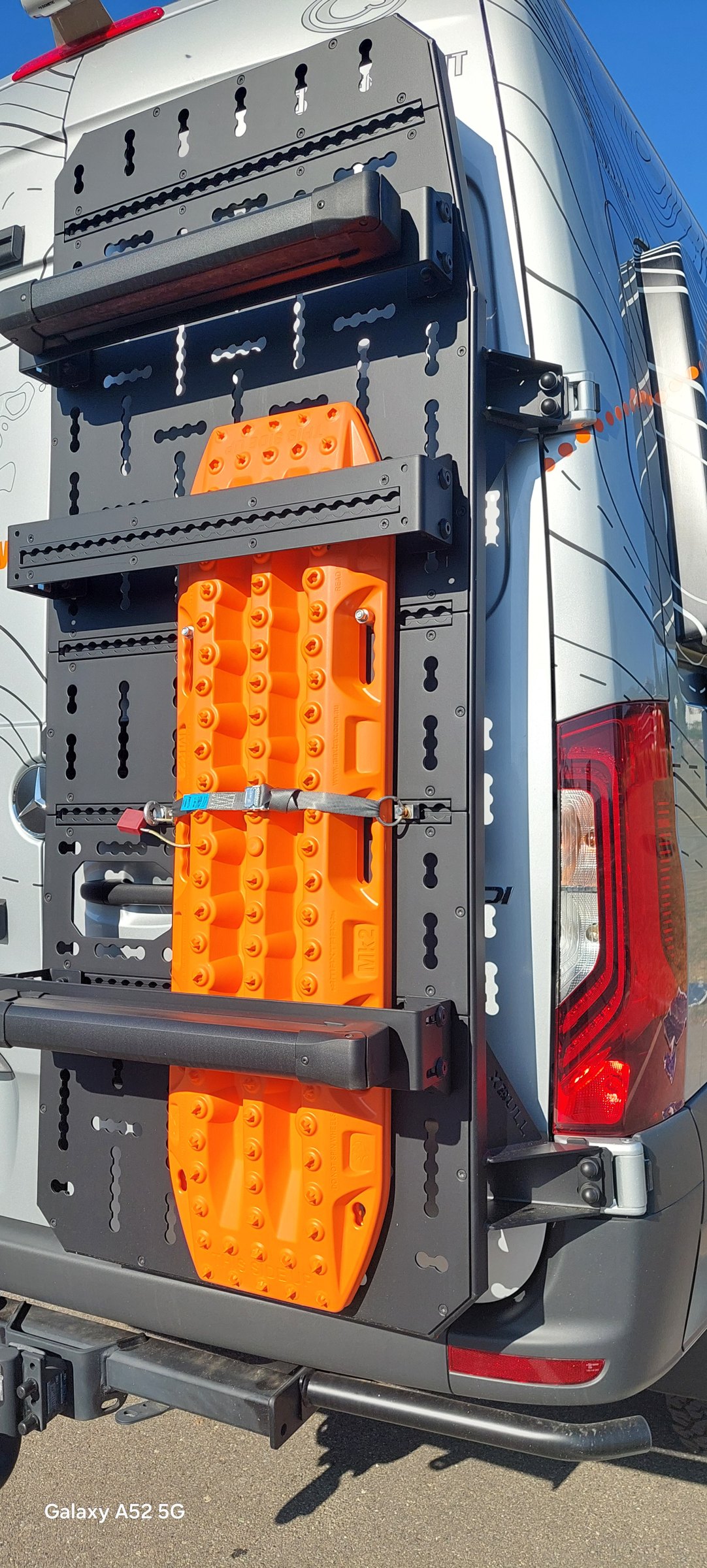
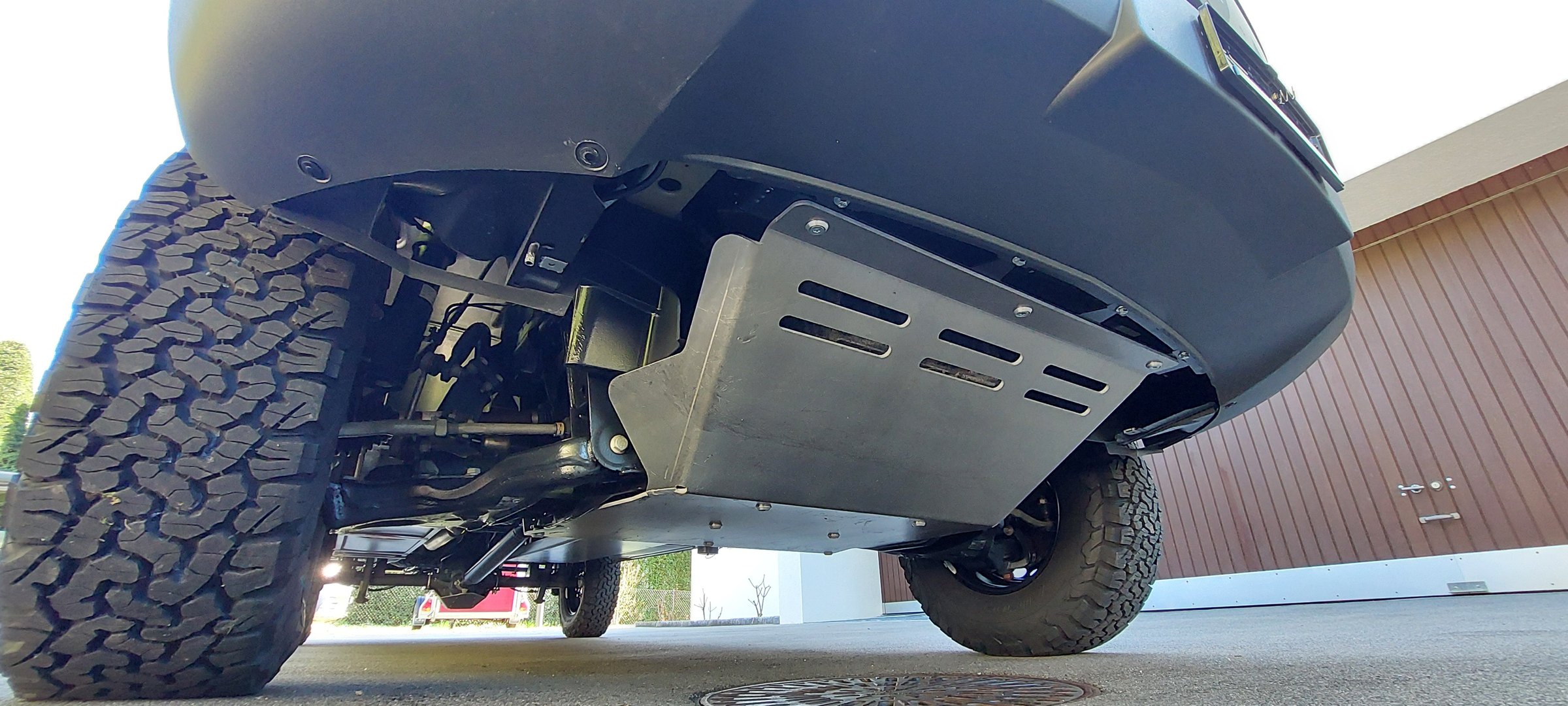
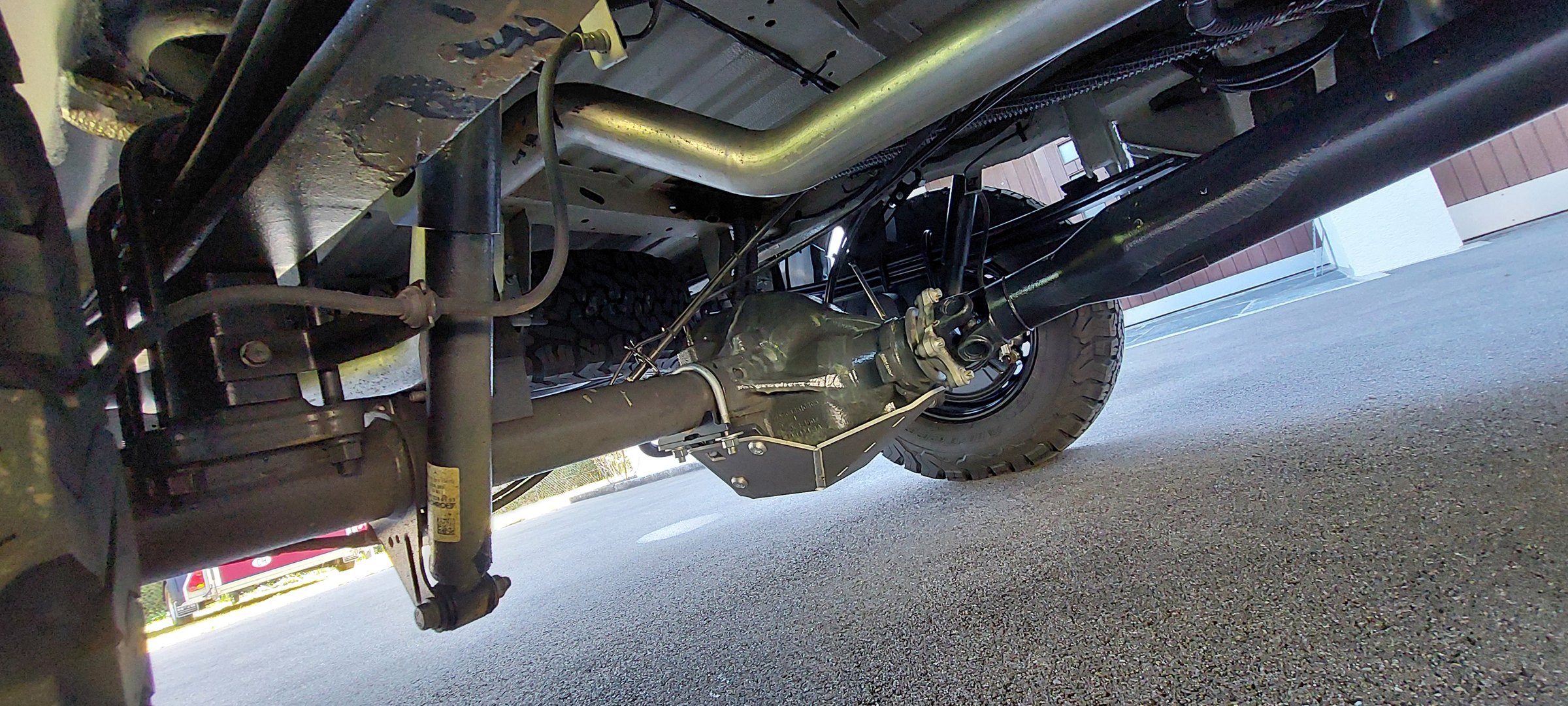
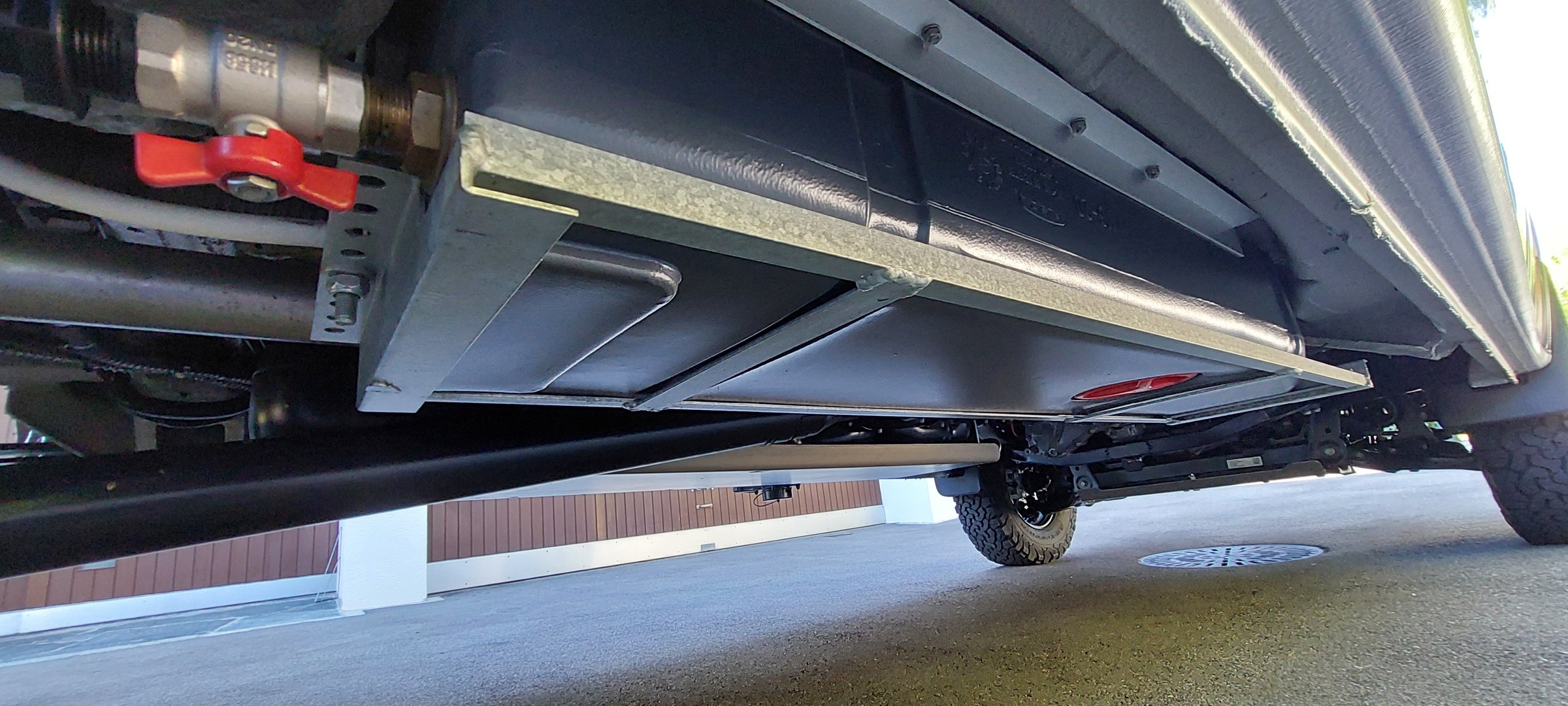
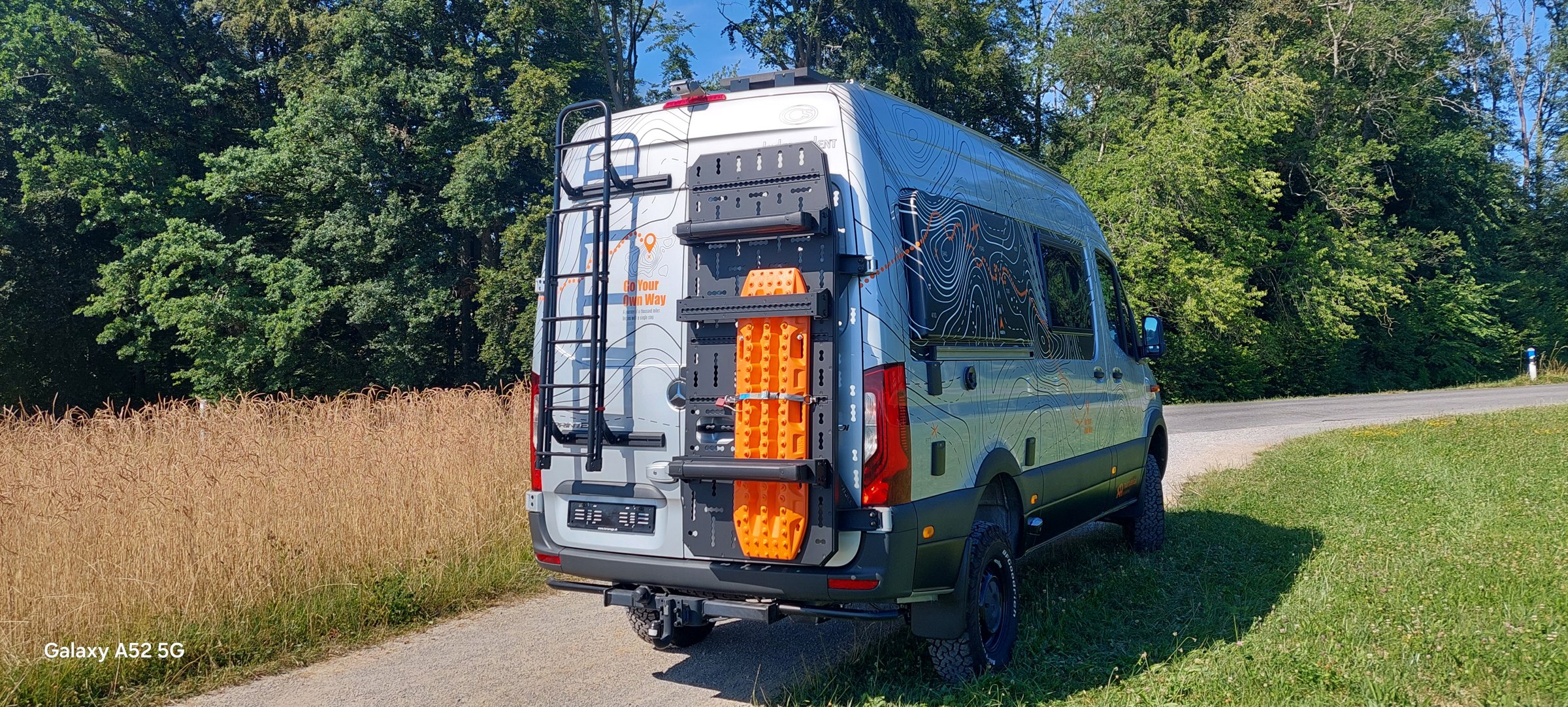
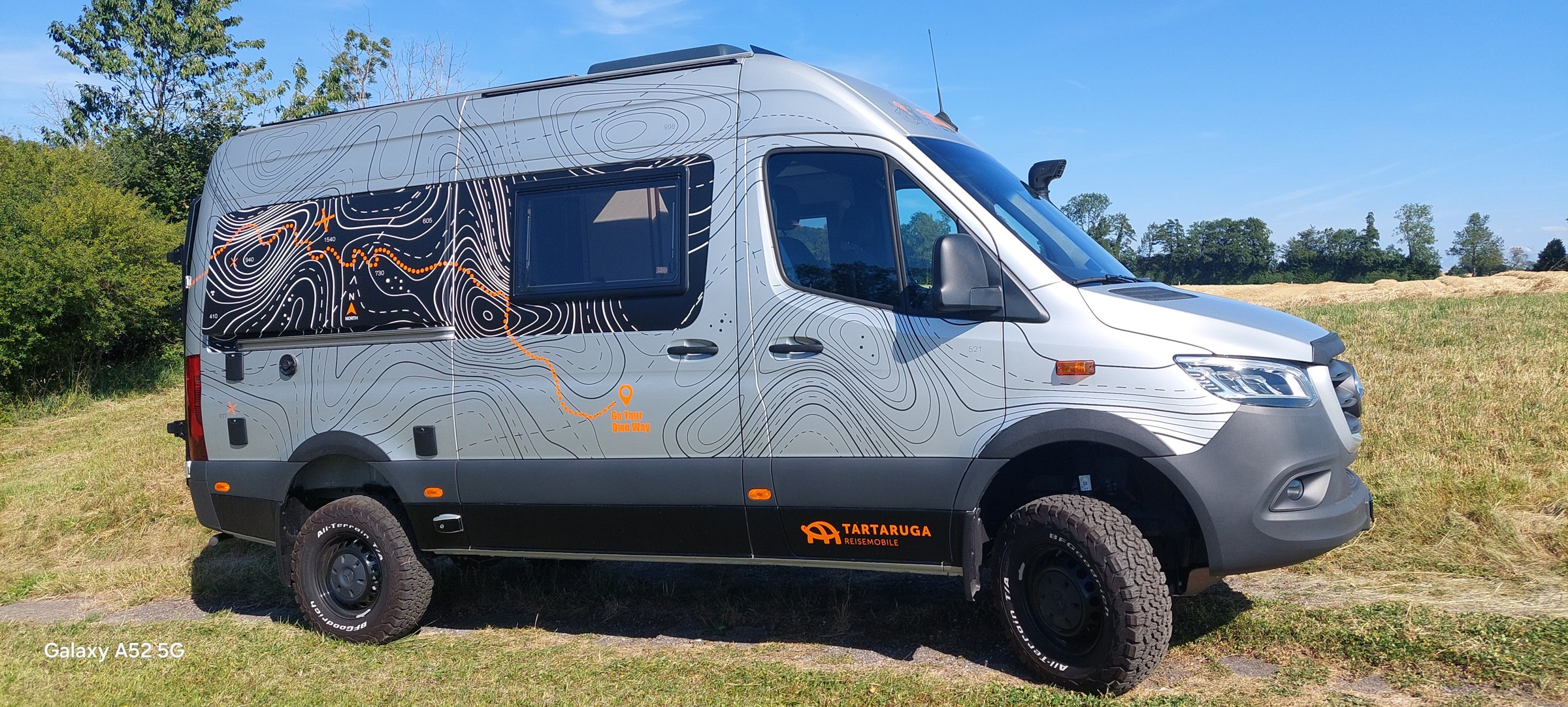
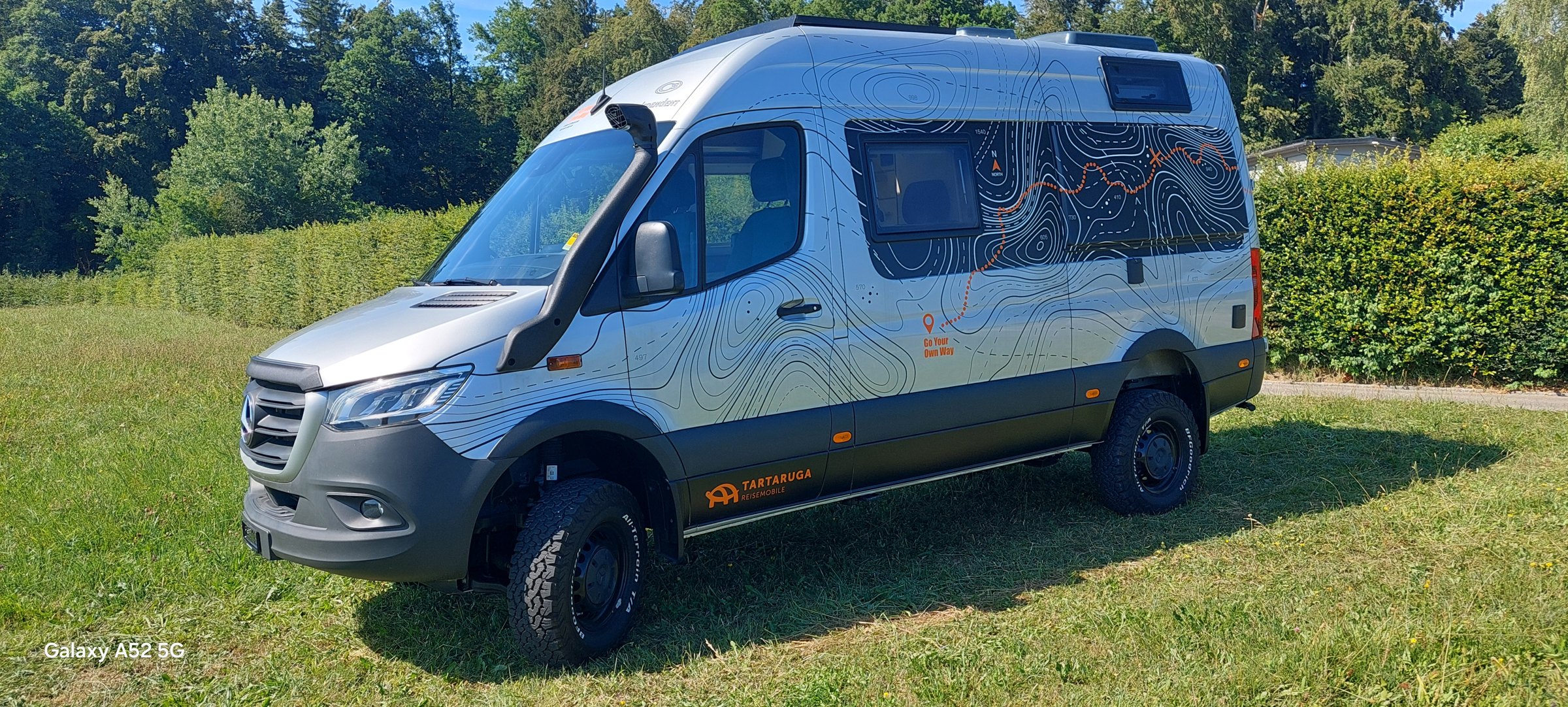
INCLUDED: an additional leaf spring on the rear axle, Mercedes steel rims, all-terrain tires, underbody protection, a permanently installed compressor, a snorkel, and an additional 60-liter fresh water tank.
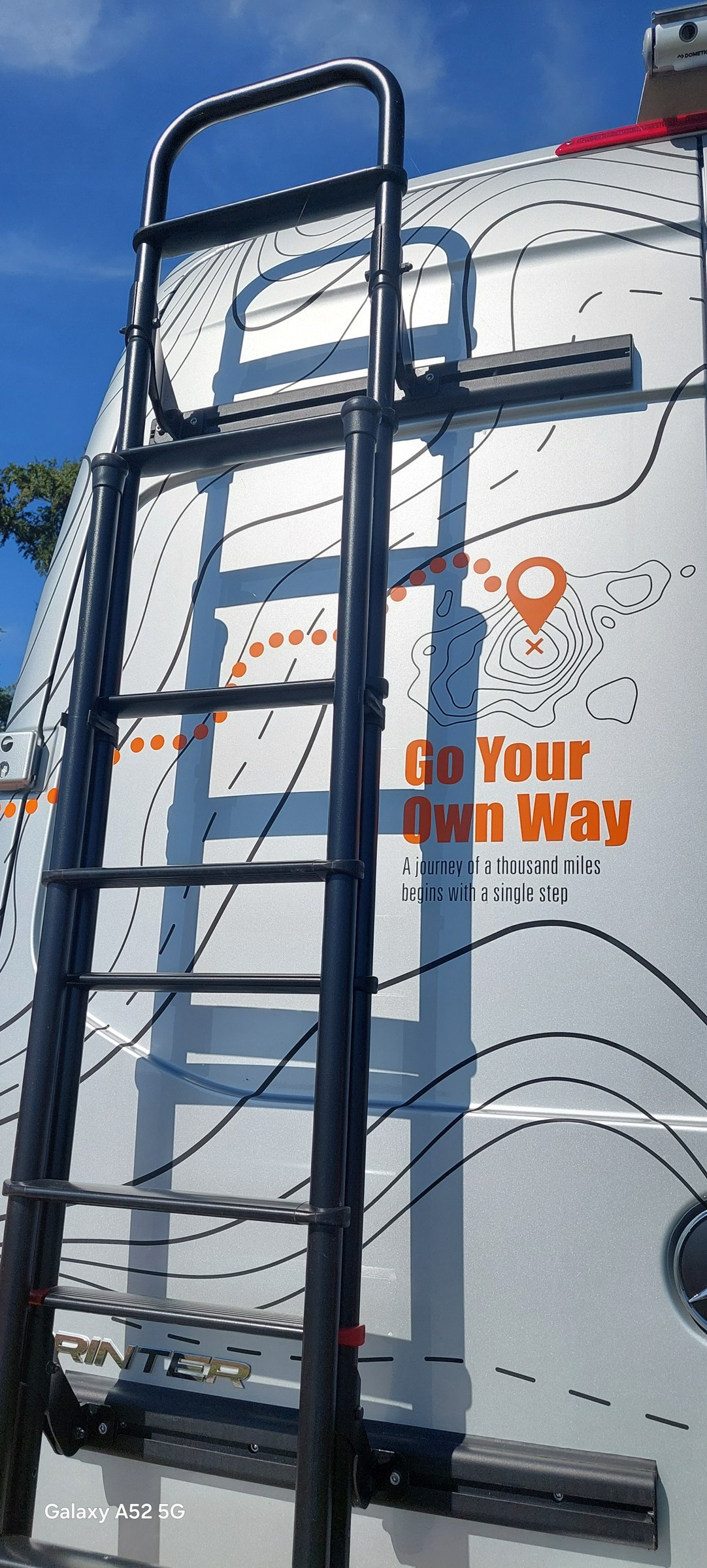
DELIBERATELY NOT INCLUDED: exterior awning, automatic step boards, additional rear storage boxes, and a winch. Regarding additional exterior lighting, Andreas wanted to wait and see if there was actually a need for it in practice.
Then the finished vehicle was weighed:
3,280 kg final weight—with all retrofits installed, a full diesel tank, and without the driver.
Not calculated, but actually weighed. Compared to the previously estimated weight, this was a “spot-on result” for Andreas.
This leaves 220 kilograms to go before reaching the 3.5-metric-ton limit, at least on paper. And that’s exactly why weight planning doesn’t stop when the vehicle is handed over.
For travel use, Andreas can save even more weight: remove the spare tire, leave the trailer hitch and ski rack behind, forgo the Maxtrax if necessary, and reduce the fresh water tank to 20 liters for use in Europe. With these measures, he estimates a realistic payload of just over 300 kilograms.
That’s not a generous margin. Passengers, water, luggage, tools, and travel gear must all stay within this weight limit. Especially with a fully outfitted 4x4 van, it’s therefore important to weigh not only the curb weight but also the load when the vehicle is ready for travel.
Under 3.5 metric tons, weight is a budget. Every extra item is paid for in kilograms.
5 / HOW MUCH SELF-SUFFICIENCY DOES AN EXPEDITION VEHICLE REALLY NEED?
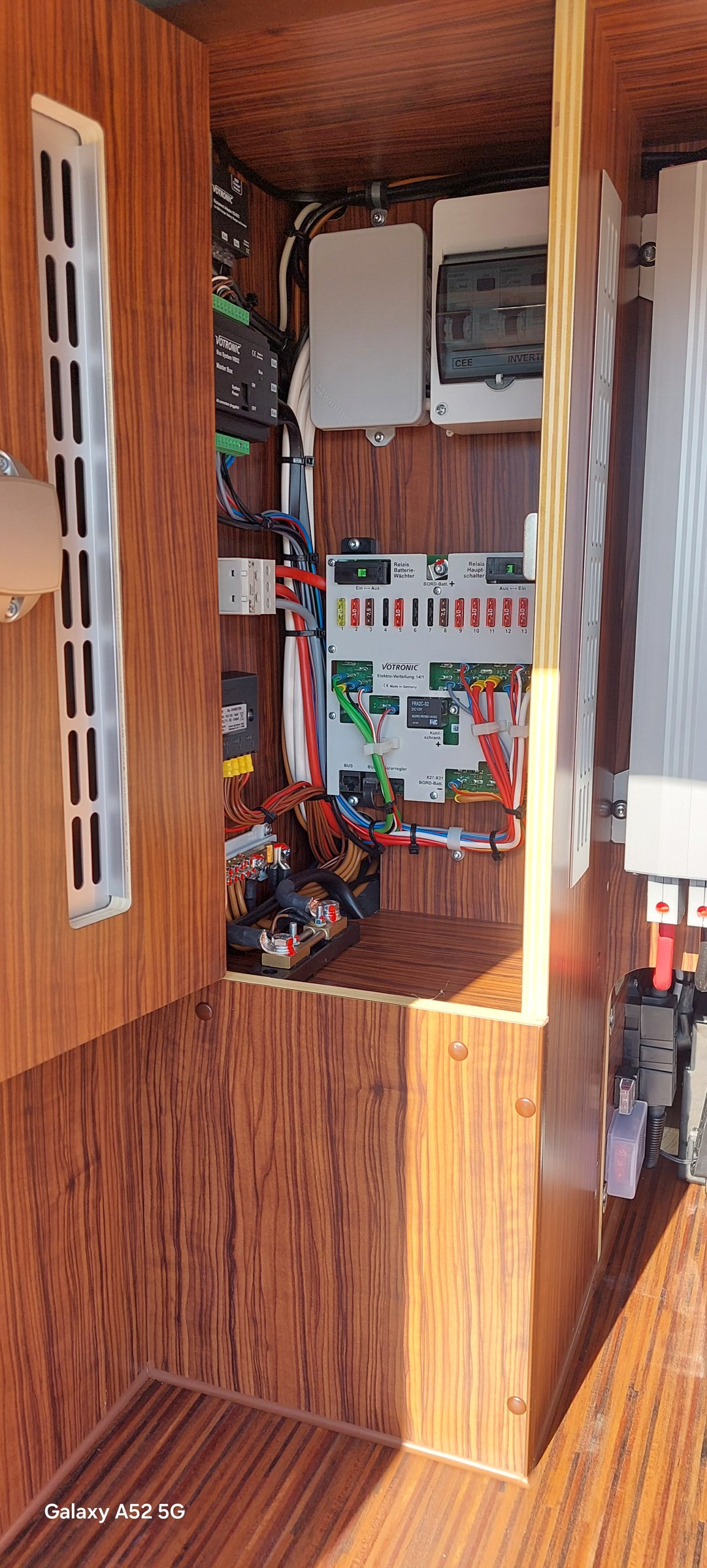
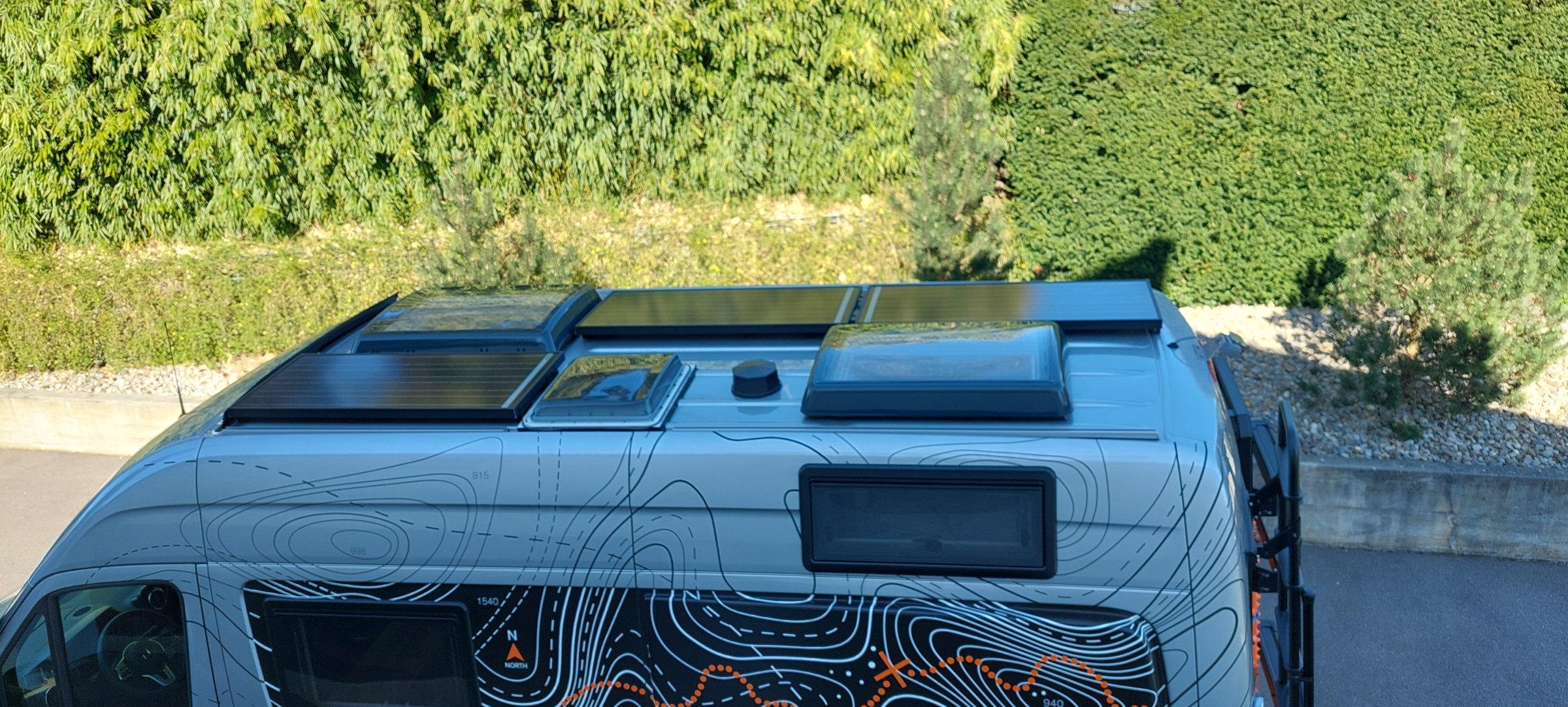
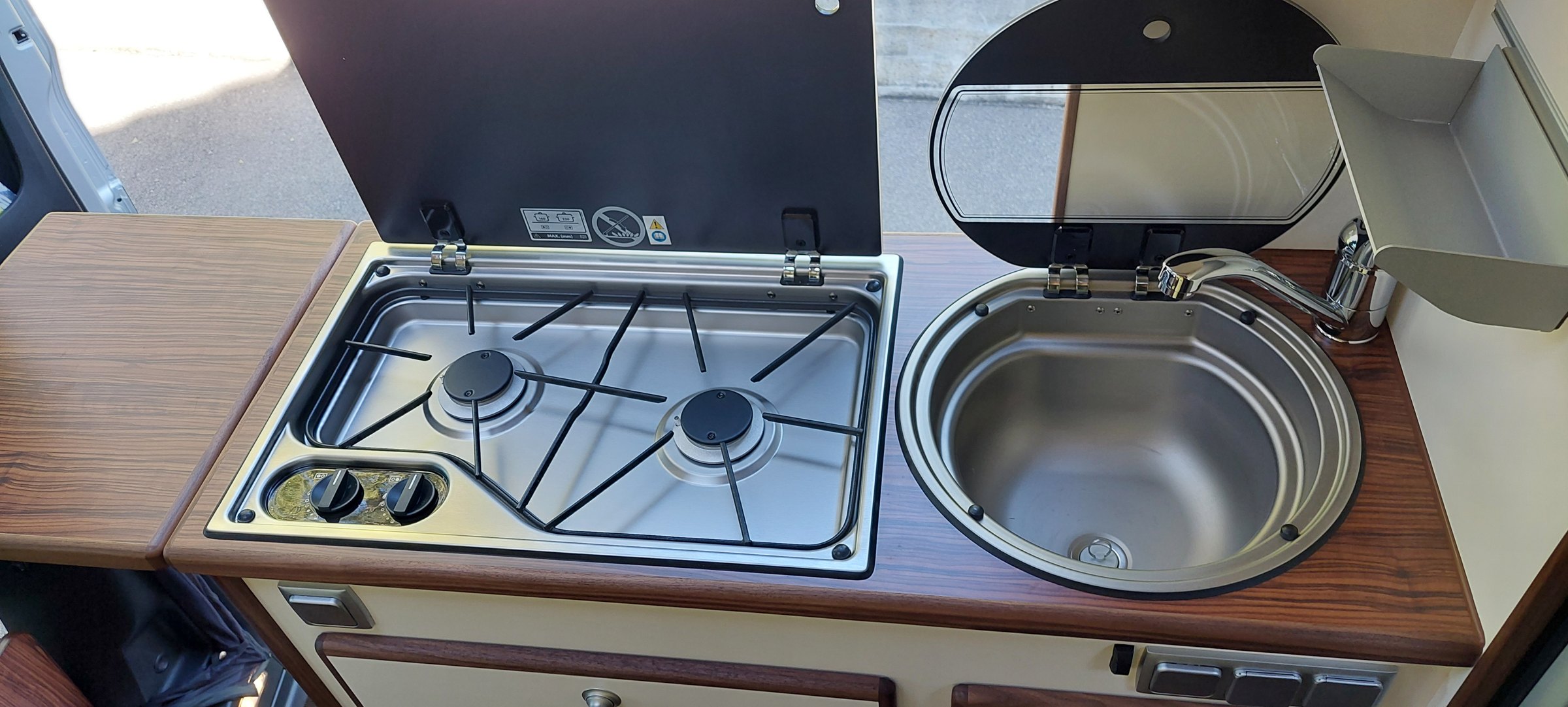
Andreas didn’t want to set a self-sufficiency record. His goal was to be able to stay in one spot for two to three days without having to move the vehicle. The power supply was designed with that in mind: a 180 Ah lithium battery, 240 watts of solar panels on the roof, and a 1,700-watt sine wave inverter. Cooking is done on a two-burner gas stove instead of using an electric induction cooktop.
“I’ve always assumed that this is the basic electrical setup, and practice will show how long one can actually live self-sufficiently with it.”
If it’s not enough, the system can be expanded later.
When it comes to water, Andreas and his wife made a conscious decision to add extra reserves. In their experience, the standard 100-liter tank lasts about three to four days for two people if used sparingly. It can be more difficult to find suitable water exactly when it’s needed.
That’s why the Independent was also equipped with a 60-liter underfloor tank. It doesn’t have to be filled all the time, so it doesn’t constantly add 60 kilograms of extra weight. The reserve is available in places where water is harder to come by.
The key figure, therefore, is not the maximum amount of electricity and water that the vehicle can hold, but rather how long you actually want to remain self-sufficient.
6 / HOW CAN YOU TELL IF A MANUFACTURER MAKES GOOD EXPEDITION VEHICLES?
When it comes to expedition vehicles, it’s not just about how well the vehicle is built. Just as important is what happens if something goes wrong later on.
That’s because several companies can be involved between the base vehicle and the finished motorhome: the manufacturer, the converter, the retrofitter, the importer, or the type-approval partner. On top of that, there’s the warranty and service. It should therefore be as clear as possible who is responsible for what in the event of a problem.
Andreas has experienced just how important this can be. With his BushCamper, a relatively minor warranty issue led to significant back-and-forth between the manufacturer and the Swiss homologation partner. It was ultimately resolved very directly: Two experts from the manufacturer came to Andreas and fixed the problem right at his location.
For Andreas, the manufacturer’s history, the experiences of long-time customers, service, and clear lines of responsibility are therefore key factors in choosing a provider. But for him, there’s a second point that demonstrates competence: A good manufacturer must also be able to say no.
“For me, a key indicator of professionalism and competence is a manufacturer’s ability not to respond to every customer request or requirement with, ‘No problem, we can make that happen.’”
This was the case, for example, with the water supply. Andreas looked closely at various permanently installed filter systems. After extensive discussions and input from vehicle builders based on their experience, he ultimately decided against a permanently installed solution and opted for a portable filter.
That’s a pretty good test for a supplier: Don’t just ask what they can build for you. Listen carefully to what they advise against—and why.
7 / WHY SHOULD YOU DO MORE THAN JUST TAKE AN EXPEDITION VEHICLE FOR A TEST DRIVE?
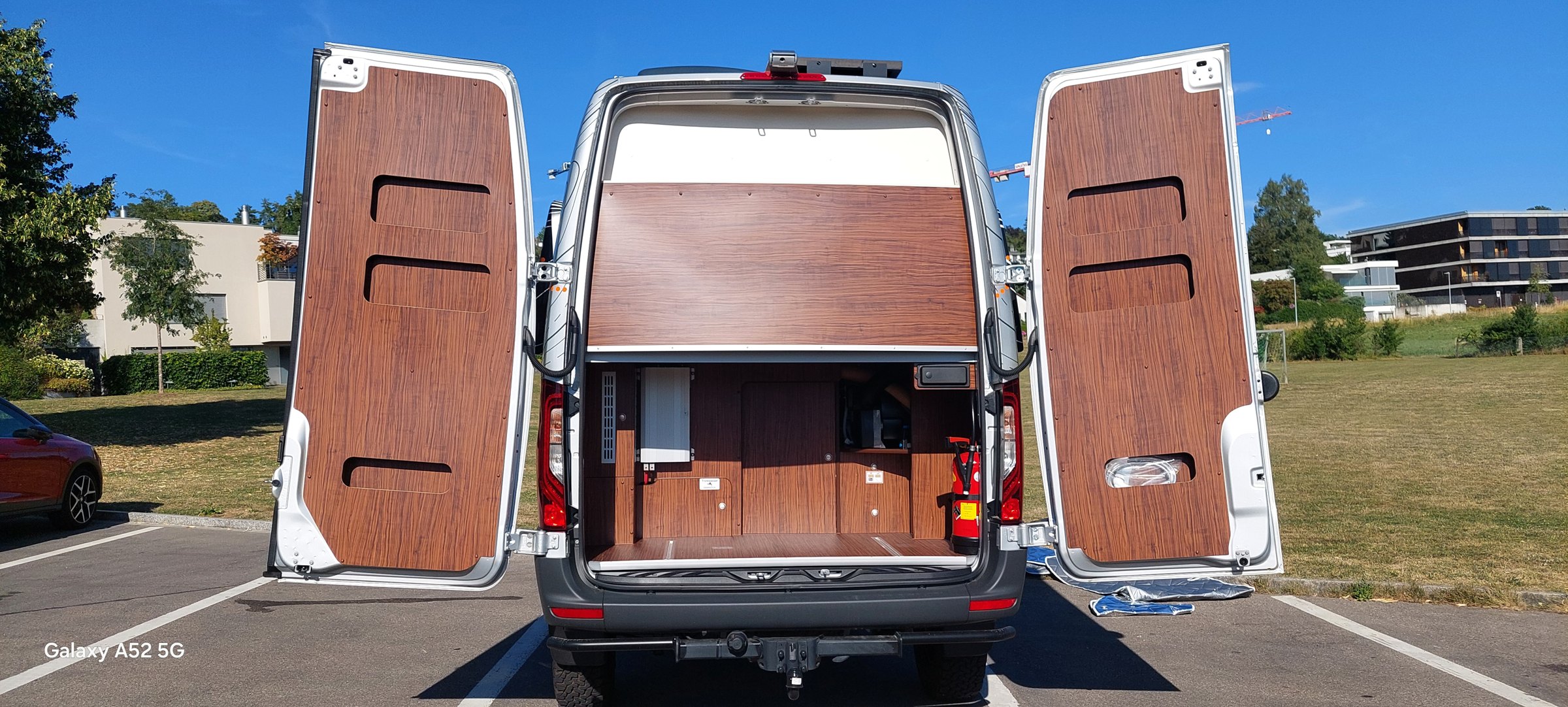
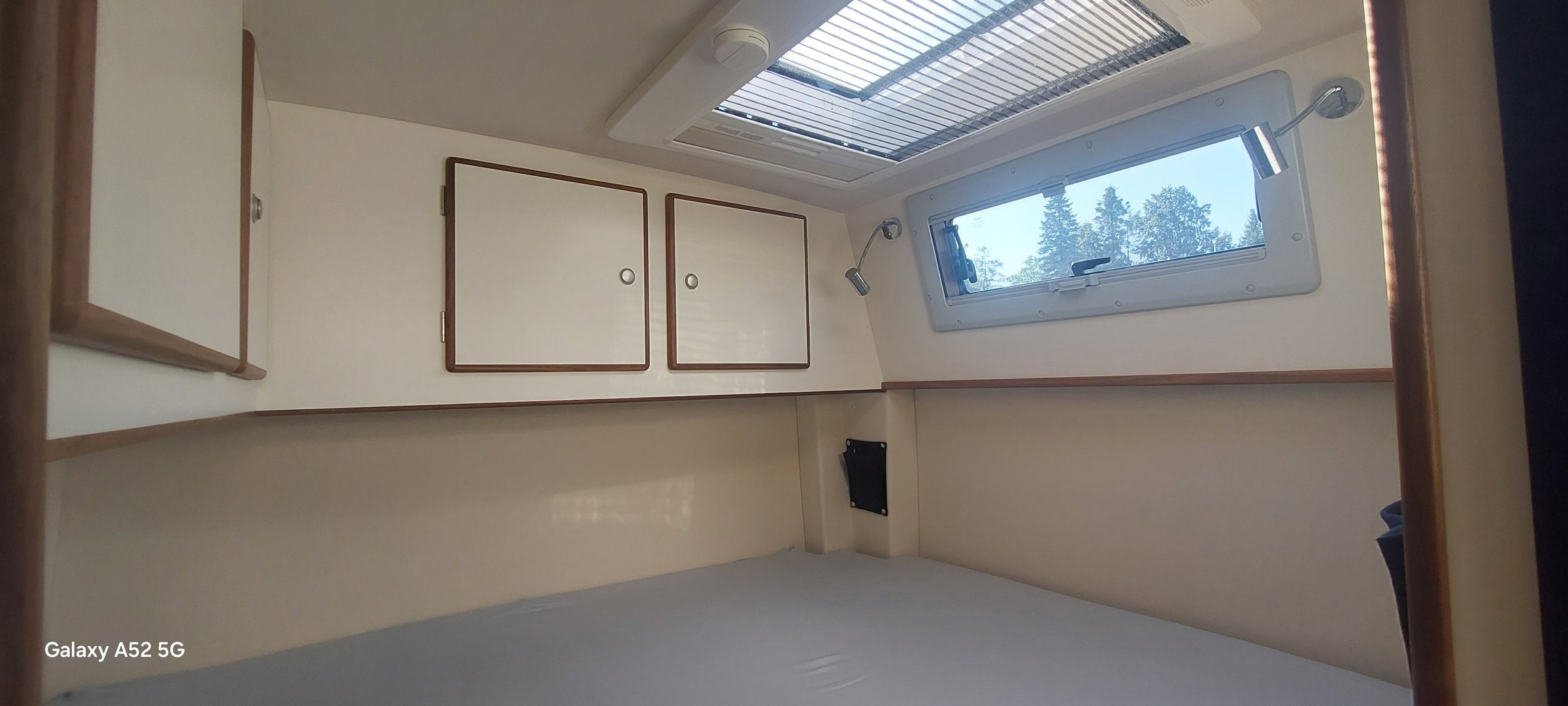
The CS Independent has a transverse bed in the rear. Its sister model, the CS Duo Independent, follows a much more specialized design: Instead of the usual side-by-side longitudinal beds, it features two bunk beds arranged one above the other in a longitudinal orientation.
This layout isn’t for everyone. The beds are relatively narrow and work well for Andreas and his wife. For taller or larger people, the Independent’s transverse bed may be a much better fit. Andreas and his wife were already familiar with the cabin beds from their previous Duo Independent. After lengthy discussions, they nevertheless decided on the Independent with the transverse bed for their new vehicle. According to Andreas, the expected future resale value also played a role in this decision.
Then came the test drive.
And it finally became clear to his wife that she preferred the Duo Independent’s cabin beds to the transverse bed. Especially at night, when with a transverse bed, one person has to climb over the other to use the restroom. The differently arranged storage compartments also played a role.
“I had imagined my wife’s reaction to the vehicle layout with a transverse bed—and her clear preference for the cabin-bed version of the CS Duo Independent model—would be somewhat different.”
Three years of vehicle development. Weight calculated down to individual components. Chassis, power, water, and amenities planned. And in the end, the question of how you get out of bed at night is also a deciding factor. That’s no minor detail. That’s exactly what sets a motorhome apart from a car.
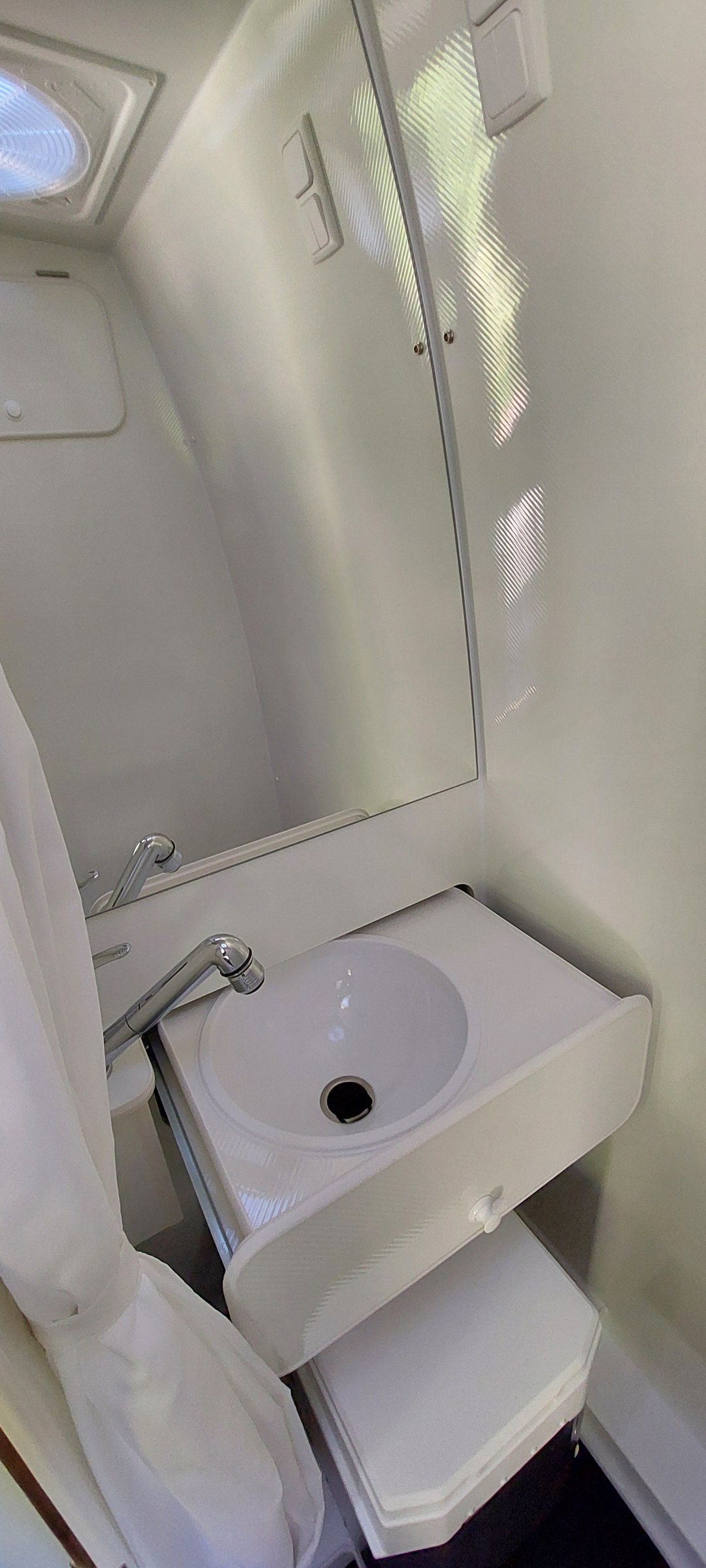
You don’t just drive it. You sleep in it, cook, use the bathroom, get changed, stow your luggage, and live as a couple in just a few square meters. That’s why you shouldn’t just test-drive an expedition RV—you should also test-live in it.
Lie down in the bed. Cook together. Use the bathroom and toilet. Open the cabinets. Stand where your partner has to walk through. And don’t just do this for five minutes at a trade show. Because a floor plan doesn’t have to work at the booth—it has to work at 2:00 a.m.
BUYING AN EXPEDITION VEHICLE: 10 QUESTIONS TO ASK BEFORE MAKING A DECISION
Based on Andreas’s experience, there are ten questions you should answer before letting the brand, model, and list of accessories dictate your choice.
01 / TRAVEL
Where do you actually want to travel? For how long? How often? In what kind of climate? On paved roads, dirt roads, or rough terrain?
02 / PEOPLE
Who’s traveling with you? Does everyone really share the same ideas about trip duration, space, comfort, and a home base?
03 / SPECIFICATIONS
What are the five or six requirements the vehicle absolutely must meet? Define the requirements first. Then look for vehicles.
04 / VEHICLE CONCEPT
Van, SUV, pickup truck with a living area, or truck: Which concept meets these requirements with the fewest unnecessary compromises?
05 / WEIGHT
How much does the vehicle actually weigh? How much weight is left for passengers, water, luggage, tools, and equipment? If you want to stay under 3.5 metric tons, you’ll need to factor in weight from the very beginning.
06 / SELF-SUFFICIENCY
How many days do you really want to be able to go without external supplies? This determines your water, battery, solar, and power needs—not the other way around.
07 / EQUIPMENT
Do I really need this extra feature on my trips? How much does it weigh? How much additional complexity does it add? Can I add it later?
08 / MANUFACTURER & SERVICE
What are older vehicles from this manufacturer like? What is the long-term experience with them? Who is responsible for warranty and service? And is the provider competent enough to say “no” when necessary?
09 / TEST STAY
Sleeping. Cooking. Bathroom. Storage space. Getting changed. Moving around inside. Don’t just look at it and drive it—try it out.
10 / REALITY CHECK
Does this vehicle suit the trips you’ll actually be taking—and the people you want to take them with?
If you can answer these ten questions honestly, you’re probably closer to finding the right expedition vehicle than you’d be after spending another hundred hours on configurators and forums.
FIRST THE TRIP. THEN THE CAR.
THE CS INDEPENDENT: THE SPECIFICATIONS
- Base vehicle: Mercedes-Benz Sprinter 4x4
- Conversion: CS Independent
- Model year: 2024/2025
- Initial registration: March 2025
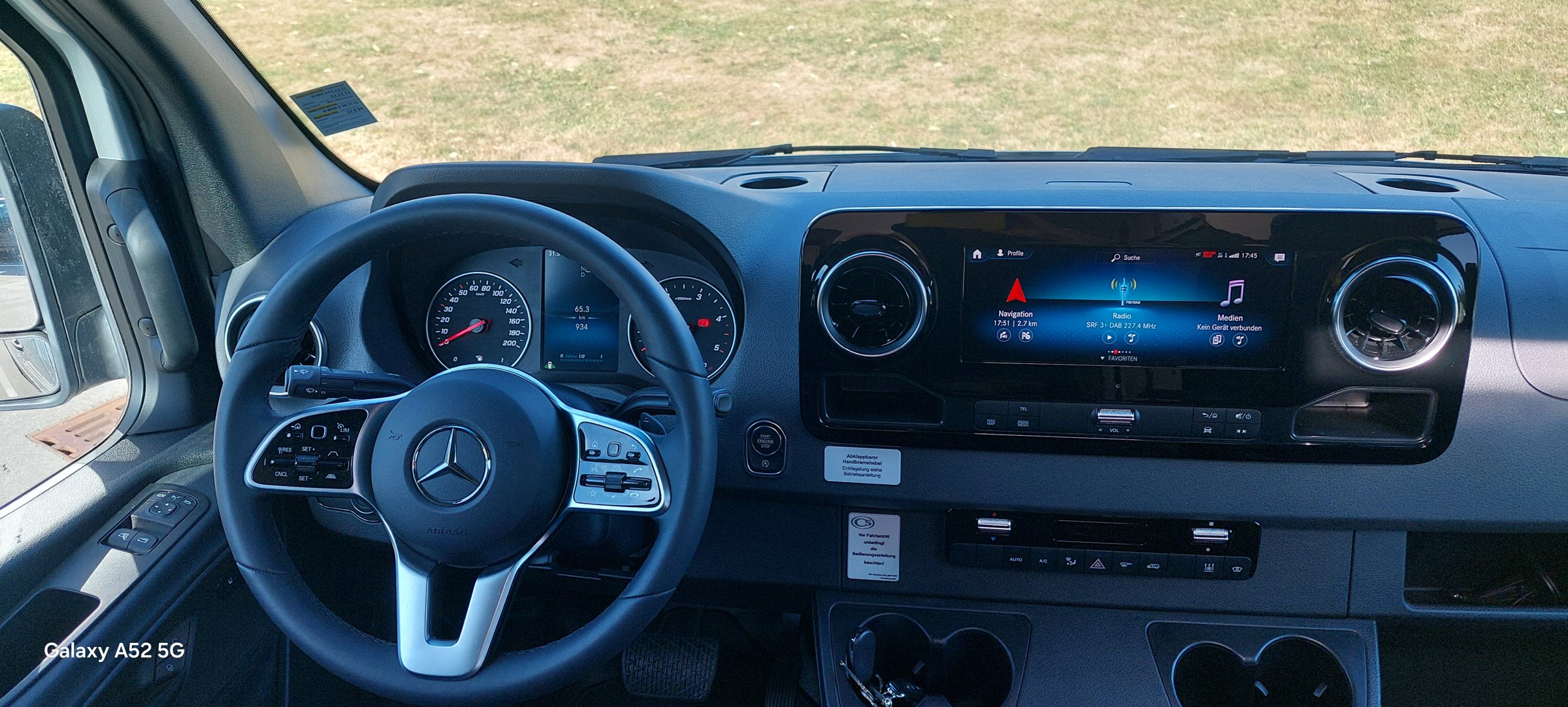
- Mileage: approx. 940 km
- Engine: 2.0-liter CDI turbodiesel
- Power: 140 kW / 190 PS
- Transmission: 9G-TRONIC automatic
- Drivetrain: 4MATIC all-wheel drive
- Current gross vehicle weight: 3,500 kg
- Technically permissible gross vehicle weight: 4,100 kg
- Weighed vehicle weight: 3,280 kg with complete retrofit, full diesel tank, without driver
- Calculated reserve up to 3,500 kg: 220 kg prior to further weight optimizations
- Diesel tank: 93 l
- Battery: 180 Ah lithium
- Solar: 240 W
- Inverter: 1,700 W pure sine wave
- Fresh water: 100 l + 60 l underfloor auxiliary tank
- Sleeping berths: 2
- Sleeping area: Transverse bed in the rear
- Self-sufficiency goal: 2–3 days of off-grid camping
WHY AN ALMOST-NEW EXPEDITION VEHICLE HAS TO GO AGAIN
The CS Independent, built on a Mercedes-Benz Sprinter 4x4, is the result of years of planning. Andreas calculated the weight and equipment down to the component level, tailored the water and energy supply to his travel profile, and weighed the pros and cons of every extra to determine whether he really needed it.
Technically speaking, he’d do a lot of it exactly the same way today. But while the vehicle was being built, their travel plans changed. Andreas’s wife wants to keep working for about three more years. Their big trips are being postponed accordingly—and until then, the CS would sit unused most of the time.
Their test drive together revealed a second insight: the layout with a transverse bed doesn’t quite fit their personal habits. Both prefer the stacked cabin beds of the CS Duo Independent.
For Andreas and his wife, the conclusion is clear: They’ll sell their current CS and have a new one built for their future travels—again based on a Mercedes-Benz Sprinter 4x4, this time as a CS Duo Independent with bunk beds.
The vehicle concept remains the same. The floor plan changes.
And that’s exactly where this story ends—with something that can’t be calculated in any set of specifications. Andreas has thought through four-wheel drive, self-sufficiency, water, weight, suspension, and every extra kilo. But one of the most important insights from his entire planning process doesn’t weigh a single gram:
The floor plan must suit the people who will be traveling in it.
THIS CS INDEPENDENT IS FOR SALE
The CS Independent was built entirely for long-distance travel, but has so far only been used for a private test drive across various Alpine passes. The living area was not used during that trip. The vehicle is therefore practically new, fully built out, and available immediately.
Immediate availability is particularly unusual for a custom-configured vehicle of this type: Andreas estimates that the entire process—from configuration and ordering through production, retrofitting, and Swiss registration to delivery—takes at least 24 months.
The CS Independent is currently for sale on the OLLI Marketplace. There you’ll find the full list of features, all technical specifications and images, as well as direct contact information for Andreas.