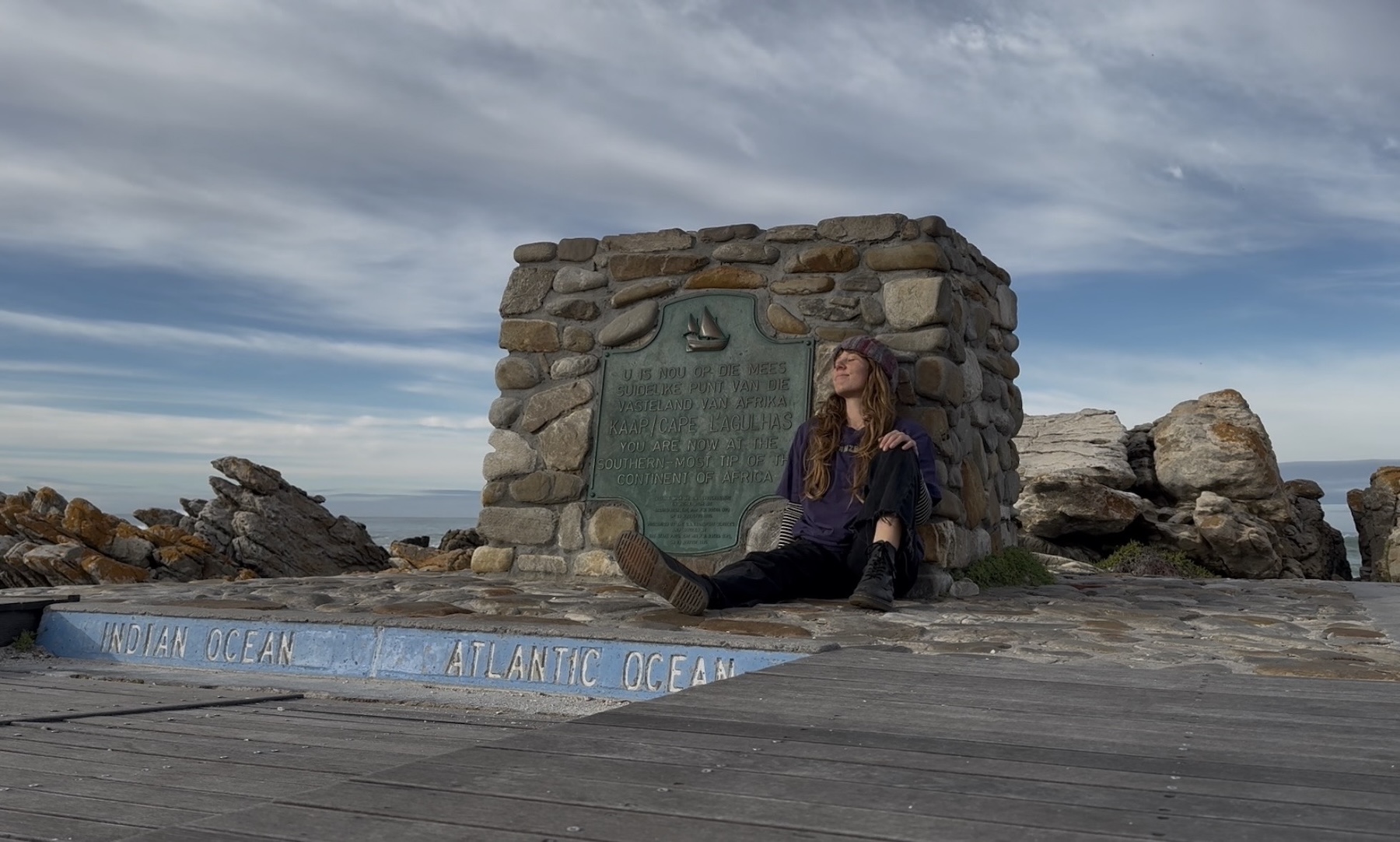
Sophie Platz buys a 1994 Toyota 4Runner and drives it across Africa. Alone. Breakdowns are part of the adventure; doubts are surprisingly rare. Her motto for just about everything in life: “How hard can it be?”
OLLI Friends are people who get out there and do their own thing. We tell their stories—about being on the road, about arriving, and about everything that happens in between.
Who are you? How long have you been traveling? What have you experienced so far? Where are you right now, or where do you live? And what’s next?
Hi, I’m Sophie, 29 years old, and I’m from Dresden. Two years ago, I fulfilled a little dream of mine and bought an old Toyota. I spent the last year traveling through Africa in it.
Even before that, I loved to travel a lot—I set off on trips during every break from my studies and later from my job as a civil engineer. Sometimes it was a two-week hiking trip in Scotland, then a city break in Venice, two months in Cuba, or a van trip from Germany all the way to Greece.
Right now, I’m back in Dresden to earn some money and plan my next trip. My current ideas include a trip around the Baltic Sea or a tour of Central Asia.
Can you still remember the moment when you knew, “I’m going to do this now”? How did your family and friends react?
My grandparents are also big travel enthusiasts, so my idea wasn’t much of a surprise to them, and even my parents were fully behind me after the initial shock. I’m extremely grateful for that.
My first thought when it comes to new ideas and plans is usually, “How hard can it be?” And as soon as that thought crosses my mind, it’s pretty much a done deal—I’m going to make it happen. That’s exactly how it went. The time it took to find the right car felt like an eternity, but once I bought it, everything moved really quickly, and I was able to cross off a new to-do or challenge every day.
Setting off was super easy for me—it always is. Probably also because I have such a great support network and know that I always have a home to come back to, and family and friends who’ll catch me if anything goes wrong.


What kind of car do you drive? Are there any encounters or stories that came about specifically because of that?
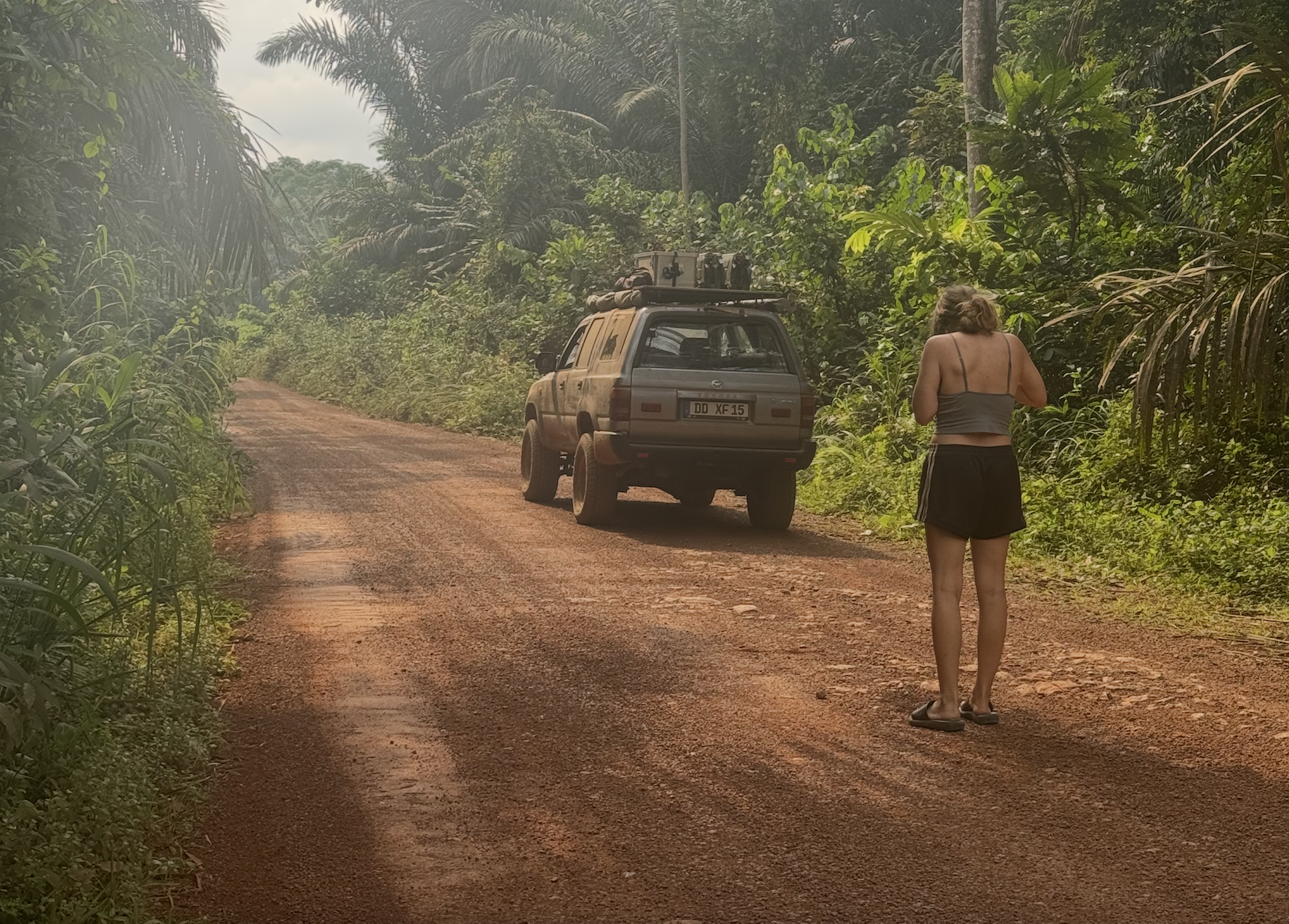
I drive a 1994 Toyota 4Runner N130—which is essentially a Hilux with a closed cab.
That’s allowed me to get around well so far, especially in Africa. Everyone knows the Hilux, and many people drive it too, so spare parts and the know-how needed for repairs are available everywhere.
As you’d expect on a trip like this, I’ve had my share of problems—mostly due to wear and tear on old, original rubber parts. In Senegal, the seal on the diesel injection pump had to be replaced. During that time, I was allowed to stay at the workshop; I had lunch with the workers, got to know their families, and we went to the beach together. I took the whole team into my heart and am still in touch with them, though I probably would never have met them if I hadn’t needed that repair.
“It’sa good lesson that even the seemingly worst situations can lead to something good.”
Aside from the minor issues, I’m absolutely thrilled with my 4Runner, which, by the way, I’ve named “Cera” after the dinosaur Triceratops. She’s a real dinosaur—she conquers any terrain and looks so impressively large that mopeds and donkeys always made way for me.
If you were to set out again today, would you choose this exact vehicle all over again?
Yes! I had the car shipped back to Germany after my trip and am currently working on repairs and upgrades. After that, she’ll definitely be accompanying me on my next trips—and hopefully for the rest of my life.

What does a typical day look like for you when you’re on the go?
It really varies a lot—except for my morning coffee and a quick glance at the map, I don’t have a set routine. I love spontaneity, so every day I decide anew what I want to do and experience, and how and when.
Where did you end up staying much longer than planned—simply because you didn’t want to leave?
That was in Windhoek. I got stranded there because my car needed some repairs, and after a flat tire, I needed a new one—which, unfortunately, was incredibly hard to come by. So I ended up staying there for almost three weeks—but I absolutely loved the time I spent there. I stayed with a German doctor who moved to Namibia a few years ago and is from the same city as me. That’s how we got in touch, and we hit it off right from the start. I was able to stay with her for those three weeks and was practically taken into the family. We had an absolutely amazing time and experienced so much together. It was during that time that I first realized just how much I needed a break and how grateful I was to Cathrin for letting me take that time there with her.
When did you find yourself thinking while you were on the road, “What the heck am I doing here, anyway?” What had happened?
It might be hard to believe, but I never had a moment like that. There were definitely exhausting days and low points, but I never once thought about quitting or wanting to go home. I’m too optimistic for that, and I love challenges too much.
And when did you think exactly the opposite? “That’s exactly why I’m doing this.”
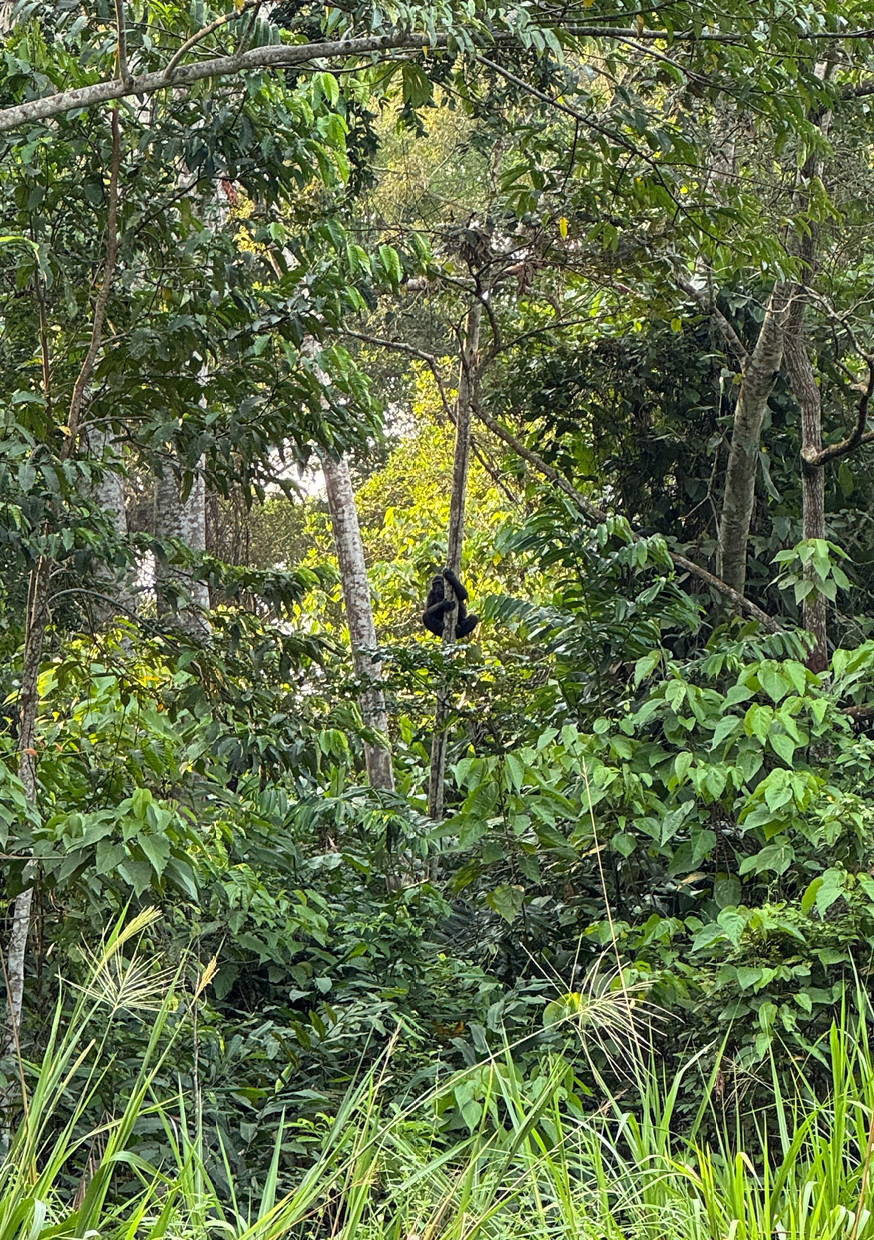
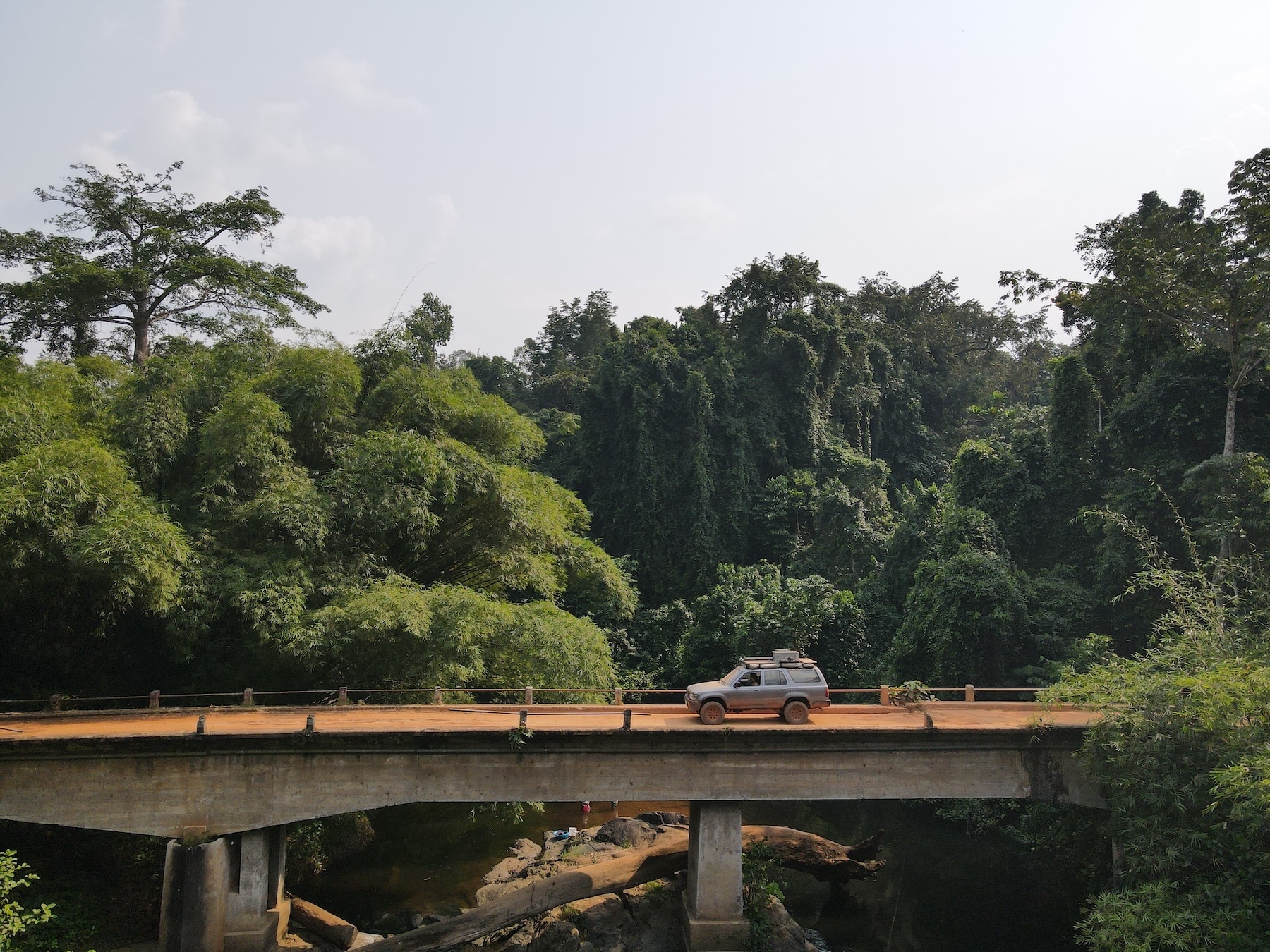
There were, in fact, an awful lot of moments like that! The first thing that comes to mind is my first night in the Sahara—all alone, under the starry sky, in my dream car—and second, a day in the rainforest in the Congo. I woke up in the morning to the roars of chimpanzees and, shortly afterward, spotted gorillas in the trees just about 5 meters away from me. I was so moved that tears of joy came to my eyes.
Tell us about a mishap you can laugh about now.
It wasn’t a car breakdown, but it was still extremely annoying: Right at the start of my trip, my brand-new Coleman stove suddenly stopped working. Every overlander knows it: a very popular and generally reliable gasoline stove. Mine, however, wouldn’t pump or light properly anymore, so I had to eat cold meals for nearly a week, and even after installing replacement parts, I still couldn’t get it to work. Eventually, I figured out that every time I used it, I’d turned the pump up a little more than before, and I just needed to open it up more than three turns. A silly beginner’s mistake.
What was the most expensive lesson you learned on your trip? Not just financially.
Missing opportunities because I didn’t trust people. It’s a fine line—especially as a woman—to judge when to trust people and accept offers, and when it’s better not to. Although I’ve developed a good gut feeling for this by now, there are moments when I’m not open to encounters because I’ve had bad experiences before or it’s just too much for me at the moment—and I end up regretting it afterward because it could have been a great experience.
On a trip to Cuba, for example, I missed out on seeing whales because I didn’t want to get on the boat alone with two men. Later, I met other travelers who had done exactly that and had a once-in-a-lifetime experience.
“That’s also one of the things that bothers me most about traveling alone as a woman: missed opportunities because my own safety takes priority.”
Who is the person you still can't get out of your head? Why?
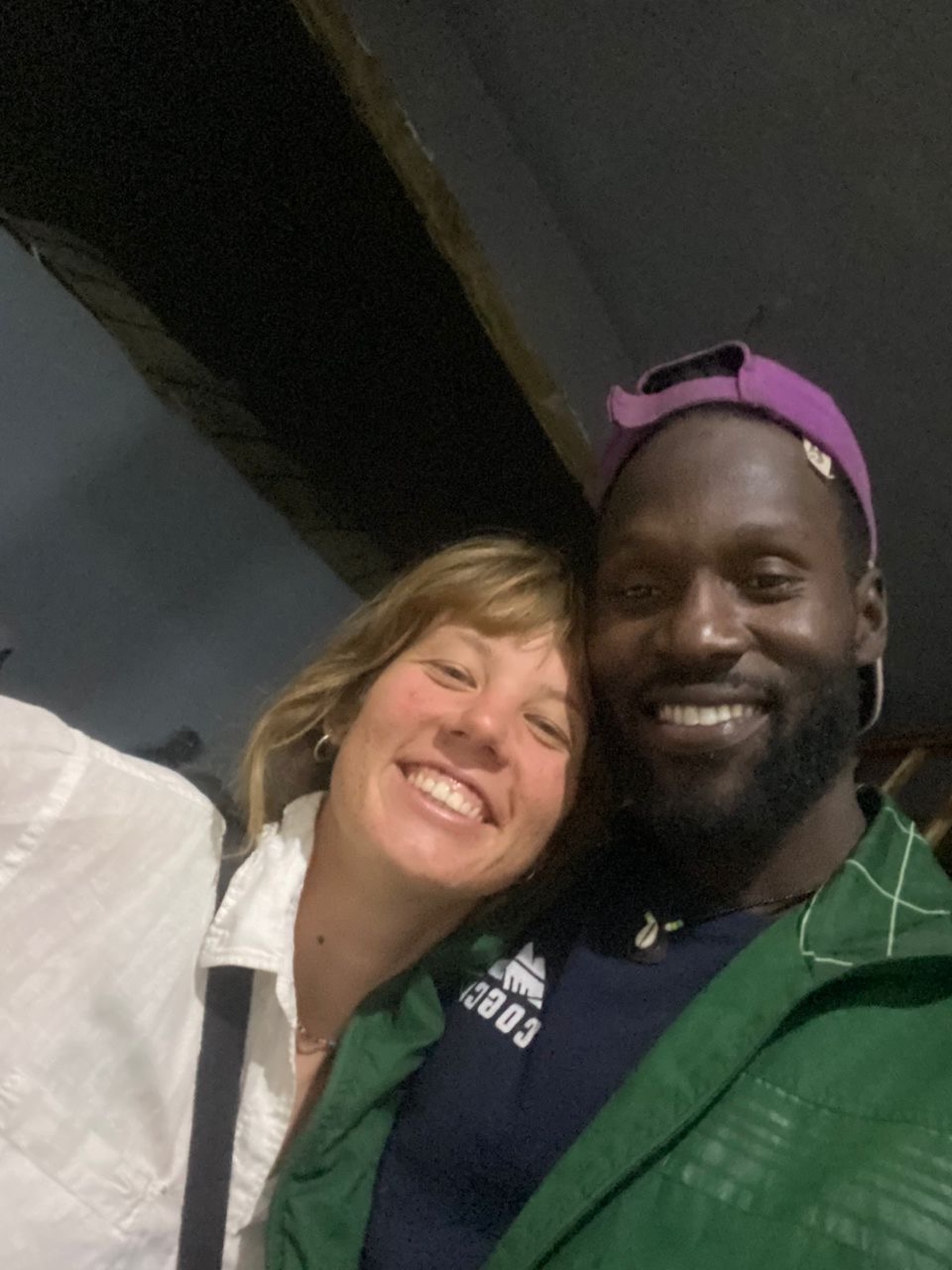
Alou “Le Grand” from Senegal. We met by chance and hit it off right away. I’ve rarely seen such a kind soul and such high emotional intelligence in anyone before.
We met several times over the course of a week and talked about all kinds of things, and I found it incredibly fascinating how different our worlds were—and yet how similar our views and values were.
“Alou works three jobs—as an engineer in a mine, as a mechanic, and doing odd jobs in his neighborhood—and still barely makes ends meet.”
This inequality—that I only have to work two years to save up money for a trip like this, and can also quit my job without a second thought and easily find a new one, while Alou works much harder and still can’t afford a single day of vacation —simply because he was born in Senegal and I was born in Germany—is just not fair and still breaks my heart.
Was there anyone along the way who helped you even though they really had no reason to? What happened?
Not just one! SO MANY people helped me on my trip! Especially in Africa, people’s willingness to help was incredibly strong—we in Europe really have a lot to learn from that.
The first thing that comes to mind is a stretch of road in Guinea that was really, really bad. I was traveling in a group with a Defender and a BMW E34 —a “normal” car—and we were moving along super slowly because the E34 had so little ground clearance and, of course, no four-wheel drive. Time and again, mopeds passed us by, many of which stopped briefly to help us, even though they could have just kept going. But then another moped rider stopped and traveled with us for at least three hours. He hauled countless rocks with us to clear the path for the BMW, or gave me directions on where to drive.
In the end, we wanted to give him a Coke and some money, but he vehemently refused and was simply happy to be able to help us. I was so impressed.

The question everyone asks: How do you pay for this lifestyle? And how do you deal with the uncertainty that might come with it?
I have a degree in civil engineering and work in bridge design. Fortunately, it’s a very secure job, and I earn a good living. So far, I’ve always worked for a while and then gone traveling until I run out of money. Since engineers are always in demand, this has worked out very well for me so far.
For my next trip, though, I’d like to not only use my savings but also find a small source of income along the way, for a little more financial security. We’ll see—maybe something will come up through social media.
What was your greatest luxury while traveling—even though it didn’t cost any money?
I think my greatest luxury isn’t a material possession, but the happiness and privilege of having parents who support me in everything and provide a safety net. I know I can always go back to my old childhood bedroom, and that they could—and would—pay for a flight home if something were to go completely wrong while I’m traveling. That’s priceless.


You're traveling alone. What's the best part about it?
The freedom. Every day, at any time, I can do exactly what I feel like doing. Especially compared to everyday life at home, where you have to plan around appointments, work, and other people, it’s a fantastic change of pace. I feel like I can be 100% myself and, above all, get to know myself better and better and keep growing. I really appreciate that. The only person for whom I’d give up solo travel at any time is my sister. We’ve traveled together many times and get along so well that I don’t feel like I’m making a compromise.
And what’s really frustrating sometimes?
For me, the only downside to traveling alone is that you can’t try two dishes at a restaurant and share them—you have to choose just one.
Do you think your trip would have been different if you’d shared it with someone?
Absolutely. The trip is incredibly demanding. From my perspective, it was already a lot just to listen to my own needs: breaks, illness, bad days, hunger and thirst, rest, or social interactions. I imagine it would be even harder to take two people into account—even though, of course, you can support each other along the way. But maybe I’ve just been traveling alone for too long.

Be honest: What’s one question you’re really sick of hearing?
“Isn’t it dangerous for a woman to be out alone?”
Um, no? At least no more dangerous than it is for a man?
I don’t understand why men are never asked this question, but I’m asked it in 80% of cases within the first few minutes.
A trip (through Africa) involves the same dangers for men as it does for me—wild animals, diseases, poisonous creatures, corrupt police officers, kidnappings, or crime—so gender really doesn’t make a difference.
Of course, as a woman, there’s the added danger posed by men, and I don’t want to downplay that, but I wish I weren’t constantly reminded of this injustice and could answer a more interesting question for a change.
P.S.: That’s why I find it all the more wonderful when women message me on Instagram because they want to travel alone themselves and are inspired by me and other women, but still feel a certain amount of uncertainty. I always reply and am happy to support and encourage other women!

What has traveling taught you that no school in the world could have taught you?
Self-confidence and a deep trust in myself and my ability to make decisions.
When was the last time you were on the road and thought, “Damn… I’m so lucky to be able to live this life”? What happened in that moment?
For me, that feeling always comes up in the simplest moments: driving with the windows down in the sunshine and marveling at the scenery.

What does “One Life. Live It.” mean to you personally?
To get out there, be brave, try new things, and be okay with it when things don’t work out. I think life isn’t about being perfect—it’s about learning and experiencing.
If someone reads your story and finds the courage to set out on a journey themselves—what advice would you give them to take with them?
At first, I was sometimes criticized for teaming up with other travelers along the way, even though I said I was “traveling alone.” I think that’s nonsense. If someone sets out alone, that’s already extremely brave. Still, it’s nice to share parts of the journey with others or to help each other out in certain situations. So I would ALWAYS recommend that people reach out to one another, accept help, ask for tips, learn from each other, and have a good time together.
Is there a project, a person, or an initiative that has become particularly close to your heart while traveling? Or something we should definitely share with the OLLI community?
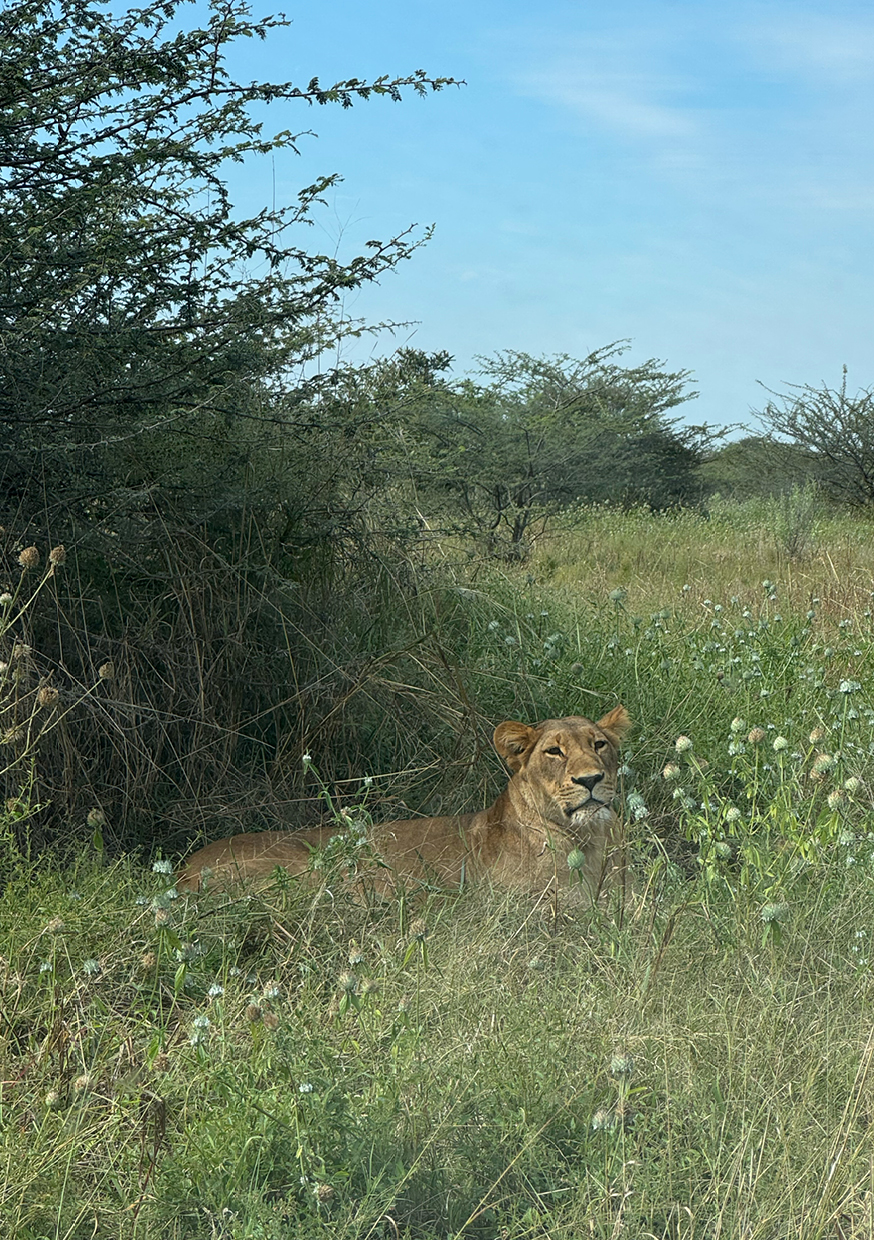
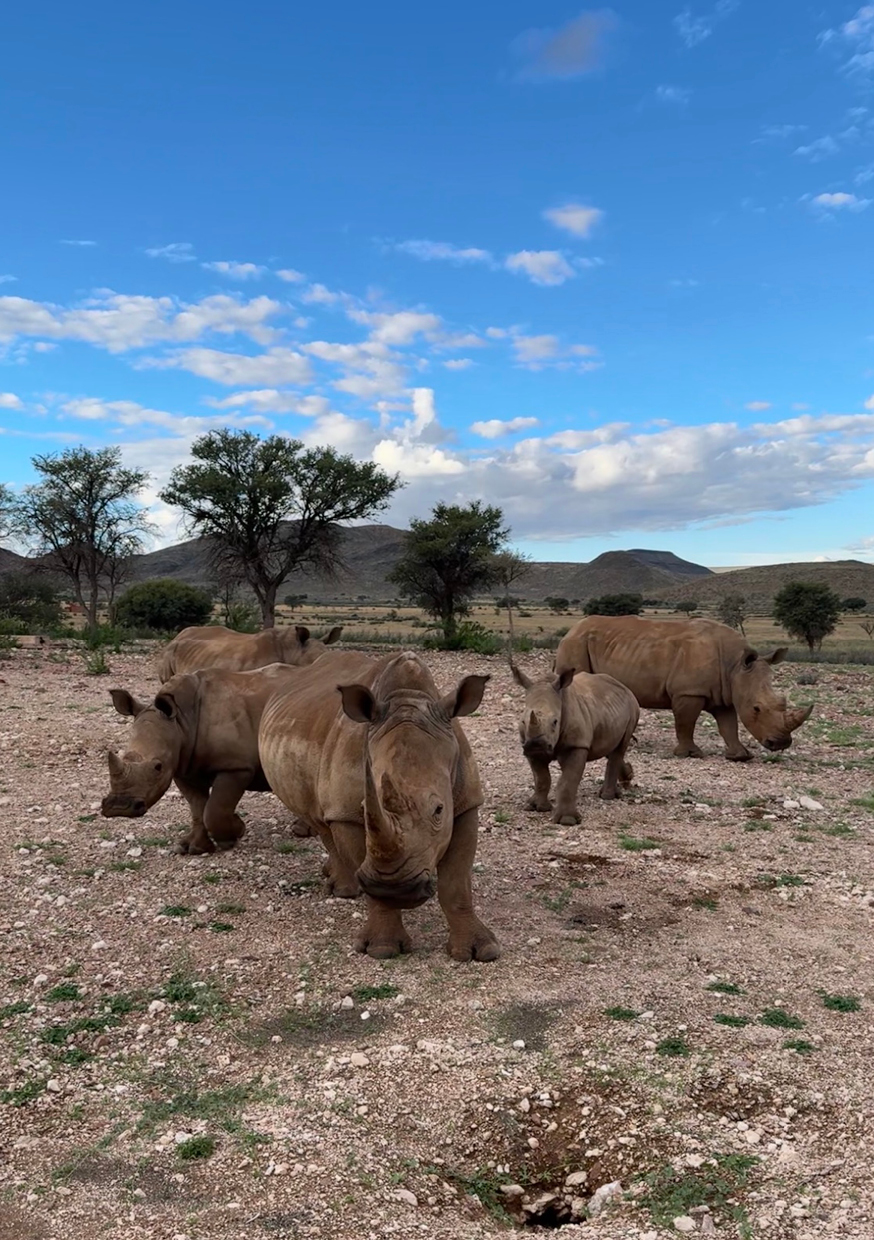
It’s important to me to emphasize that safaris aren’t—and shouldn’t be—like visits to the zoo. Time and again, I’ve encountered people and tour operators who’ve stalked animals with flashlights or felt the need to drive even closer to already nervous elephant moms. I find that extremely disrespectful. Safaris can be a very positive experience because the revenue generated helps better protect endangered species and track down and punish poachers.
To anyone planning to go on a safari in the future, I strongly urge you to research carefully where and with which tour operator you’ll be taking the trip, to respect the rules and the animals while you’re out there, and DEFINITELY not to go trophy hunting—even if it’s “officially” offered.
Follow Sophie on: